It’s raining again, torrents of water, blazes of light and thunderbooms, making outside an impossibility.
Confined, I close all windows and stalk the floors in a prison of boredom and frustration, thinking about a friend I used to know.
My dear one still inhabits her evanescent frame, but her beautiful mind has fled; she no longer recognizes me.
This past Sunday, I sit sandwiched between her and her husband, a strong tower of a man whose sturdy presence reassures us both that somehow it’s going to be okay.
How?
Memories that once anchored her to me, to others, have slipped from the depths and motored away.
I remember the years she poured into the children of our church, my children, Sunday after Sunday, teaching the littles to love Jesus and one another. She was a brilliant light who attracted their innocent shiny souls to herself, like a cluster of stars shimmering and glowing in a galaxy of joy.
There were paper arks and popsicle stick crosses, glue and googly-eyed lambs, singing and laughing and prayer.
Though she sits beside me still, I miss the her she used to be, and I’m not sure what to do with this new layer of sad.
I wonder about my own mind, whether it might one day also go, and what that might mean, as there is no strong tower next to me. My kids, of course, have promised that they will honor my only request, should circumstance require, of a room with a view of anything besides another wall. A place where they don’t pretend decaf is coffee.
My friend suspected what what coming for her; her own mother slowly faded into dementia, and the prayers we prayed, that she would have a different fate, have not been answered in the way we had hoped.
Both of my own parents had a similar end.
It’s too soon to be afraid.
We must not lose heart.
If this Jesus is real, the One who tells us over and over and over again fear not, little flock; for it is your Father’s good pleasure to give you the kingdom, then I know that one day, some day, I will sit with her once again, surrounded by the children she loved so well, and she will be wholly, beautifully, joyfully there.
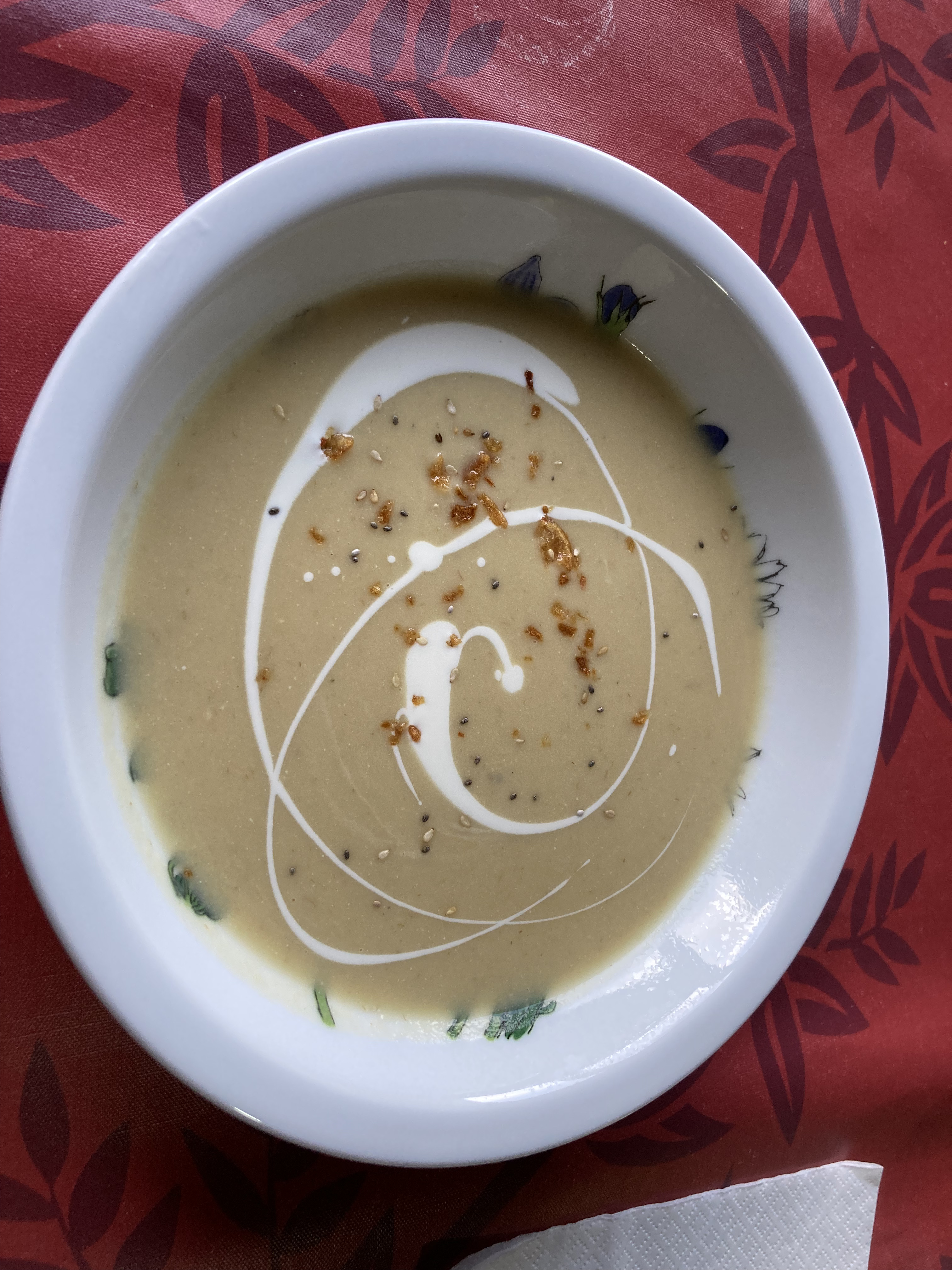
I’ve been back from the Camino de Santiago for a few weeks now, and although I re-familiarizing myself with my own kitchen, I am unable to replicate the feeling of sitting down after a long day’s walk to bowls of savory soup, baskets of bread, plates of rice and seafood, pollo and patatas, a bottle of wine and a glass.
The first time this happened, as I sat at a table alone, I wondered if there had been some mistake – did the waitress think I was expecting someone else?
So. Much. Food.
But I soon came to appreciate the rejuvenative nature of these hearty meals for the next day’s miles.
I’m still processing all of the things-I-miss from my time in Spain.
There are actually whole books written about the post-Camino experience. Author Karin Kaiser writes in After the Camino: Your Pocket Guide to Integrating the Camino de Santiago into Your Daily Life, “The Camino isn’t something you do to check off a bucket list and return to your life as if nothing happened. Something did happen. The person who started the Camino is no longer the same person who finished it.”
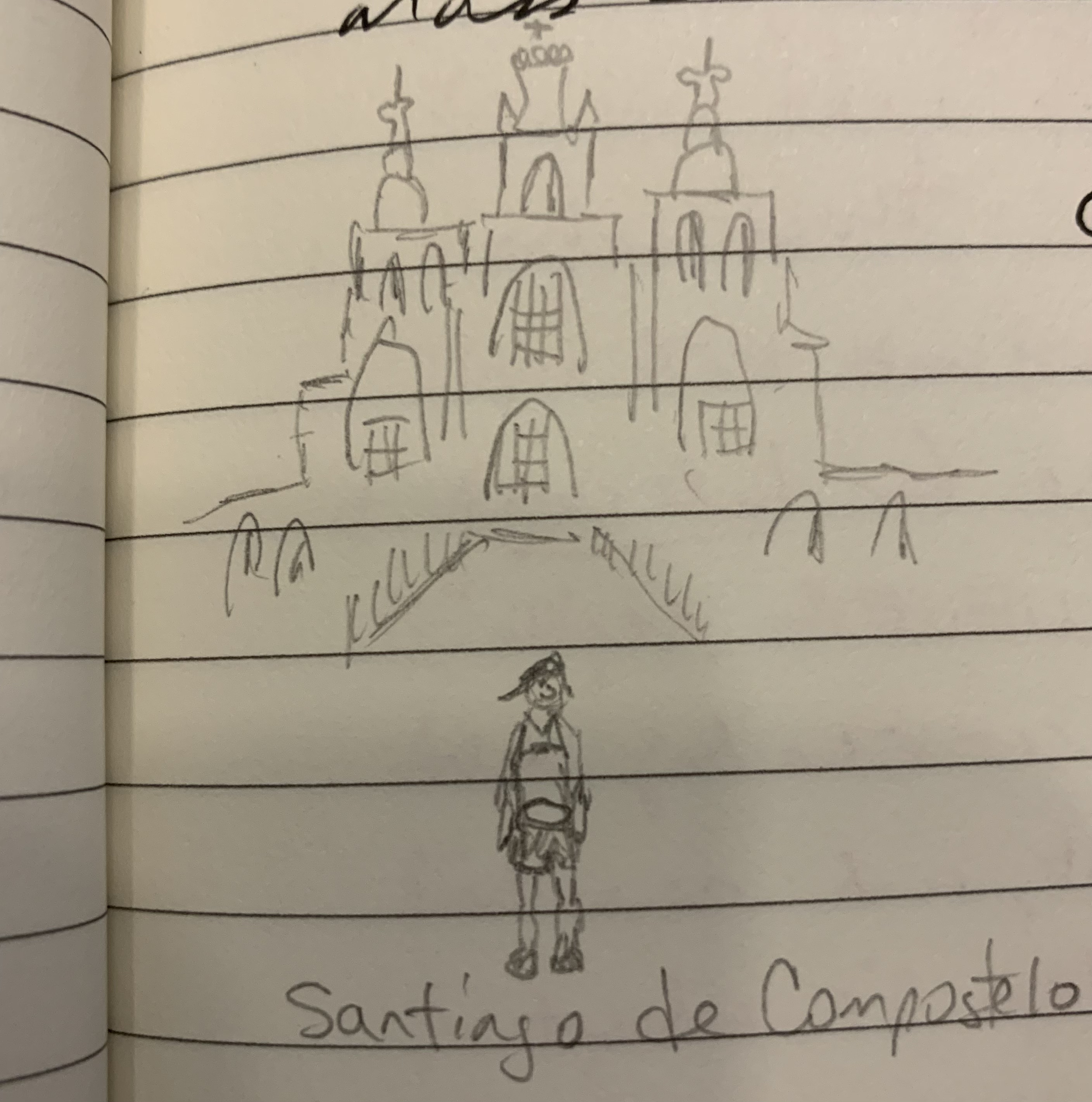
Given that this Camino, my first, had been an unexpected gift, it was not unusual that when I arrived in Santiago, I did not, like so many before me, want it to end.
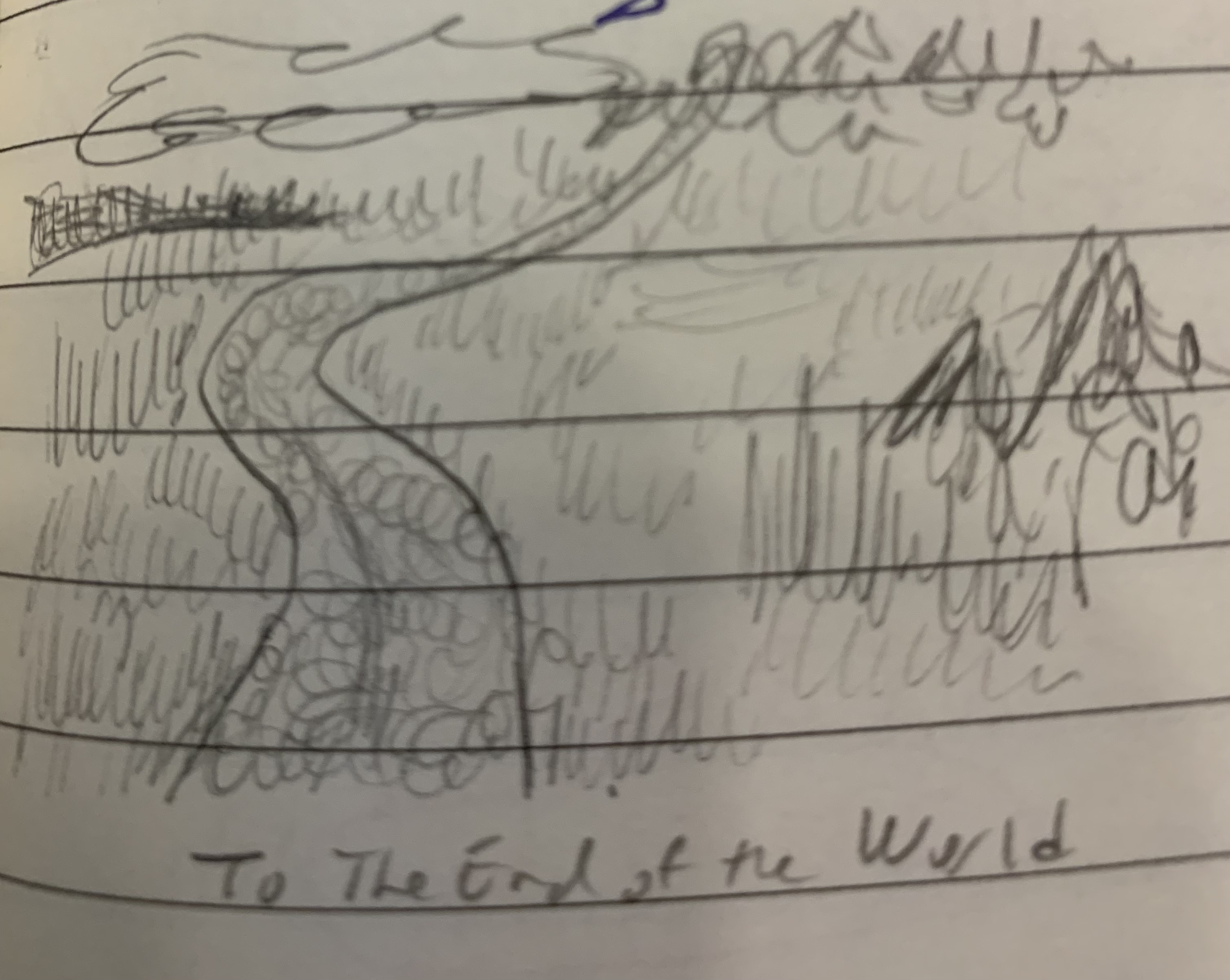
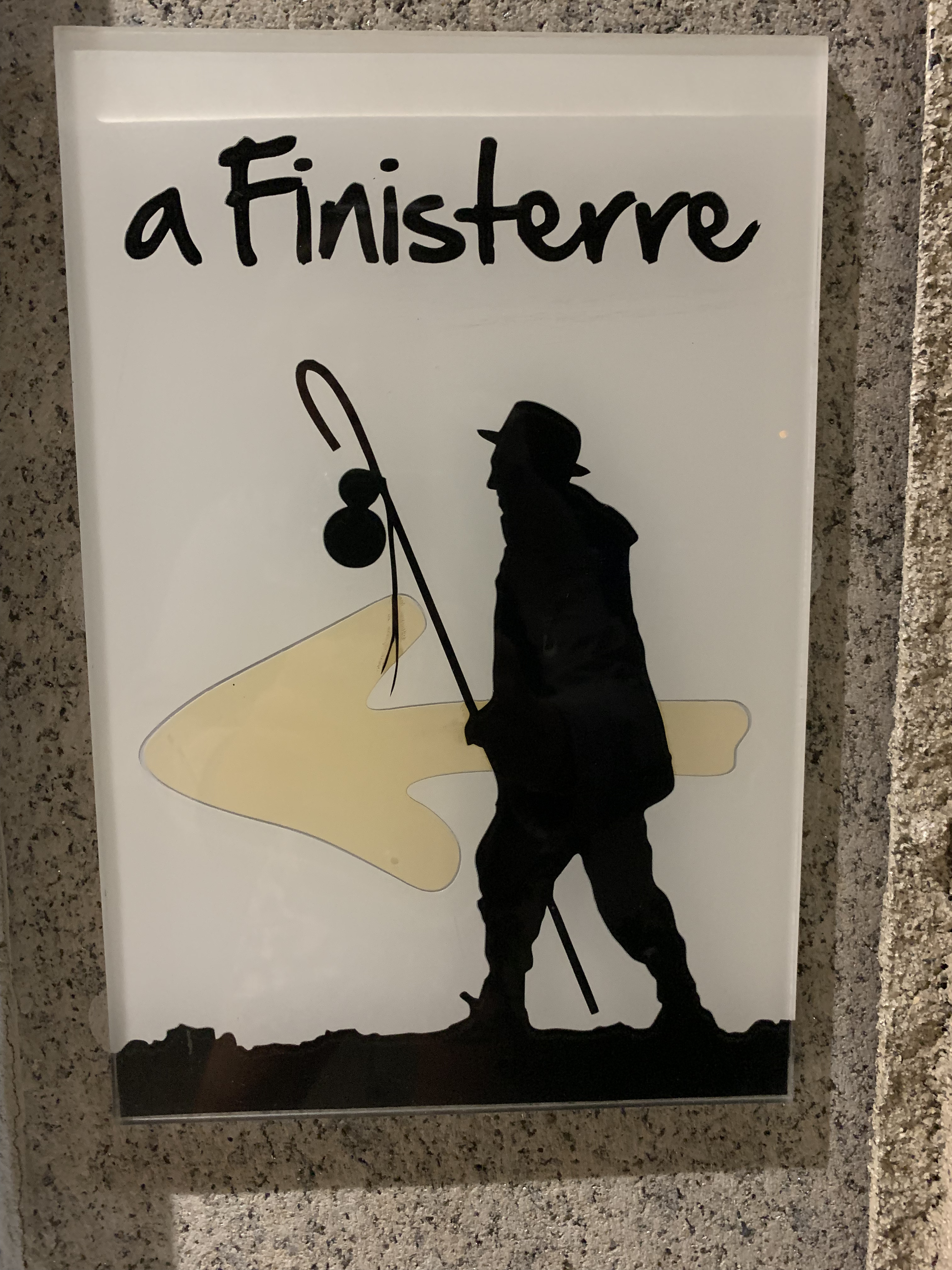
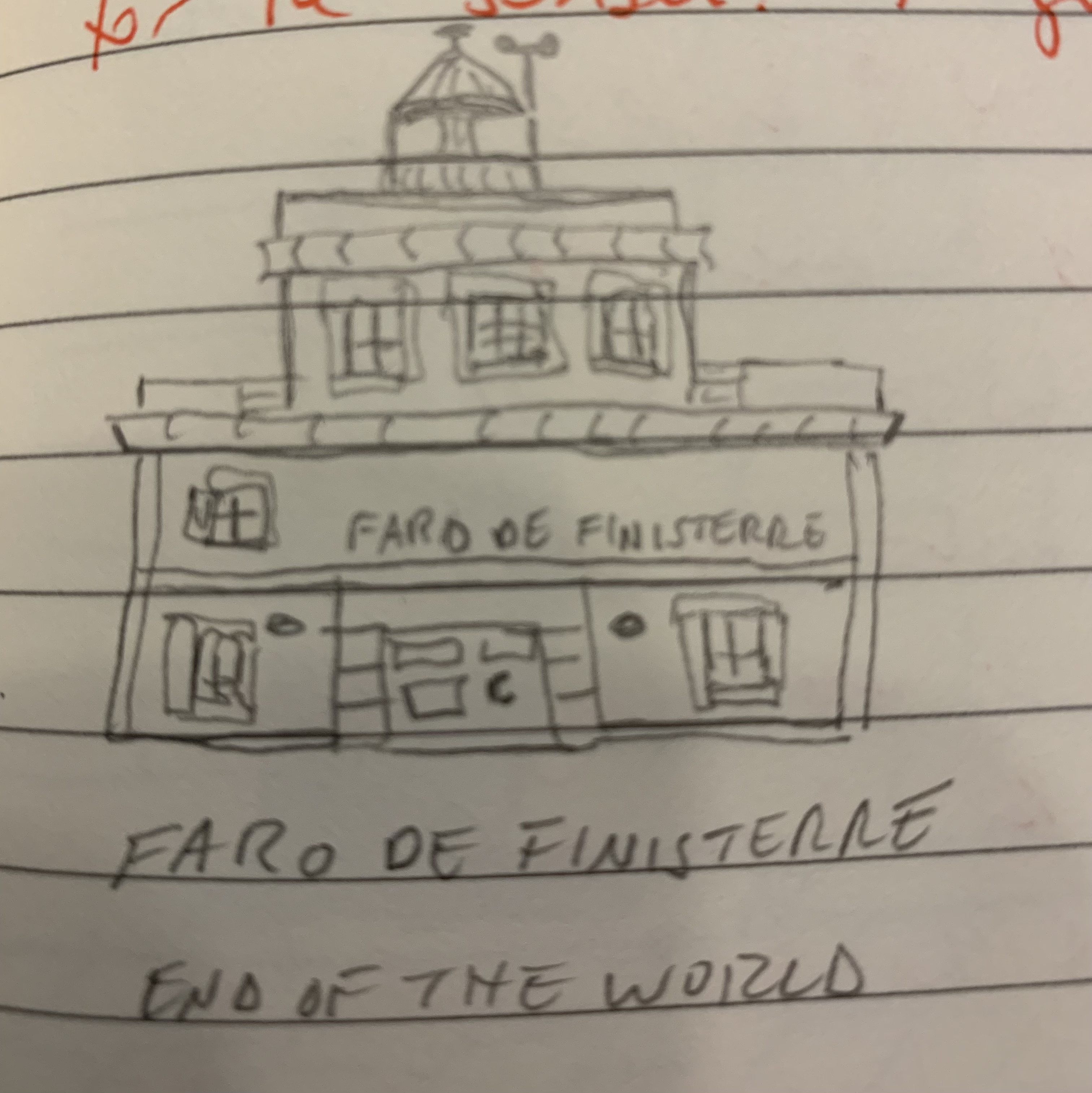
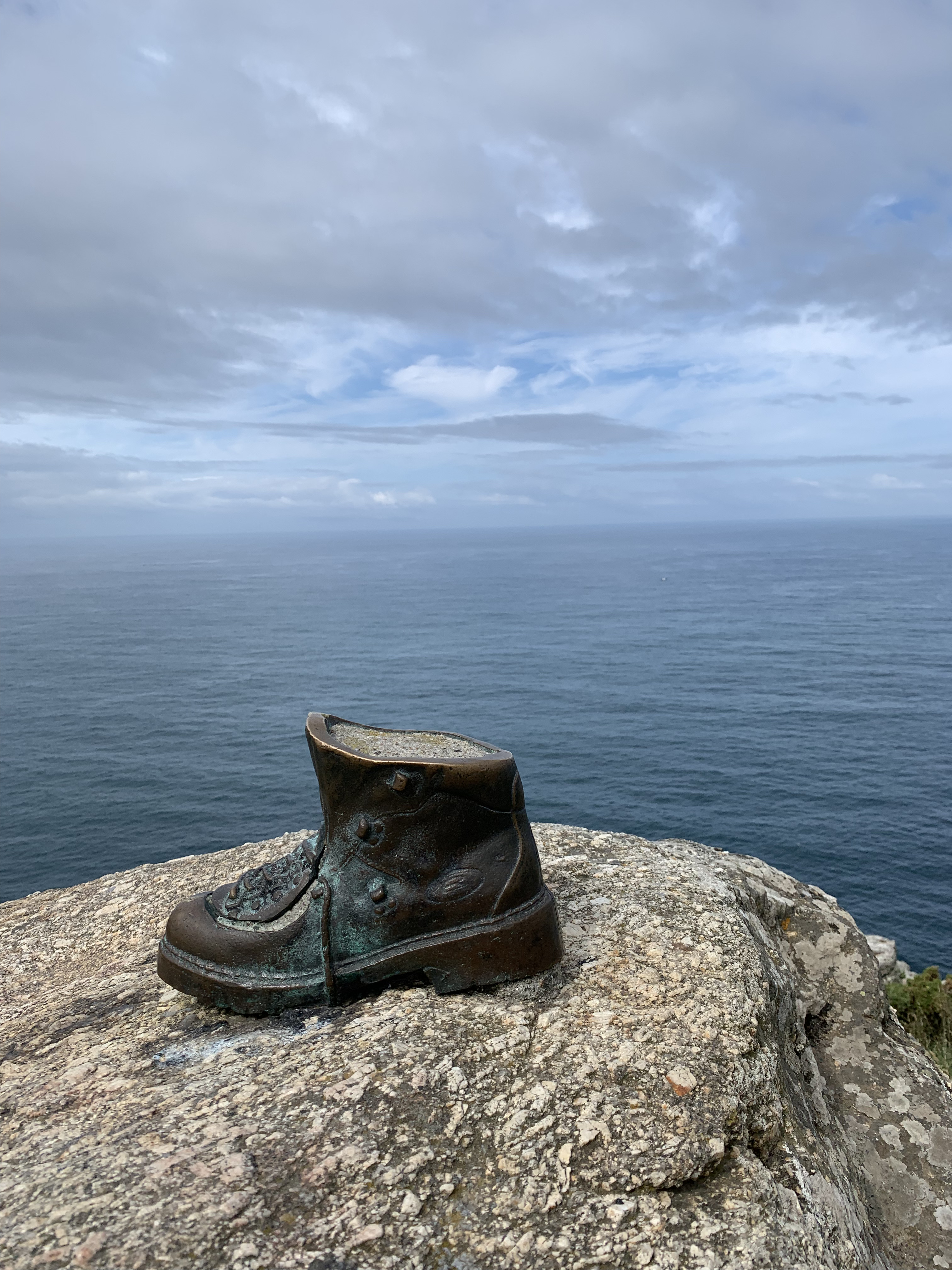
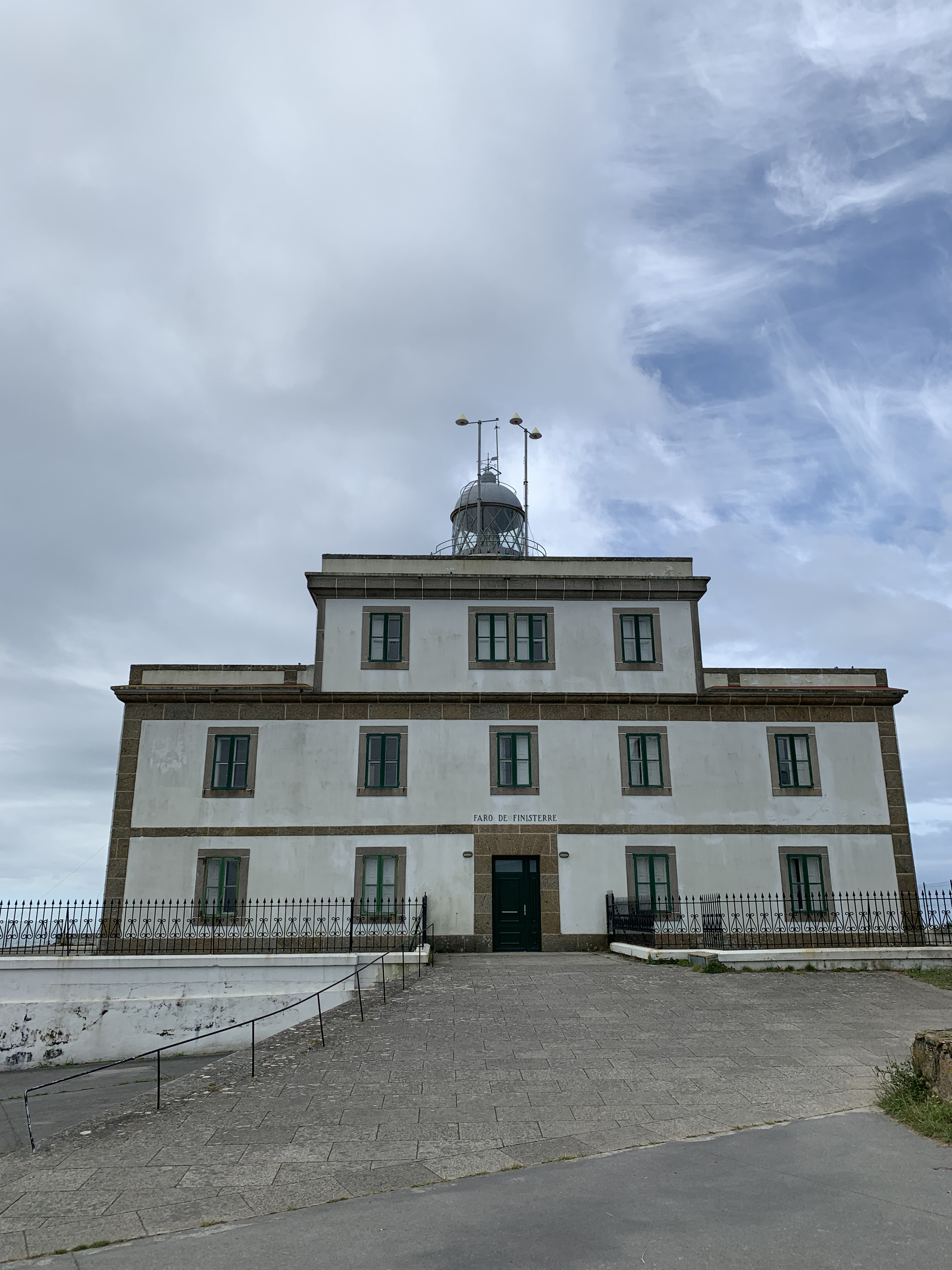
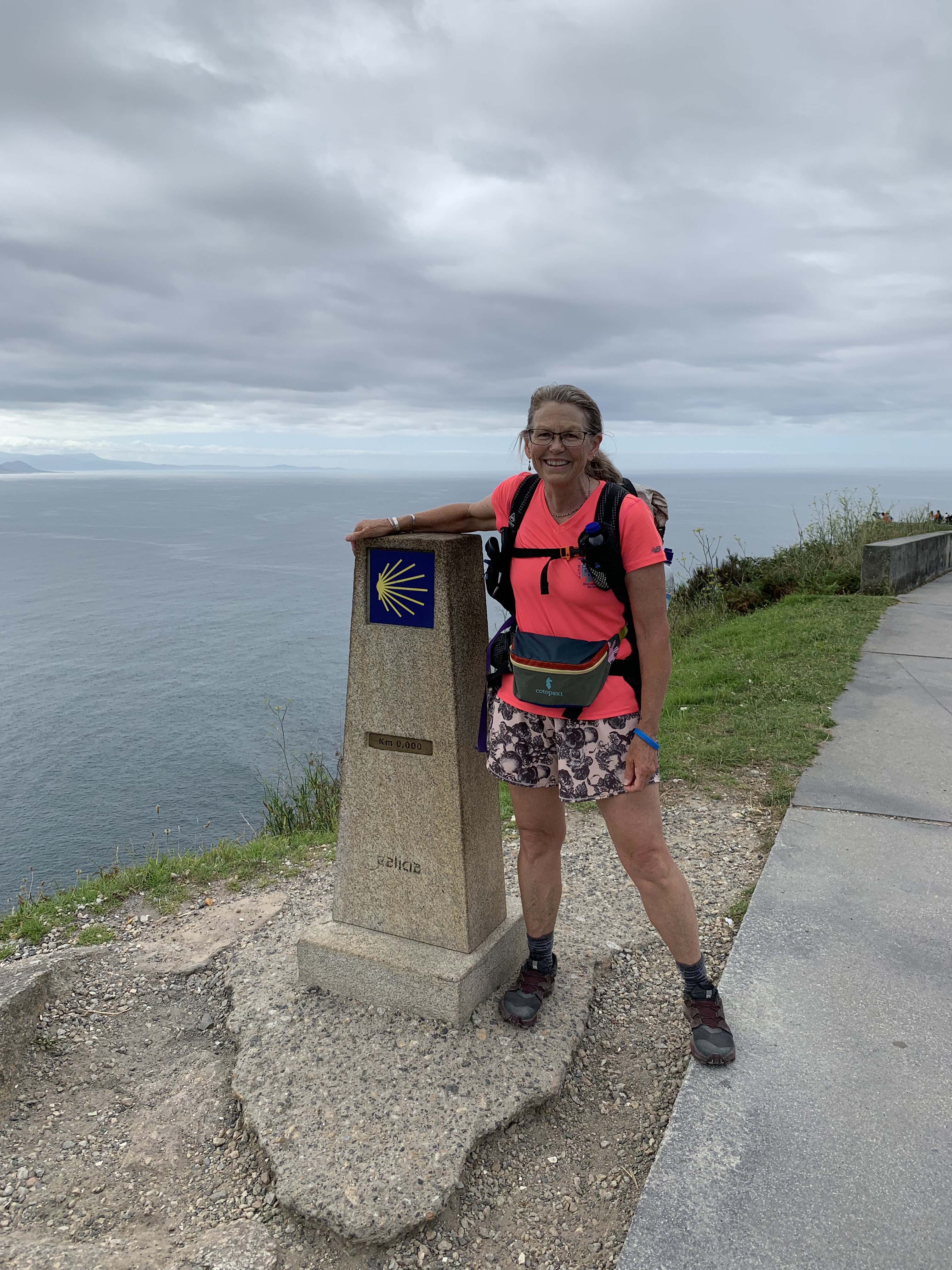
Luckily, many pilgrims choose to head to the coast after reaching Santiago, to Finisterre, which translates to “The End of the World.”
So early morning, on the day after I arrived in Santiago, I headed back out to cross the Cathedral plaza and walk the three days to the coast.
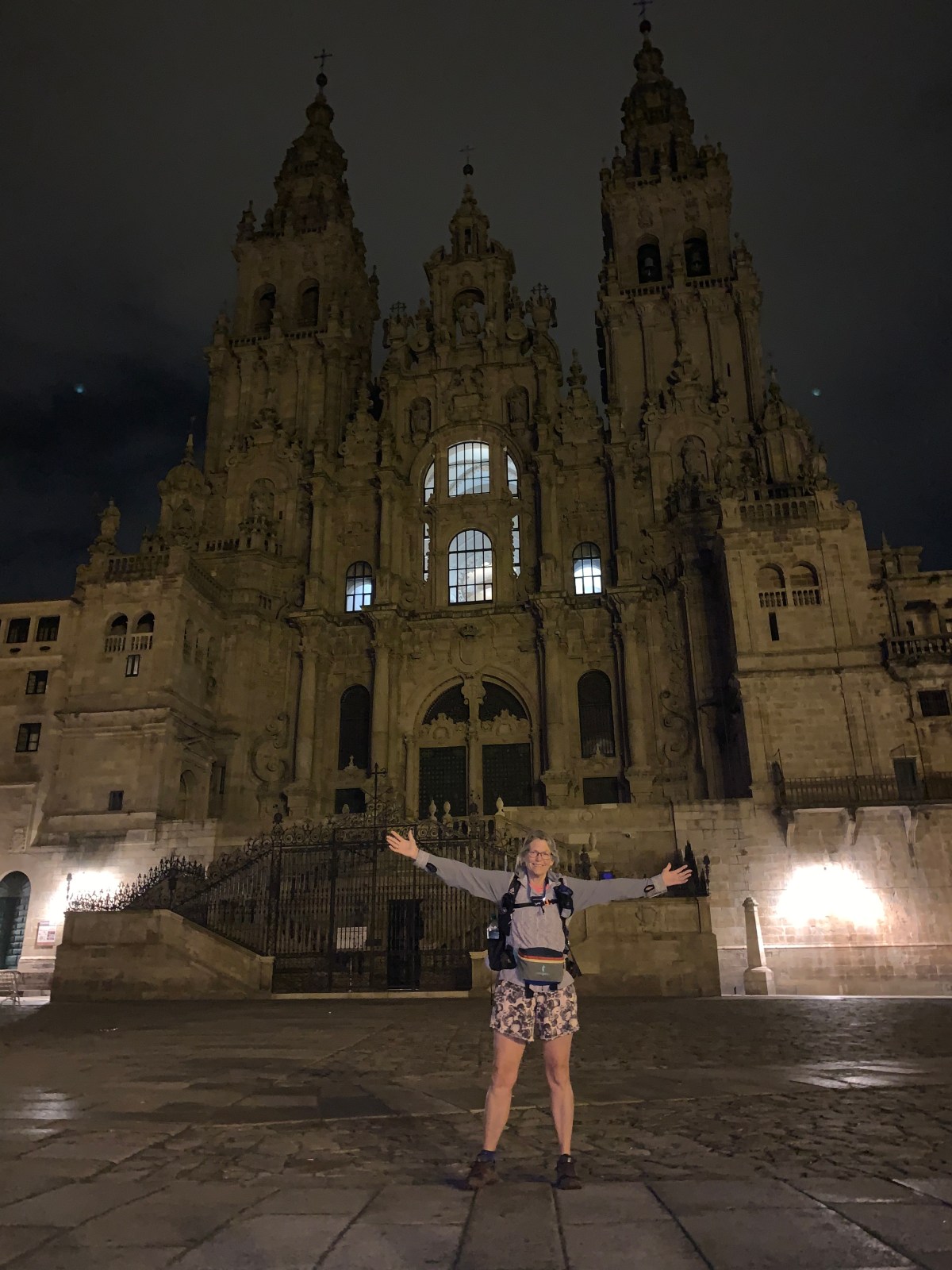
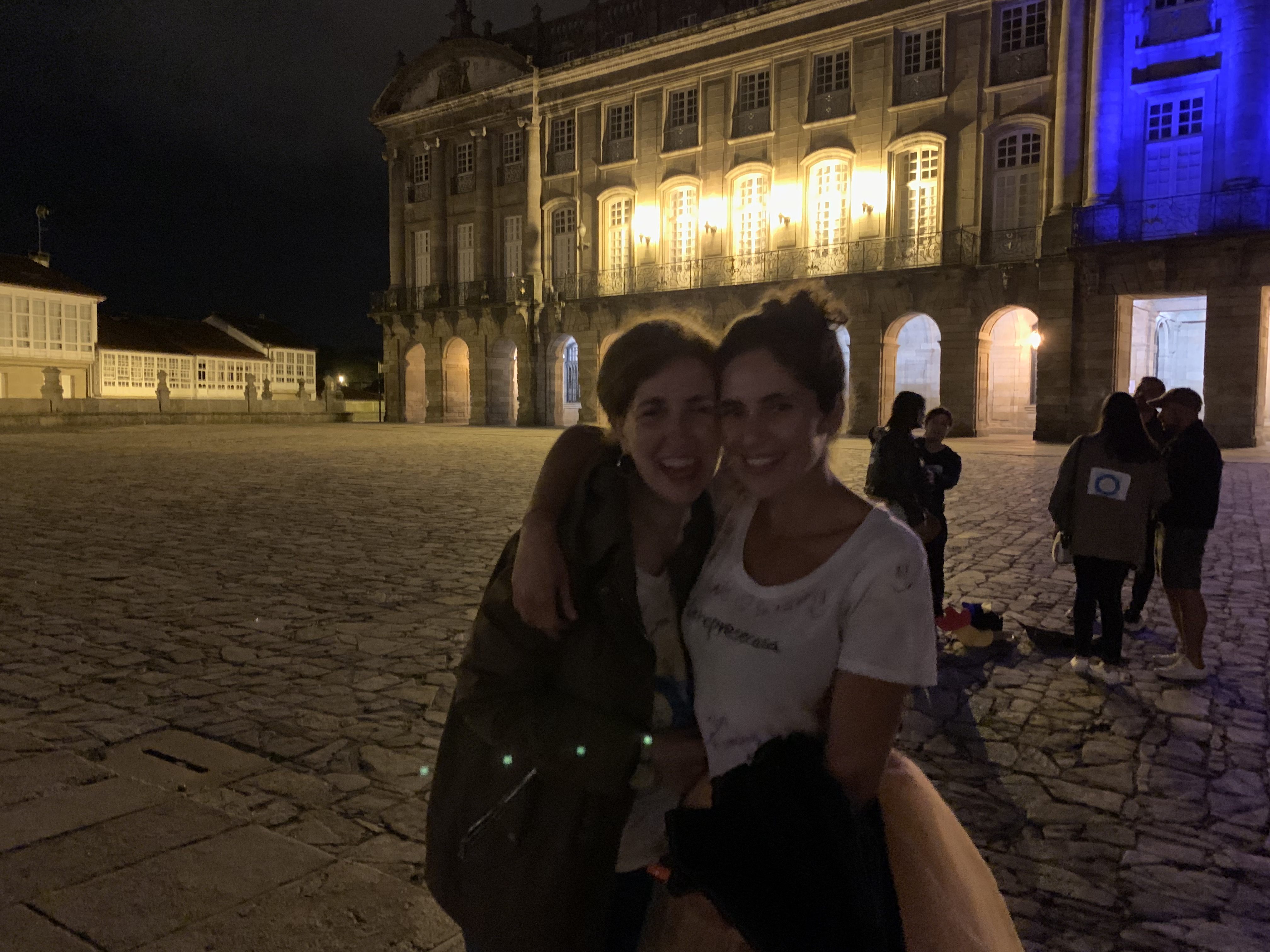
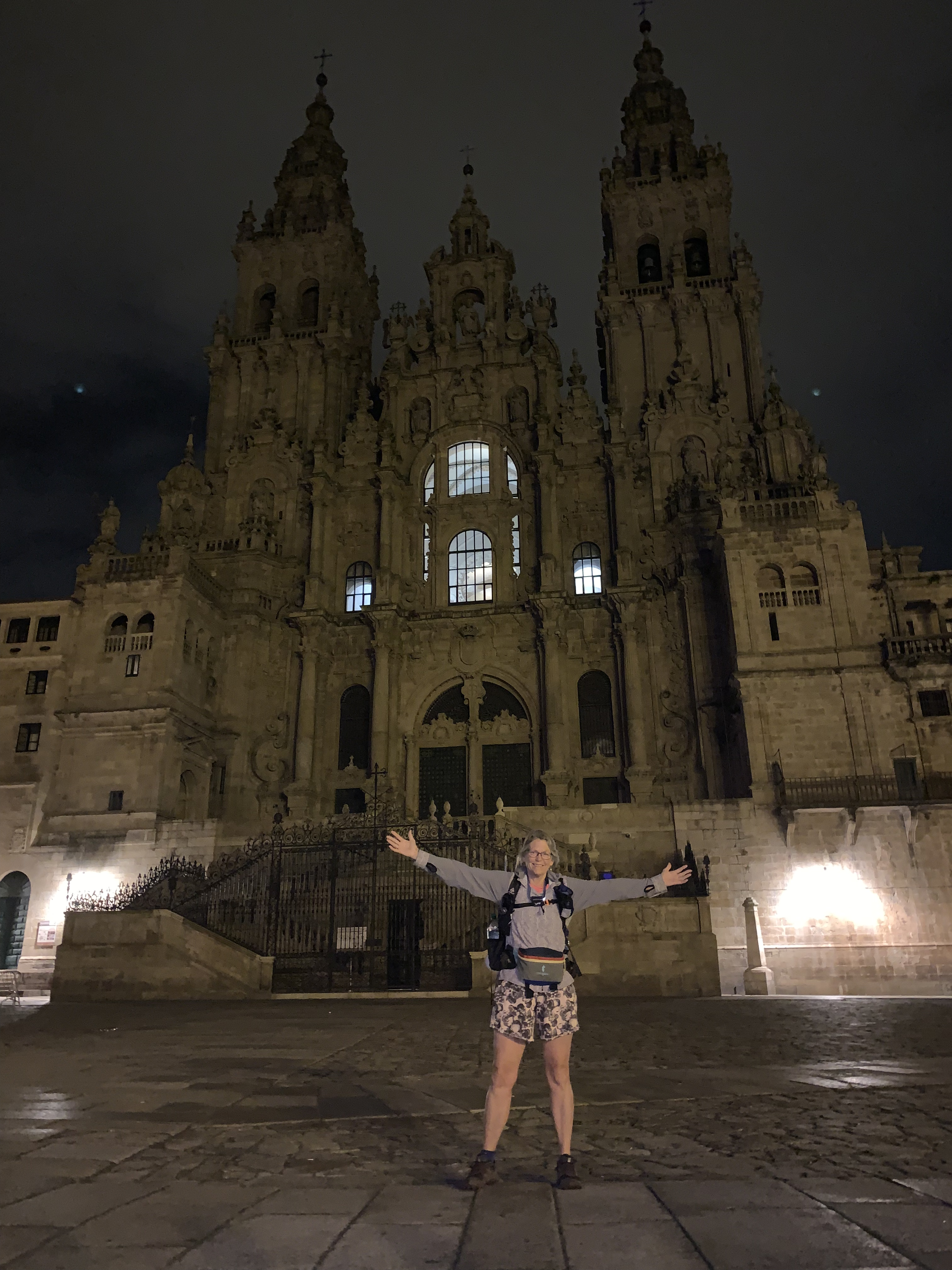
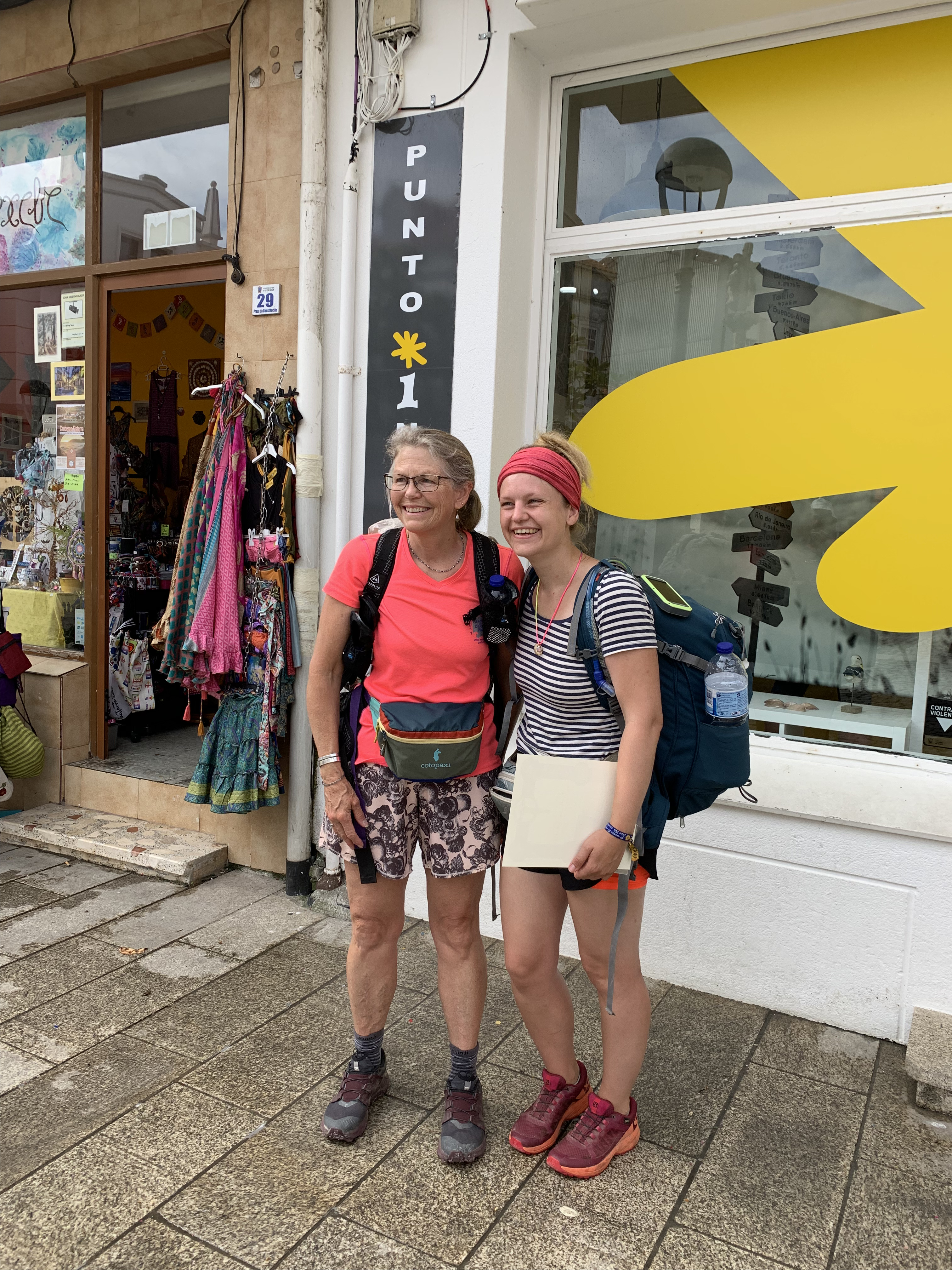
It was lovely to have the plaza almost all to myself after the chaos of the day before. I joined a party still in progress as bridesmaids celebrated with the soon-to-be-bride; invited to sign her shirt, we laughed together as she hugged her momma in joy.
They insisted on taking my picture in front of the Cathedral, and their energy carried me the rest of the way out of town.
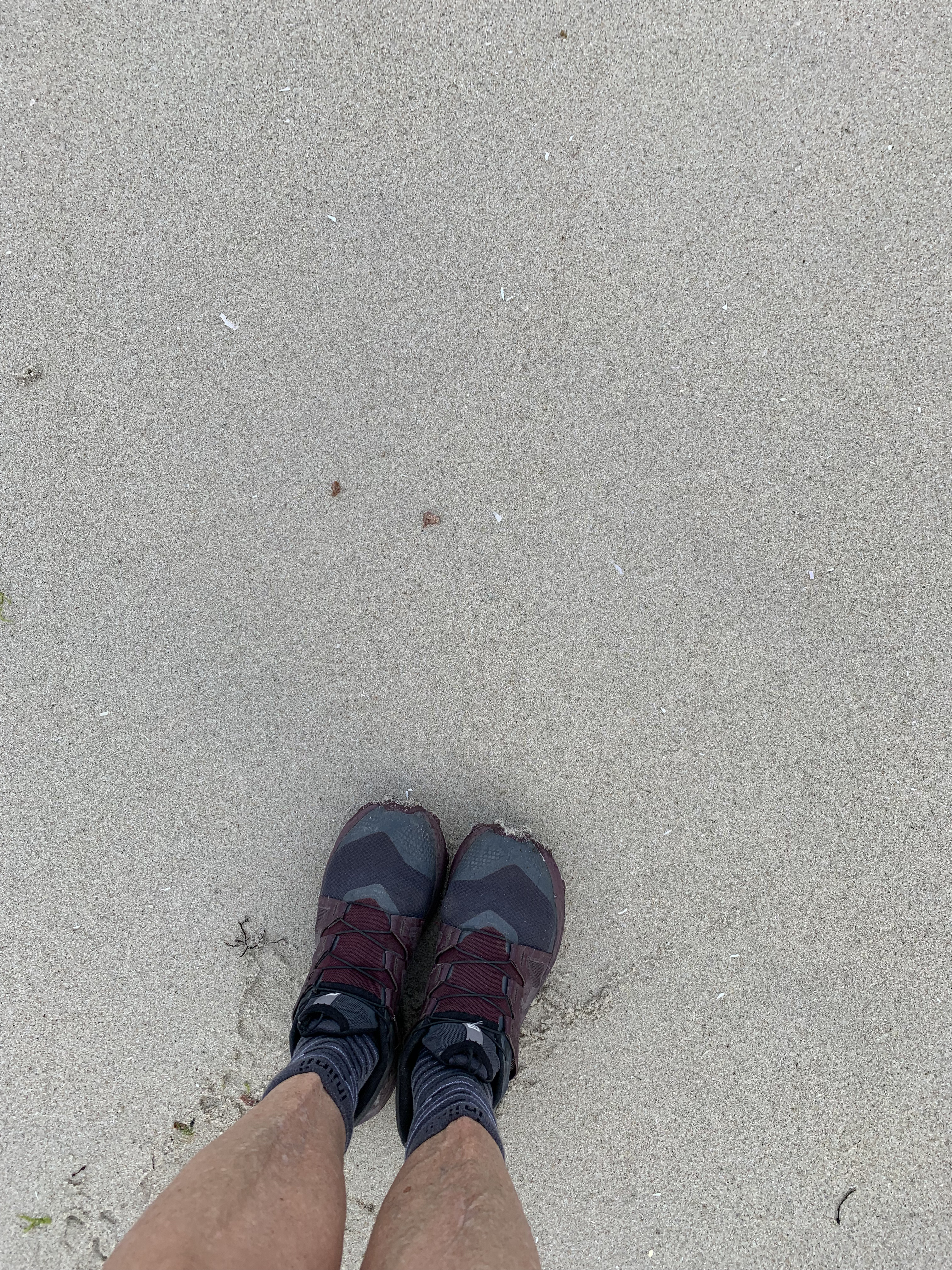
One thing I wanted to do before I left Spain was swim in the ocean; having lived much of my life close to the Atlantic, it seemed fit to try to find a place where, if I looked out across the swells, I could imagine seeing home.
I walked long that first day, 47K, hoping to set myself up to reach the port town of Cee. Unfortunately, their beach turned out to be a shallow, seaweed-laden, plastic trash soup, so I needed another plan. The beach on the approach to Finisterre would have worked, but the chilly air and my eagerness to reach the iconic lighthouse kept me moving.
I decided not to stay overnight in Finisterre, as most pilgrims do, as it was a bit too people-y; despite brief encounters with others from around the world, I remained a most solitary pilgrim.
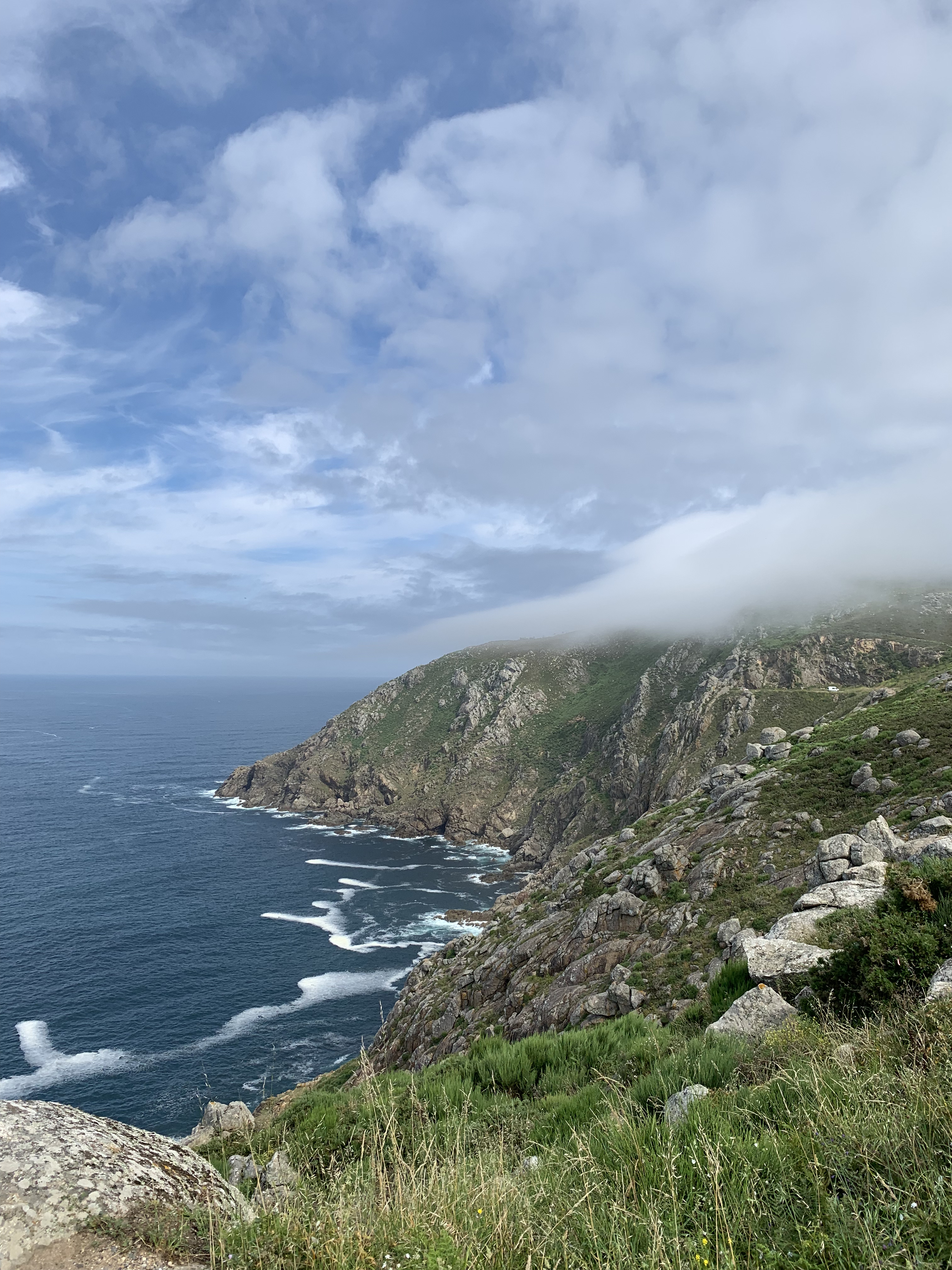
I did spend a few hours on the rocky cliffs at The End of the World, taking pictures and watching mists shape shift across the sea.
But there was one place left to visit, and my feet just wanted to keep walking, 27K north of Finisterre, to the tiny town of Muxia. It seemed much more my type of end, quieter, and the last place listed in my guidebook.
The trail hugged the coast through forest and farm, giving glimpses of water and wave. At last it popped out onto the road into Muxia, and I couldn’t believe my luck.
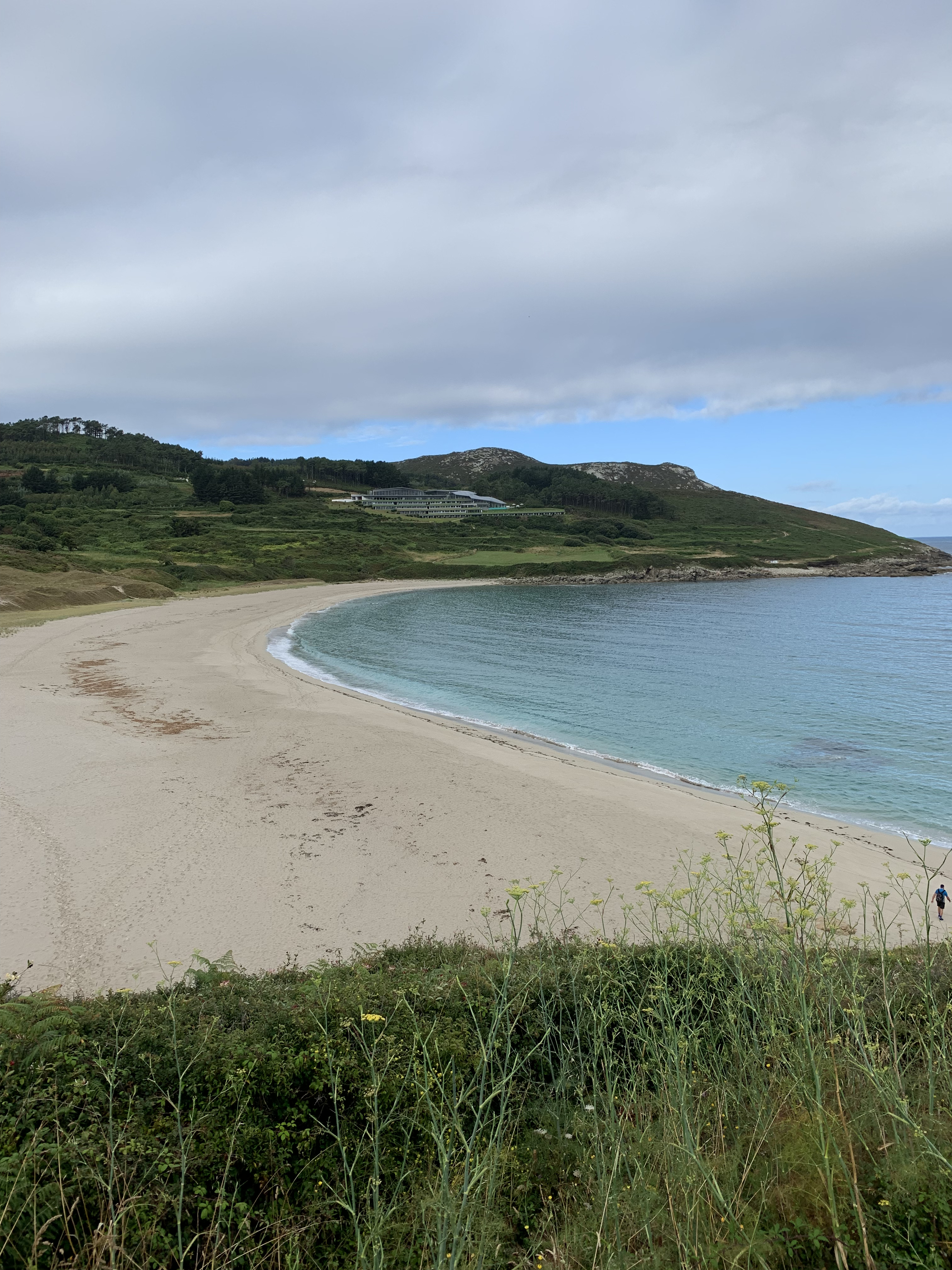
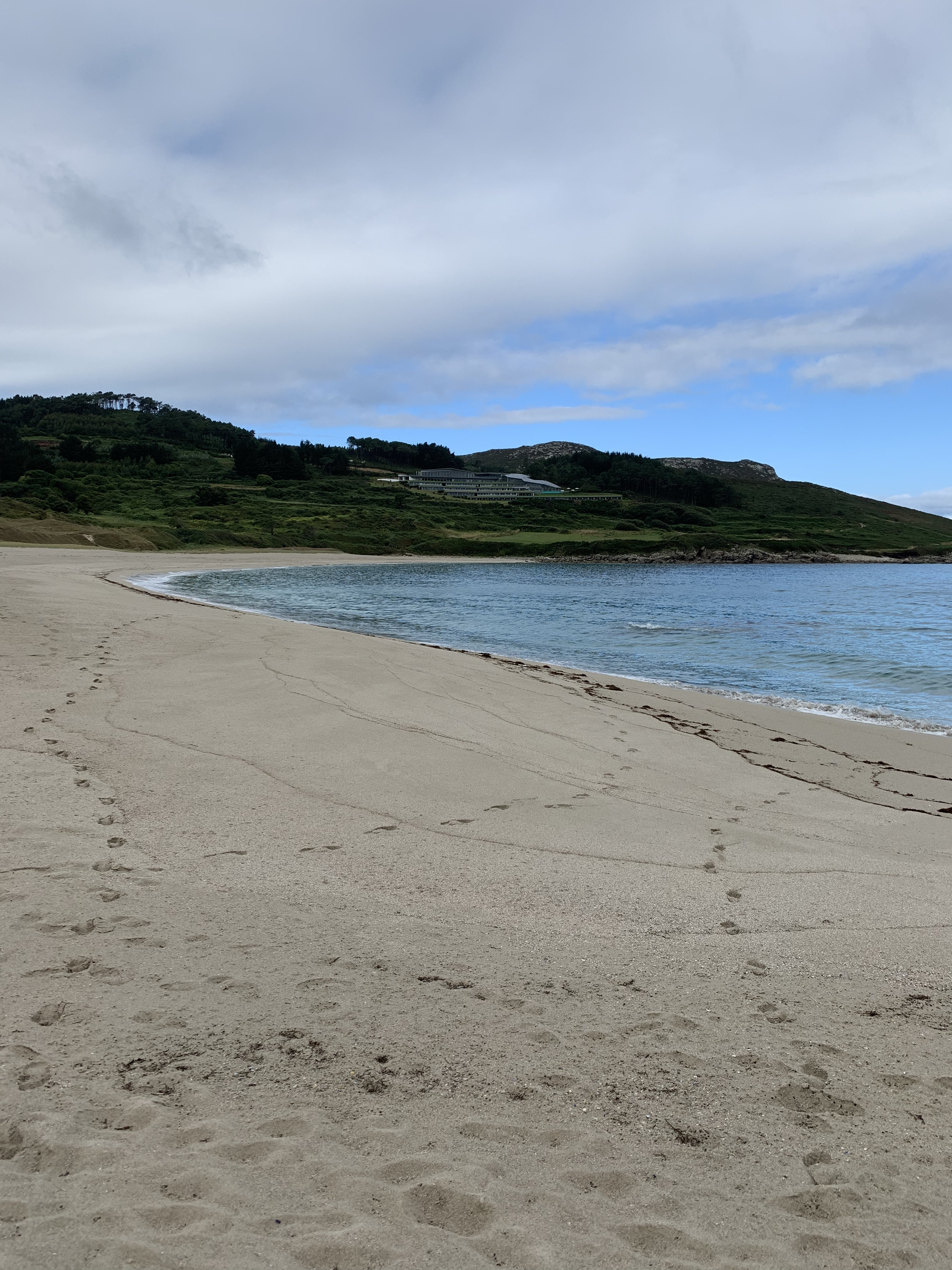
A vast expanse of deserted sand, cobalt blue surf, a path leading down. Time to swim.
Matthew writes that Jesus’s disciples were “amazed” when he calmed the storm, but not a peep about when he healed a leper. Was this smaller on the miraculous scale? Do we ignore minor miracles in our earnest expectation of the one for which we wait? After asking for the how-many-ith-time, do our hearts turn hard at the not-yet?
O, if we could only wait! Un-stone our hearts, watch with assurance, rejoice when it arrives.
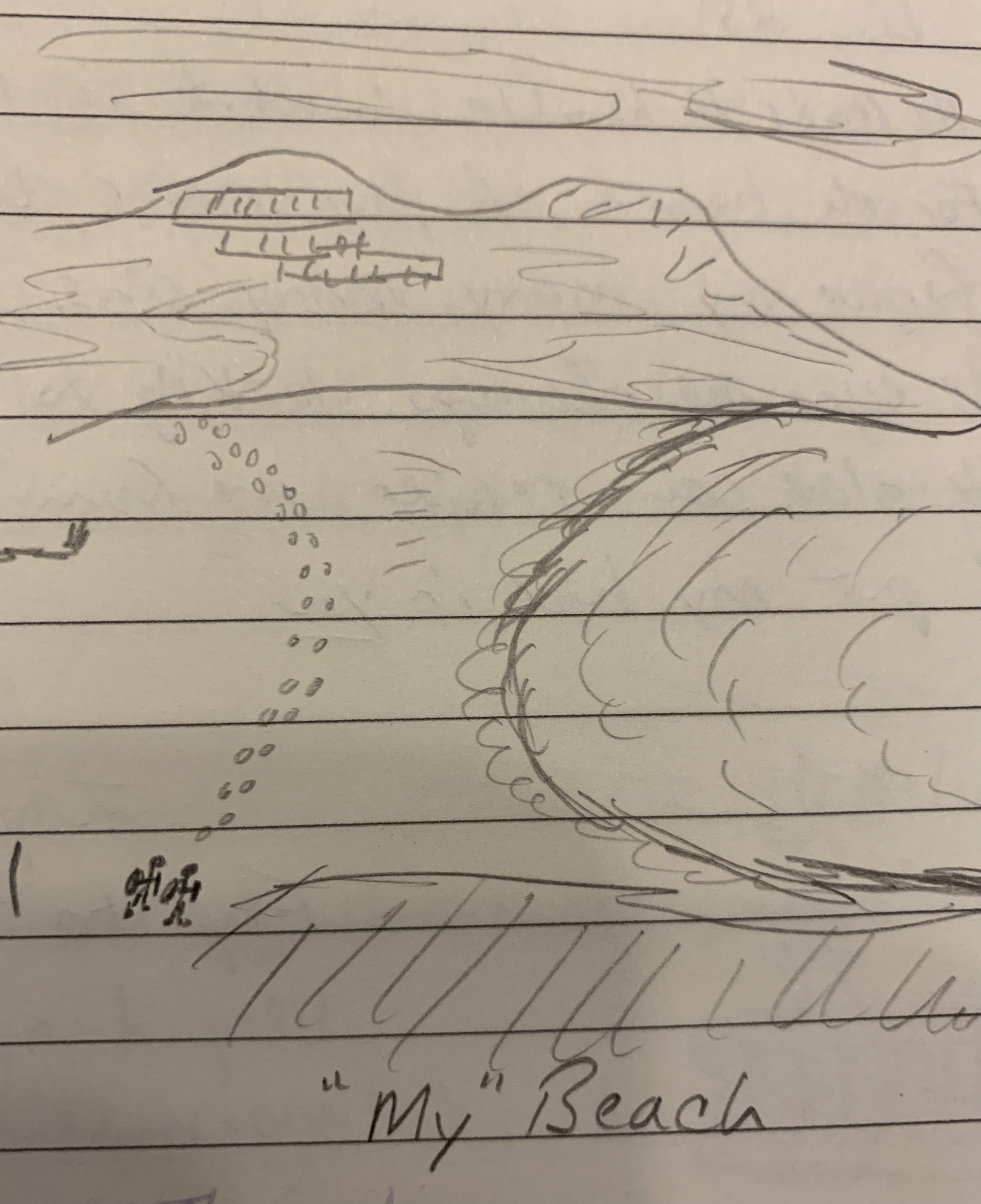
“My” beach was perfect, all the more for the wait, and I didn’t even mind when I had to share.
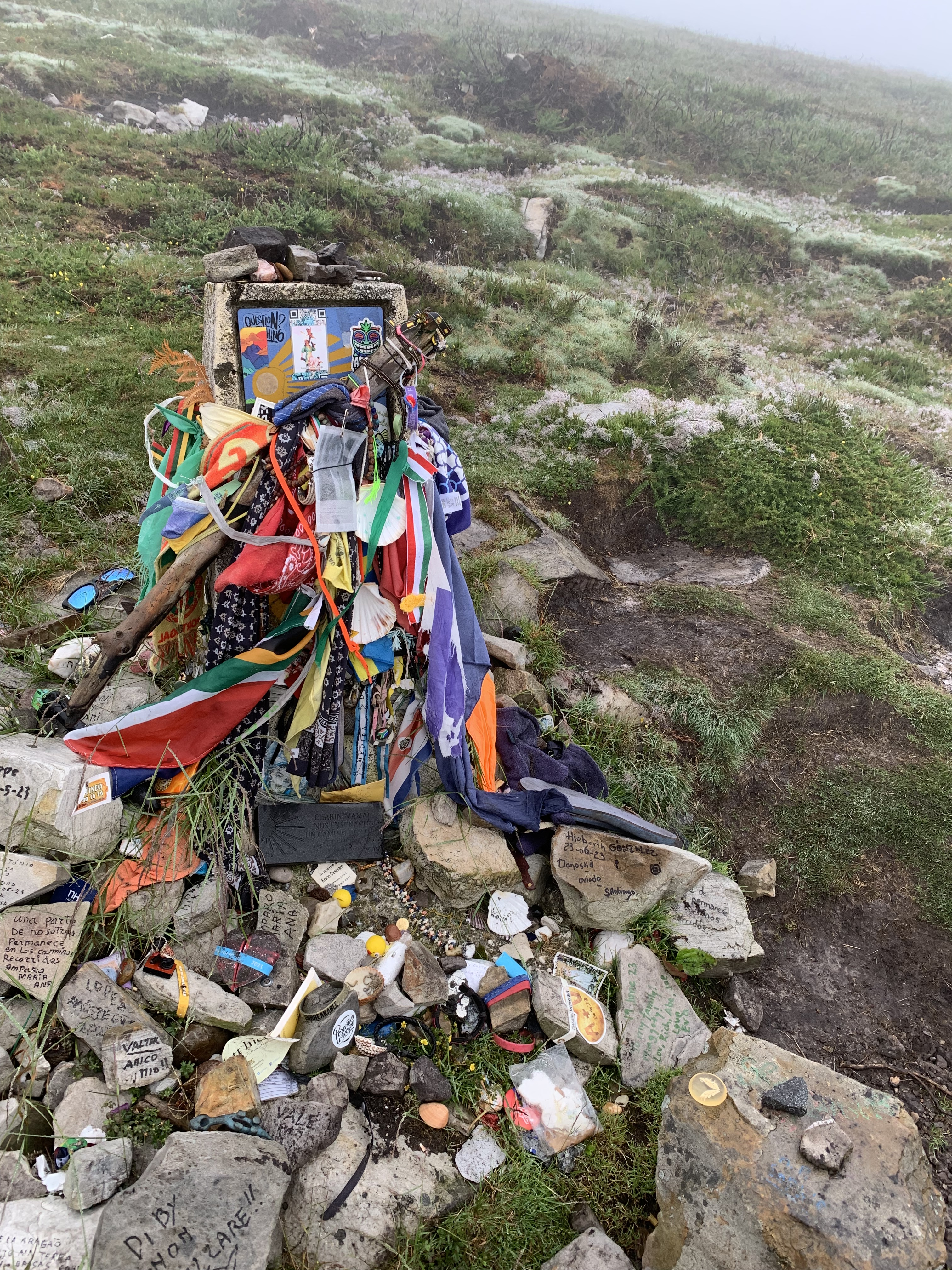
One tradition many pilgrims participate in is bringing a small cross or stone to Spain, symbolically leaving them at one of the many shrines along The Way in remembrance of a loved one or a burden they would like to shed.
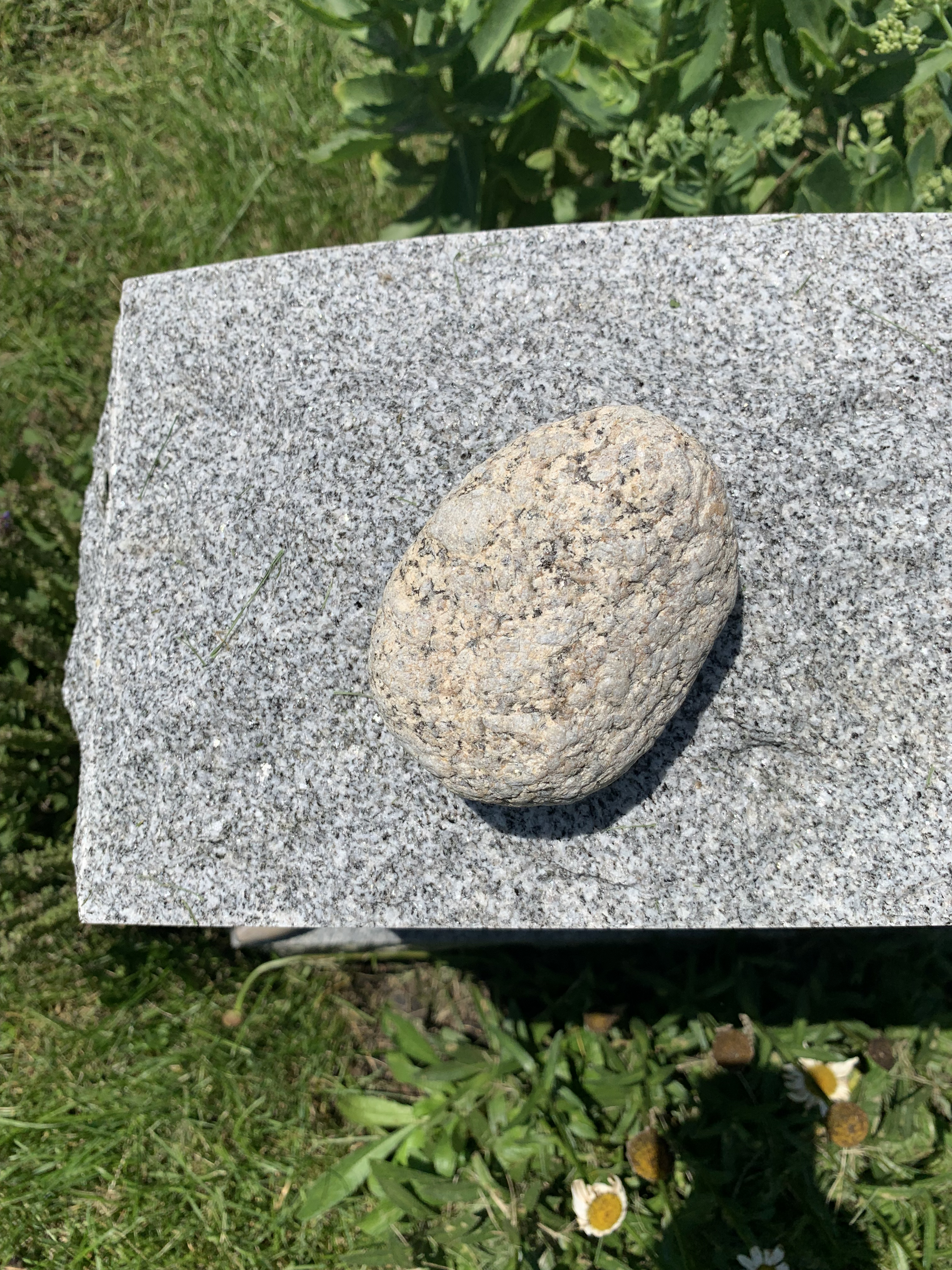
I decided, since my oldest son could no longer walk an earthly path, to bring a stone back to him; climbing back off the beach, I spied one, lovely in shape and heft, and carryied it with me to the end. When I got home, it was a beautiful complement to the granite of his gravestone.
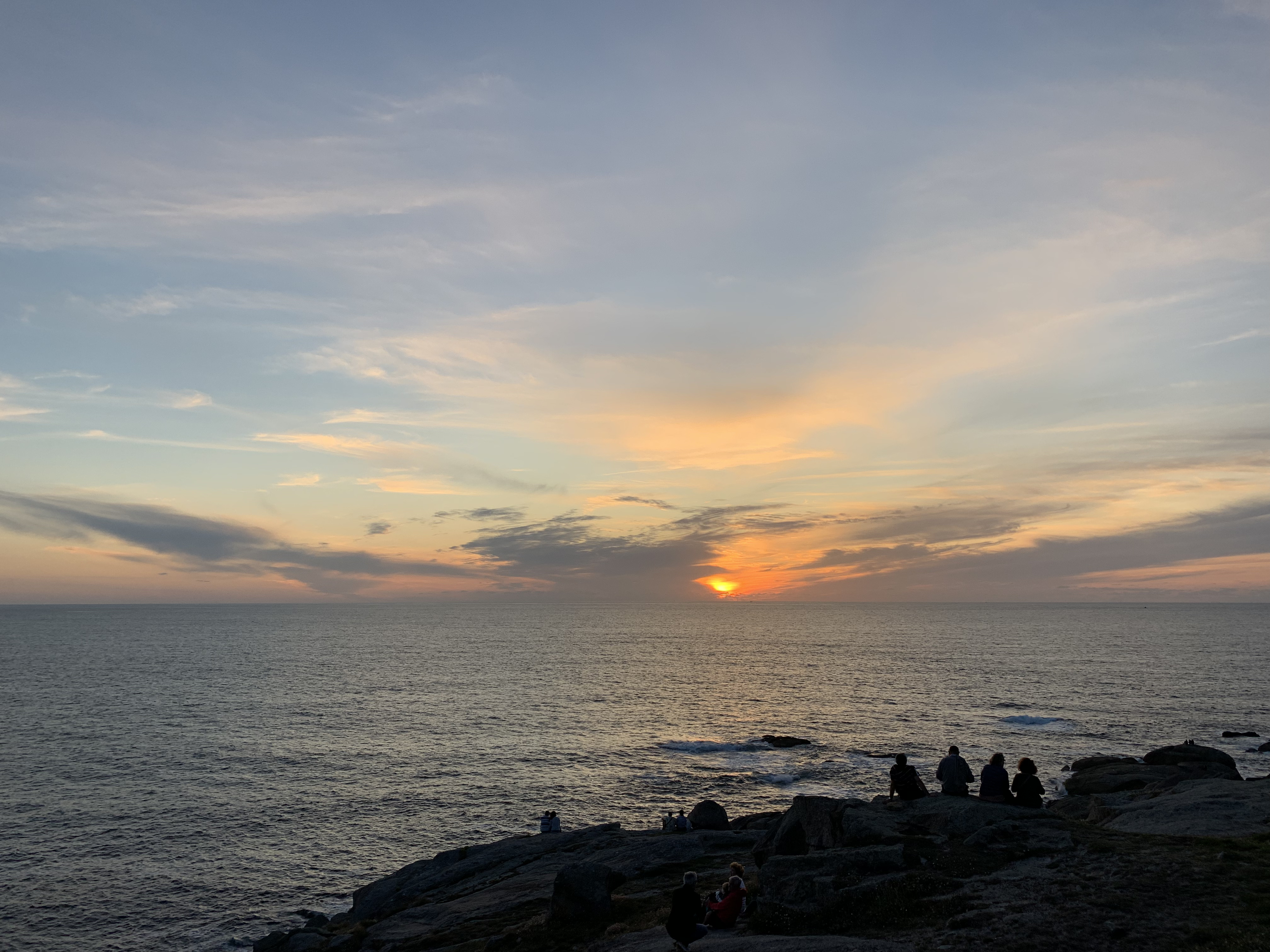
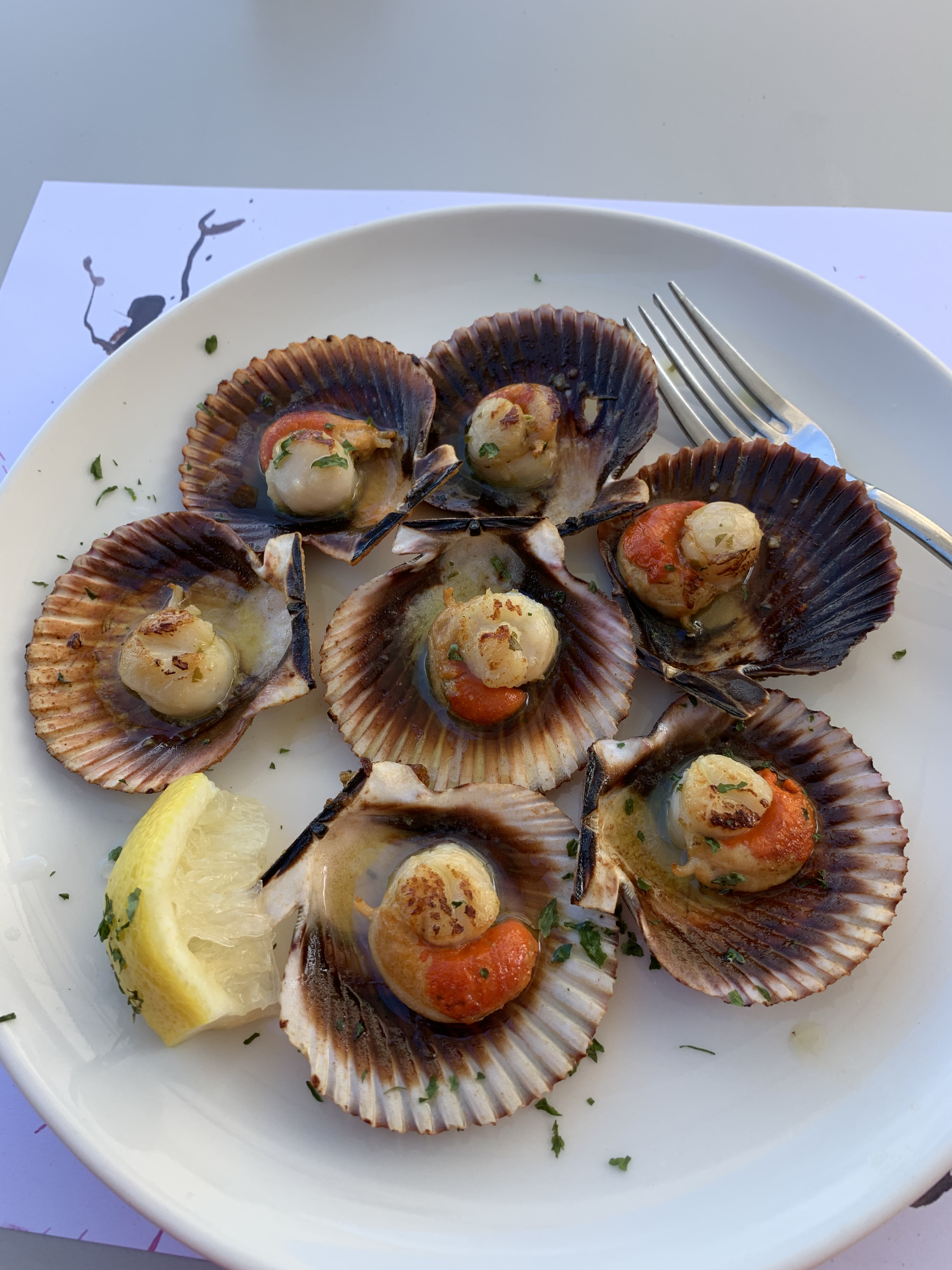
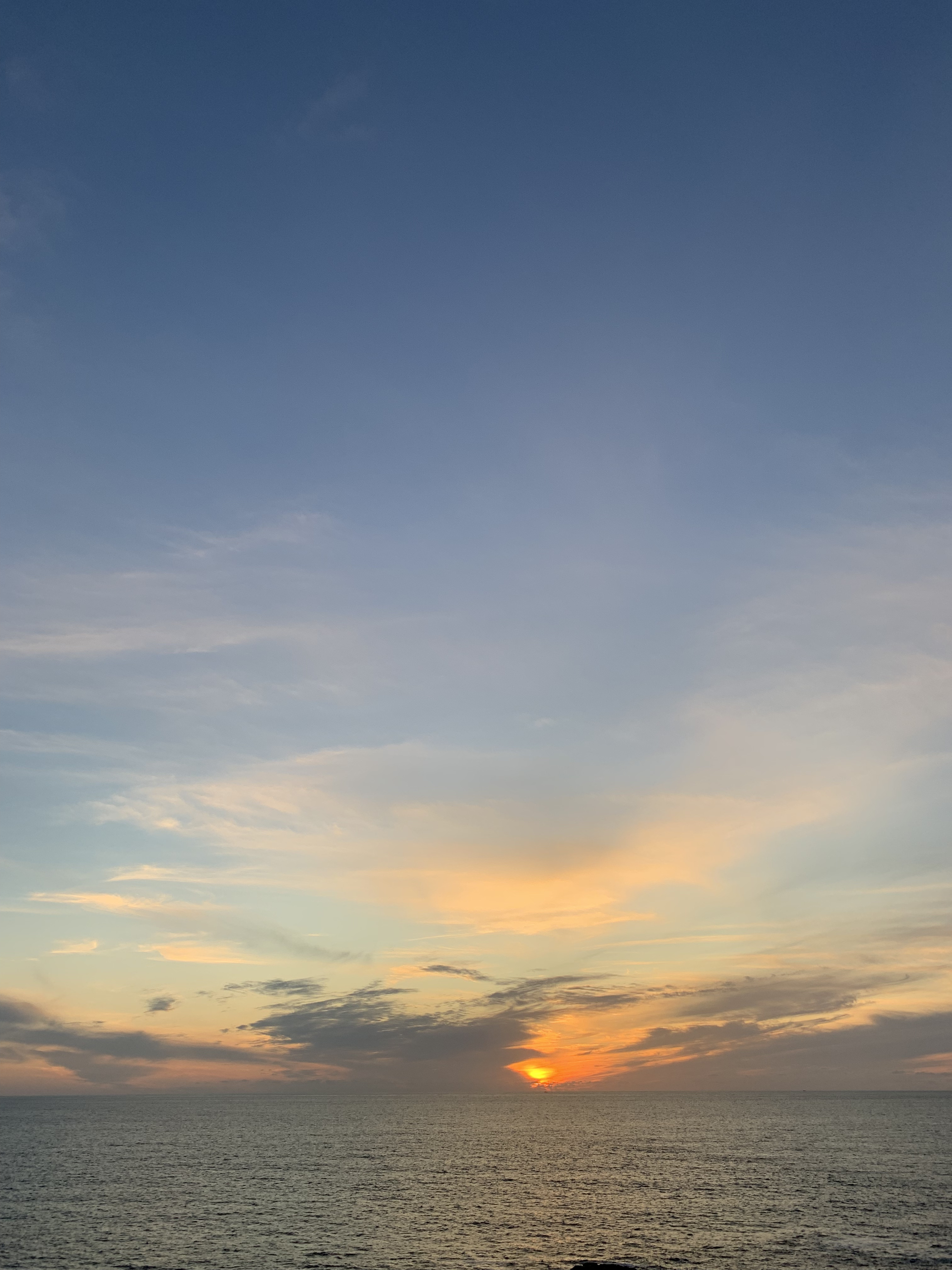
Muxia held other miracles. Sunsets, scallops. A strange monument, harkening back to the Celts. I milked Muxia of everything I could; my Camino was near to its end.
Home now, there are things I miss too numerous to count. Most of all, I miss the daily adventure, the not-knowing of where you will end up, the miracles around every turn. But we cannot live like that forever. Not here, on this plain, at least.
Though I brought with me no rock, I did manage to leave some other things behind: one traitorous sock, then another, as they rent and tore from the daily exertion. Grief and heaviness, past pains. Fears and insecurities – gone as I navigated Europe – busses, trains, post offices, menus, and maps – alone, armed with only a language and a half, my own skin now enough.
Something did happen. The person who started the Camino is no longer the same person who finished it.
It’s time to wait again, for another Camino, perhaps, or something else I know not what.
Is his perfect timing about to find us? We will never know, until it does.




 walkwithme413