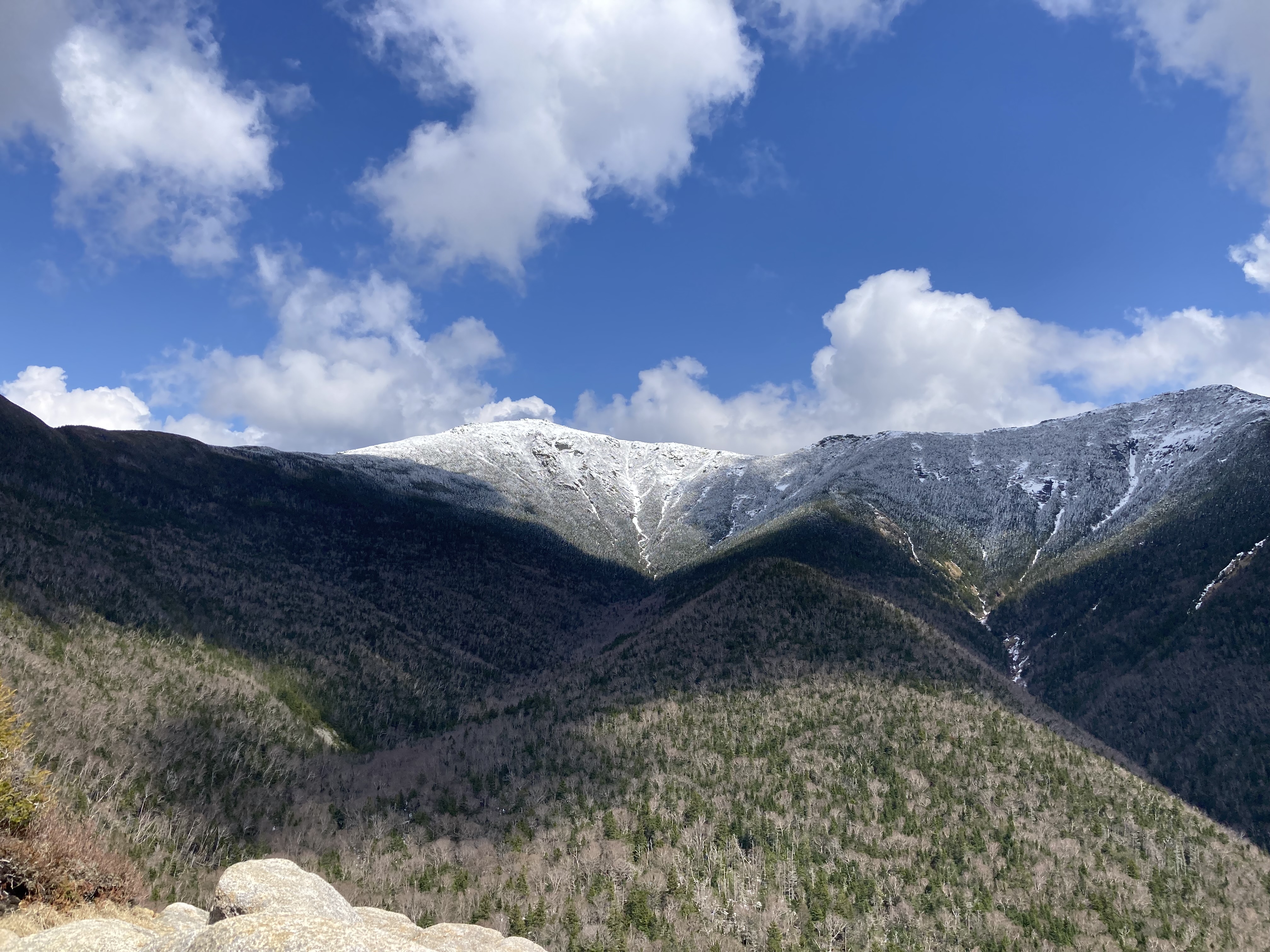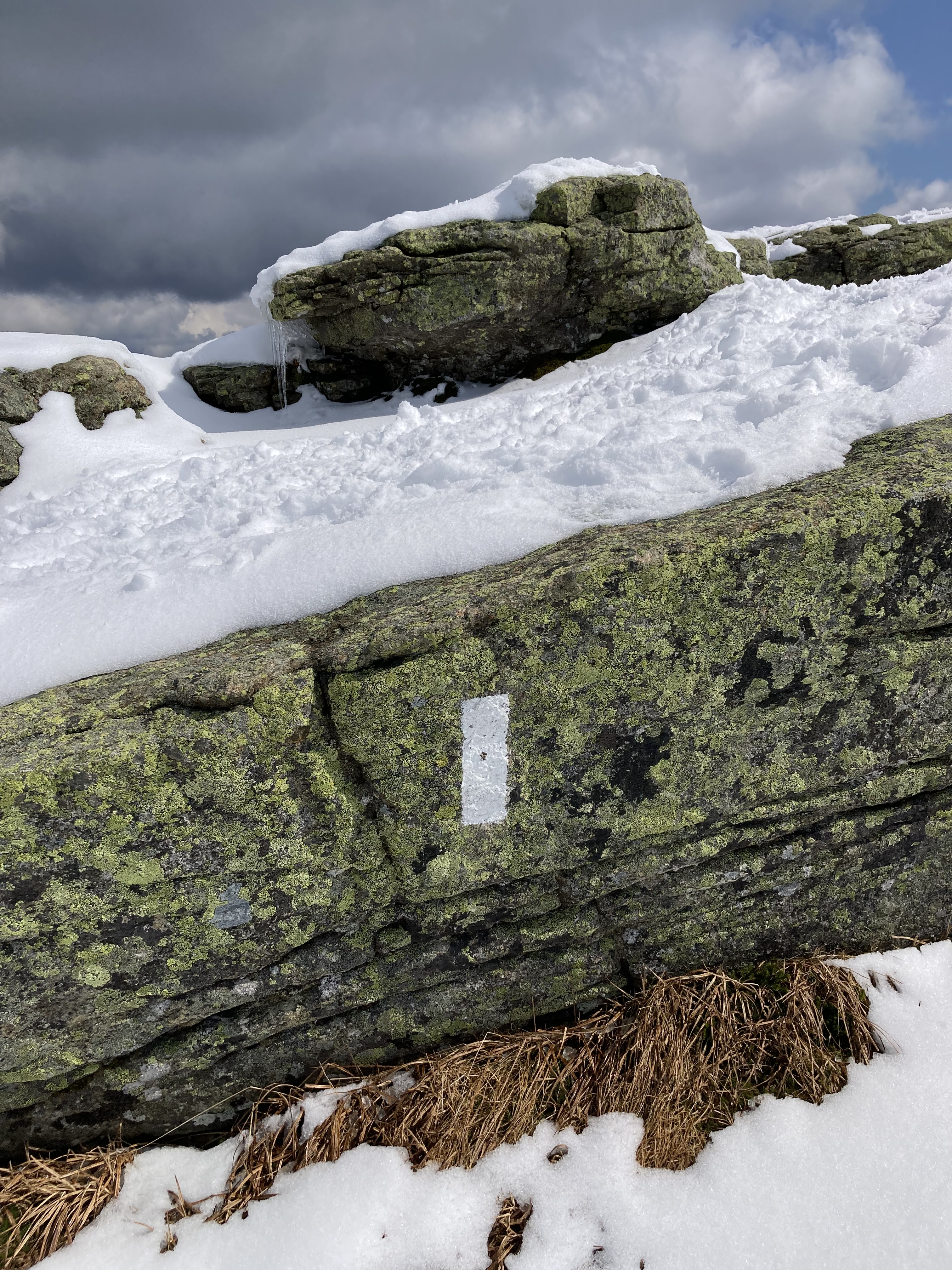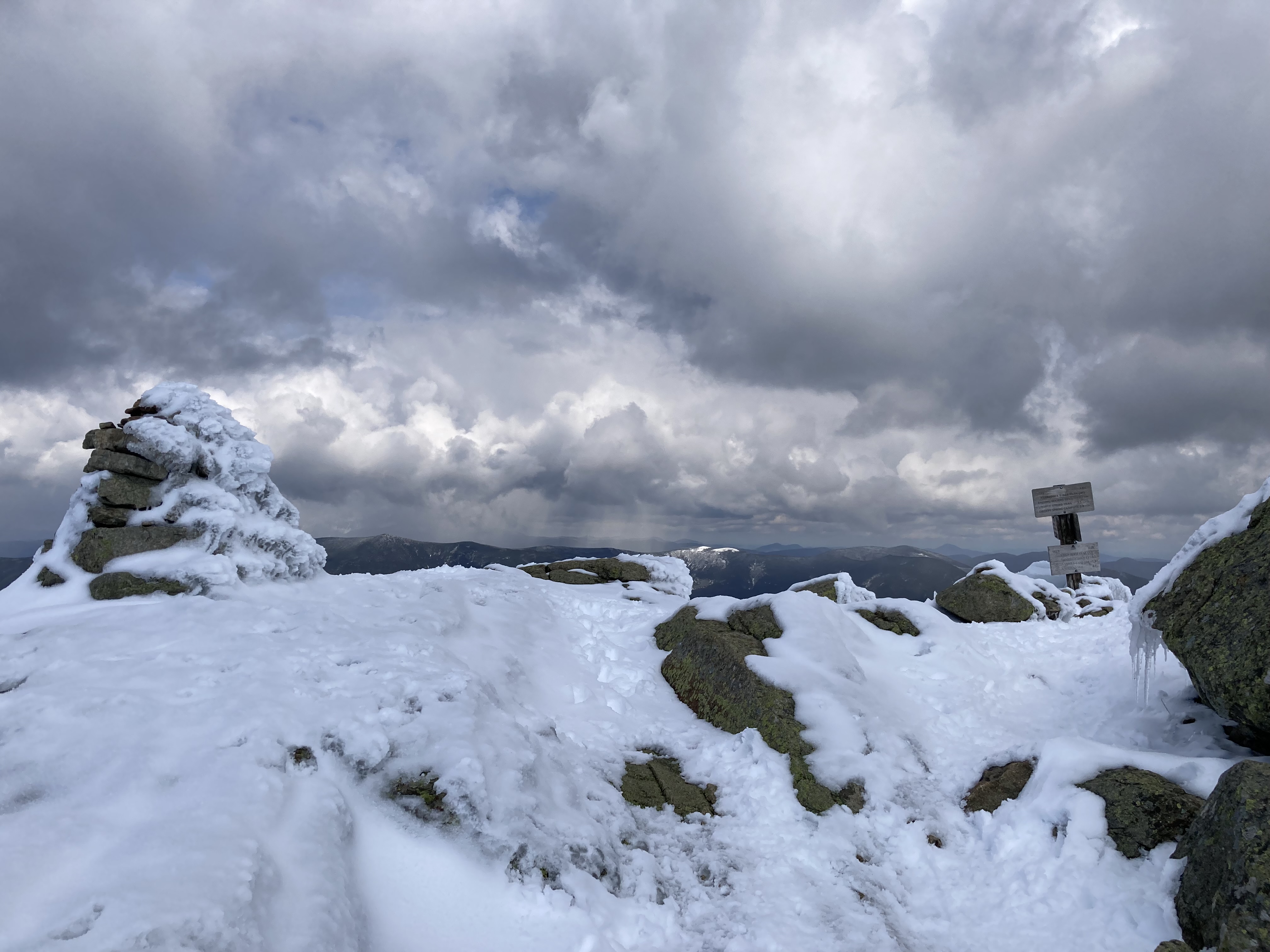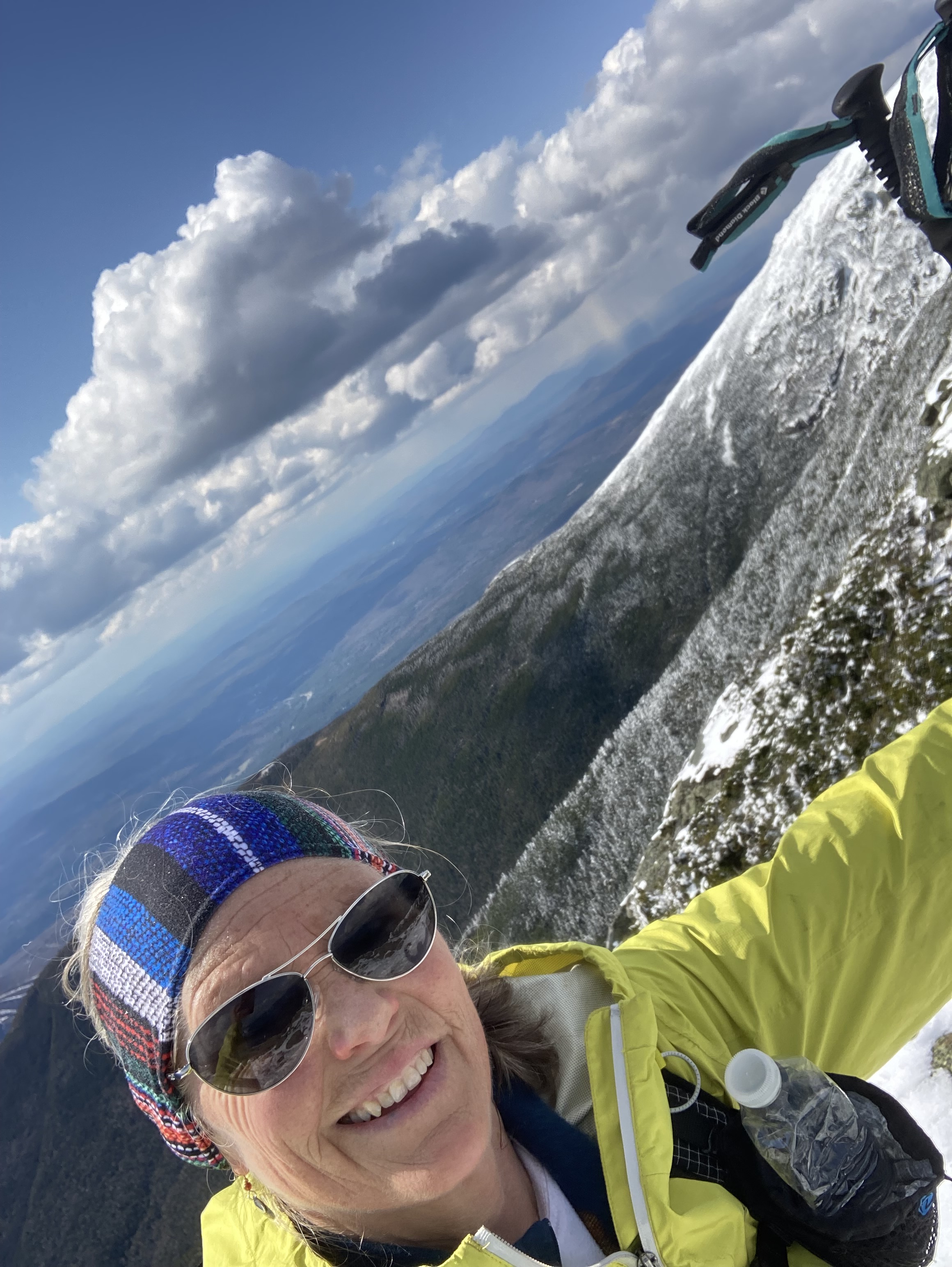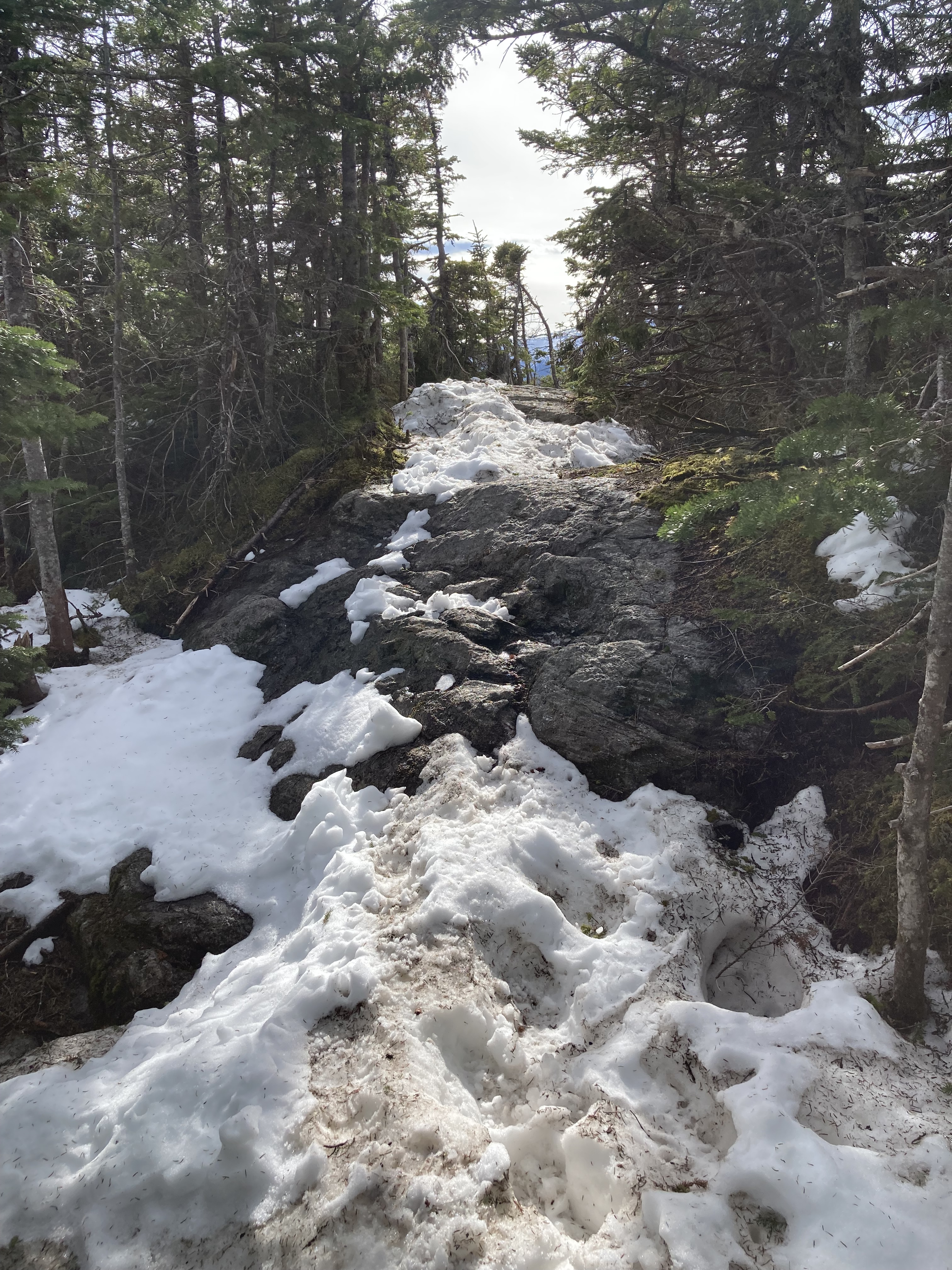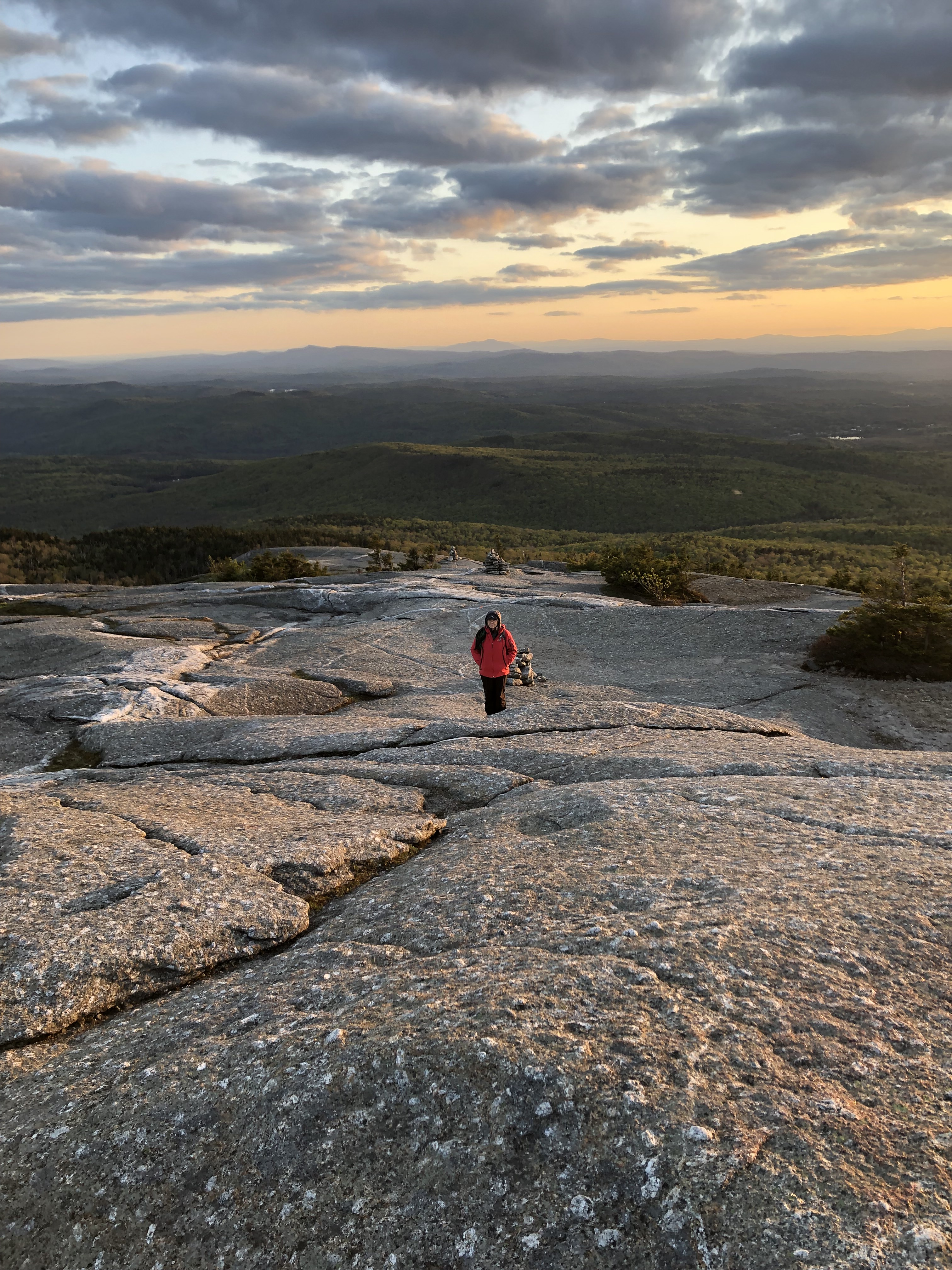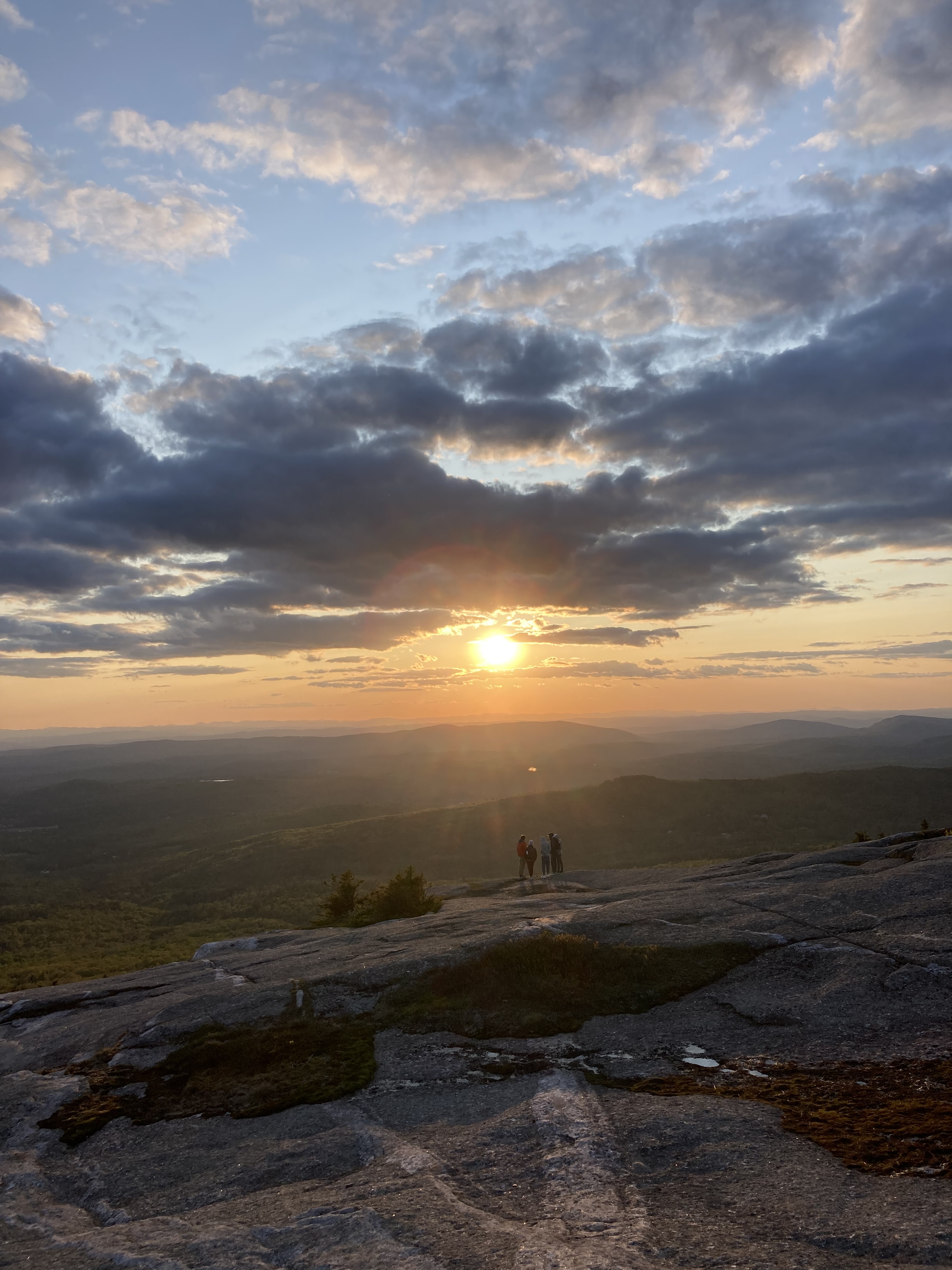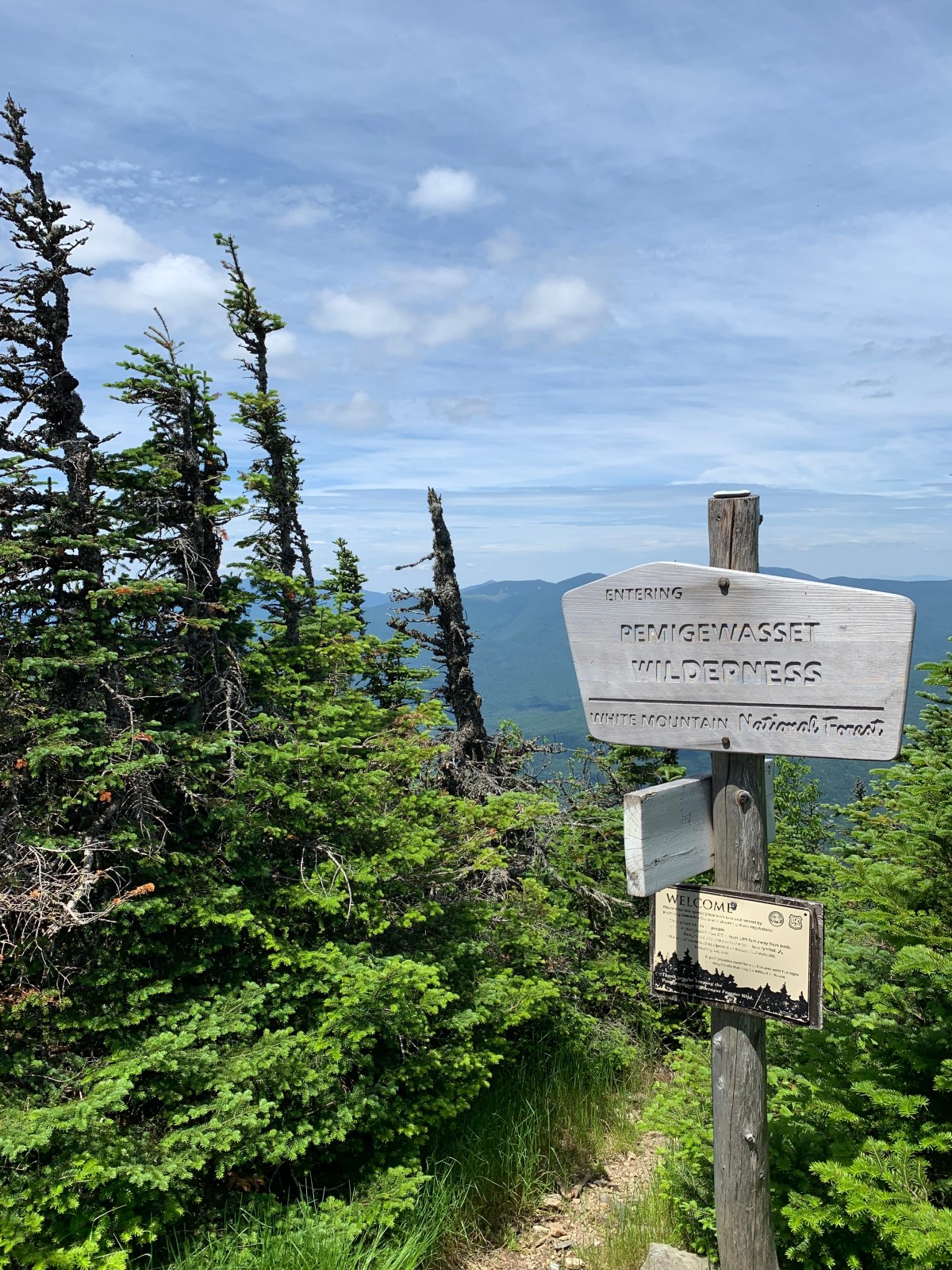
A White Mountain Direttissima: Part One

The Route

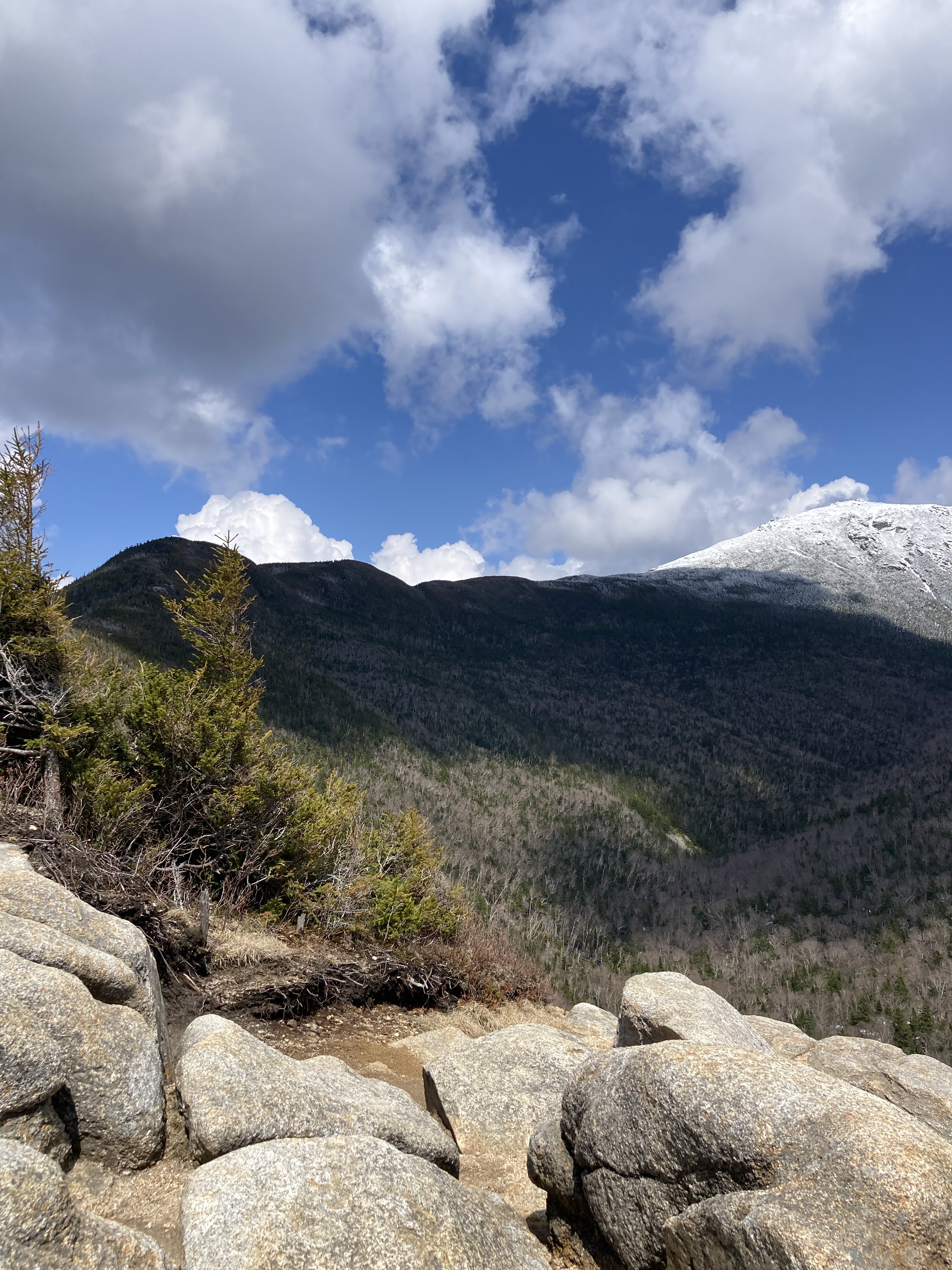
The White Mountain Direttissima is an ambitious route that seeks to connect the 48 New Hampshire 4,000′ peaks in one continuous thru-hike. Although the exact number of hikers who have completed this route is unknown, it is estimated to be few, particularly for women.
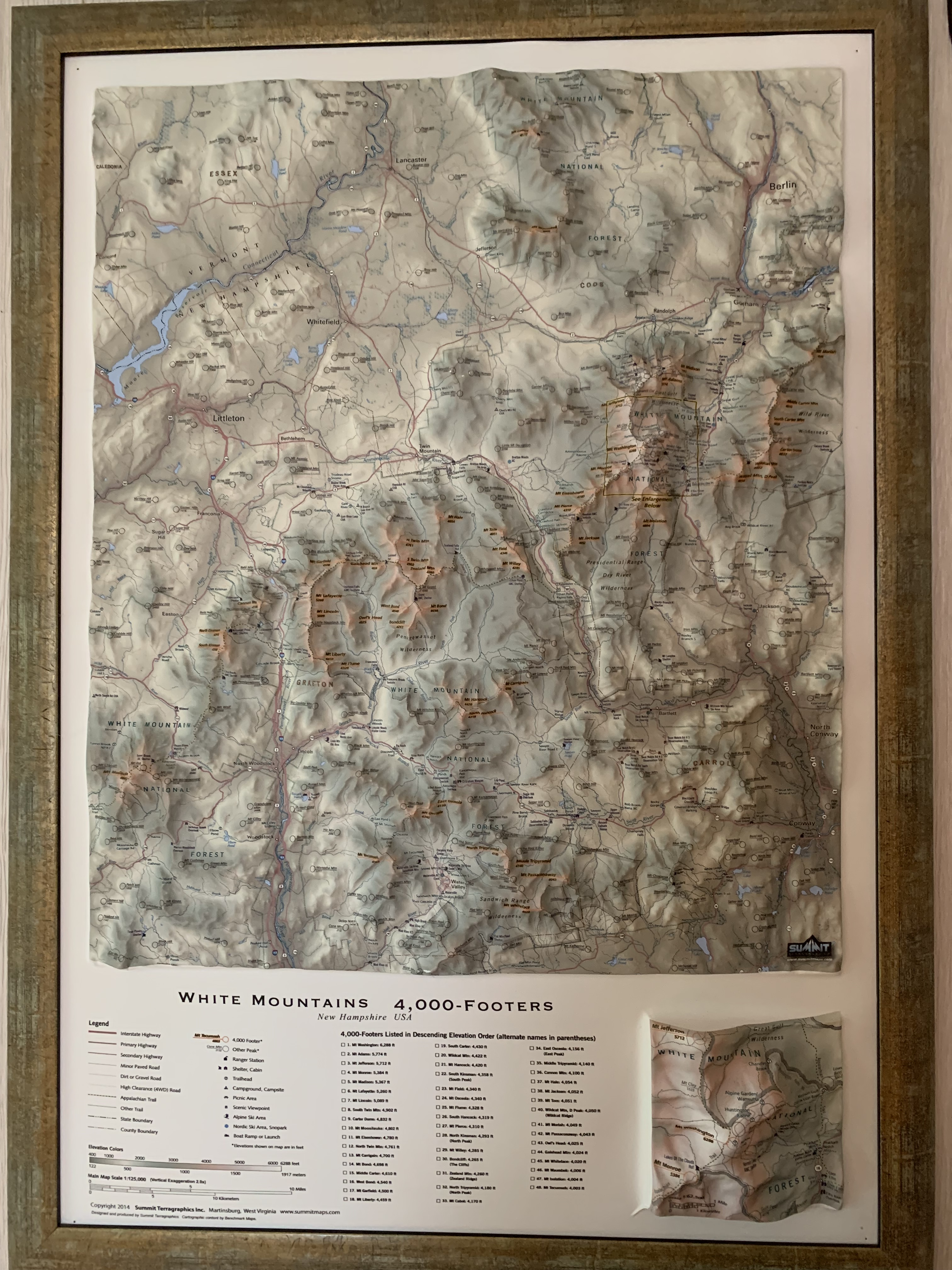
I had been toying with the idea of attempting a Direttissima for a while, and decided that this summer would be a good time to stick close to home and replace some of the older peaks I have listed on my Grid with some more recent ones for June and July.

The length of the Direttissima varies depending on how one decides to connect trailheads, ridges, and peaks; bushwhacks might shave off mileage but add difficulty, and other shortcuts – like walking under power lines, for example – could be overgrown and tangled mid-summer.

I decide to stick to established trails and roads using a route shared with me by Philip Carcia, who has completed the Direttissima five times. Philip is an all-around kind and generous human who continues to set records and establish precedents in the Whites, inspiring many to test their own limits.
As an added challenge, I decide to do the route north-to-south, finishing at the Mt. Moosilauke trailhead, then walk an additional 30 miles or so, on trail and back roads, to my front door. Over the course of the next two weeks, I would gain 80,000 feet of elevation over 285 miles. Let the fun begin.

The Meaning of Dire

On Thursday, June 27, the youngest and I drive north to Milan, New Hampshire, where he drops me off at the York Pond Trail parking lot. It’s a few minutes before noon, already steamy, but optimism carries me away from the air-conditioned comfort of his truck and up the familiar path toward my first 4,000 footer, Mt. Cabot.
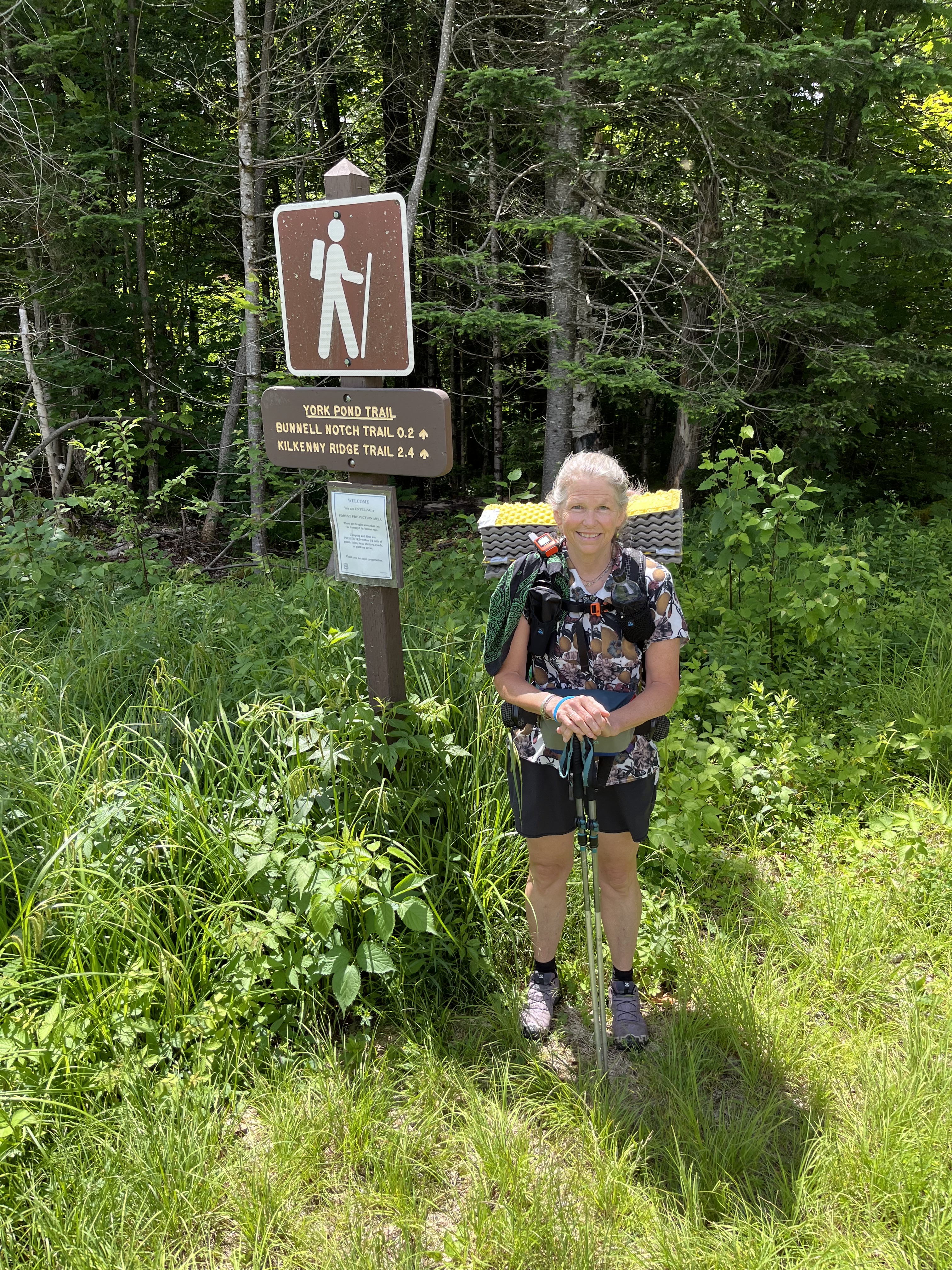
Cabot will be an out-back; that is, at the junction of Bunnell Notch and Kilkenny Ridge Trails, I need to climb 1.7 miles to the summit of Cabot, then retrace my steps back to the junction. This will be the first of many of these out-backs, and I’m grateful for Philip’s advice to drop my full pack and carry only water and a few essentials to the top.

I had a little too much time on my hands in the days leading up to this endeavor and have crafted a small tag to display on my pack when I must leave it behind. The last thing I want is for someone to think a hiker is in distress when encountering my unaccompanied stuff in the woods. Plus laminators are cool.
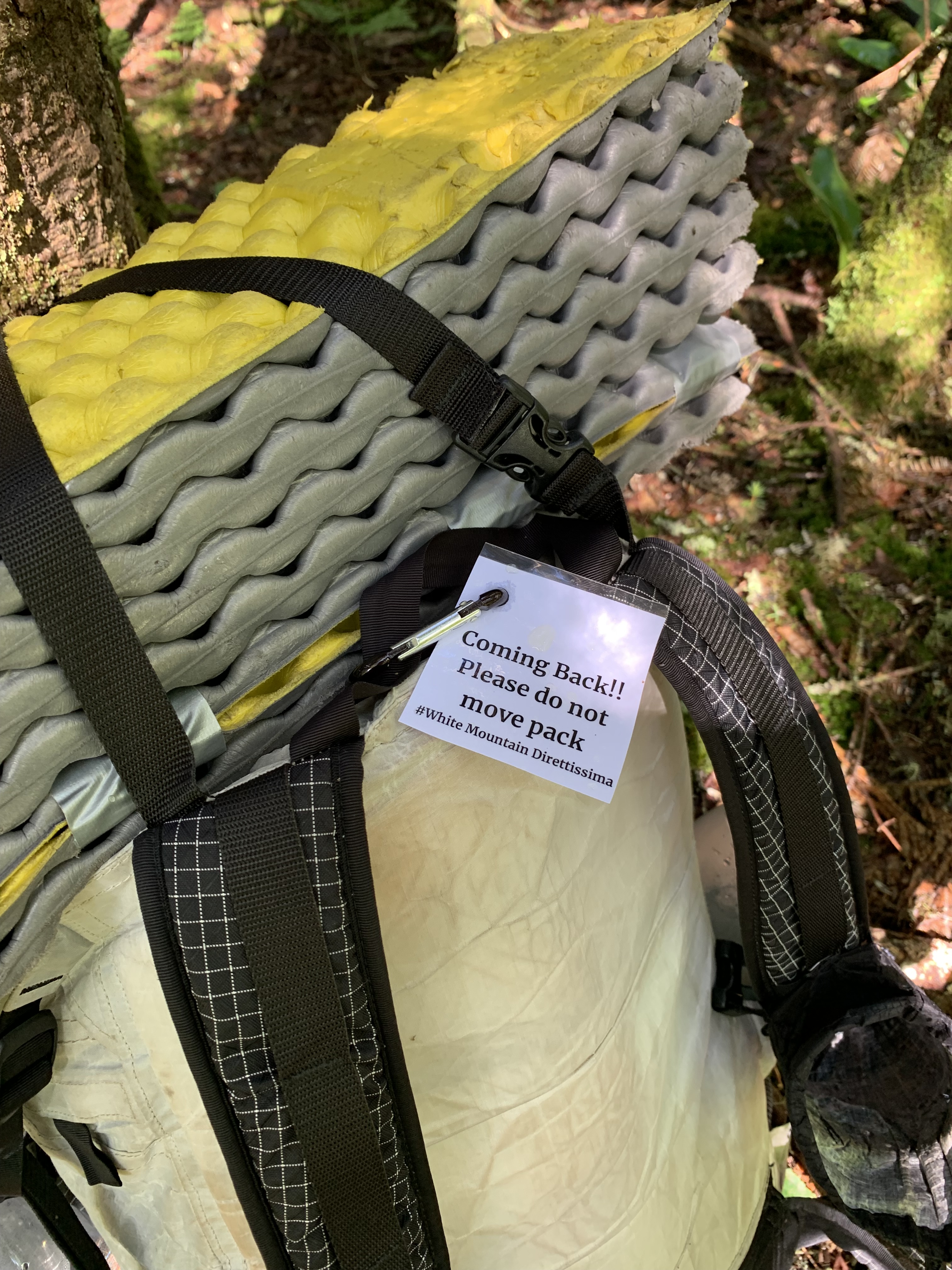
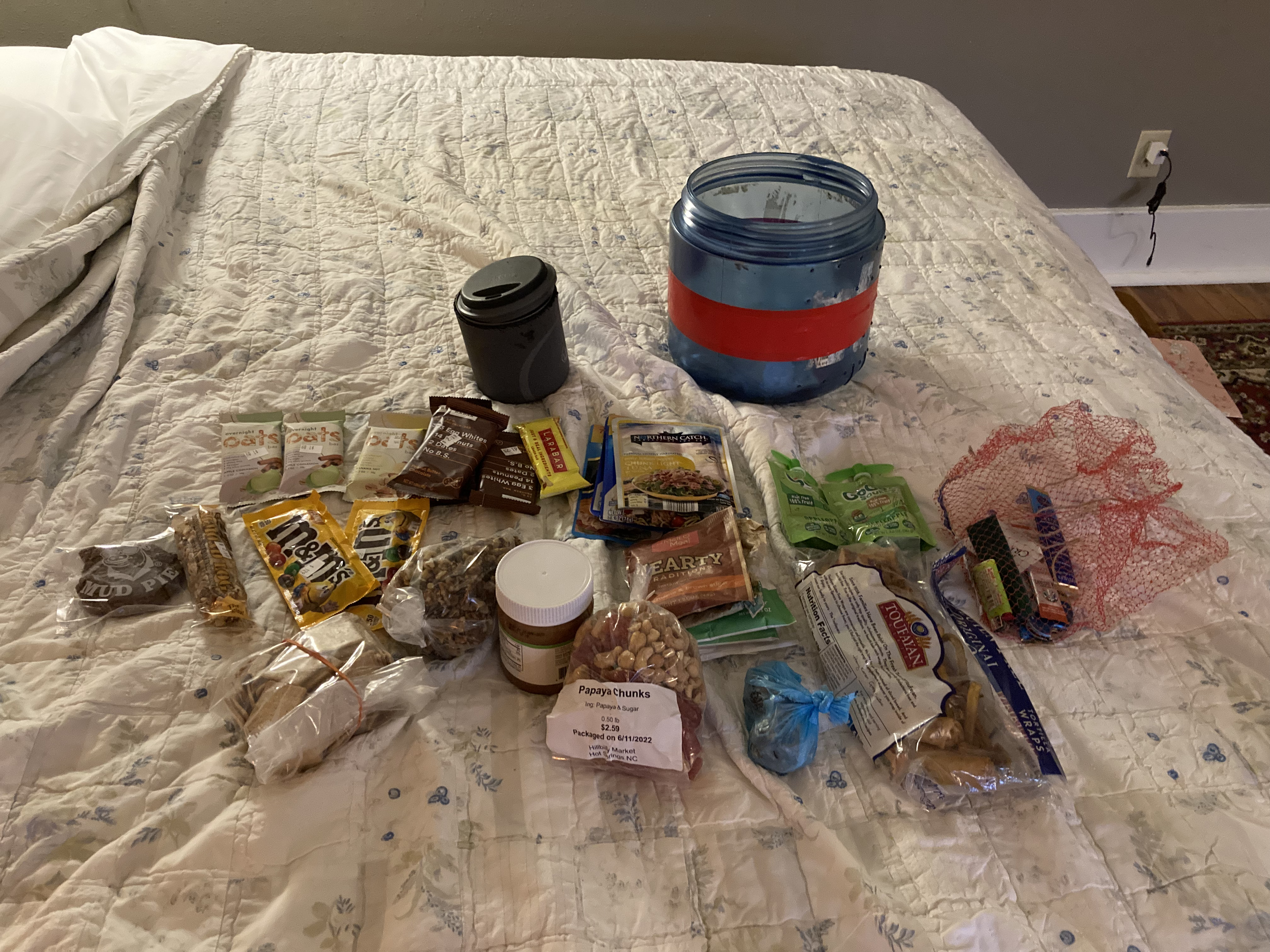
Small tag aside, my pack is ridiculously heavy. Four days of food and two and a half liters of water is a lot, but much of this route is in remote wilderness areas with few options to resupply; additionally, water sources are not always conveniently located. They say you carry your fears.

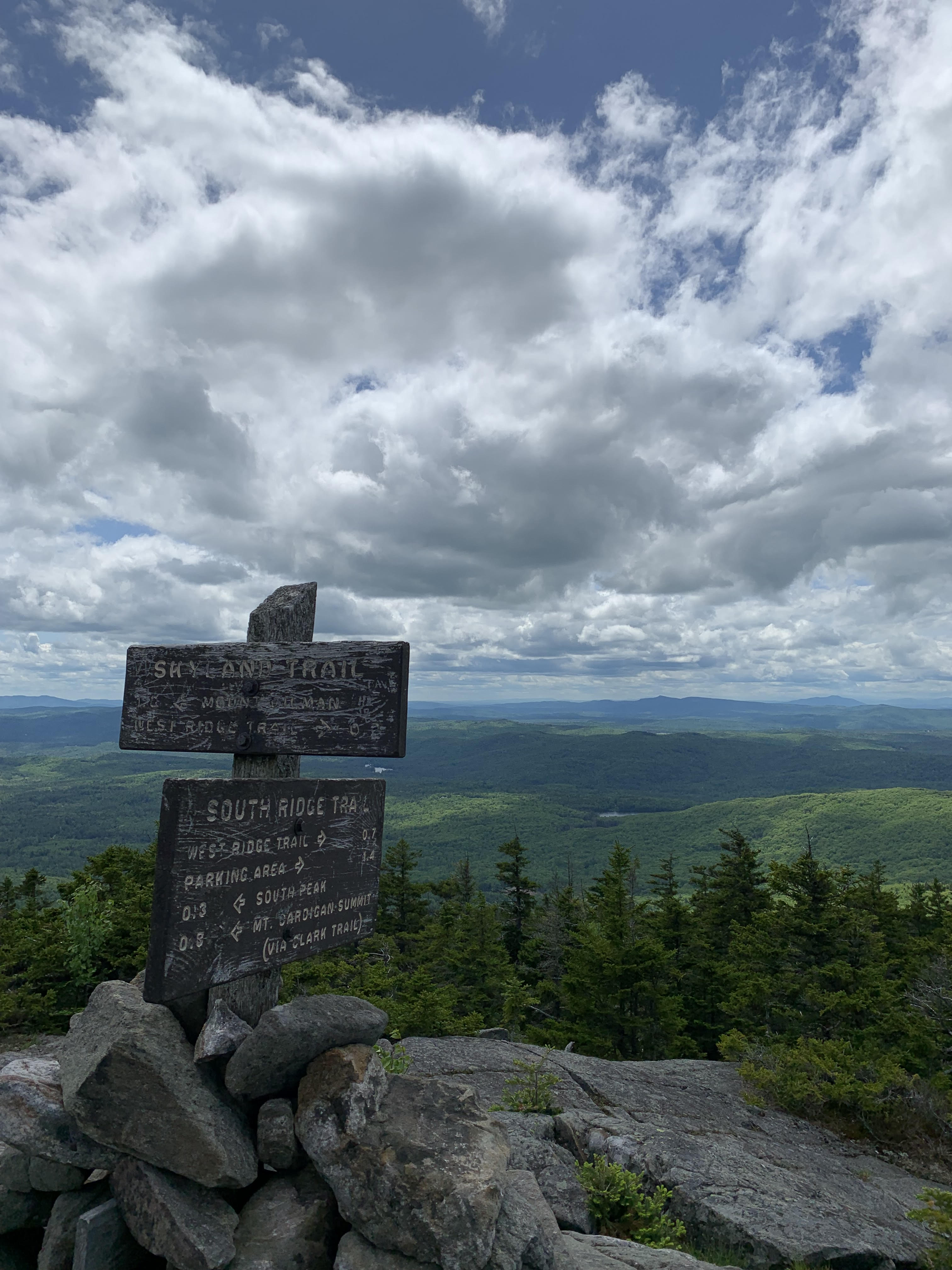
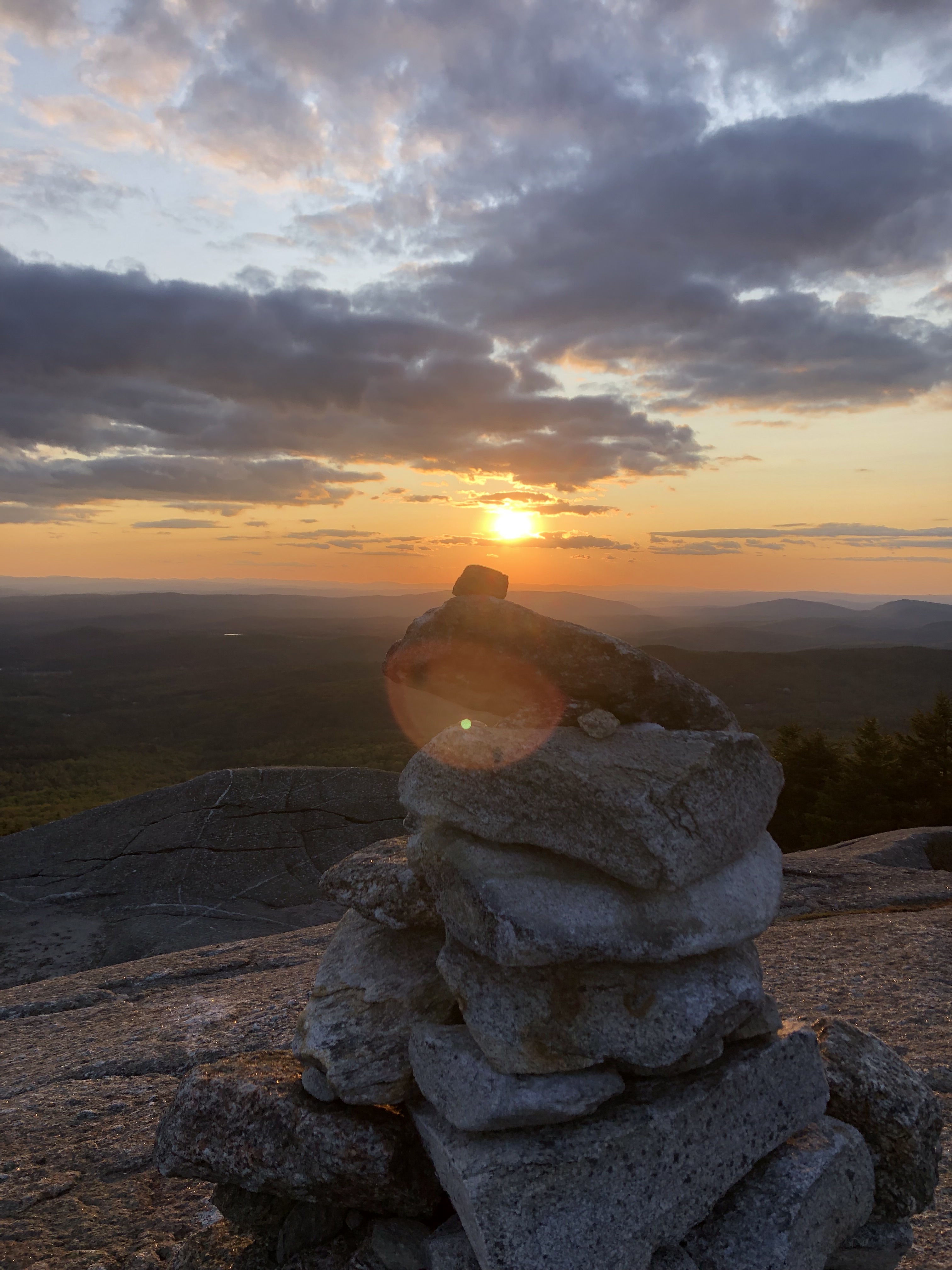
I soon touch toes to the first of many summit cairns, hustle back to the ball and chain, and head out across Kilkenny Ridge.
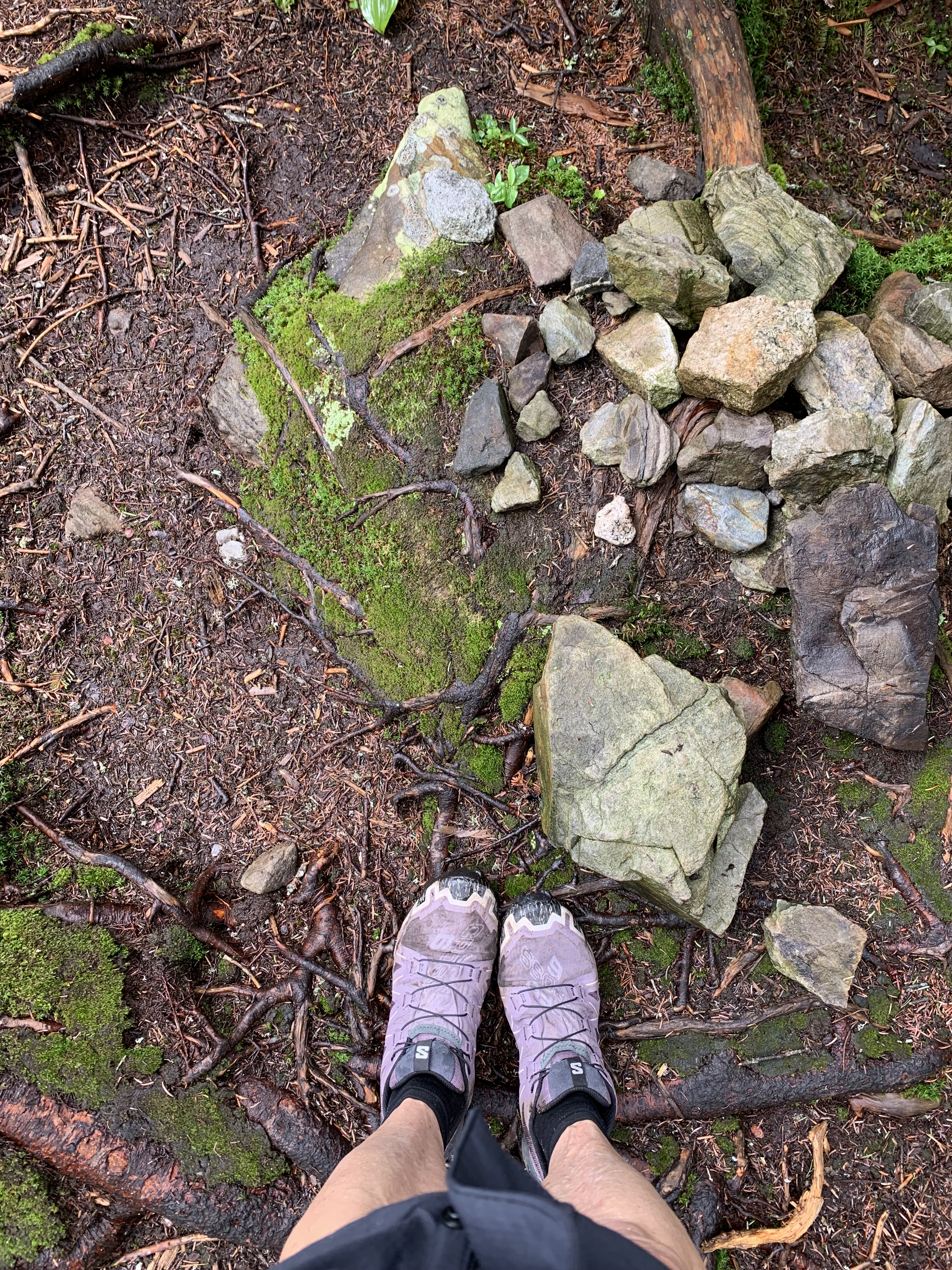
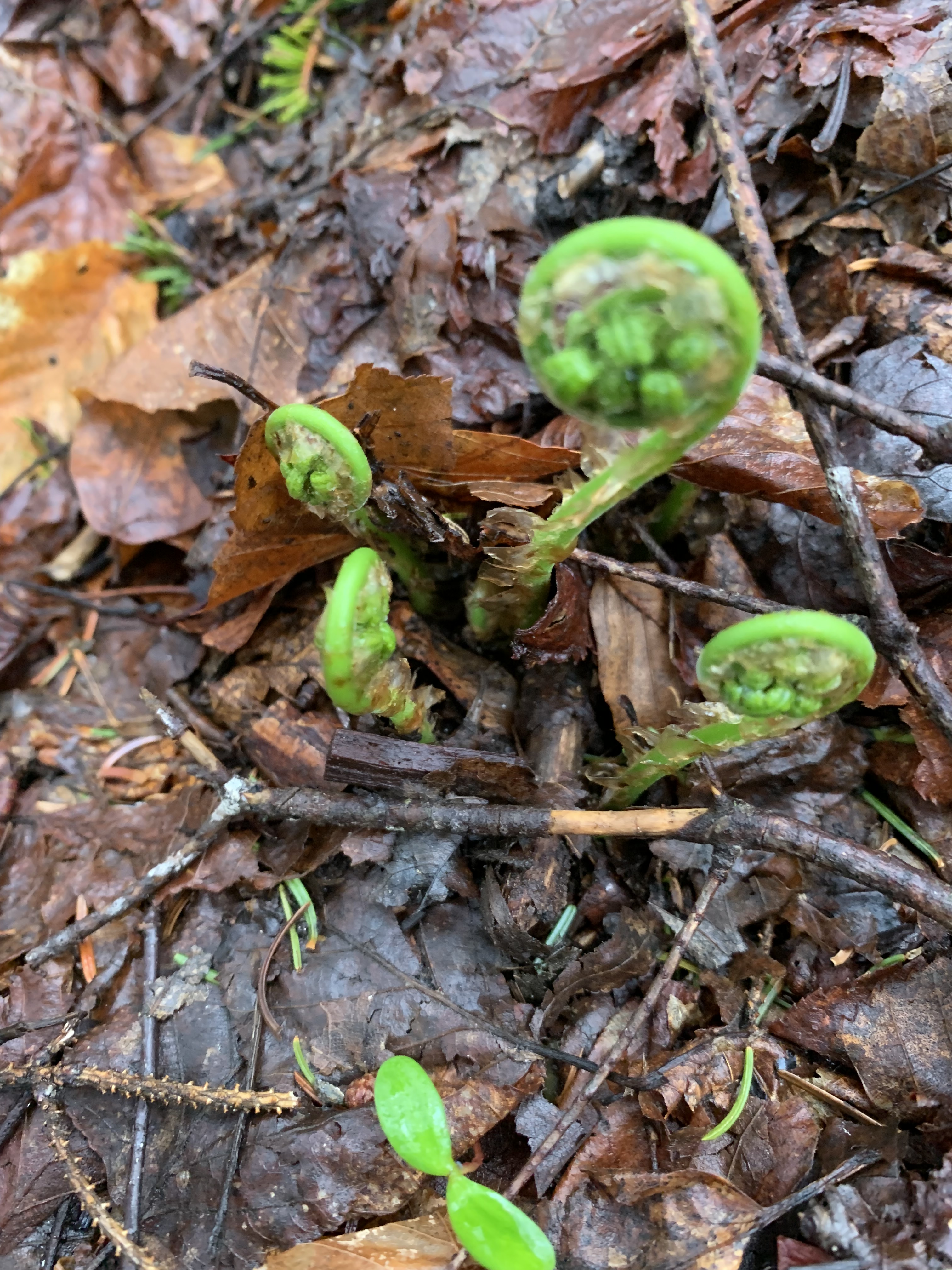
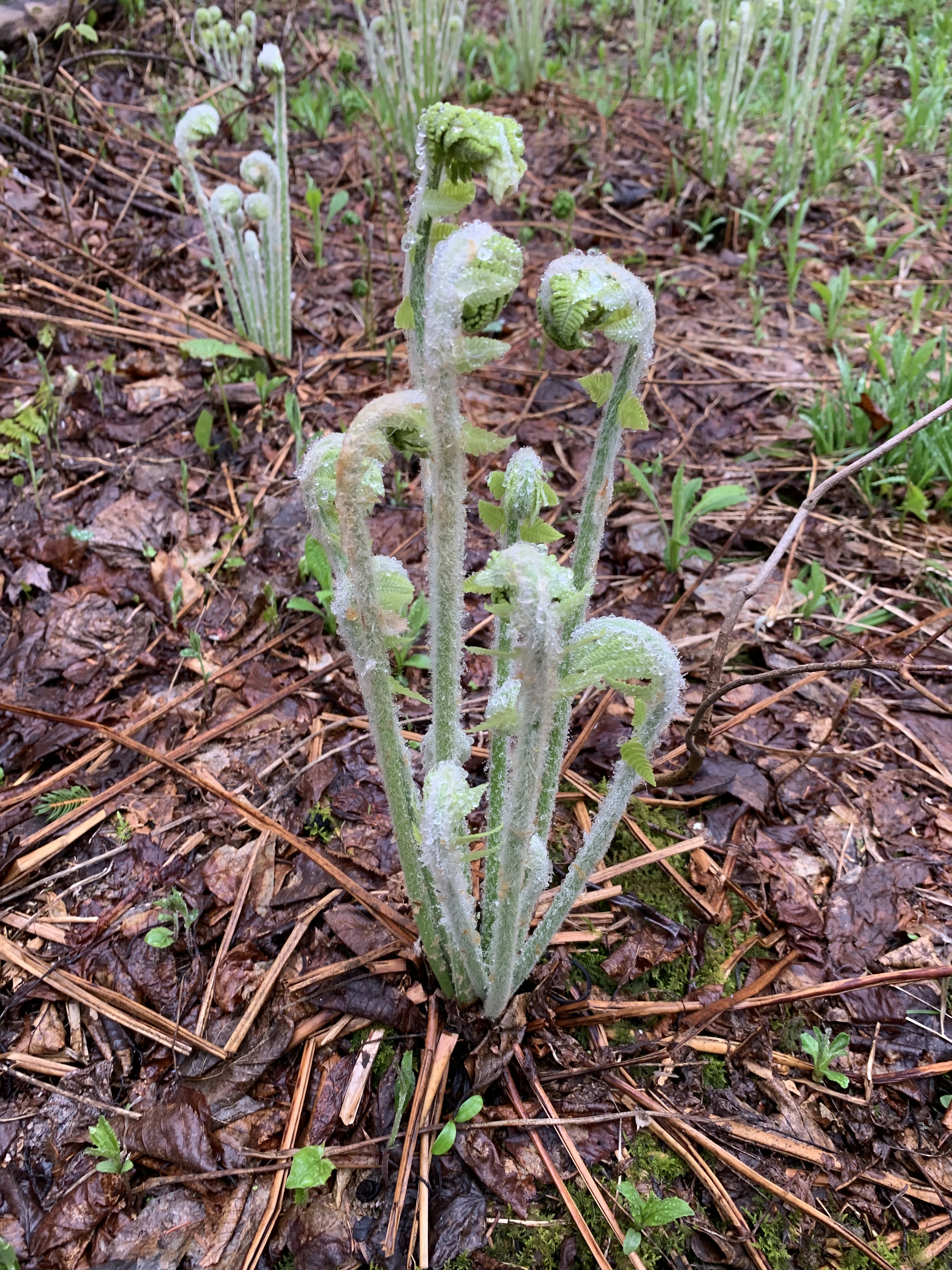
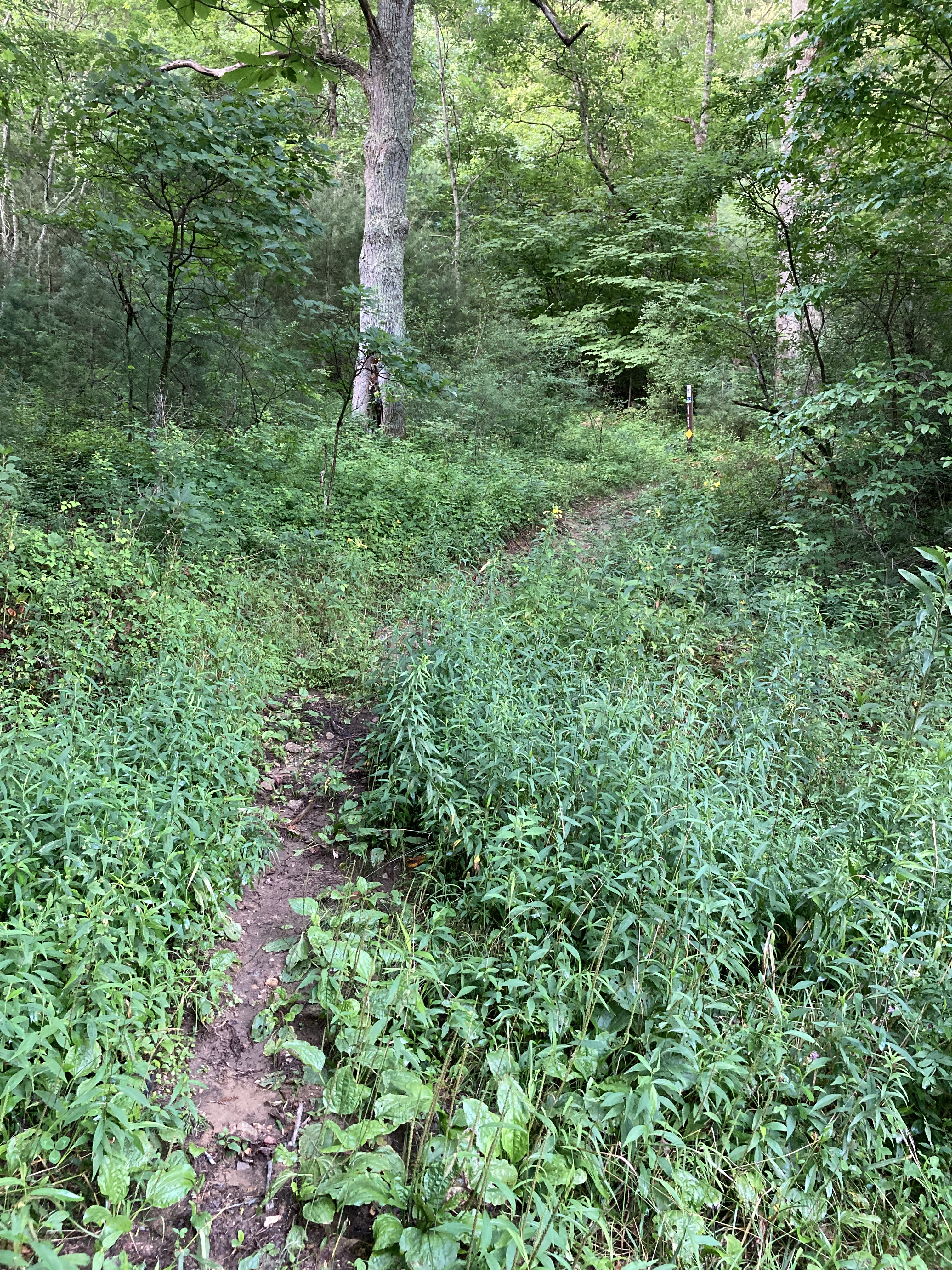
It soon becomes clear that I will not be making the kind of time I am accustomed to making in these mountains. The ridge is rocky, overgrown with Jurassic ferns: brutal but beautiful. It’s only the first day and the itinerary I set for myself must be scrapped. Although the translation of Direttissima is something like “most direct route,” I list the synonyms for dire in my head as I crawl along.

Dreadful. Appalling. Woeful. Grievous.
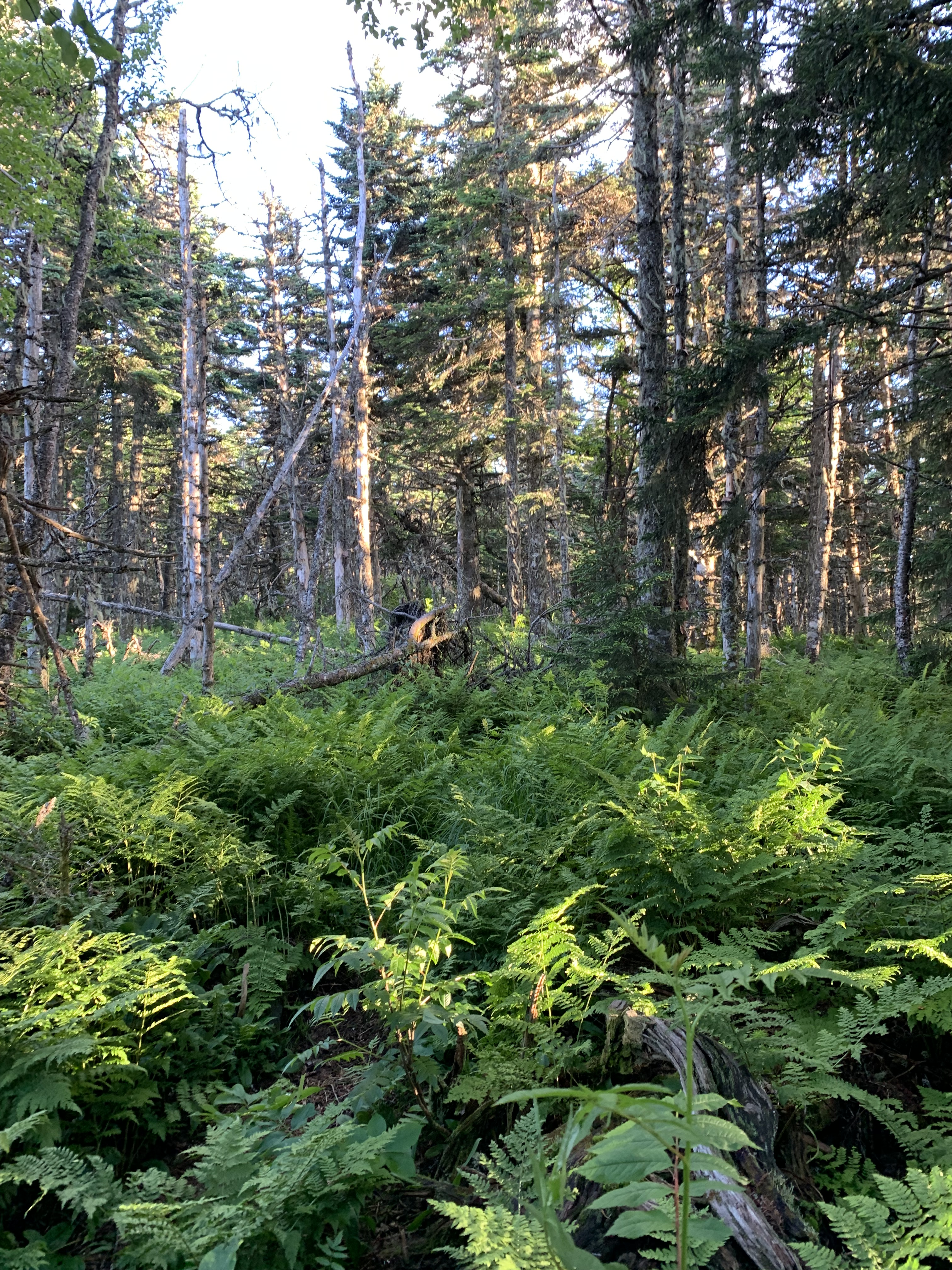
Soon it’s time for me to play the game of how-long-can-I-get-by-without-a-headlamp, discovering when I finally pull it out that the batteries are dead.

Idiot!

Didn’t check before I left, but luckily I have spares. It’s close to 9 PM when I finally find a spot to set up camp, a bare patch pitched at a crazy angle and exposed to the full brunt of the wind. But I’m too tired, too sore to complain.

Day 1 – York Pond Trailhead to .1 north of Waumbek (noonish start): 15.5 miles

Peak: Cabot

Not Quitting

I awake to frost on my tent. Wrapping myself in every stitch of clothing I have with me, I walk the .1 to Mt. Waumbek. My brain must not have been working the night before. I had the FarOut app, which would have told me the summit was just ahead, and I knew there was a larger, flatter, more protected space to camp there. Sigh.
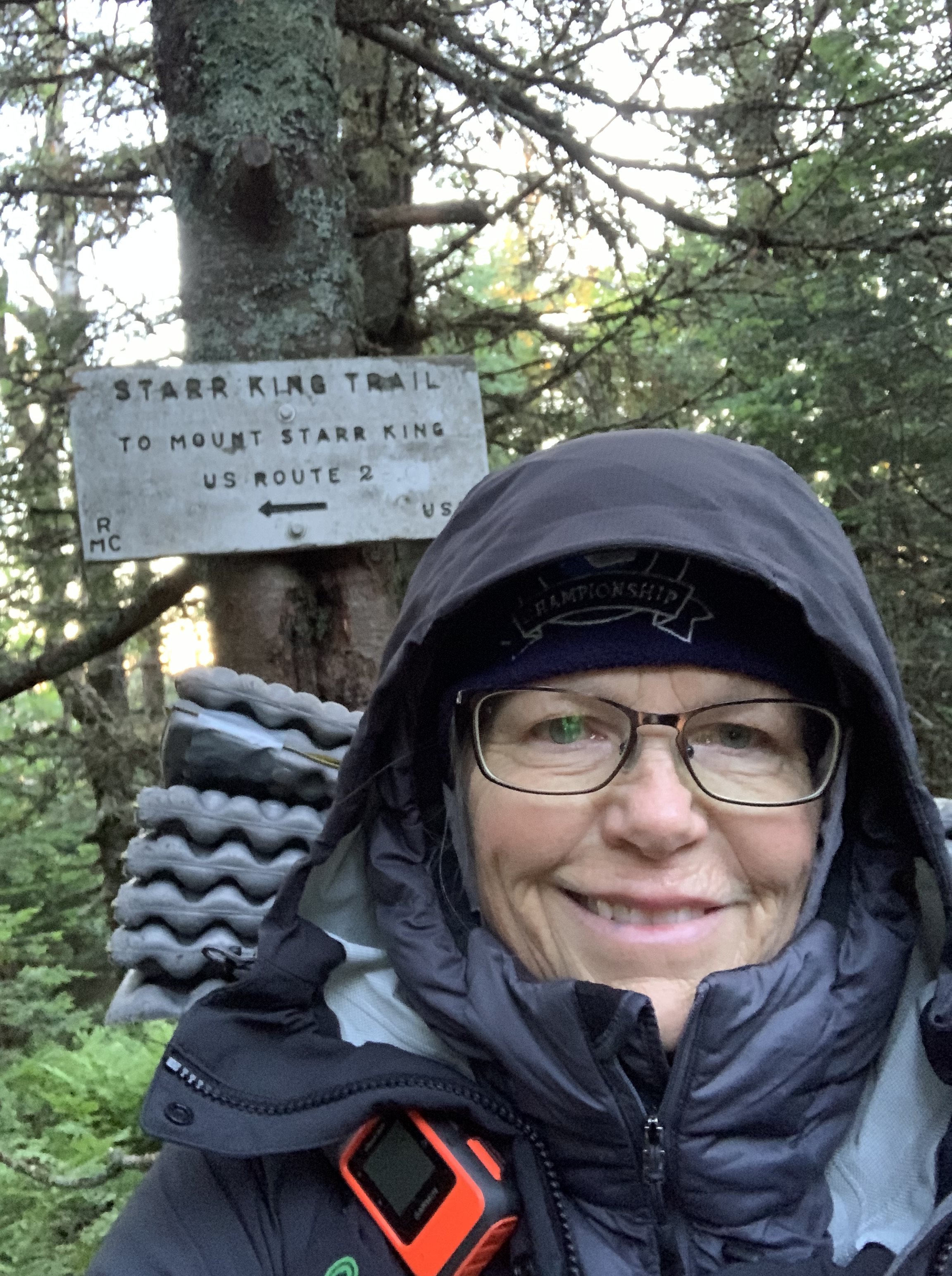
But down below in Jefferson is a country store with a grill and hot coffee. I float along, dreaming of bacon. Unfortunately, the grill is closed for some reason, so I grab a muffin and the coffee, charge my devices, and head out on the longest road walk of the trip.
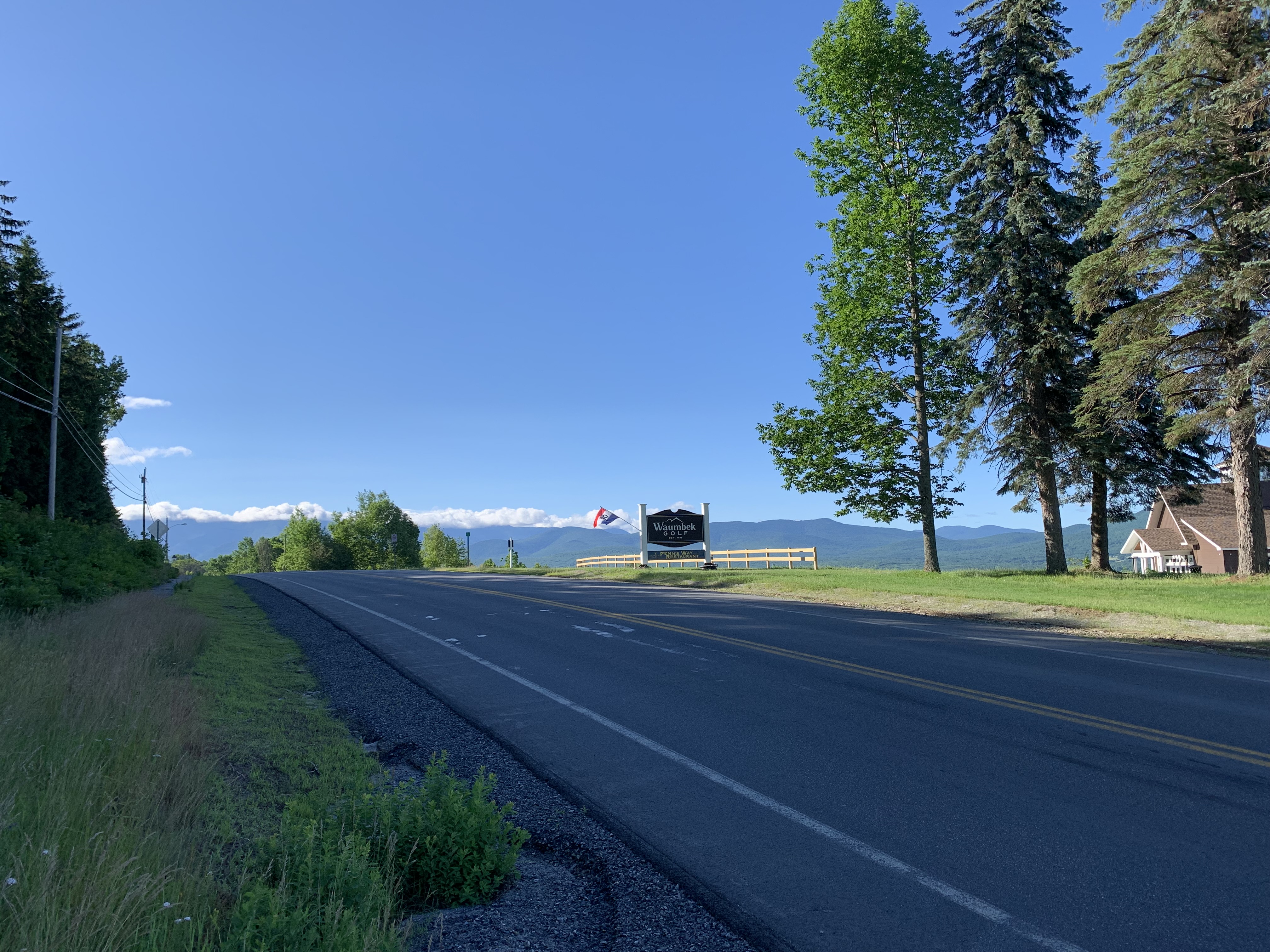
It is twelve miles to the Caps Ridge trailhead, and I shed layers as the sun rises and the pavement warms. Caps Ridge, leading up to the summit of Mt. Jefferson, is one of my favorite trails in the Whites. Both hands are feet are needed to scramble the 2.5 miles, so when I arrive at the parking lot sweating sunscreen, a nap seems like a good idea. I burrito myself in my tent to keep away the bugs.

Caps with a full pack is tricky, but up and over I go without incident and head across to Adams with the goal of eating dinner at Madison Spring Hut. After choking down a full package of instant mashed potatoes (why didn’t I split it up into more manageable portions?!), the last peak of the day is Madison, where the torture begins in earnest.
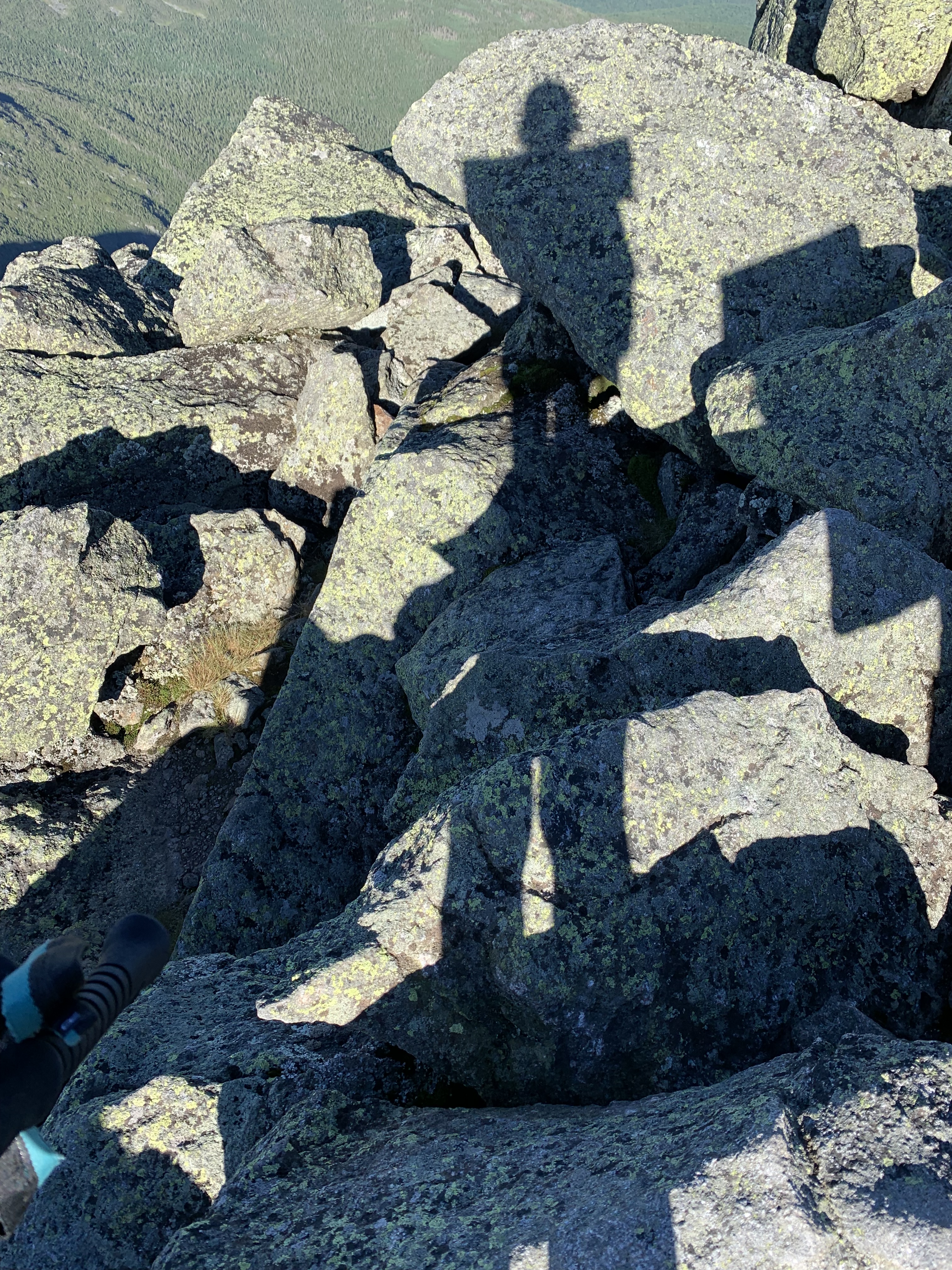
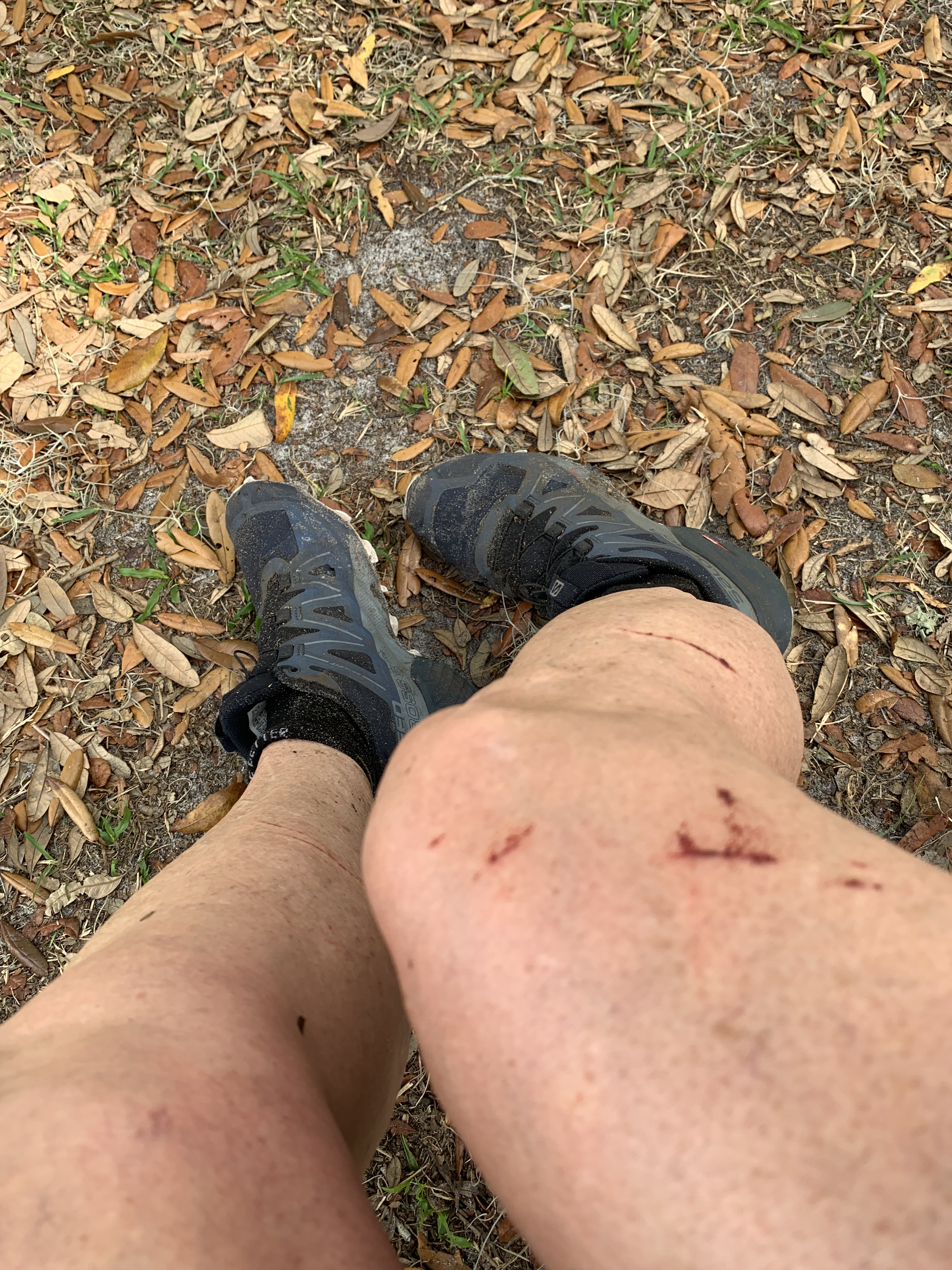
Many of the trails linking ridgelines on the Direttissima are lightly used, unpopular for a reason. The Daniel Webster Scout Trail is rocky, steep and overgrown; I cut my knee and hand, whimper, stagger, and pray in the waning light. My topo map suggests a flat that never materializes, so at 10 PM – and I’m not proud to admit this – I tent right on that rarely used trail on the only level spot I have seen in miles. Doubt creeps in: can I keep this up for another 200+ miles?

Of course, everything appears better in the morning, with coffee and perspective.
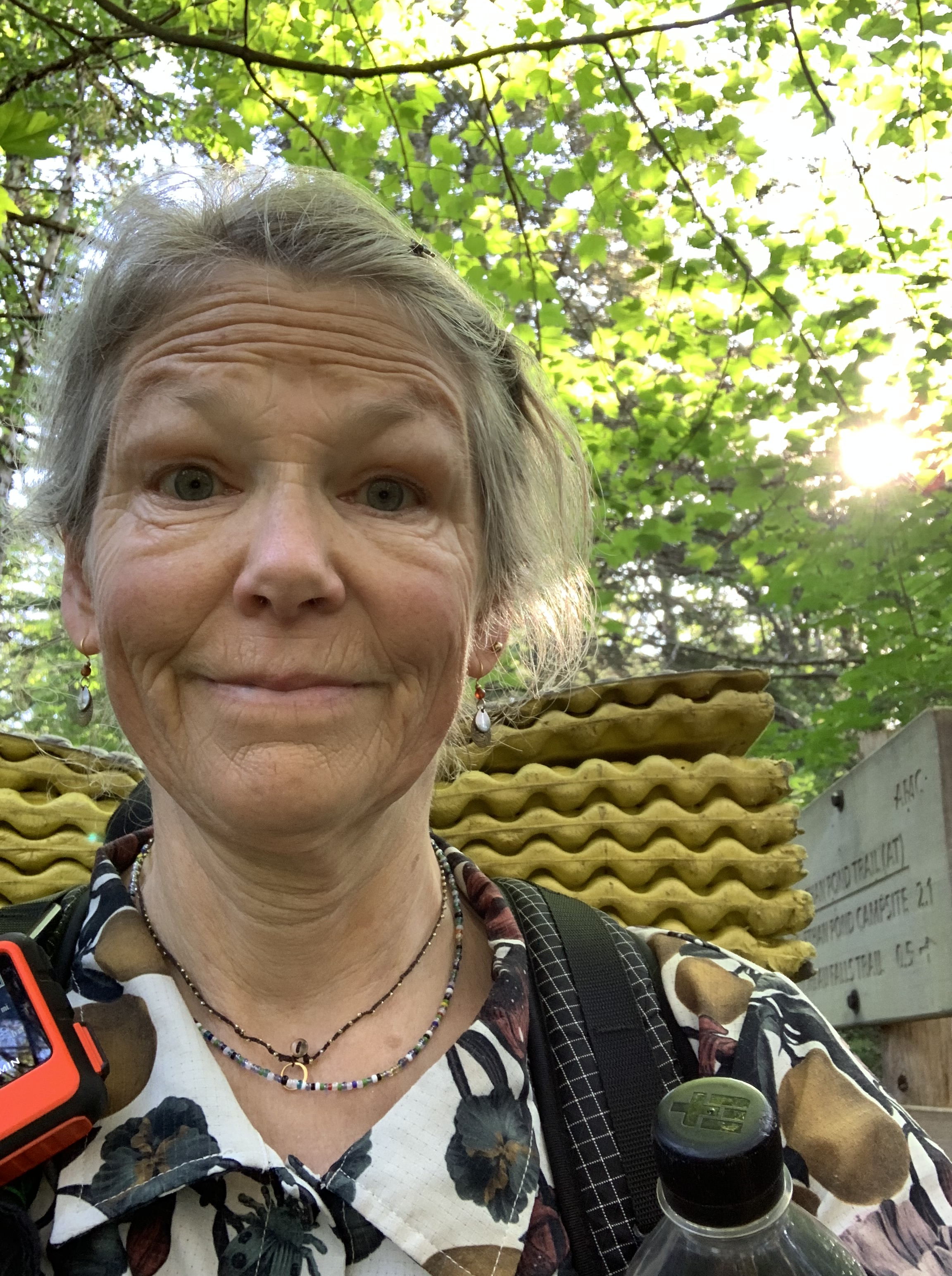
At the bottom of the trail, the next road walk takes me across to the Carter-Moriah ridgeline, another of my favorites. What I haven’t remembered is the cliff that must be scaled to ascend North Carter, every turn in the trail revealing another pitch. It starts to rain, then pour, then lightning and thunder.

My hands are so cold that I worry if I keep going to my goal for the day – somewhere close to Wildcat – I won’t have the dexterity to pitch my tent. Like a miracle, a tent site appears just north of South Carter, and I bail out at 5:00 like a beaten dog.

My weather app predicts “tornadic activity” and triple digit winds across the way on Washington; even in my protected col, the fabric above my head whips and snaps all night. I’m soaked, miserable, deep in despair.

Do I call the youngest? Hike out, have him come pick me up tomorrow? Is quitting even an option?

Morning optimism again wins the day. Everything wet gets stuffed willy-nilly into my pack, and I set a goal to reach the AMC Pinkham Notch Lodge, where drying out and perhaps even a room are an option.

When I arrive, after cruising down the Wildcat D ski slope, I decide to be kind to myself. The room is overpriced, the included dinner barely edible, but dry gear and a night in a bed have set me up to tackle remote Isolation and behemoth Washington the next day.

In 24 hours, I have gone from thinking I’ll die of exposure to sleeping safe in crisp sheets. Such is the unpredictability of this route.

Day 2 – .1 north of Waumbek to 2.7 north of Dolly Copp Campground: 23.5 miles

Peaks: Waumbek, Jefferson, Adams, Madison

Day 3 – 2.7 north of Dolly Copp to .3 north of South Carter: 15.3 miles

Peaks: Moriah, Middle Carter

Day 4 – .3 north of S. Carter to Joe Dodge Lodge: 10.5 miles

Peaks: South Carter, Carter Dome, Wildcat, Wildcat D

It Doesn’t Get Easier

I have seriously underestimated the difficulty of this pursuit.

However, having decided to sally on, I simply need to find ways to overcome the hard. Sunrise. Most of the next two days will be on familiar, well-trodden trails. The presidentials boast epic views. There’s a snack bar on top of Mt. Washington.

Aptly-named Isolation via the beautiful Glen Boulder Trail (yes, there are rocks so noteworthy in these mountains that they have been given names) is the first peak of the day, another glorious out-back.

On the “back,” I turn a corner to a moose galumphing up the trail. He plops down yards ahead of me for what appears to be his afternoon siesta.
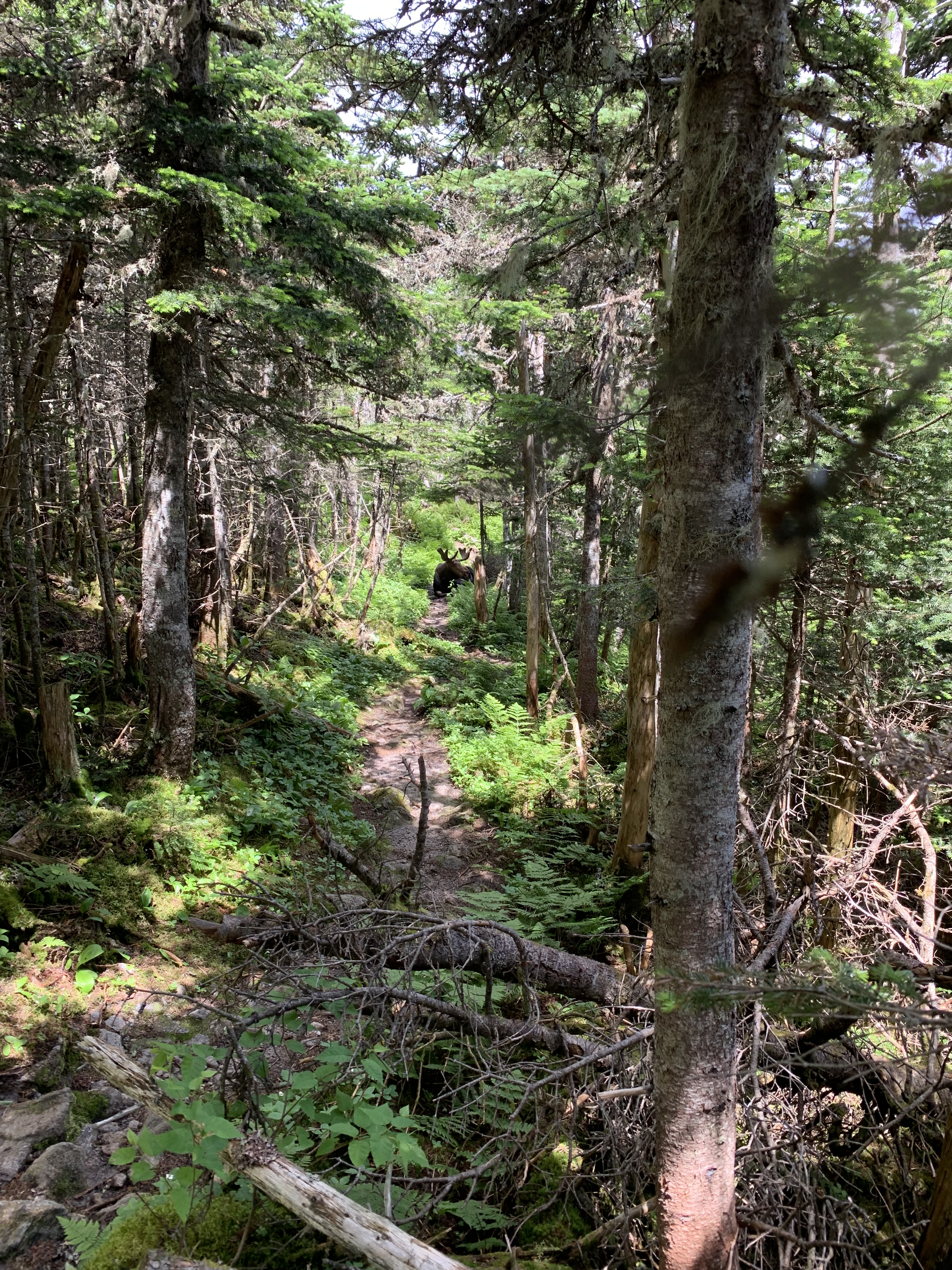
Yikes.

In all my years of hiking, I’ve never seen a moose on trail; I take it as a good omen as I bushwhack around him and head up to Washington.
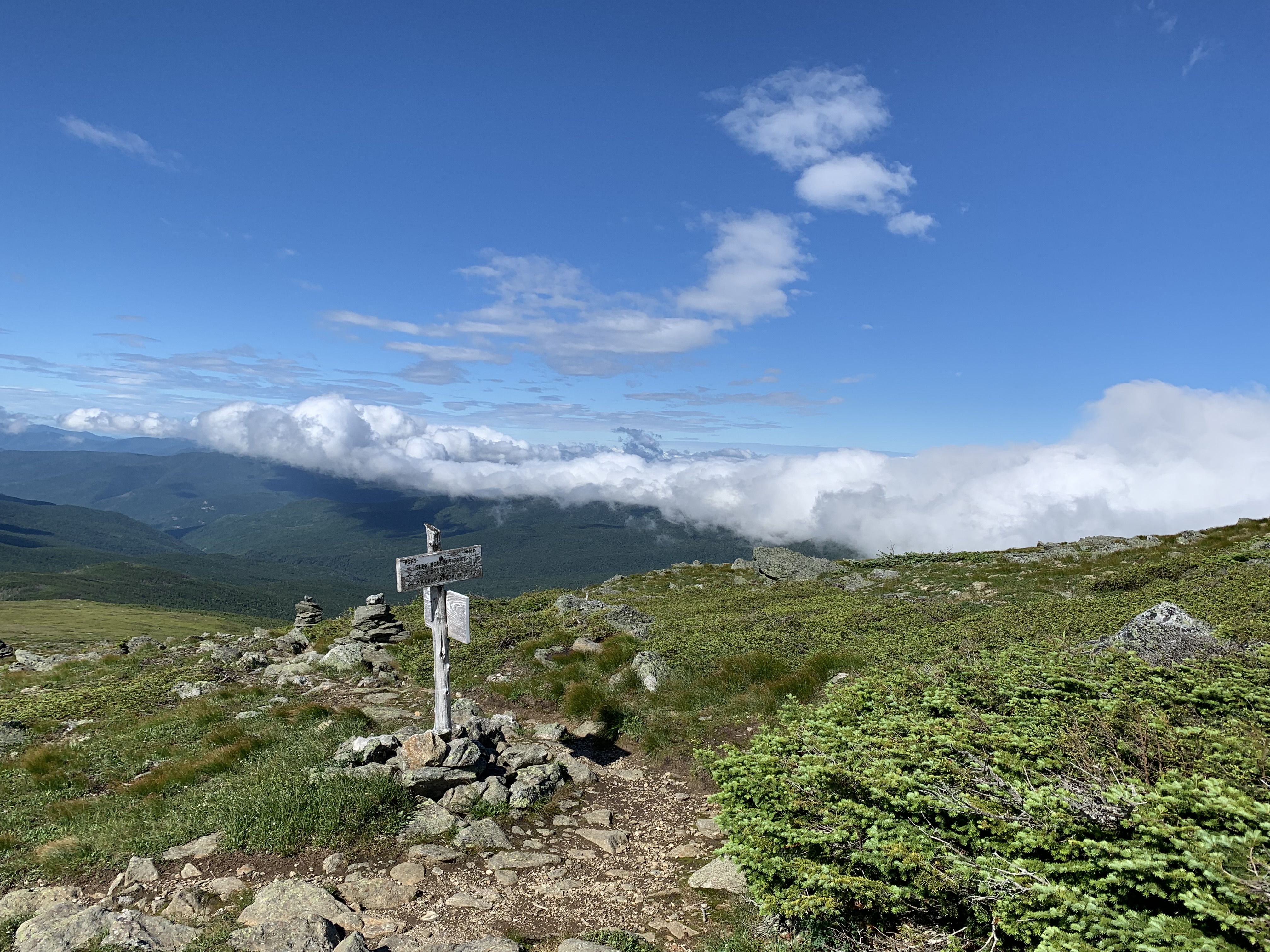
It takes me an hour to ascend the final .6 up Tuckerman Ravine Trail, others suffering all around. The novelty of chili and chips, writing and mailing a postcard, and the crowds fortify me for the miles ahead, across Monroe, Eisenhower, and Pierce.
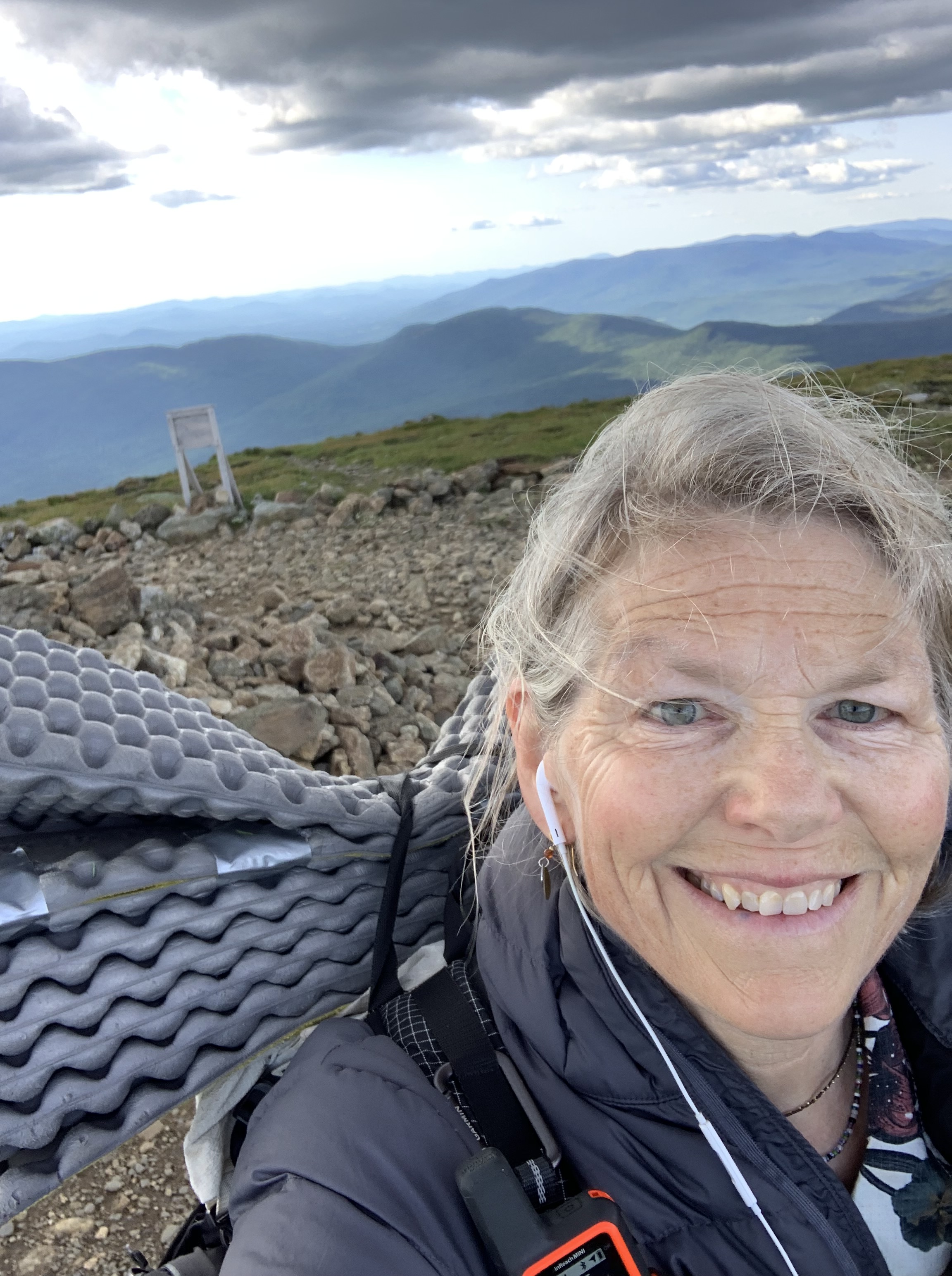
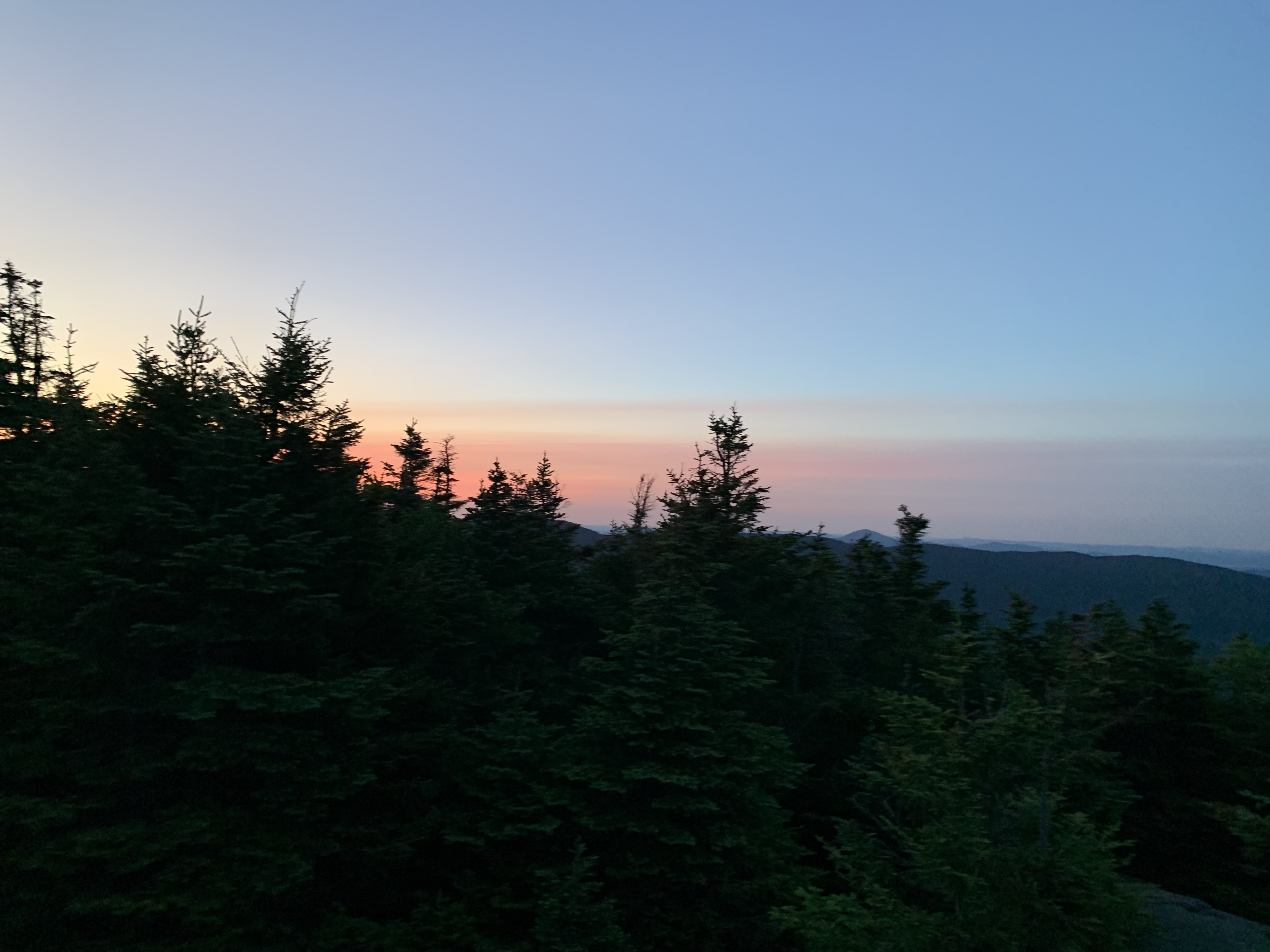
A flat rocky space appears north of Mizpah Hut, just the right size for my cozy tent, and I’m rewarded with some big sky as night falls.
Day 5 – Joe Dodge Lodge to .3 north of Mizpah Spring Hut: 18.6 miles

Peaks: Isolation, Washington, Monroe, Eisenhower, Pierce

Eat the Heavy Things First

My first resupply is a box I mailed to myself care of the AMC Highland Center. After hitting Jackson early, I head down across the road.
When the package is handed to me, I can’t believe its weight. Tearing it open, I discover I had vastly overestimated the types of food I would want to be carrying at this point. There’s packets of coconut daal, peanut Thai sauce, and even a full jar of almond butter. I spend the bulk of the day – over Tom, Willey and Field – eating all the heavy things.
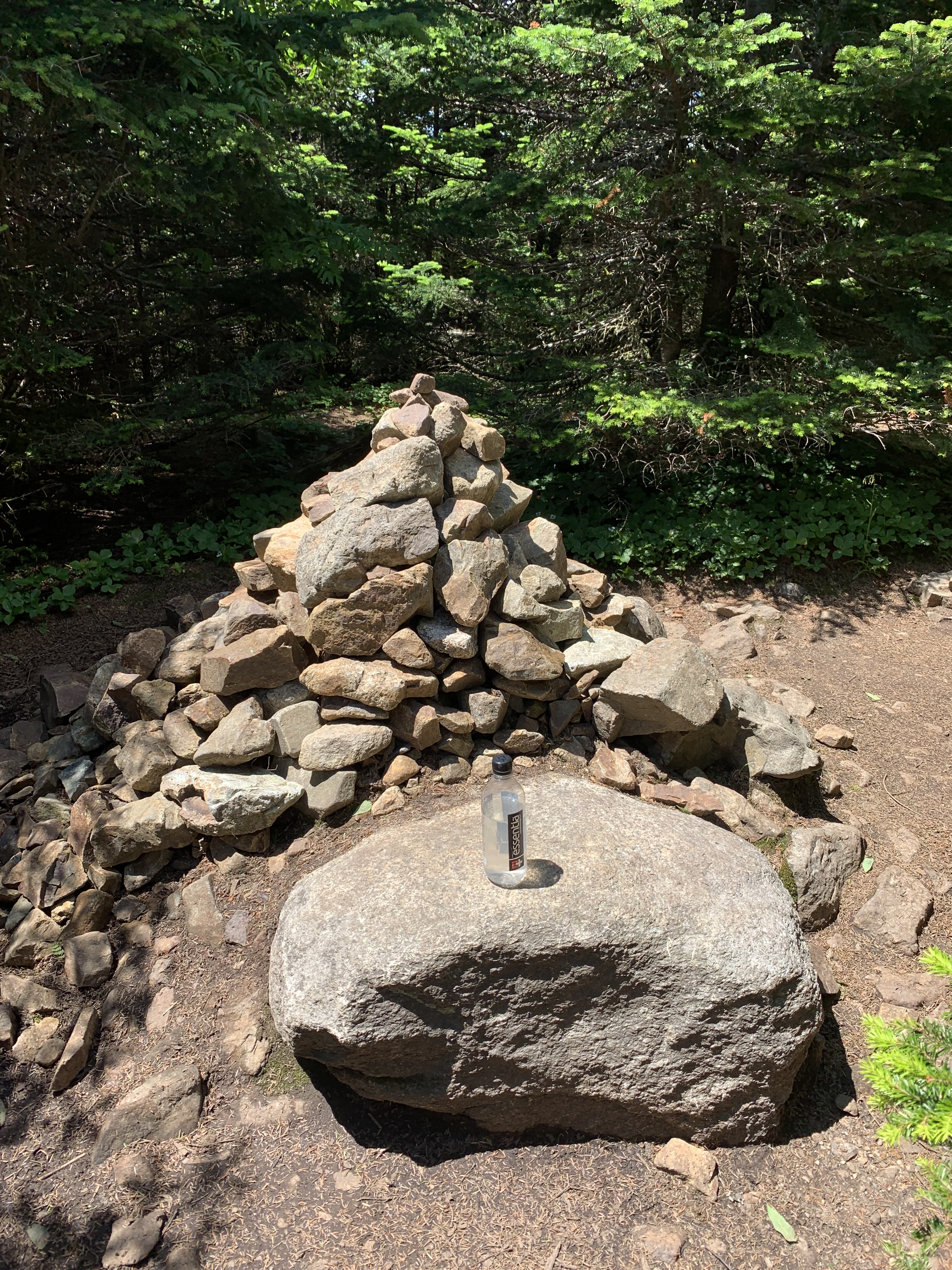
Another rustic connector leads me over to Zealand Falls Hut, where I drop my pack at 5:15 and set out to check off Hale. It’s beginning to cool, and it feels like flying not to be saddled with that full food bag. When I return, I ask the Croo at the hut if they have any leftovers and am rewarded with turkey, rice, and fresh tomato soup. AT hikers glide by my tent later that night, and I’m bolstered by their enthusiasm.

Carrigain is on my radar for the next day.
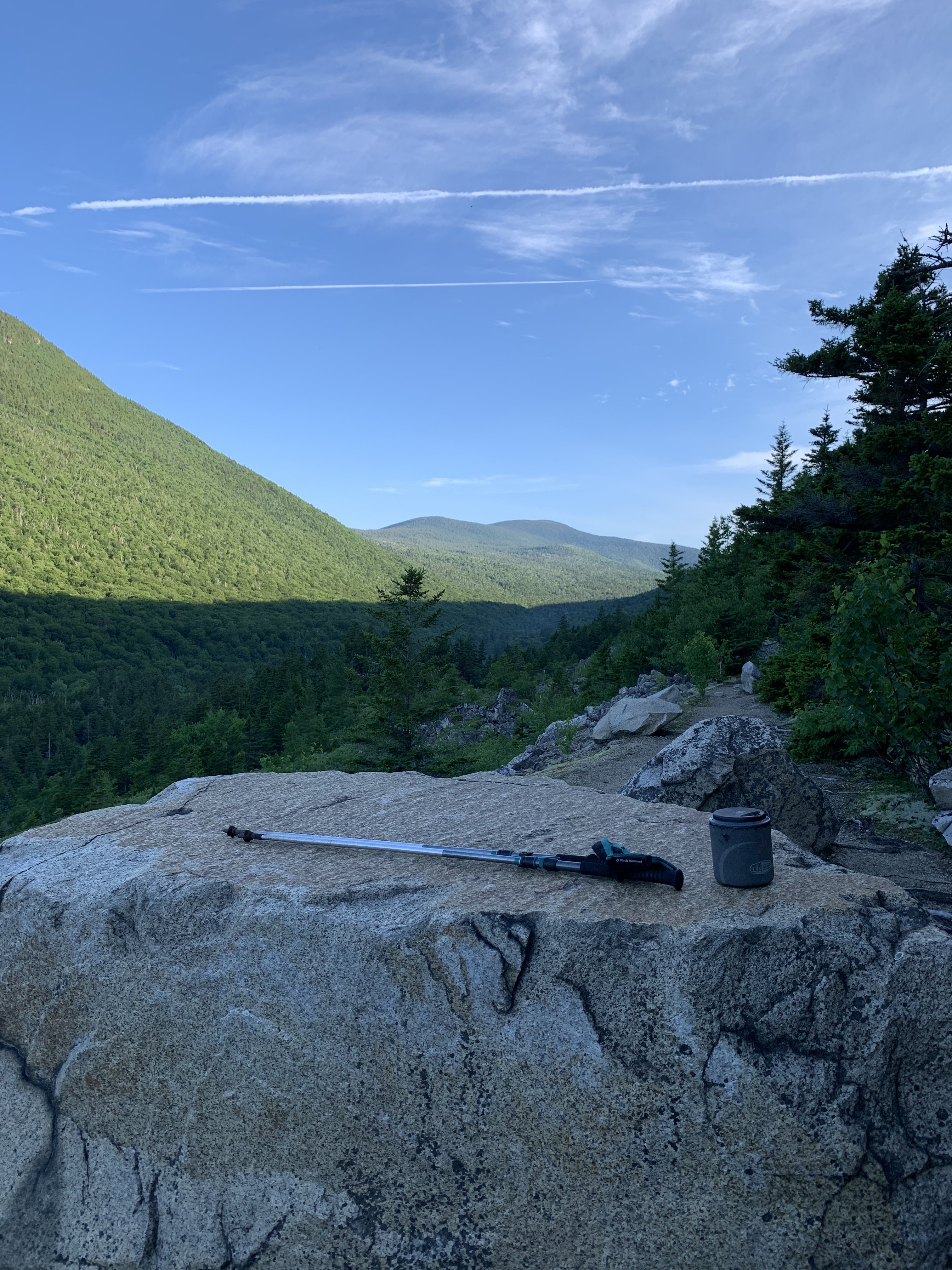
The ridiculously flat Ethan Pond Trail gives way to more wilderness as I head over to the back side of Carrigain.
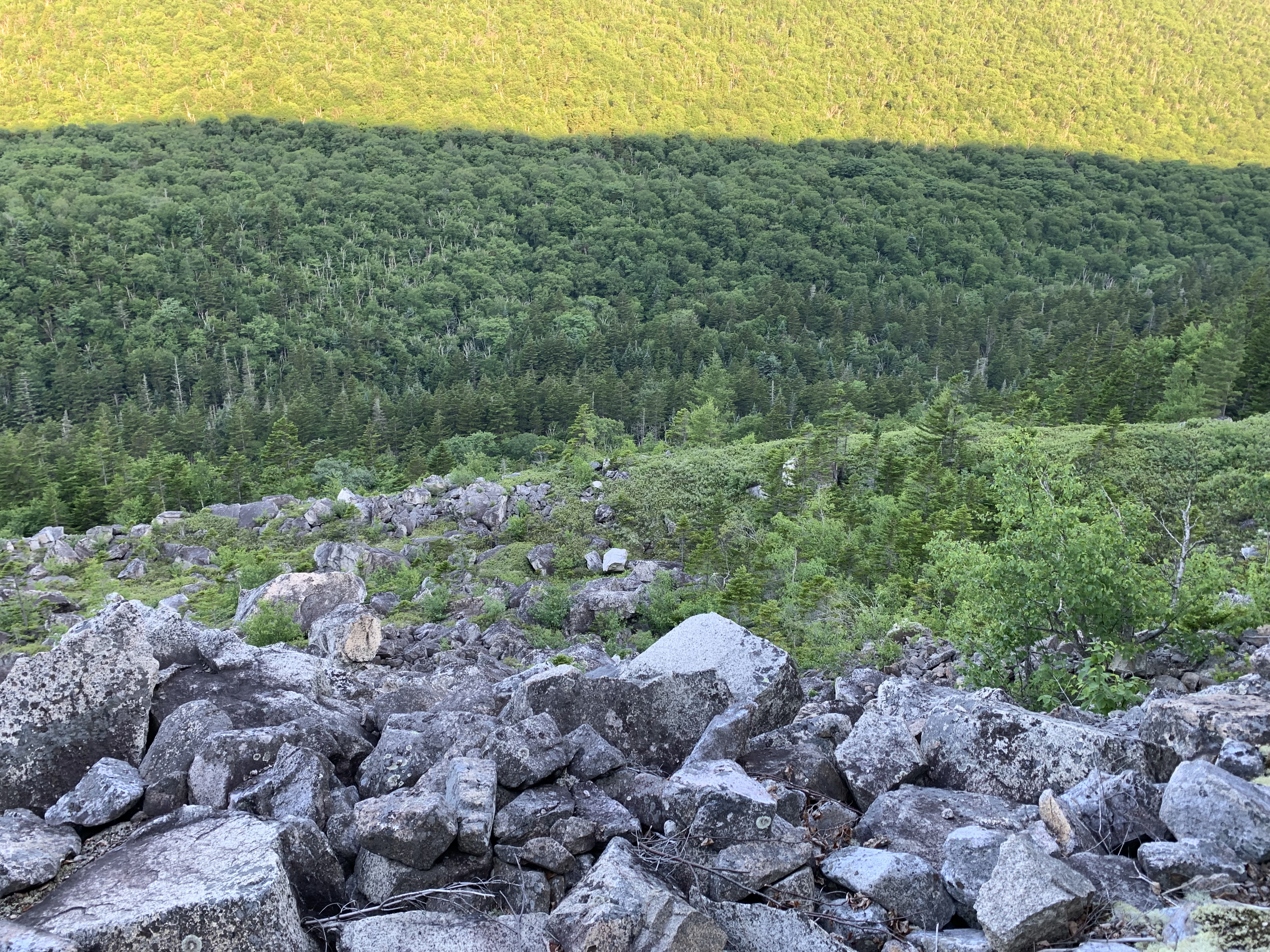
I’ve climbed this way once before, and the memories come flooding back of steep after steep after steep. When the fire tower finally appears, I’m toast.
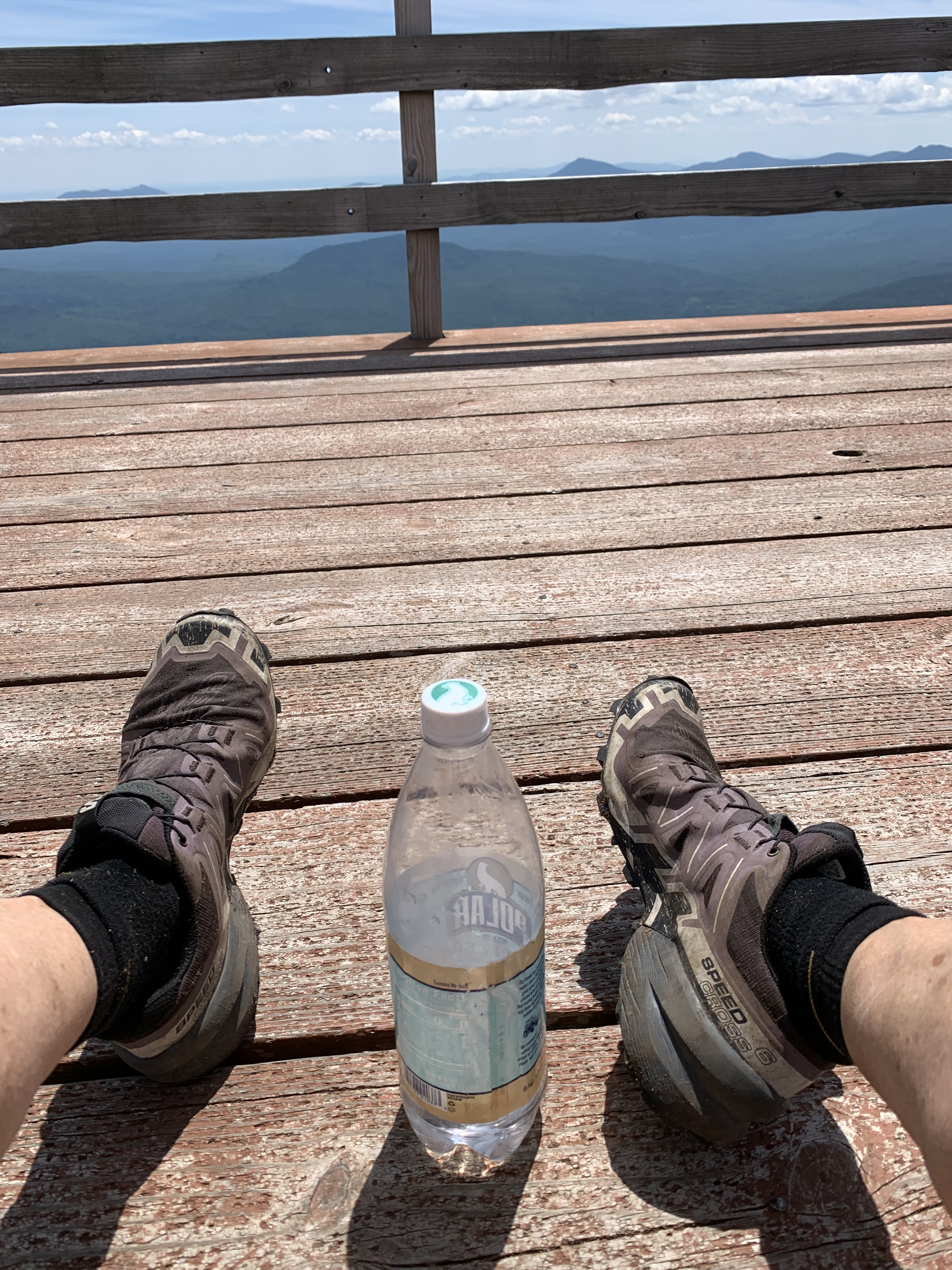
Faced with the choice of bugs in the shade or wind in the sun, I choose wind, eat almond butter by the spoonful, rest up before the final push down, down, down to the Kancamagus on dirt roads and isolated paths.

The last challenge of the day is a thigh-deep ford of the Swift River. The cold water soothes my sore muscles and feet, cleans my muddy arms and legs. I go to bed feeling renewed, despite only having ticked off one peak the entire day.

It’s taken me much longer than I had hoped to get to my soft place in the pines, but the next day is the Fourth of July, and if I walk fast enough, I could be in Waterville Valley by dinner.

Day 6 – .3 north of Mizpah Spring Hut to .4 north of Zealand Falls Hut: 21.6 miles

Peaks: Jackson, Tom, Field, Willey, Hale

Day 7 – .4 north of Zealand Falls Hut to .2 south of Oliverian Brook trailhead: 22.9 miles

Peak: Carrigain
Waiting

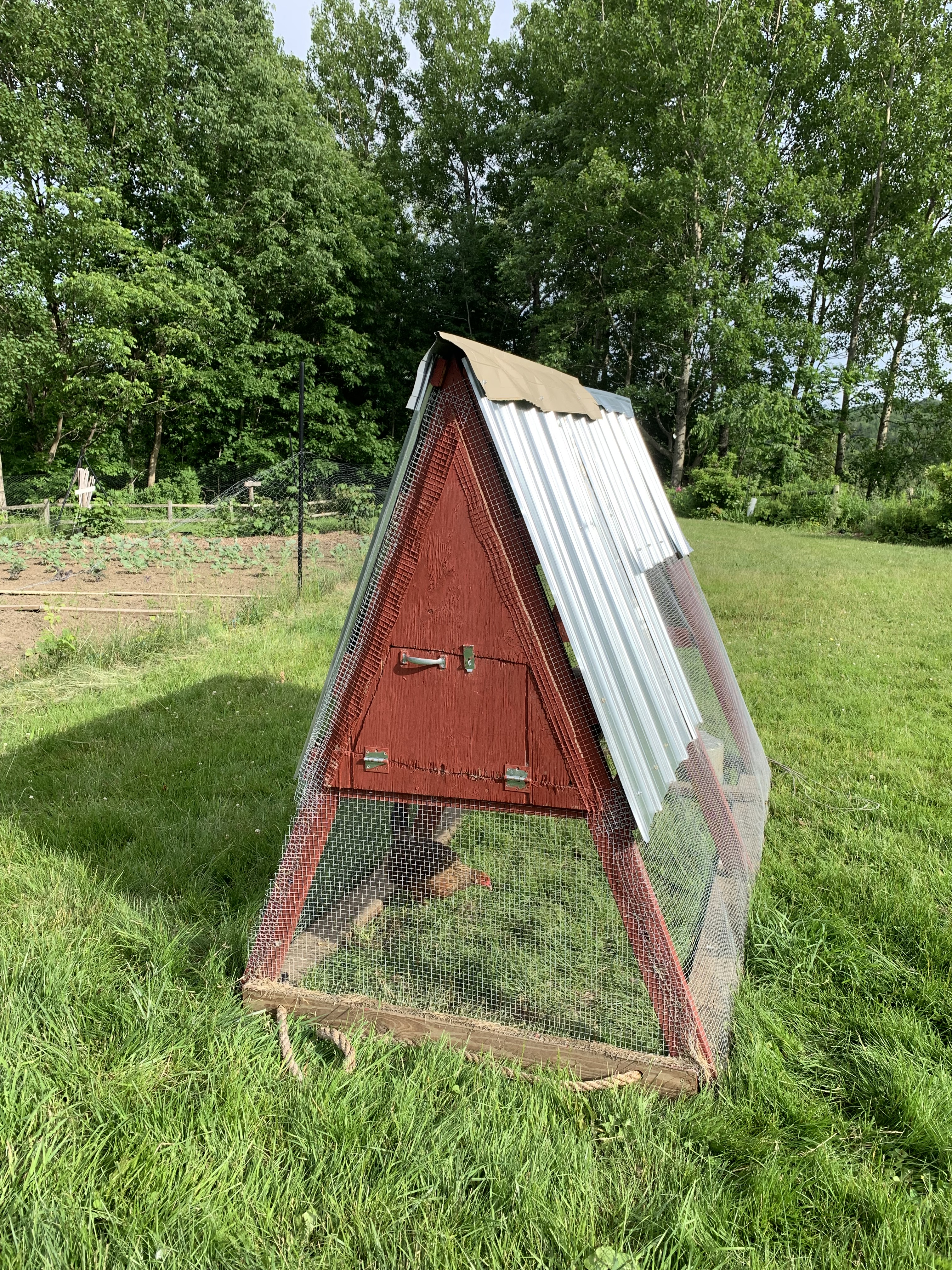
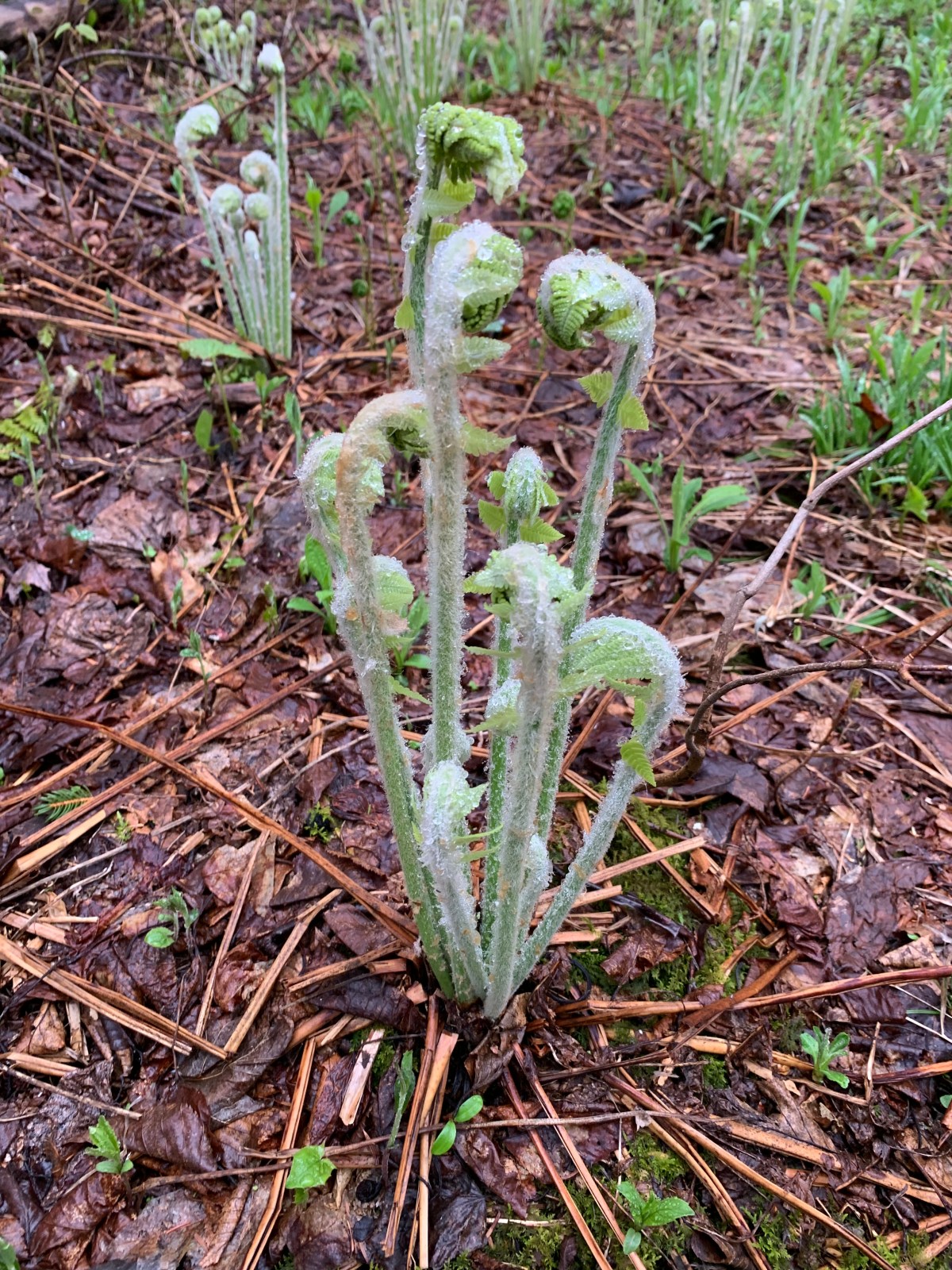
While visiting my daughter’s family “farm” in Vermont recently, I noticed they had isolated one of their hens in a chicken tractor in the middle of the yard. The poor girl jumped and paced to try to get out of her little prison, obviously highly agitated and unable to calm.

It was heartbreaking.

However, this girl was caged because she was “broody.” Instead of laying an egg and heading off to do other chicken-y things, a broody hen is fiercely devoted to hatching chicks and no good to a family who simply wants eggs to eat. She obviously didn’t understand that she needed to be separated from her other friends, to wait until her maternal instinct passed, before she could rejoin the brood.

In many ways, I’ve recently felt a bit caged myself, waiting, unable to move freely, either forward or back.

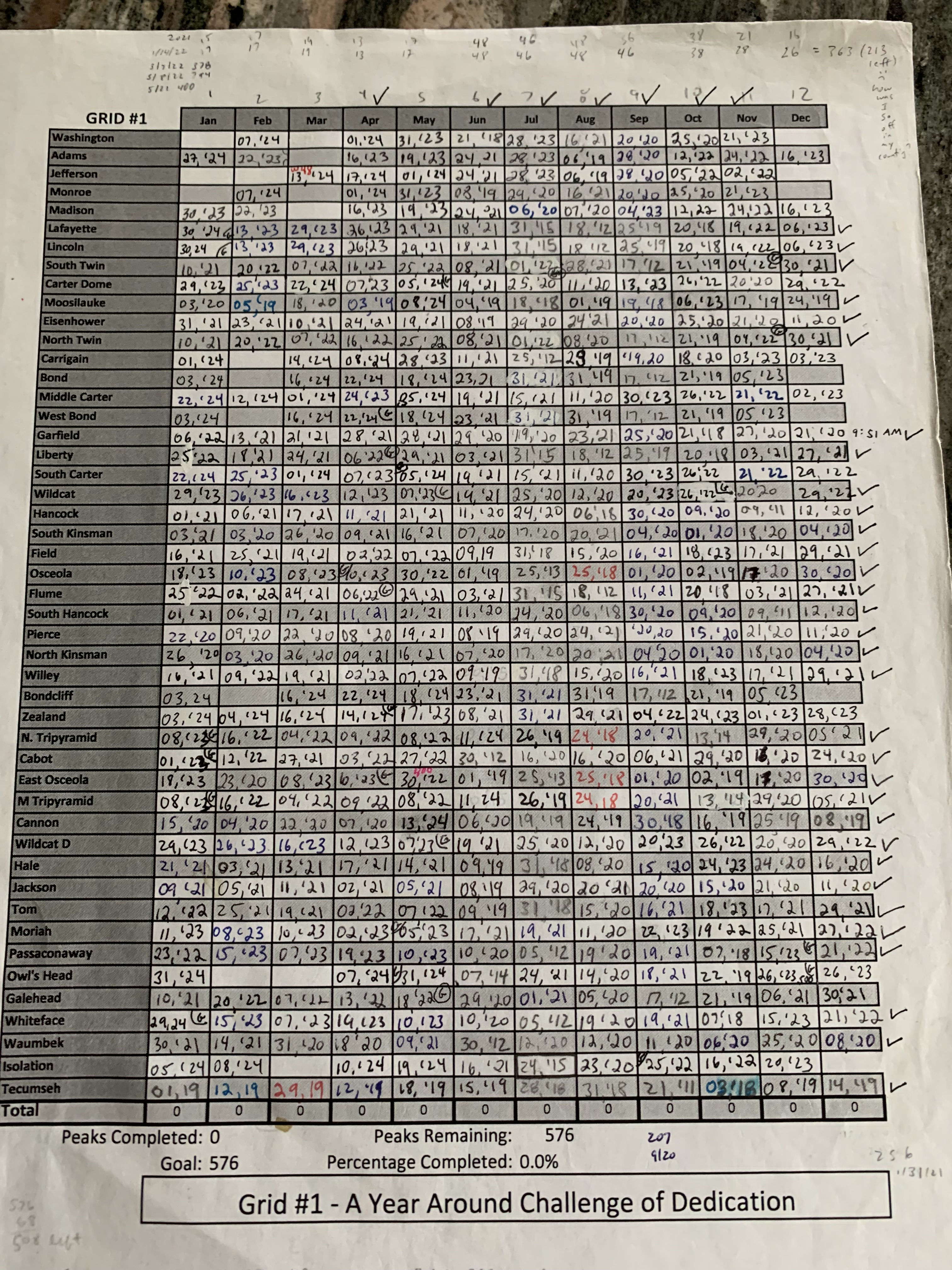
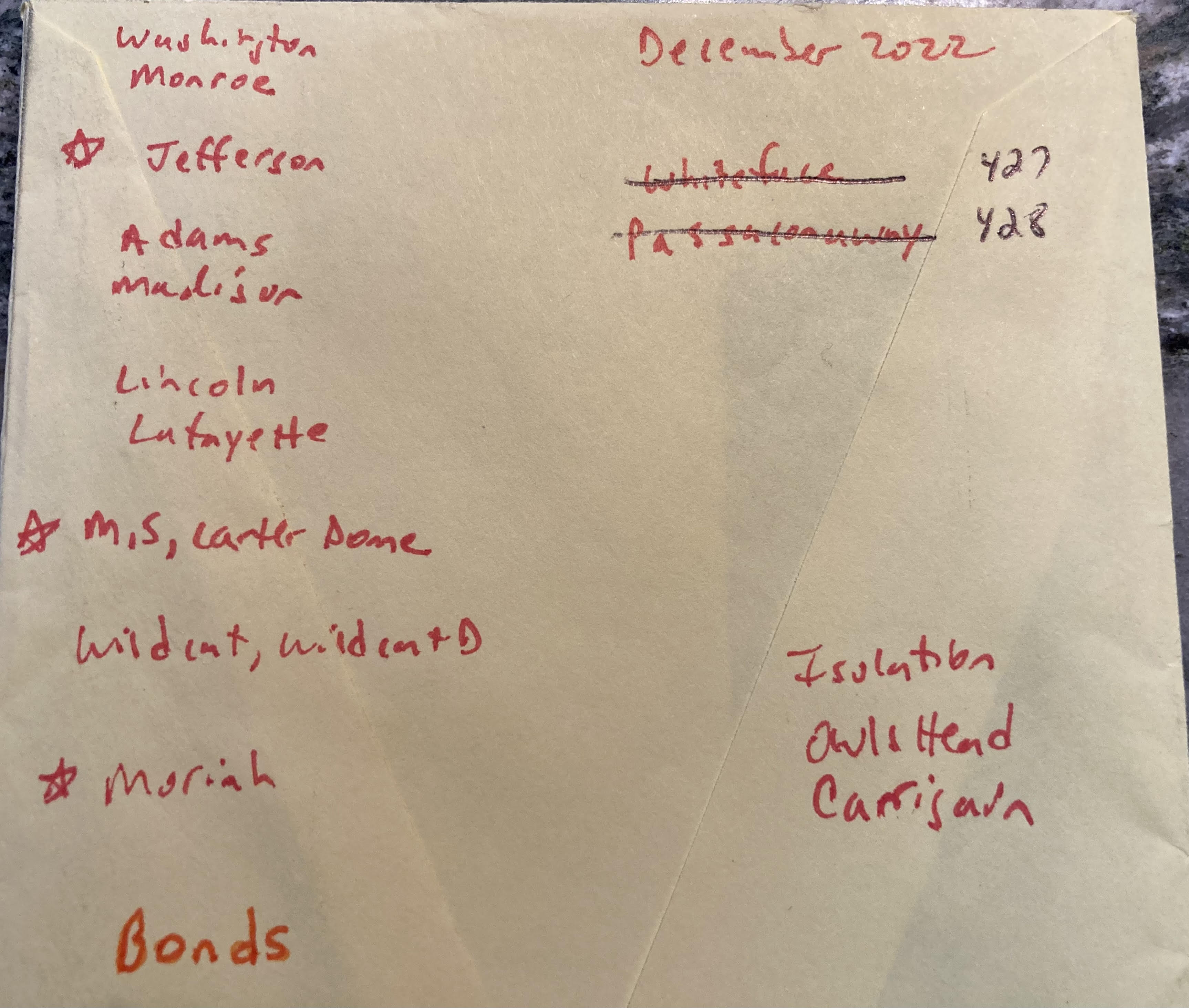
Having spent the last five or six years chasing an audacious hiking list called The Grid – New Hampshire’s 48 peaks over 4,000 feet, in every calendar month – I’m finally within reach of the finish.

The problem is, although I only have 22 more mountains to climb, they are all in the winter months. I must wait for December to come before I can begin to end what I began.

This is also the first summer in decades that I am alone in my tiny house, the youngest having moved out last August to pursue his own audacious dreams.

At times, I find myself pacing the vacant rooms, trying to escape the feelings that come with having raised my own brood to adulthood, where they need me less, and for vastly different reasons than when they were littles.

I’m trying to be content with where I am and who I am, in this season. To wait well, even though all I can think of is I want to be somewhere, to be doing something.

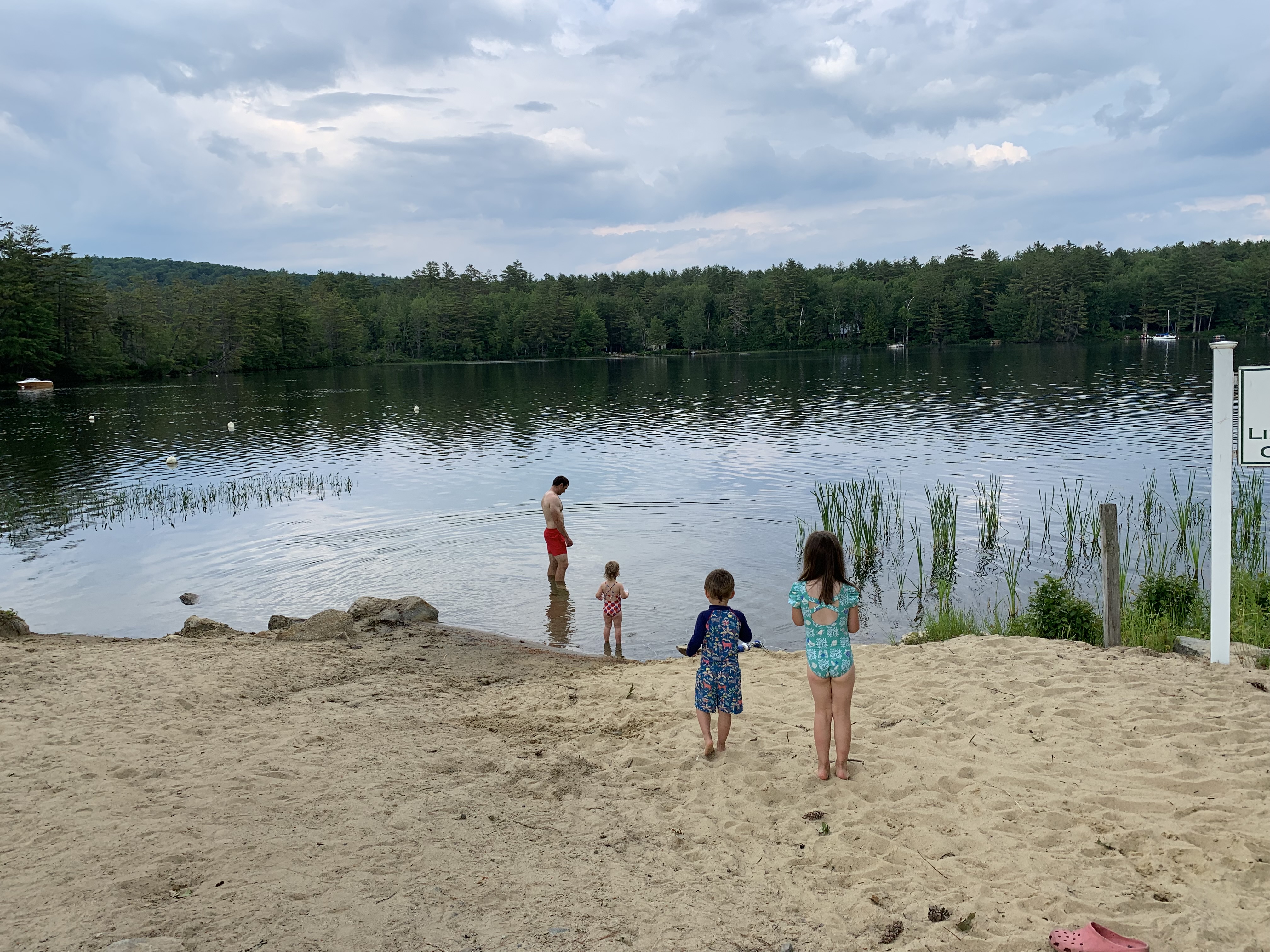
The other day, the youngest grand had an epic tantrum when it was time to leave the beach where we had been playing that afternoon.

She cried and kicked, not knowing that there was something equally awesome that Dada had planned next. A fire. S’mores.

She wasn’t willing to exchange a known good for the unknown ahead.

I admired her ferocity, even as I lamented her limited perspective. I suppose, however, that in many ways, I am like her.

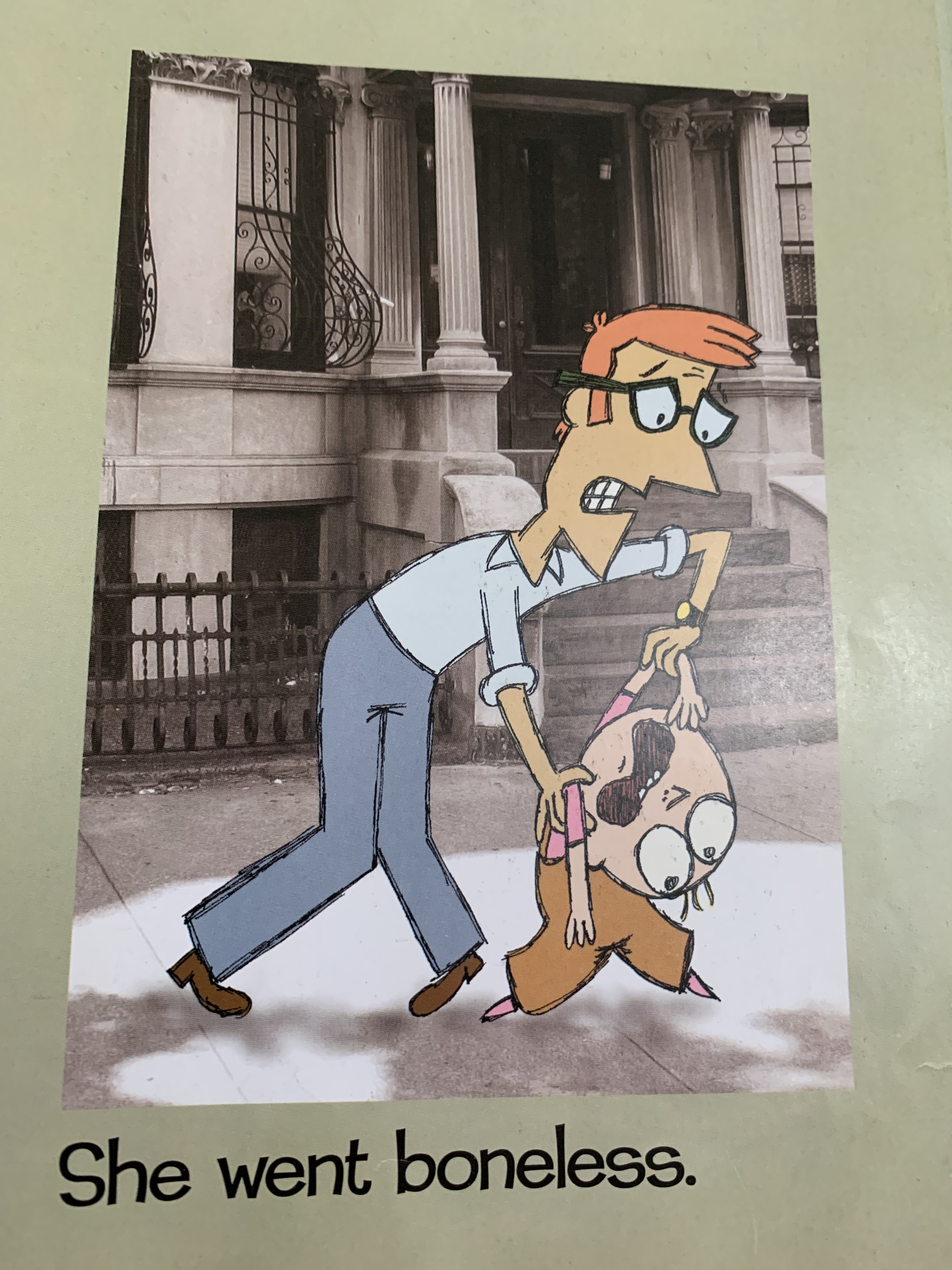
I prayerfully protest, going boneless, when I cannot get my way, questioning God’s goodness and wondering why, O, why, is it taking so long?

Taking so long, when all I have done is to ask for His help, for friends and family, for myself, waiting for the unknown to become known.

I know my perspective is limited. That I cannot see what He sees.

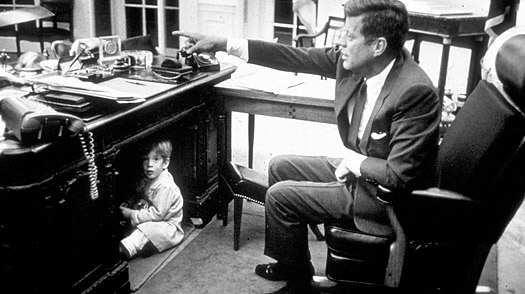
Like little John John, sitting under the Resolute Desk, I must remember that Father knows far more than I do. My only job is to trust.

In the meantime, I will try to wait well. To stop the pacing.

I will sit in the known, content that whatever unknowable is ahead will be unfurled whenever and however He thinks is best.

Shadows

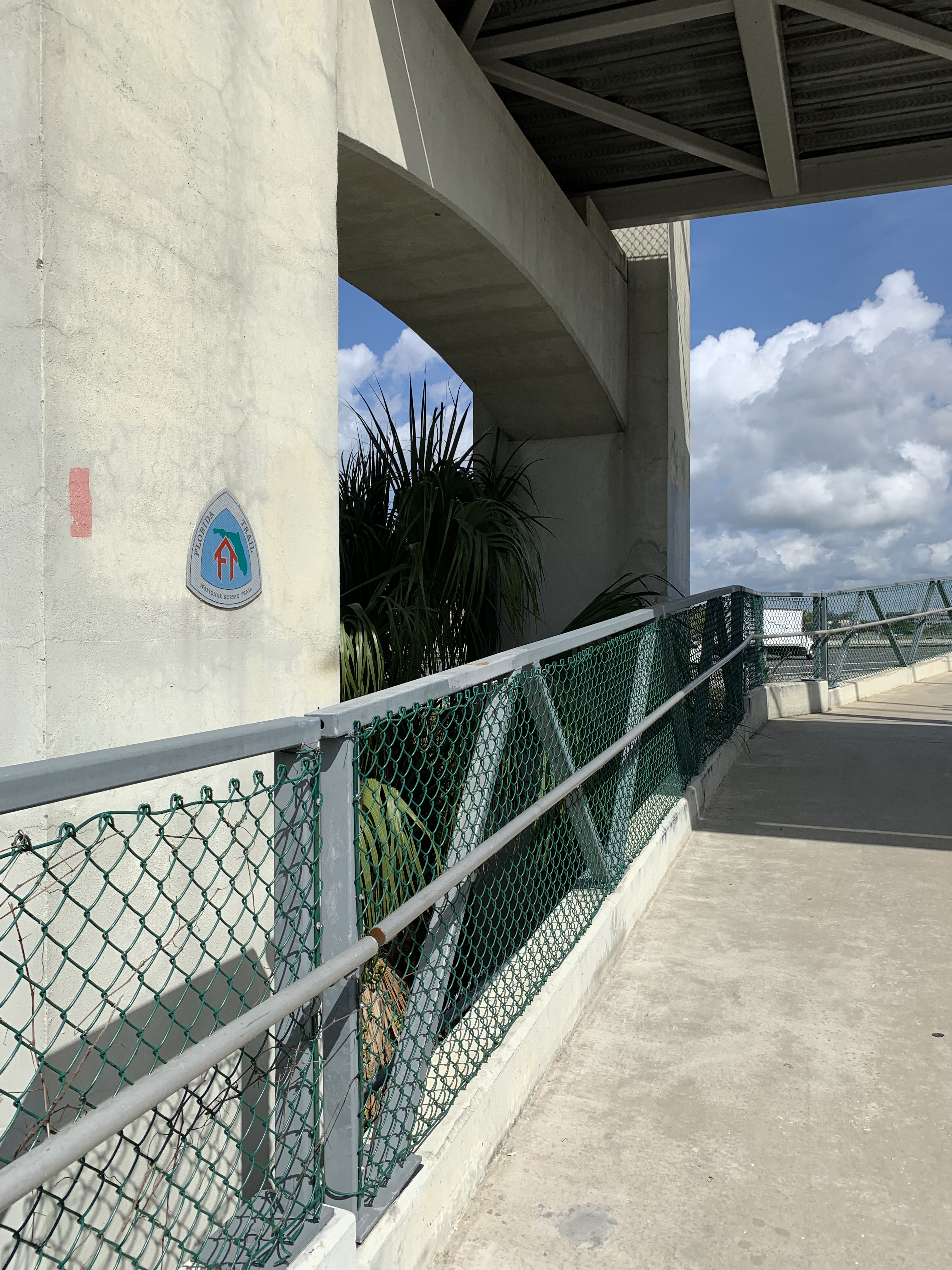
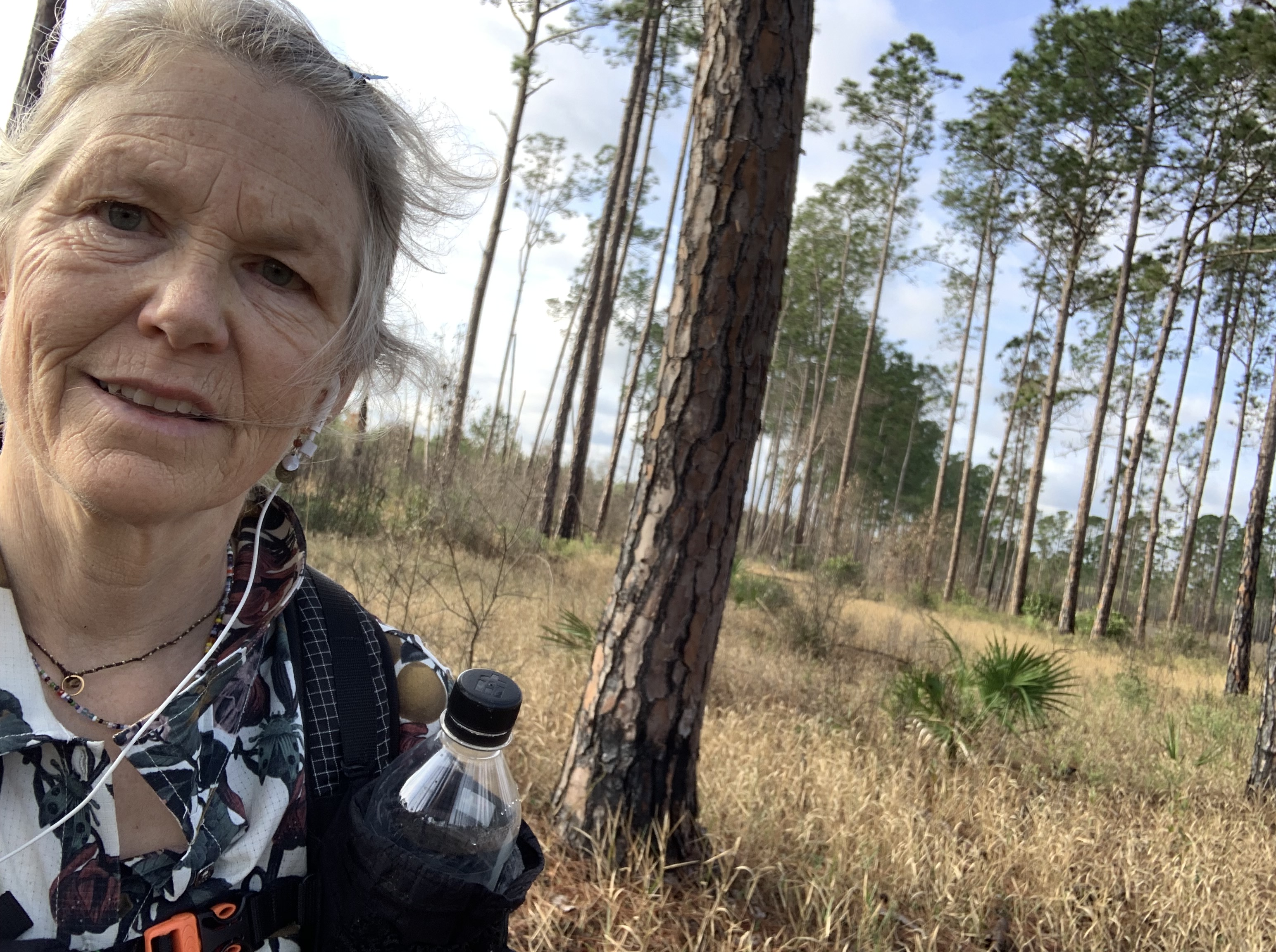
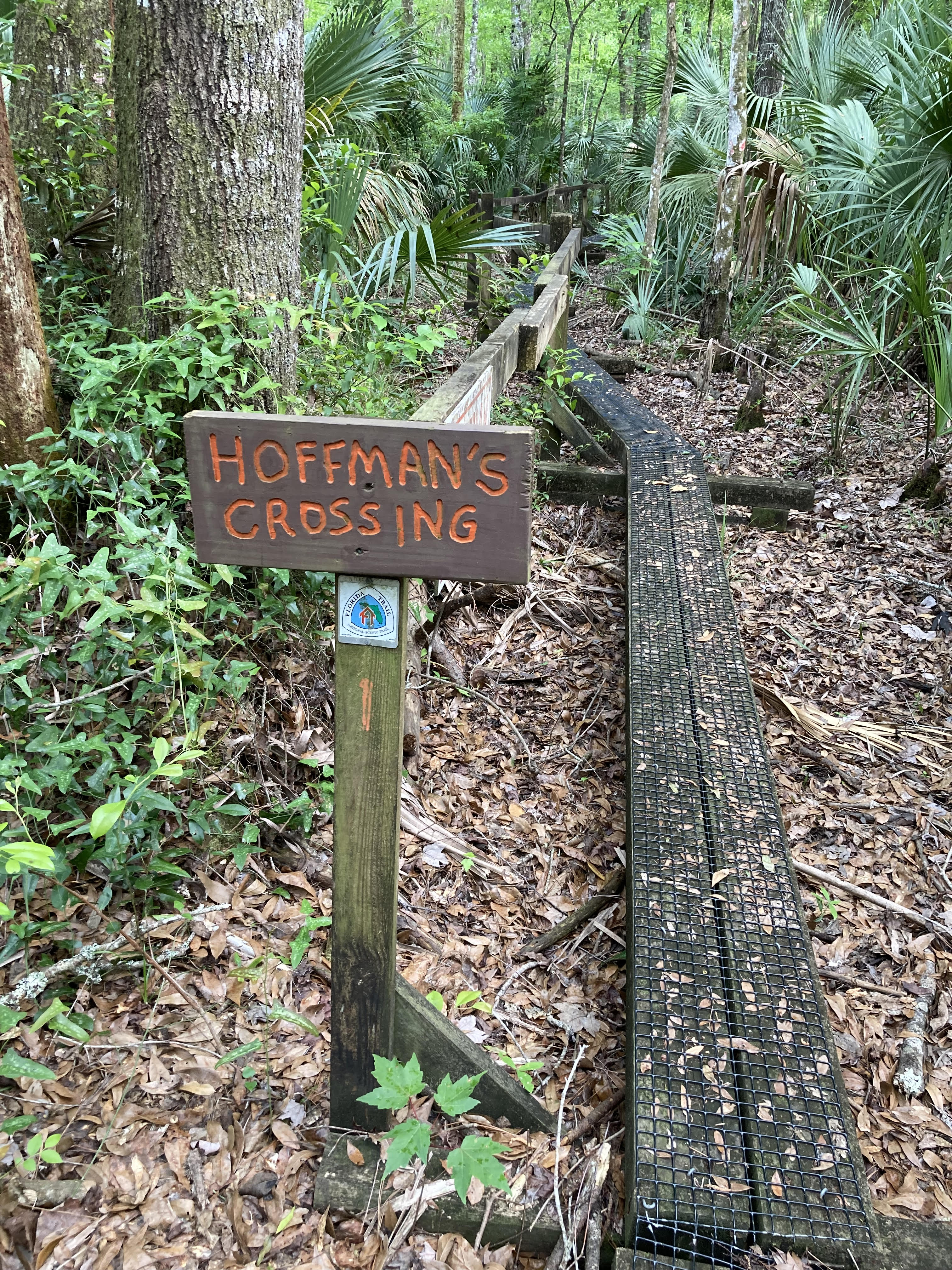
Six years ago, I decided to forego the stereotypical Florida spring break – beach novels, umbrella drinks, motels – and explore instead one of America’s least beloved long distance hikes, The Florida Trail.

Swamps and road walks are two of the main reasons why the Florida Trail gets a bad rap amongst some of its showier neighbors, like the Appalachian Trail or the Pacific Crest Trail, but over the years I have come to appreciate its quirky nature, despite its propensity to repeatedly beat me up.

This year, my cousin agrees to keep watch over my car after dropping me off at mile marker 325.8, 120 miles away, on the outskirts of Tosohatchee State Preserve.

I know from researching on the FarOut app that Tosohatchee is going to be one of the swampier sections I’ll encounter this trip, and I want to be ready.

I pray in advance against the fear that has paralyzed me in the past when encountering the black water, muddy sinkholes, and potential alligators of these sections. I want to enjoy every part of my hike this year, even the scarier bits, and it’s not long before those challenges begin.

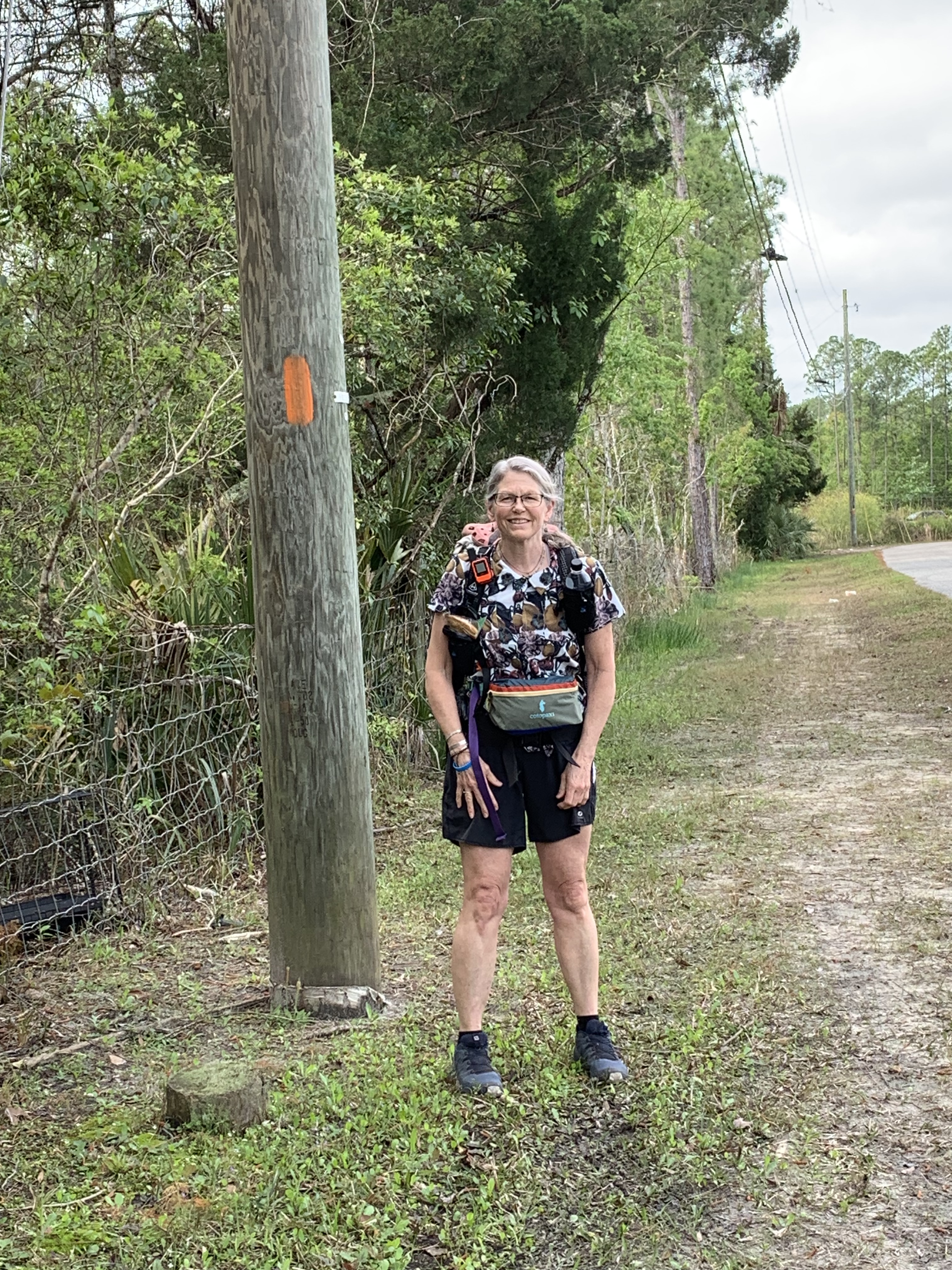
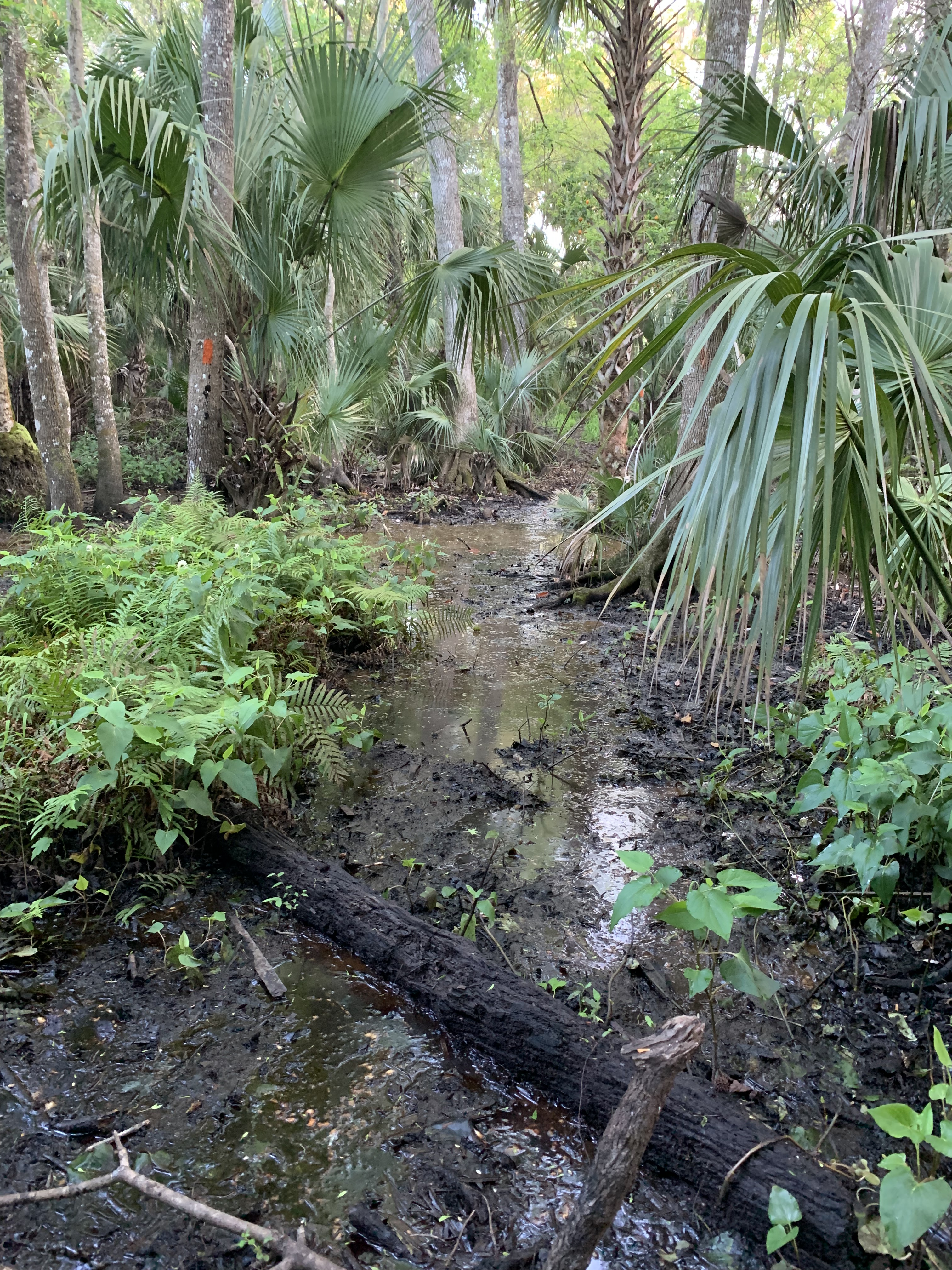
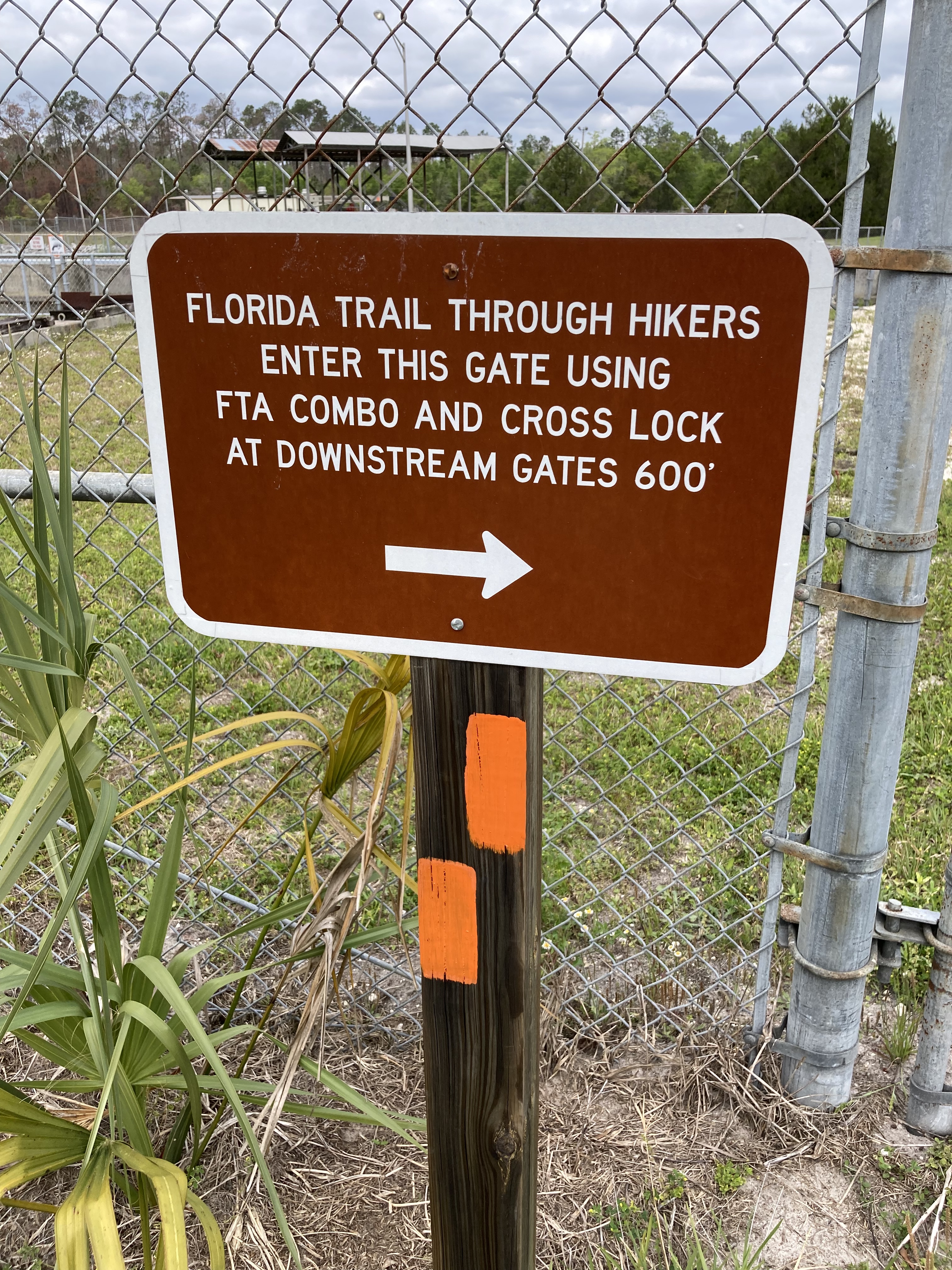
Within the first mile, I’m ankle- and shin- deep in water, but I find that by looking ahead to the next orange blaze – reasoning how not-far-away it is – I can slosh through the cool water and appreciate the beauty, even when my shoes fill with silt and I’m slashed by spikey overgrowth.

I even decide against the high-water route, which, according to FarOut, was impassable a month earlier, testing those prayers as I’m in and out of cypress swamps all afternoon.

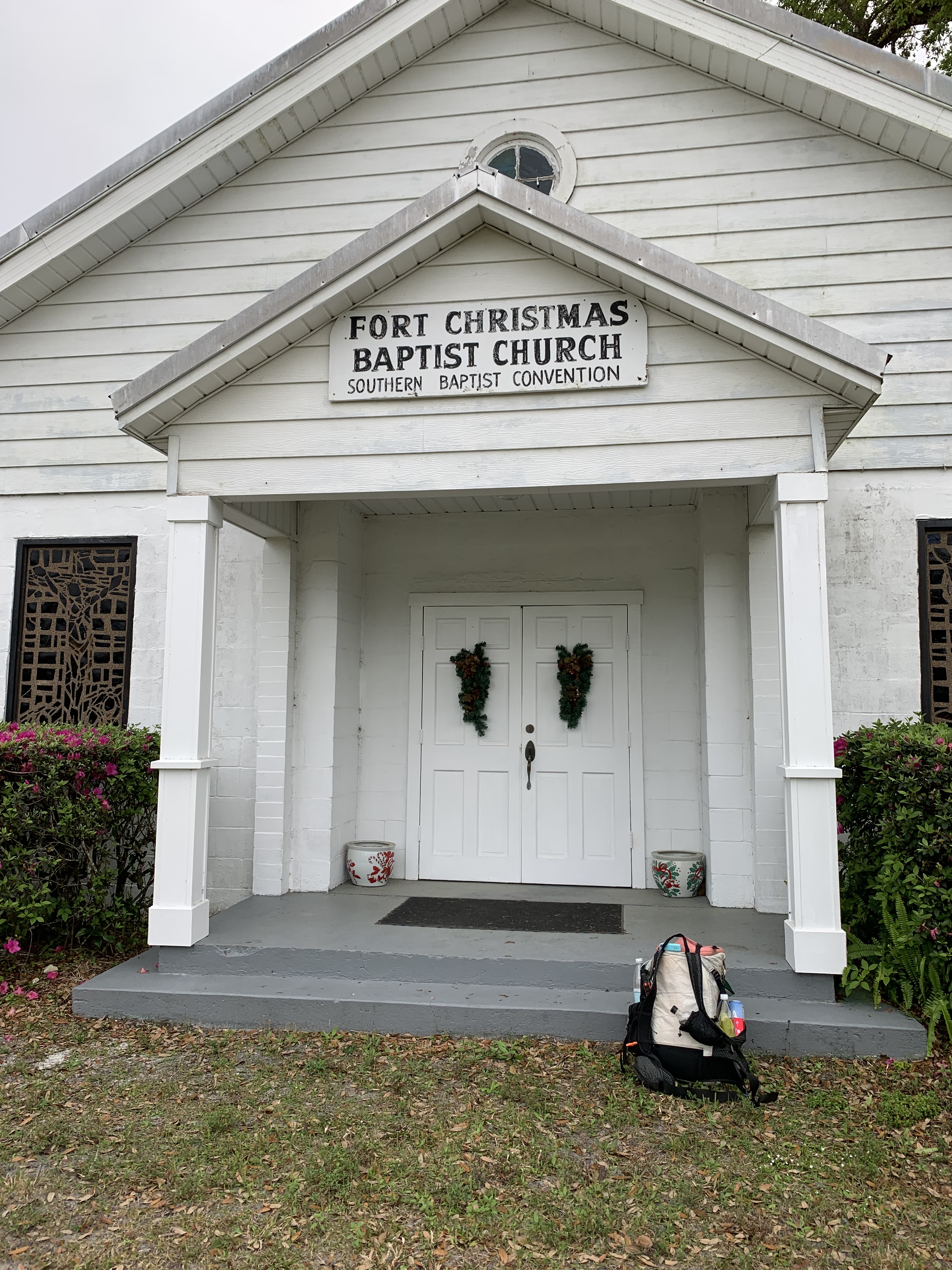
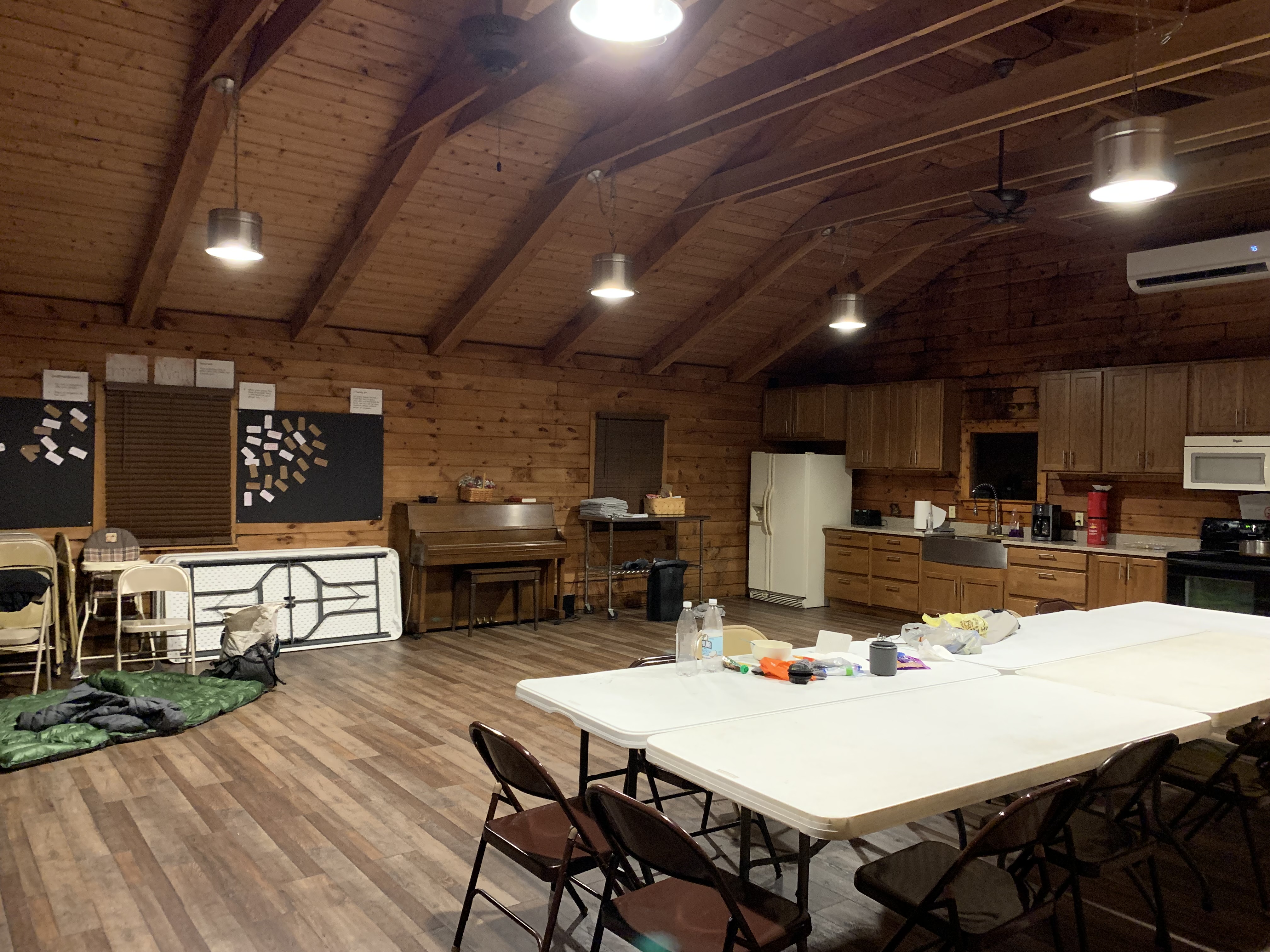
Luckily, my first night brings me to the Fort Christmas Baptist Church/ Hiker Haven, where Pastor Ken opens a spacious log cabin just for me. He even stocks the fridge with mini-Reeses, my absolute favorite.

I don’t feel quite worthy of the warm outdoor shower and roof over my head, given I’ve only done 15 miles and it’s my first day, but I enjoy the luxury in the spirit of “the trail provides.”

That night, I am welcomed into a sobriety group that meets in the cabin on Tuesday nights. The moderator, Glen, includes me in the conversation by asking how hiking relates to the topics they discuss. This is a safe group of fellow believers, and I marvel at how such an eclectic span of people – from an elderly cowboy to a middle age couple to a young 20-something, sweet-faced girl working on her first few months – can be so honest and open about their struggles and triumphs.

We discuss Psalm 23, talk about how God prepared one of the attendees for the death of her father.

I am blown away by these two ideas juxtaposed, as I recall how God prepared me for the death of my son eight years ago. Has it really been that long?

For a few weeks leading up to his crash, I kept seeing Psalm 23 everywhere I turned – in my daily devotions, in random emails, on the wall of a laundromat. Everywhere.

Yea though I walk through the valley of the shadow of death, I will fear no evil, for thou art with me.

I will not fear.

The very prayer I had been praying all day.

As we hug good-bye and wish one another Godspeed through our unique valleys, I remember hearing, years ago, how a shadow cannot harm. Lacking substance, a shadow is nothing to be afraid of; I can walk through shadows – even unpleasant, squishy ones – with bold confidence, trusting the One who is always with me.

I go to sleep thankful for the gift of this meeting, unexpected yet profound.

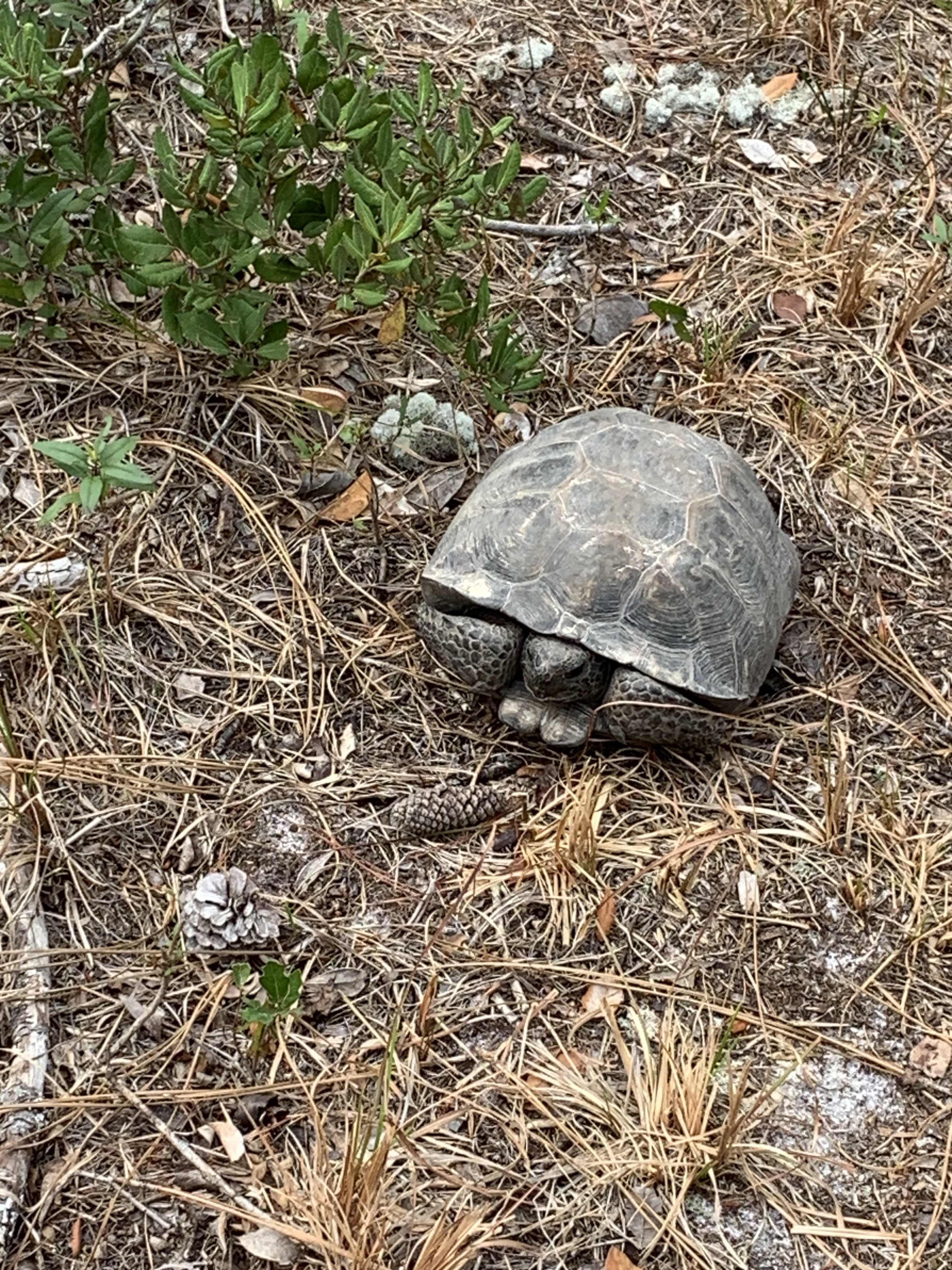
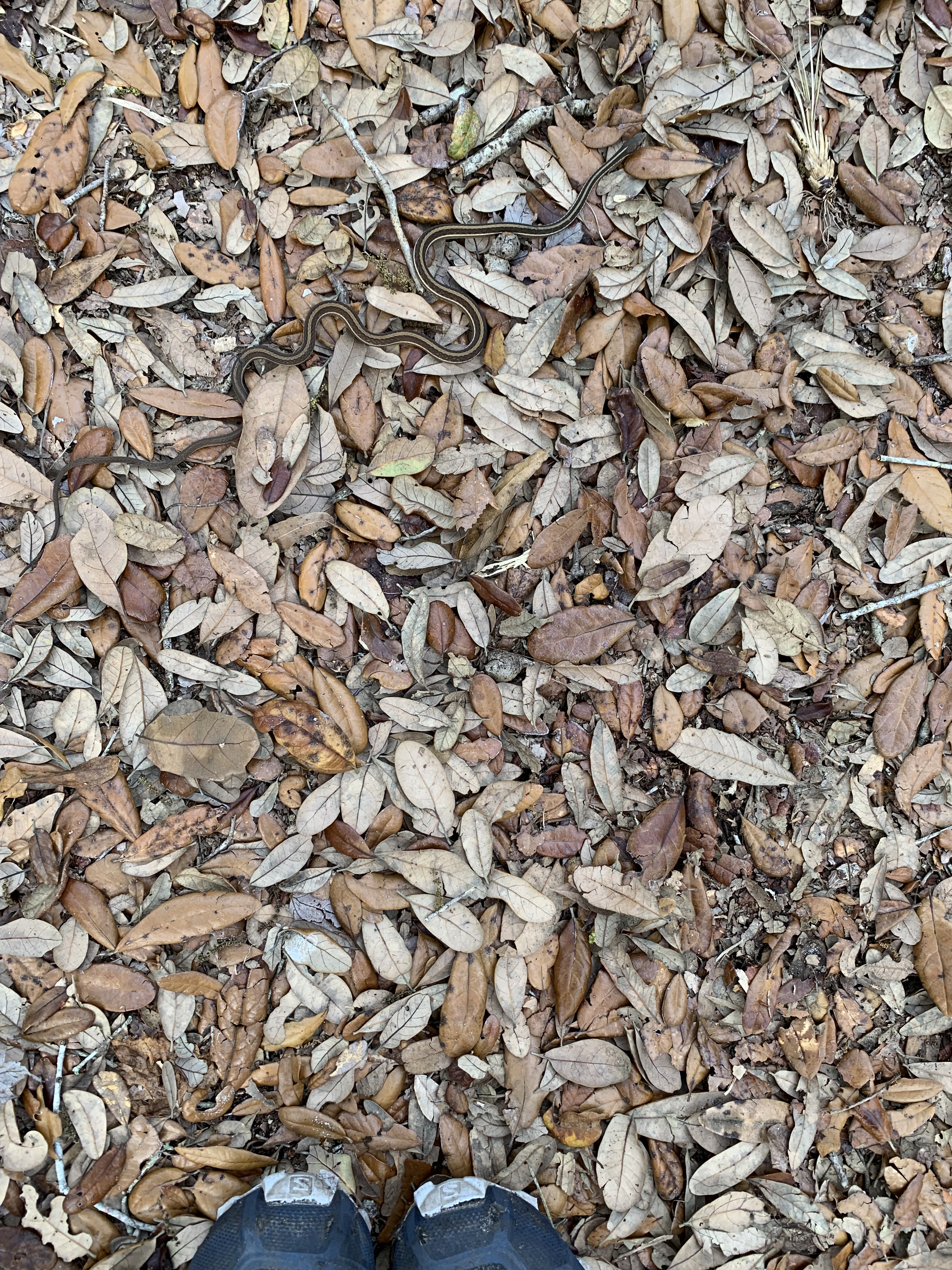
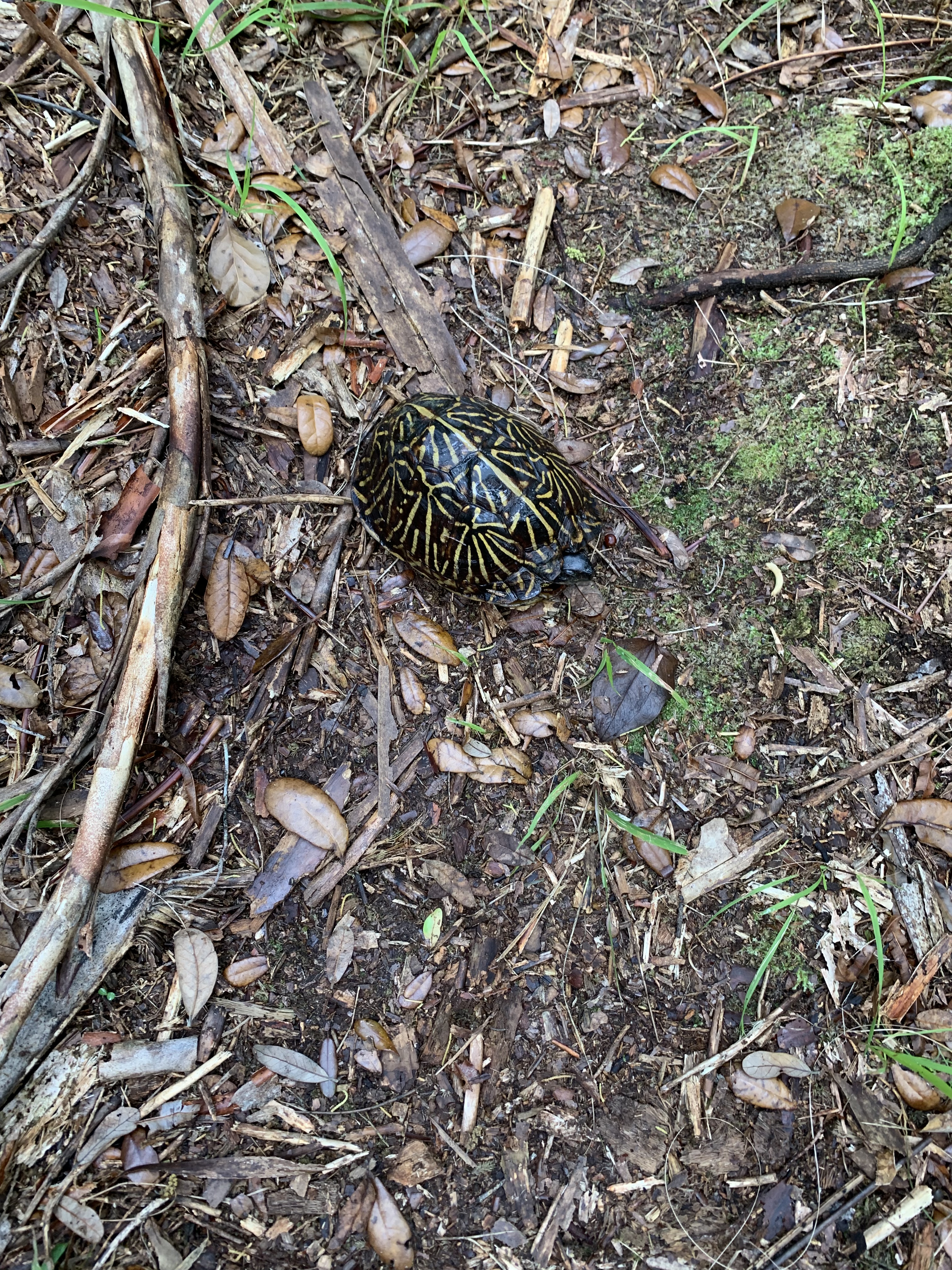
It rains overnight, so packing up dry is a joy. So are the miles ahead, as armadillos, tortoises, snakes, and even a skunk pepper the trail, reminding me that even though this section skirts the urban sprawl of Orlando, the rightful residents still find a way to endure.

An added bonus are the many opportunities to refuel along the way: smoothie shops, Starbucks, Publix. As I wend my way north, the sprawl thickens and I find myself, after miles of concrete, longing for a swamp or two.

In Paisley, I stop at a Dollar General to resupply and find a puddle of shade. Sitting on a dirty curb, it takes me four tries to hit the right pocket to drain the fluid from a blister on the sole of my foot. I listen as a man f-bombs his children into silence as they wait, strapped in car seats, for him to unpack his cart of groceries. I’m broken by the sadness of it all.

I wish there were something I could do, but his hostility is unsafe, and I get up and keep walking.

A night spent in a sketchy tent sight right off a busy bike path gives me the willies, as does a warning on FarOut.

I will not fear, I will not fear, I will not fear.

I wake up early and hoof it through that section, happy to leave Orlando behind.

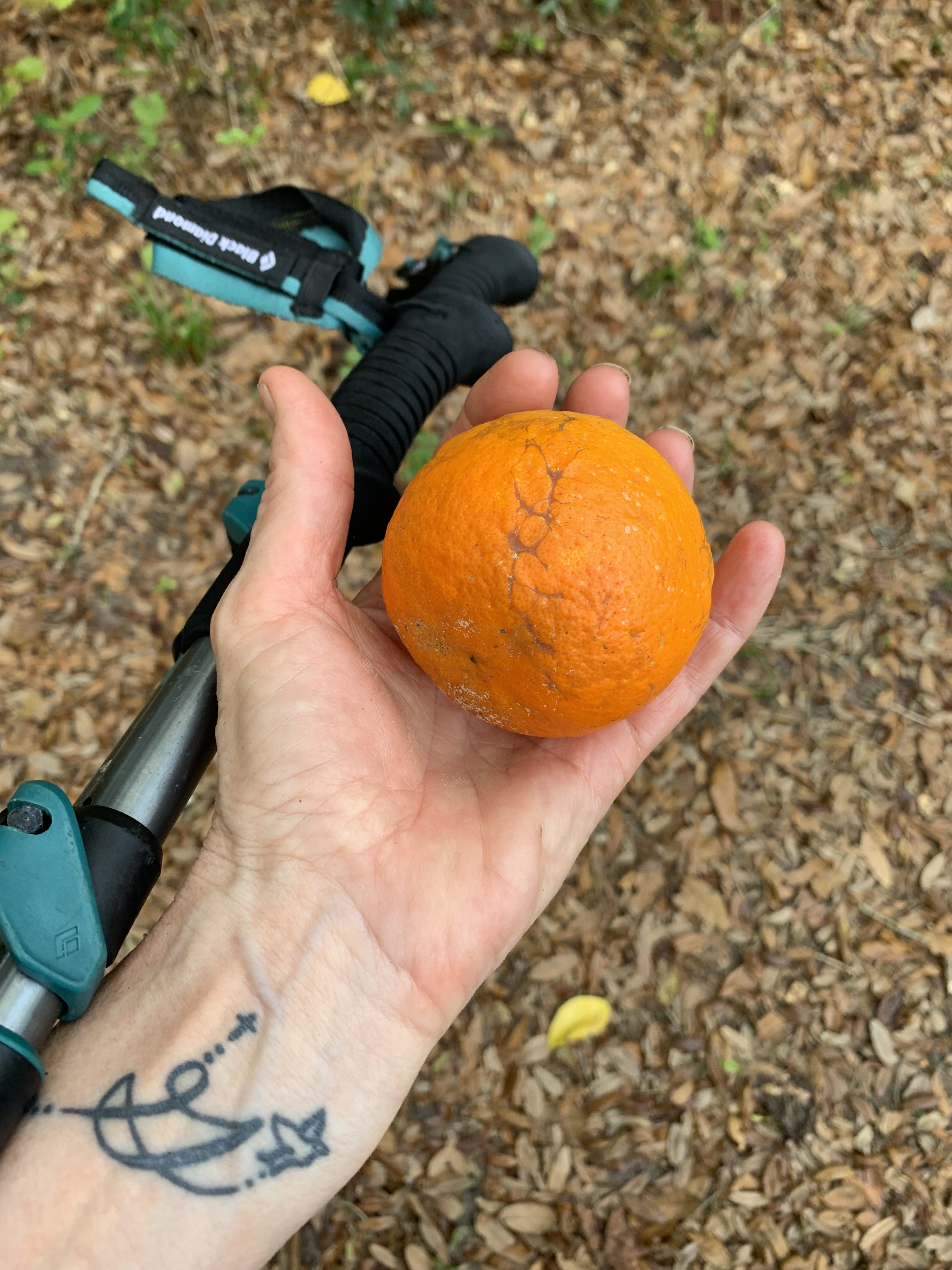
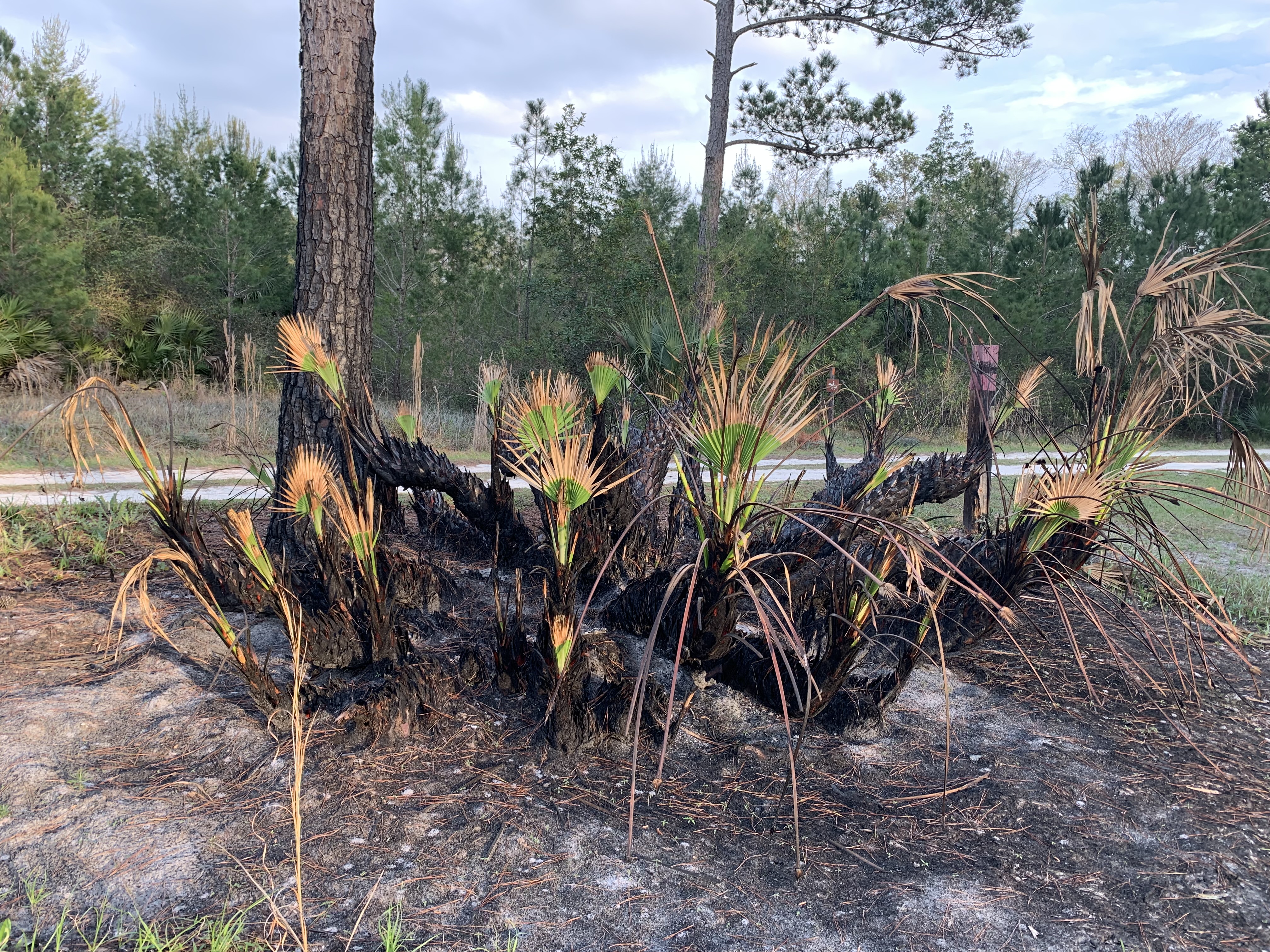
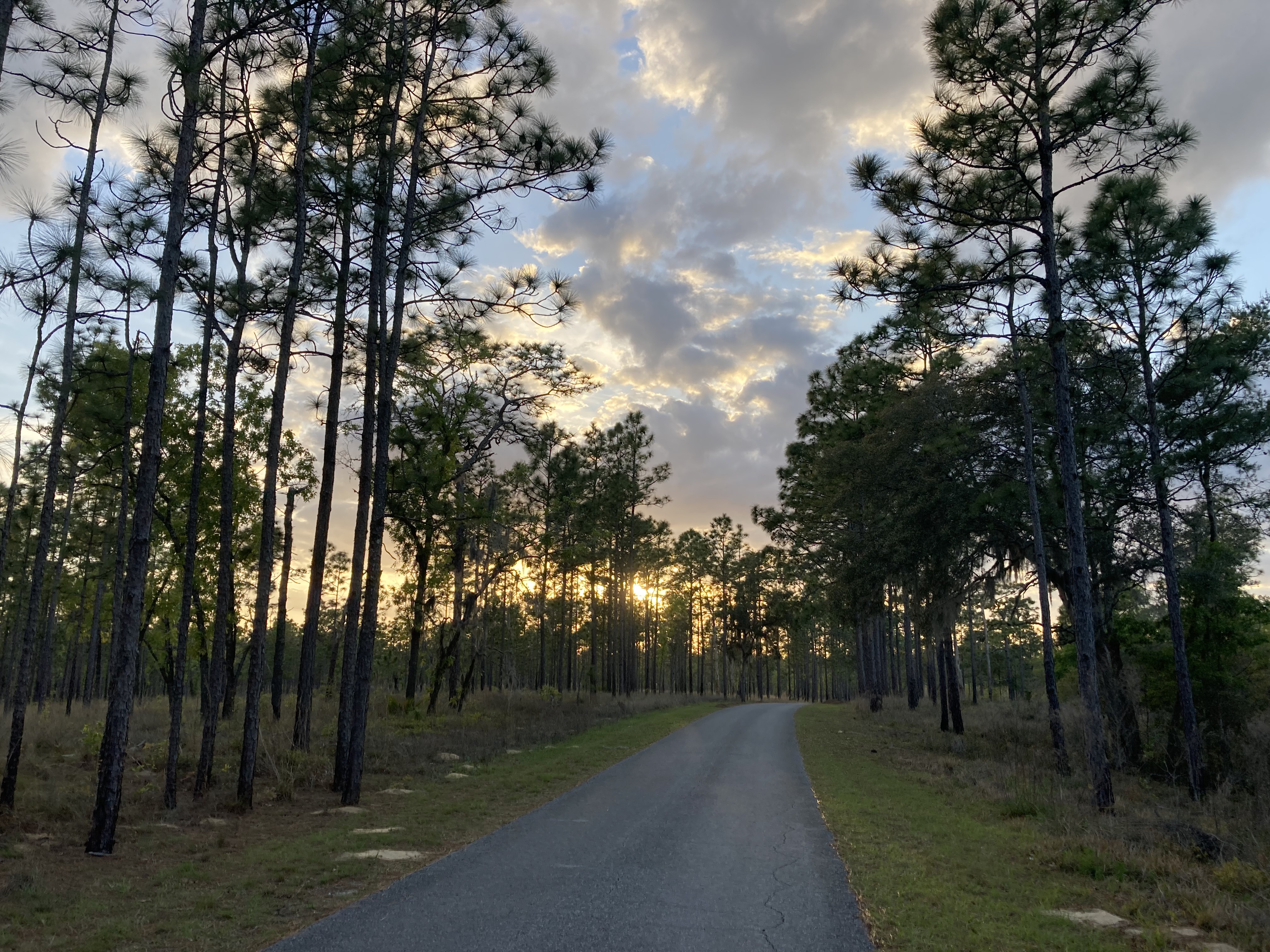
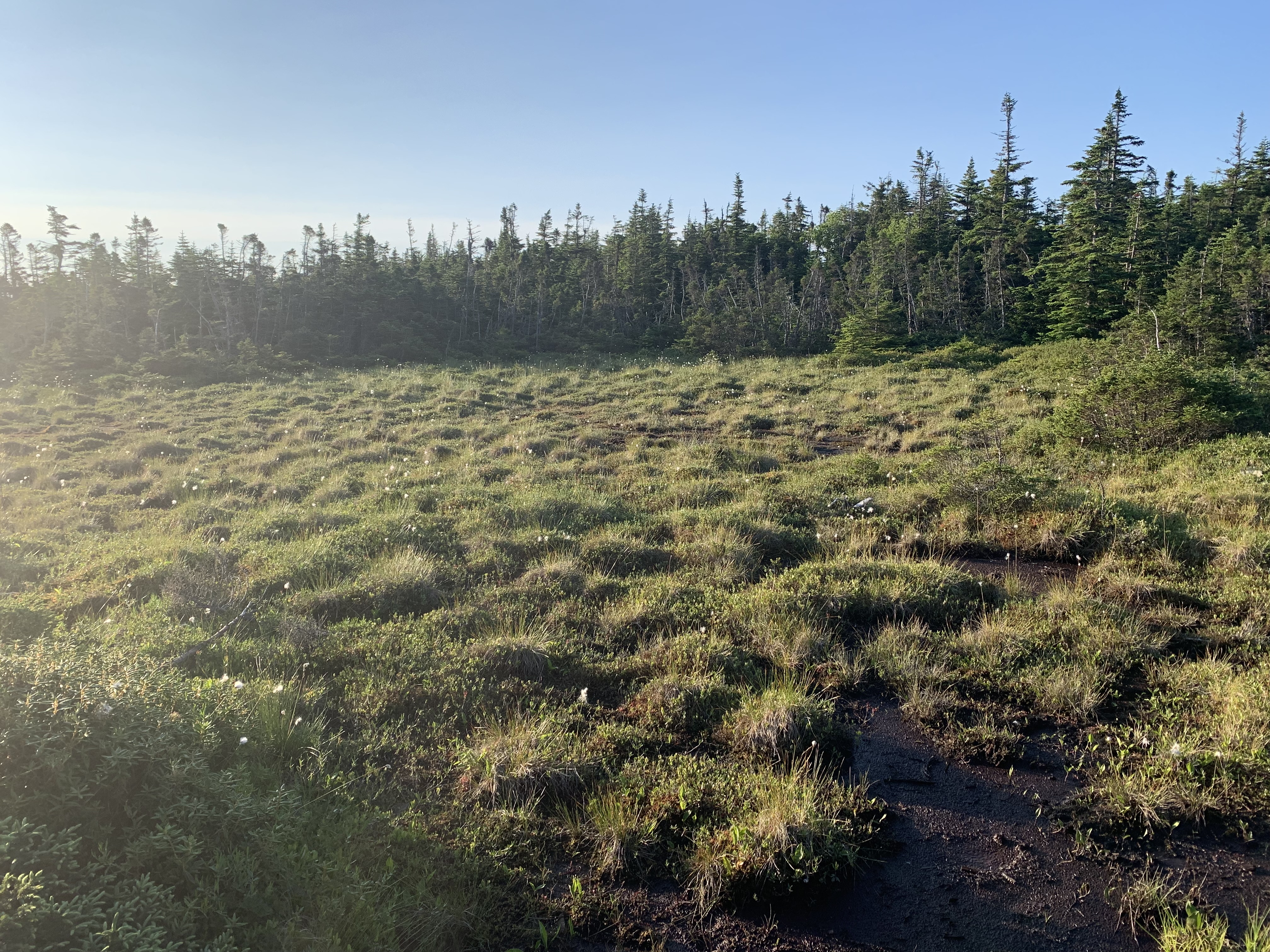
Thankfully, the trail leads upward into Seminole State and Ocala National Forests, where I discover lakes, a wild orange tree, vast prairies, and nature resiliently recovering from prescribed burns.

Full disclosure: the orange tasted more like a lemon, but the liquid novelty made up for it.

On the last day, I pop out of the woods at the same road crossing where my cousin dropped me off a year earlier, linking last year’s miles with this year’s.

The shadows recede as she gives me a ride back to my car.

What began, years ago, as a way to escape the cold has become one of the highlights of my spring break.

I’m grateful that I still have a few hundred miles left, grateful that they will be there for me next spring, grateful that I can hike them and not be afraid.

All the Things

I’ve been sick for what seems like – has been – weeks, so 2024 came sneaking through the door while I was asleep.

I find if I nap and rest and sleep good night sleeps, I can still hike, can still chase The Grid to its at-last conclusion.

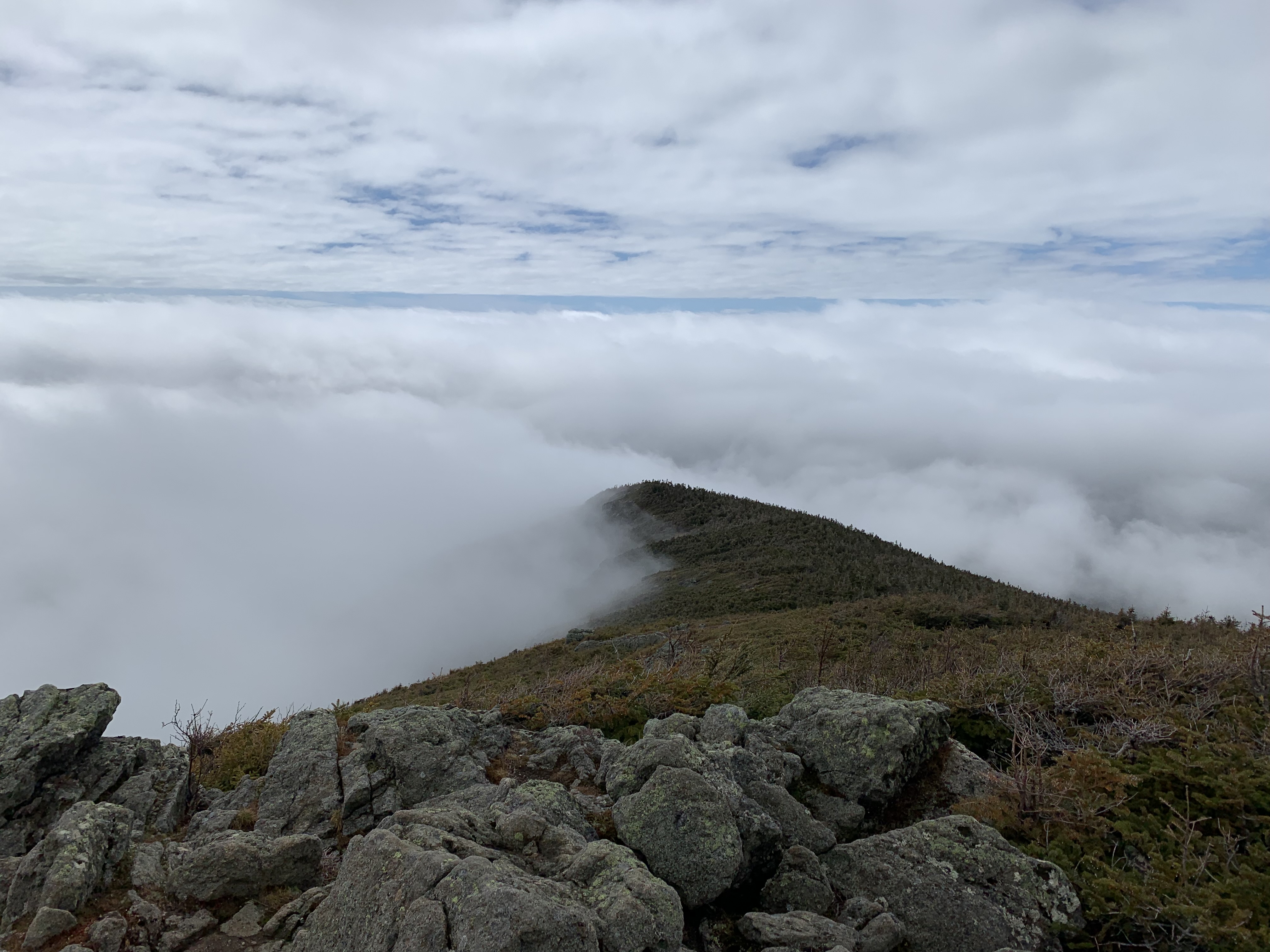
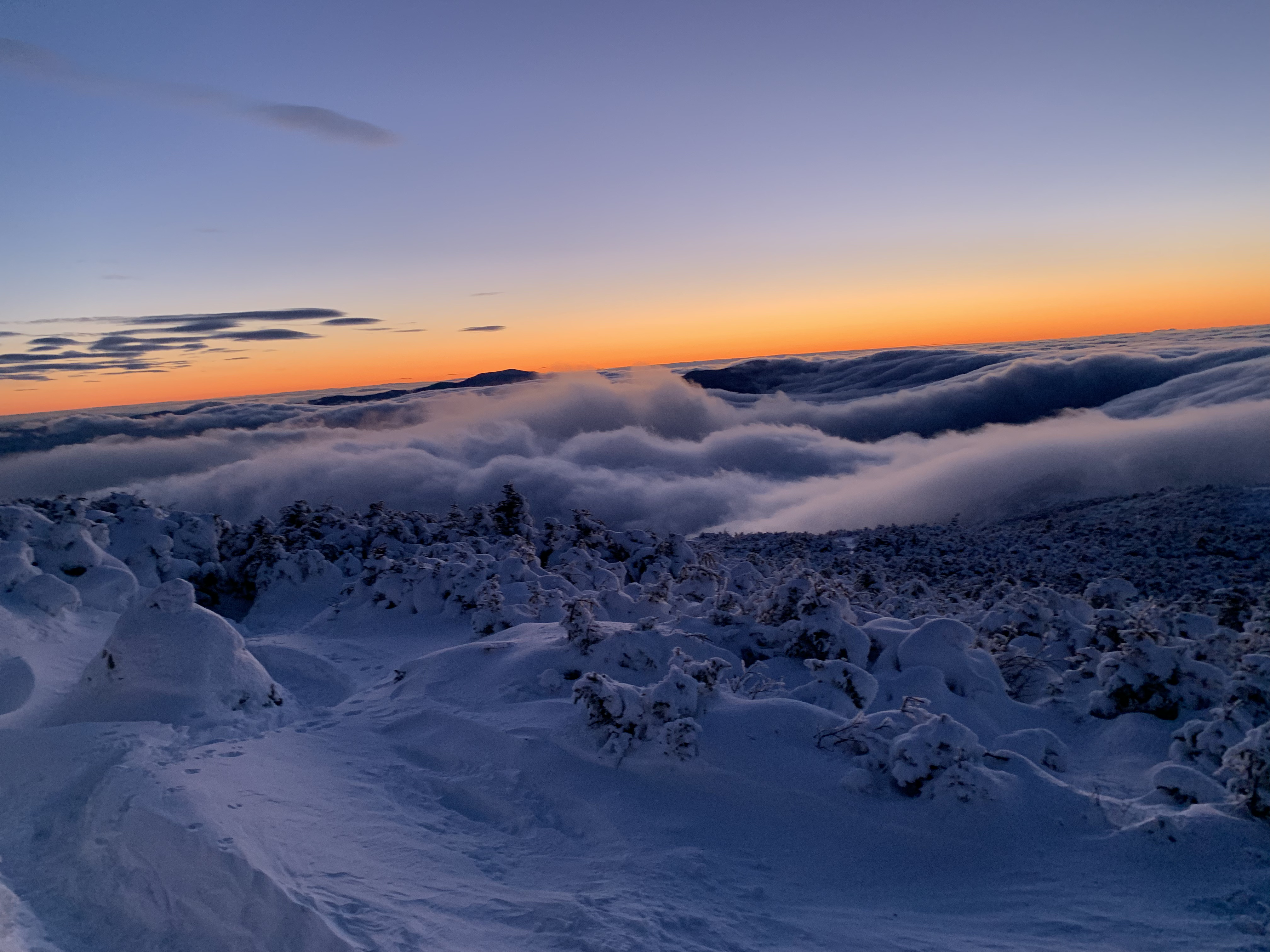
On the first day of the year, I hit 509/576 with Carrigain, a glorious peek into what forever might look like: blue blue sky, cold clear air, clouds above and clouds below.

But I feel myself slowing down.

I look in the mirror and see my mother’s face, gone now 10 long years.

I know, I know, there could be many years left ahead for me. On the cusp of 2024, I welcome every one and all the things that each might bring.

The summits up ahead, though they look far off, are closer perhaps than they appear. I’m thankful there is a now.

Thankful for the faces of my children and grandchildren, and all the wild silly that lives within them.

So much ahead for them.

I wish to be a part of it for as long as I can.

I’m thankful, too, for the gift of tears, for the juxtapositional tug of sadness and joy. I read somewhere recently that a dead world does not suffer; much like love, we must take the possibility of its ache if we ever hope to glean all of its delight.

It feels sometimes that I will never finish The Grid. It pulls me along, one peak at a time, giving me just enough hope for the next one and the next. Sometimes it constrains me, and I wish I could just go where I wanted. I suppose that I could, but I’ve spent a lifetime in competition – against others, against myself, against the forces that seek to derail and destroy – so not-finishing was never an option.

Best to just believe the good report. To embrace the shifting seasons and live like I know I should, like I know that I can, because of the promise that we will never die forever.

Pressing on toward the goal to win the prize for which God has called me heavenward (Phillipians 3:14).

After The End

I miss pilgrim meals.

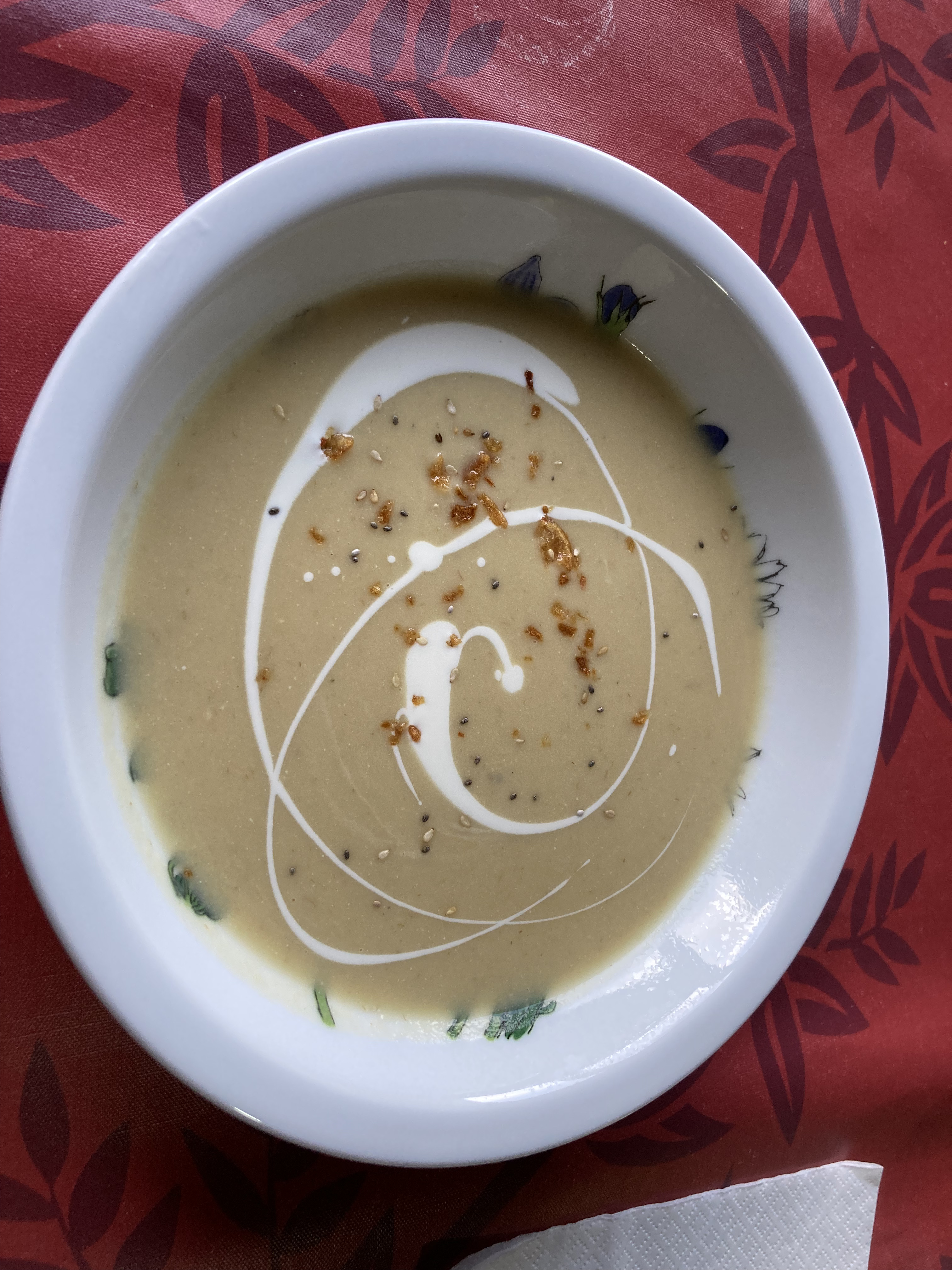
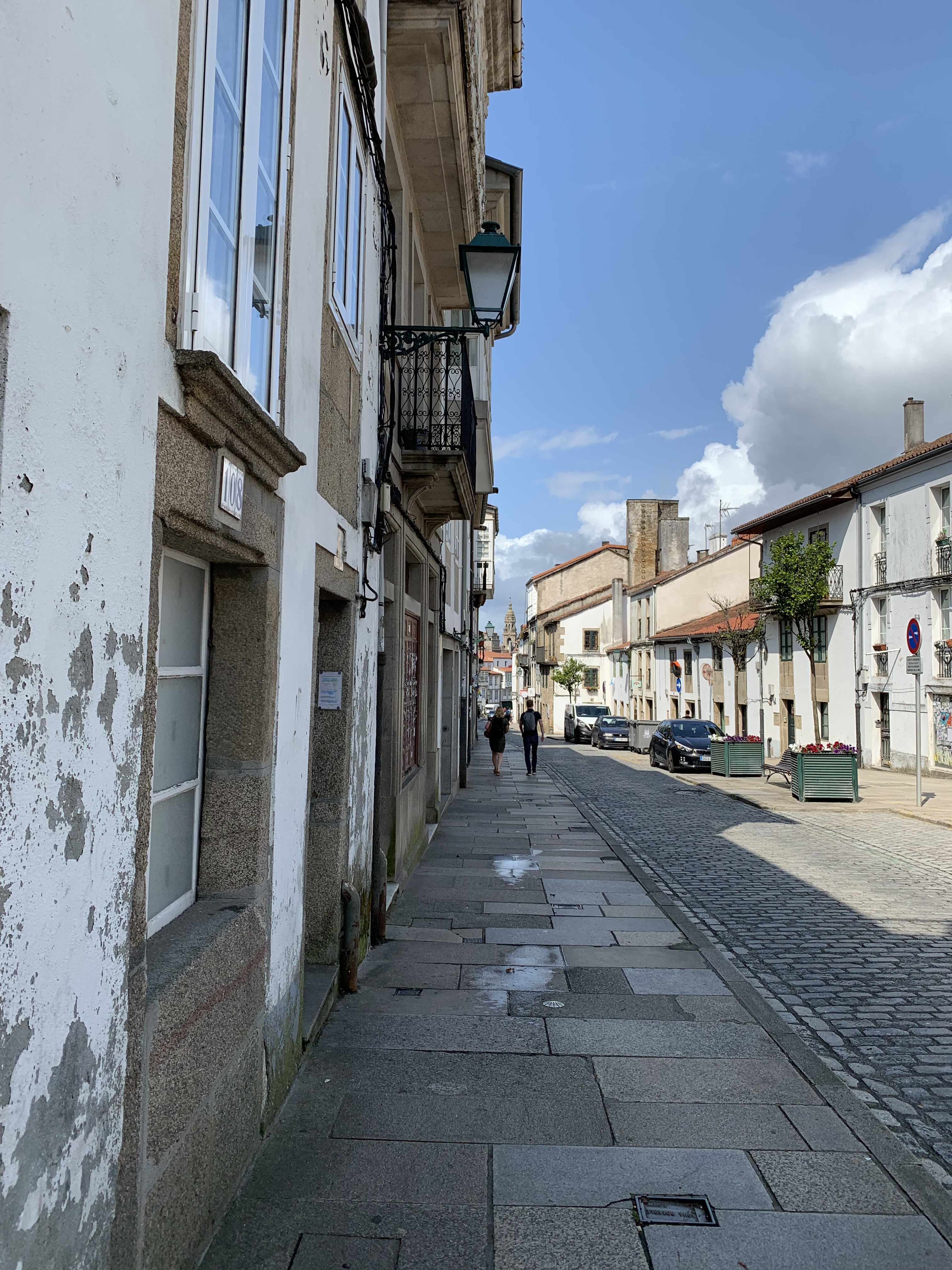
I’ve been back from the Camino de Santiago for a few weeks now, and although I re-familiarizing myself with my own kitchen, I am unable to replicate the feeling of sitting down after a long day’s walk to bowls of savory soup, baskets of bread, plates of rice and seafood, pollo and patatas, a bottle of wine and a glass.

The first time this happened, as I sat at a table alone, I wondered if there had been some mistake – did the waitress think I was expecting someone else?

So. Much. Food.

But I soon came to appreciate the rejuvenative nature of these hearty meals for the next day’s miles.

I’m still processing all of the things-I-miss from my time in Spain.

There are actually whole books written about the post-Camino experience. Author Karin Kaiser writes in After the Camino: Your Pocket Guide to Integrating the Camino de Santiago into Your Daily Life, “The Camino isn’t something you do to check off a bucket list and return to your life as if nothing happened. Something did happen. The person who started the Camino is no longer the same person who finished it.”

Given that this Camino, my first, had been an unexpected gift, it was not unusual that when I arrived in Santiago, I did not, like so many before me, want it to end.

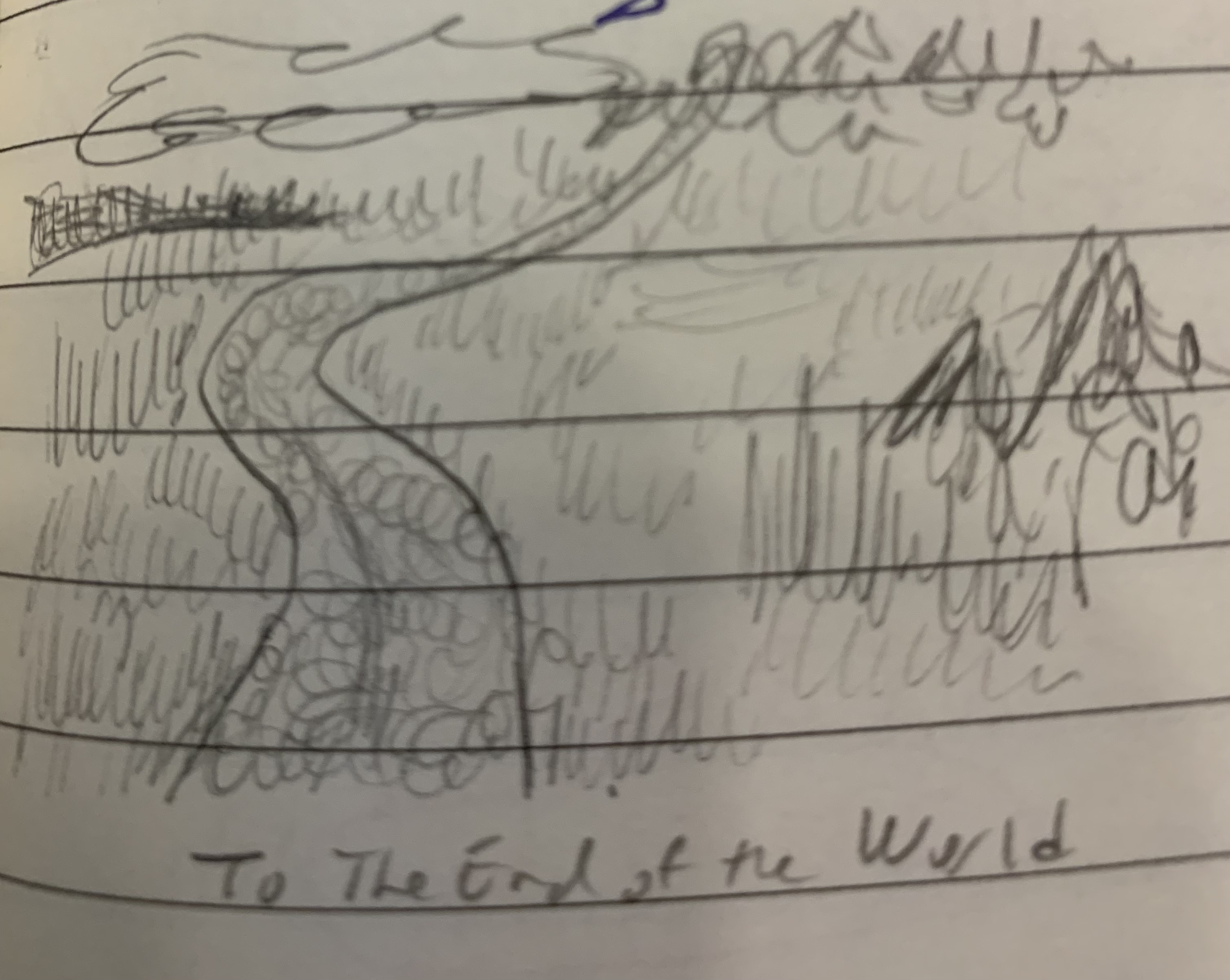
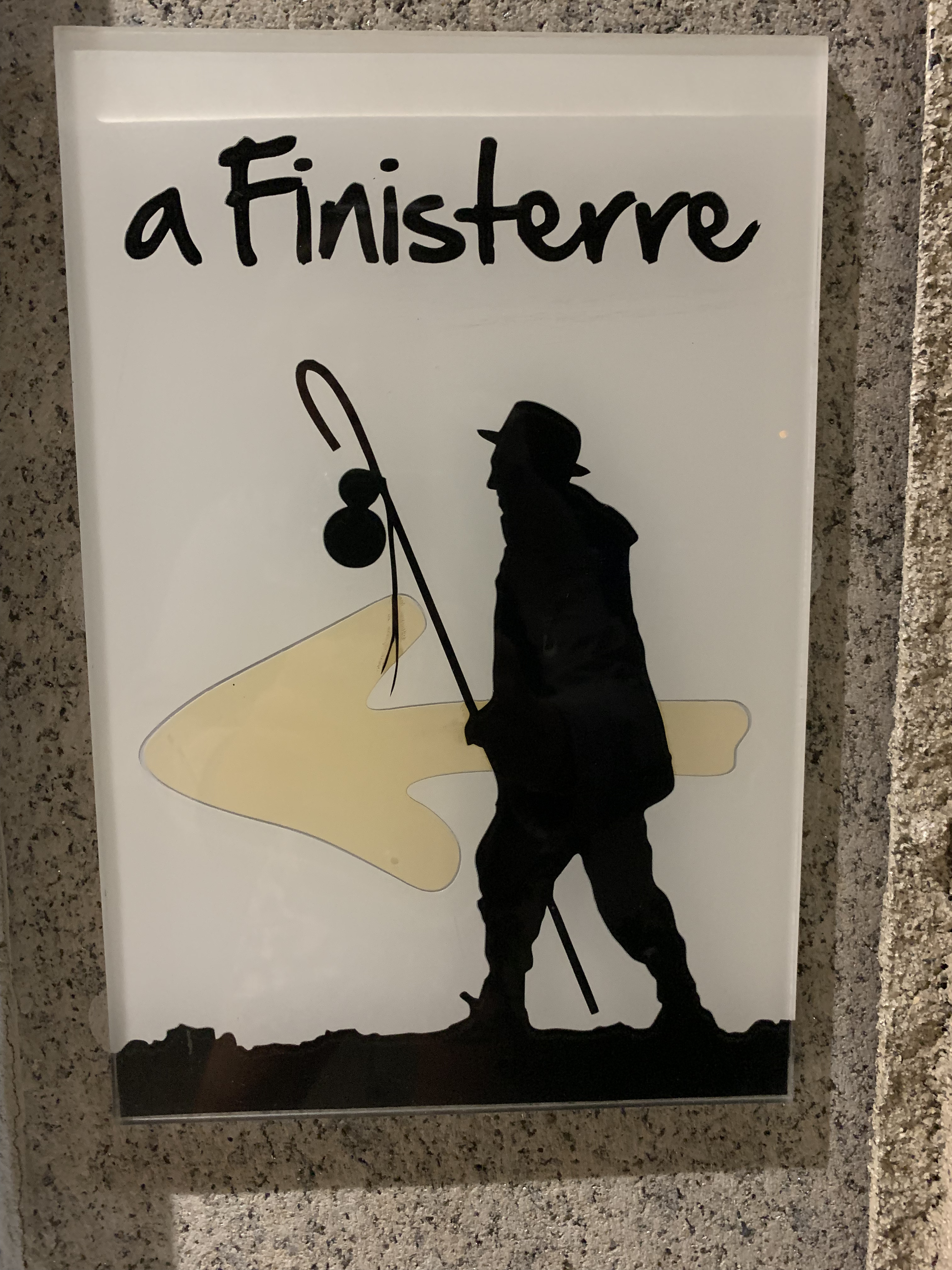
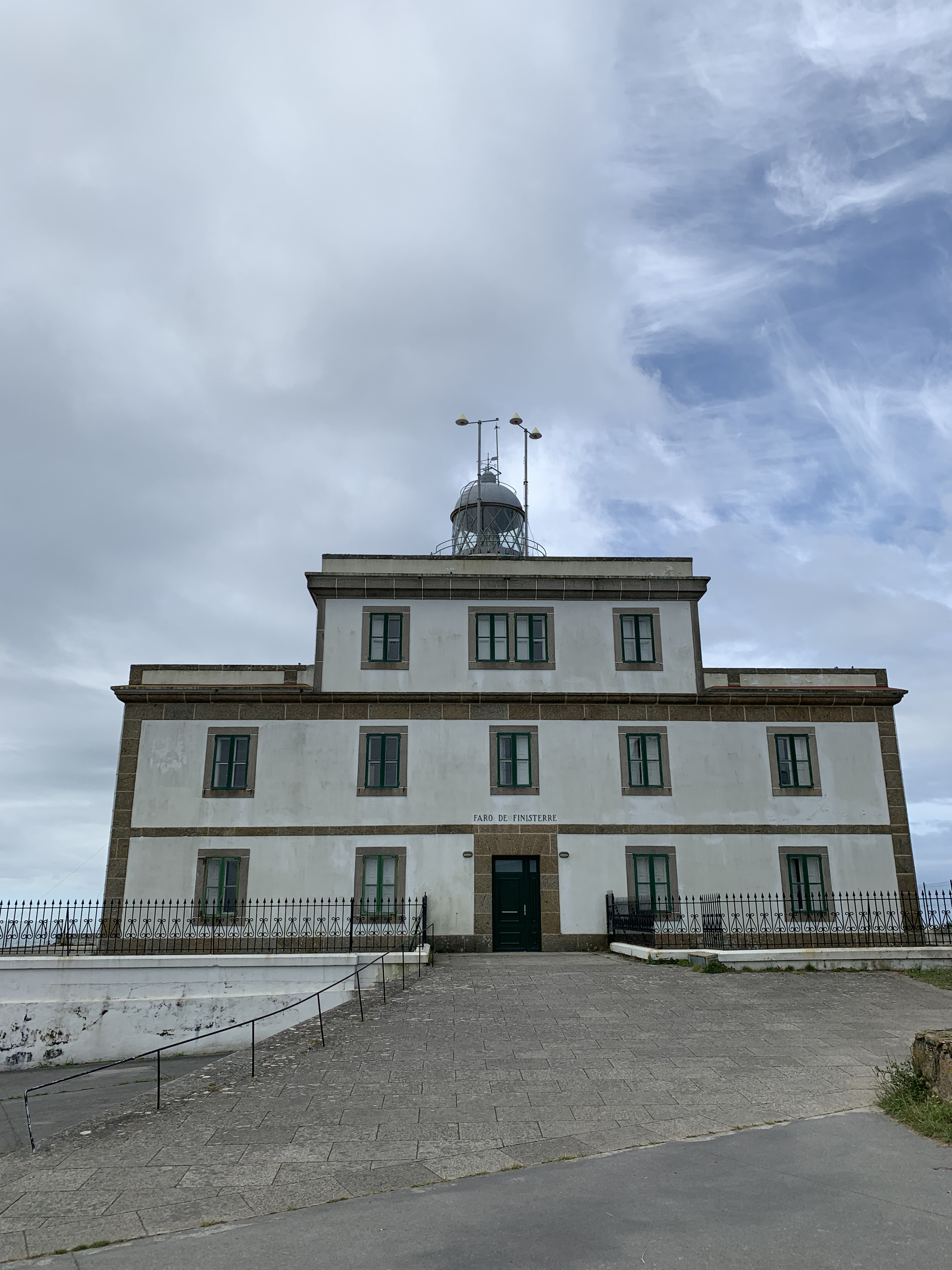
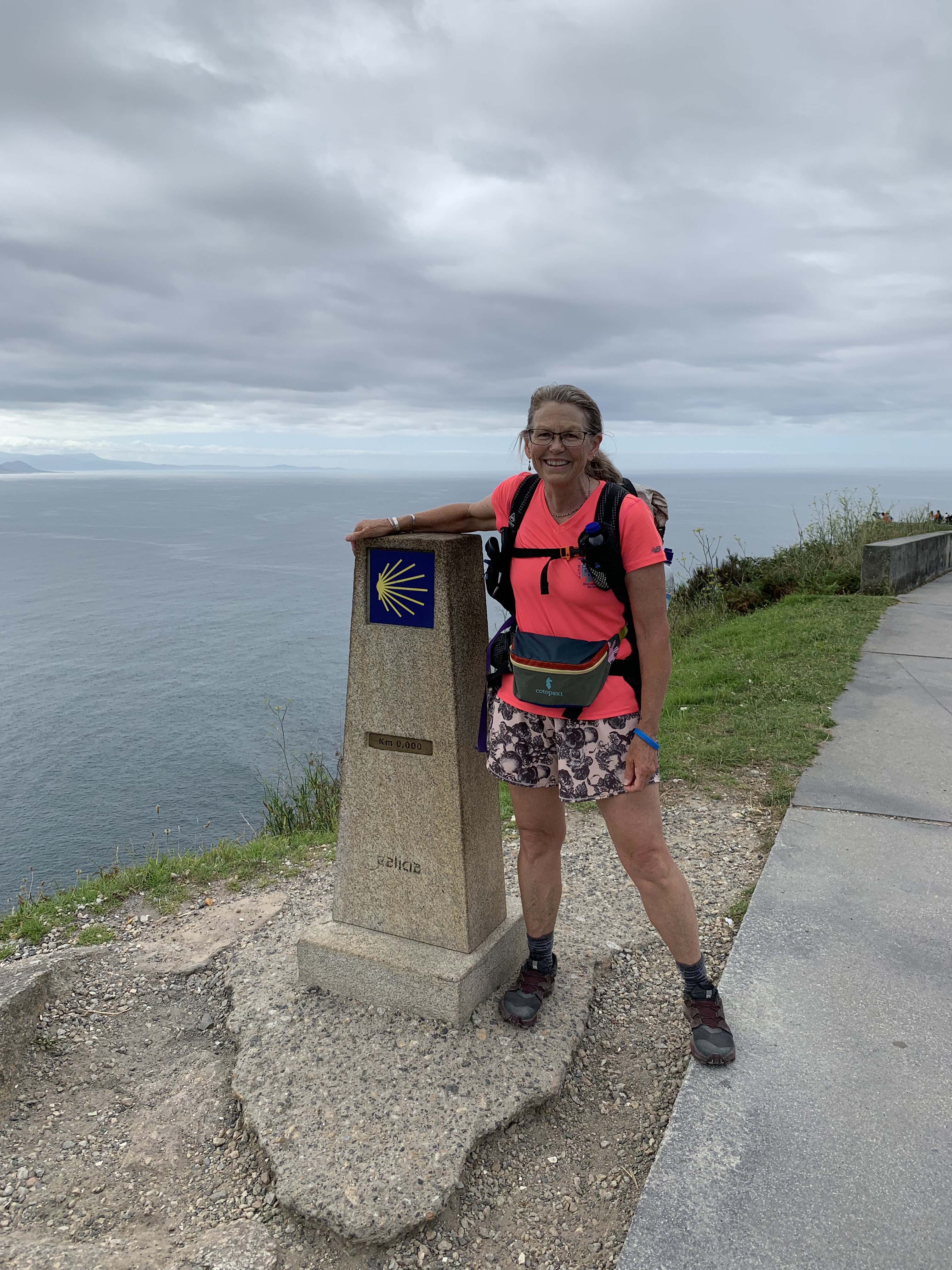
Luckily, many pilgrims choose to head to the coast after reaching Santiago, to Finisterre, which translates to “The End of the World.”

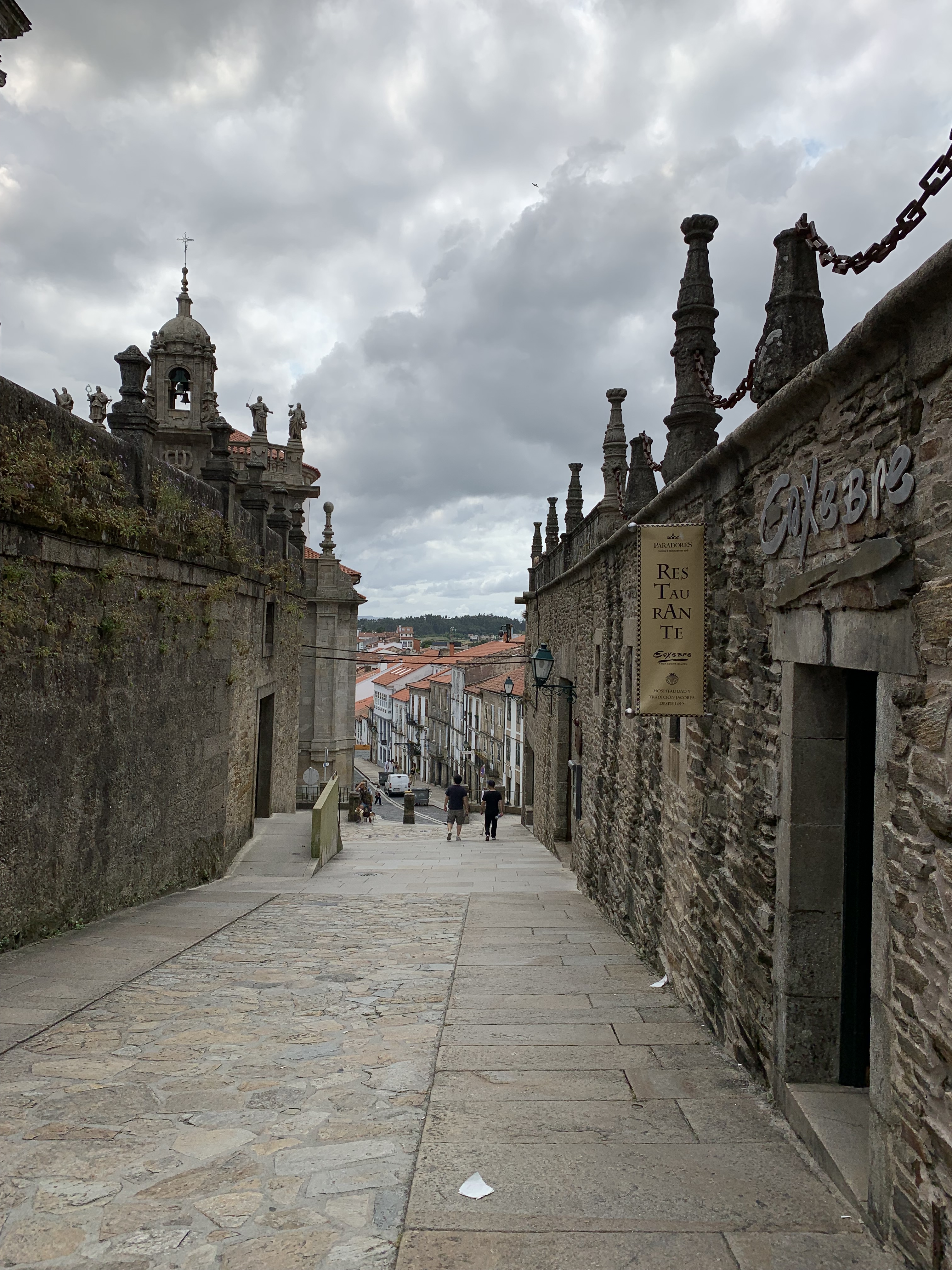
So early morning, on the day after I arrived in Santiago, I headed back out to cross the Cathedral plaza and walk the three days to the coast.

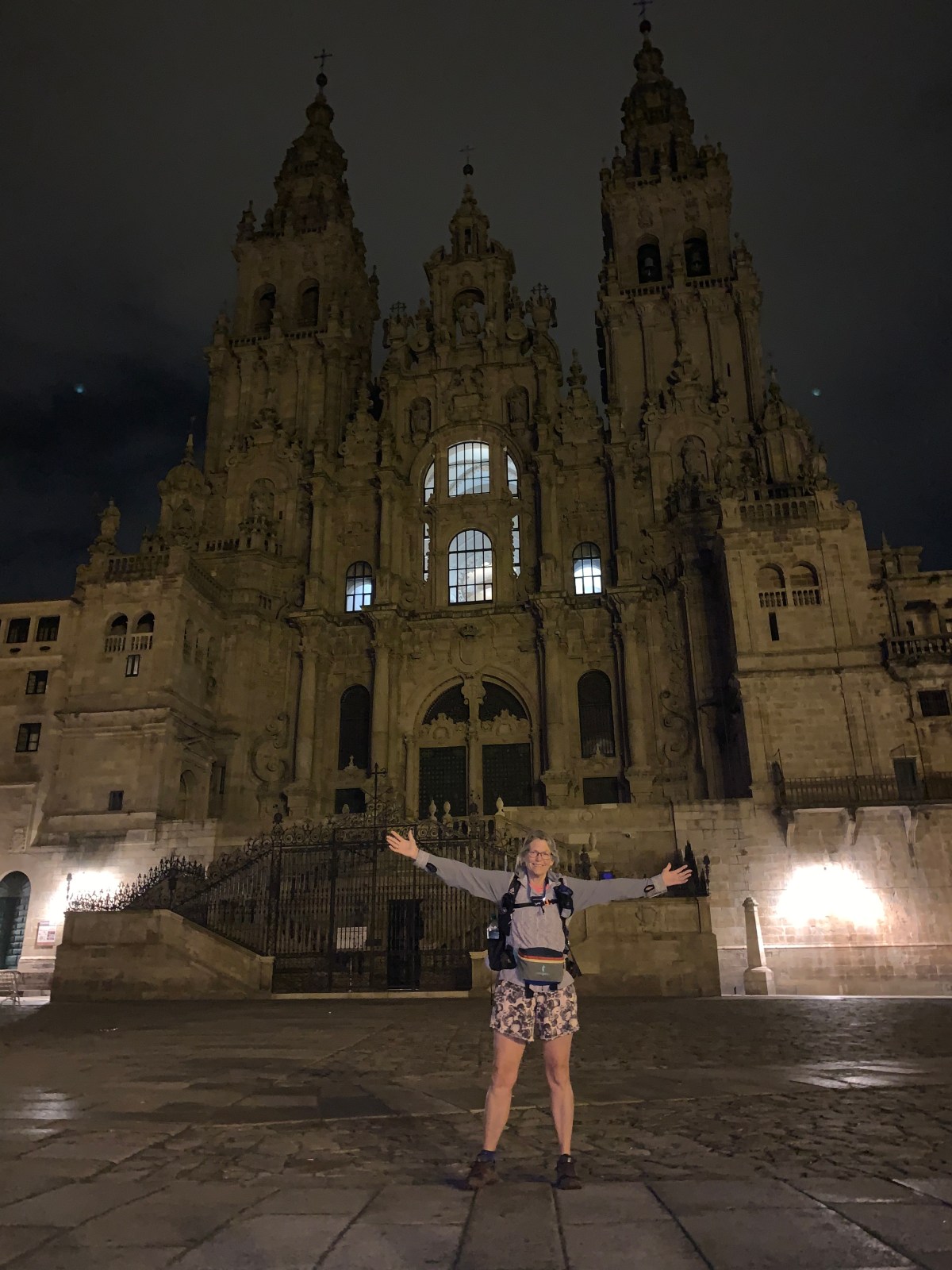
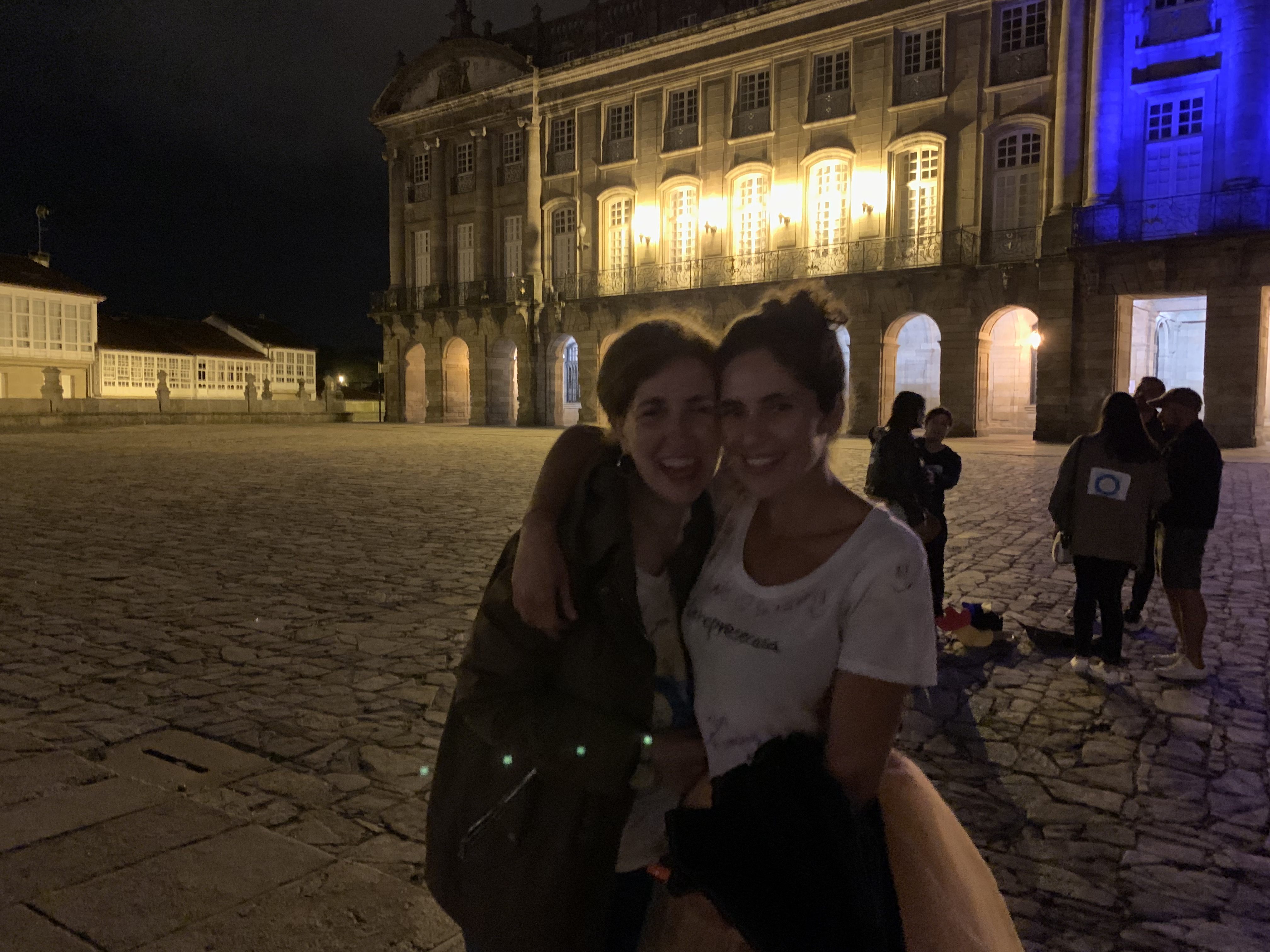
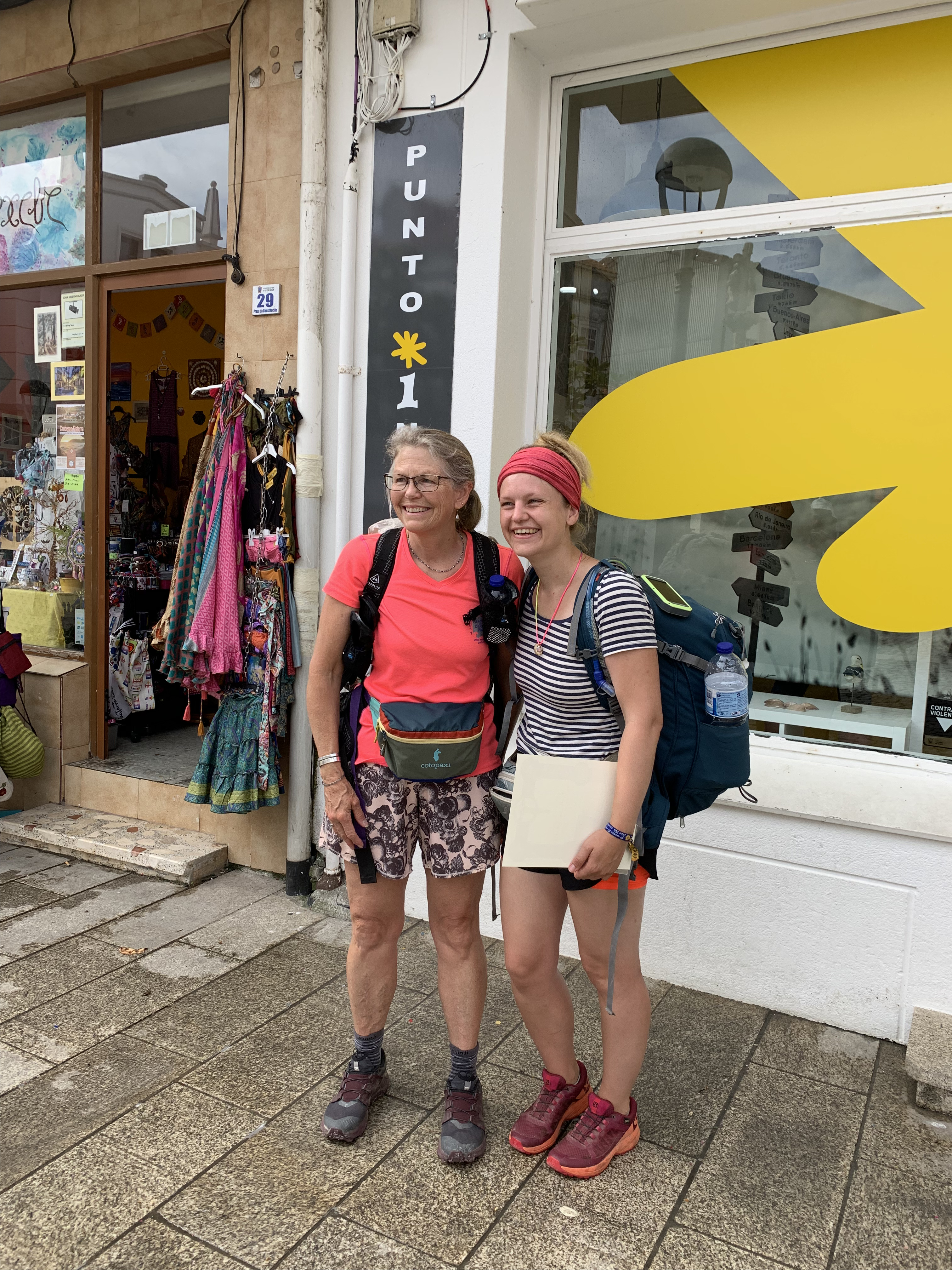
It was lovely to have the plaza almost all to myself after the chaos of the day before. I joined a party still in progress as bridesmaids celebrated with the soon-to-be-bride; invited to sign her shirt, we laughed together as she hugged her momma in joy.

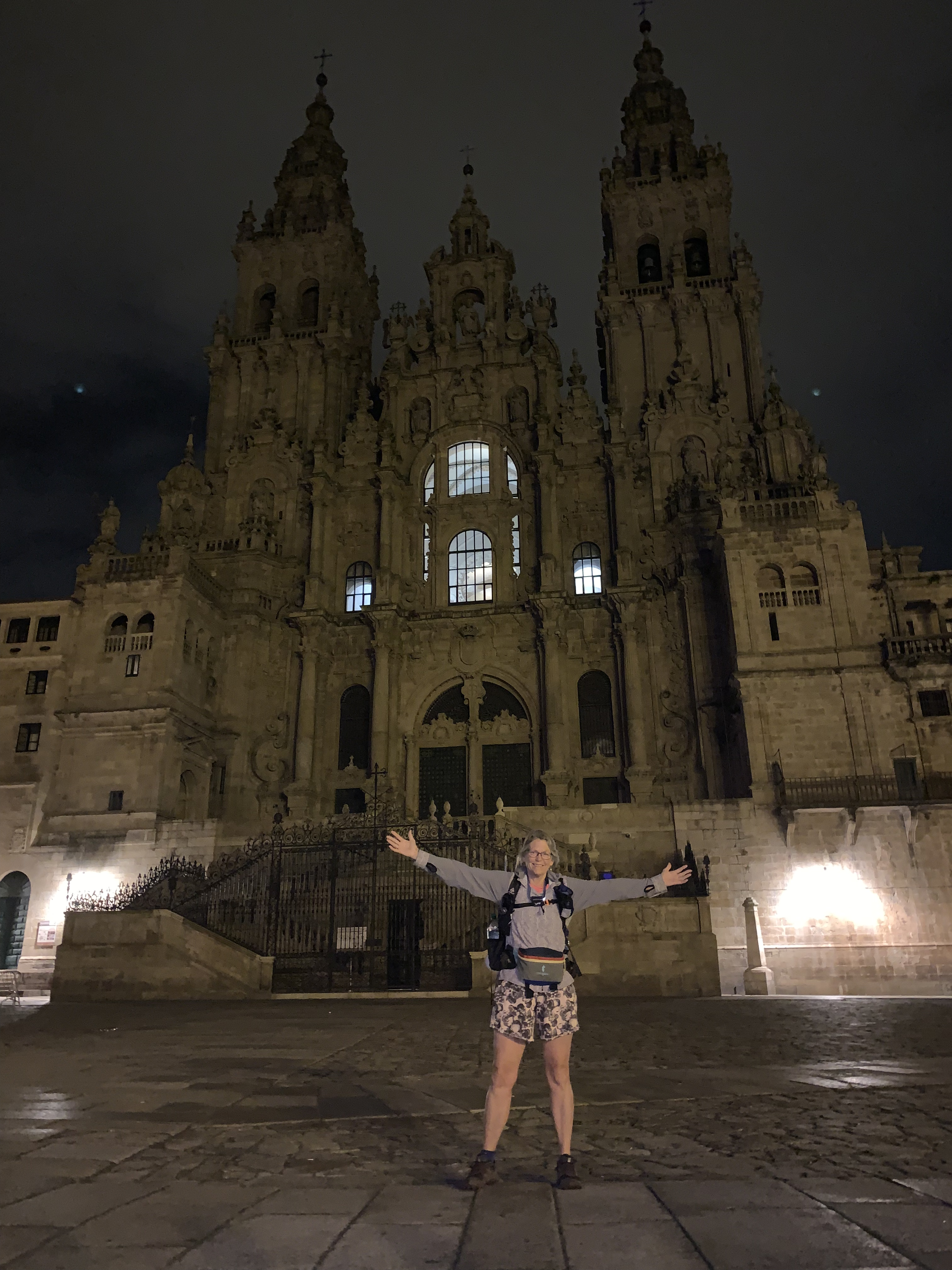
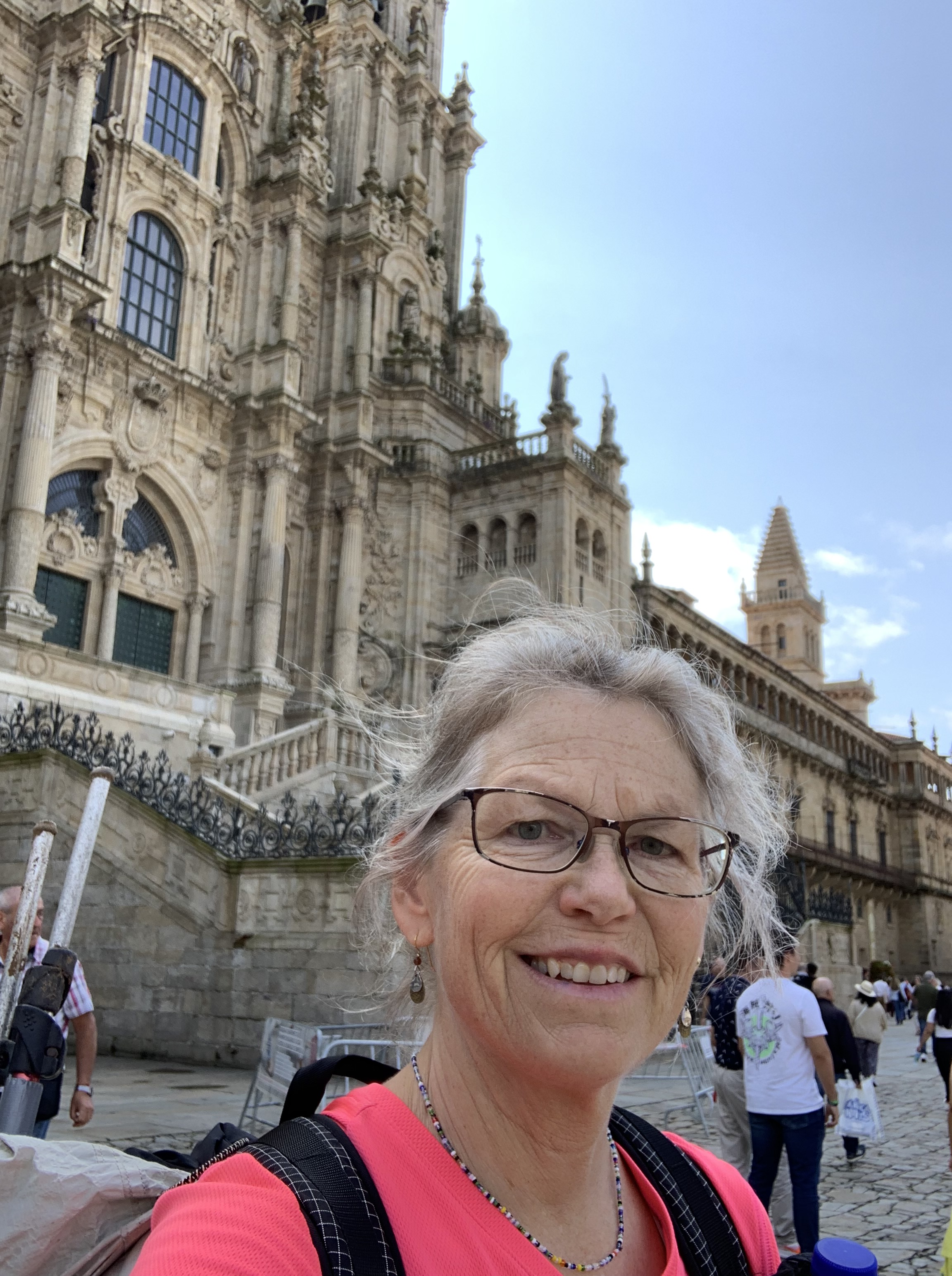
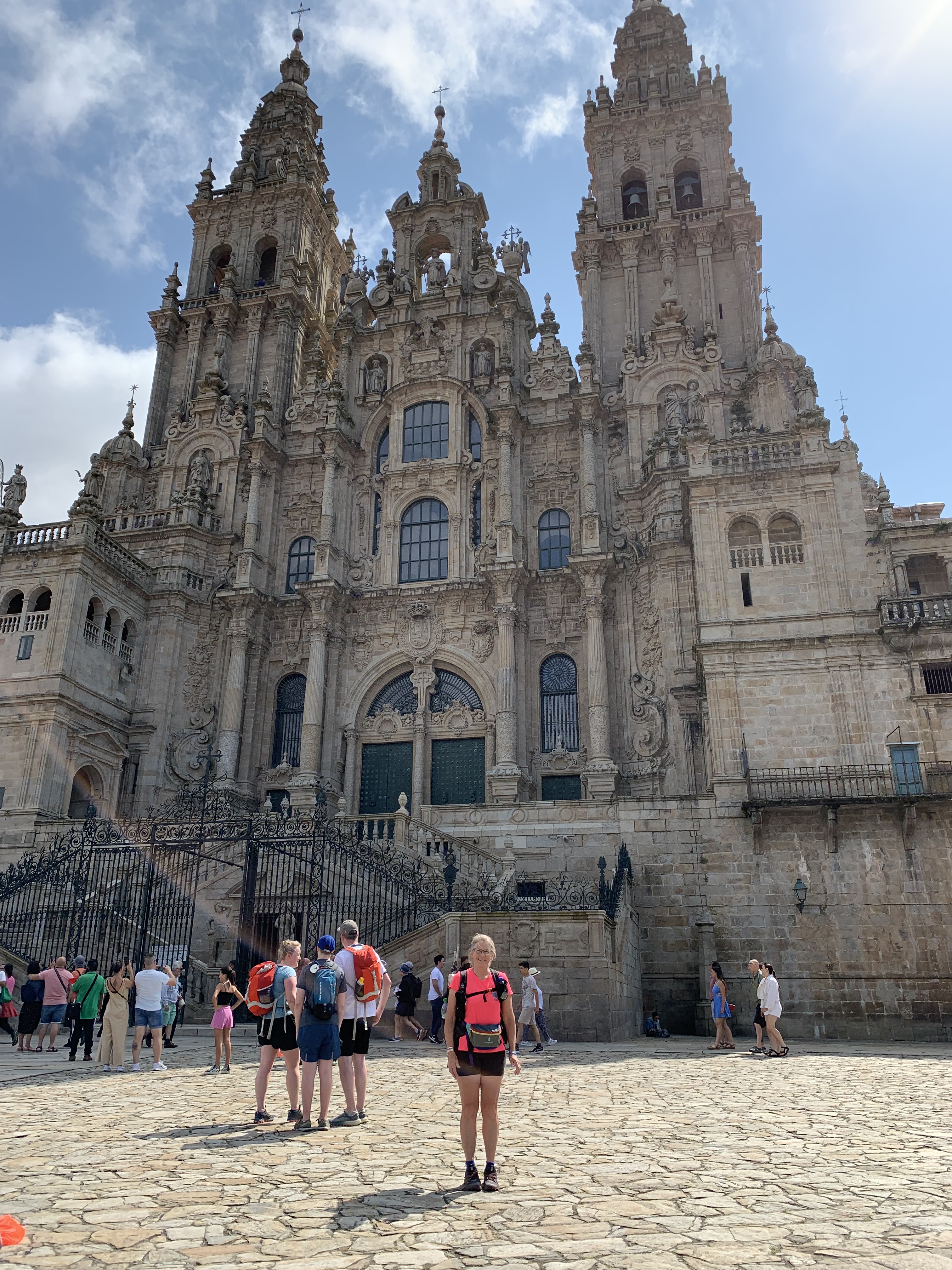
They insisted on taking my picture in front of the Cathedral, and their energy carried me the rest of the way out of town.

One thing I wanted to do before I left Spain was swim in the ocean; having lived much of my life close to the Atlantic, it seemed fit to try to find a place where, if I looked out across the swells, I could imagine seeing home.

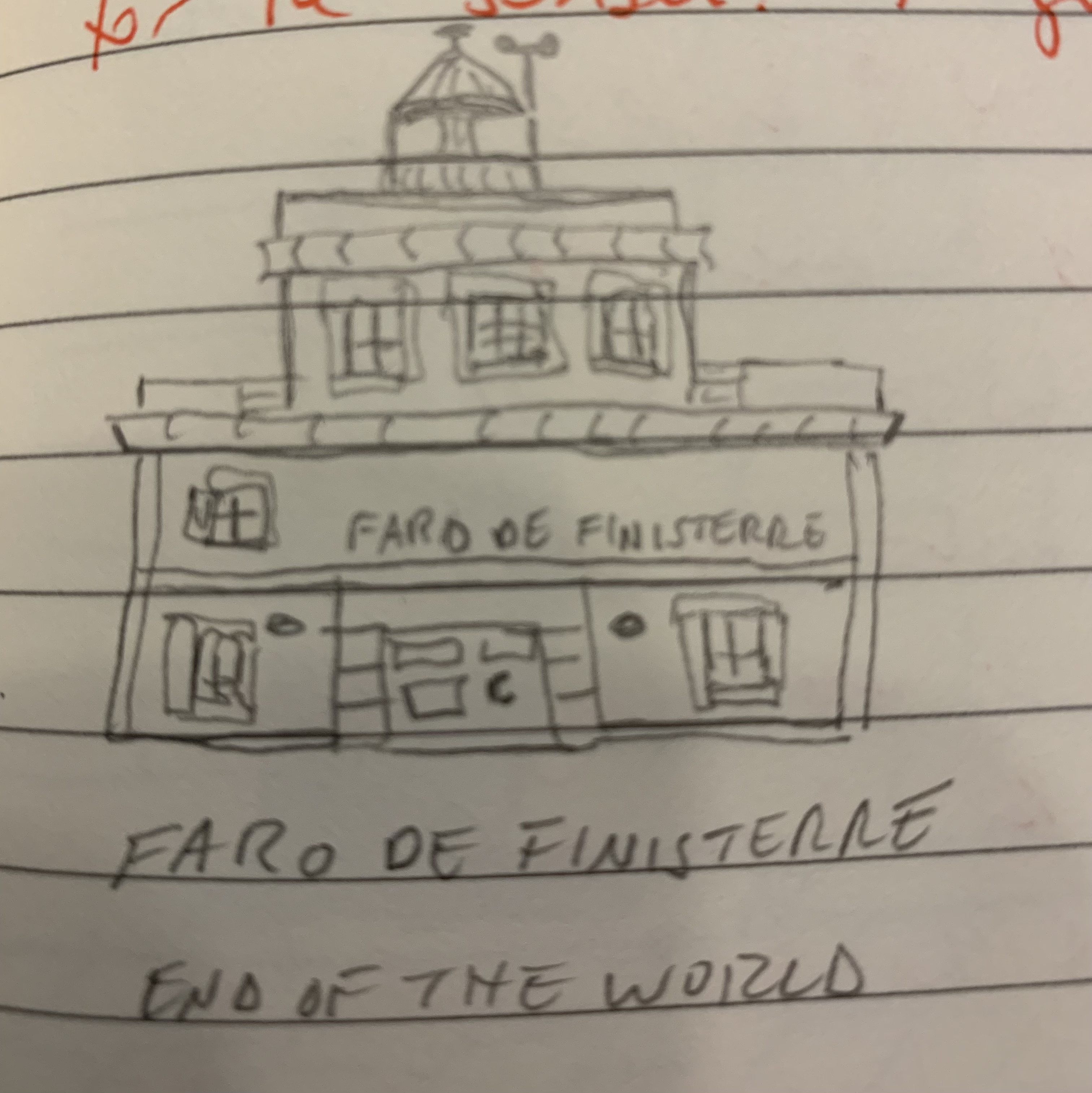
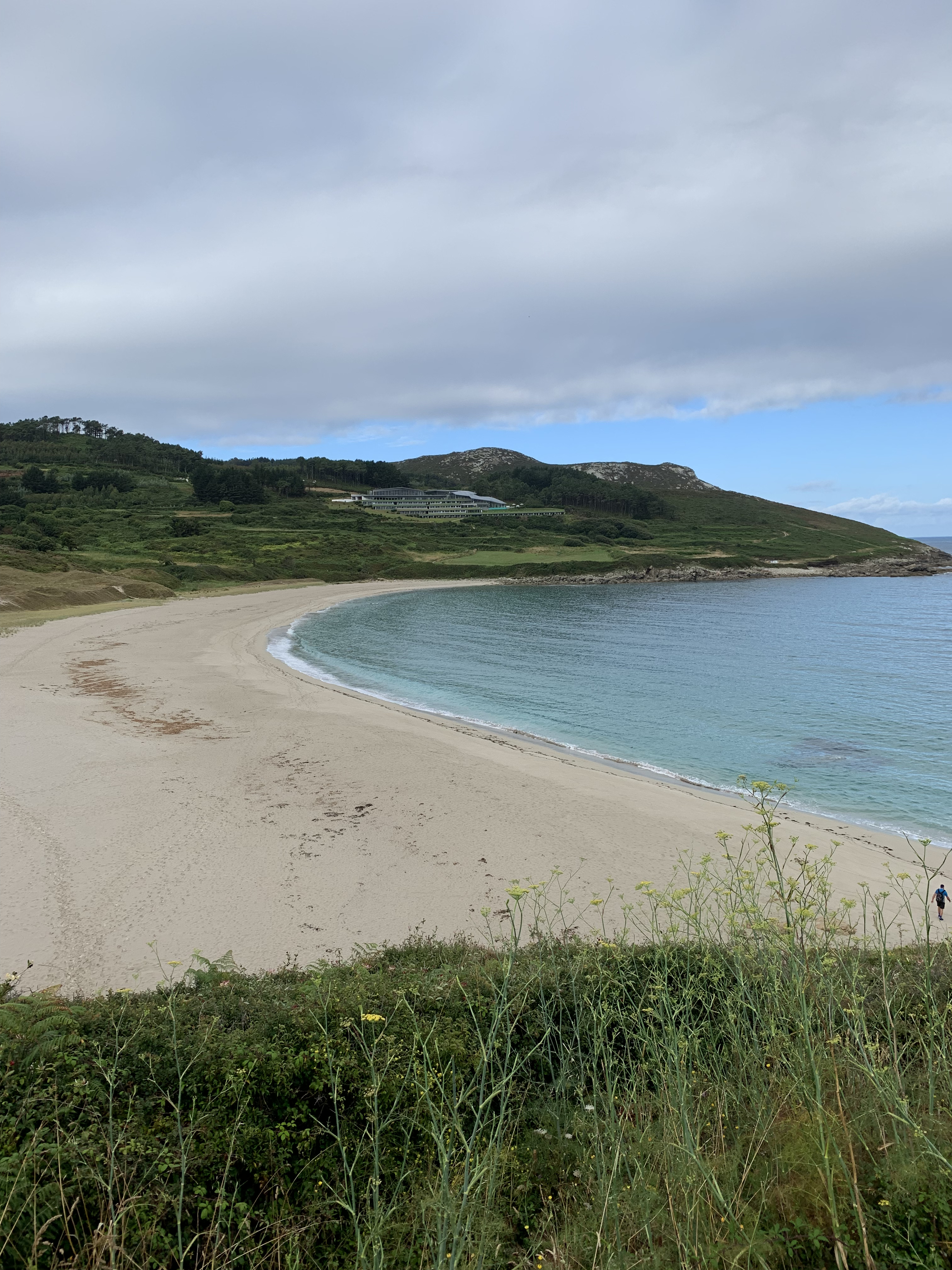
I walked long that first day, 47K, hoping to set myself up to reach the port town of Cee. Unfortunately, their beach turned out to be a shallow, seaweed-laden, plastic trash soup, so I needed another plan. The beach on the approach to Finisterre would have worked, but the chilly air and my eagerness to reach the iconic lighthouse kept me moving.

I decided not to stay overnight in Finisterre, as most pilgrims do, as it was a bit too people-y; despite brief encounters with others from around the world, I remained a most solitary pilgrim.

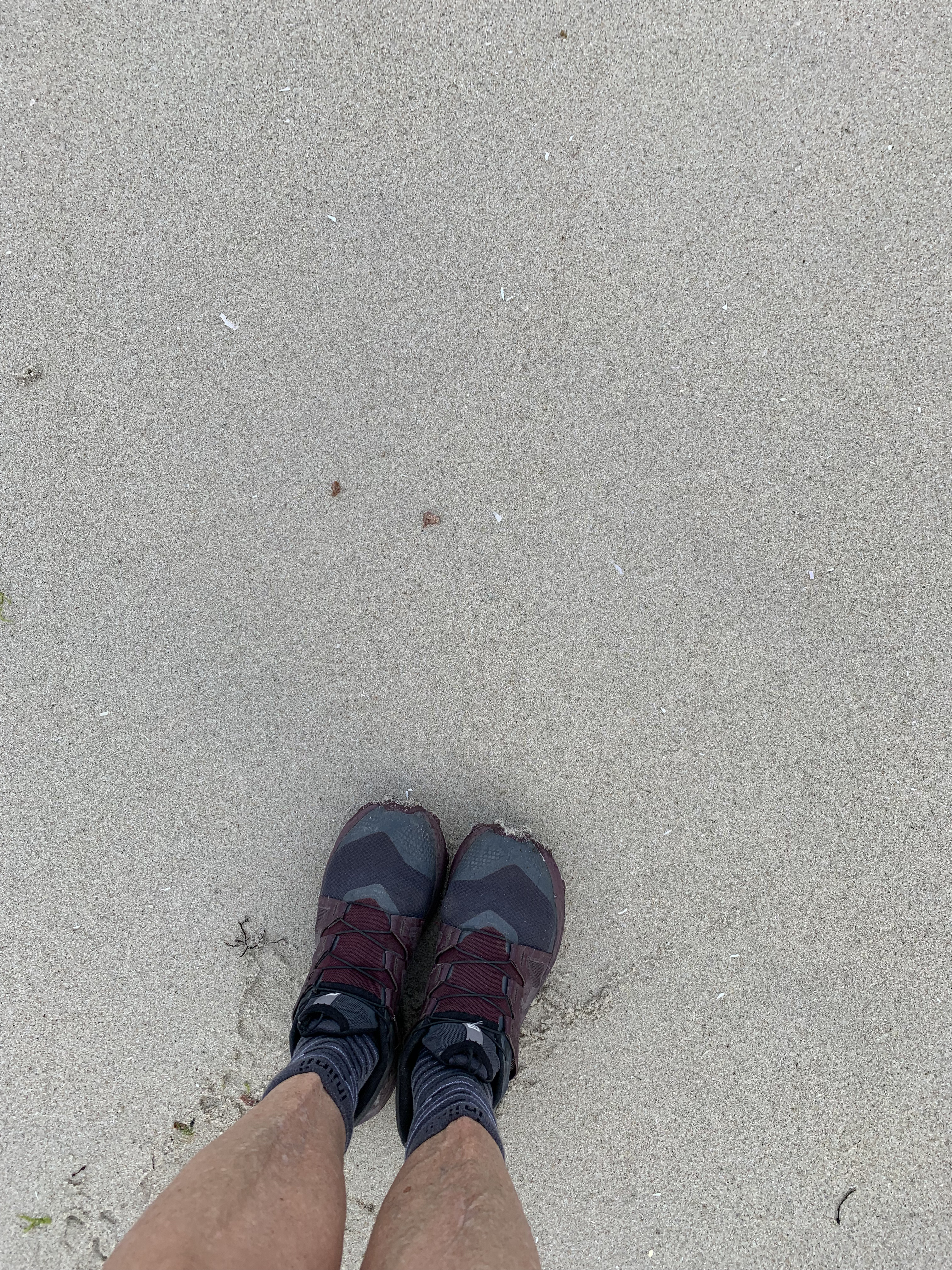
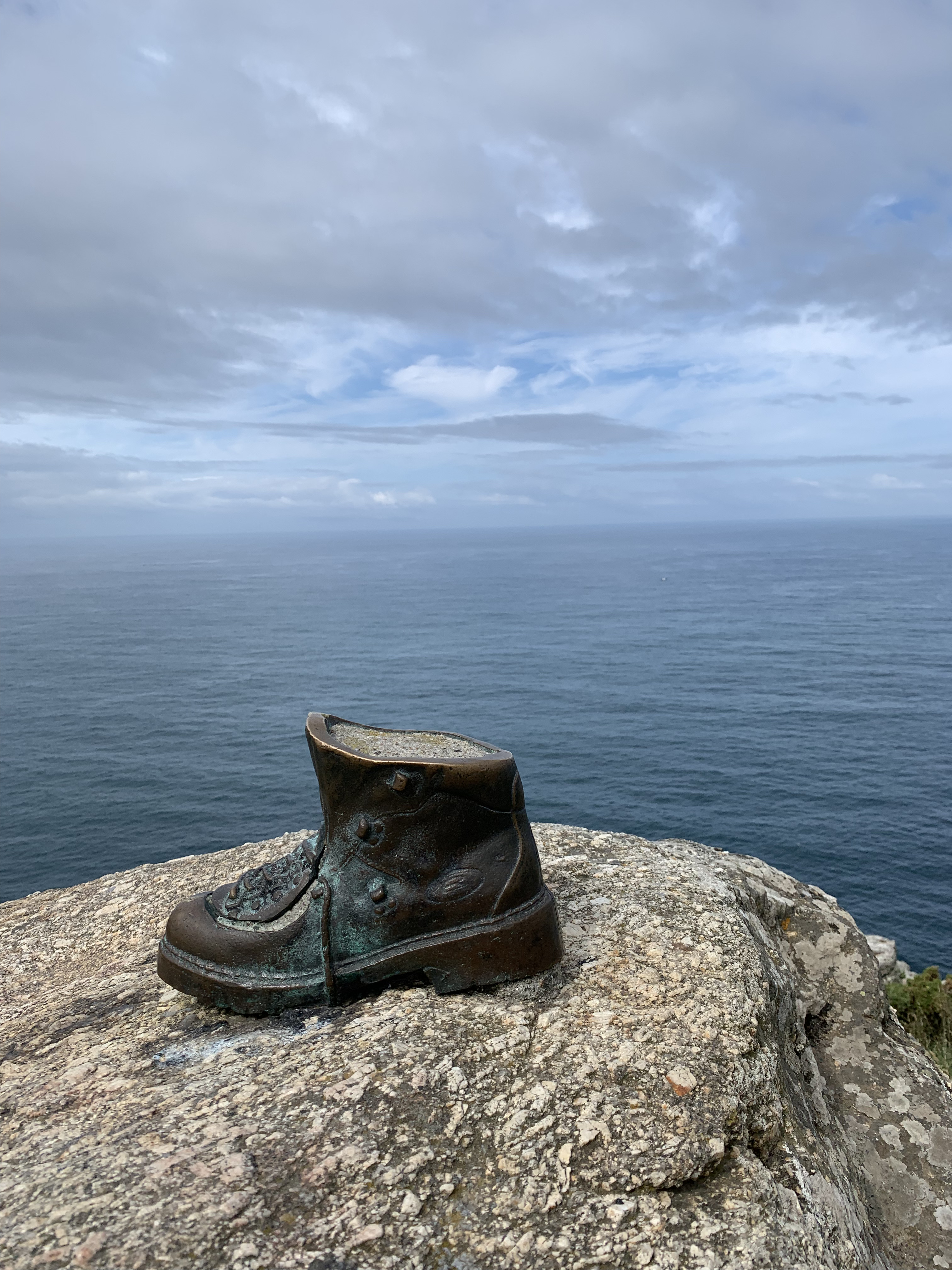
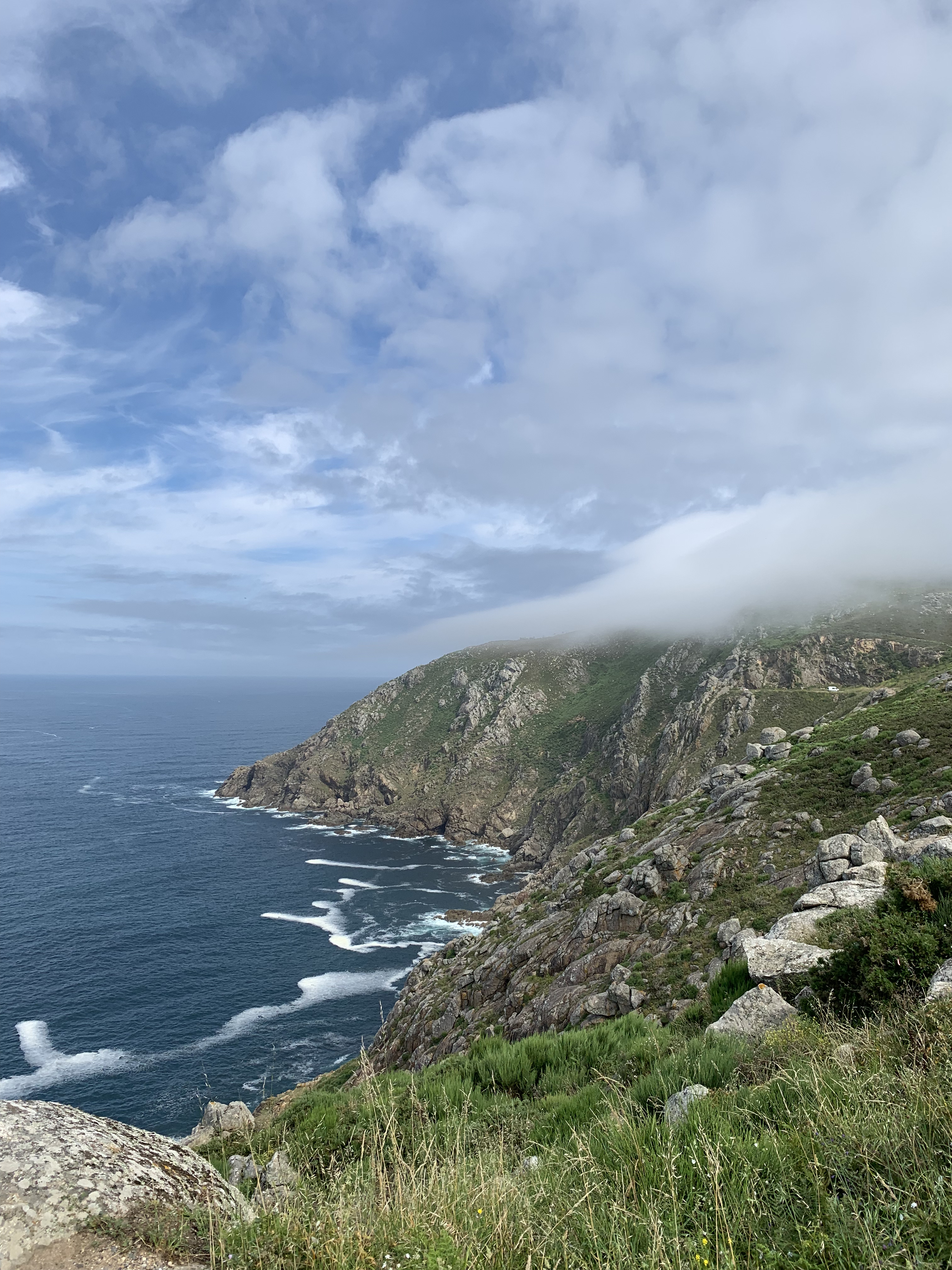
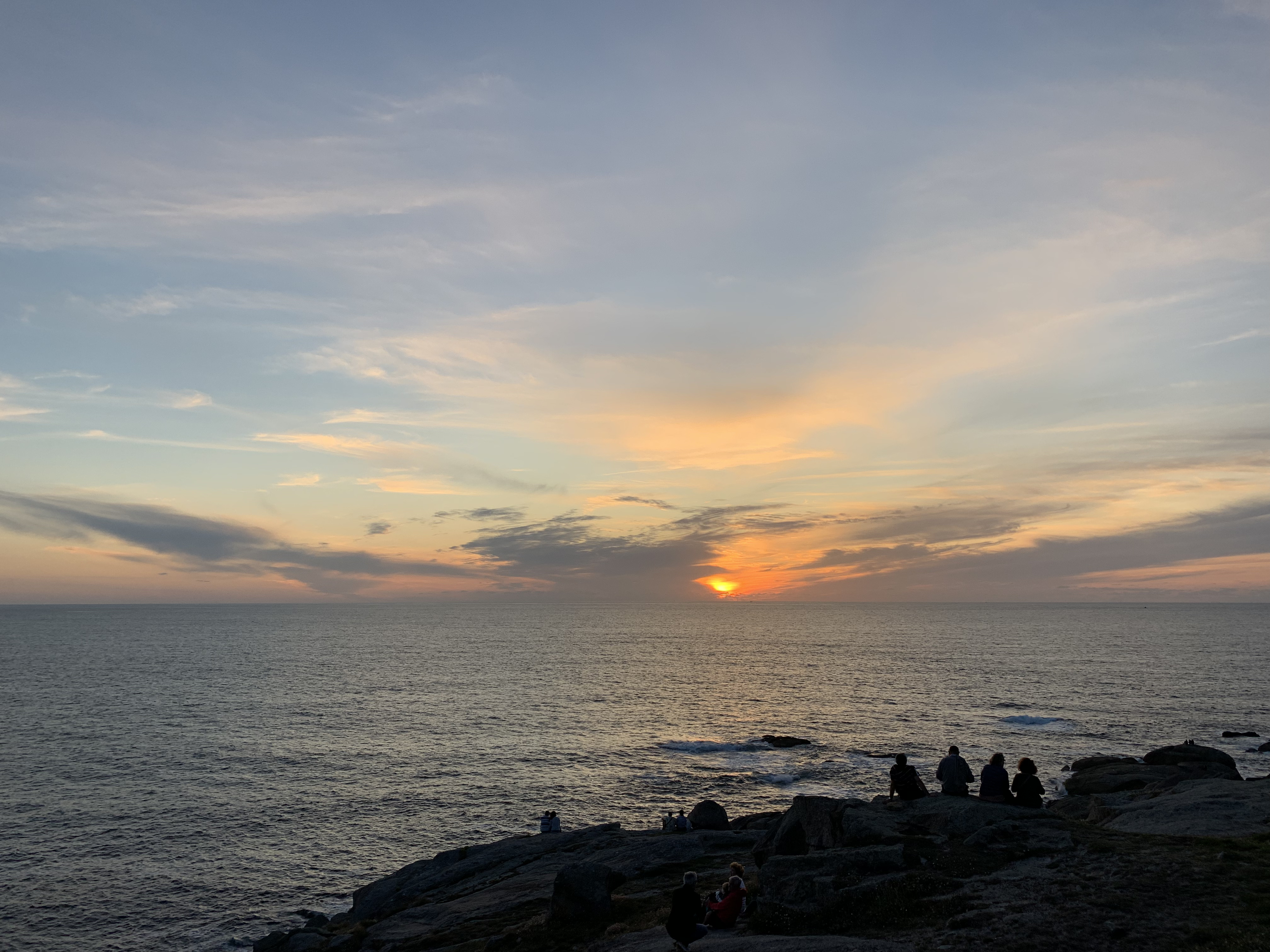
I did spend a few hours on the rocky cliffs at The End of the World, taking pictures and watching mists shape shift across the sea.

But there was one place left to visit, and my feet just wanted to keep walking, 27K north of Finisterre, to the tiny town of Muxia. It seemed much more my type of end, quieter, and the last place listed in my guidebook.

The trail hugged the coast through forest and farm, giving glimpses of water and wave. At last it popped out onto the road into Muxia, and I couldn’t believe my luck.

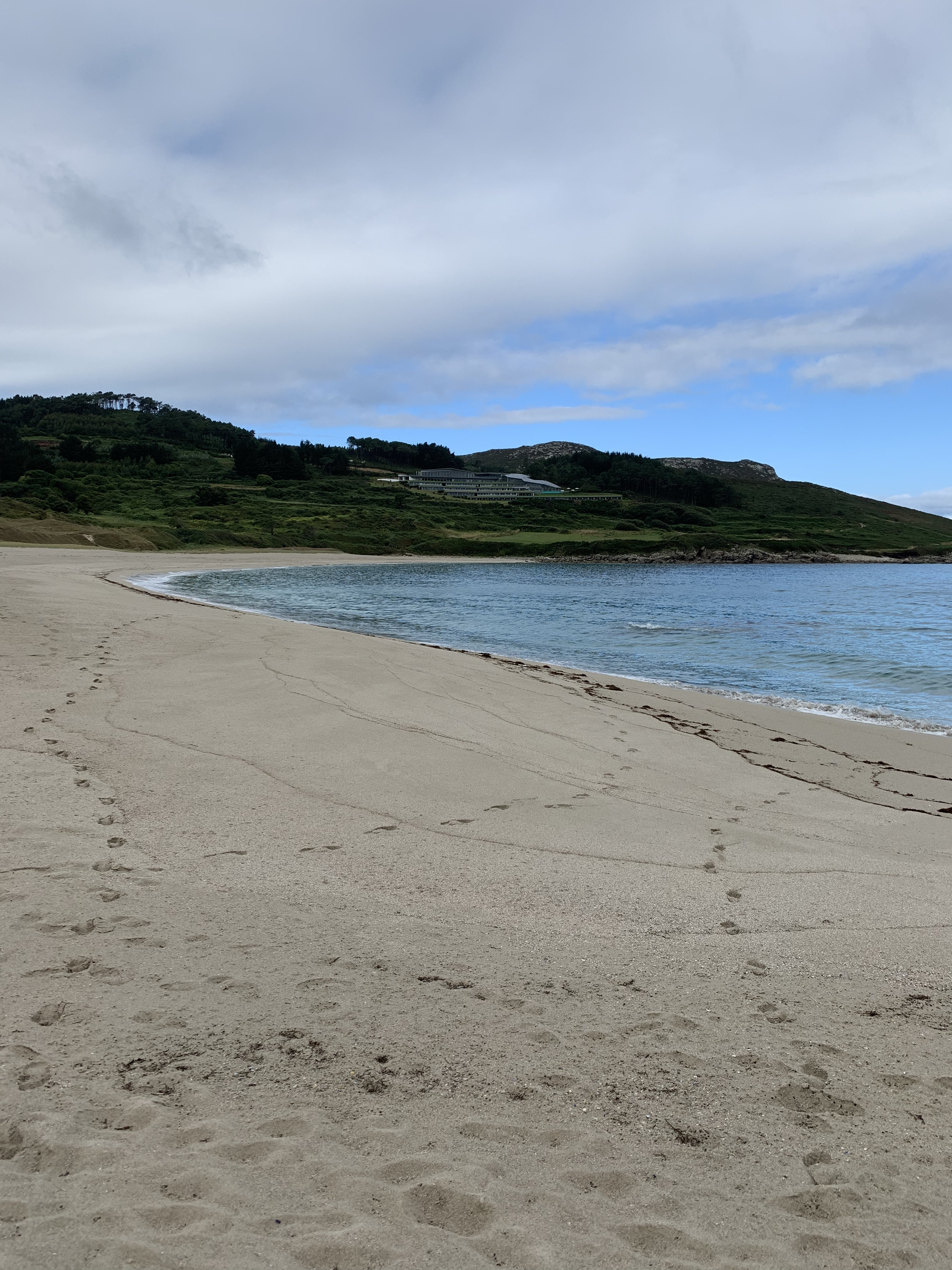
A vast expanse of deserted sand, cobalt blue surf, a path leading down. Time to swim.

Matthew writes that Jesus’s disciples were “amazed” when he calmed the storm, but not a peep about when he healed a leper. Was this smaller on the miraculous scale? Do we ignore minor miracles in our earnest expectation of the one for which we wait? After asking for the how-many-ith-time, do our hearts turn hard at the not-yet?

O, if we could only wait! Un-stone our hearts, watch with assurance, rejoice when it arrives.

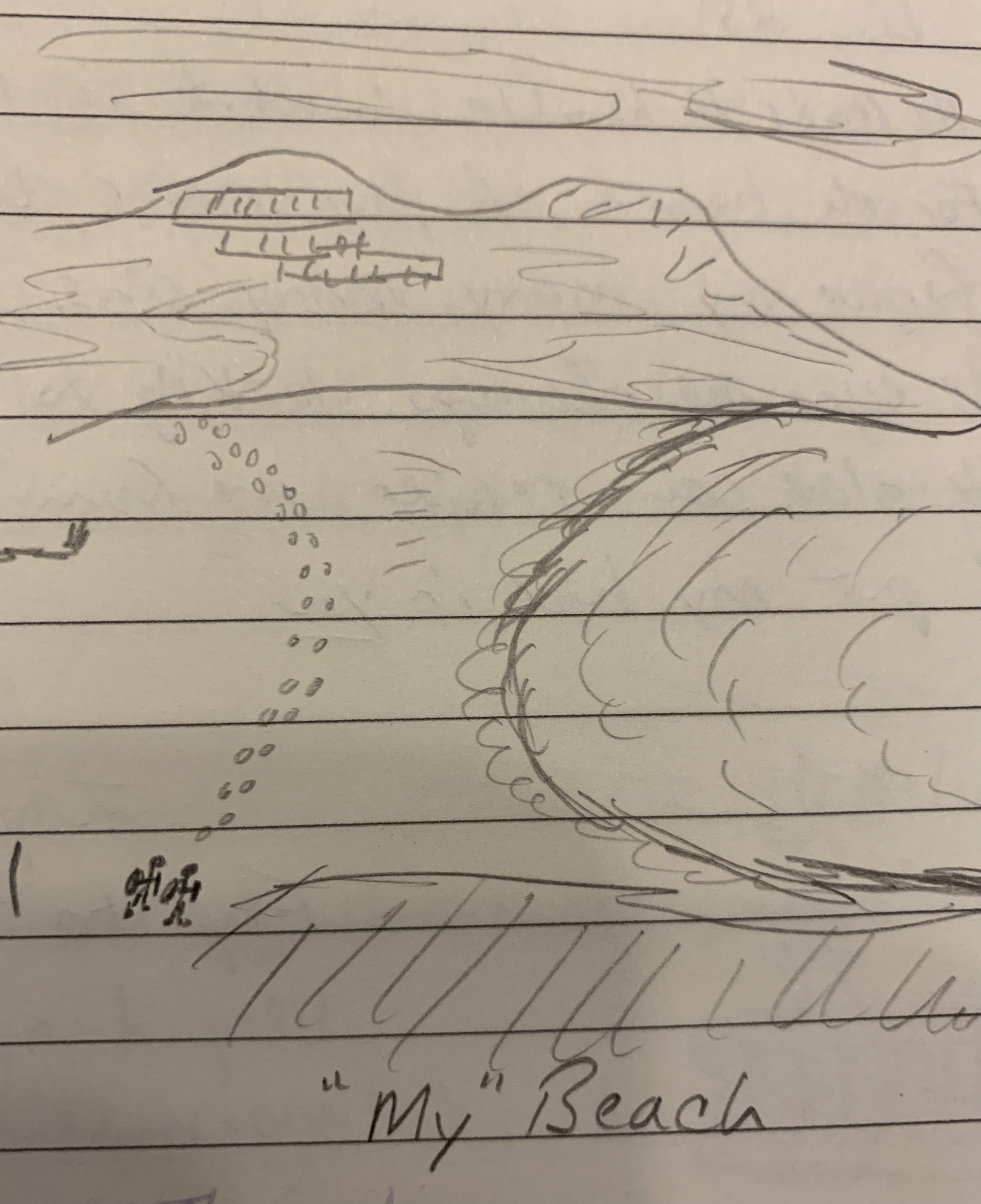
“My” beach was perfect, all the more for the wait, and I didn’t even mind when I had to share.

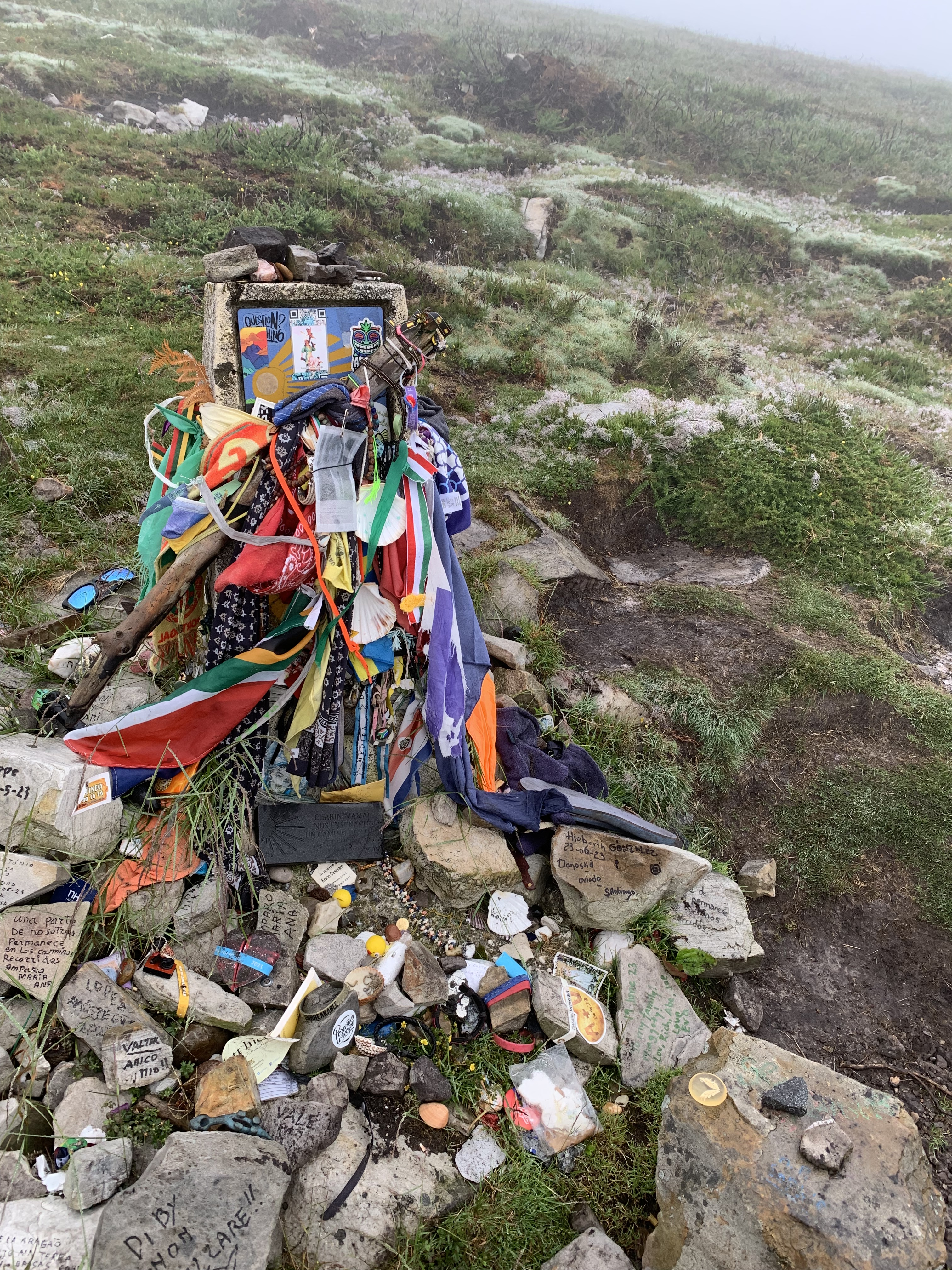
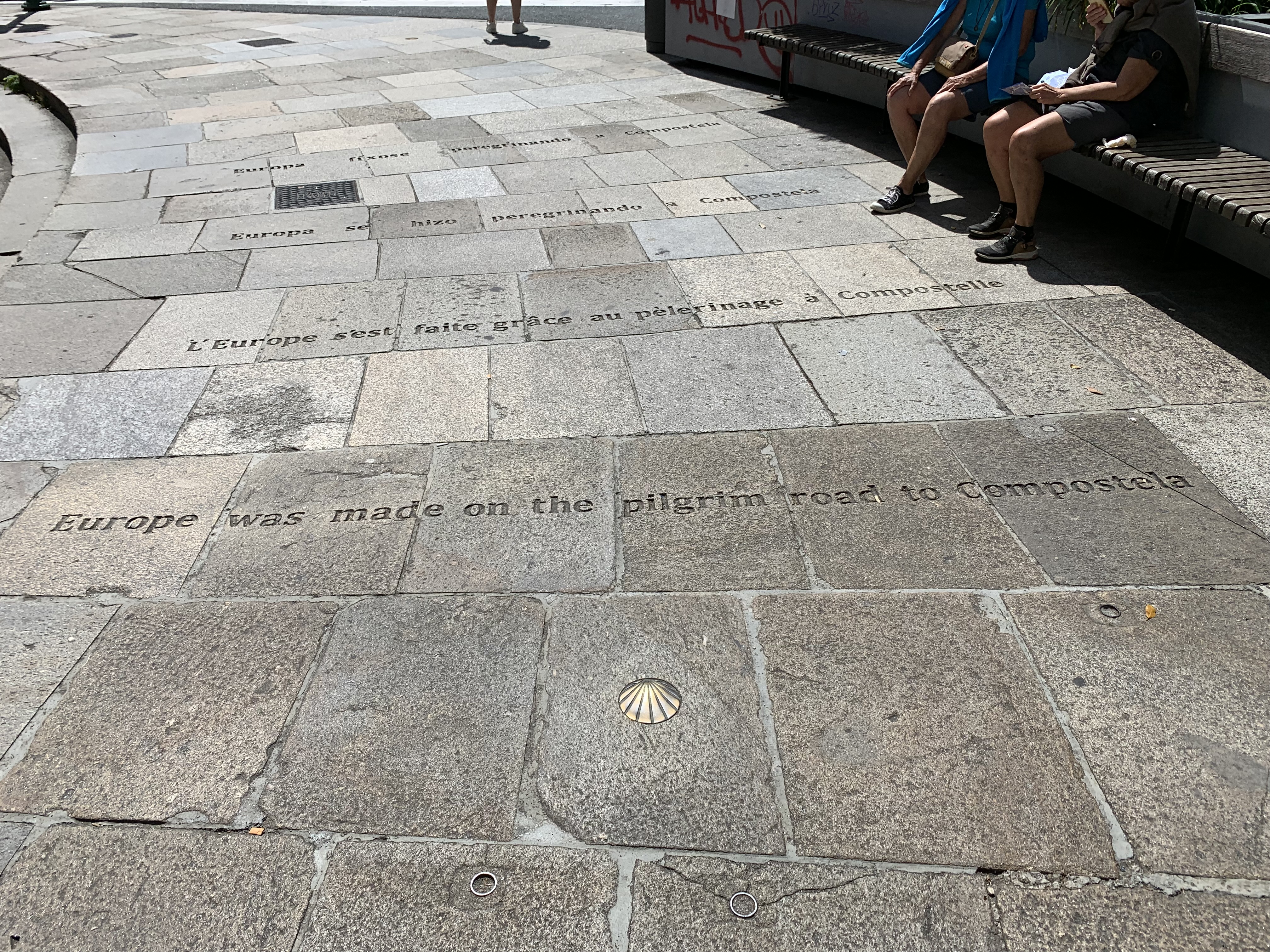
One tradition many pilgrims participate in is bringing a small cross or stone to Spain, symbolically leaving them at one of the many shrines along The Way in remembrance of a loved one or a burden they would like to shed.

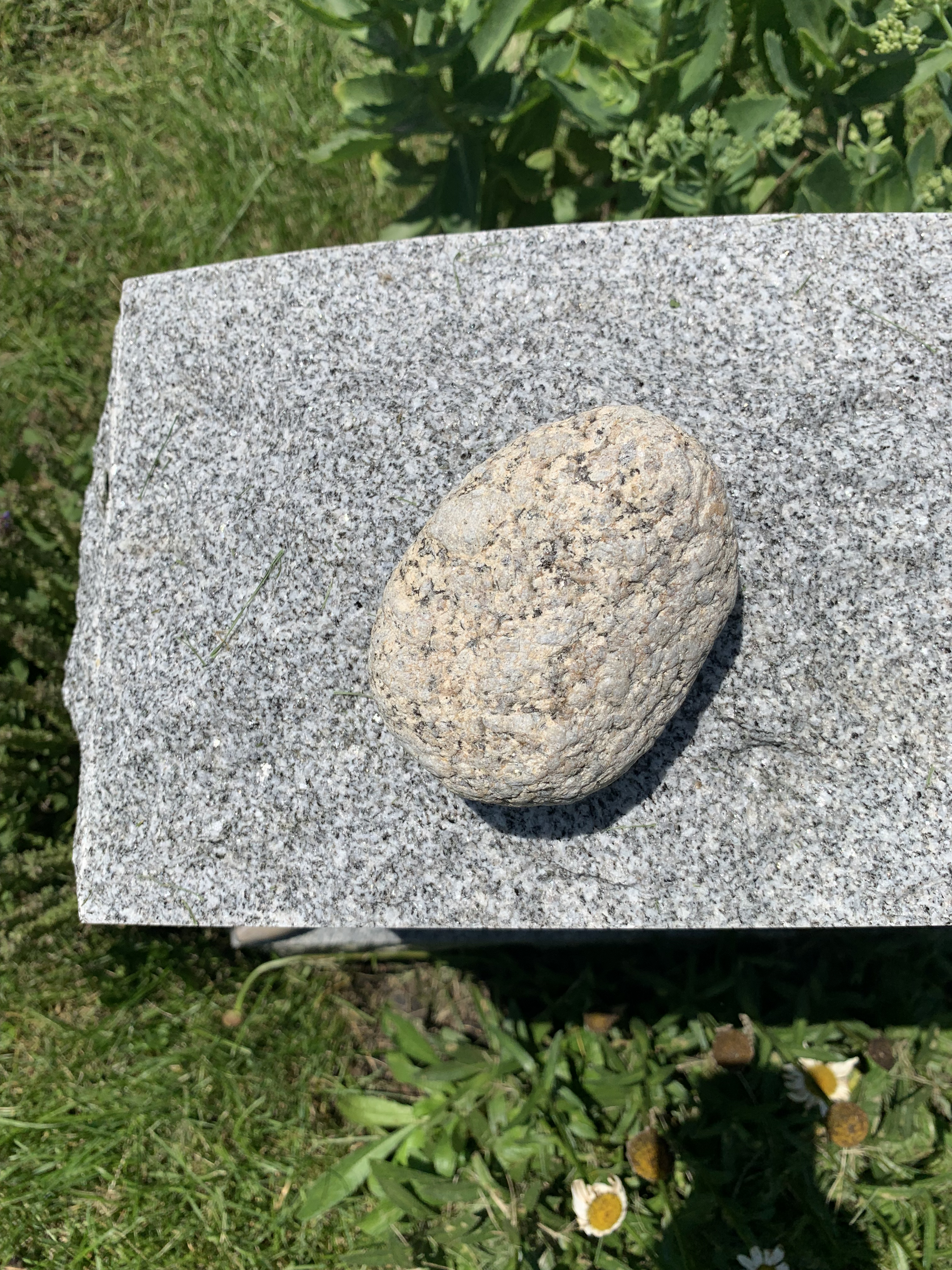
I decided, since my oldest son could no longer walk an earthly path, to bring a stone back to him; climbing back off the beach, I spied one, lovely in shape and heft, and carryied it with me to the end. When I got home, it was a beautiful complement to the granite of his gravestone.

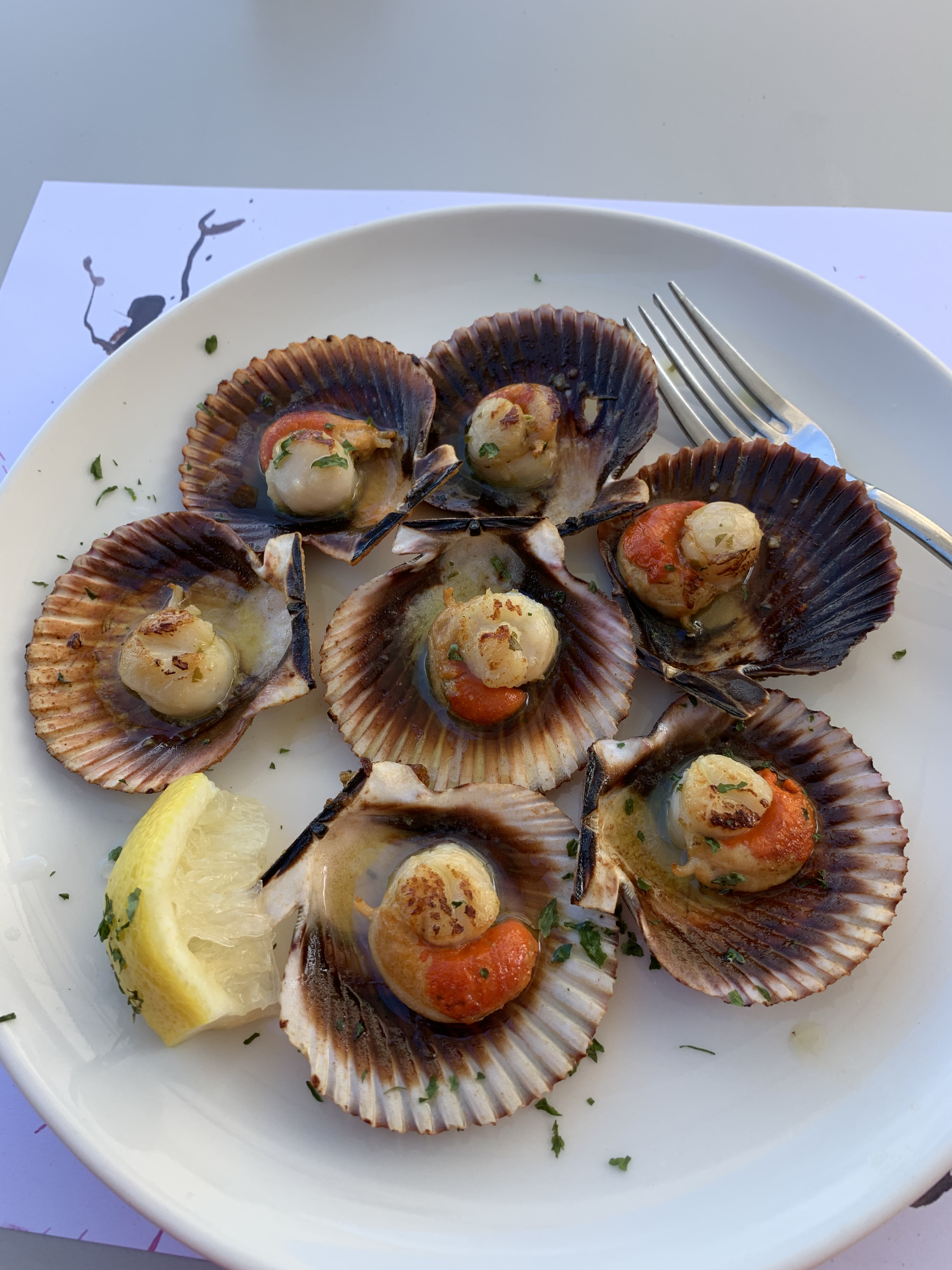
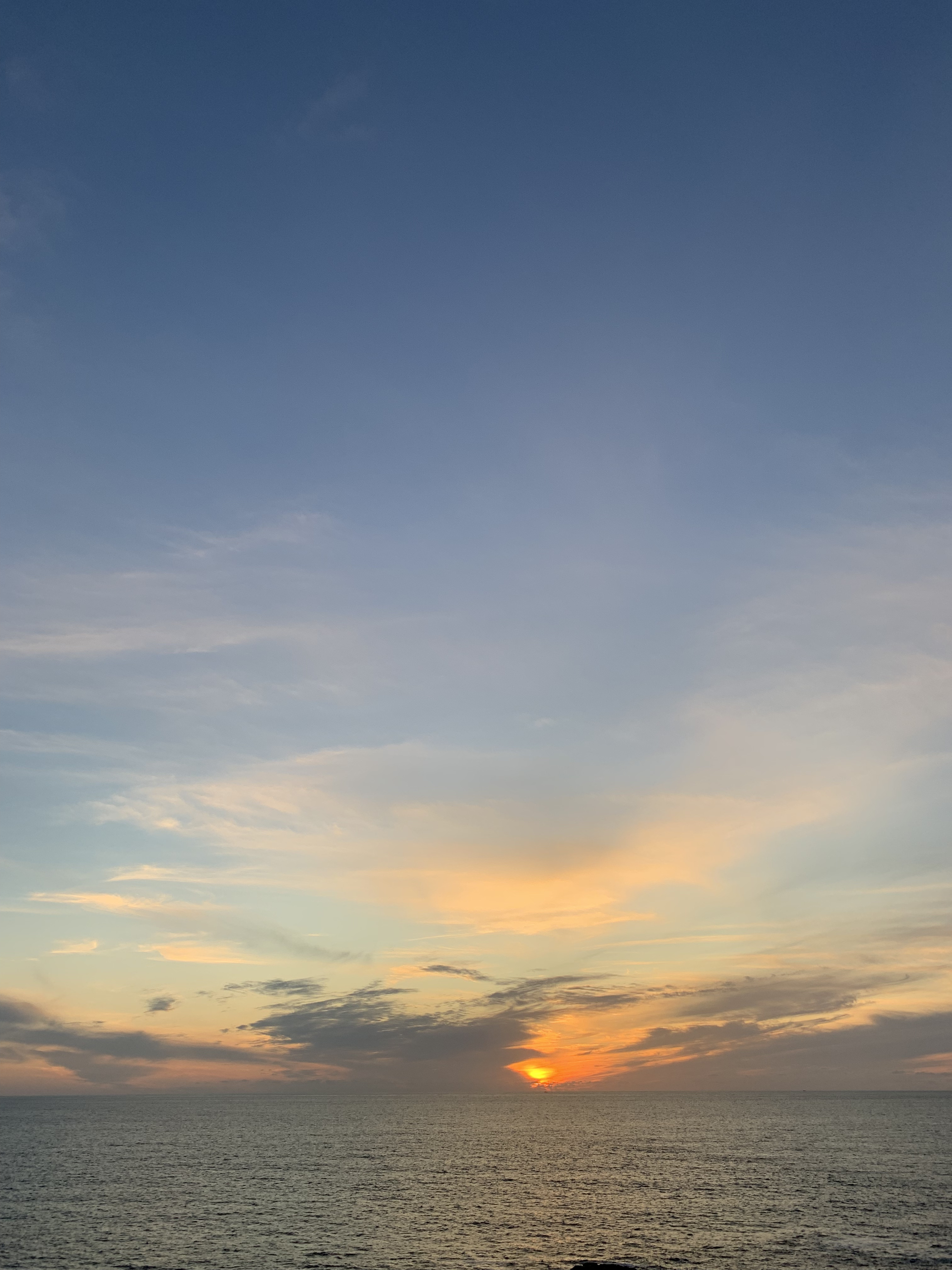
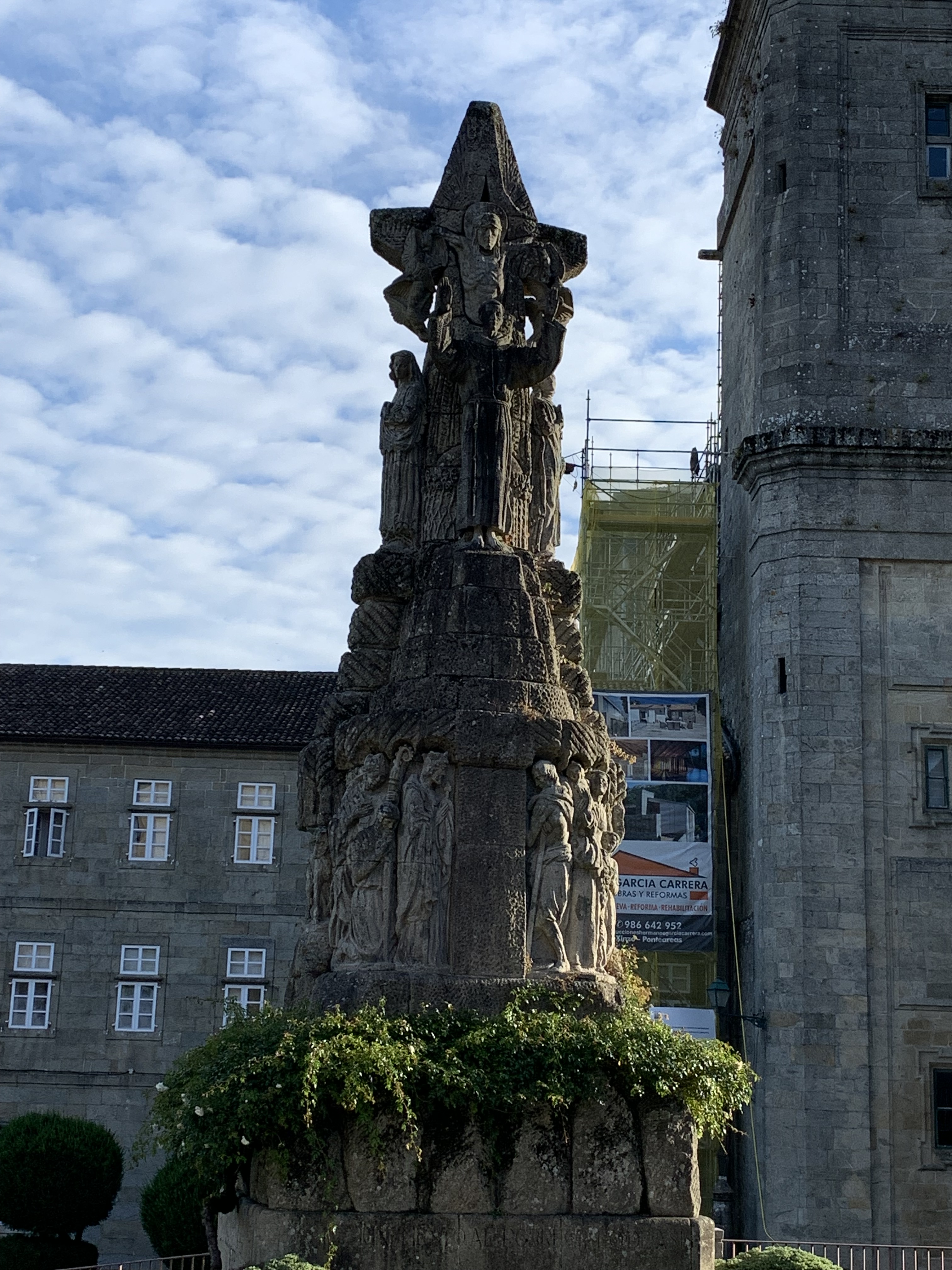
Muxia held other miracles. Sunsets, scallops. A strange monument, harkening back to the Celts. I milked Muxia of everything I could; my Camino was near to its end.

Home now, there are things I miss too numerous to count. Most of all, I miss the daily adventure, the not-knowing of where you will end up, the miracles around every turn. But we cannot live like that forever. Not here, on this plain, at least.

Though I brought with me no rock, I did manage to leave some other things behind: one traitorous sock, then another, as they rent and tore from the daily exertion. Grief and heaviness, past pains. Fears and insecurities – gone as I navigated Europe – busses, trains, post offices, menus, and maps – alone, armed with only a language and a half, my own skin now enough.

Something did happen. The person who started the Camino is no longer the same person who finished it.

It’s time to wait again, for another Camino, perhaps, or something else I know not what.

Is his perfect timing about to find us? We will never know, until it does.

After The End.

On Following The Way

A few years ago, I had planned on walking the Camino de Santiago with my cousin. At the time, all I knew about the Camino was gleaned from watching Martin Sheen in The Way and from listening to a few others at my school who had walked it.

When they spoke of The Camino, I had assumed there was only one, from the border of France across the north of Spain, and when Covid cancelled all the plans my cousin and I had made, I turned to other long walks in the hopes that one day we might find another window of time to make the pilgrimage.

Unexpectedly, this May I was invited to accompany my best friend on a brief foray to Germany and dreams of The Way came flooding back.

With a new job, my cousin would be unable to accompany me, but in the meantime, I discovered that there are scores of Caminos of varying lengths from compass points all over Europe; I could pick another and save the route from France for a future time with her. Why waste an already booked flight which was taking me only two countries away?

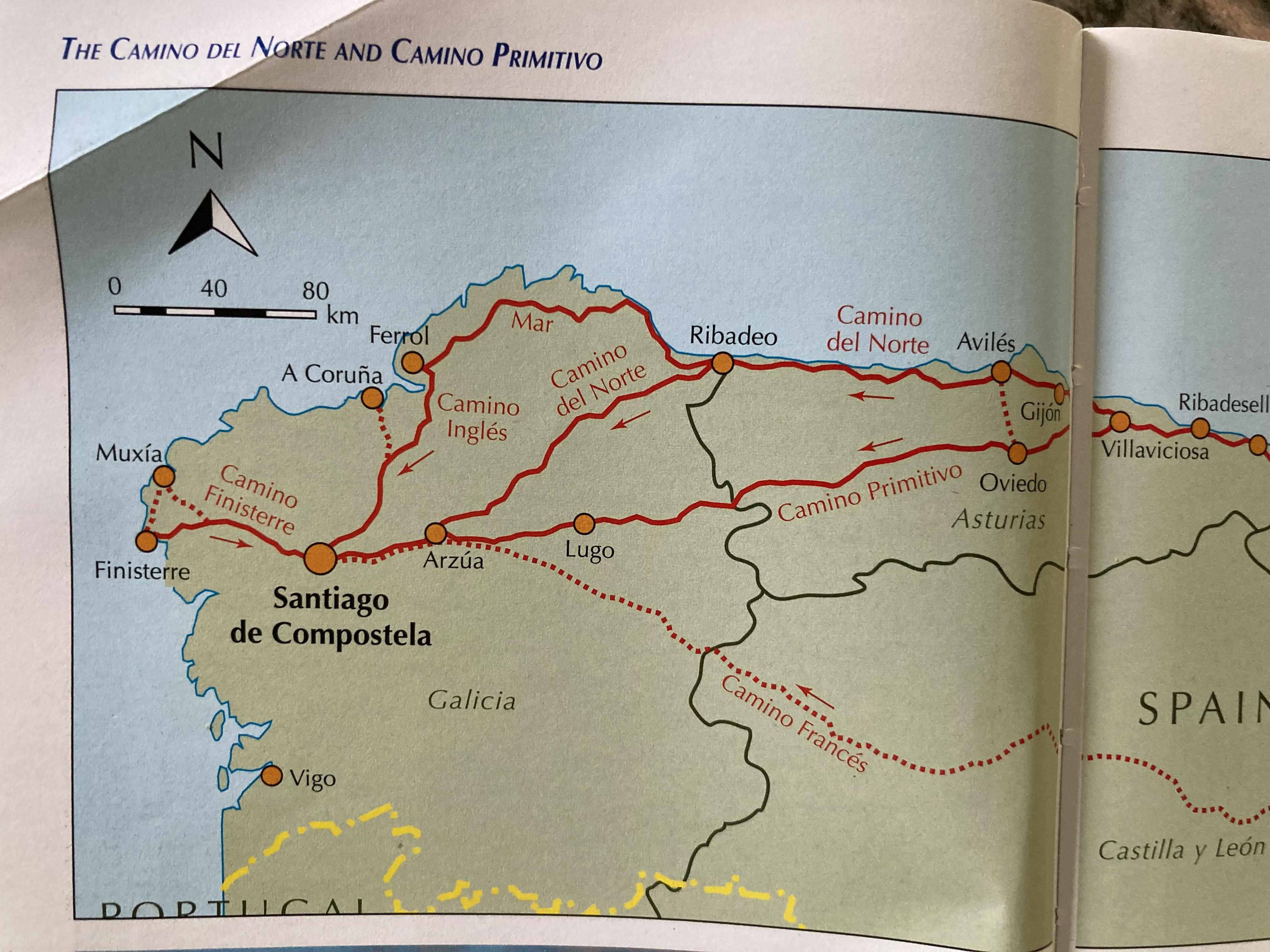
I decided on the Camino Primitivo, largely because it was described as one of the more mountainous routes and a lesser traveled one. I could fly into Aviles, a city which is on the Camino del Norte, walk backwards (away from Santiago de Compostelo) on the Norte, and pick up the Primitivo in Villaviciosa.

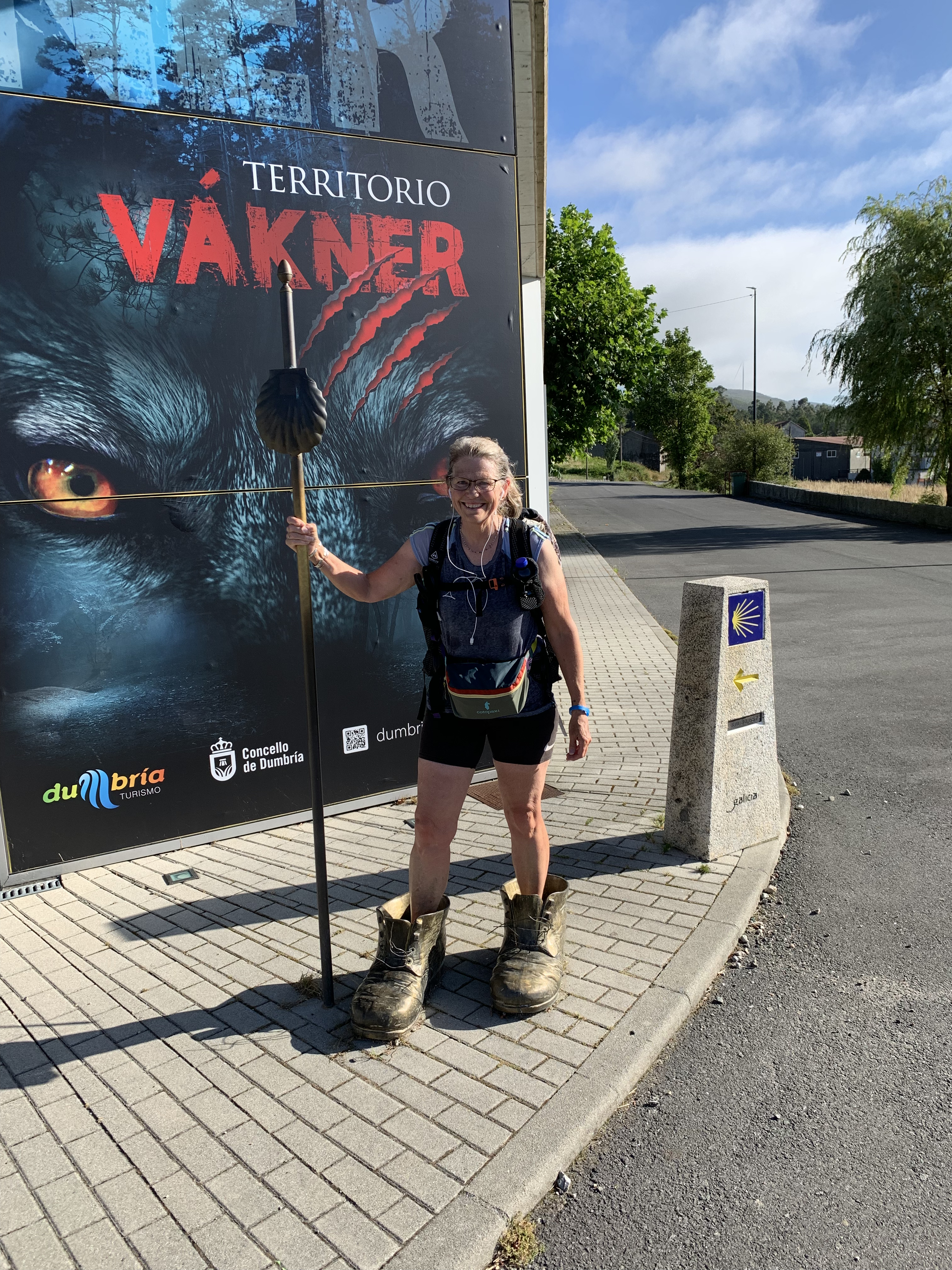
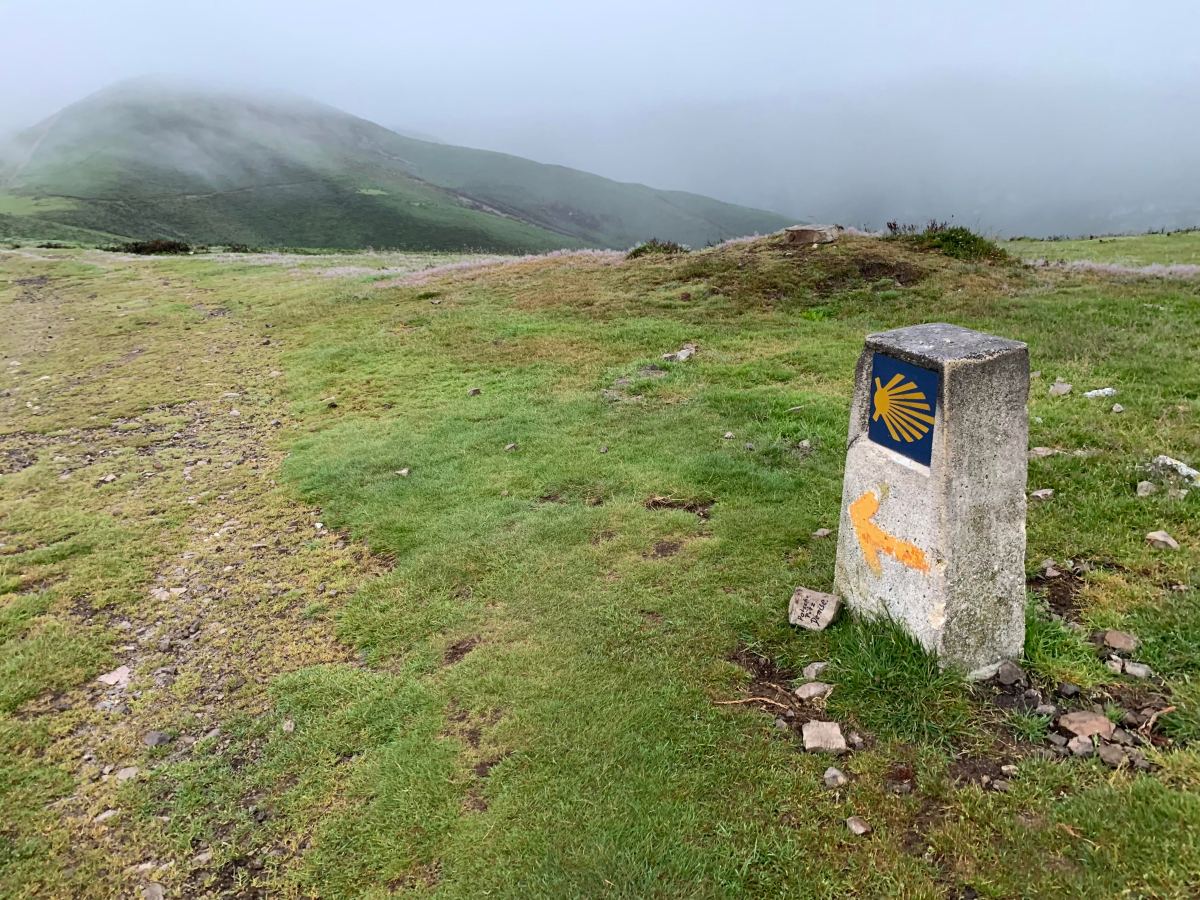
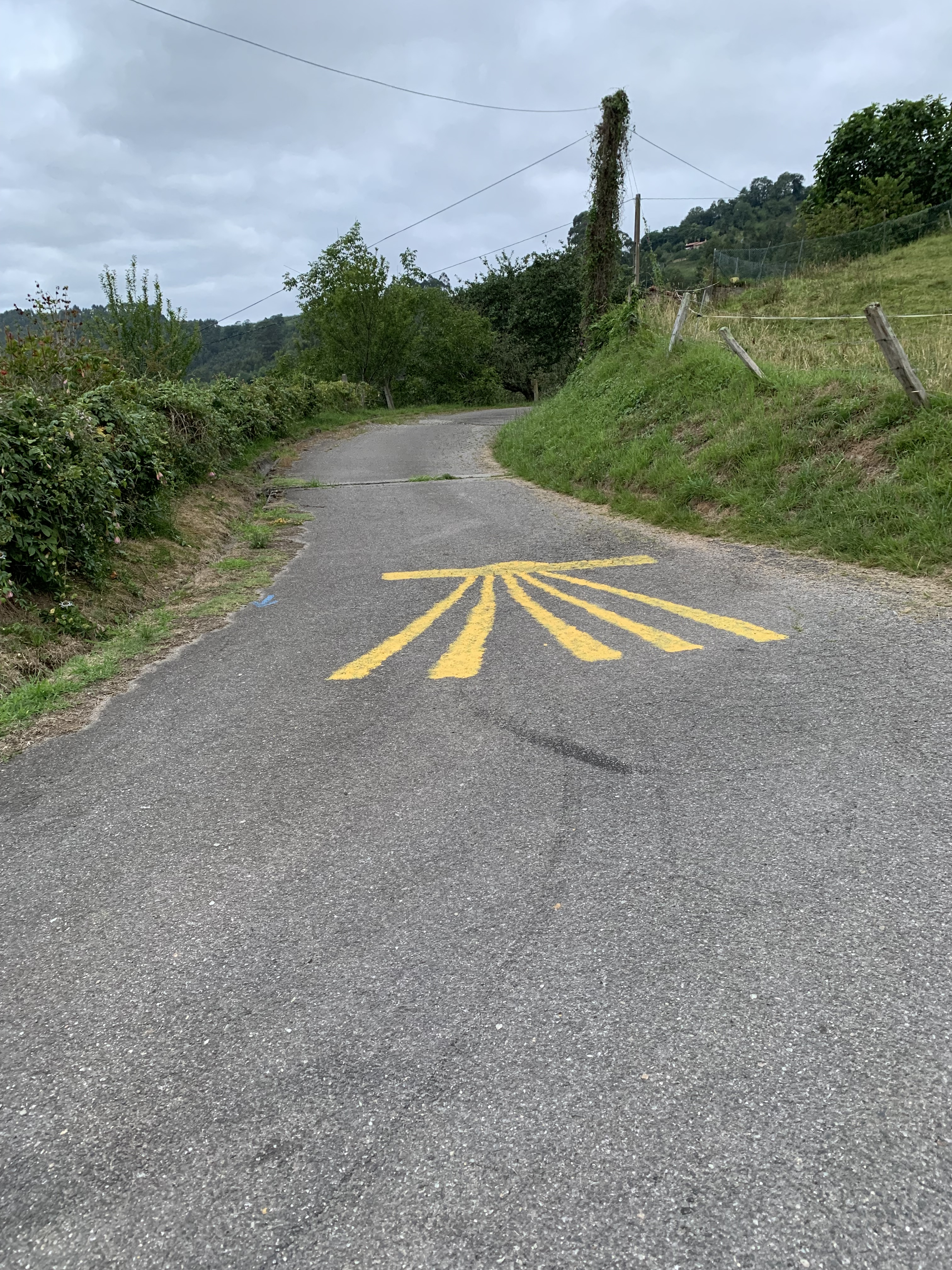
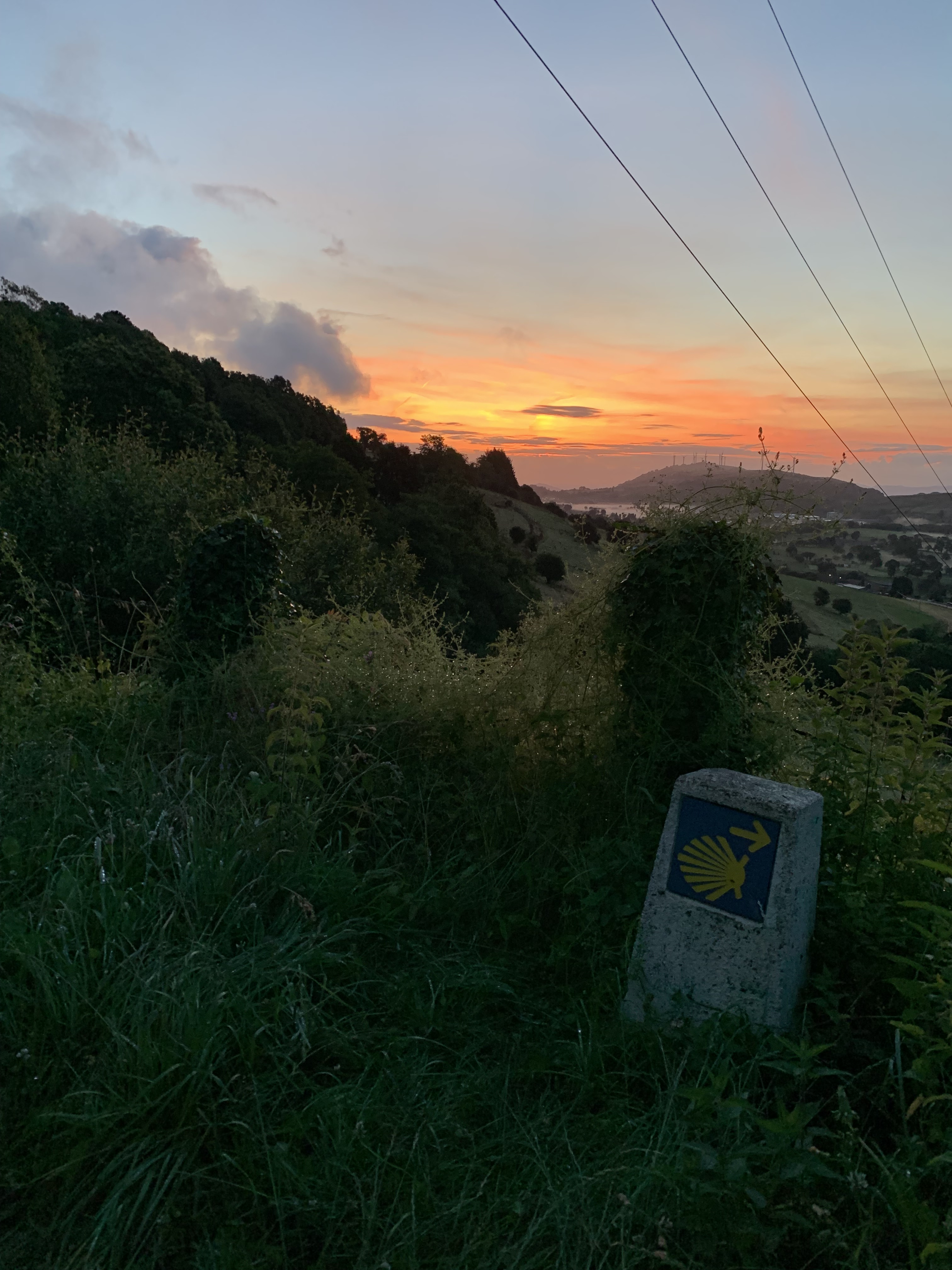
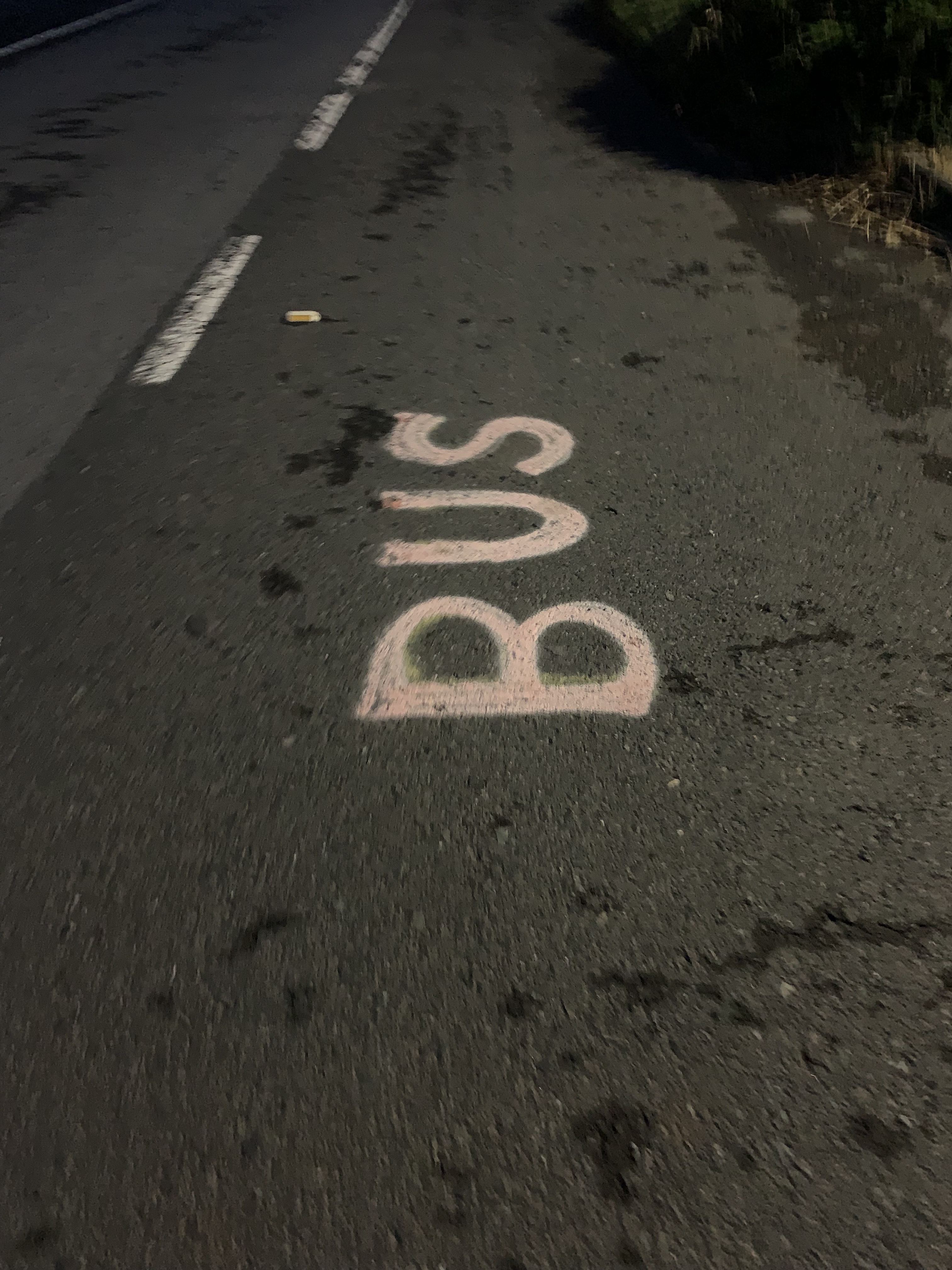
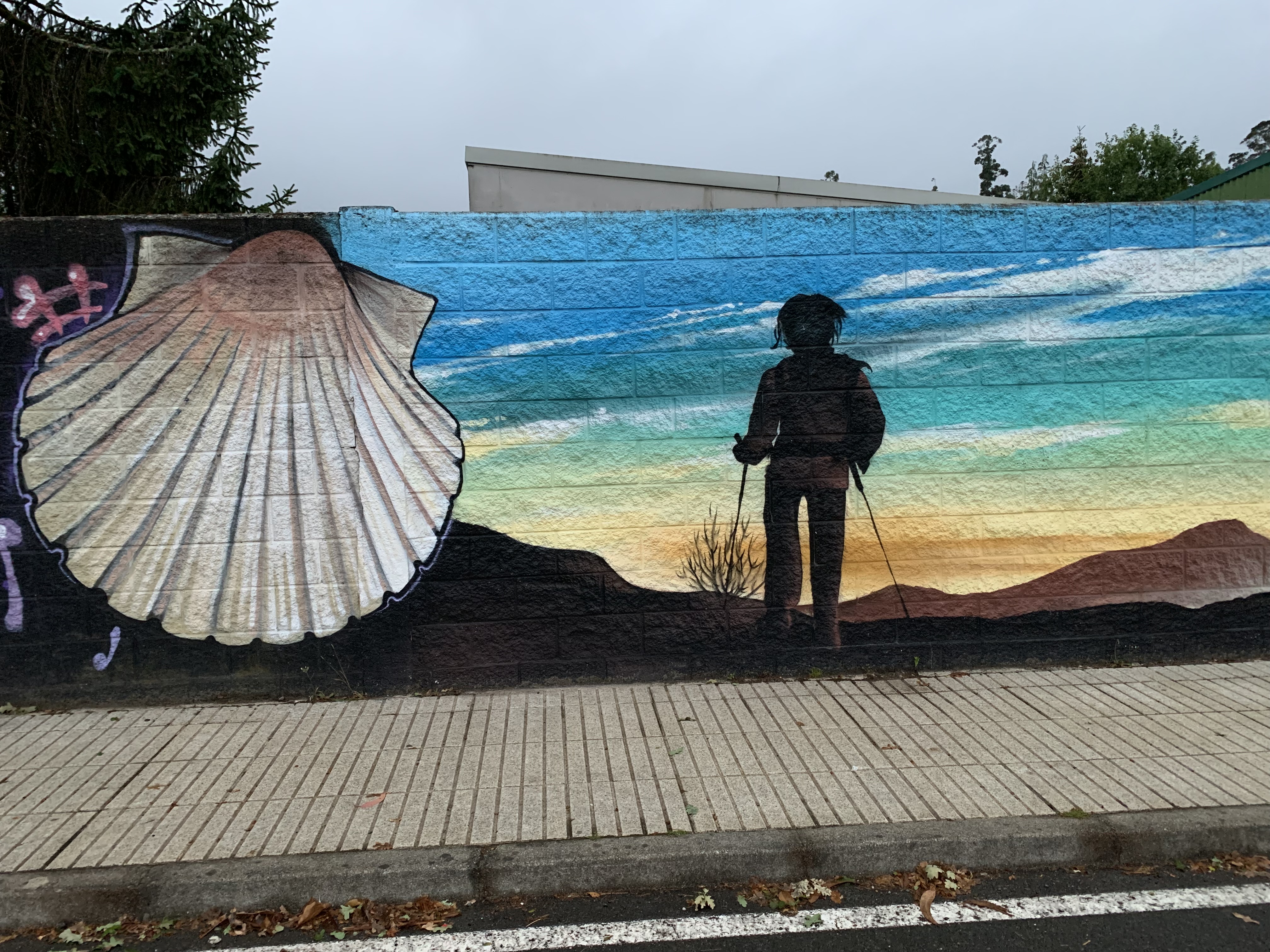
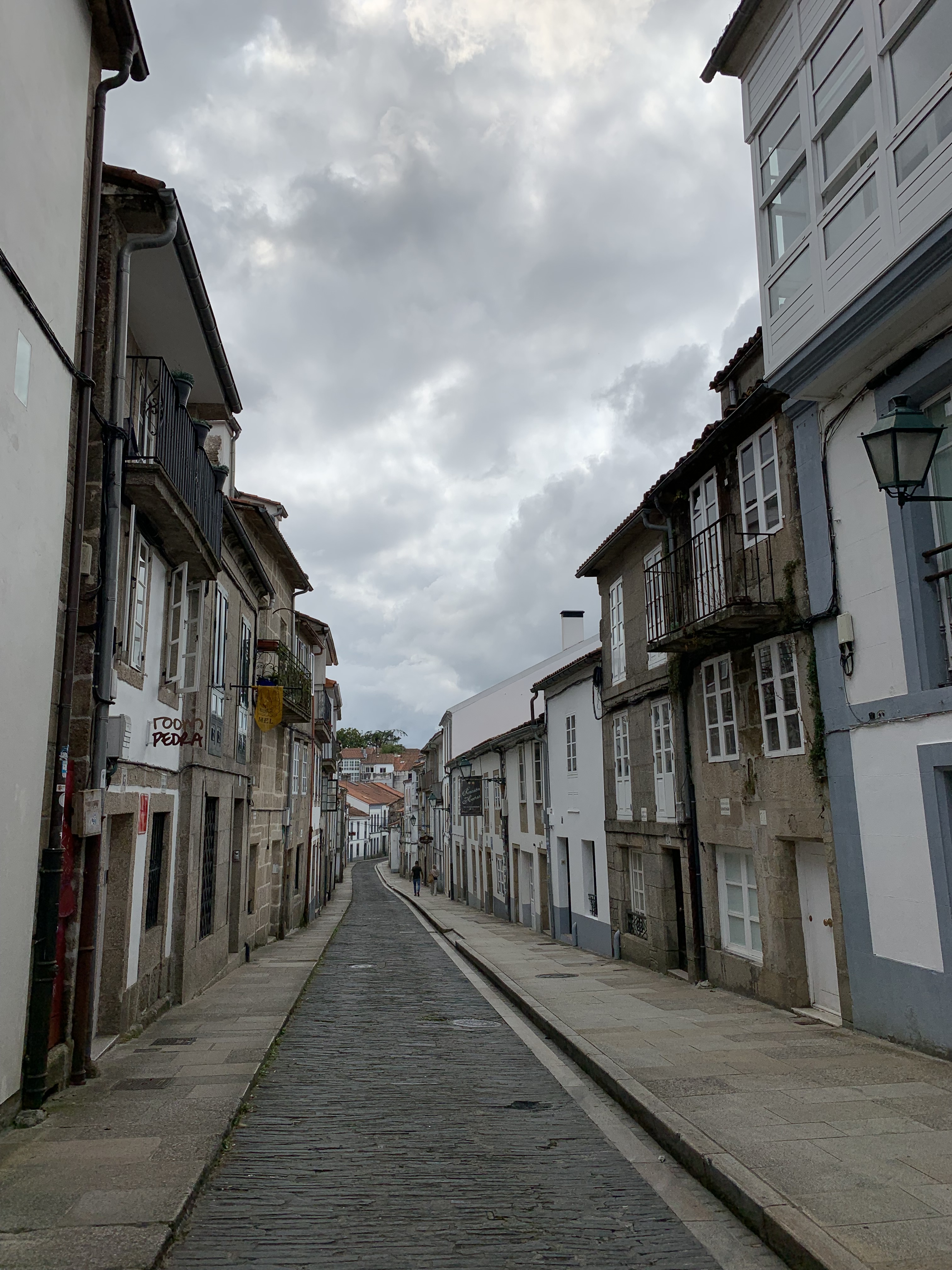
Credencial in hand, I left Aviles in the early hours of June 25 following the iconic scallop shells and yellow arrows that mark the route. For two days, until I reached the Primitivo, everyone I met would ask me if I was going the wrong way. I’d just smile and assure them that The Way I was going was the right way for me.

One wonderful thing about the Camino are the albergues and hostels pilgrims stay in every night and the small cafes and grocers spaced throughout the day. I needed only to carry some simple clothing and a few other essentials, making it the most luxurious thru-hike I have ever done.

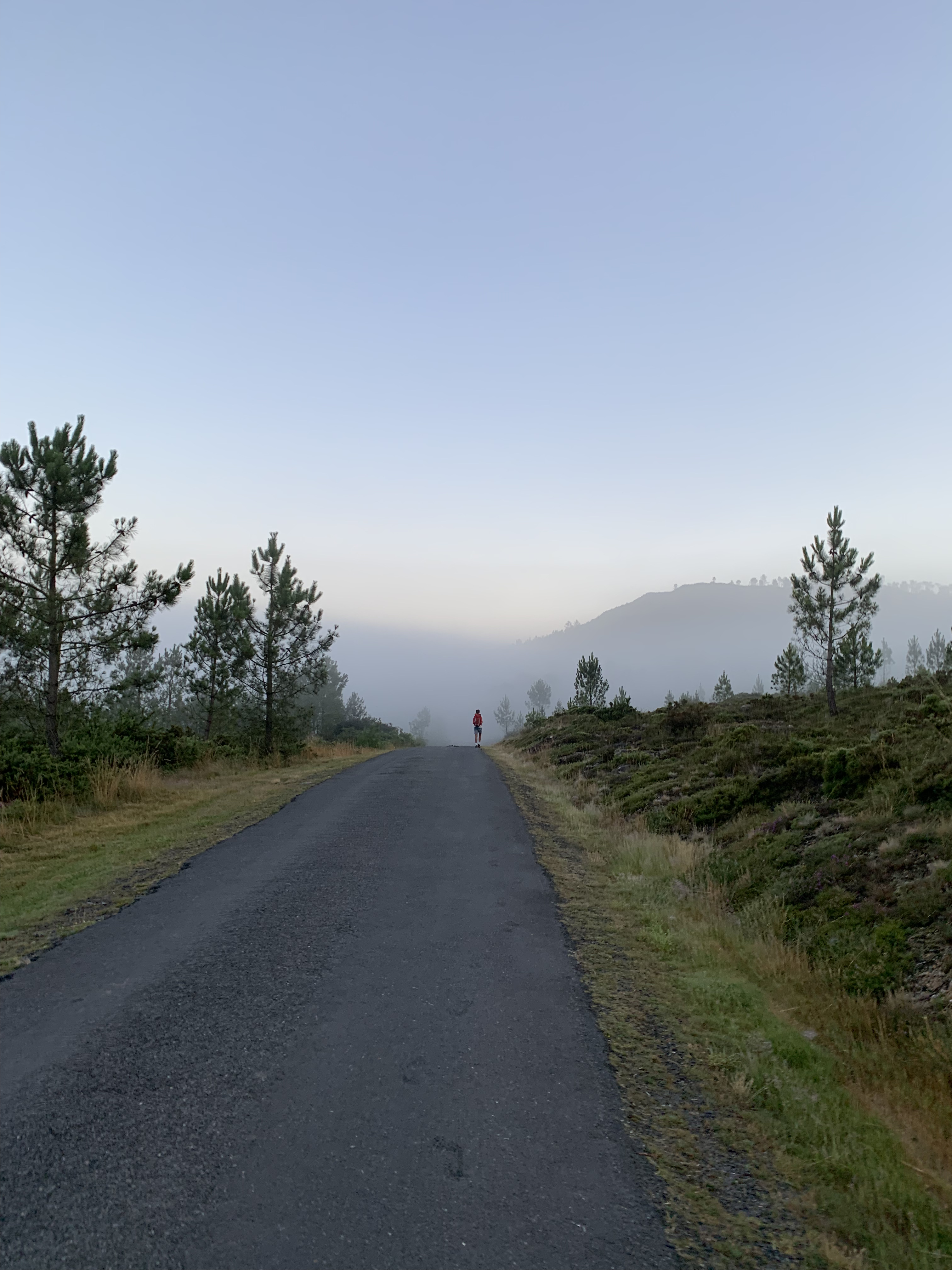
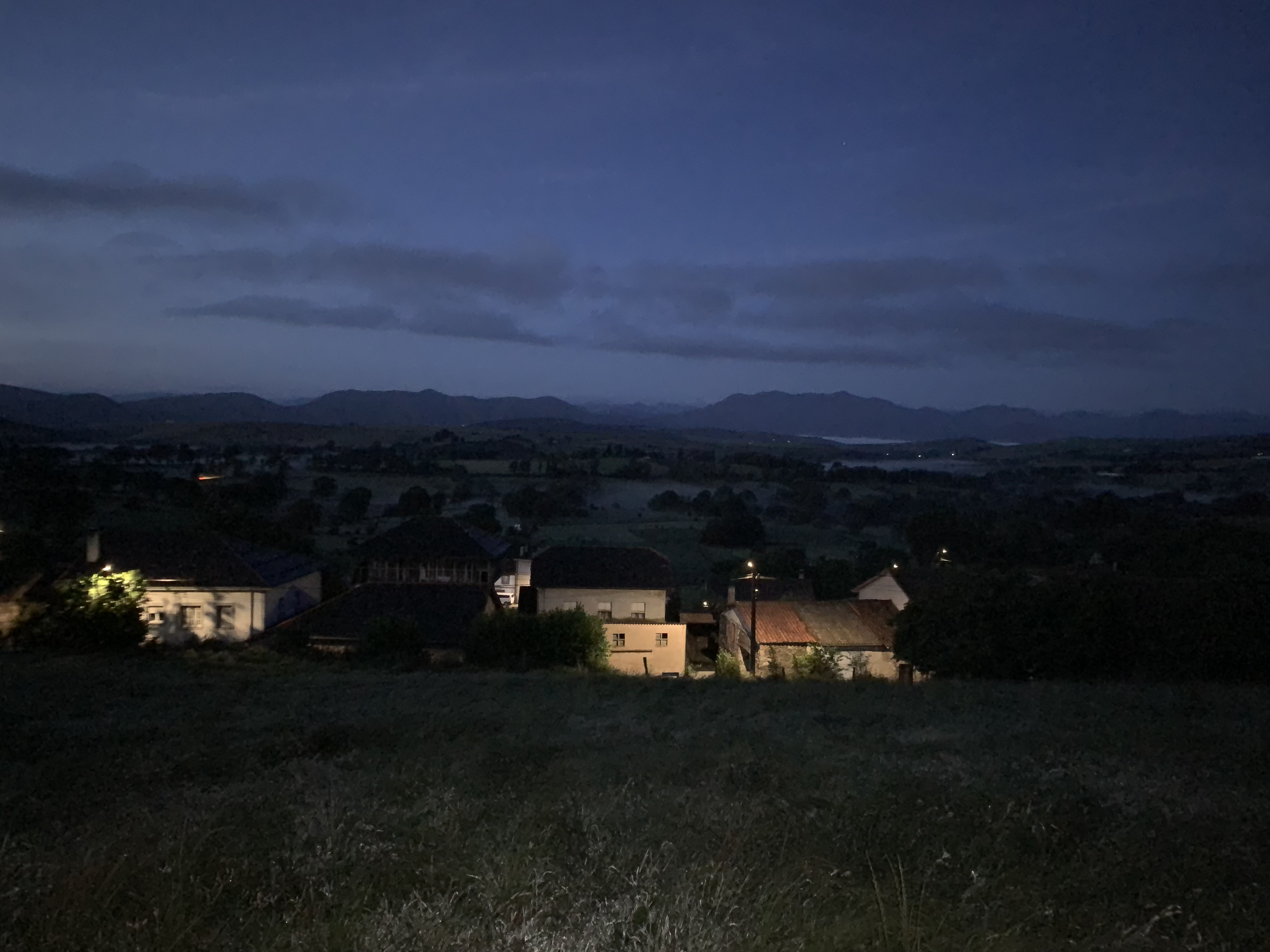
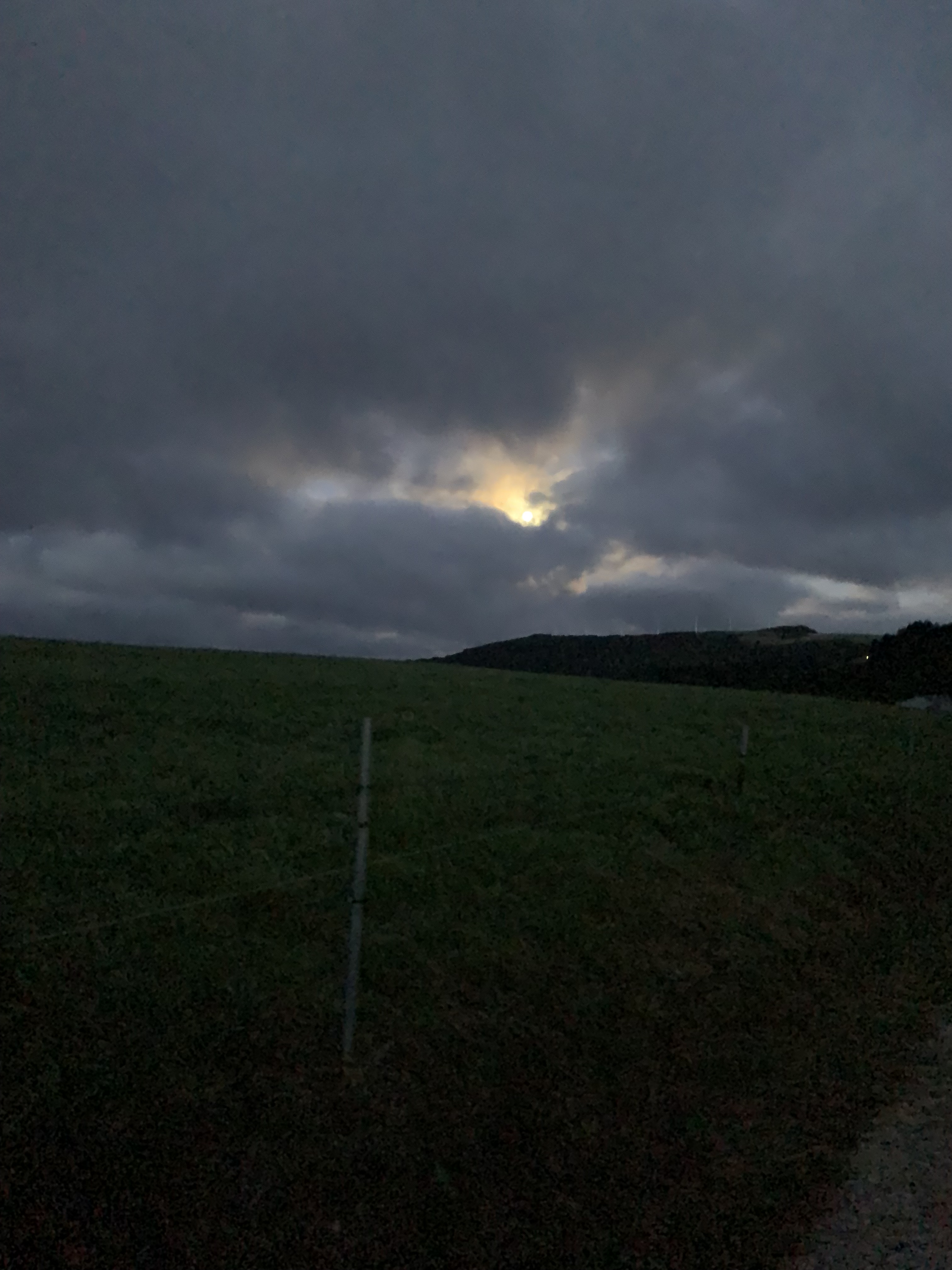
I loved getting up early every morning, tip-toeing out of the bunkroom so as not to wake my fellow pilgrims, and walking the first few cool hours in the dark mist, moonset and sunrise engaged in a duel of beauty.

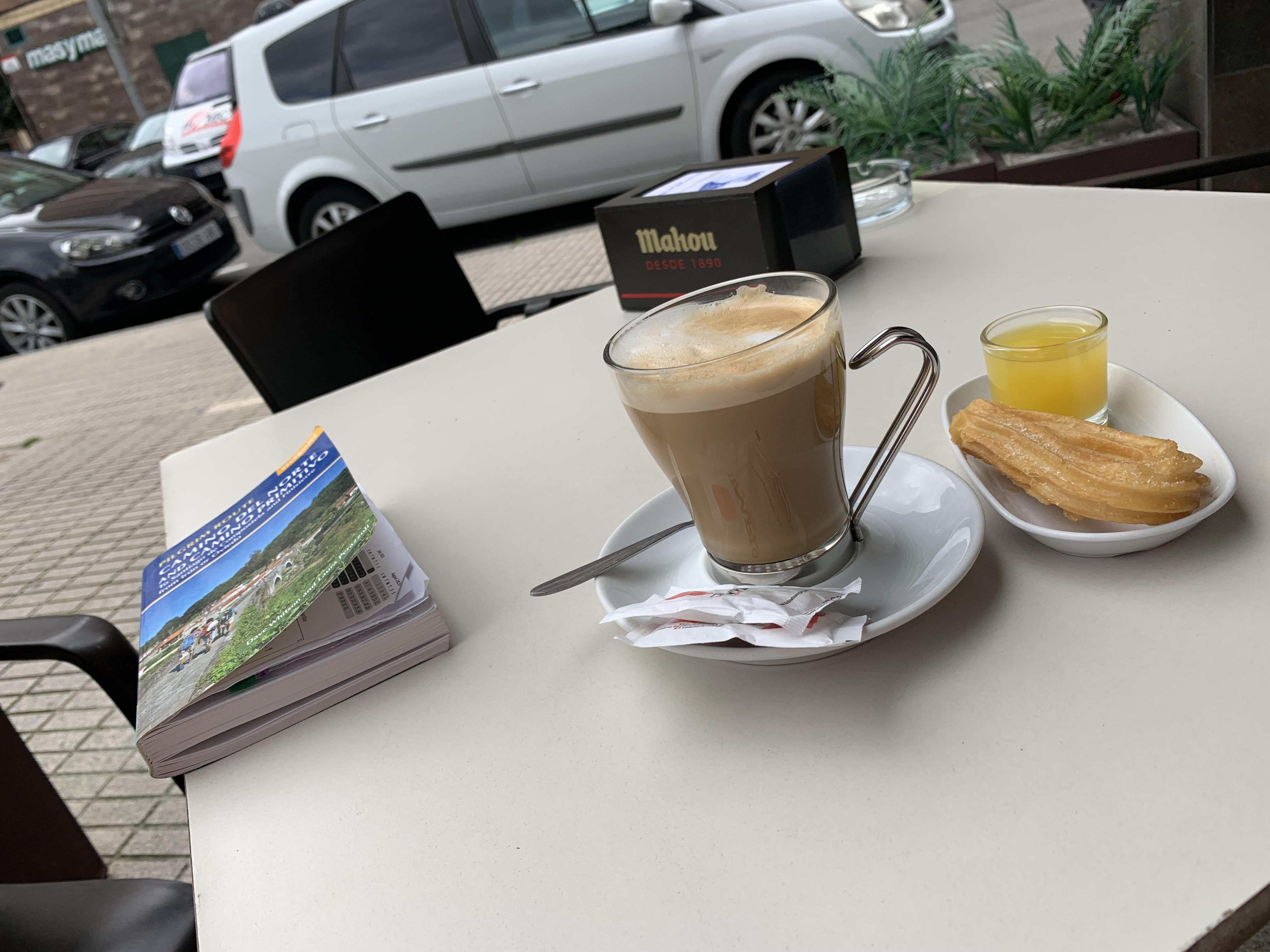
Spain tends to stay up quite late and sleep in, so I cherished these quiet moments alone on The Way waiting for the first shop to open to stop in for a cafe con leche grande and the delicious extras that always accompanied it.

Although it was harder to find markings in the dark, I found myself unbothered when I wasn’t sure which way to turn; feet at one shell, I’d inch a few tentative steps forward until the next one appeared; I reminded myself that I was a pilgrim and must do pilgrim-y things, like launching out in faith even when the road ahead was uncertain.

I forced myself to slow down. To find the sacred.

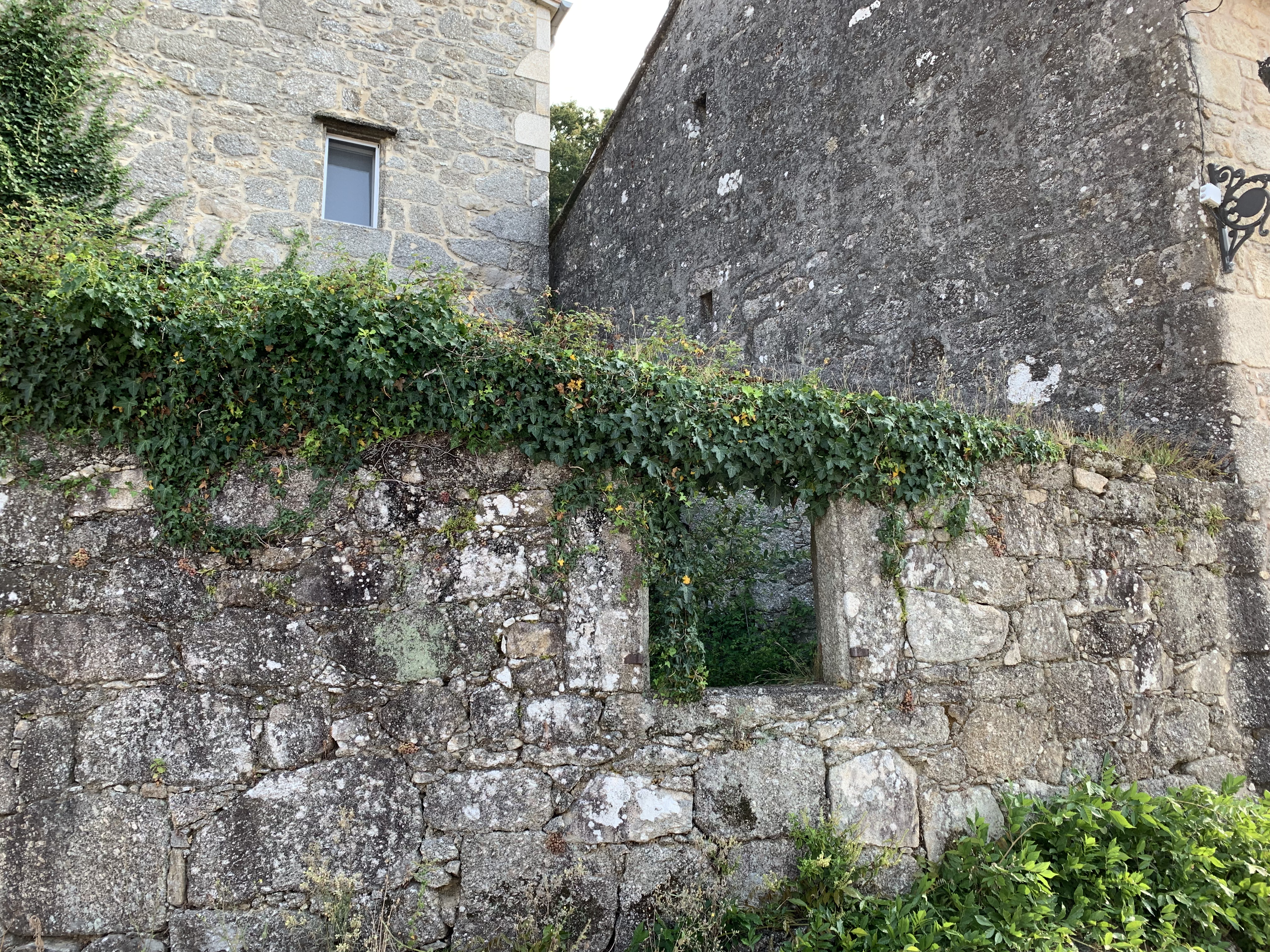
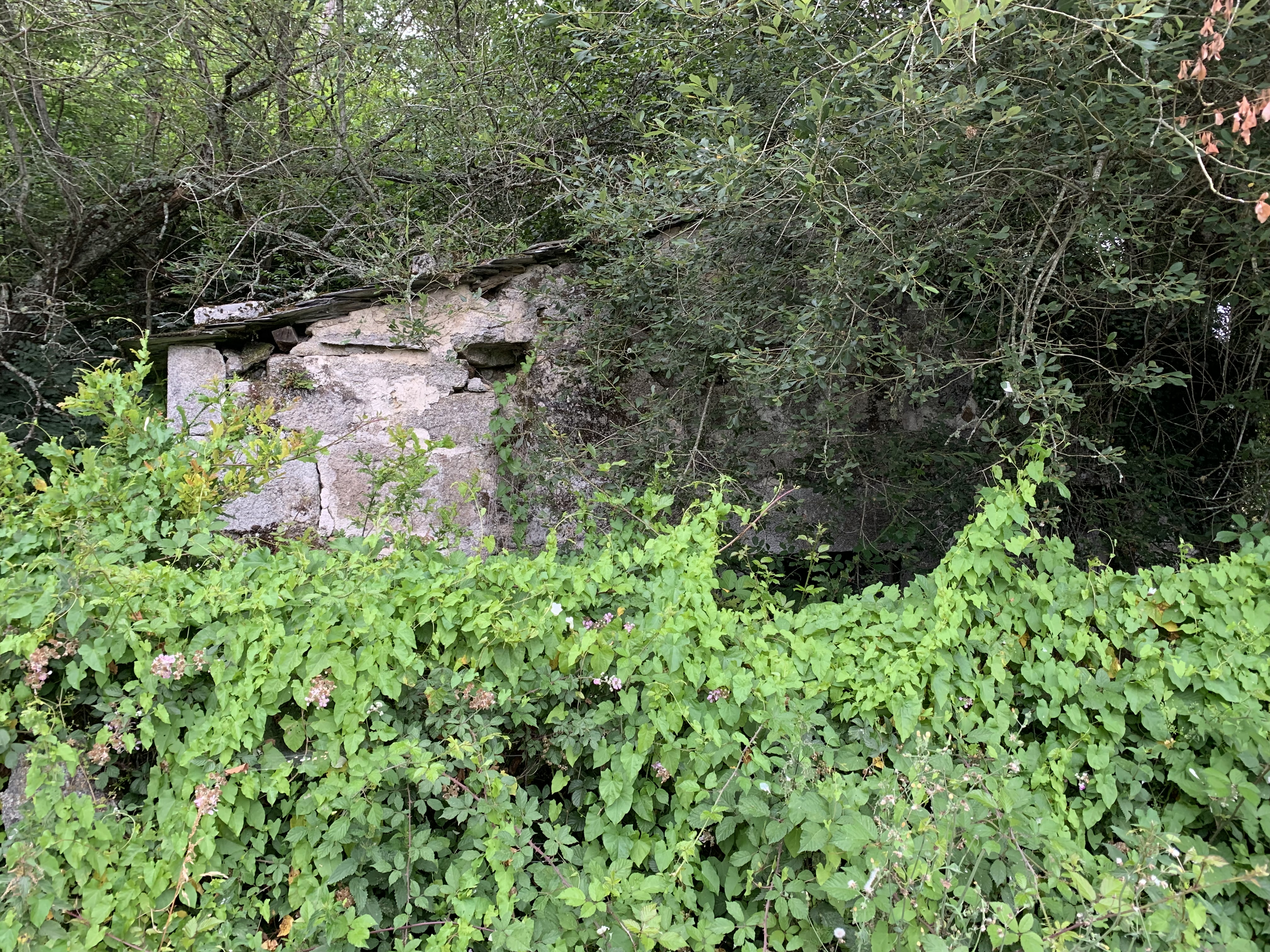
Sometimes it was revealed in ruins, evidence of the relentless taptaptap of time.

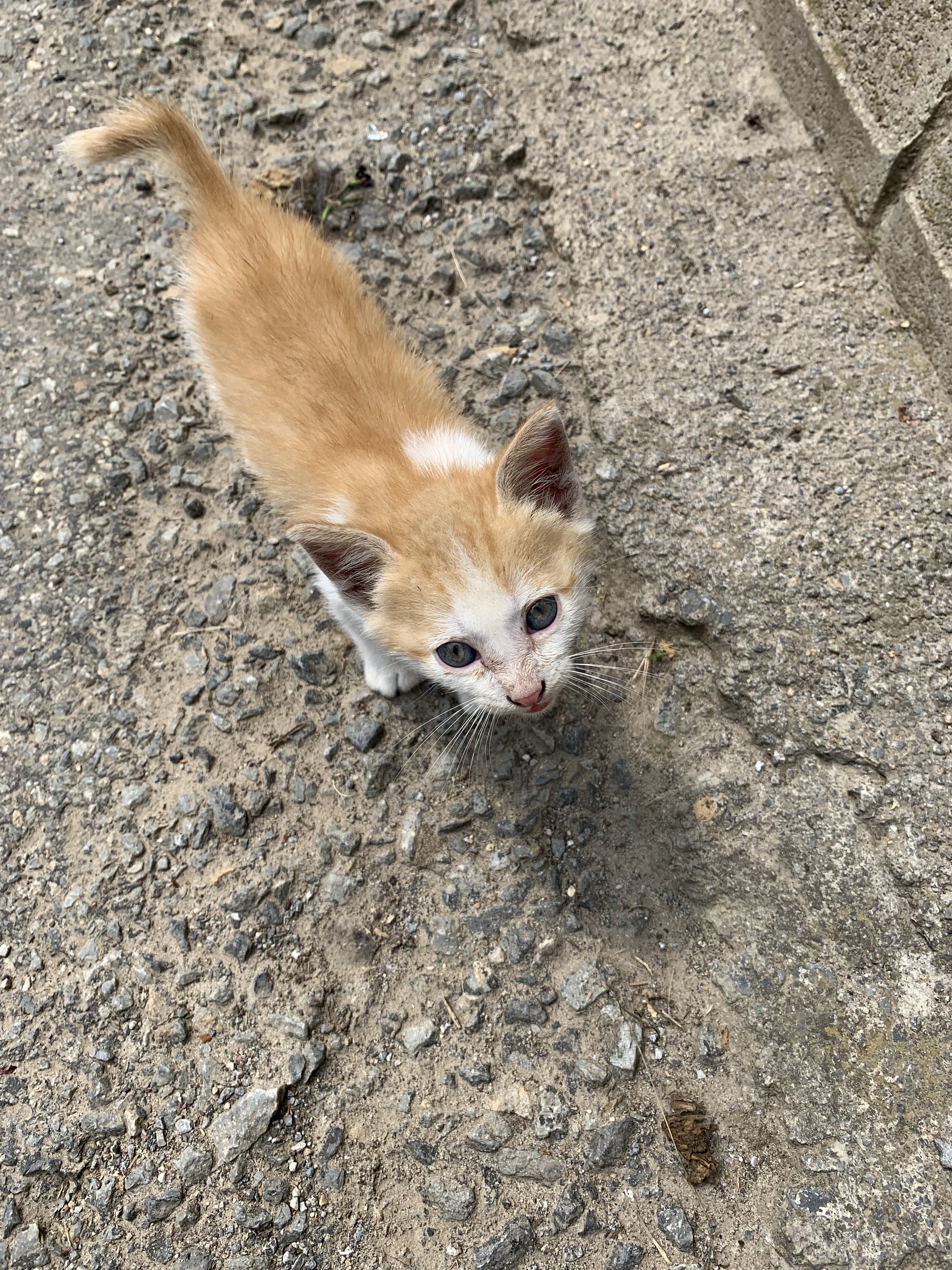
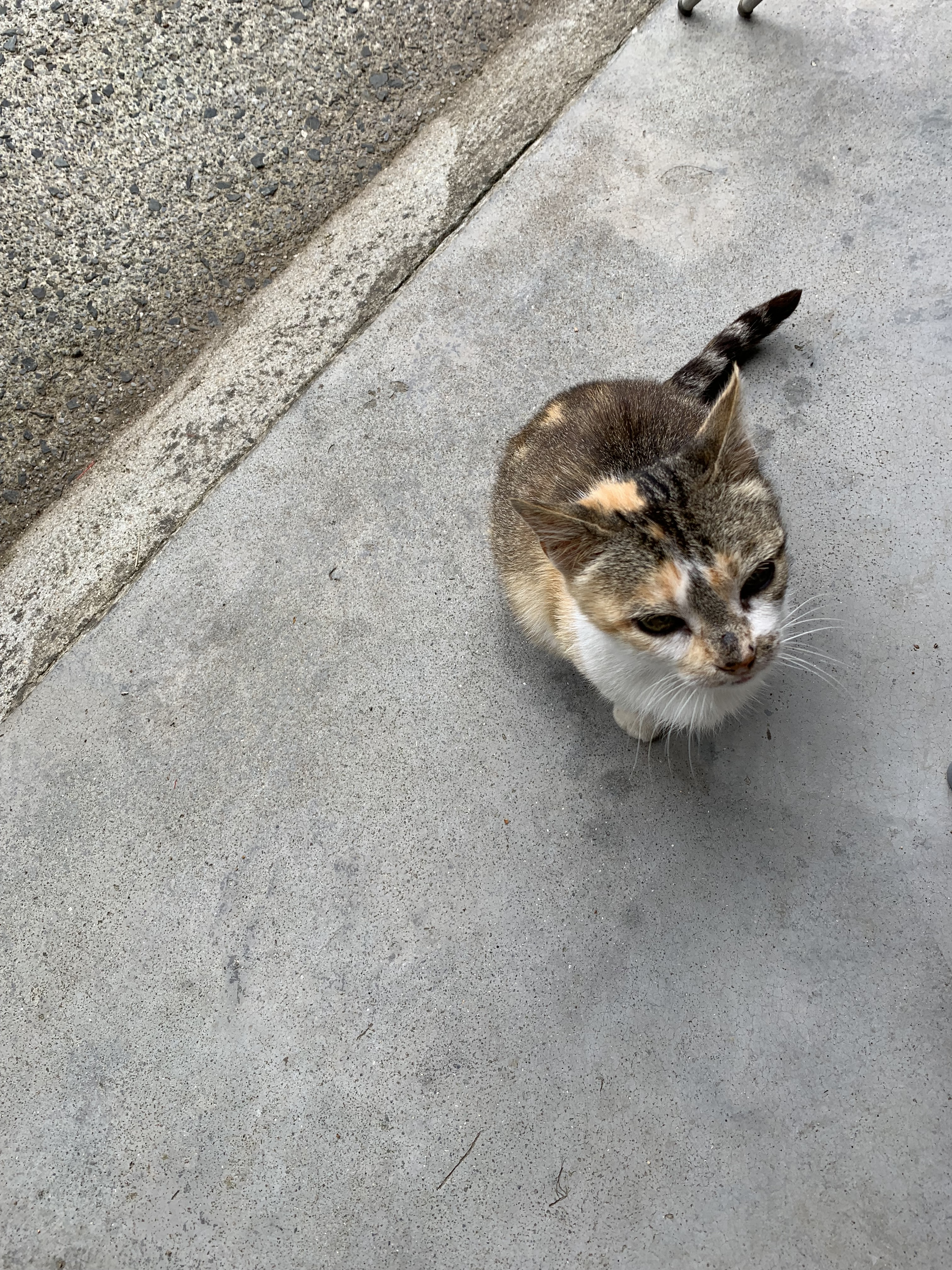
Other times it was a kitten, tiny delight with a broken tail, begging me to take her with me.

The hills of Spain felt like God’s holy temple, and every day He surprised me by His intimate care.

Like a monastery albergue, where I met Richard from Quebec and Noel from Australia, each of us speaking wildly disparate English as we shared a week or so of gentle company.

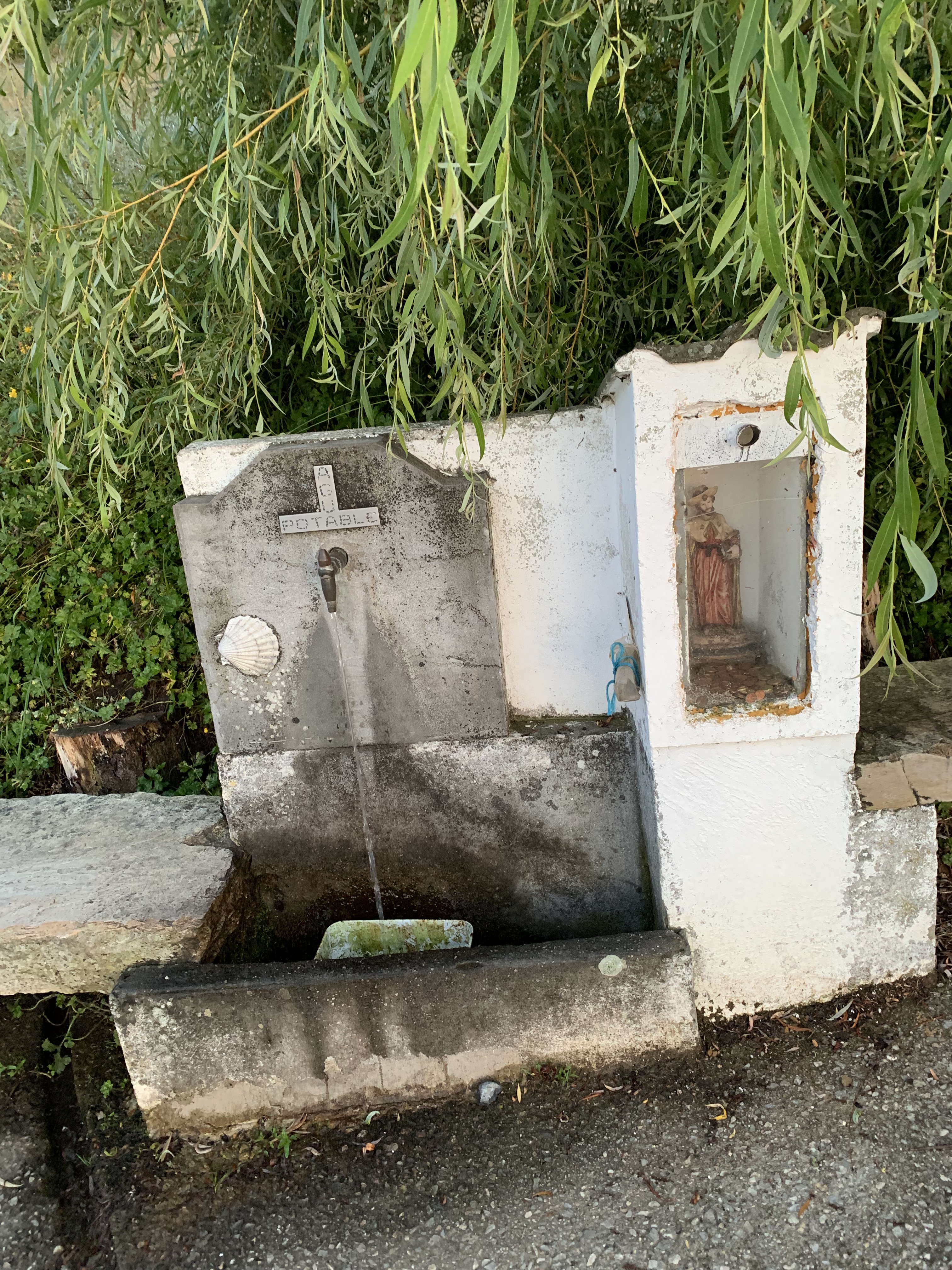
Or a town water fountain just as I was about to run out.

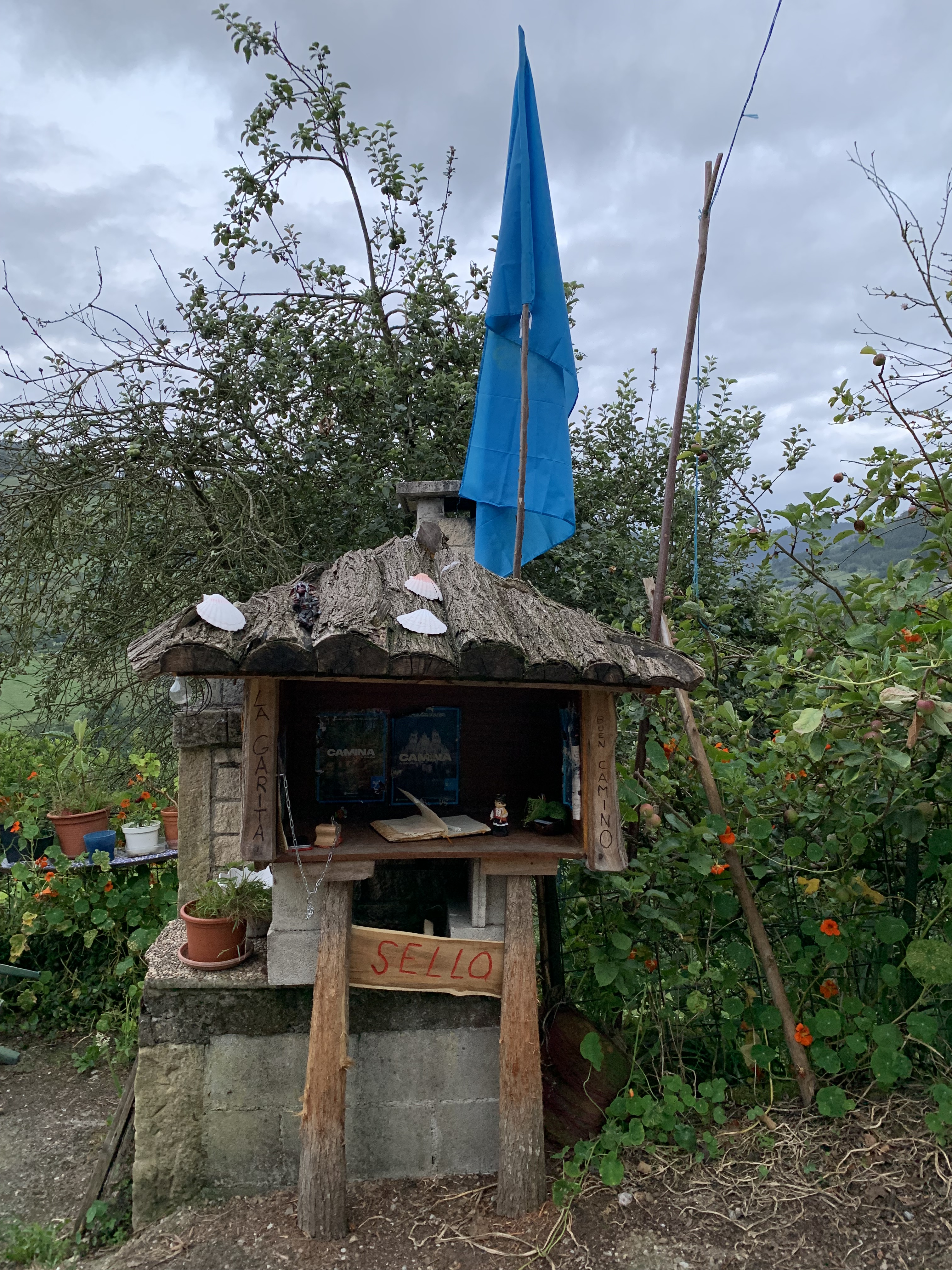
A sello stand in the middle of nowhere when I hadn’t found any place to stamp my credencial all day.

Fairytale forests.

A cheese-loving cat to share my lunch.

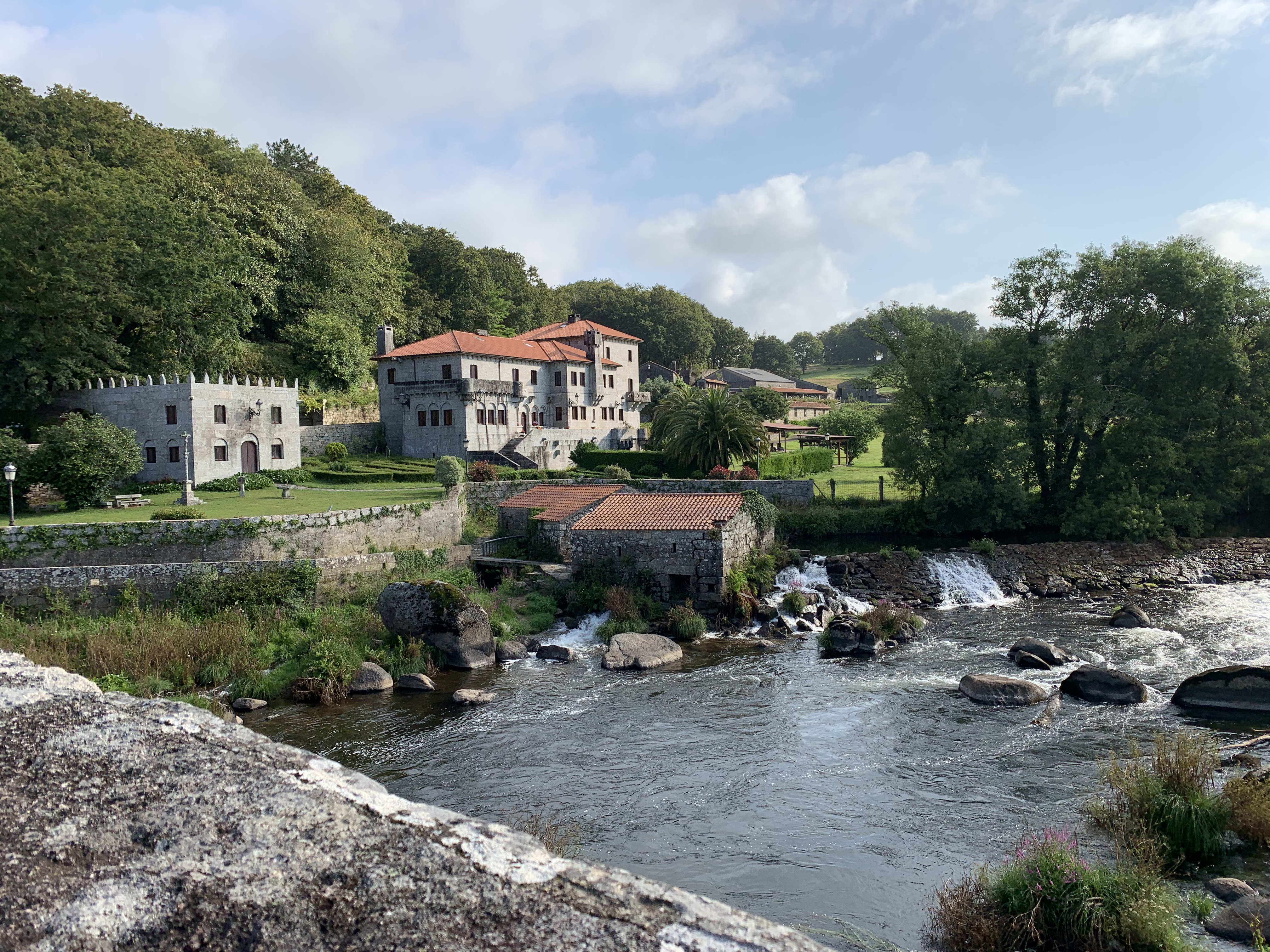
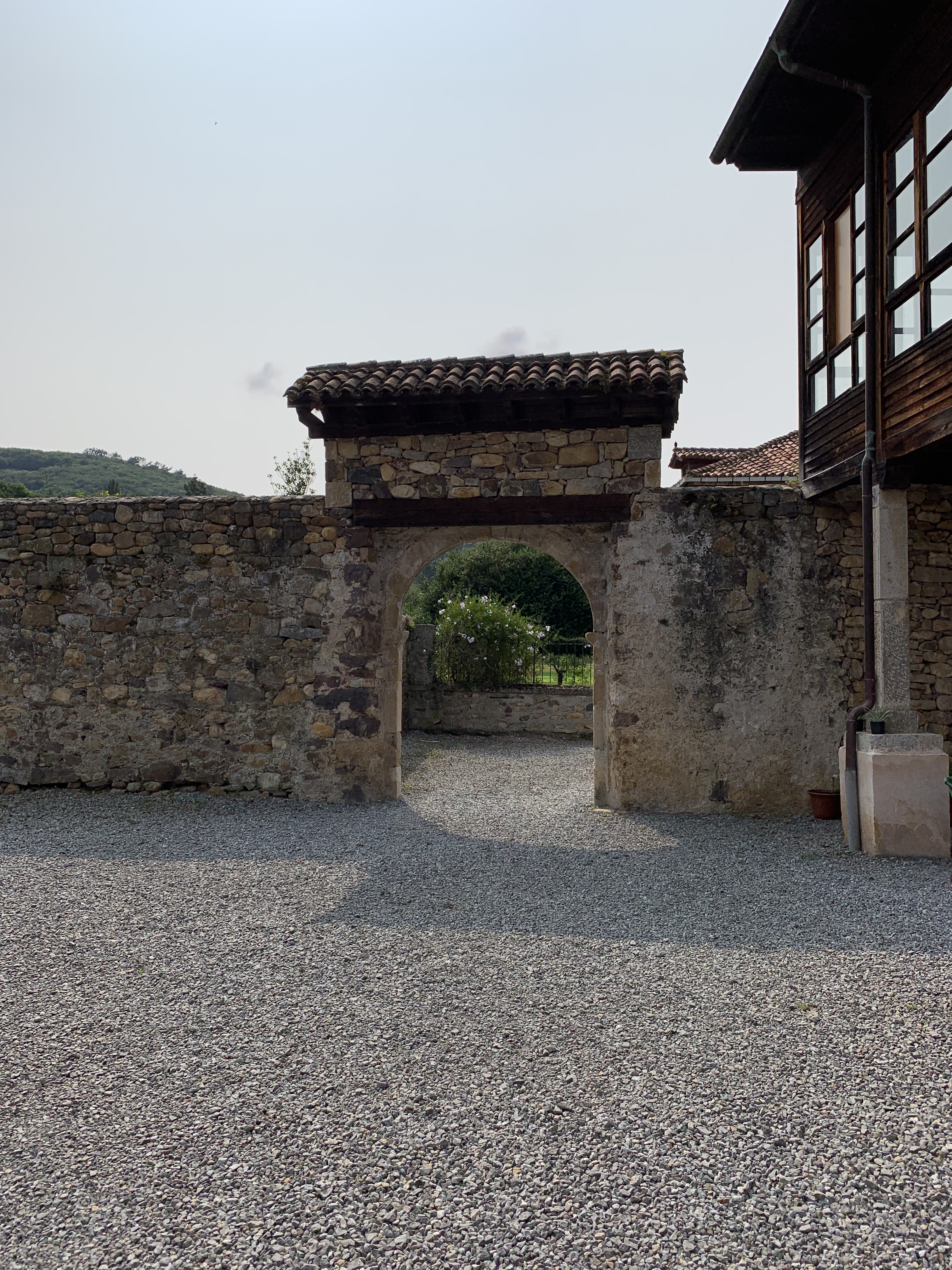
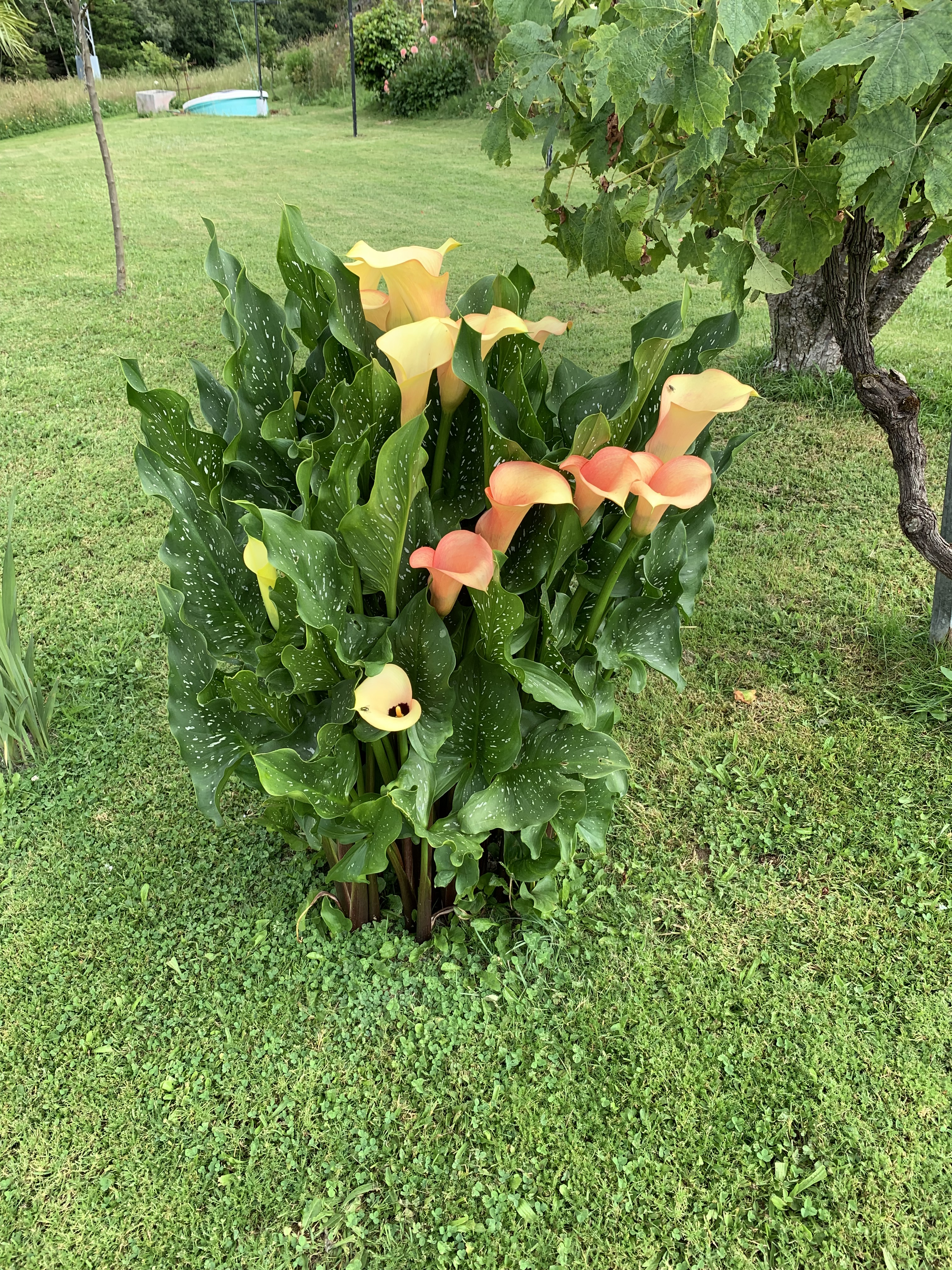
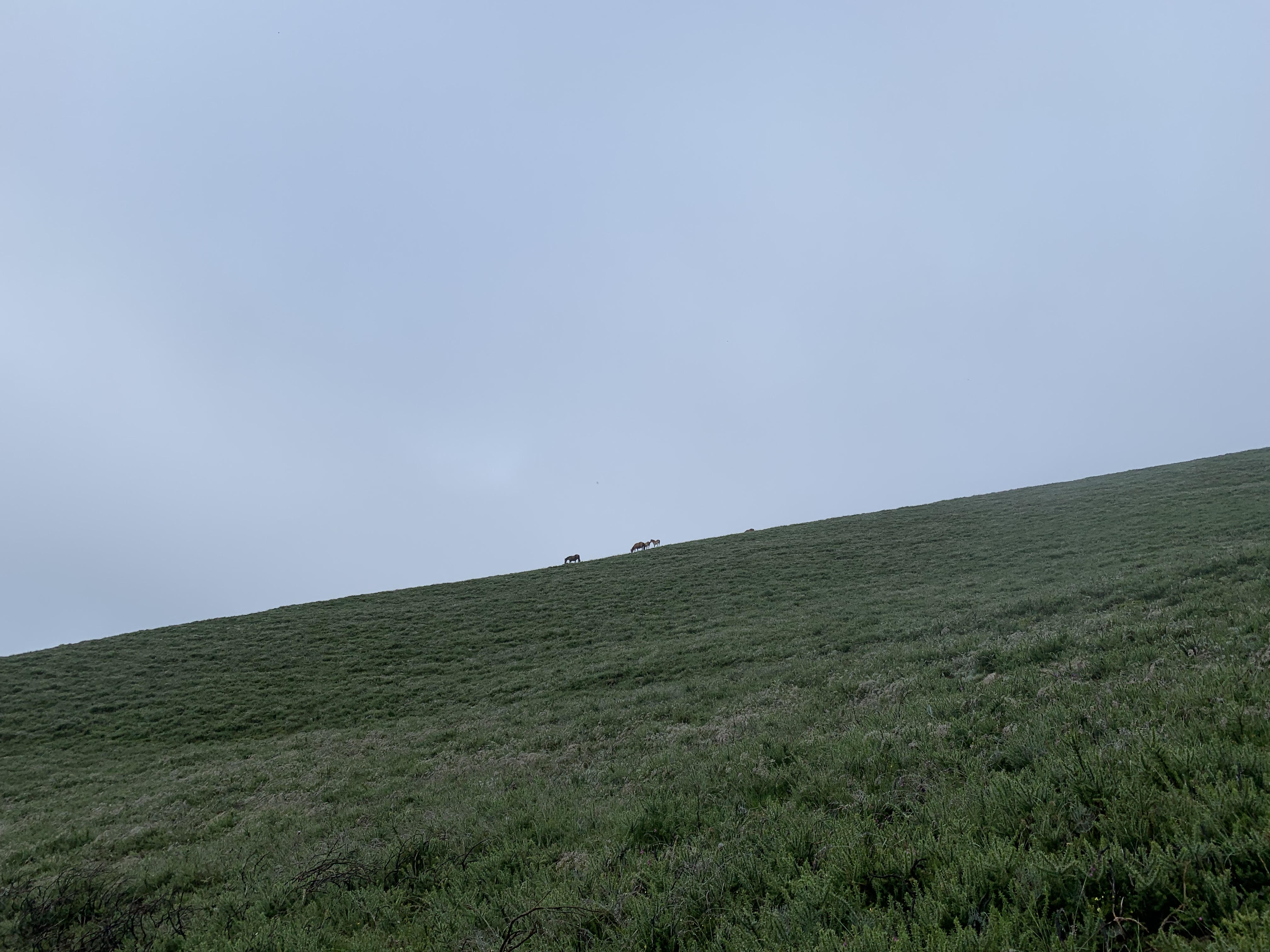
Lush flowers, Roman bridges, horses grazing a hillside, mysterious doors, and small stone churches, candles ablaze, causing me to weep.

One morning, I came across a vending station in a tiny hamlet, but no coffee dispensed after paying my euro. Noel happened by, and as we chatted, the owner of the machine walked in. Unable to fix the problem, she ran instead to her house and brewed us both fresh coffee, served on a tray with a pitcher of cream.

I could have kissed her.

One night, we pilgrims fall asleep to the mournful moos of momma cows newly separated from their babies. Another morning, I sit eating second breakfast at a road crossing, enthralled as wafts of steam evaporate from the asphalt.

Everywhere, beauty.

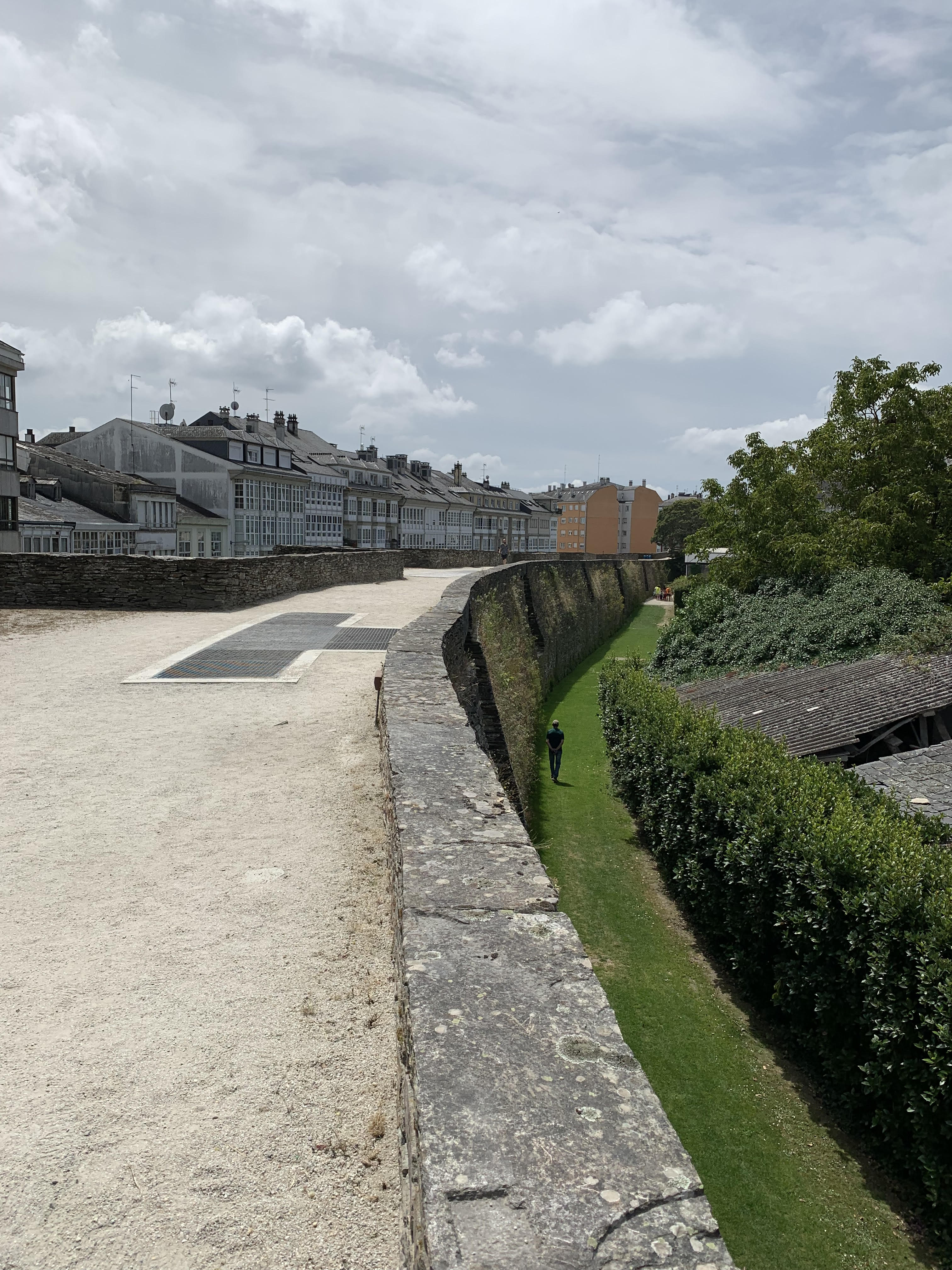
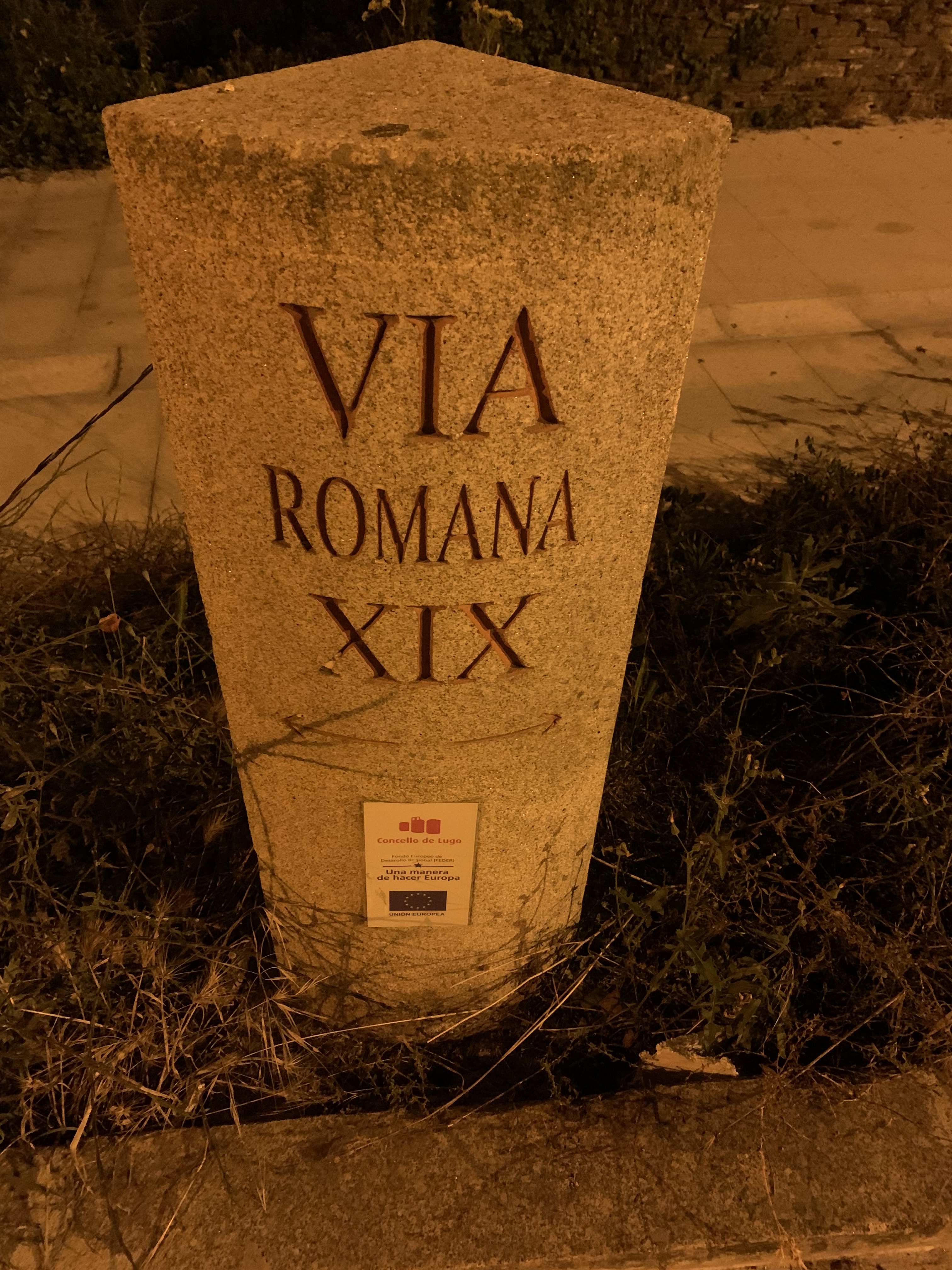
In the ancient Roman town of Lugo, I walk the city walls and find an English language paperback at a market stall to replace the one I was just about to finish.

When the Primitivo finally joins the French Way in the town of Melide, a day and a half from Santiago de Compostela, I am unprepared for the hordes of pilgrims completing the final stages.

It’s disorienting to walk next to tour busses and taxis ferrying luggage, singing and cheering, music blaring over bluetooth speakers; I’m initially quite grumpy.

Who are all you people?

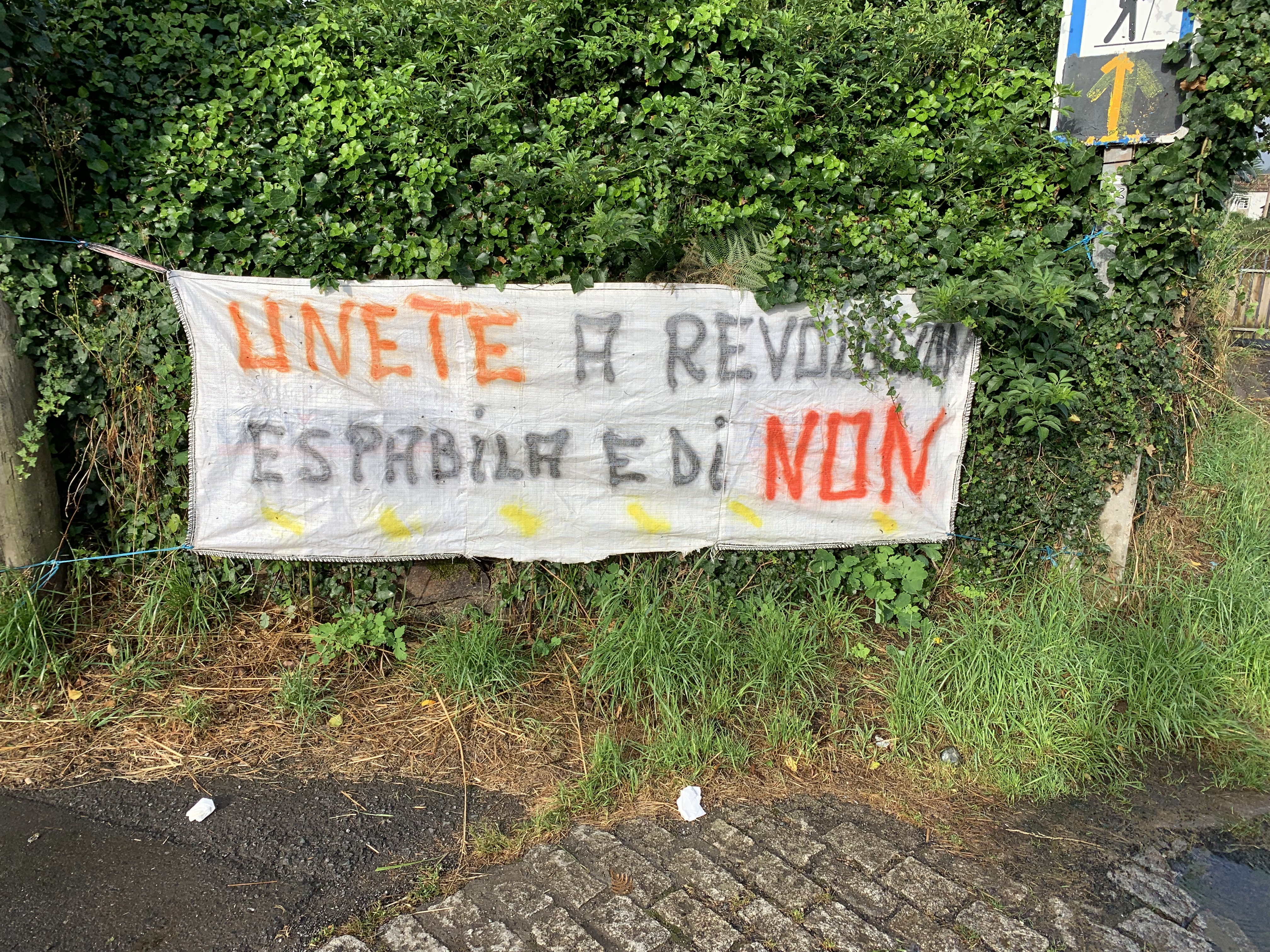
Perhaps the noisy crowd is why the closer we get to Santiago, we begin to see neighborhoods displaying protest signs. The mobile party coming through every day must be a lot for the residents.

But are not all these souls pilgrims? Are they not also following The Way?

I force my critical heart around and begin to give thanks for all those pilgrim feet, traveling the hot and dusty road into the city.

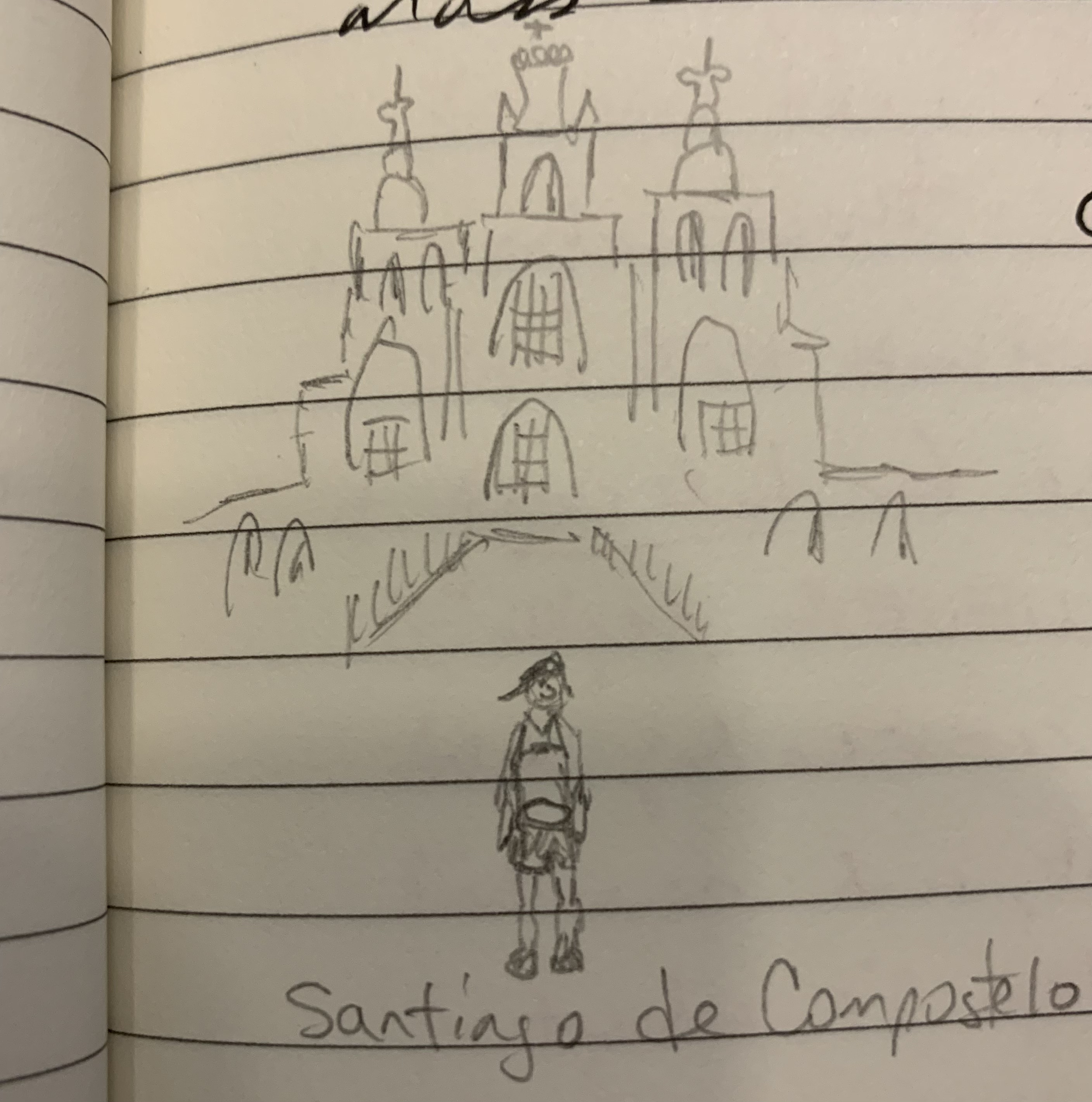
And just in time – peeking out between the apartments and businesses that line the street is my first glimpse of the iconic Cathedral tower.

Pilgrims buzz by me as I lose my breath, hands on knees. Wasn’t expecting that.

Straightening up, I become singularly focused – get to the plaza.

Crosswalks are torture, as are mothers with strollers, old couples arm in arm, men on corners smoking. Please let me by!

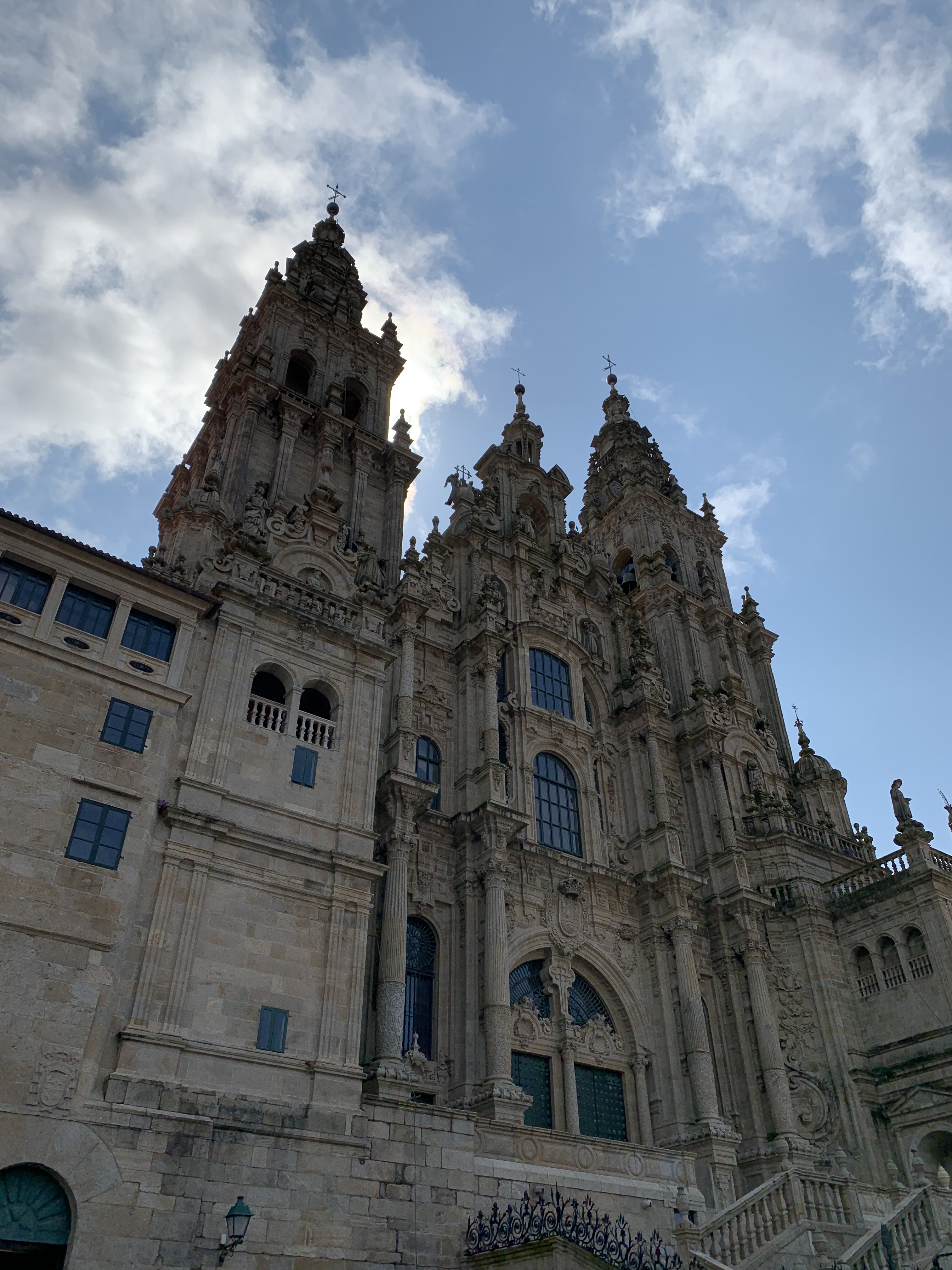
Bagpipes play as I round the final corner and the Cathedral appears.

Pilgrims are everywhere, all of us in similar states of relief, euphoria, confusion, and despair.

Over? How can it be over?

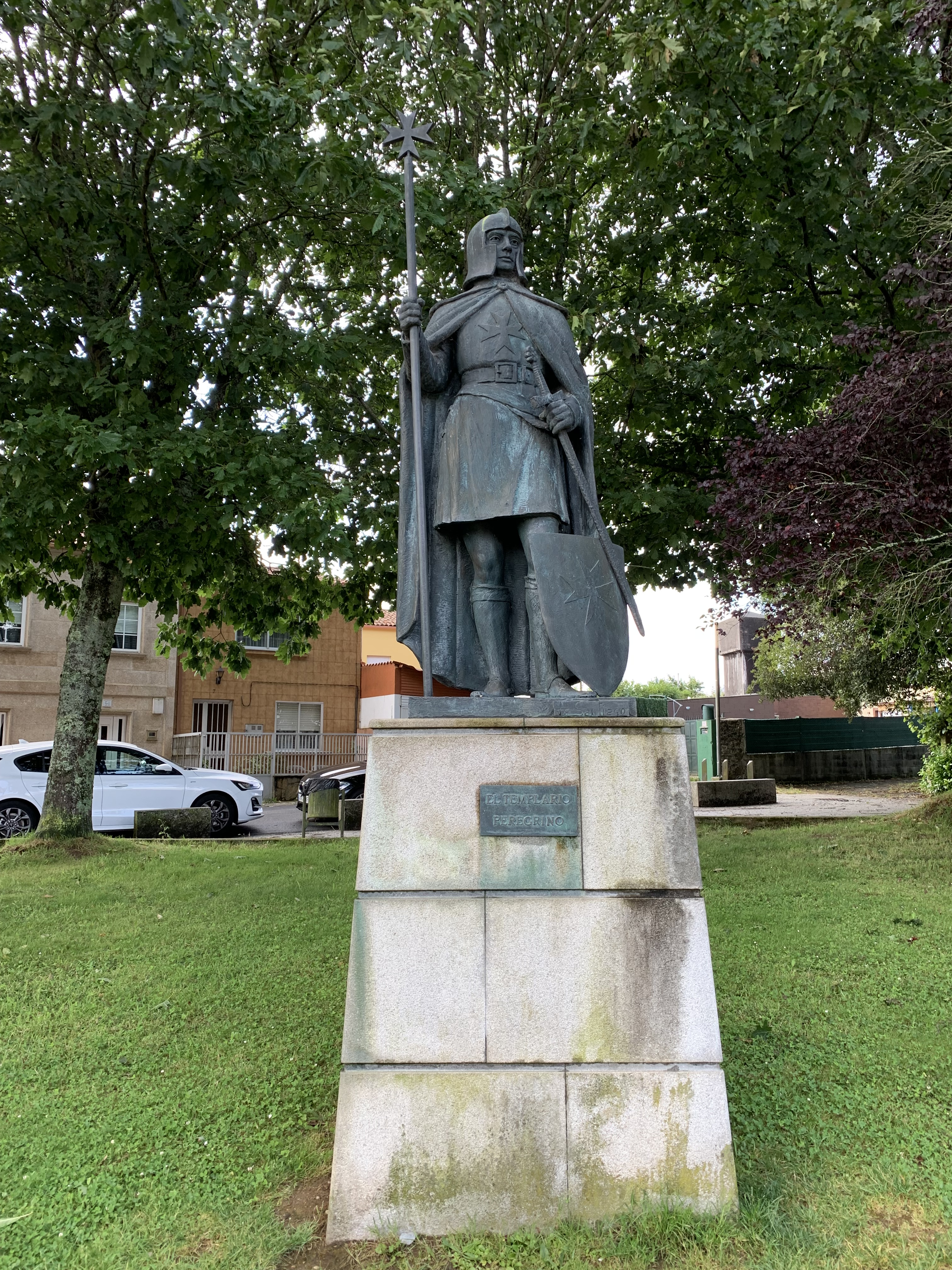
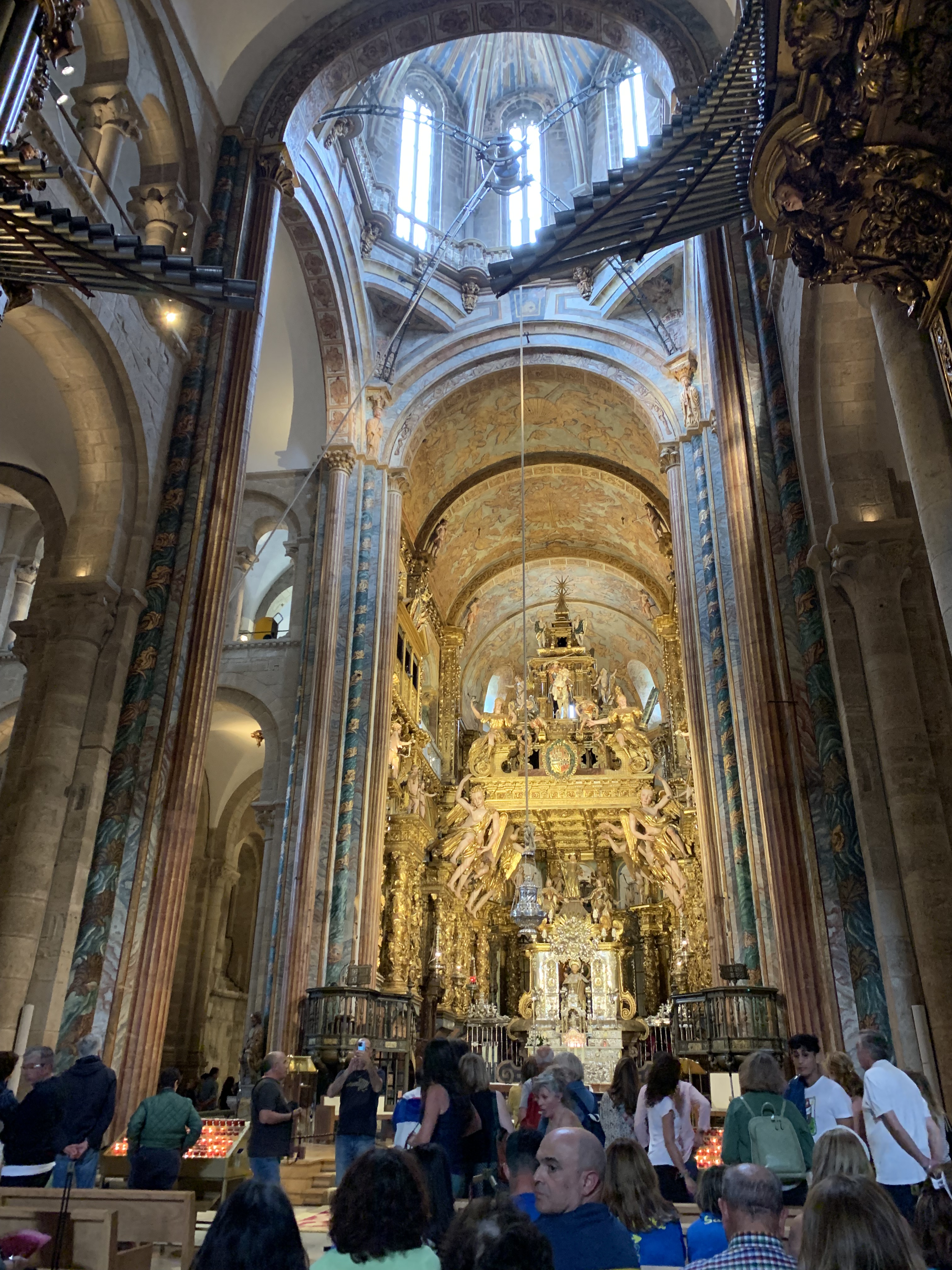
I wander around, doing the things I know I should do. Go to the Pilgrim Office to receive my Compostela. Tour the Cathedral. Get in line to hug the statue of Saint James.

Offer to take others’ pictures. Ask someone to take my own.

I know I should feel something – what? – more.

But all I really want to do is keep walking.

So that is what I do.

Why have you chosen to follow The Way? This is the question most pilgrims ask one another when they meet.

For me, it was an unexpected gift to hike The Camino this summer.

I felt God’s protective and loving presence in myriad forms, every day, and I learned to trust Him, not begrudgingly as I often have in the past, but in eager anticipation of His goodness, wisdom, artistry, and love.

Following The Way was to experience what the prophet Isaiah described hundreds of years before there even was a Way:

But those who hope in the Lord will renew their strength. They will soar on wings like eagles; they will run and not grow weary, they will walk and not be faint.

On This Side

On the way up Old Bridle Path, leading to Mt. Lafayette, New Hampshire’s sixth tallest mountain, there is a place on the trail where the trees part.

From there, you can look up and see a series of humps, a roller coaster of lesser crests which are the gateway to the 5,260′ rocky crown of Lafayette.

It’s a daunting view.

You know you have to haul yourself up there, over those hellish hills, if you ever want to stand on top and look down, across all of Franconia Notch and beyond.

Along the way, head down, you grasp and claw, finding what beauty you can between the sweat and heavy breathing.

Until at last.

As I write this, I think of how seven years ago on this day, I went about my life as if nothing were amiss. Not knowing what was to come, two days hence. It was uncommon grace, the not-knowing.

I look under the bed and see his backpack stored there, the one he had forgotten at his friend’s house from that day. He left so little behind.

All it contained was a sock ball and a pair of worn out Chuck Taylors. It’s how he lived his earth-bound life and after, he simply didn’t need it where he was going.

He had only new ahead, a glorious death, like the life of an autumn leaf. Burnished gold or orange or red, a fall, then the waiting. For us. For me.

But unlike the leaf, his eternal self (I don’t pretend to know when, or how) will not contain even a cell of decay.

Not. One. Cell.

On this side, things continue to happen, good things and hard, heedless to the one who is gone.

I have to admit, it is sometimes a daunting view, from this side.

I cannot do it alone as I wait, but I am grateful for the One who holds my hand and listens as I haul and breathe, crest after crest, on the way to until.

Grateful, for He listens as I pray – for a sweeter disposition, for living bread that satisfies, for redemption, for friends, for peace, for plans. For my kids and the littles, for this lonely ache, for temptations, boredom, and pain.

I think of the seed that was my son. Planted here, on this side, a brief blooming, but full of the all any mother would want. Sweetness and honor, devotion and warmth.

Each of us is also a seed, each a potential to reproduce – hope, love, help. Eternal friendships, eternal family, eternal joy.

Seven years ago, two days from now, I lost my son from this side.

It’s okay.

I know he’s waiting.

Ice and Fire

March was a curious month in my hiking journey, bracketed, as it were, between twin extremes of brutal low temps and massive snowpack at the beginning of the month and blistering heat and sun at the end.

It is hard to say which I loved more.

Gridding in March always seems more like winter than spring, and this year was hardly an exception. The day before I was scheduled to head to Florida to chip away at another section of the Florida National Scenic Trail, I waited until late afternoon, when the ski lifts close, to hike the Wildcats.

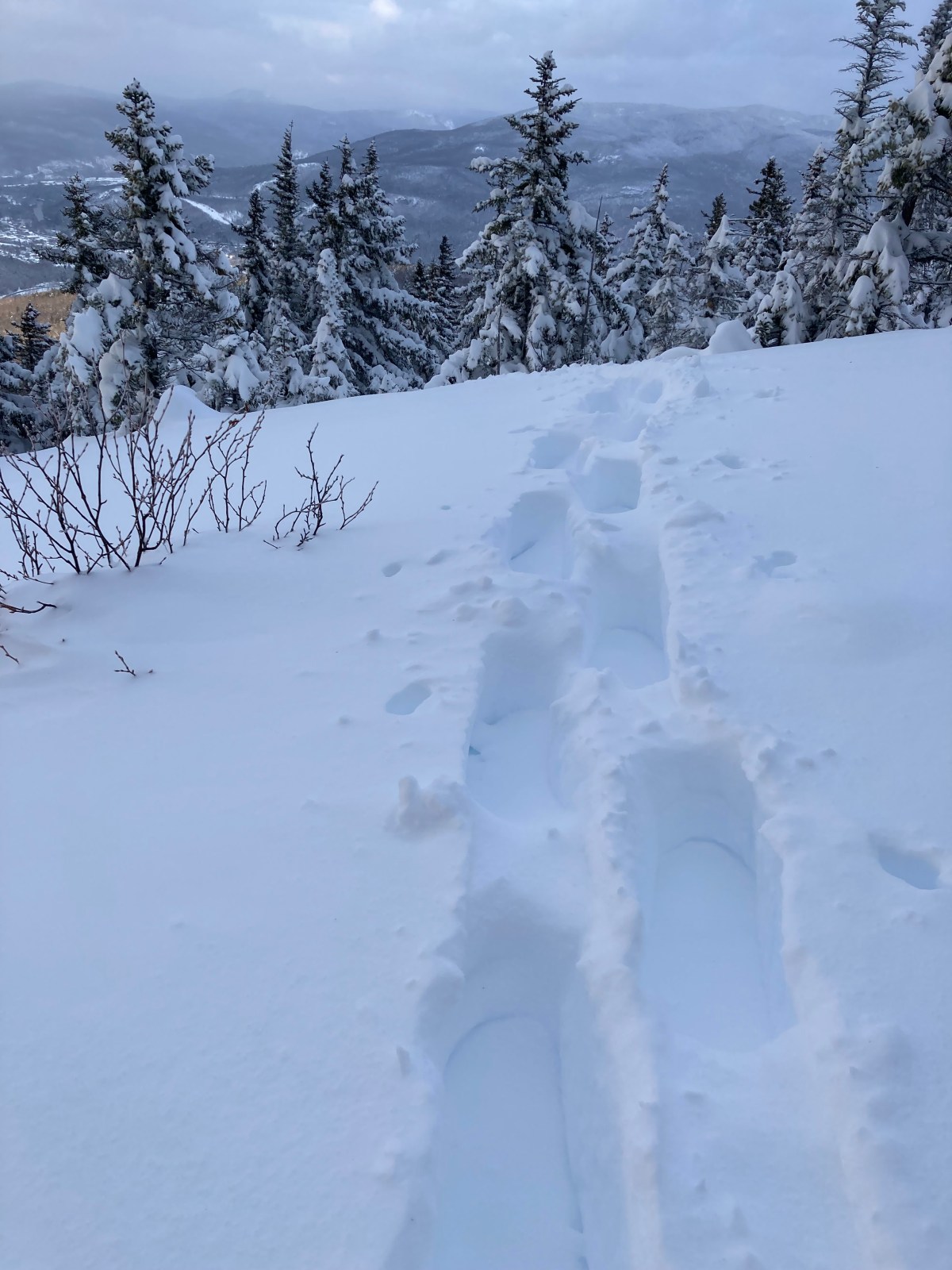
A recent storm had covered the ridge in deep powder, which is why hiking up the groomed ski trails before heading across is such a treat. Pleasantly surprised that the ridge had been broken out by, of all things, some skiers, I followed their tracks across the Wildcat alphabet (peaks D, C, and B) until my mystery friends lost the narrative and turned around a mile short of A.

Darn!

There was no way I was bailing so close to a March summit, so I broke the last mile through knee high drifts, tagged A, and backtracked the way I came. The snow was so high up there that branches typically out of reach above my head now lashed my face. It was all worth it, though, as the wide open view of stars and far-off lights of Gorham glistened on the way back down the ski trails.

It was a perfect contrast to what lay ahead in the Sunshine State.

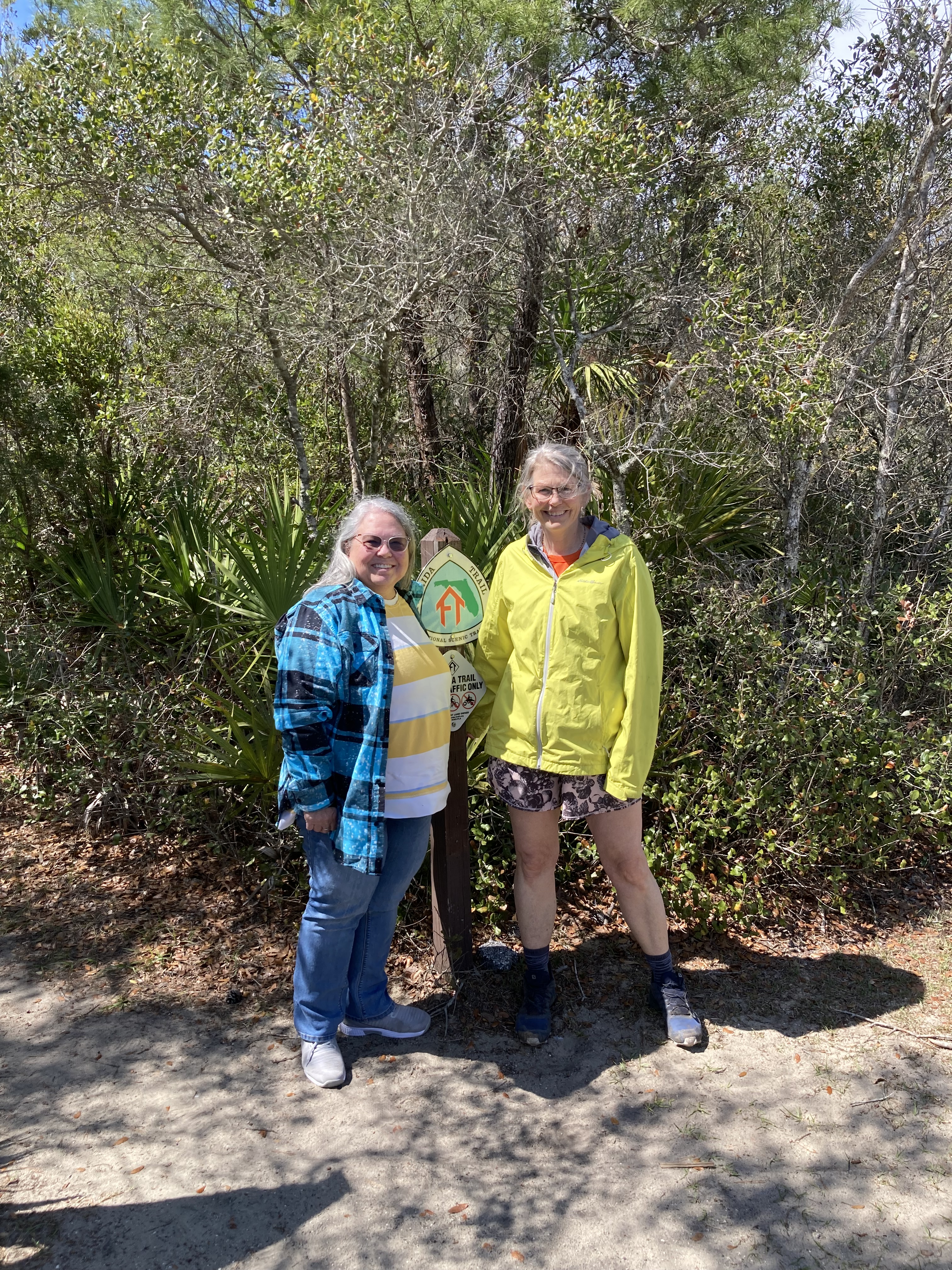
This year, finding a safe place to stash my car for a few days and a ride to a distant starting point was never easier. Gold Head Branch State Park agreed to let me park in front of their entrance building, and my cousin, whom I hadn’t seen in decades, gave me a lift 85 miles south. Catching up on family and a hearty pre-hike lunch were sweet bonuses.

In years past, hiking the Florida Trail meant one unwelcome thing: wet feet.

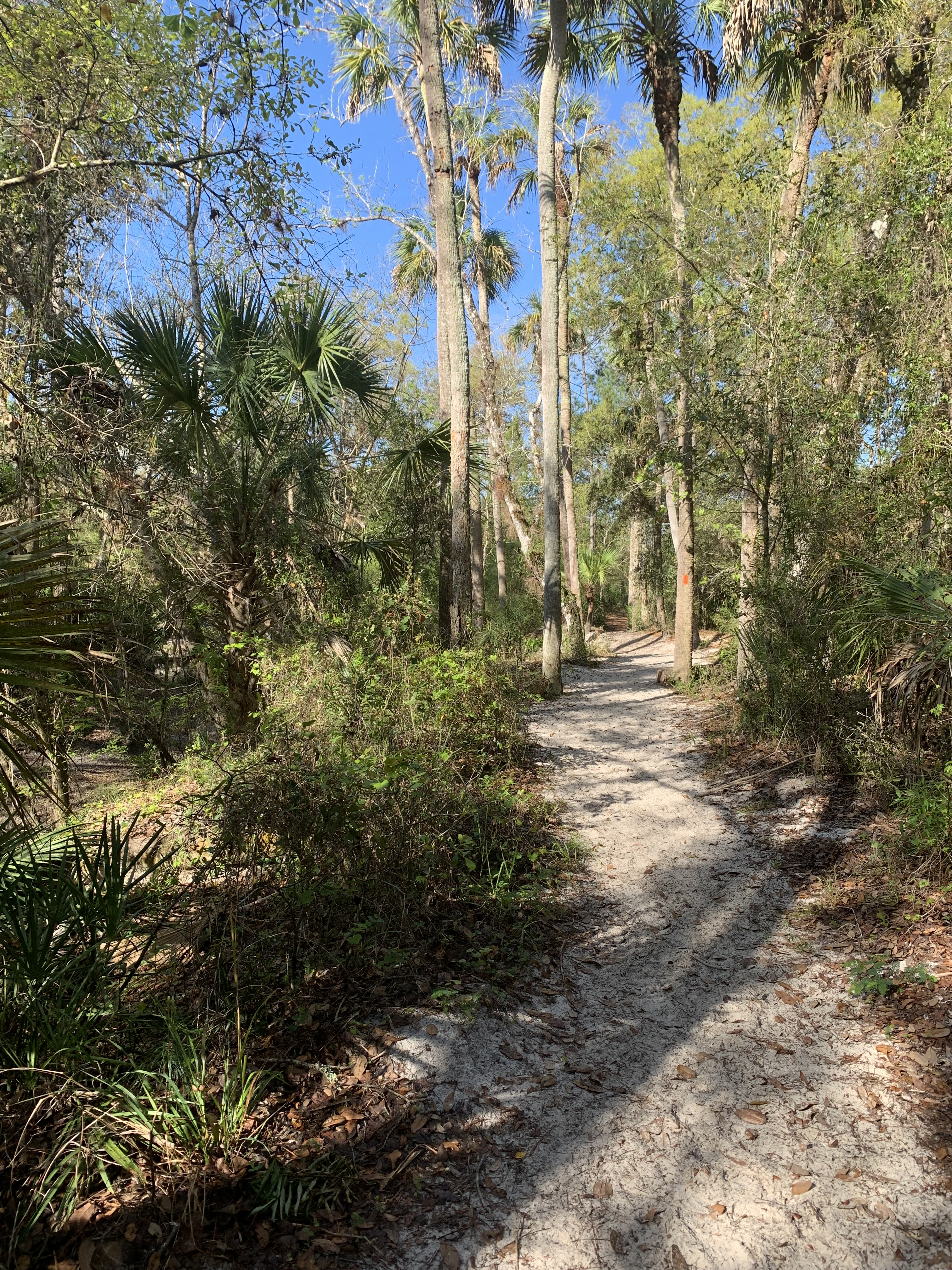
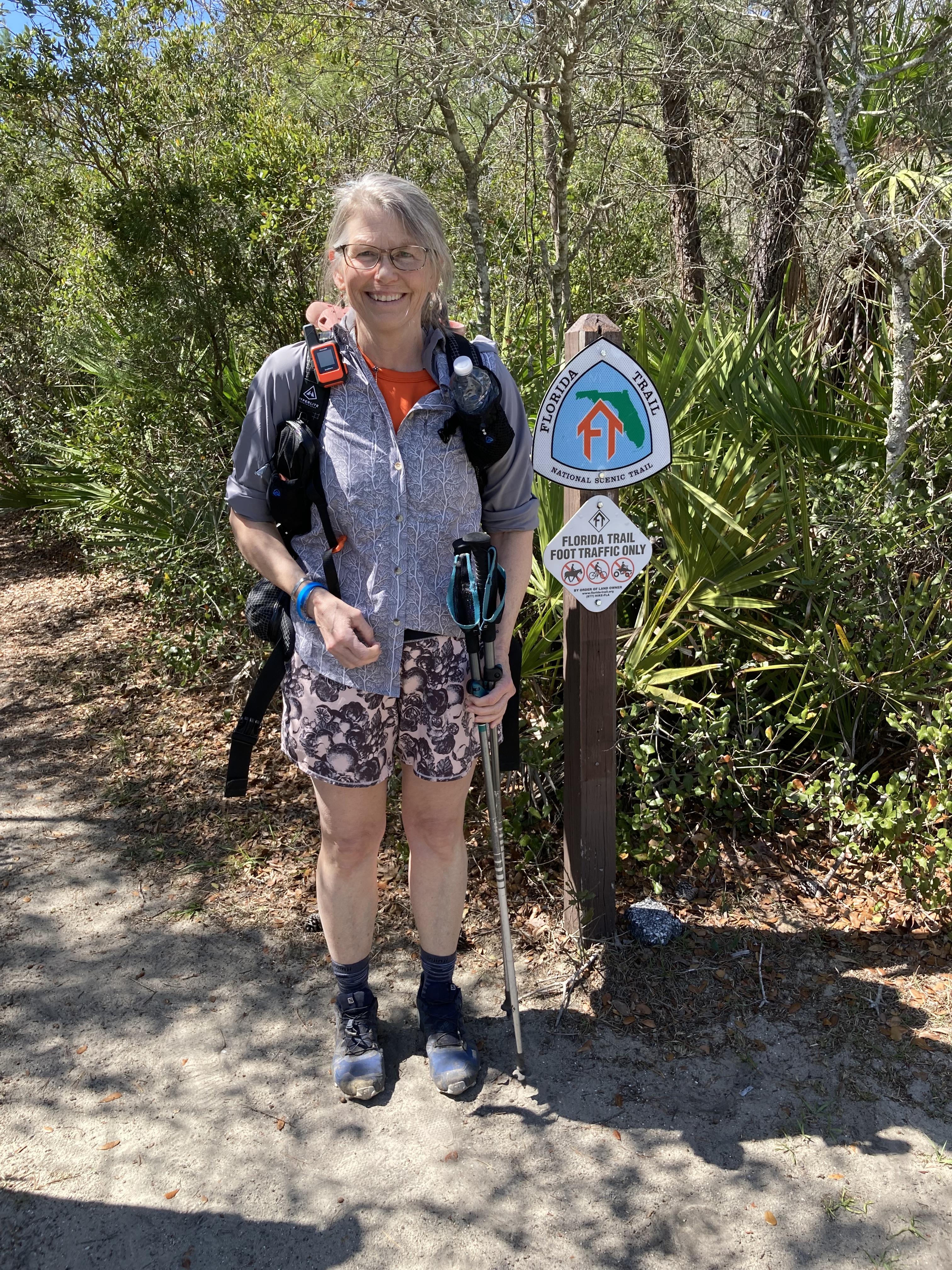
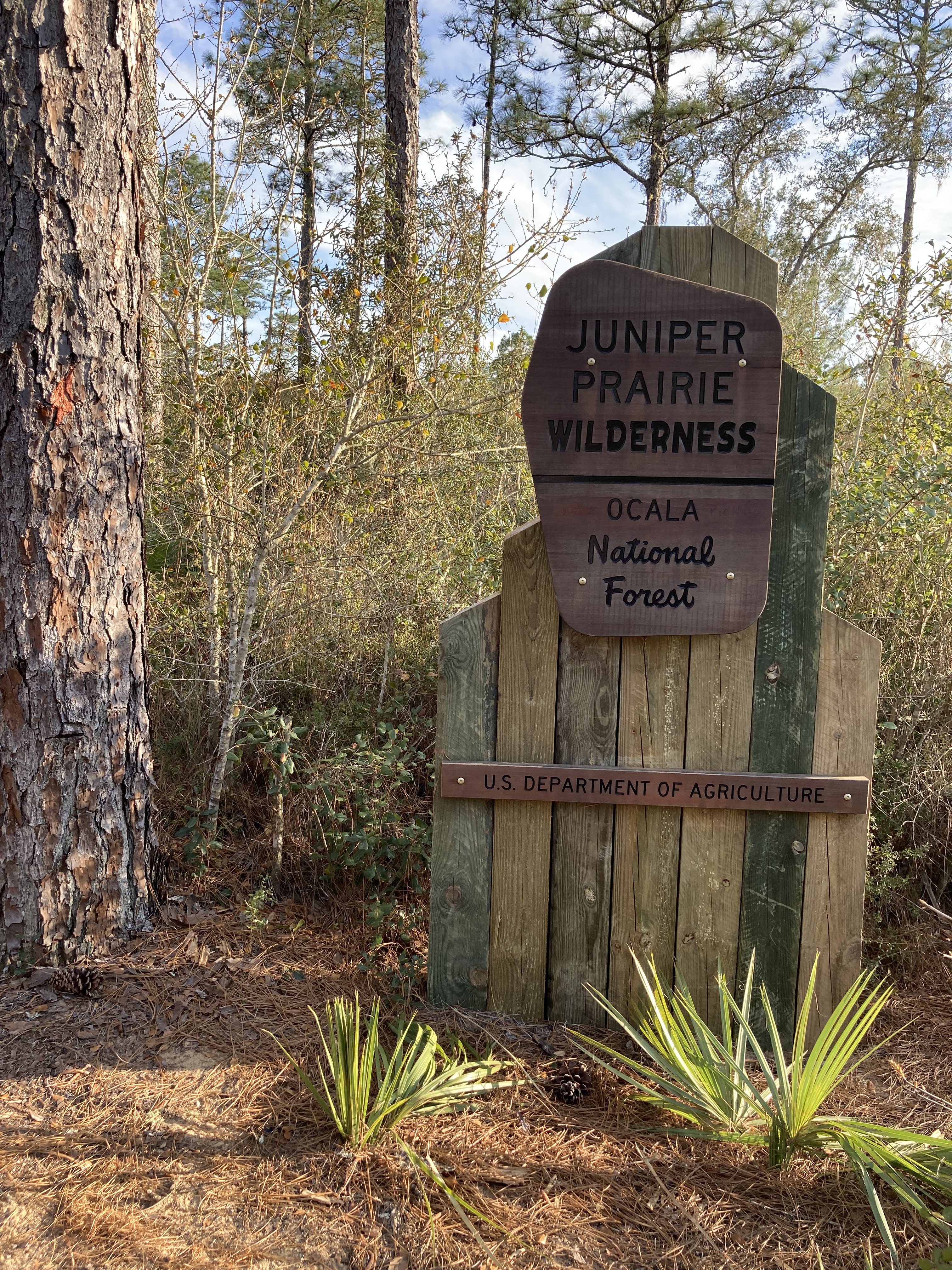
It was a strange surprise, then, when day one took me through Juniper Prairie Wilderness Area on soft, sandy trail with nary a puddle in sight.

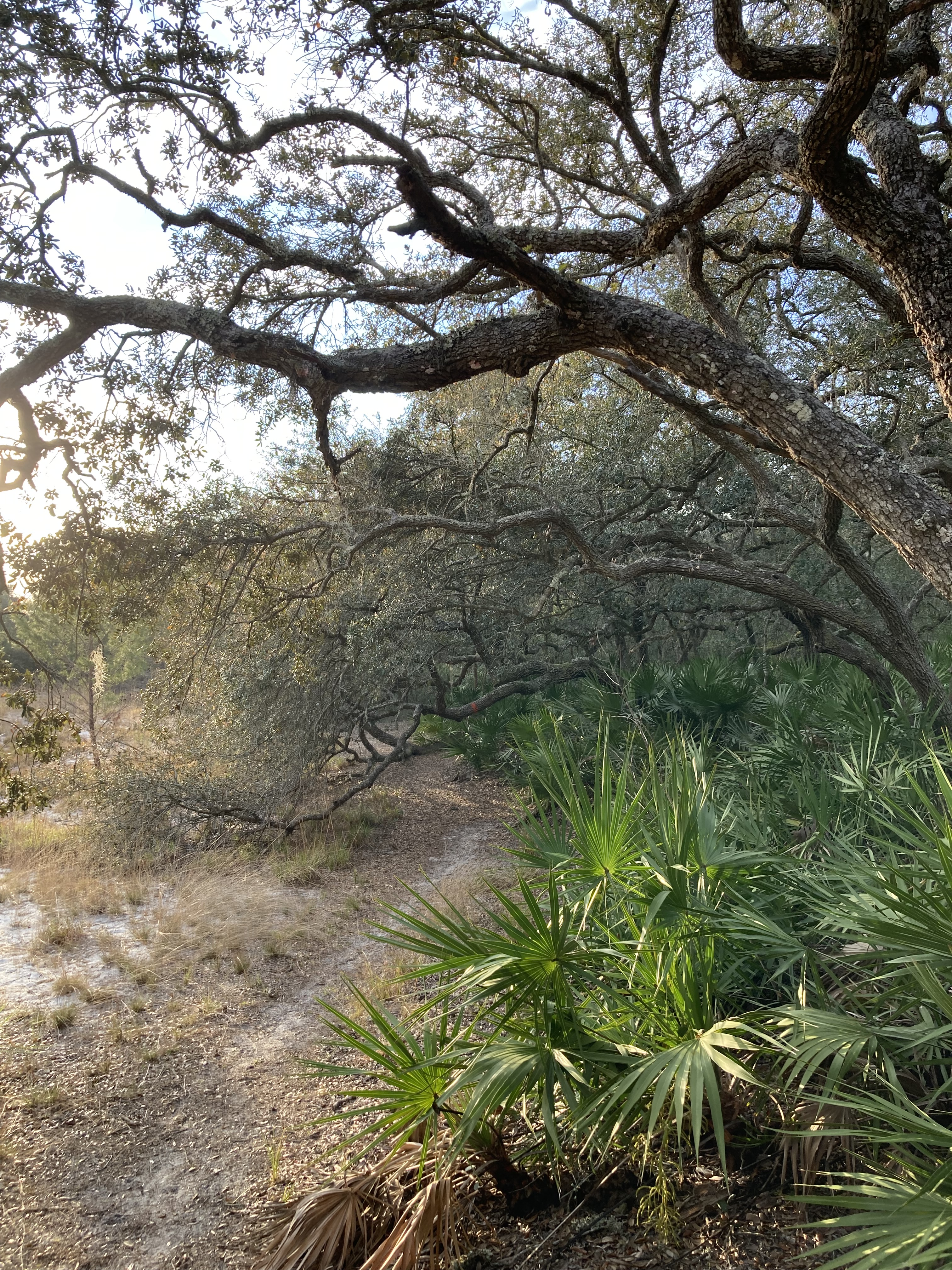
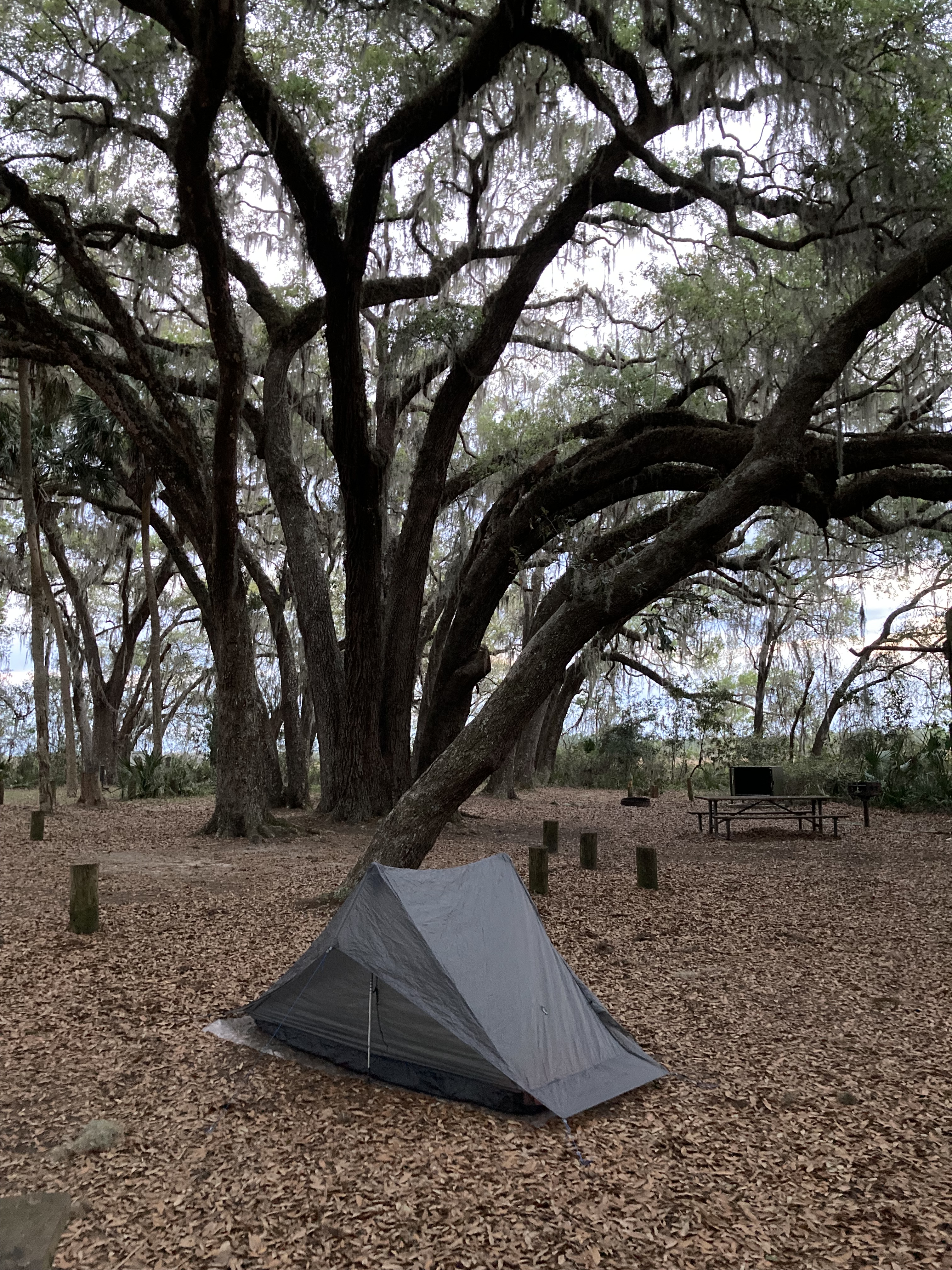
The massive trees draped in soft moss and open expanses of grass could not have been more different that the buffeted peaks of New Hampshire; the dry conditions would continue for the remainder of the hike, marking the first time in the five years I have been hiking the trail that I remained blister-free.

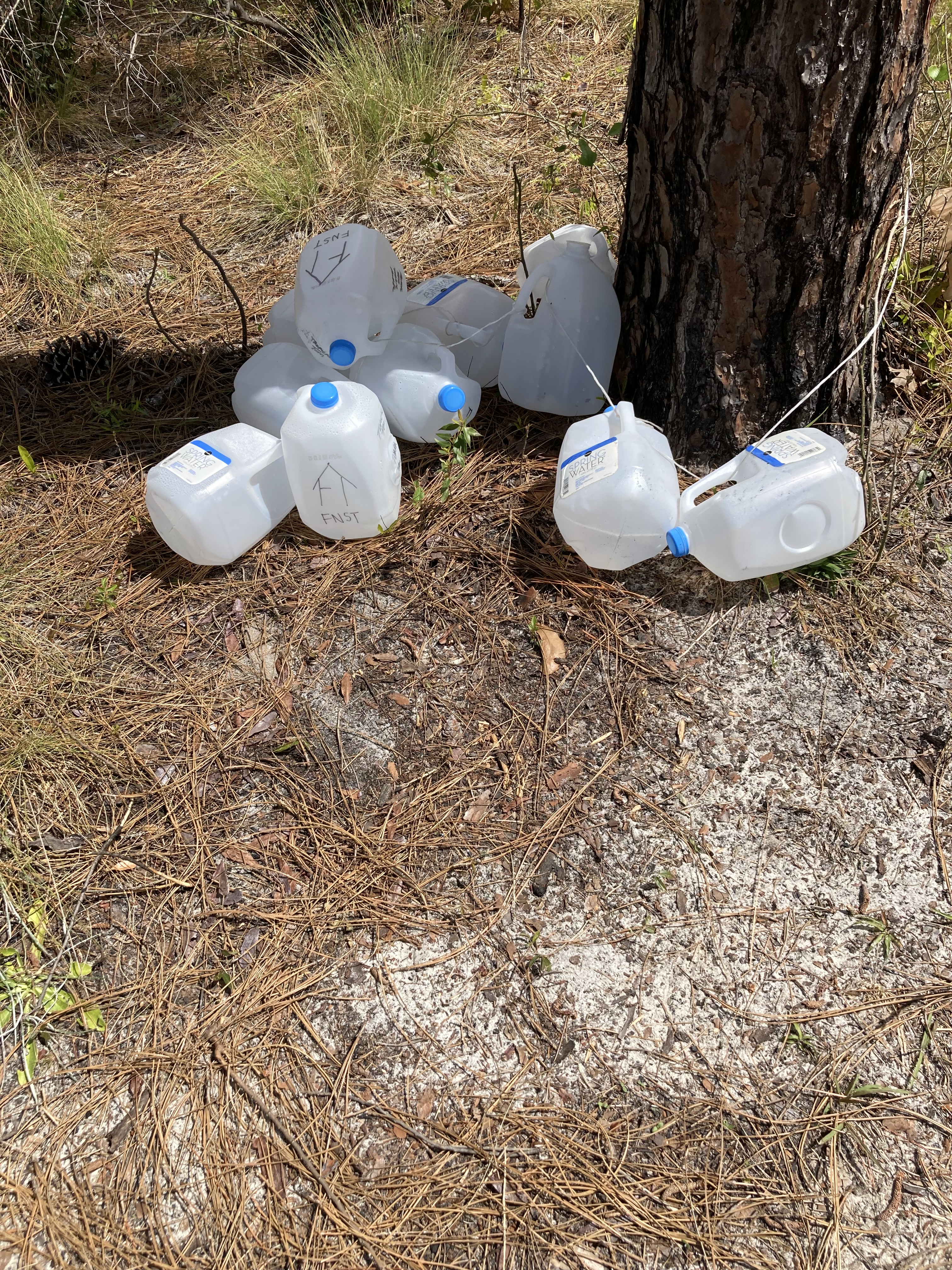
The dry trail made locating water more difficult, and I found myself doing heavy carries of multiple liters and relying on the trail angels who stashed gallons at road crossings. Not complaining, though, as I treasured the time with warmth on my skin.

Because I was only doing an 85 mile stretch and had five days to do it, I had pictured myself toodling along, exploring side trails, and sipping afternoon coffee prepped on my pocket rocket stove as I bathed in the beauty of the Florida forests.

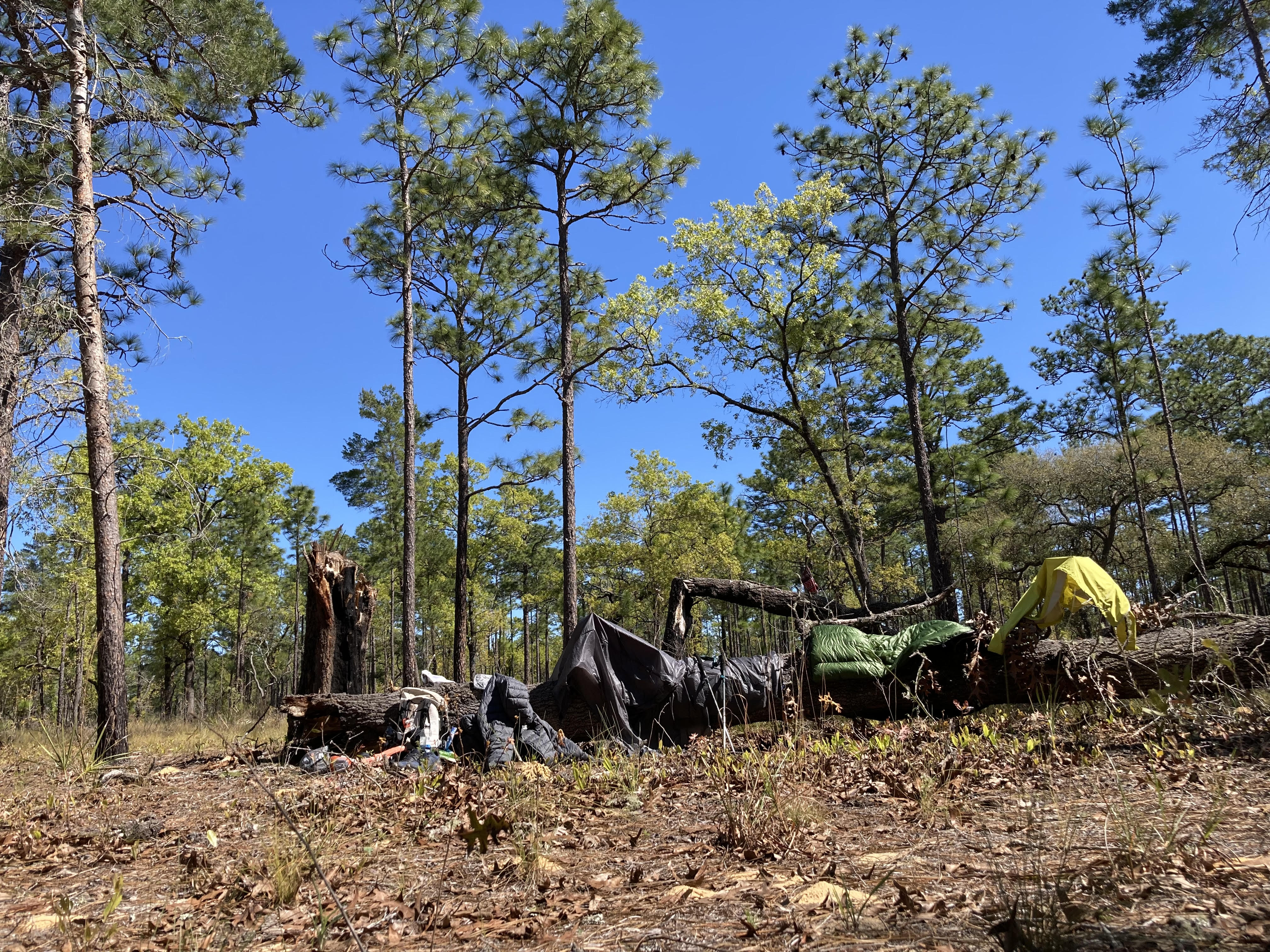
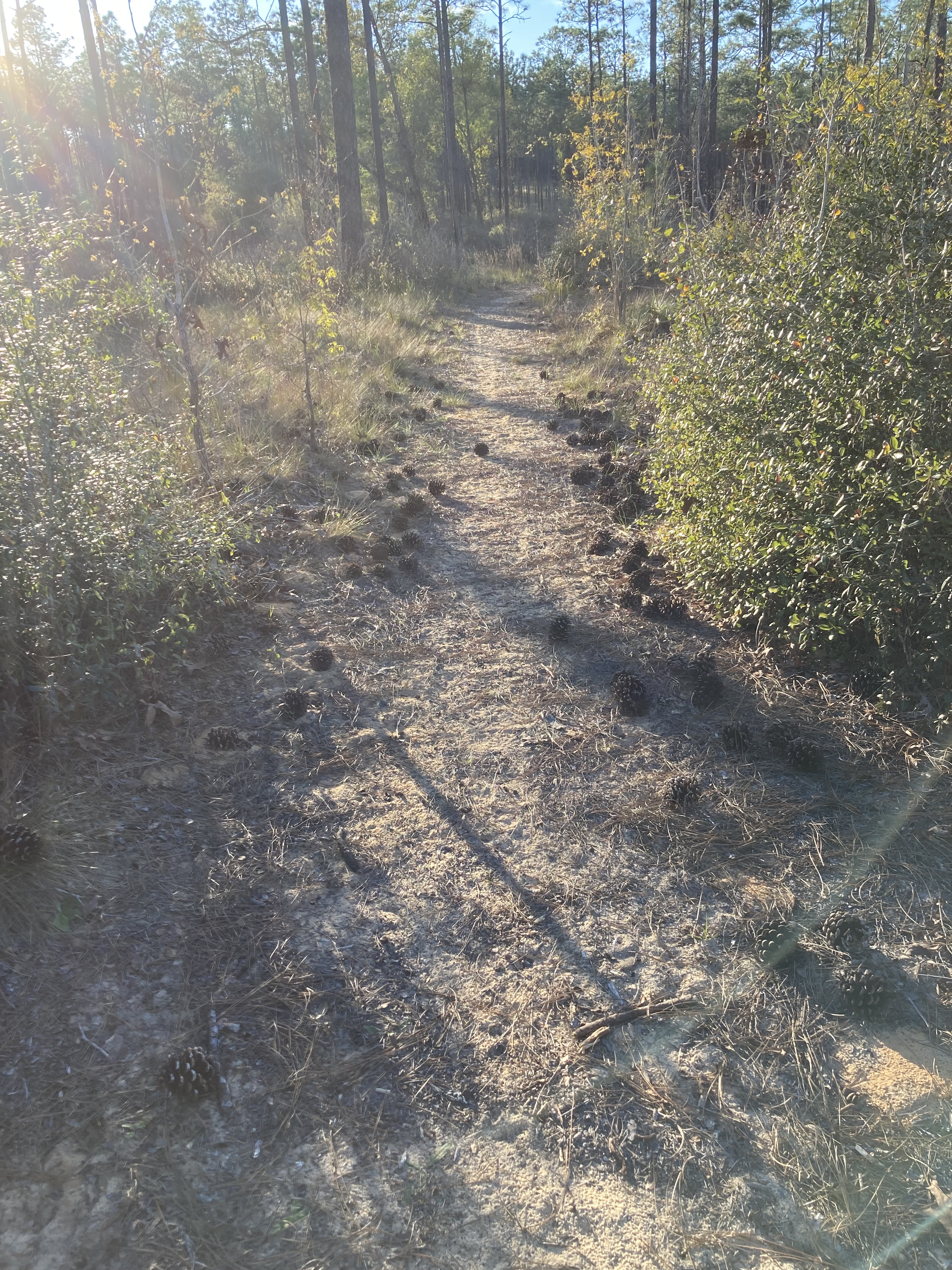
There was some of that, to be sure, especially when dew-laden gear needed to to be draped dry in the lunchtime sun or a jaunty pine-cone parade route invited admiration as the last light leached from the day .

But old habits die hard, and once a thru-hiker, always a thru-hiker.

Wanting to escape the cold during the dark days of March, I started hiking the Florida Trail years ago because chasing blazes seemed more appealing than sitting on a beach.

There always seemed to be something up ahead, and my feet just wanted to get there. I just couldn’t make myself slow down.

I awoke three days in, 29 miles from my car, hungry as all get-out, with a few easy stretches of road-walking ahead.

Well, why not, I reasoned.

There were showers ahead at the park, a bag of chips in my car, and nothing but flat in between.

Just get close, see how you feel, and the rest will sort itself out.

And perhaps that is what I learned this year, on this stretch of the Florida Trail.

Walking that 29 miles, the longest I had ever done in a day, was possible because there was no pressure to do it.

I walked because I like to.

Linger if desired, or walk wildly if you want, but chase those blazes with everything you’ve got, because there’s always something pretty up ahead.

Ice or fire, it’s all lovely in the end.

Turning Back

Earlier this week, after the storm, I headed north to hike Moriah.

The list left for my December Grid is long, a function of a busy school month, family obligations, and, of course, winter.

While chipping away at the peaks on The Grid can sometimes be a haphazard pursuit – when choosing hikes, I must weigh time I have left in the day, my energy level, weather, and countless other factors – there are always a few targeted mountains I strive to finish in that given year. I haven’t even begun to really tackle the Big Boys, so I know it’s still a while before I get to 576.

On the way, though, Moriah is one of my recently targeted peaks, and having taken nearly three weeks off since completing my last November climb, I was anxious to get up there and check ‘er off.

I had an early morning appointment at the dealership to fix a recall on the car, so a late start was inevitable. Still, I arrived at the trailhead earlier than most days, when I typically rush out after teaching my last class, resigned to finishing in the dark.

People had packed down the snow up to Mt. Surprise, about the halfway point, but the trail ended there.

So. Much. Snow.

Nothing to do but push on.

And on.

And on.

Hours passed as I tracked my “progress” on CalTopo. Drifts were so deep on the steeps that I found myself belly-crawling, military style, just to gain a few yards. It was brutal work, and I realized late in the afternoon, with maybe a mile still to go, that there was no way I was summiting.
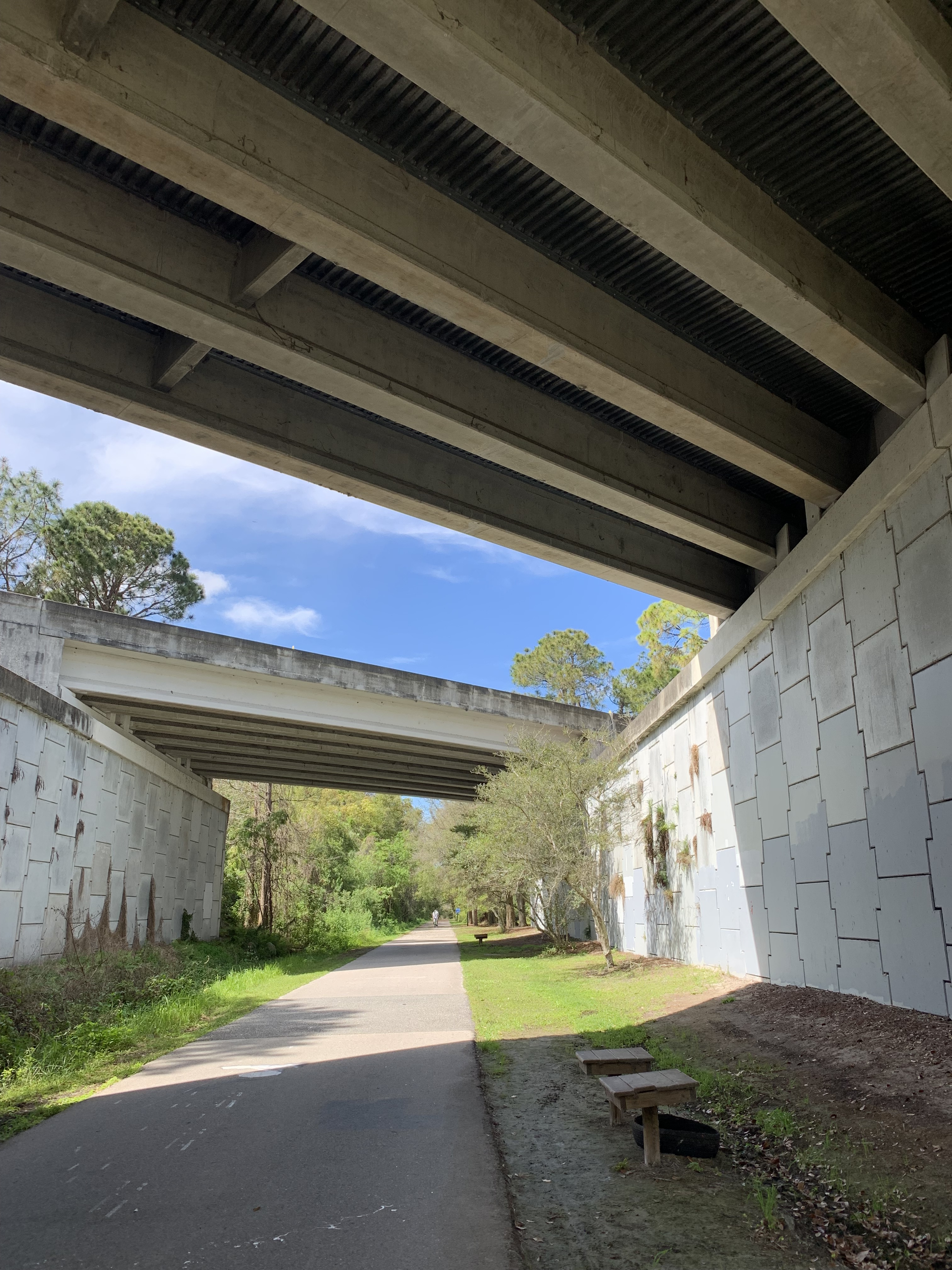
Disappointed didn’t even come close to how I felt; I had spent hours in the car and on the slope, December was spilling away, and I was no closer to checking off Moriah than had I stayed home.

I had no choice but to turn back.

Cloud and tree and light danced on the way down, easing the sting, so by the time I got back to car and kicked off the shoes, the glum had lifted. I had turned back, but I was still alive, awash in beauty, and there was a McDonalds a mile up the road. Might as well celebrate the effort.

A different Moriah was the site of another turn-back, long years ago; God had commanded Abraham to “Take your son, your only son, whom you love—Isaac—and go to the region of Moriah. Sacrifice him there as a burnt offering on a mountain I will show you.” (Genesis 22:2)
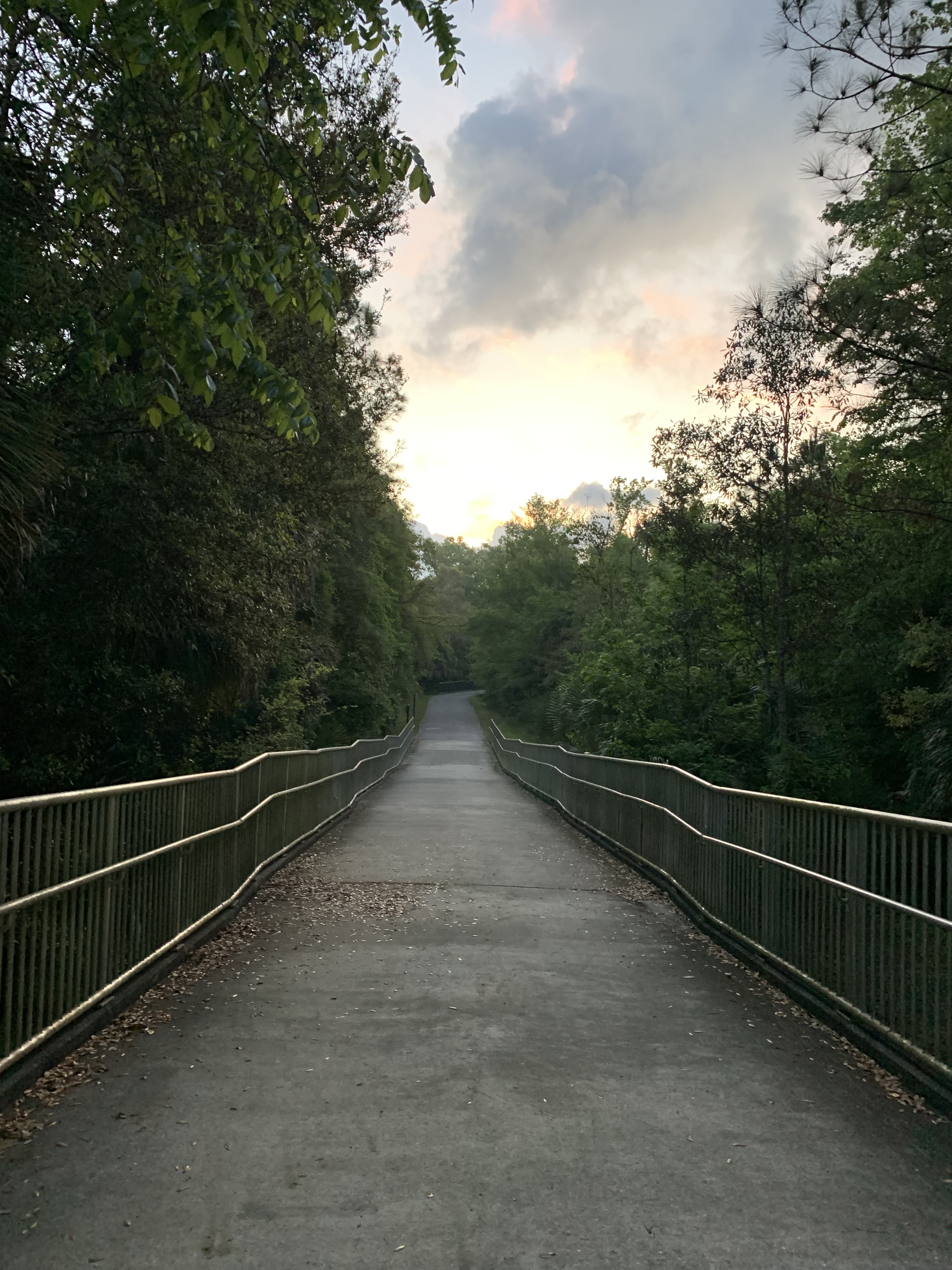
Isaac was the son of promise, the one through whom God was going to build his big beautiful family, the one born to Abraham and his wife Sarah well past child bearing age, their darling, their only, their love.

And yet, without even arguing (AreyousureGod?), Abraham got up early the next morning, saddled his donkey, and took along two of his servants and his son Isaac. He split the wood for a burnt offering and set out for the place God had designated.(Genesis 22:3)

That place was Moriah, and I wonder how many times, on the way, Abraham longed to turn back. To question whether he had heard God correctly, or whether, if he had, this God was someone he could trust. Or even wanted to.

As I enter my 60th year, I consider all the times I’ve trudged toward mountains I never wanted to climb, questioning, questioning, questioning, questioning:

God, are you sure?

How can I know?

Why?

Can I trust you?

We cannot fathom, King Solomon writes, what God has done from beginning to end. (Ecclesiastes 3:11)

How can we?

We only see this small little piece of his big big plan.

Looking back across the decades, I no longer recognize the angry, selfish, willful, reckless girl I once was.

Those things still hide in my heart and rise, unbidden, if I do not set my feet, do not fix my eyes. It’s a battle to beat them down, beat them down, keep beating them down until there is nothing left but a filmy thinness.
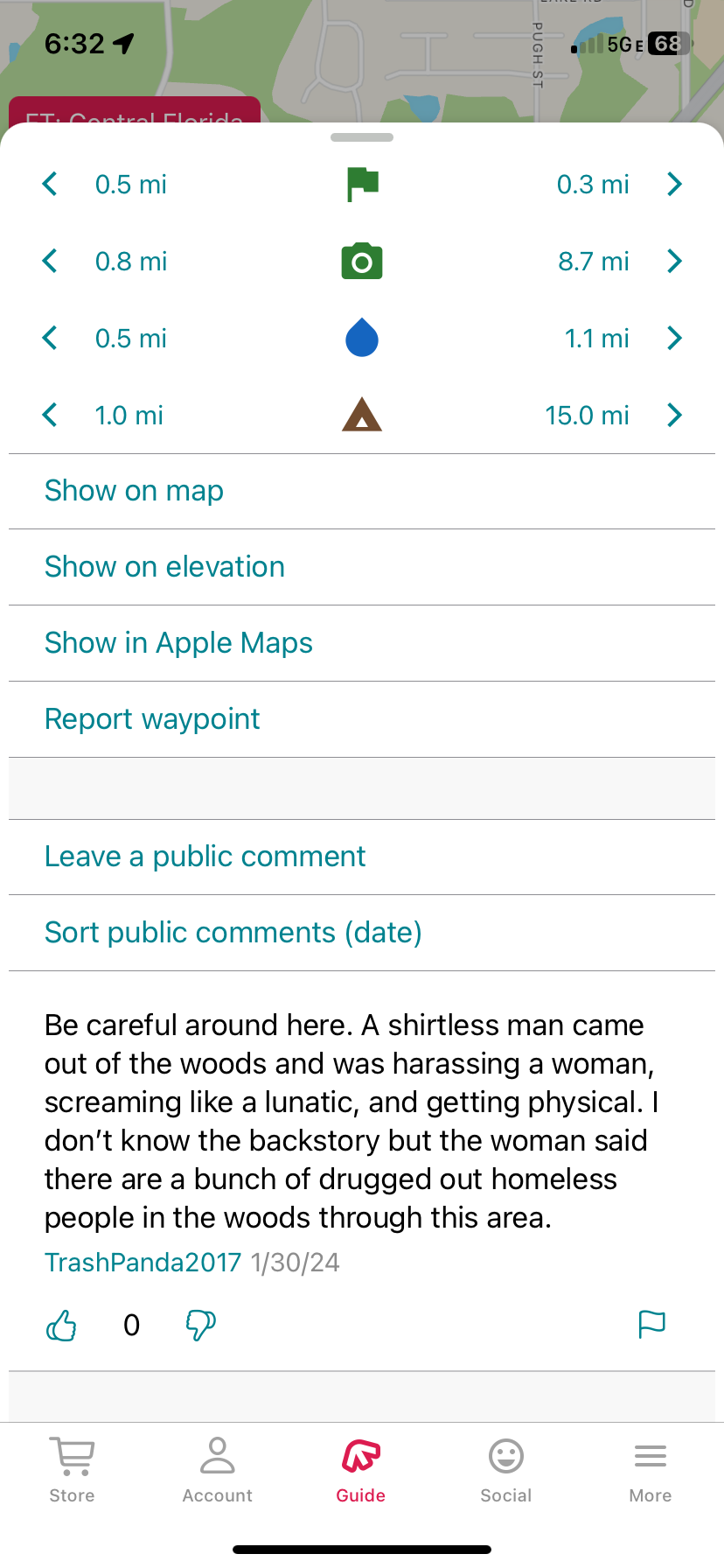
This older self still waits and struggles, weeps and sighs, but I am more myself than I ever was. Like Abraham, I am tempted to turn back, but Moriah lies ahead. And you never know what happen next.

“Do not lay a hand on the boy,” God told Abraham as he aimed the knife. “Do not do anything to him. Now I know that you fear God, because you have not withheld from me your son, your only son.”

Abraham looked up and there in a thicket he saw a ram caught by its horns. He went over and took the ram and sacrificed it as a burnt offering instead of his son. So Abraham called that place The Lord Will Provide. And to this day it is said, “On the mountain of the Lord it will be provided.” (Genesis 22:12-14)

I imagine Abraham’s soul expanding as he turned back toward home, clean-bladed with breath-filled son. Forever to be known as the father of faith.

Abraham’s faith in God and God’s in him; I doubt he doubted ever again.

Later in the week, I checked two other peaks off the December list. I wasn’t ready, yet, to try for Moriah again. Didn’t want to face another turning back.

I’m coming to terms with the years I have left, however many they may be. I passed what could be the halfway point a decade ago, and I’m trusting the God who might have other plans for my Moriah.

My soul continues to expand as I walk toward home, full of breath and joy and hope.

Appalachian High Route, Part 3: Hot Springs to Home

The Other Bear

Hot! Temps are high on the steep slog out of Hot Springs, but all during my time at Laughing Heart Lodge, I had been mentally preparing myself for this particular pain cave.

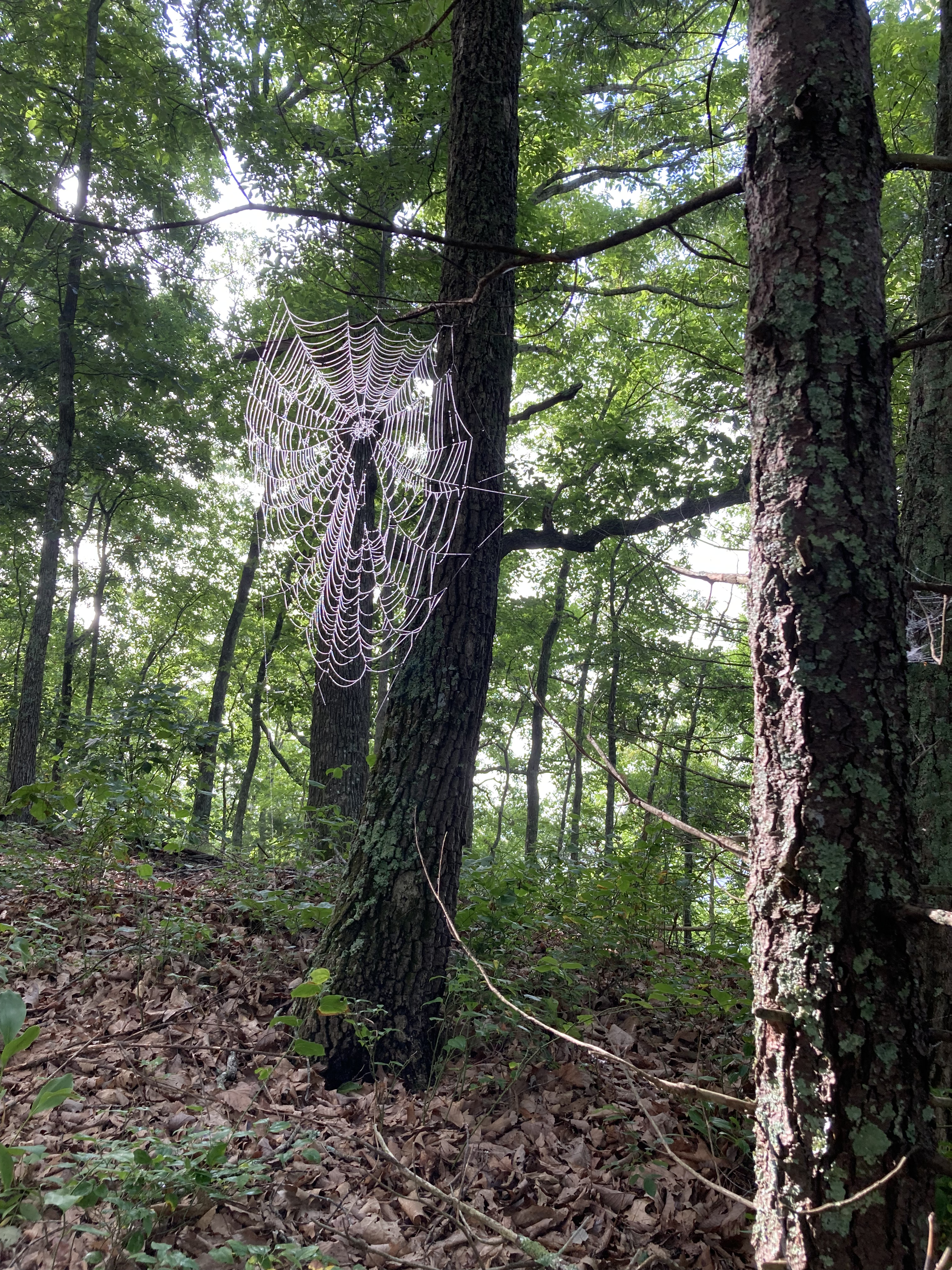
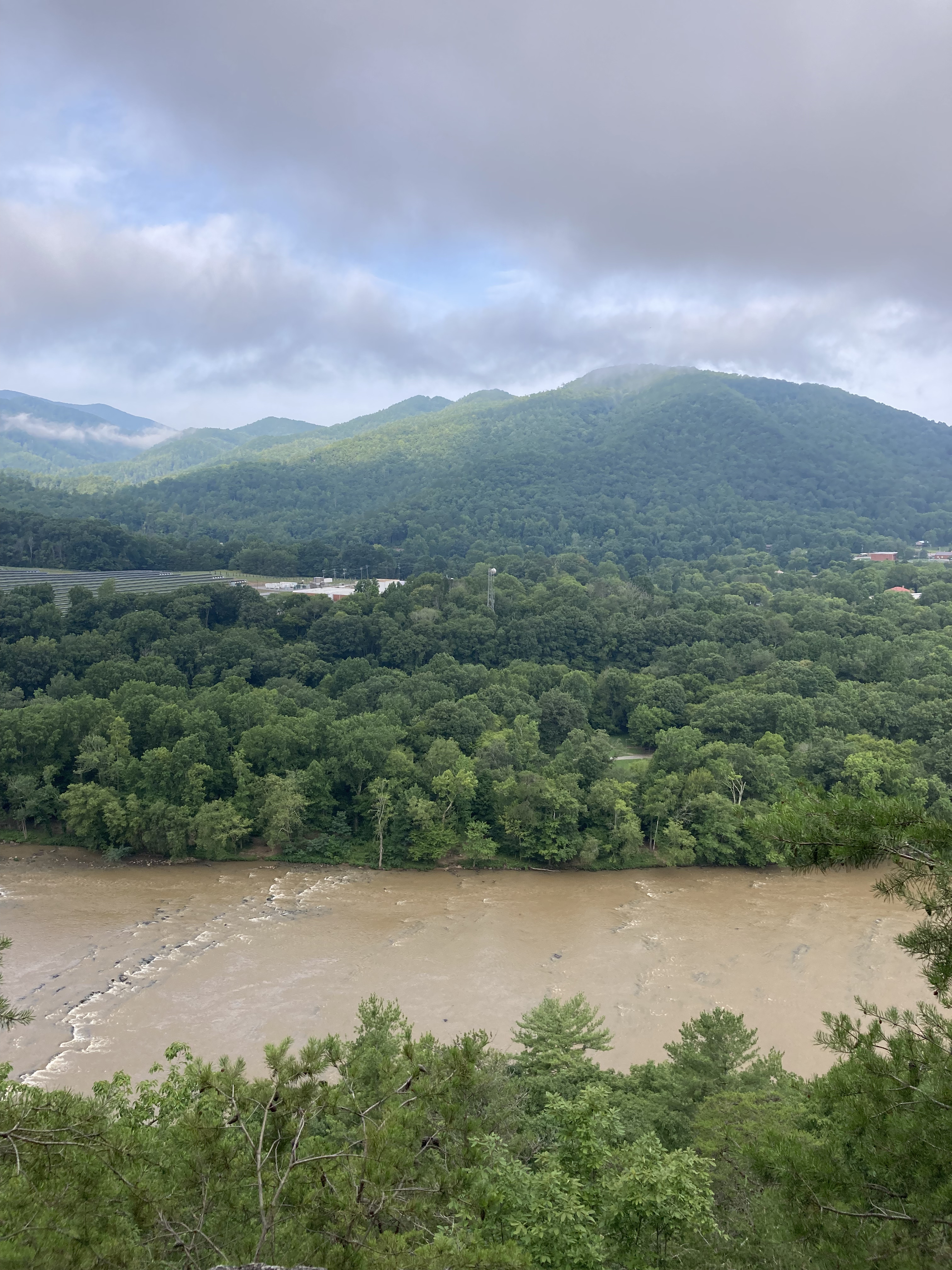
I love hiking. Truly, I do. Sometimes, however, like with a pack heavy with town, it can be rough, so I try to appreciate the dewy webs and the French Broad look-back at the crest of the climb.

The day before, I had been startled at how tired and worn down Hot Springs seemed since my son and I had walked through 12 years prior, though this vibe is tempered by the friendly optimism of everyone I meet.

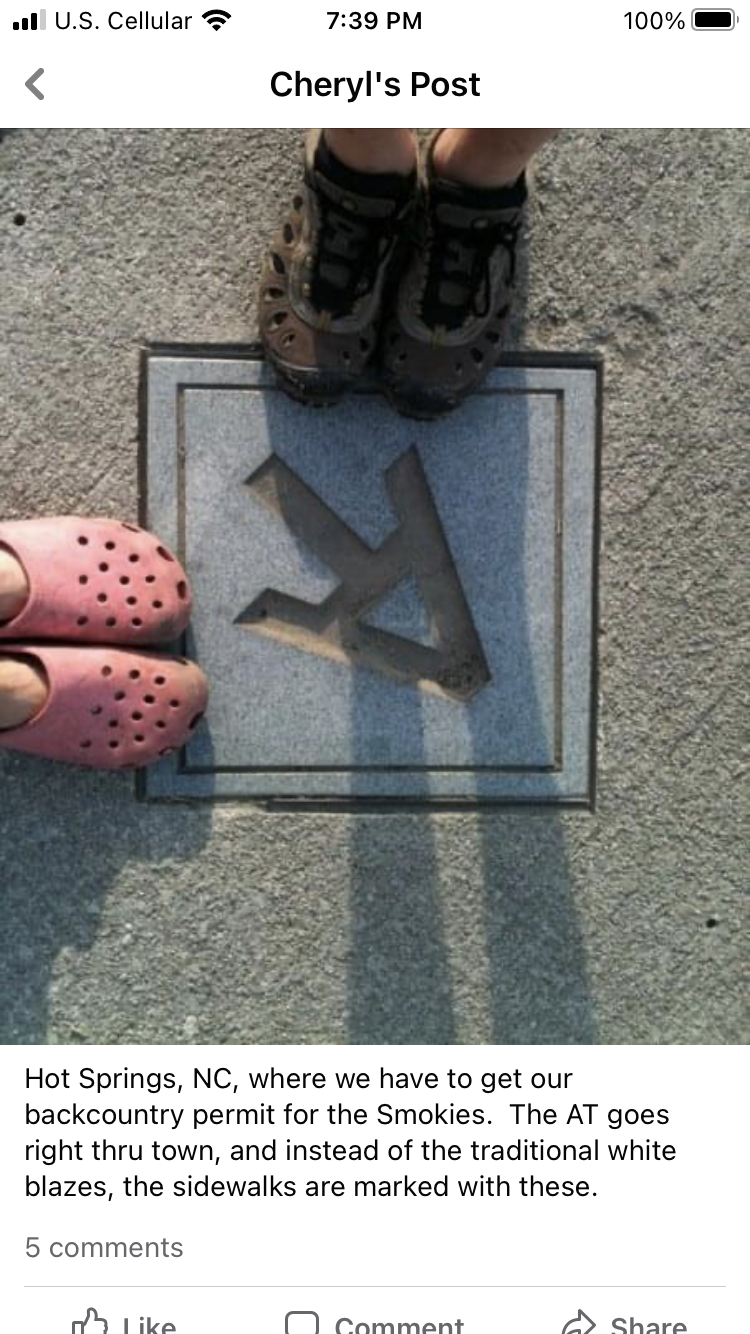
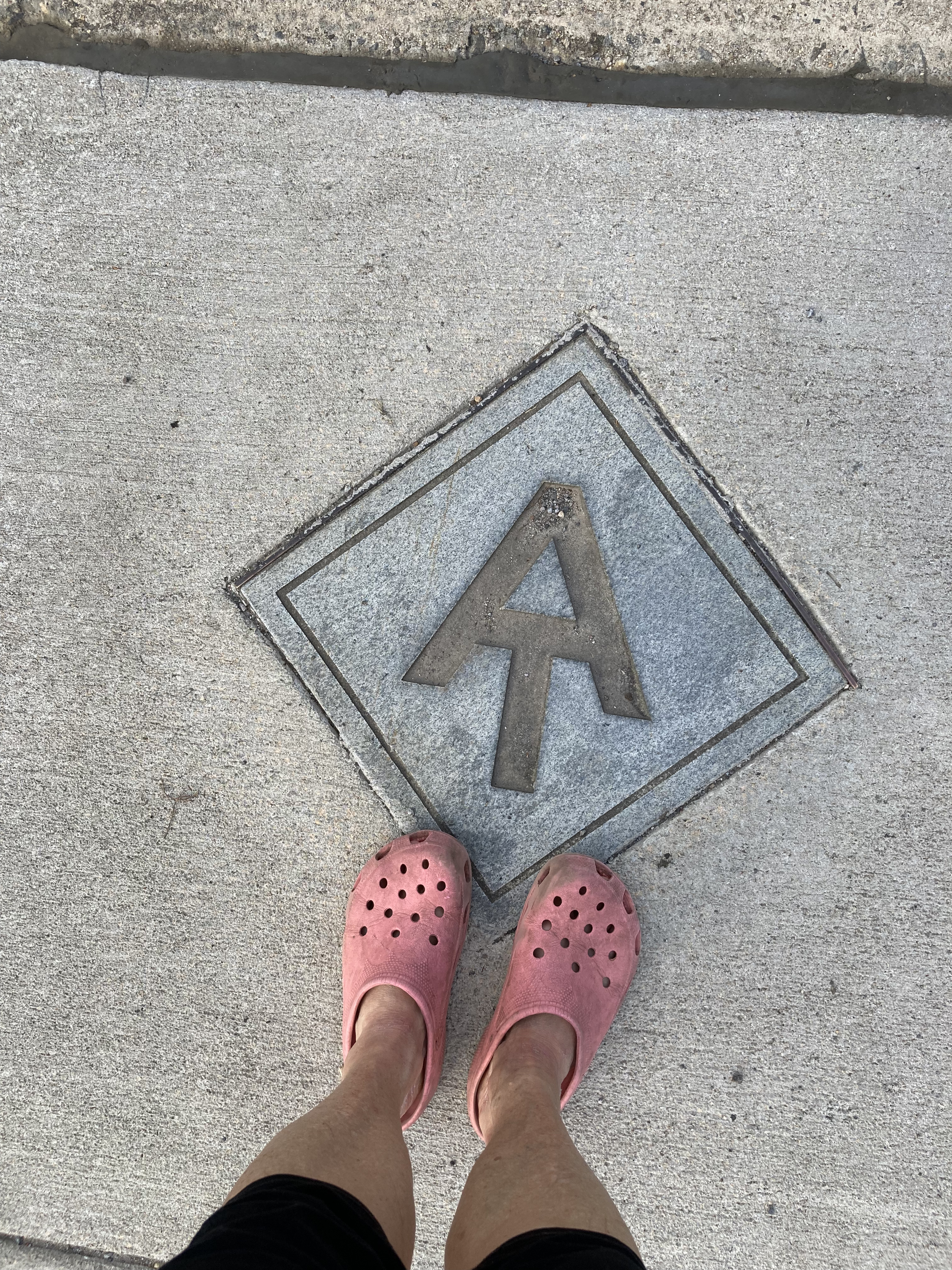
I recreate a pic of the AT sidewalk logo wearing the same crocs as before and try not to miss the kid.

I’m starting to long for home, though I want to enjoy the journey left; it’s roughly 80 miles back to Burnsville, and I’m aiming to be there in 4 days.

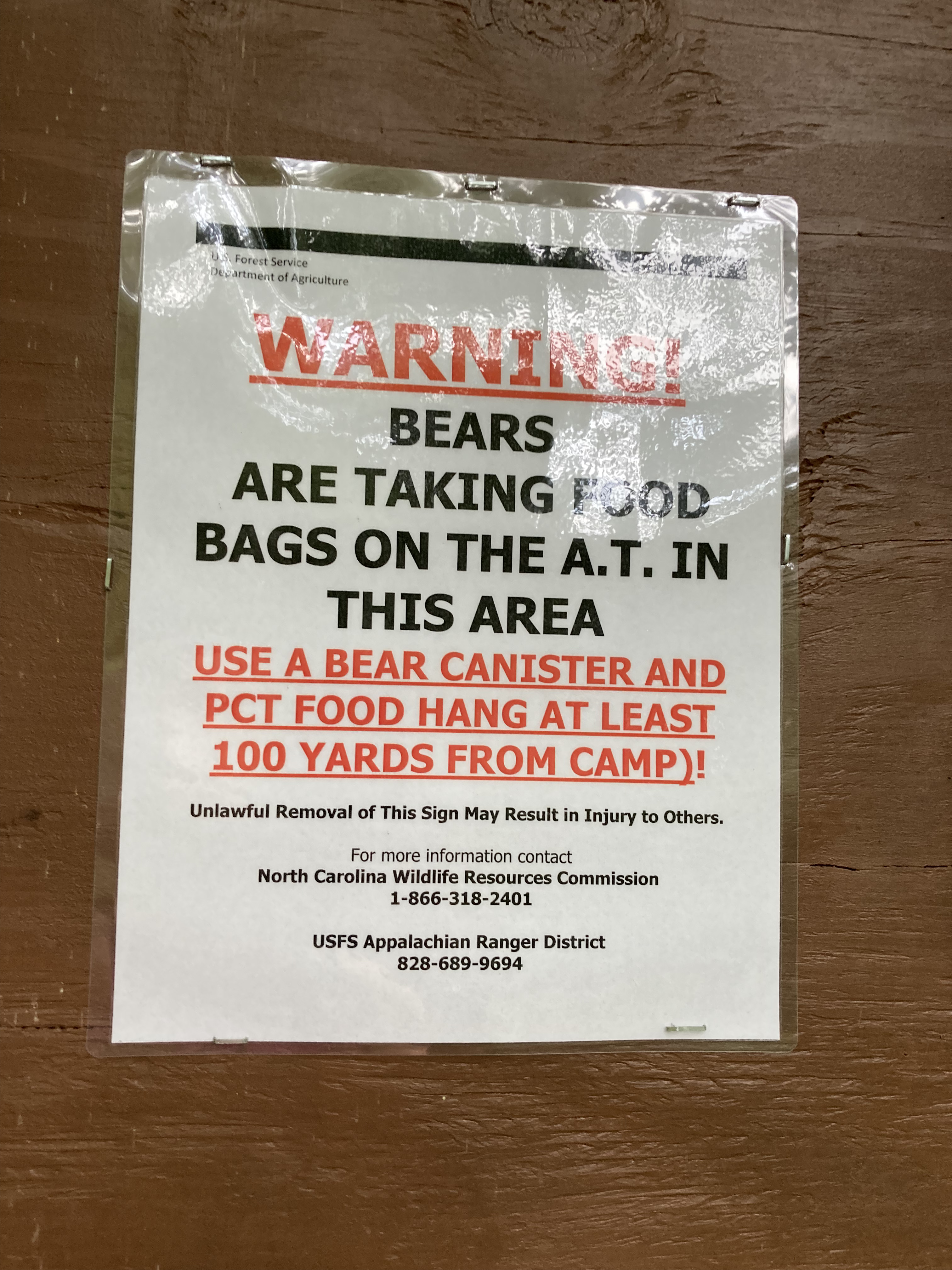
A little less than four miles south of Little Laurel Shelter, I cross Log Cabin Drive and start to ascend. I’ve got one earbud in, half-listening to some podcast and dreaming of dinner, when I hear the unmistakable snuff-snarl of a bear.

I instantly freeze, tear out the earbud, and begin tentative negotiations.

Hey, bear. Just passing through, bear. Nothing to see here, bear.

To each calm pronouncement, the bear’s snorting grows more agitated, and I back up a few steps to think what to do.

The trail where I stood was cut into a steep slope; above and ahead of me, switchbacks were carved into the dirt, and below were the tops of trees, thick brush, and the bear. I couldn’t see him clearly – just a darkness through the leaves – but I estimated he was about 20 yards from where I stood.

Too. Close.

Perhaps desperation and fatigue are not good metrics for decision making; looking back, I’m not sure I would do what I did again, but I was almost out of water, it was the end of the day, and I just wanted to get to the shelter.

Moving forward, I stop talking to the bear and began talking to God, loud, averting my eyes from the black blob and purposefully marching by where it sat snorting below.

Maybe Bruno was also tired, thirsty, and just longing for his cave, because as I pass above, I hear his rustling retreat. I keep walking and do not look back.

Me – 2. Bears – 0.

Something strange was up with the wildlife that day, as a huge black snake refuses to move off the trail a mile or so ahead and I am attacked by yellow jackets.

This is their home, I try to remember, even as we build ours among them and chip away at the margins of their habitat.

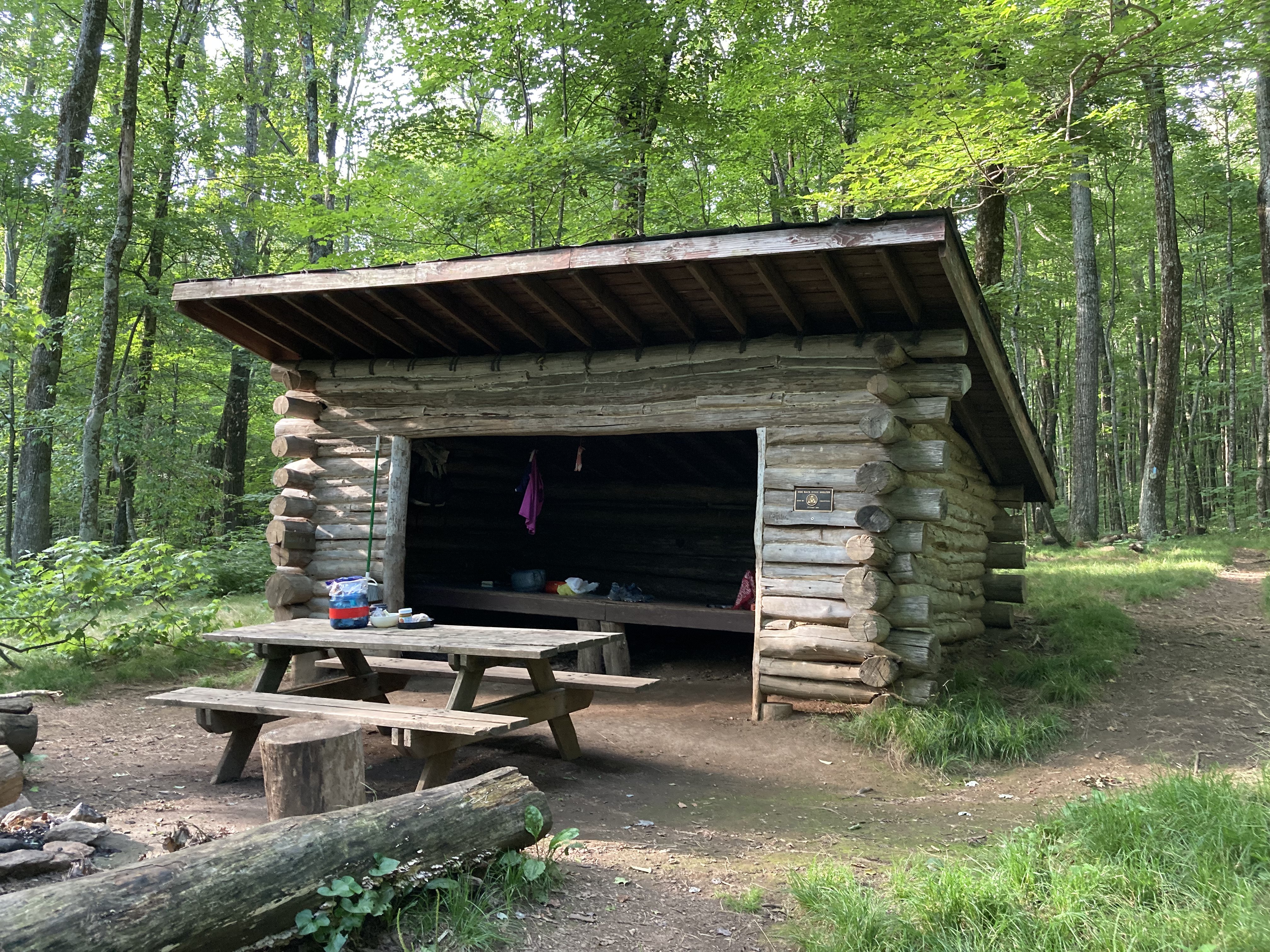
Still, shelter never looked so good.

Day 15: Hot Springs to Little Laurel Shelter – 19.9 miles

Balds

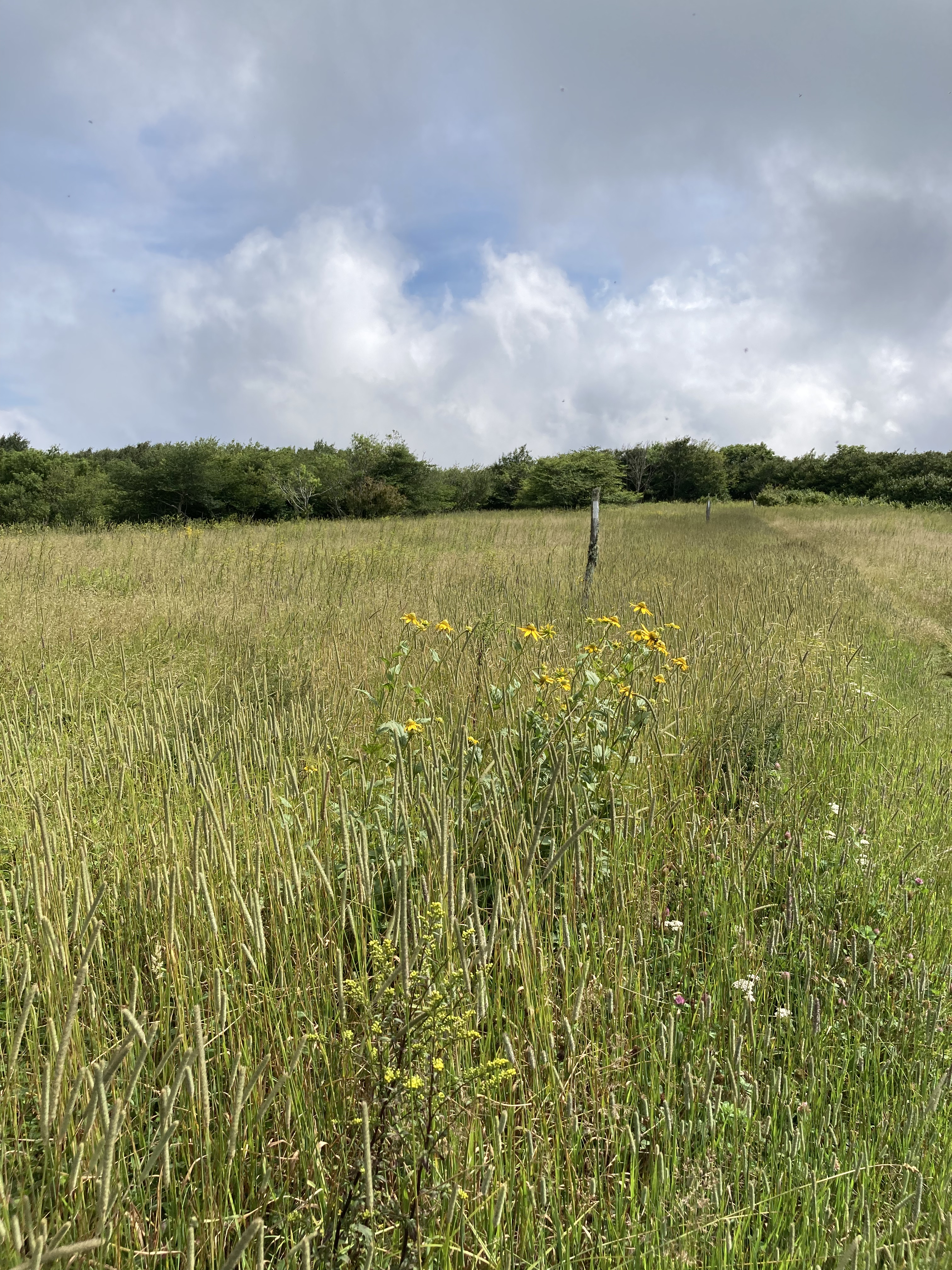
Closing in on 300 miles, the trail leads me gently in and out of the woods and up and over more beautiful balds.

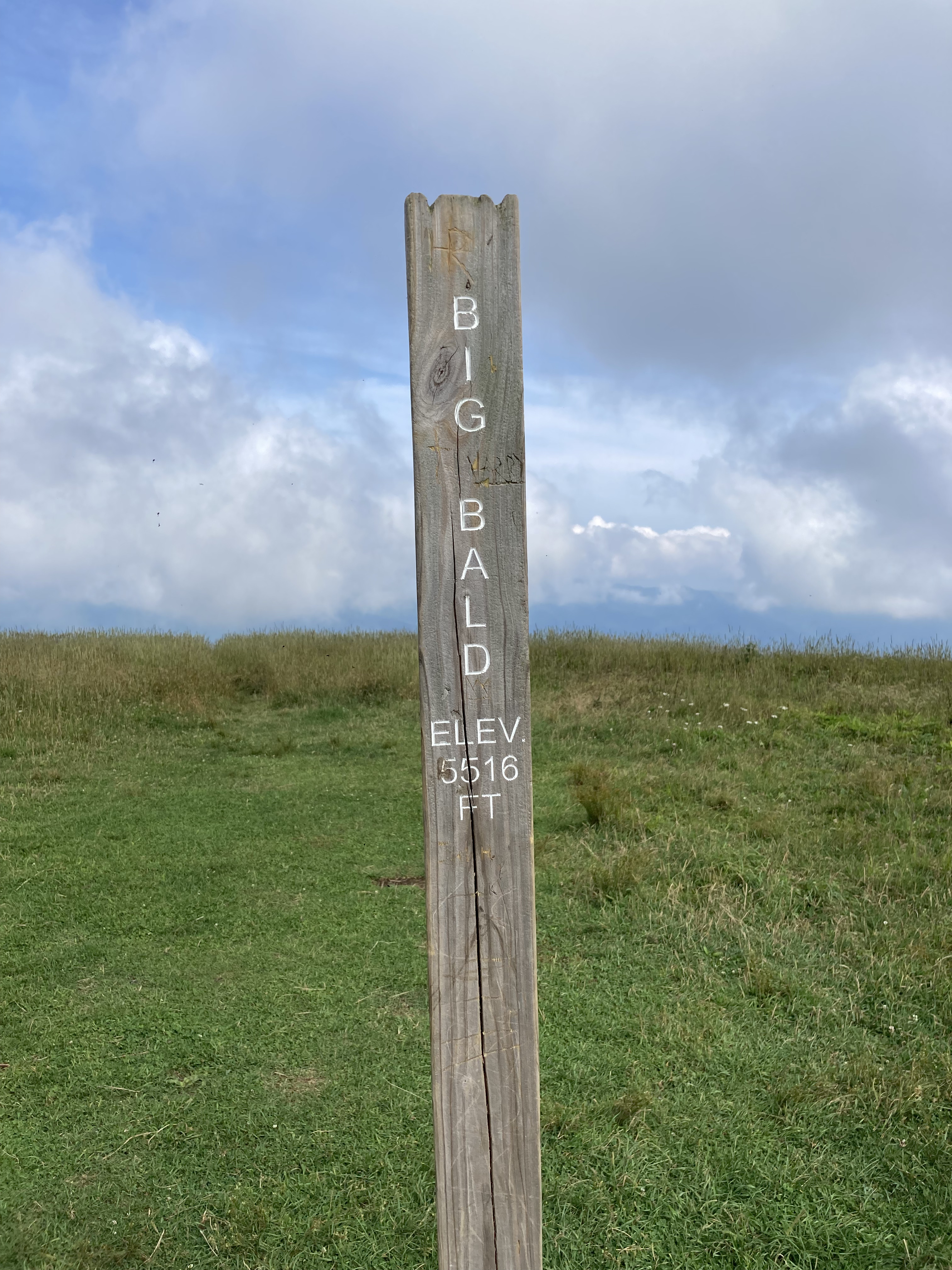
Big Butt, Big Bald, Big Stamp: such pedestrian names for so beguiling a landscape.

Mountains over 4,000 feet in my native New Hampshire are spiny, severe; in contrast, the southern balds are subtle and soft, beckoning like lovers leaning in for a kiss.

So, I lean in.

Linger.

Let wind and sky have their way.

And just like that, the longing to leave evaporates into cloudy mist.

Day 16: Little Laurel Shelter to Hogback Ridge Shelter – 23.3 miles

The Burnsville Connector and How It Nearly Broke My Heart

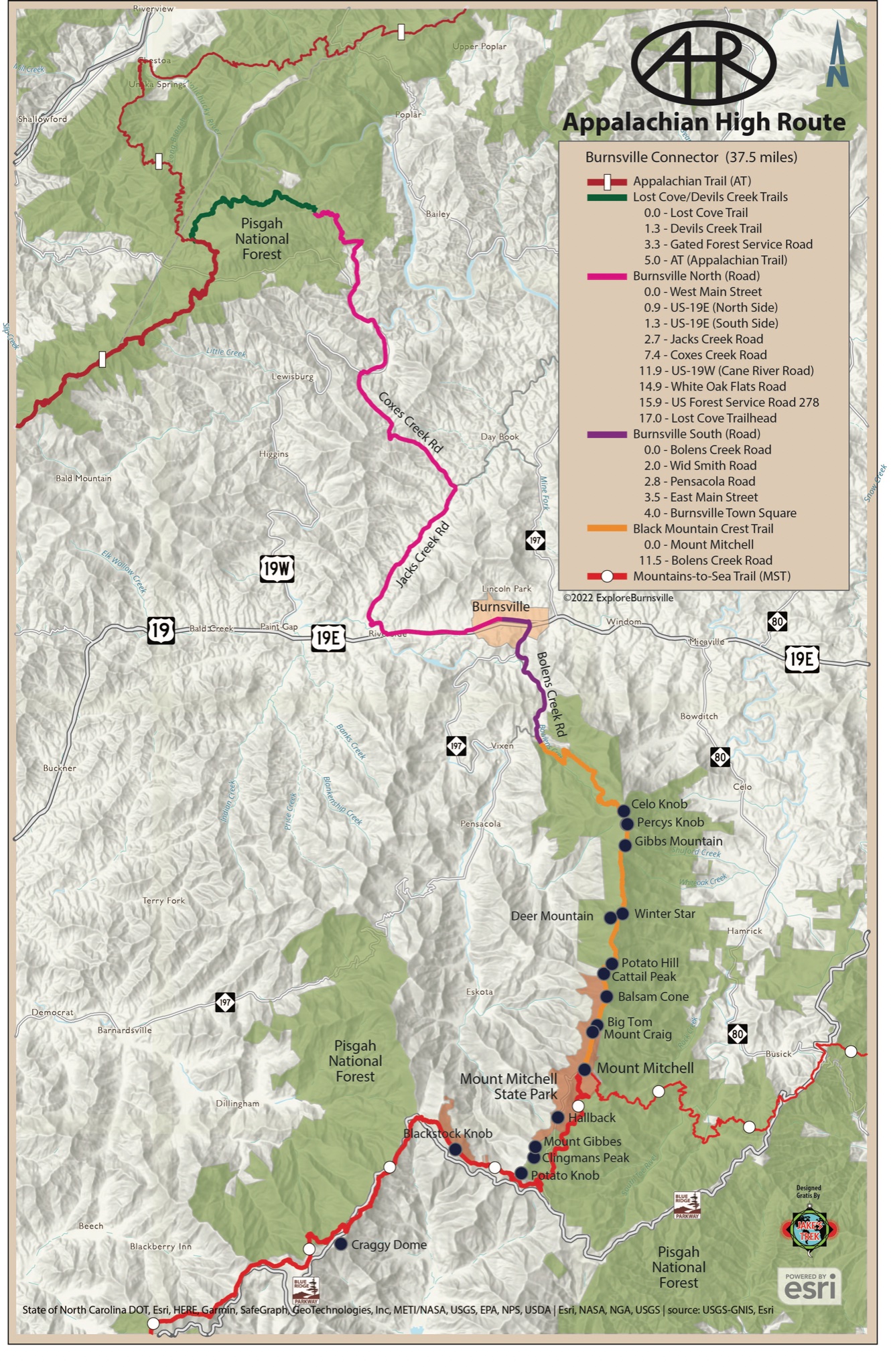
I chose to walk the Appalachian High Route in a clockwise direction, starting in Burnsville, North Carolina, which means my hike will end on the last 22 miles of the newly mapped Burnsville Connector.

If all goes to plan, some 17 or so miles ahead, the AT will pop out onto Flat Top Road and I will string together some forest service roads, some trail, and finally some pavement to return to town.

Back in Balsam, where I picked up a resupply package the week before, a fortuitous meeting with a kind gentleman has made finding these turns exponentially easier.

Having initially planned to use the fringes of the FarOut app, Runkeeper, and Google maps, I rejoice as this angel introduces me to CalTopo, a more precise mapping app. I’ve taken pictures of the sections I am about to encounter, but doesn’t everything always look so much simpler on a screen?

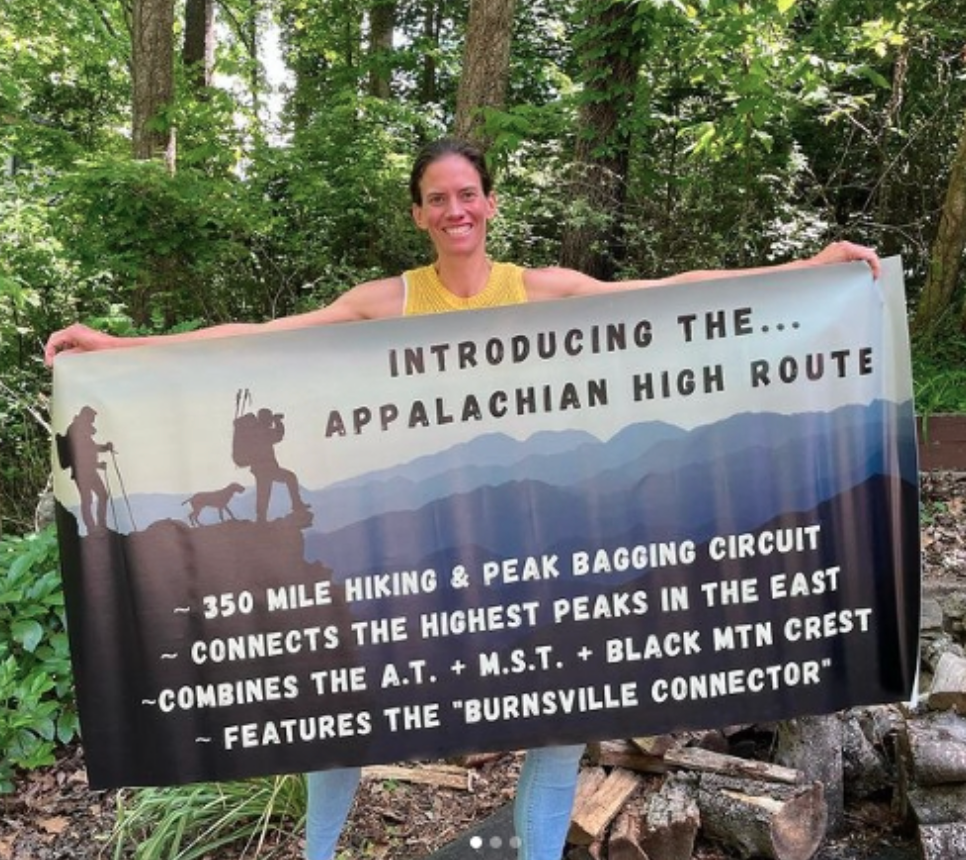
Let me emphasize that the AHR is new and Davis, Jake Blood, and others who were instrumental in creating it are volunteers, working out of sheer love for these cherished mountains.

It appears I was the first to thru-hike the route, so if there happened to be any kinks that might need to be worked out, I was probably going to be the one to find them. That being said, I also have a propensity to get lost, so the mistakes I made on the Burnsville Connector were also my own.

For days I had been anxious about finding the turns on the Connector, but I am expectant waking up on Day 17 that the research I have done will translate into finding my way.

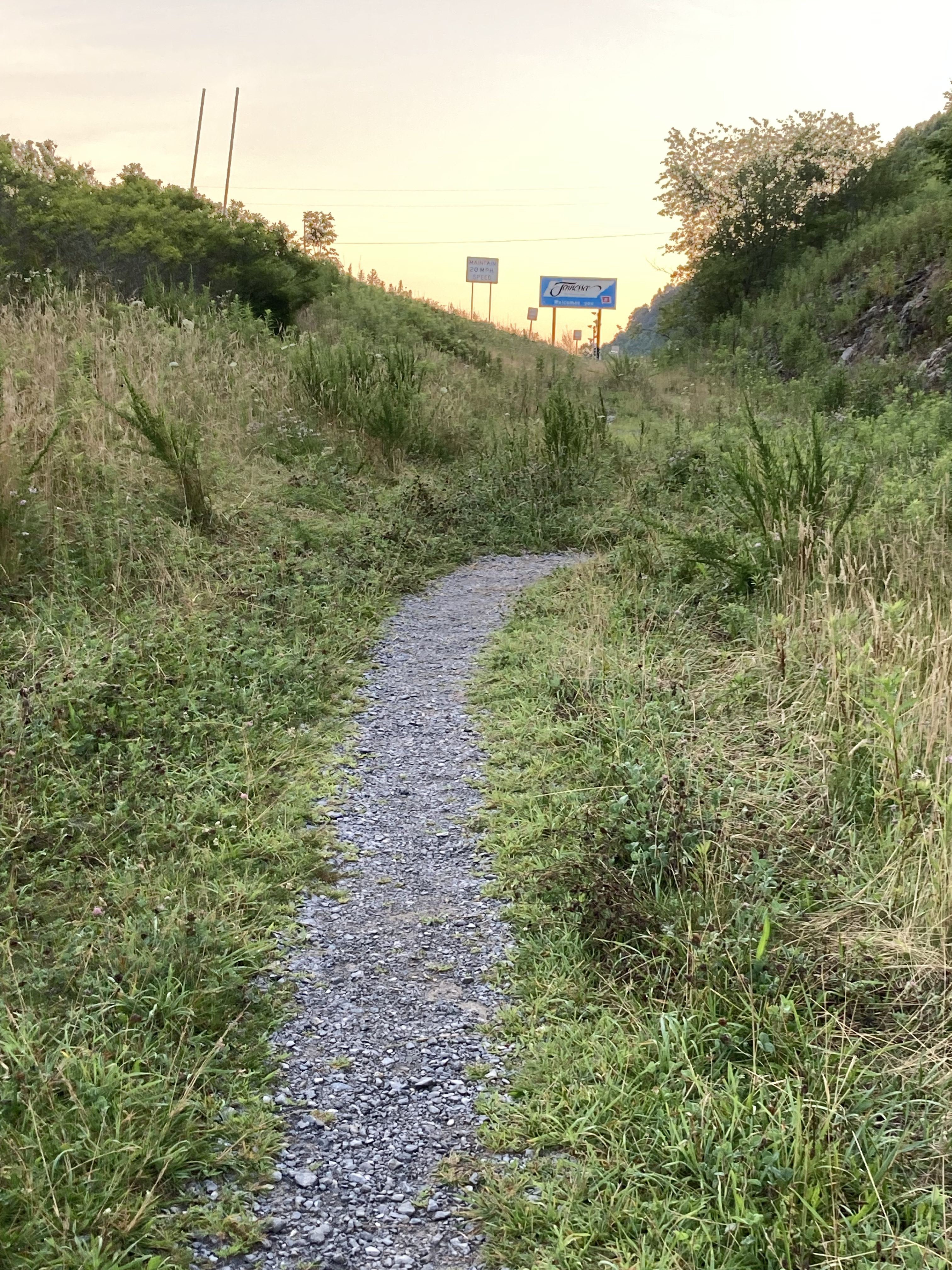
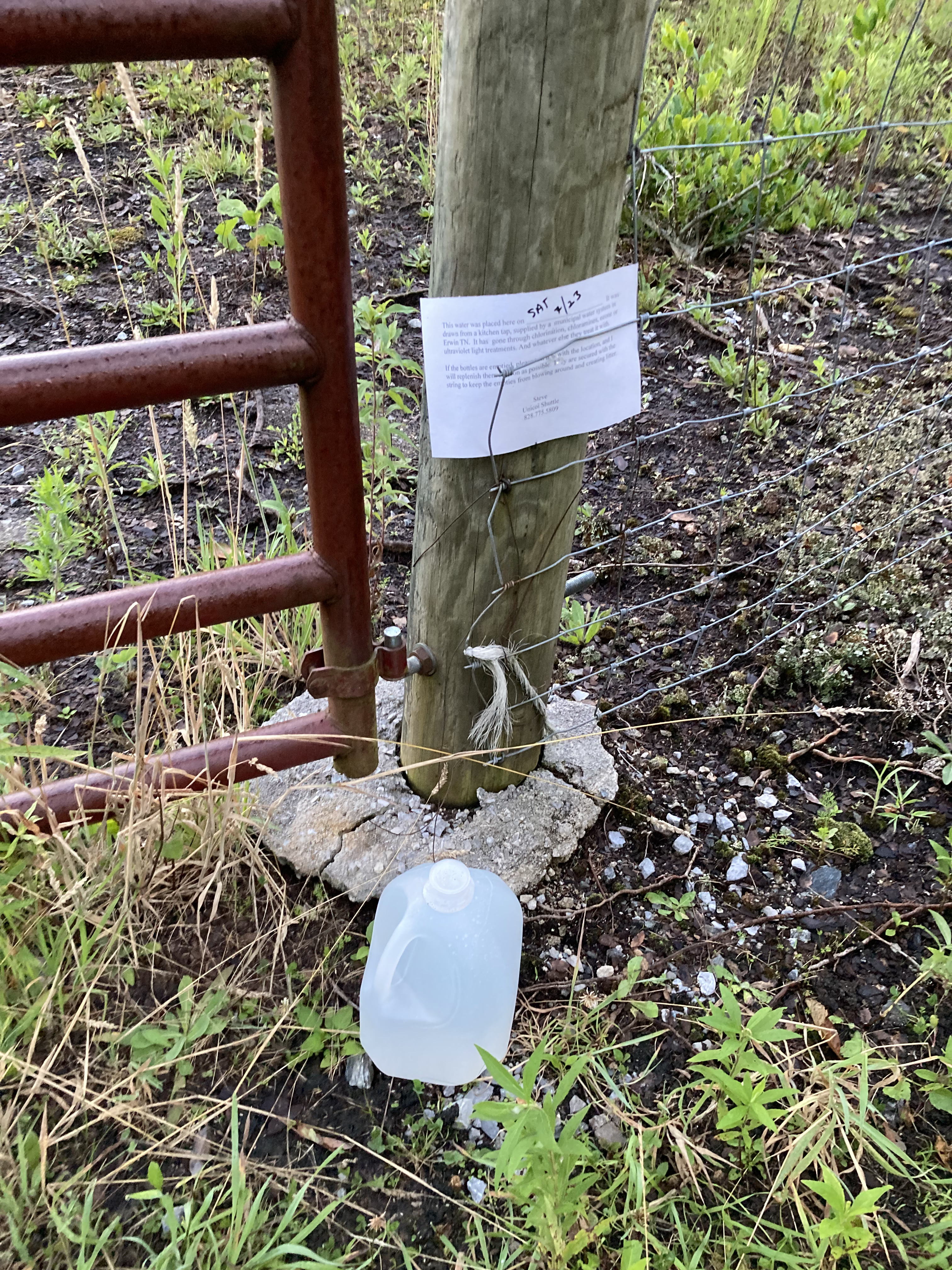
Sunrise finds me at Sam’s Gap, where kind Steve from Unicoi has left water. Many of the road crossings boast Steve’s signature water, and it’s trail angels like him that make some of the onerous chores on a thru-hike – finding, gathering, and filtering water being one – less onerous.

Thanks, Steve.

It’s Sunday and the trail runners are out. It feels good to talk to someone, anyone, even if it’s just the exchange of quick hellos.

Of course, another storm rolls in late in the afternoon. I’m soaked in the short time it takes me to pull out my rain jacket, and worry gnaws again as I wonder if I can keep my phone and the paper directions I’ve printed from Davis’s website dry when I get to the first intersection, Devils Creek Gap.

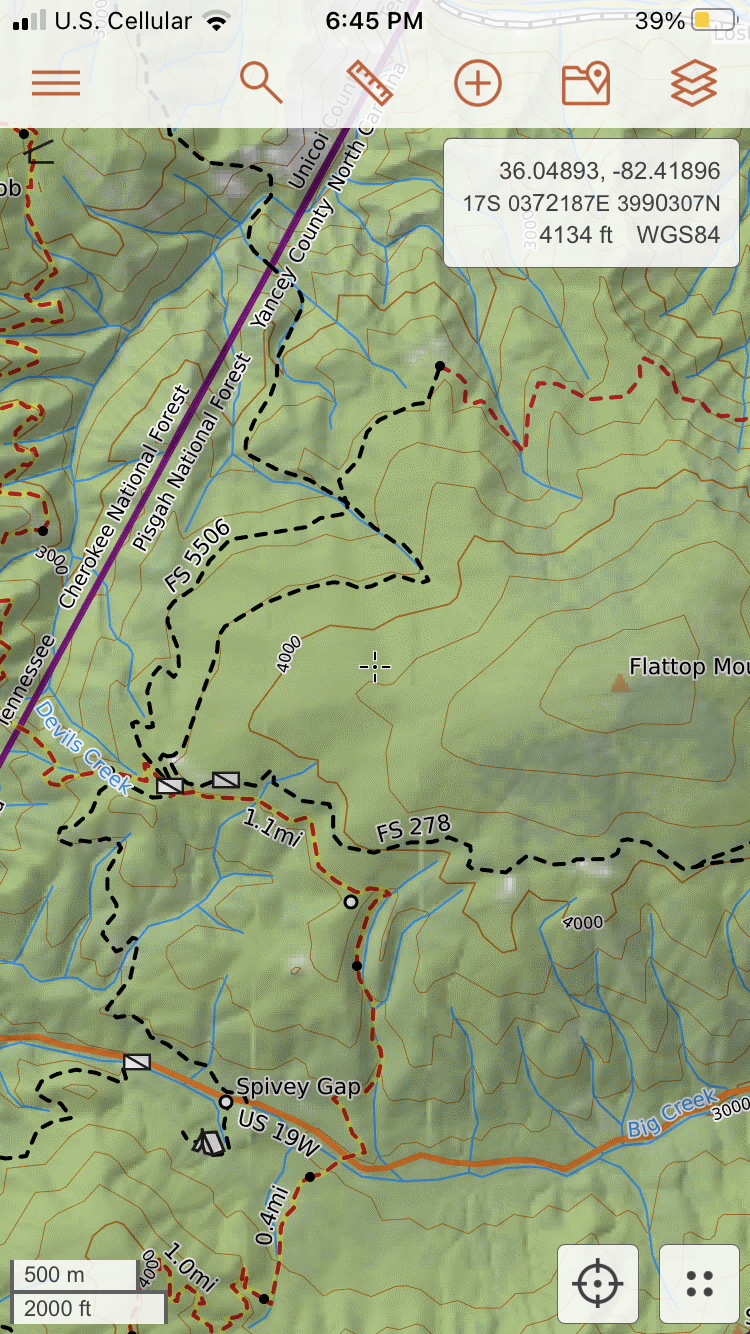
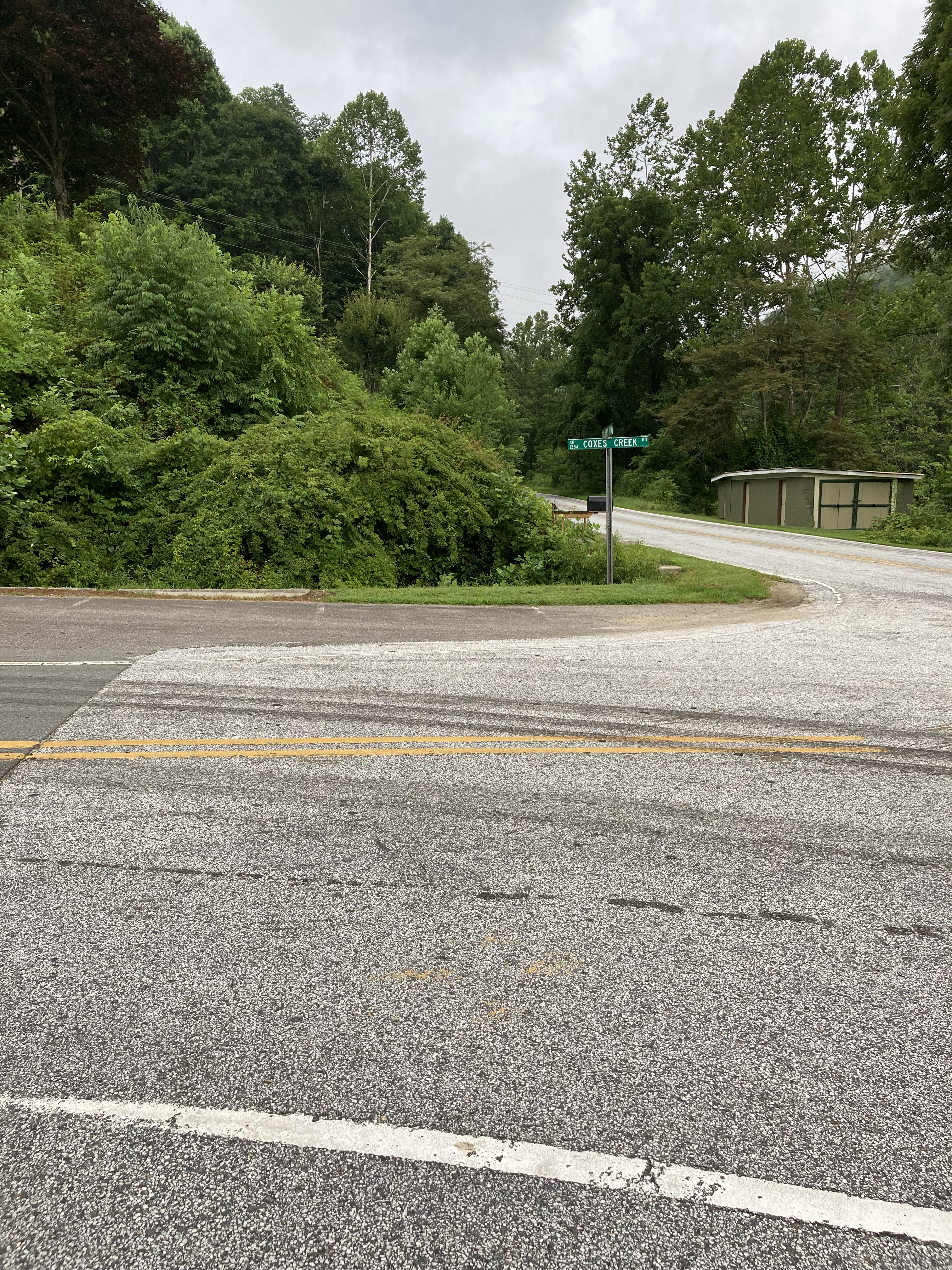
I’m looking for “a gated/unmarked Forest Service Road from the intersection of the AT and Flat Top Road.” Hmm. There are two gated FS roads when I reach Flat Top Road, thankfully drying out after the storm has passed. One is marked “FS 5506.” That sounds marked to me.

So I take the other, as just as fair, noting how after a hairpin turn, it will join FS 5506 and take me (pleaseohplease) to the Devils Creek Trailhead.

Right from the start, this feels wrong.

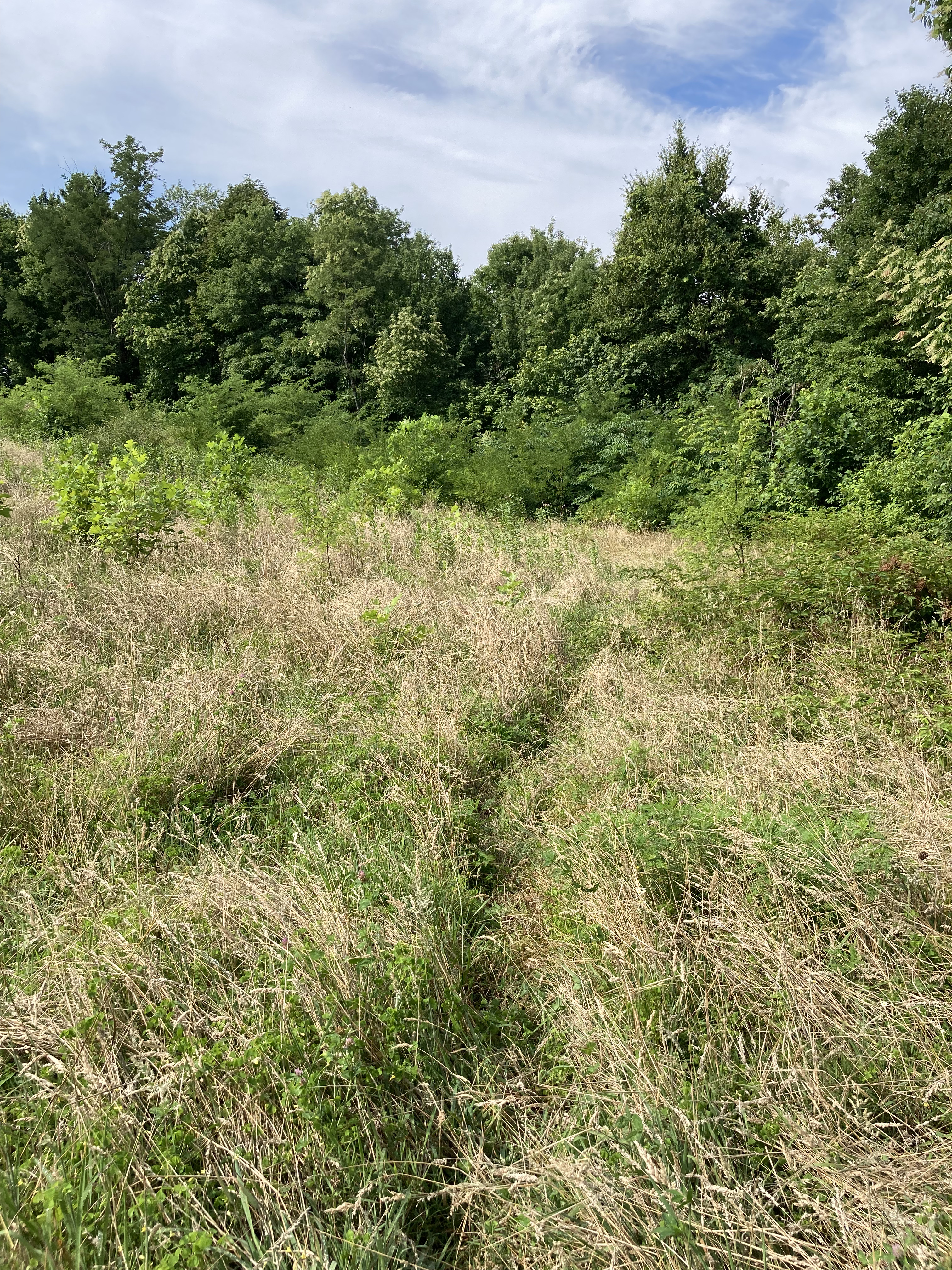
Unmarked Gated is an overgrown, marsh-suckingly awful mess, although still fleetingly navigable.

At the hairpin turn, however, the route dead-ends into a massive, impenetrable blowdown. What to do?

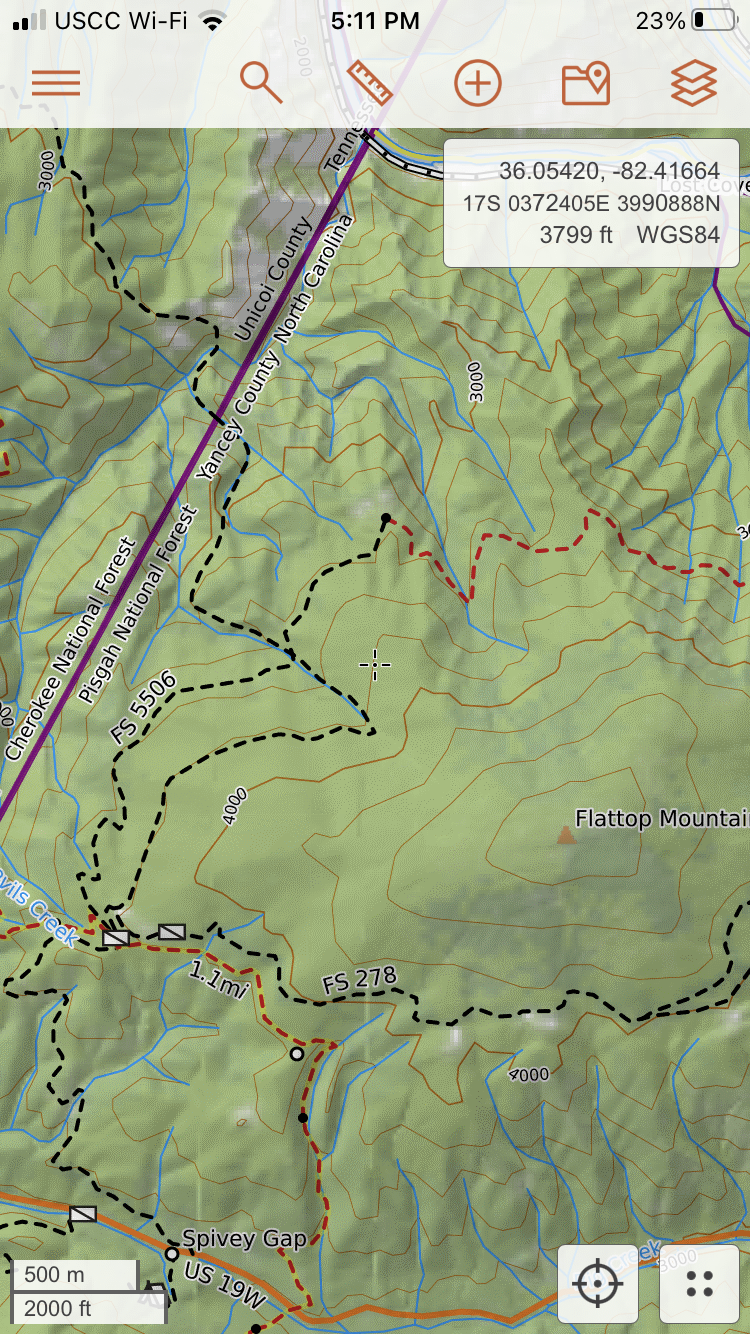
CalTopo shows that the “road” parallels a river until meeting FS 5506. I see no river, only a dry bed of boulders littered with years of broken branches and fallen trees, but I follow it hack-and-slashing for a half mile until, gratefully, it plops me unceremoniously out onto 5506.

Good ol’ 5506 – so much better than Unmarked Gated.

Chest high thorn bushes, bear scat, snakes.

Just get to the Devils Creek Trailhead, I preach to my audience of one. Everything will be better at the Devils Creek Trailhead.

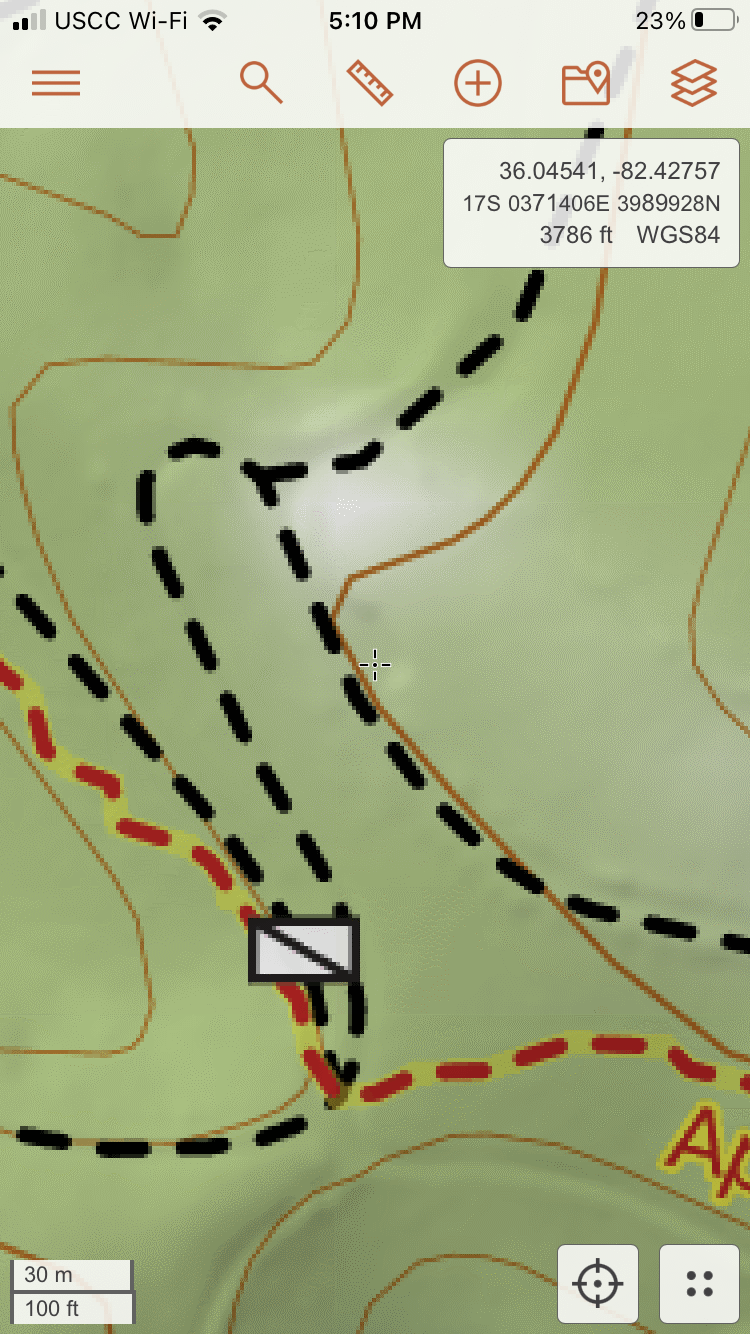
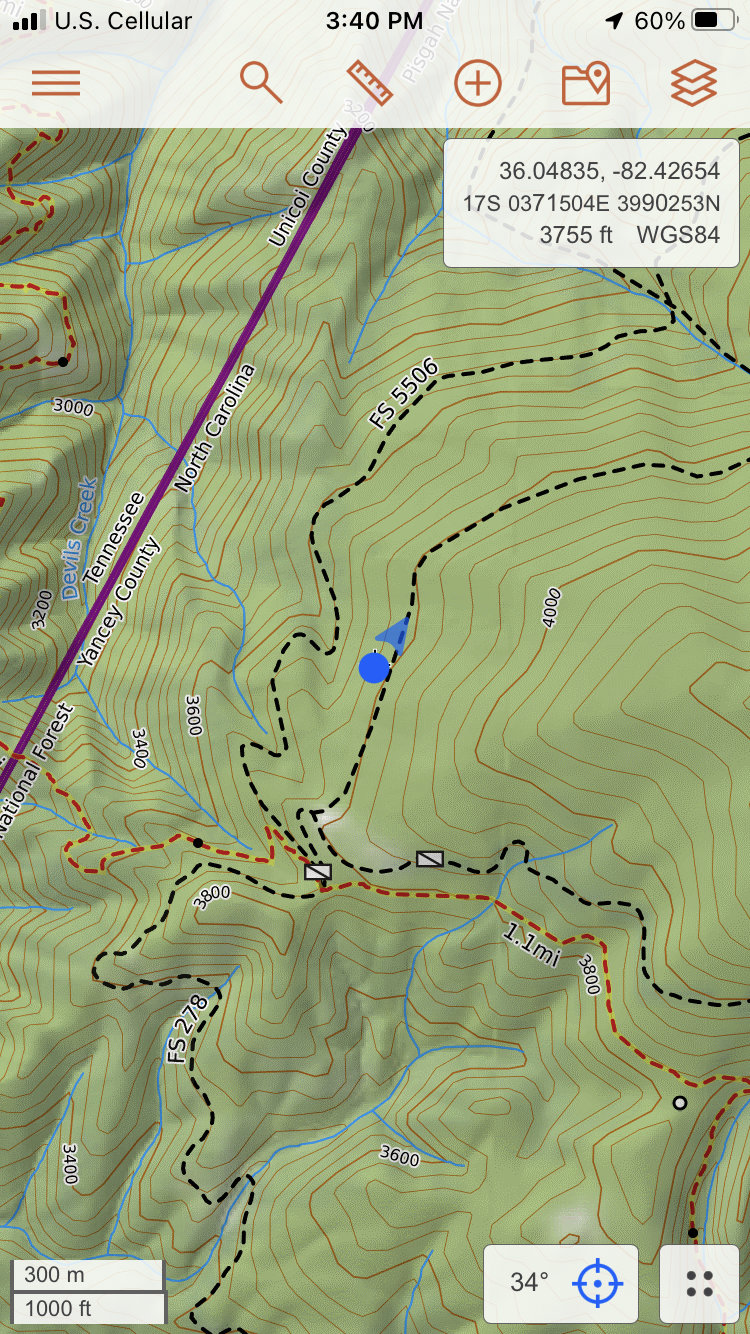
I watch my progress on CalTop, that peppy little blue arrow optimistically pointing to where I am, until I reach the “trailhead.” Below, you can see a black dot where 5506 takes a sharp right onto the red Devils Creek Trail.

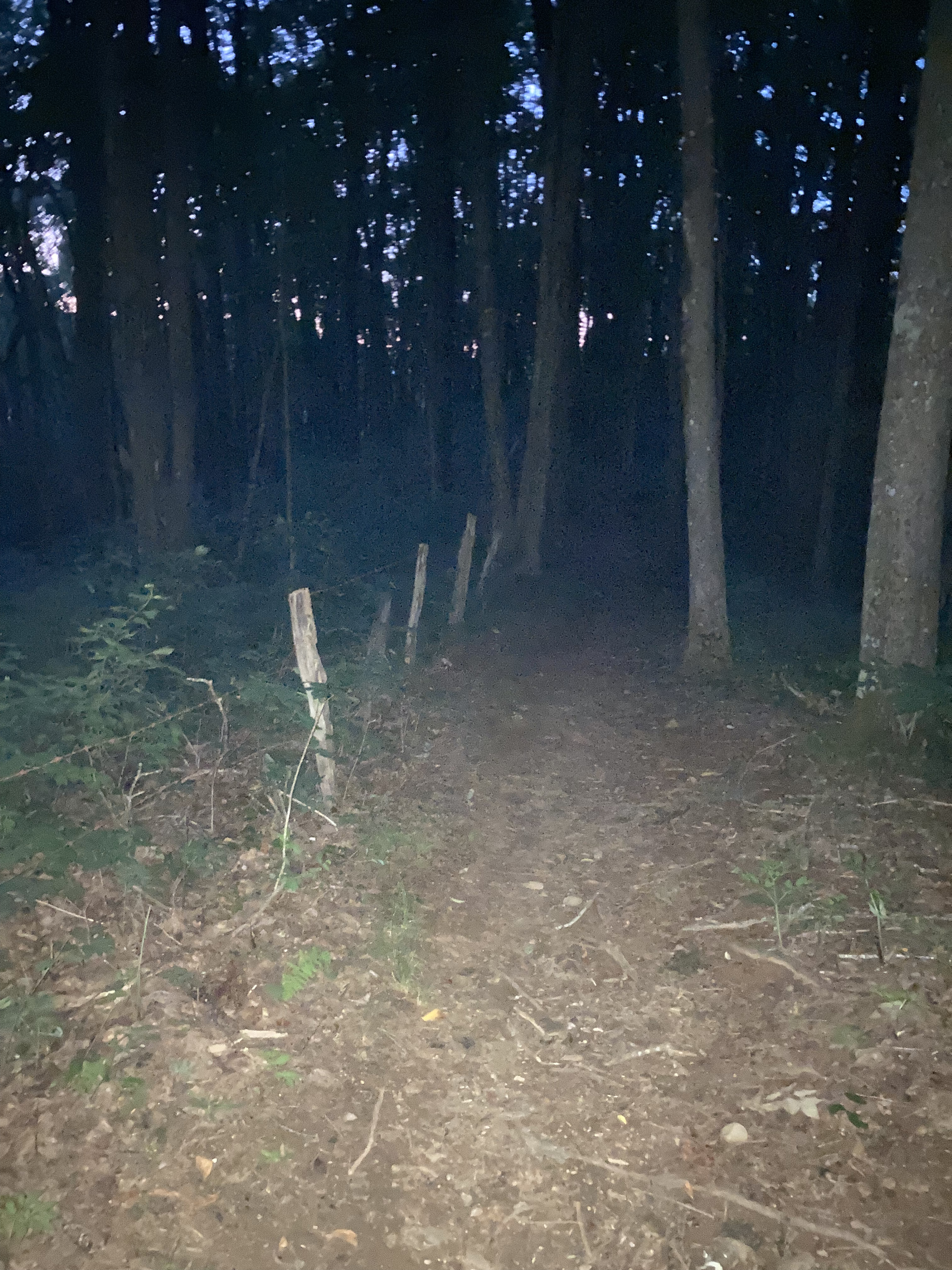
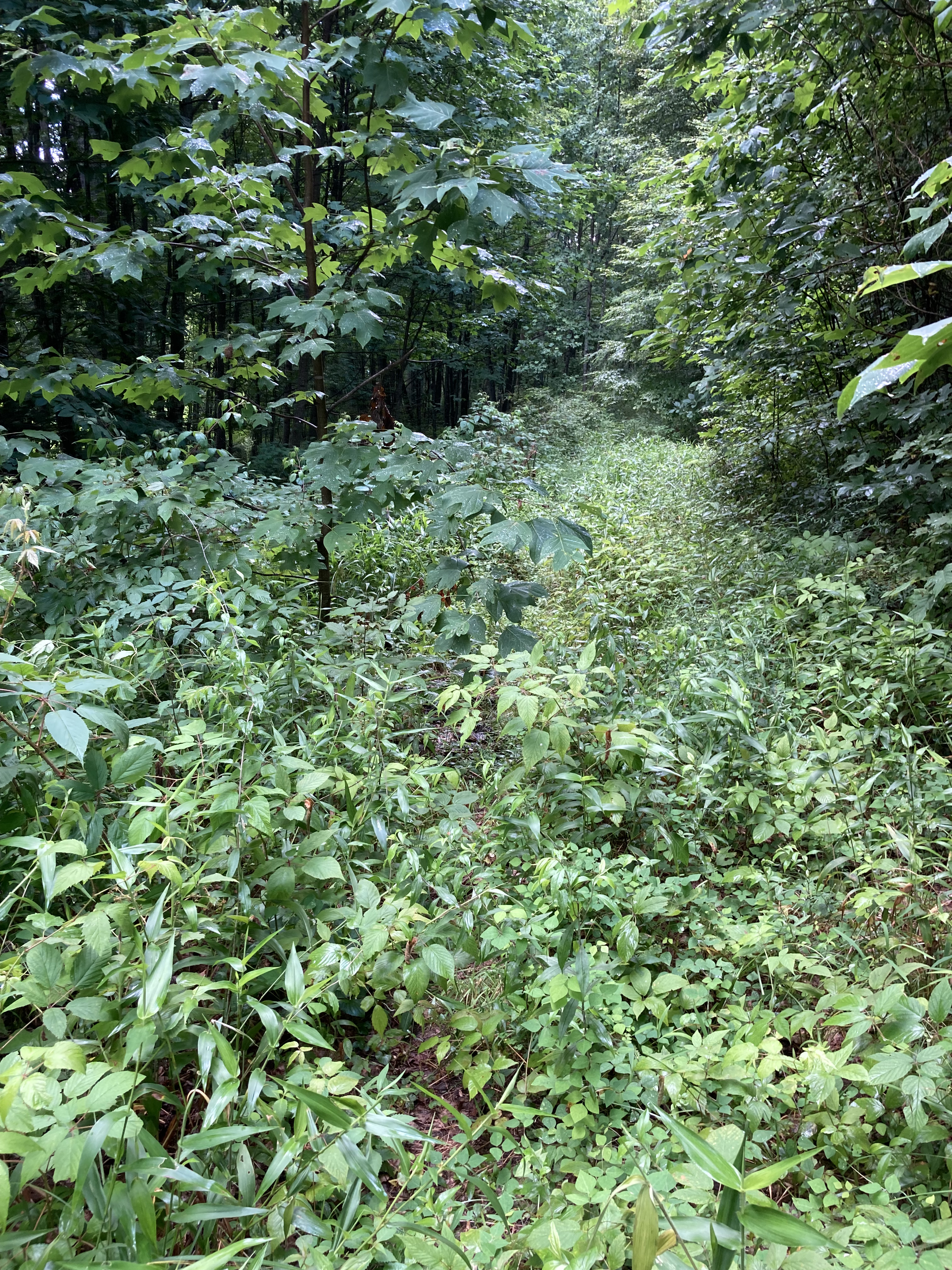
I stand at that dot, pointing my phone toward the red-dashed line, but this is all I see:

Yikes.

No sign, no opening in the trees, no cairns, no nothing.

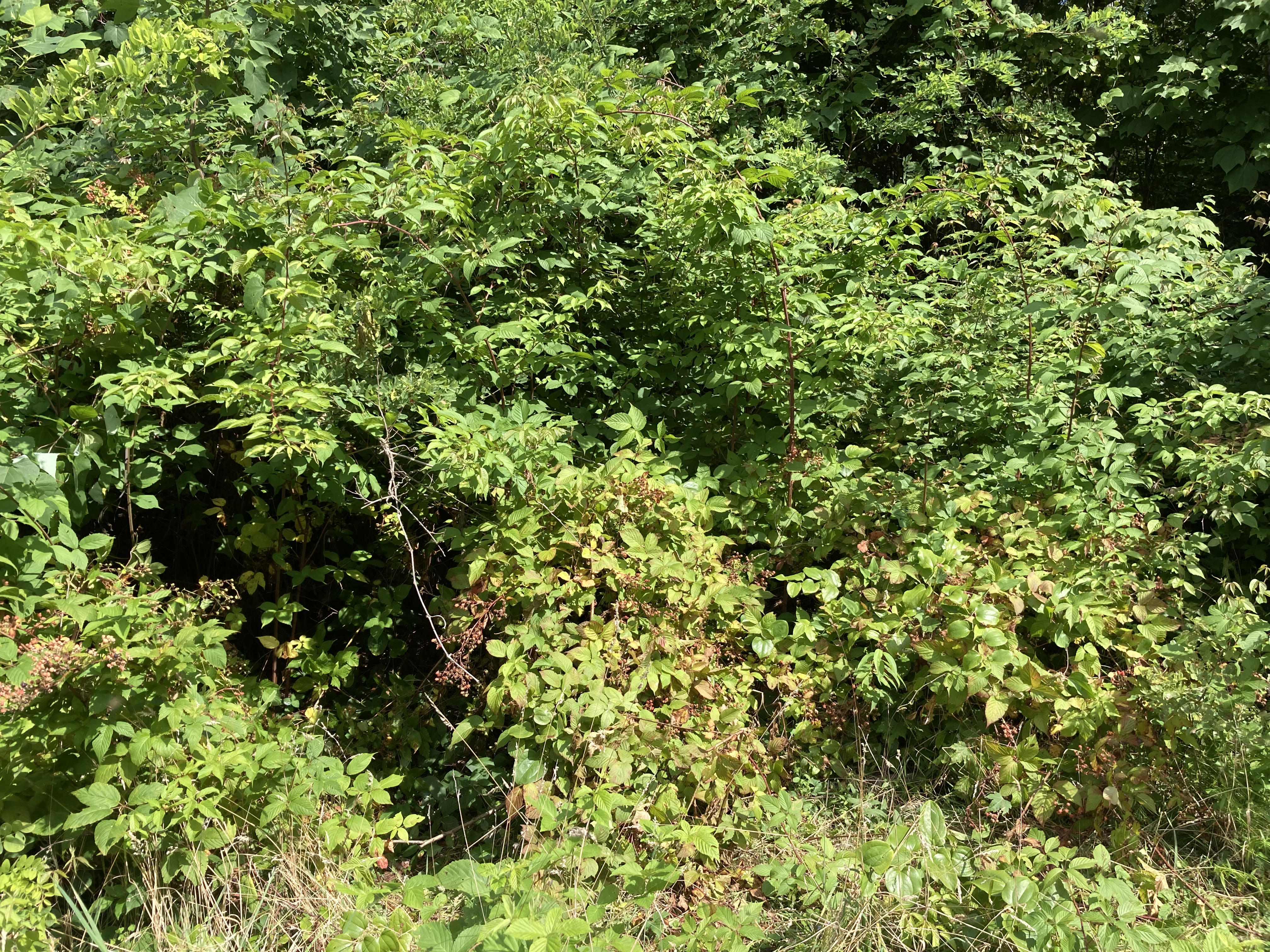
Just a solid wall of bracken that I try to part with my poles; if there is a trail in there, I cannot find it. I spend another half hour or so wandering along the perimeter on a game trail, pointing CalTopo hither and yon, but it’s fruitless. I’ll need to find another way.

You can do this, the inner voice chirrs. Remember that we glory in our sufferings, because we know that suffering produces perseverance;  perseverance, character; and character, hope. (Romans 5:3-4) 

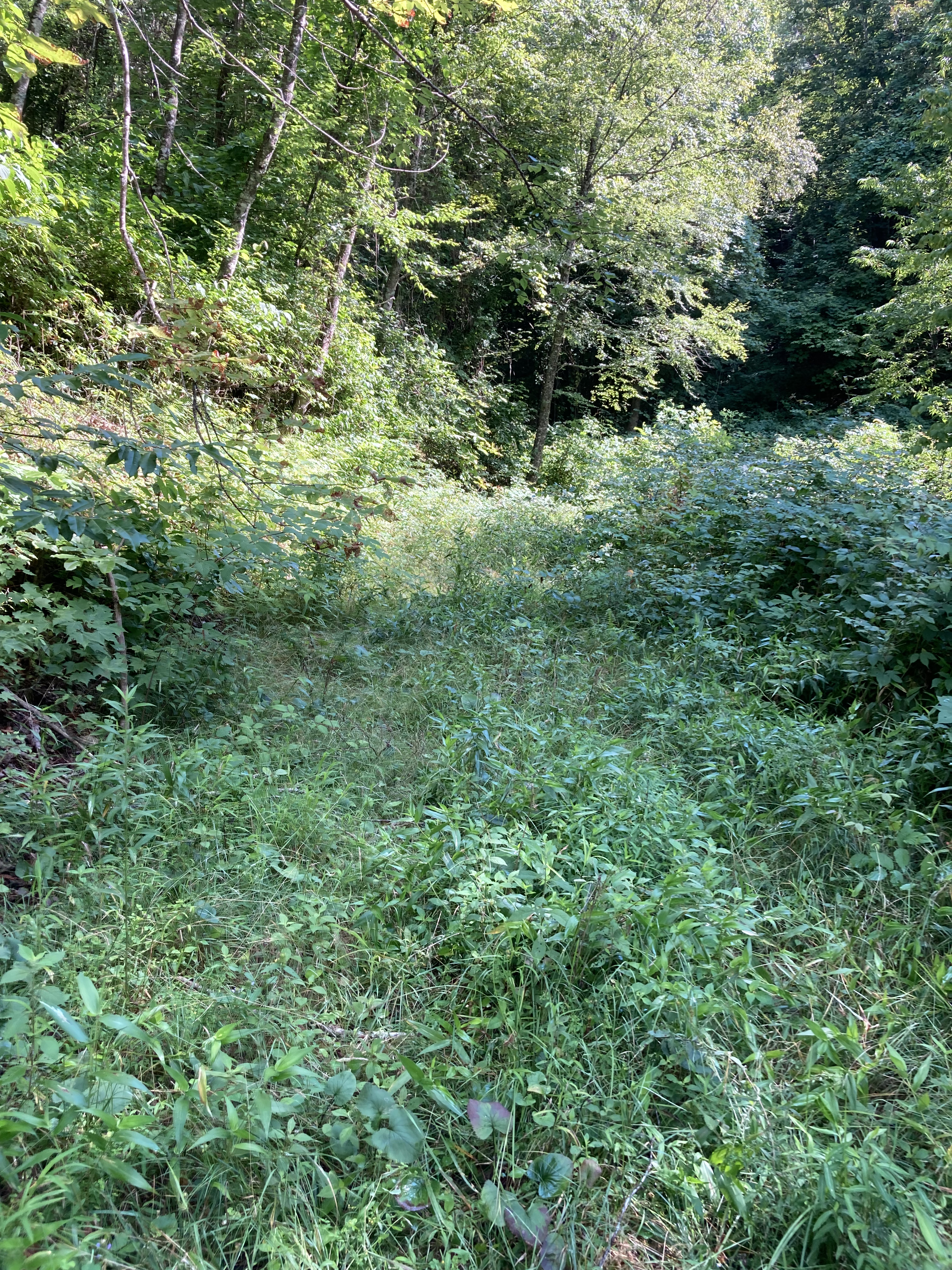
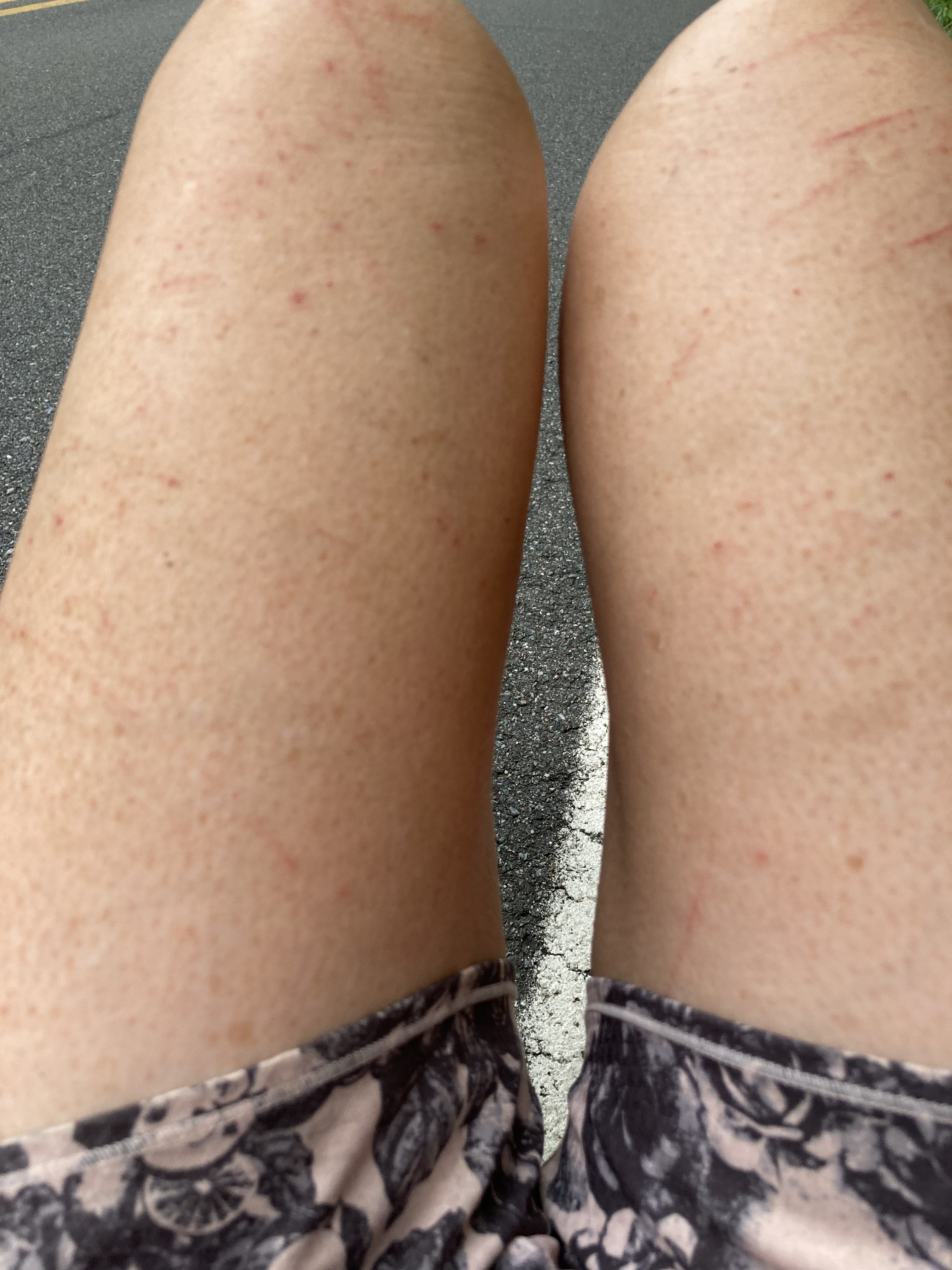
Calling an audible, I backtrack, taking 5506 the whole way. Legs and arms bloodied, I re-emerge onto Flat Top Road – really, just another overgrown FS road, #278 – and take it around Devils Creek Tail and contiguous Lost Cove Trail. It will have to do, but I leave part of myself, literally, figuratively, back in that overgrown meadow.

Just north of where the pavement will begin, I am surprised to find a piped spring right next to the sliver of flat where I balance my tent for the last night on trail.

Hope.

Note: The AHR is a spectacular route. Many hours of love and commitment went into its founding, and I highly – HIGHLY – recommend it to anyone looking for a slightly shorter thru-hike with some kicker peaks and inspirational terrain. As more people complete this trail – and volunteer to maintain this section – the turn-off to the Devils Creek Trail will become more pronounced, particularly at this time of year, when vegetation is high. I was disappointed in myself for not being able to complete the 3.7 miles of DCT and LCT, but not in any way with the AHR itself. Hike on, friends.
Other note: When I reached the clearly marked eastern terminus of the LCT, I thought about hiking back to that overgrown meadow, turning around, and hiking back, thus completing every single step of the official AHR.

But I’m not a lunatic.

Day 17: Hogback Ridge Shelter to west of White Oaks Flat Road – 25.9 miles (including the 1.7 backtrack)

Pennies

I’m up early for my last day on the AHR, stirring my last remaining packet of coffee and looking forward to the road walk. No way was I getting lost on pavement.

I’m used to long road walks from section hiking the Florida Trail the past four spring breaks. Staying attuned to one’s feet is critical, given the grind of asphalt on tender toes, so I walk the first half in crocs. It’s a muggy morning but there’s lots to see, a diversity not often found in forest.

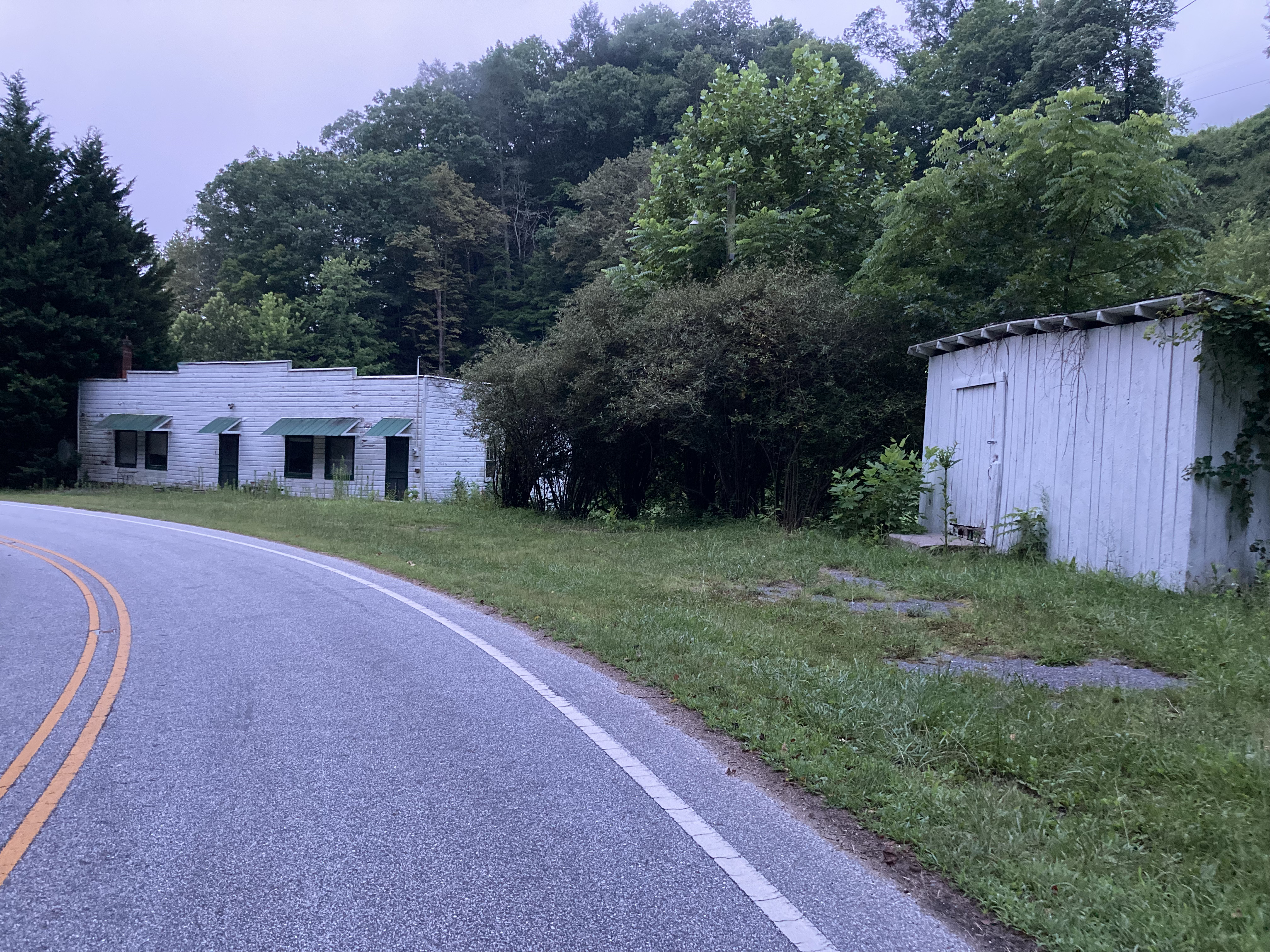
Stopping to snack at an abandoned gas station, I look down and see a penny.

I think of how God always knows when I need a reminder that He’s thinking of me.

I find another just before crossing the street.

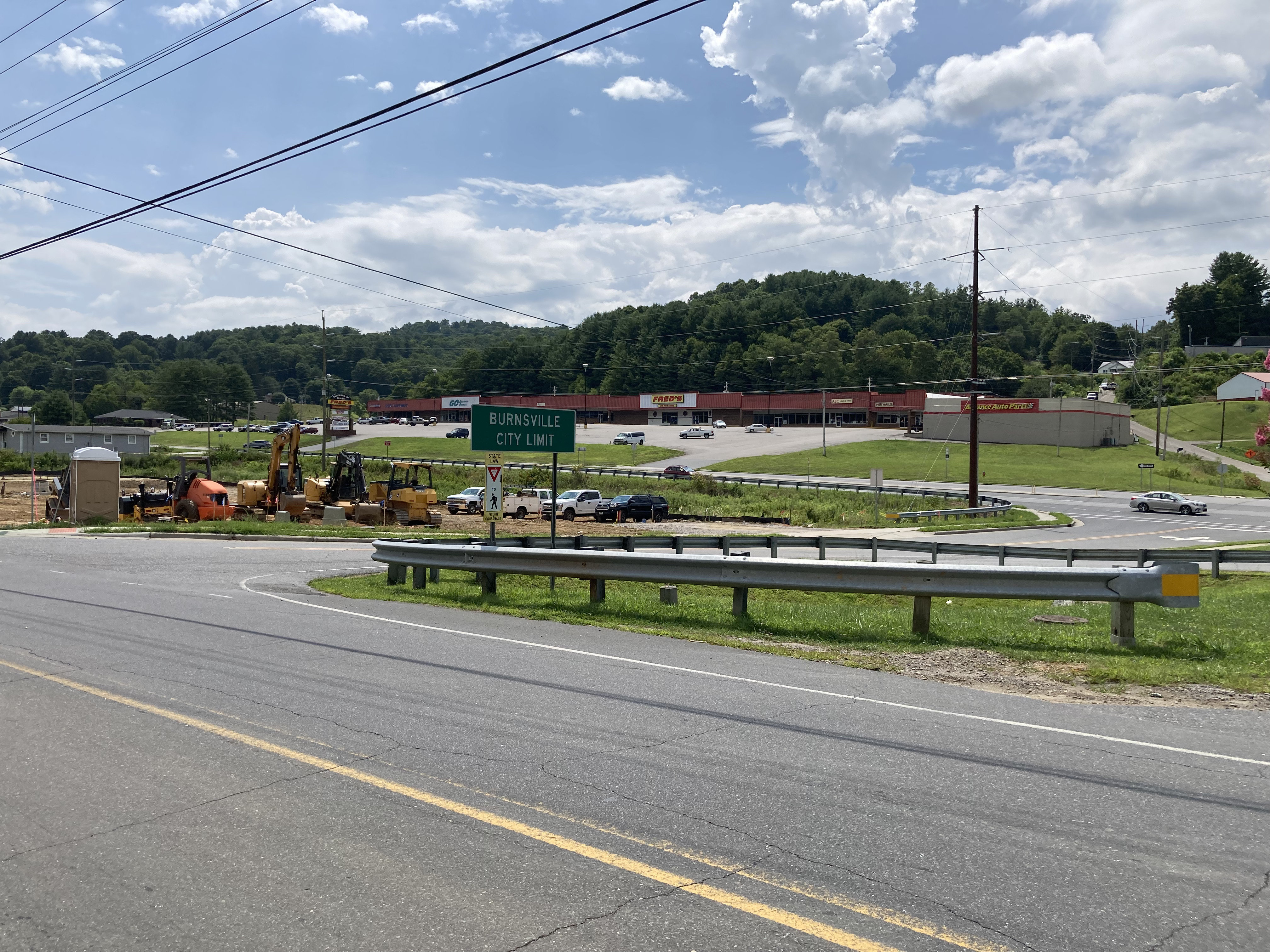
As the shade disappears, my pace slows. Finally, the turn into Burnsville and a quick stop for a smoothie before retrieving my car from the Carolina Country Inn.

As he hands me my keys, the owner and I chat amiably, when suddenly he asks Were you carrying?

Carrying? Like a gun?

Haha. I was carrying lots of things, but a gun wasn’t one of them.

Way too heavy.

I think about his parting words driving north: You’re braver than I am.

But I don’t think it’s bravery, necessarily. If we allow our fears to dictate what we will and will not do, I believe we would miss out on some of life’s sweetest moments, its most winsome triumphs. Suffering, perseverance, character, hope. All worth it, in the end.

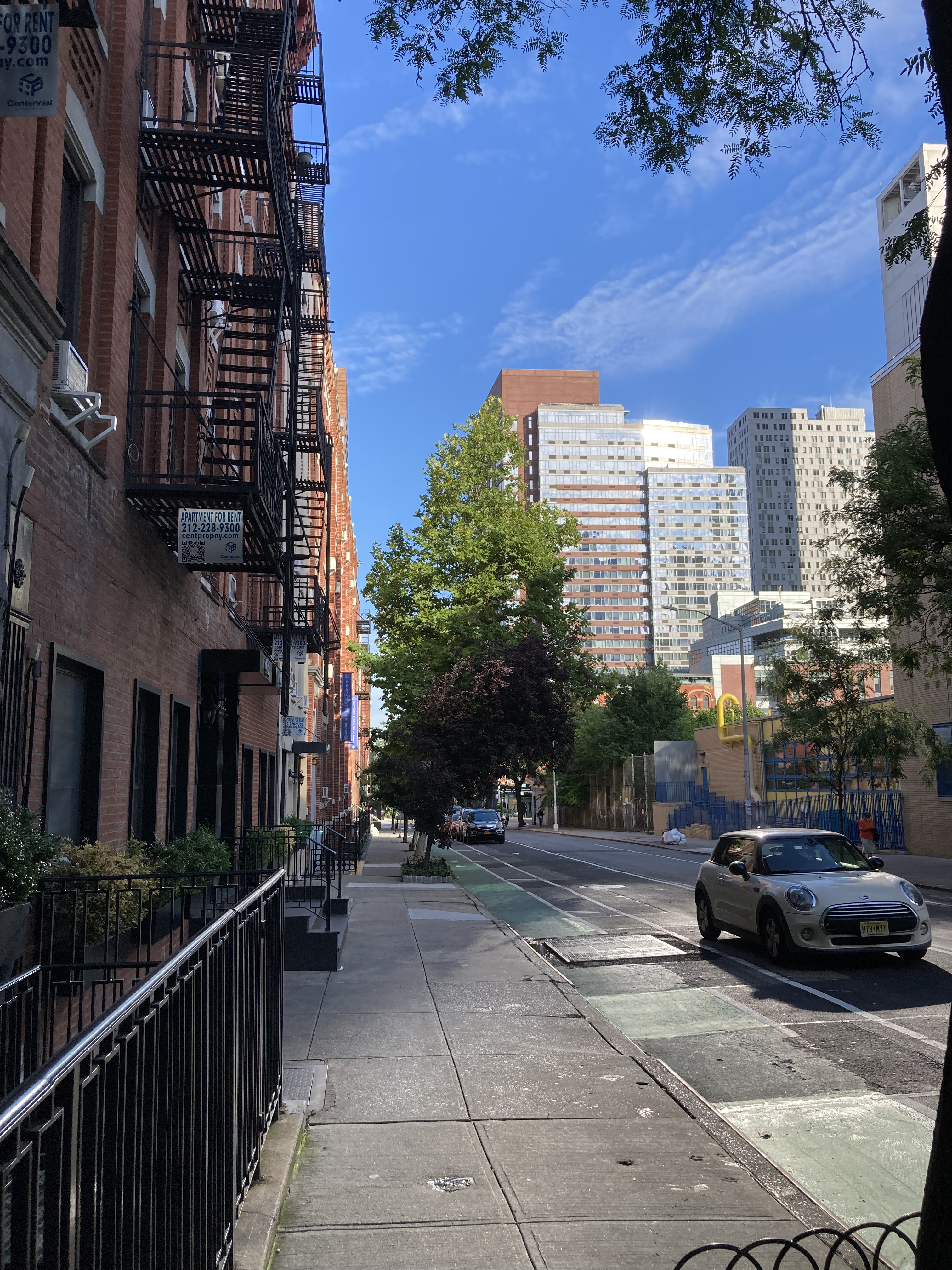
The next day, I reach the Big Apple, where my older son needs help moving apartments. Honestly, I feel safer in the woods.

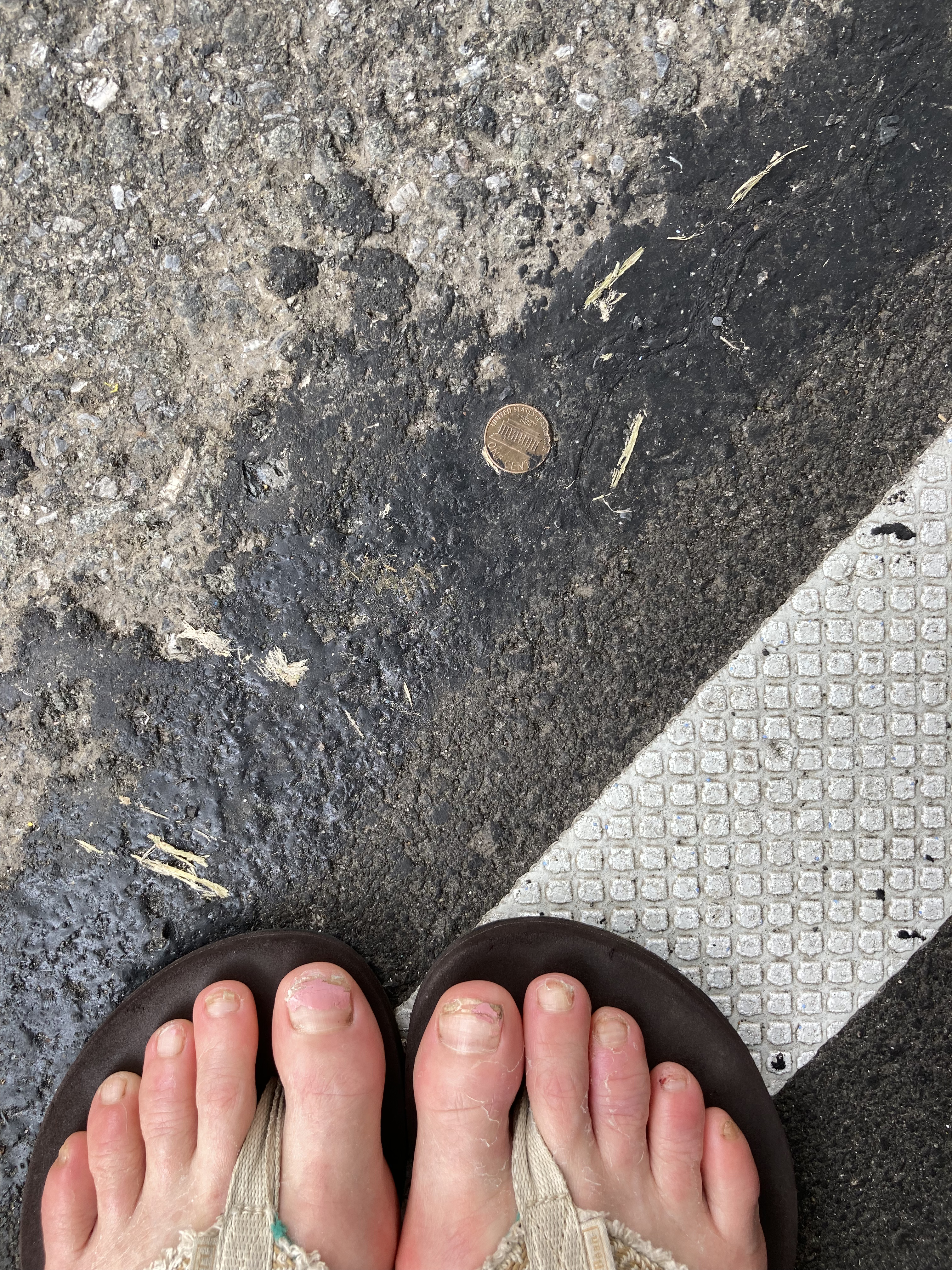
Waiting for him, I look down.

This one, sunk deep, cannot be gathered.

But like the Appalachian High Route, I’ll always know it’s there.

Day 18: West of White Oaks Flat Road to Hot Springs – 14.9 miles