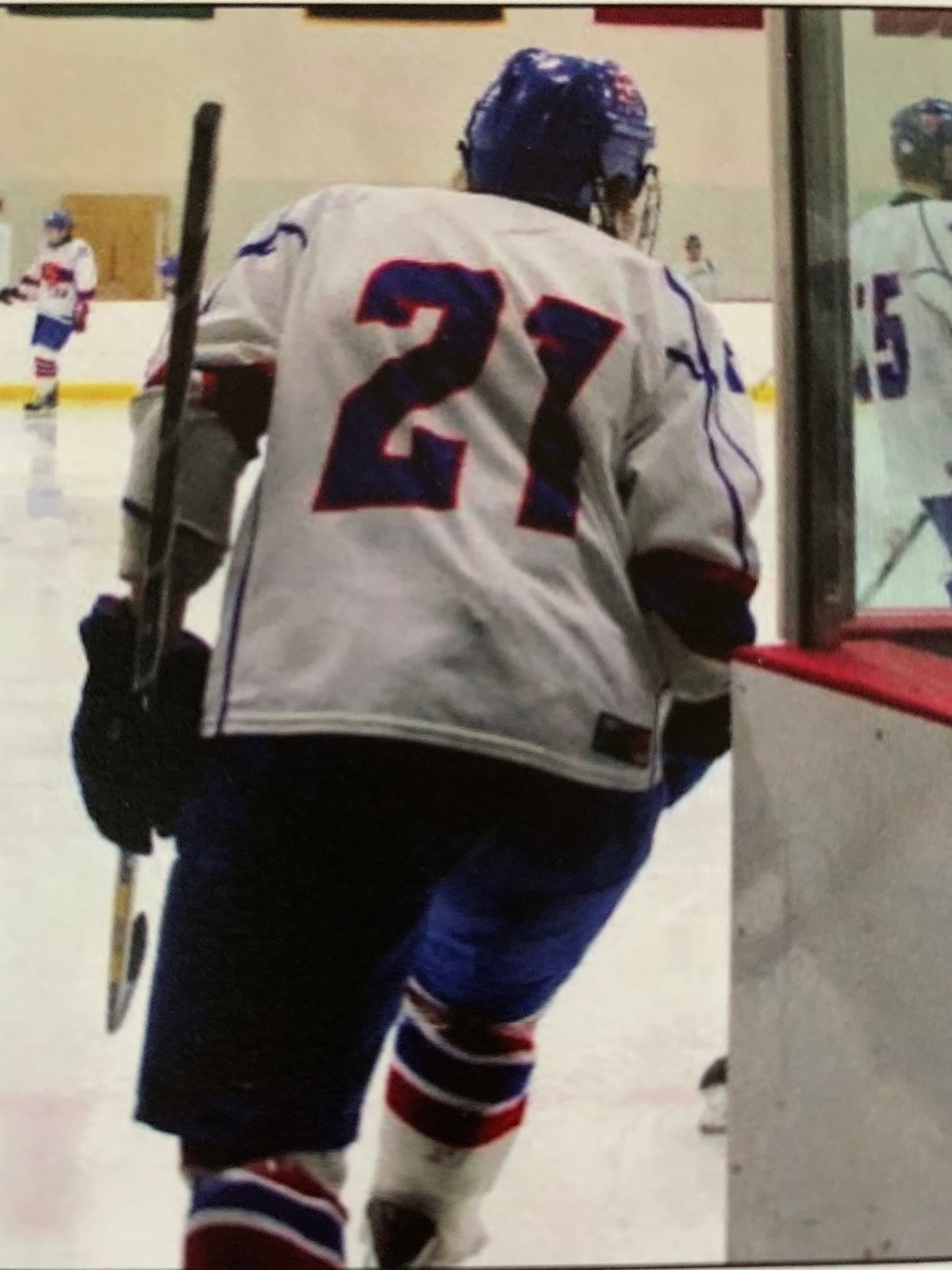
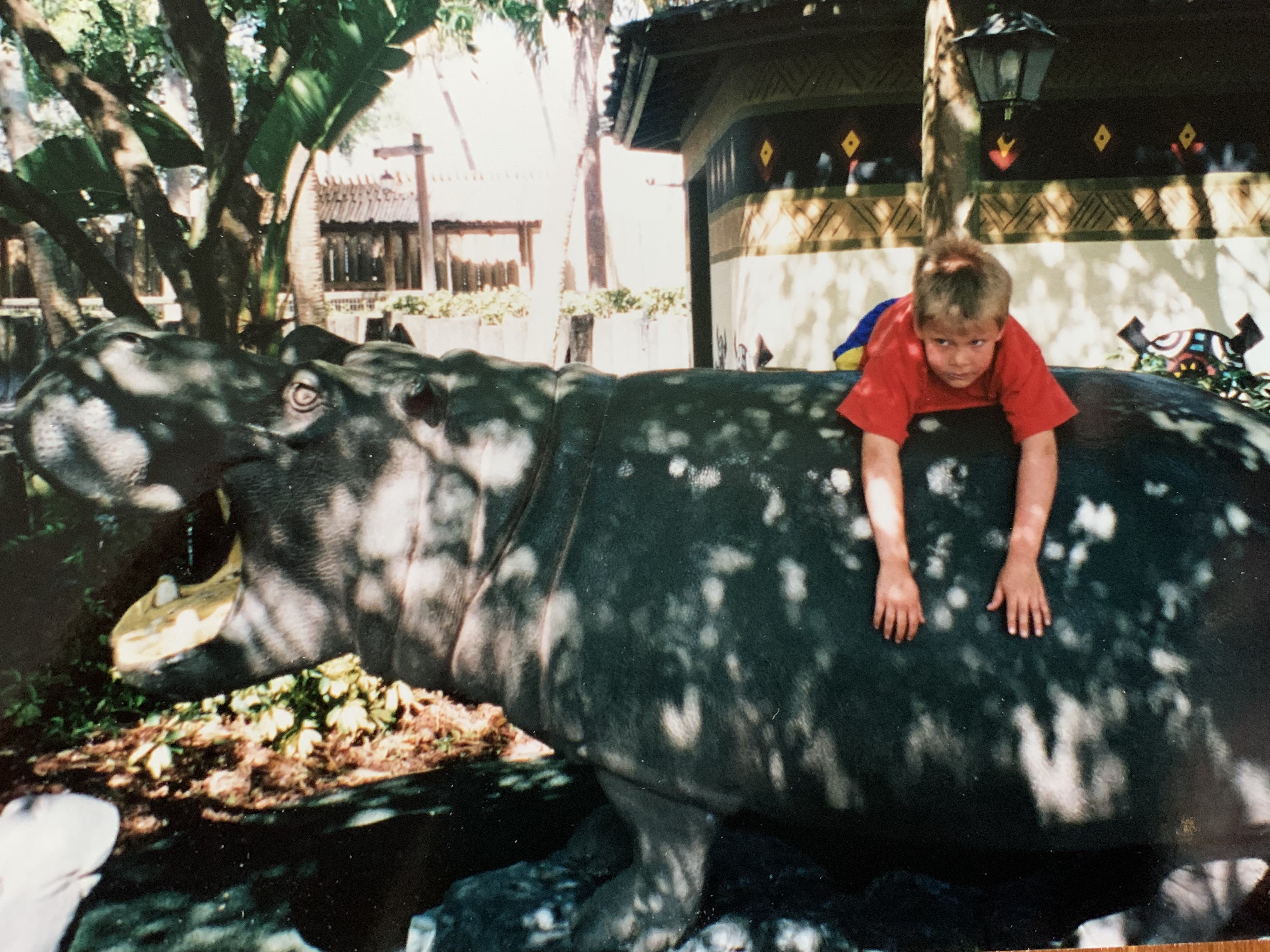
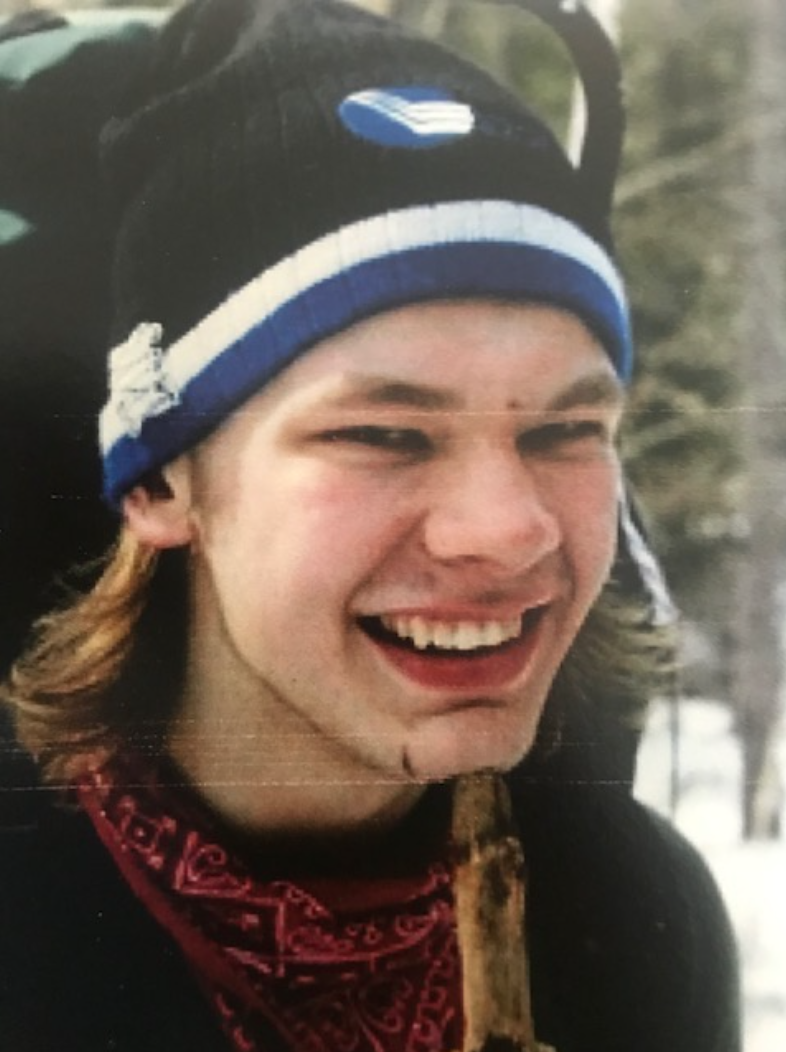
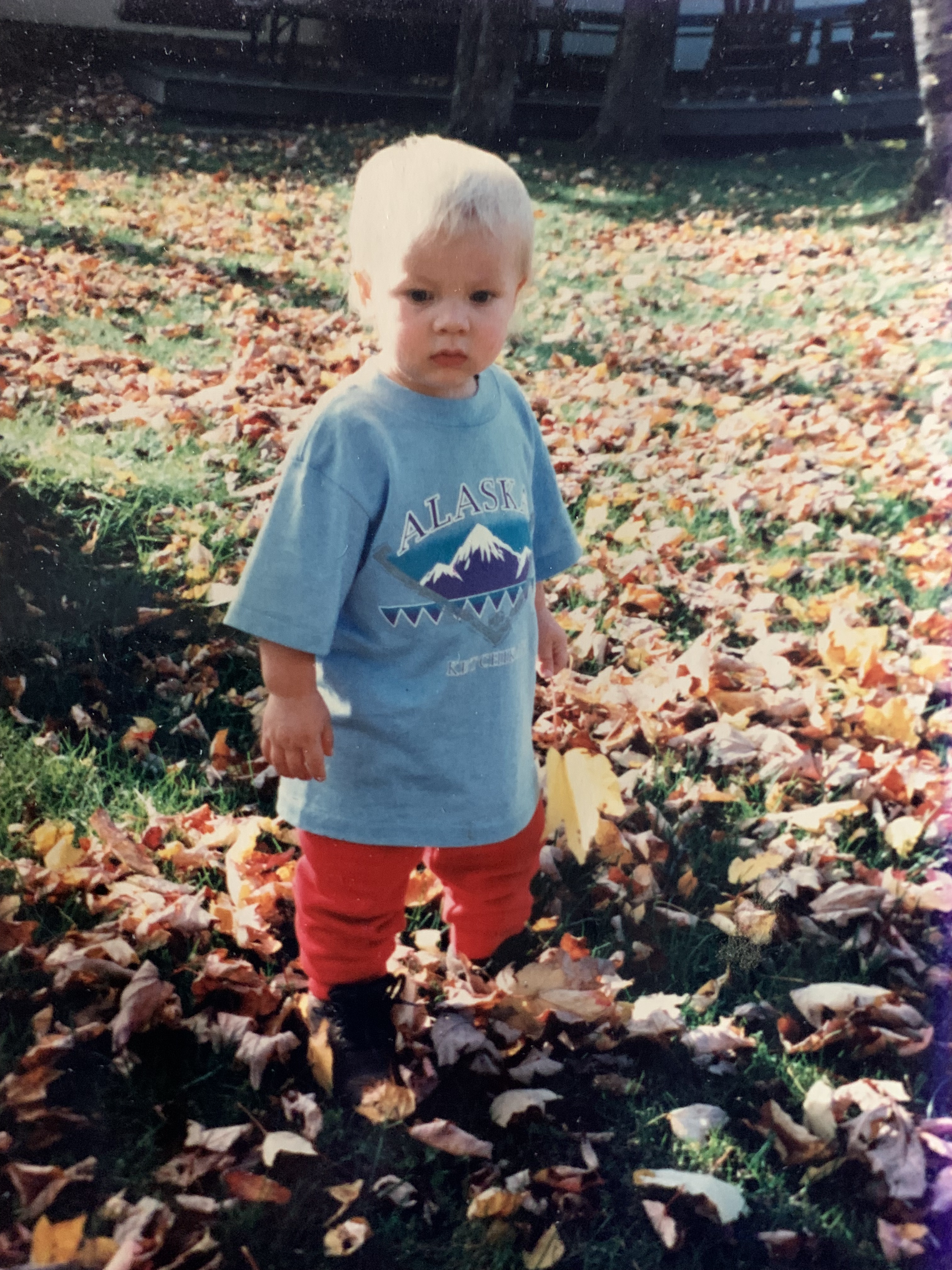
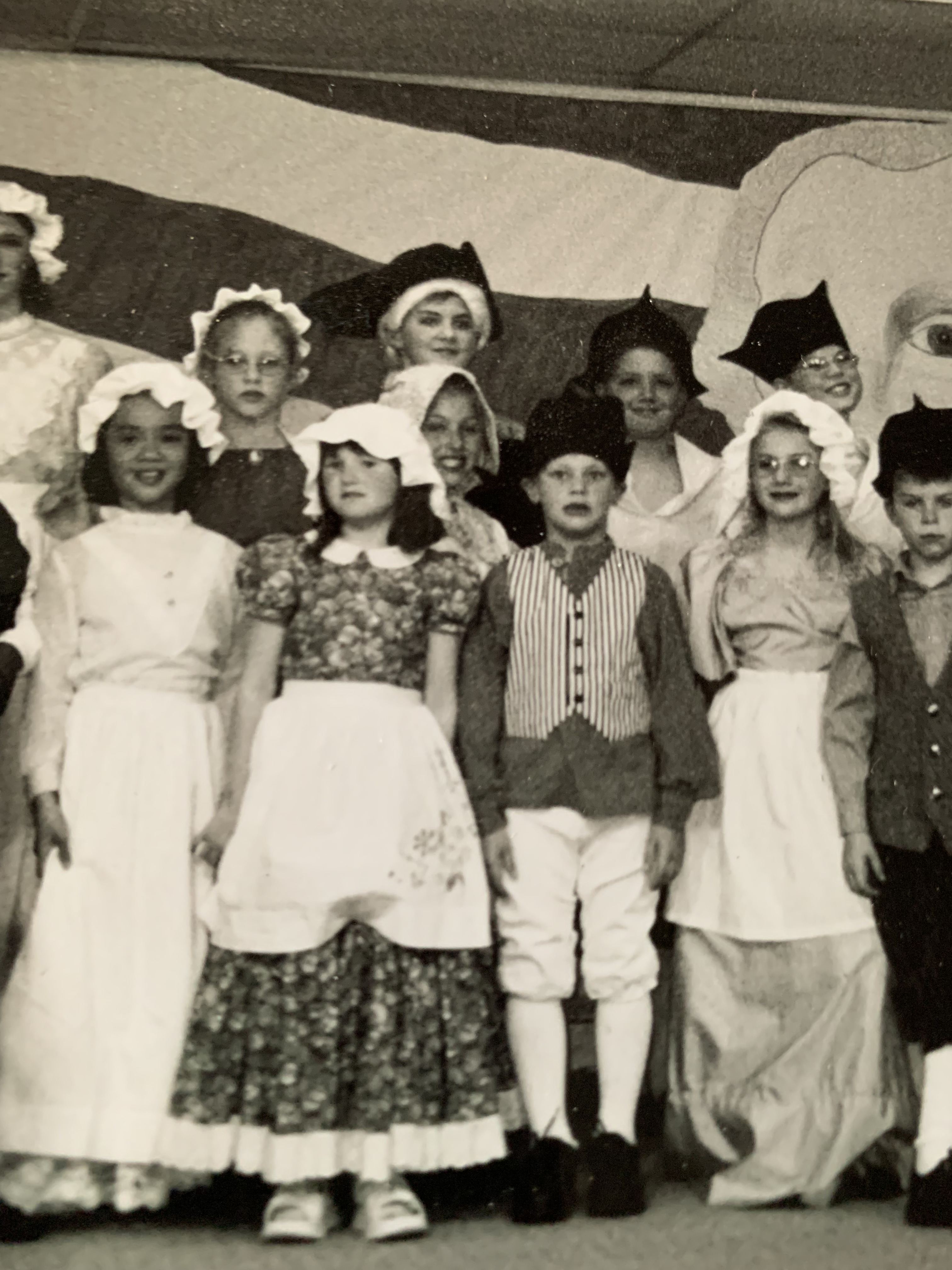
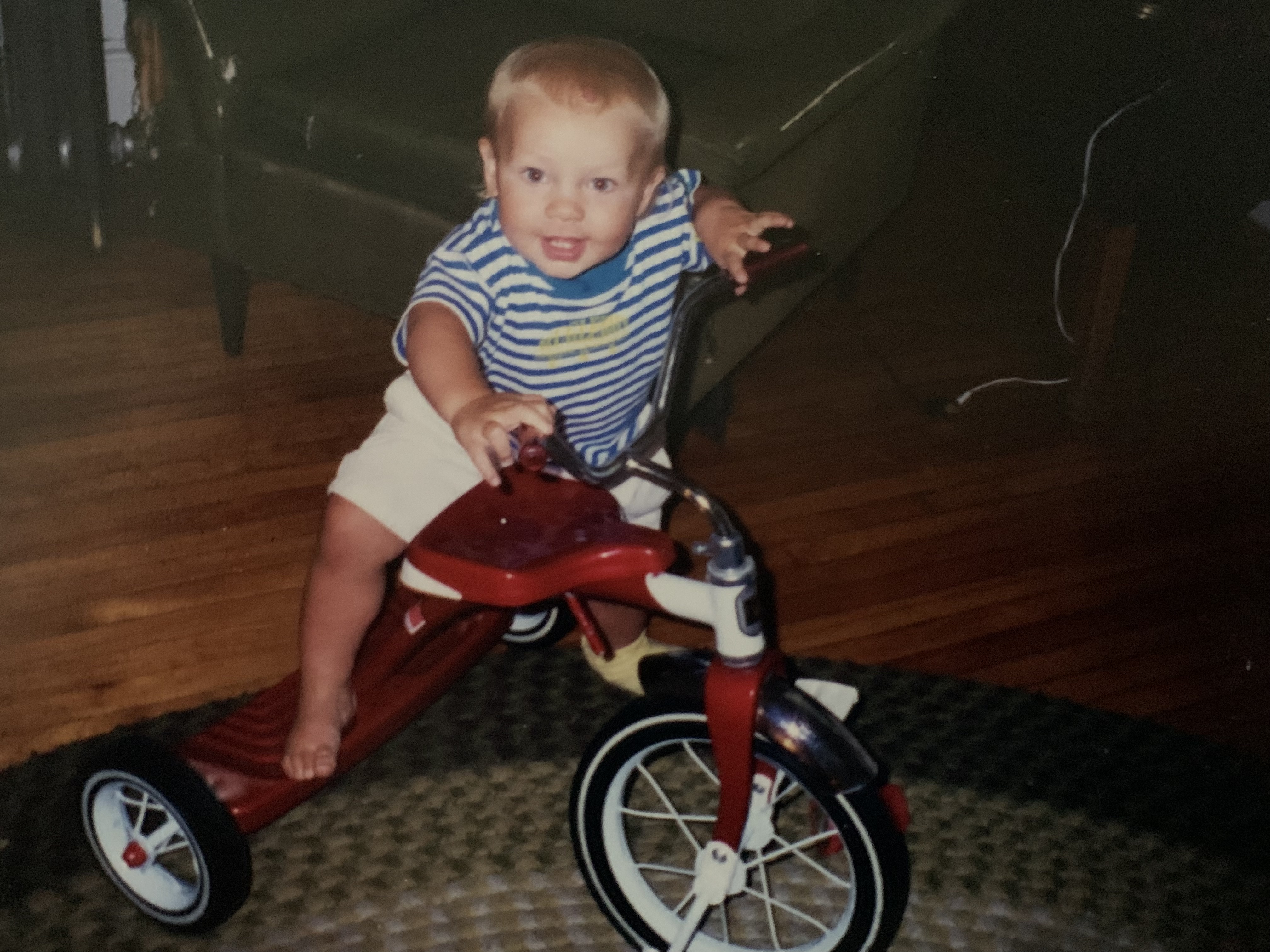
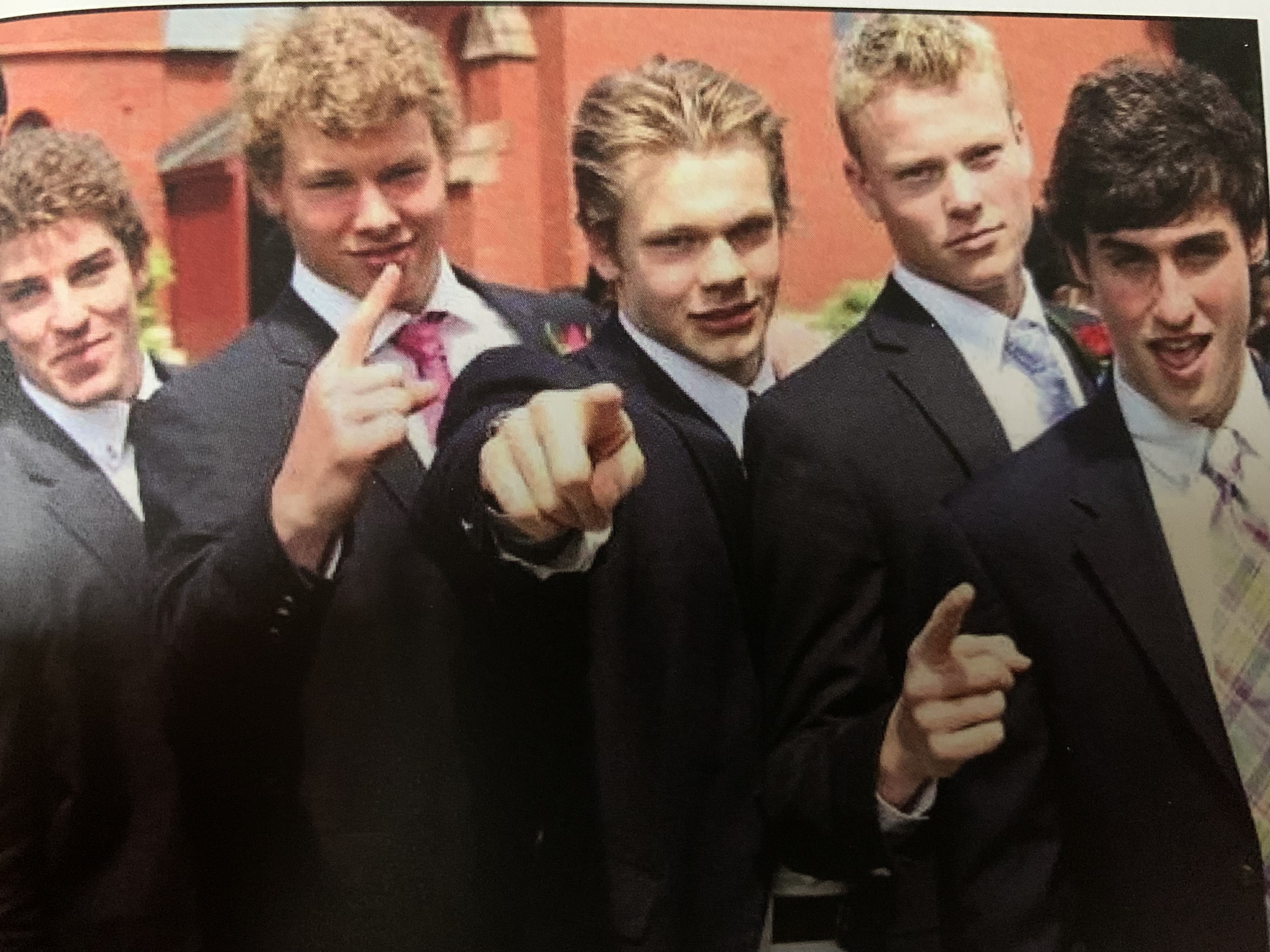
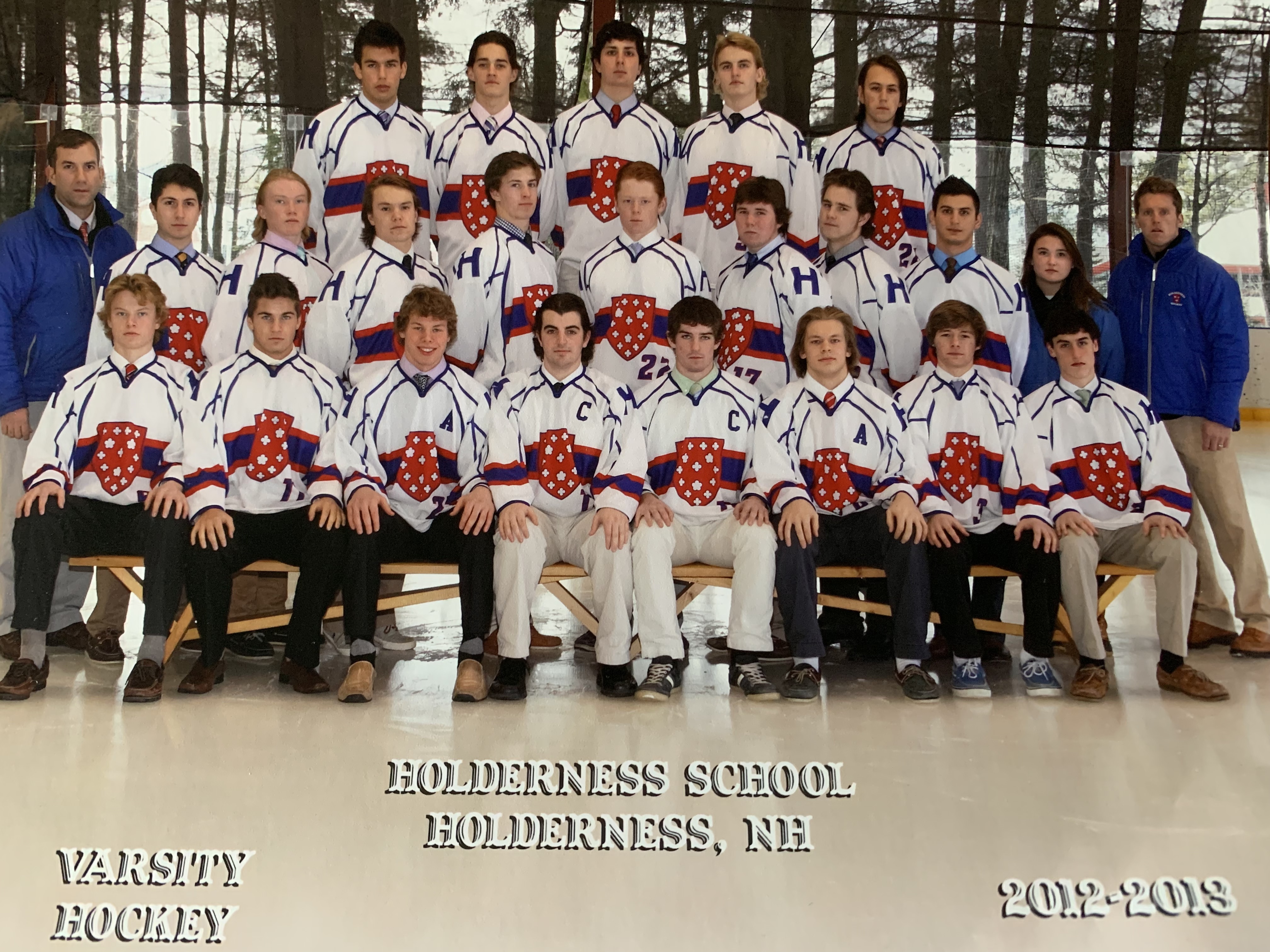
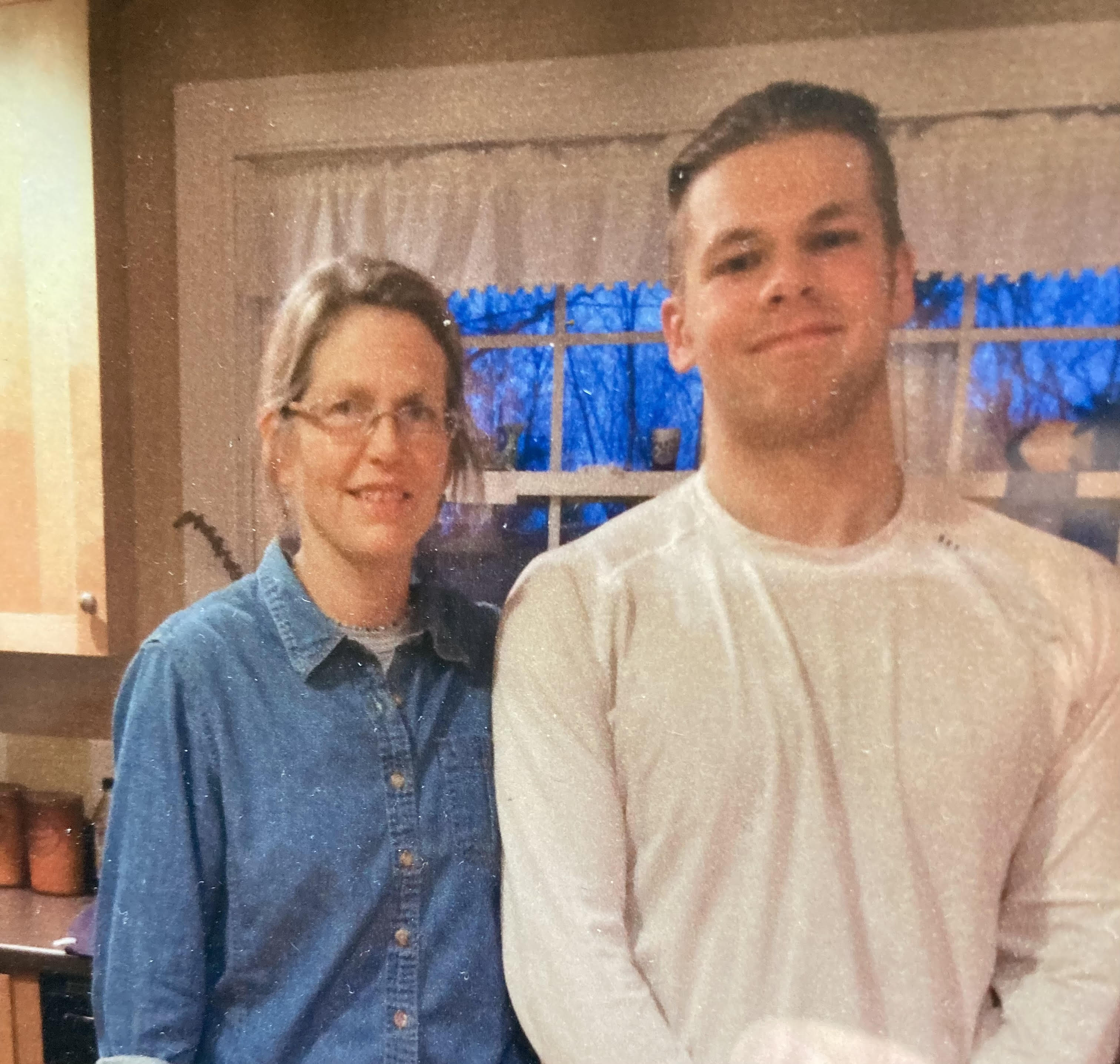
Today, on my son’s would-be 30th birthday, I pull out the photo albums and invite in the grief.
It doesn’t sting as it once did, nearly eight years after he’s been gone, though the ache is still sharp.
Not kitchen-shears sharp, capable of precise severing, leaving edges crisp and clean; no, perhaps more like a pair of training scissors in the hand of a toddler, tearing and catching indiscriminately as it kidnaps the day.
I gaze at the years gone by and lament all the photos we will never take.
There is a limited number of pictures to sit with, and the inventory will never change.
Of course, our lives go on, as they must. Baby showers, new employment, holidays, and mountains climbed.
All the while, he’s still stuck, smiling out from the old gloss and reminding us of the power of a heart given over to love.
There’s housekeeping to be done here, stewarding those things he’s left behind.
I was reminded earlier this week, walking back from study hall under a misty moon, of the power of home. The air held little bite, but it was dark as I approached my empty house. I had been gone all day, busy with my fleet of middle school boys, and had not left on any lights. Body and mind were tired, ready to shift from duty to ease.
Home. I just wanted to get home.
And then, I remembered, again, for the thousandth time.
That’s where he is.
Privileged to live every moment in his Father’s house.
Awe-filled, beholding beauty more marvelous than here(Psalm 27: 4).
I’ve been sick for what seems like – has been – weeks, so 2024 came sneaking through the door while I was asleep.
I find if I nap and rest and sleep good night sleeps, I can still hike, can still chase The Grid to its at-last conclusion.
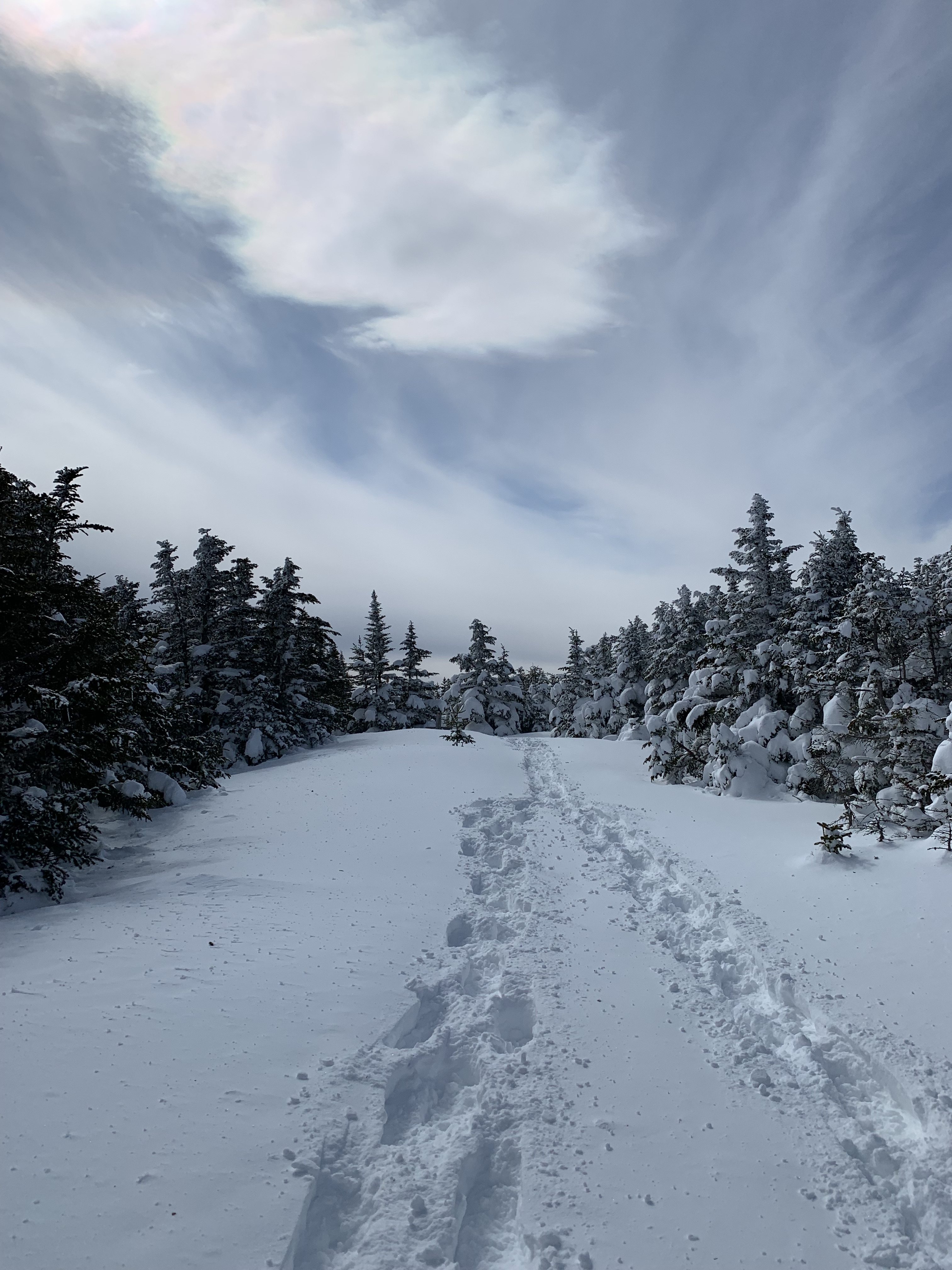
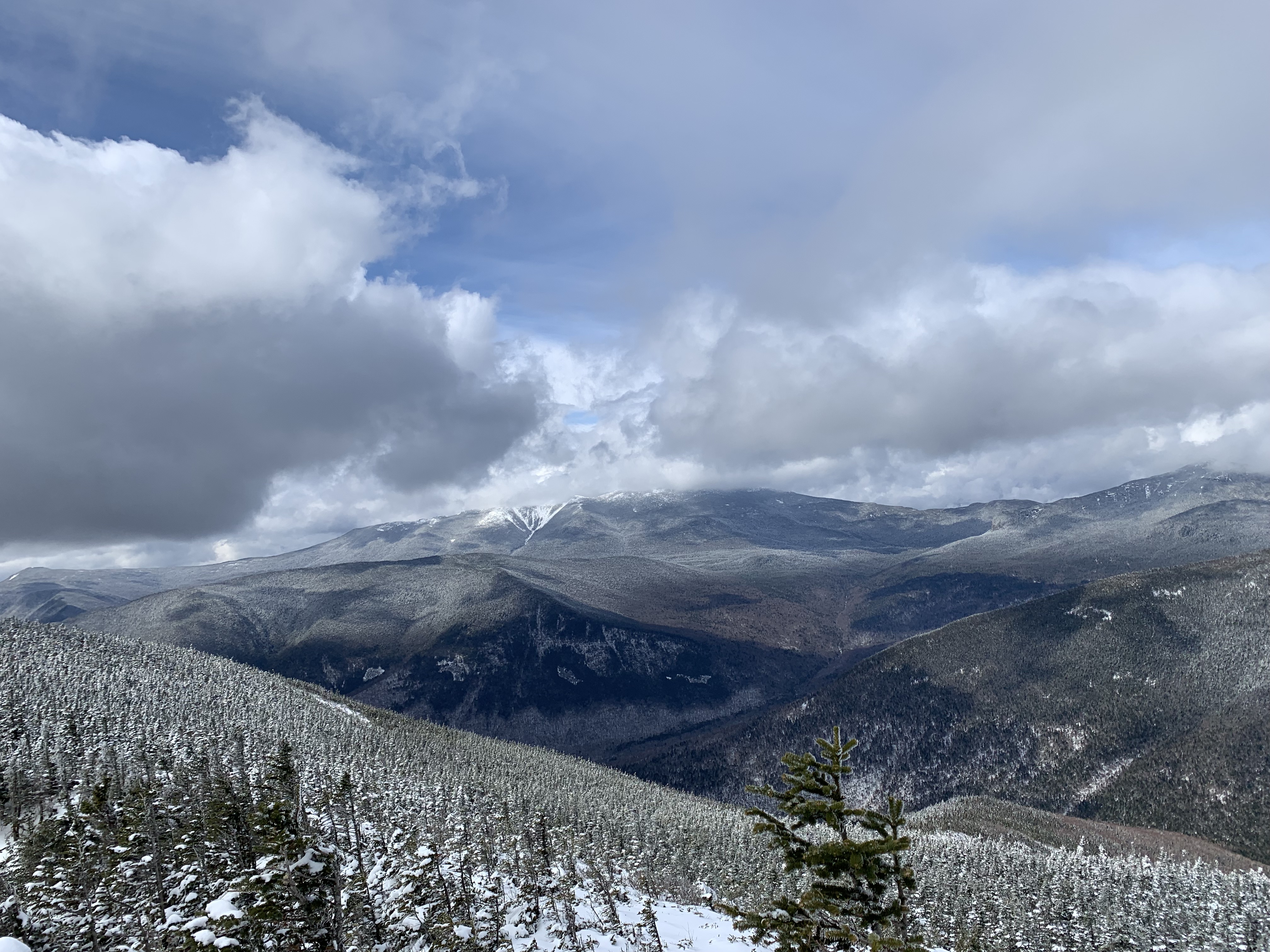
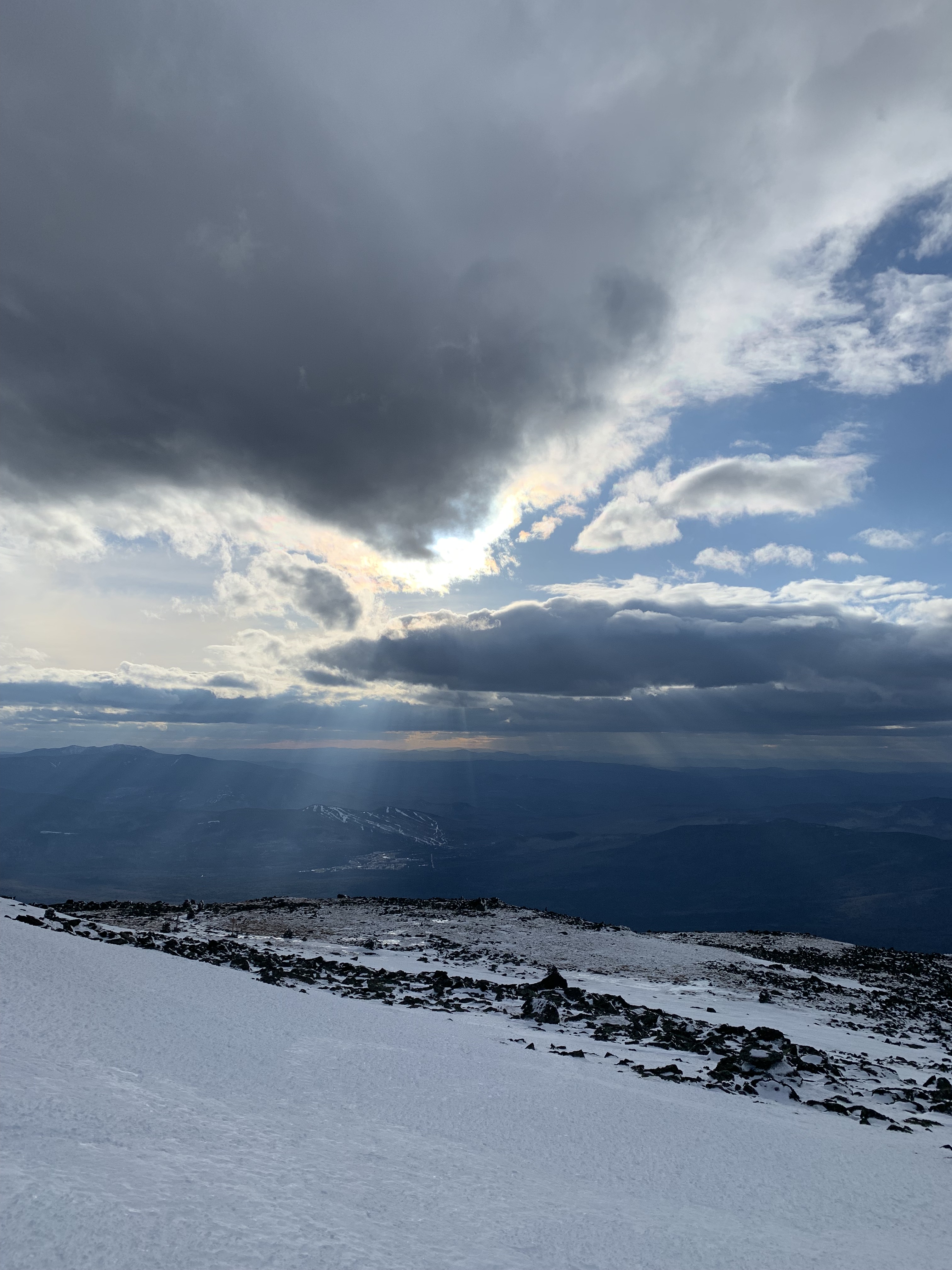
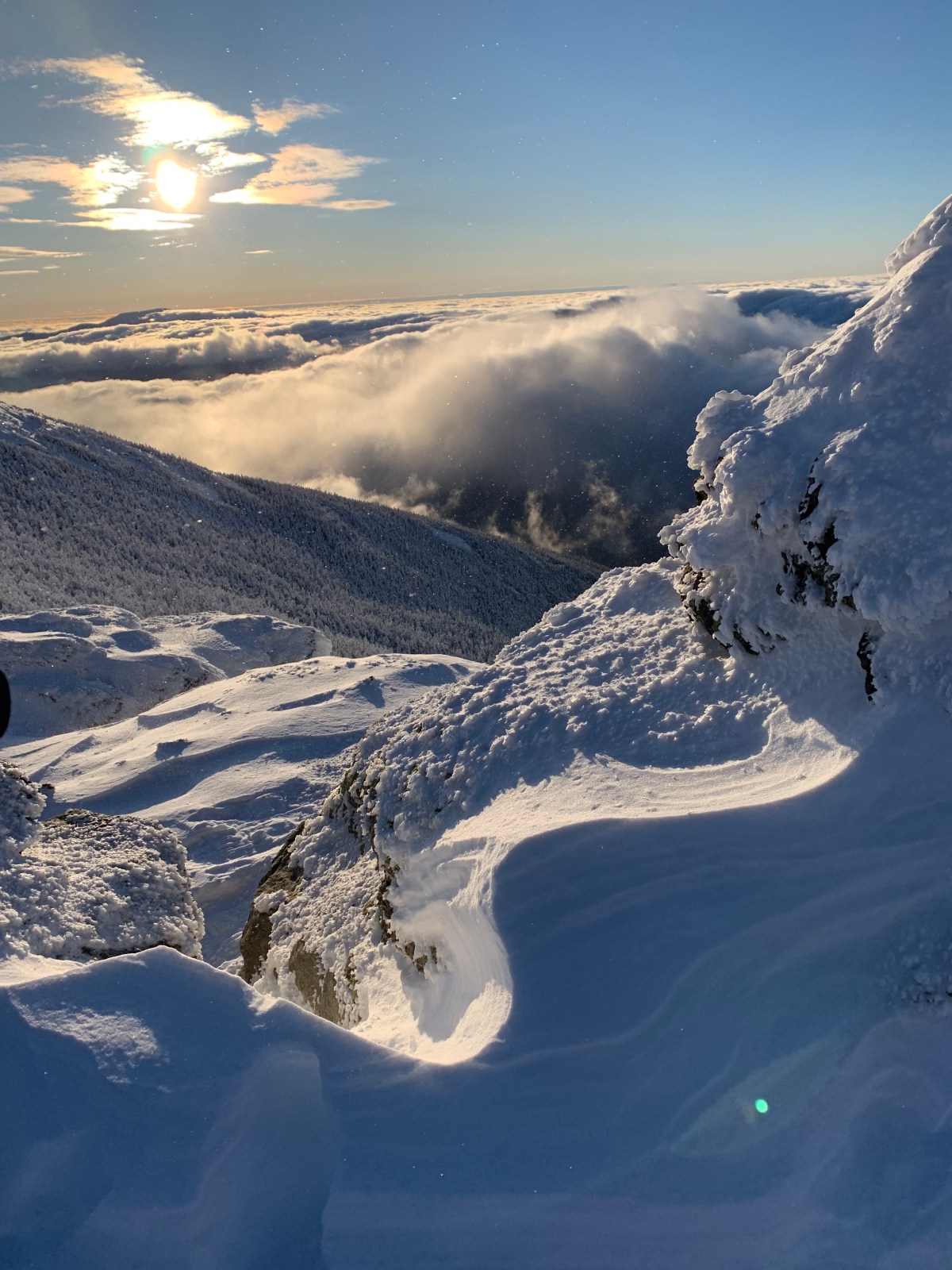
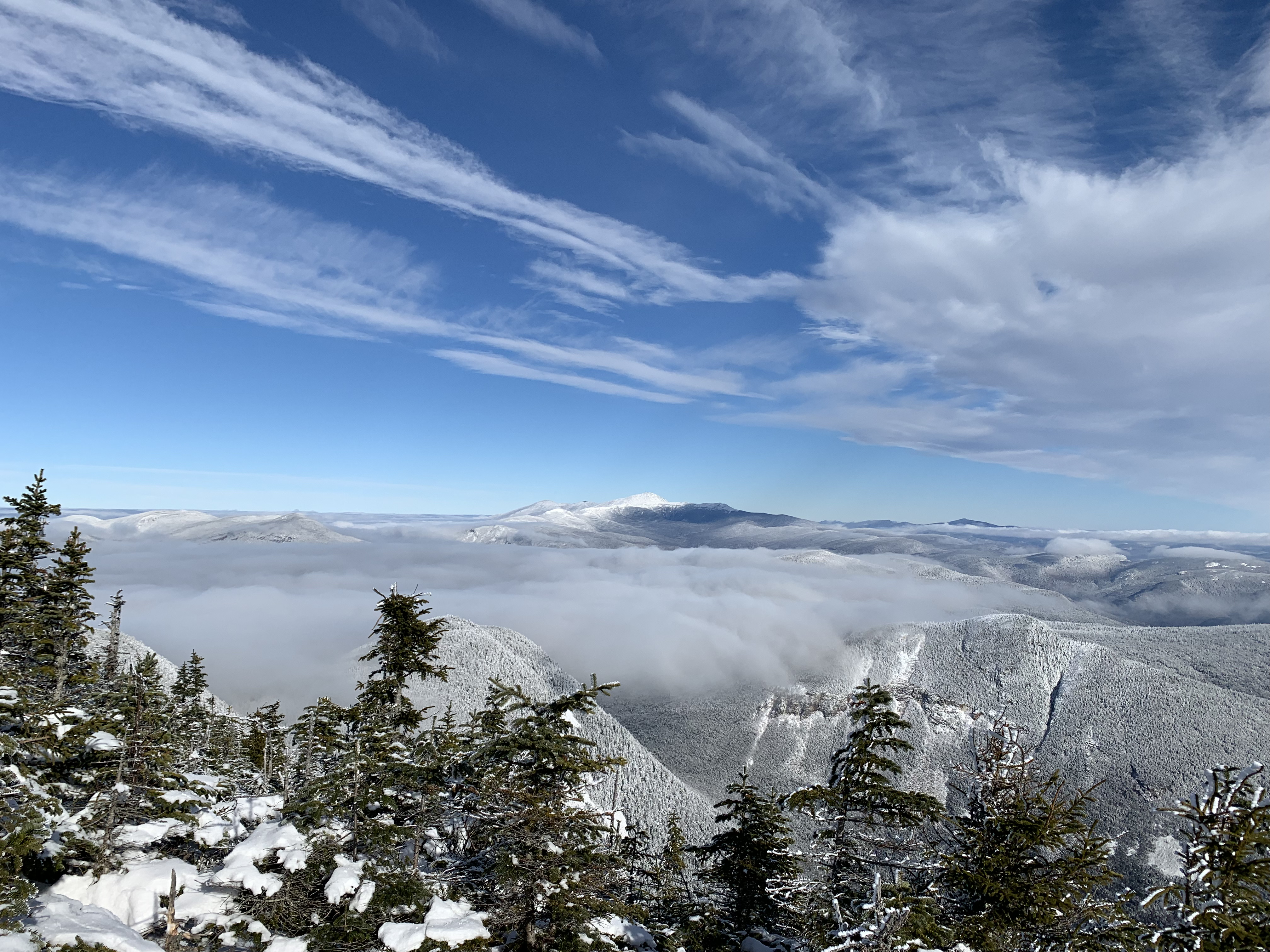
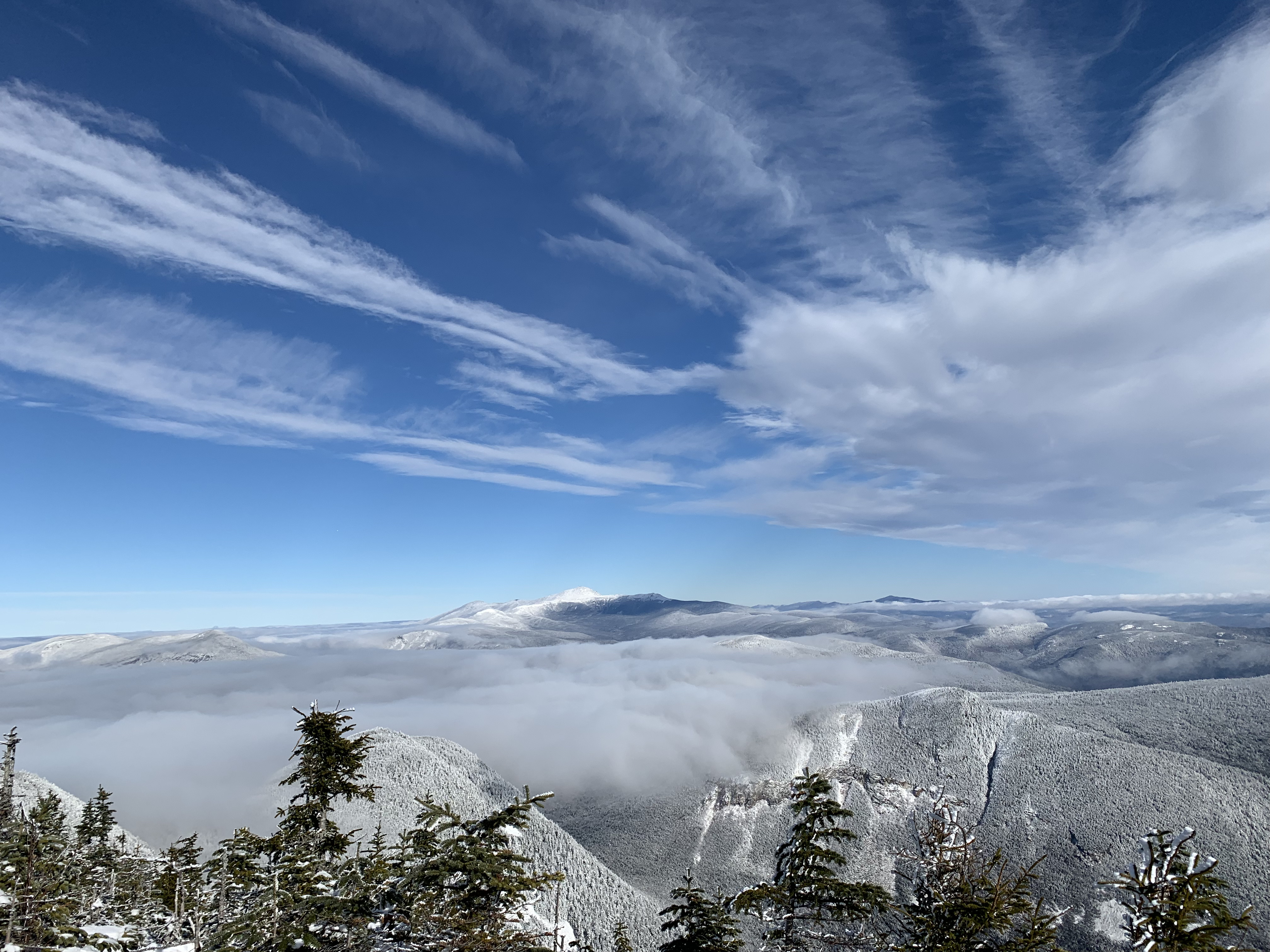
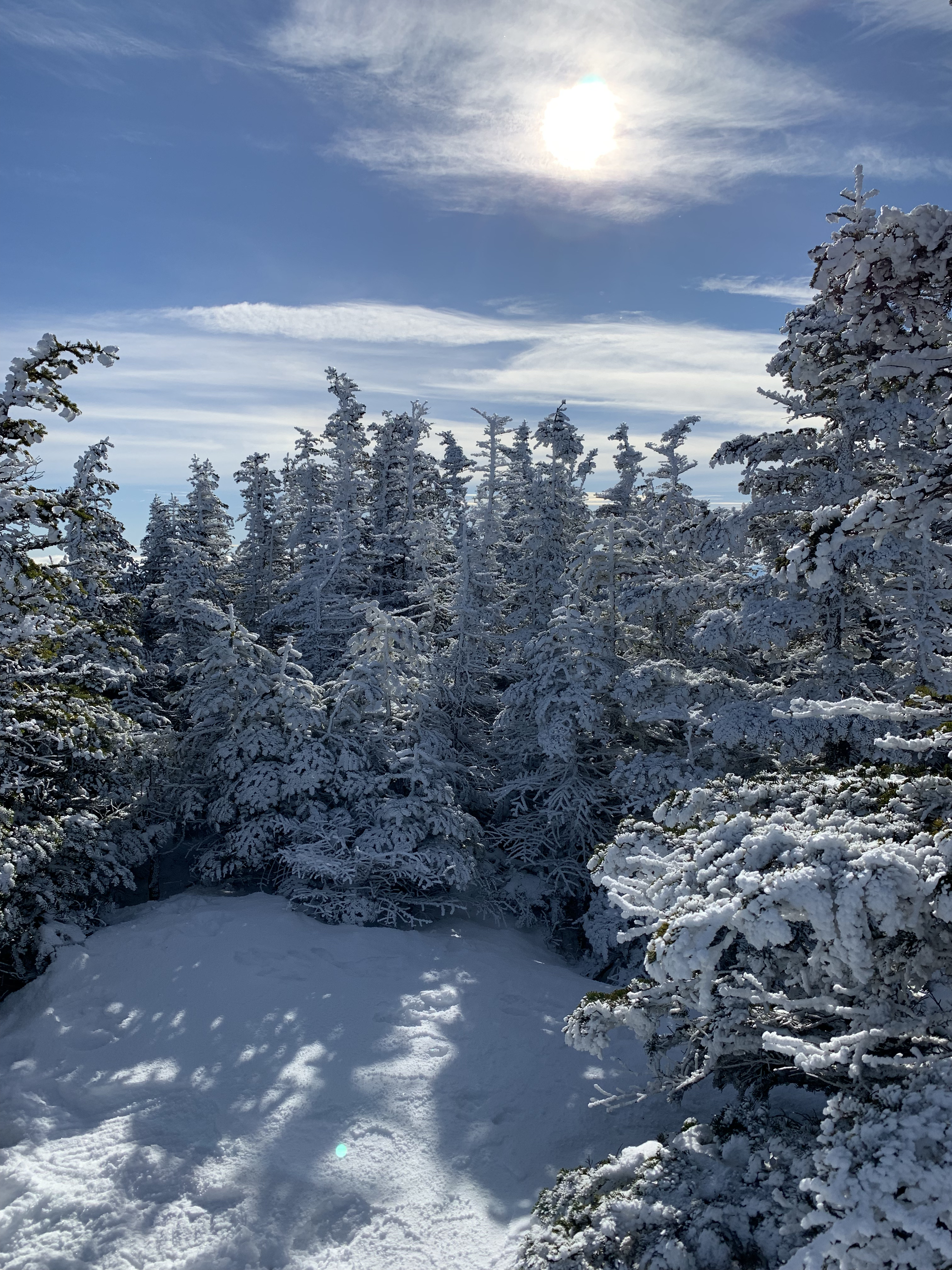
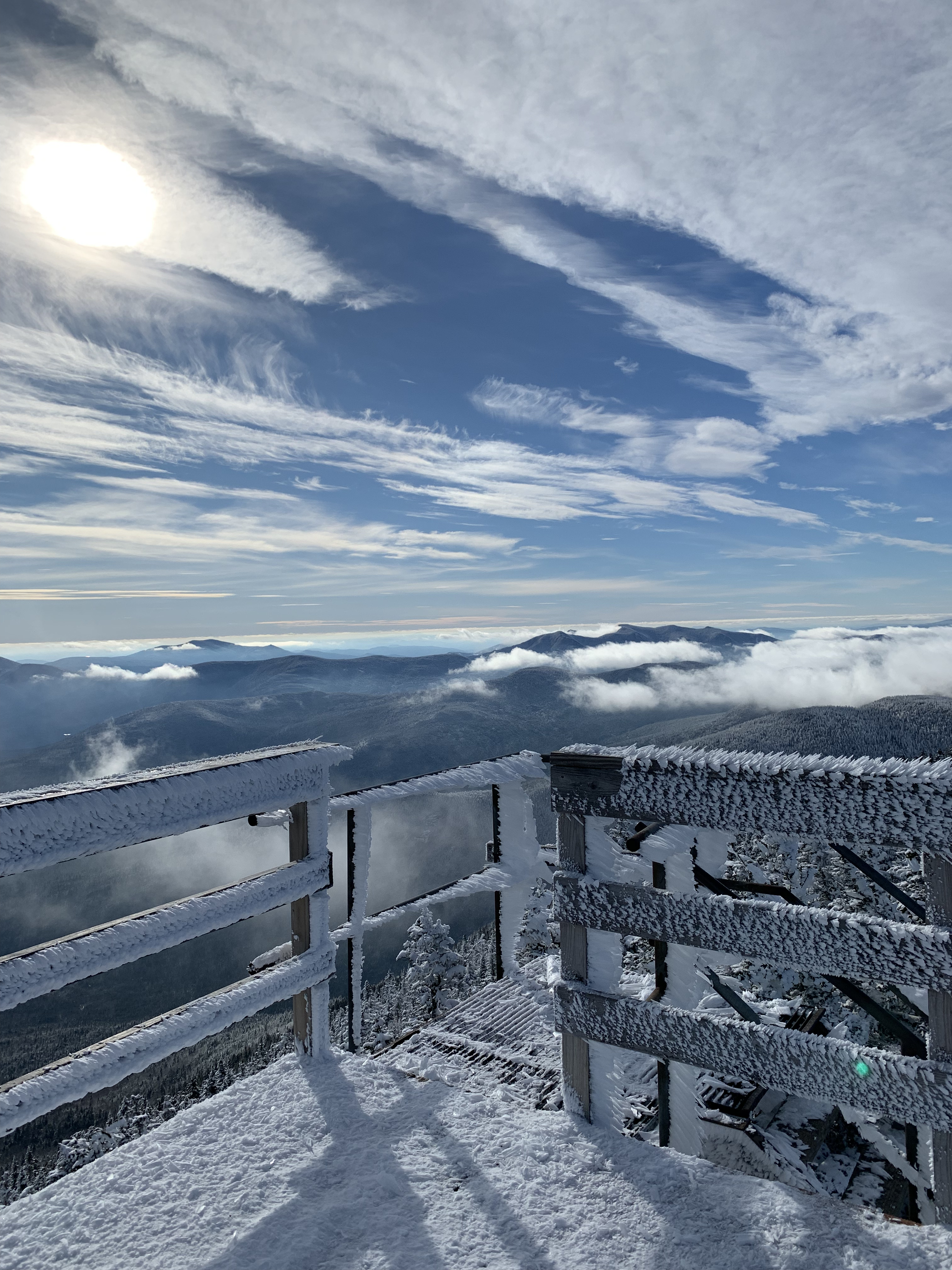
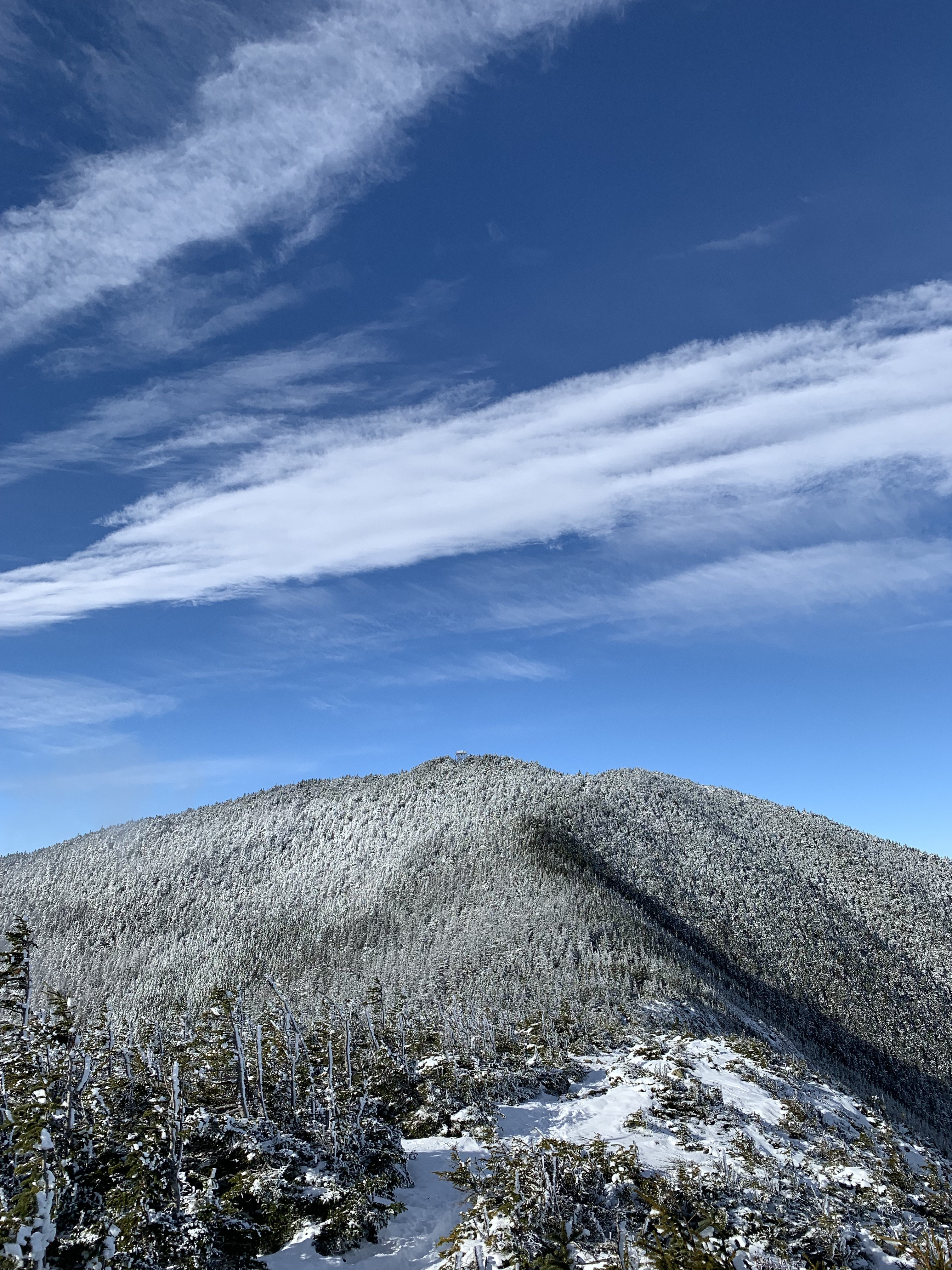
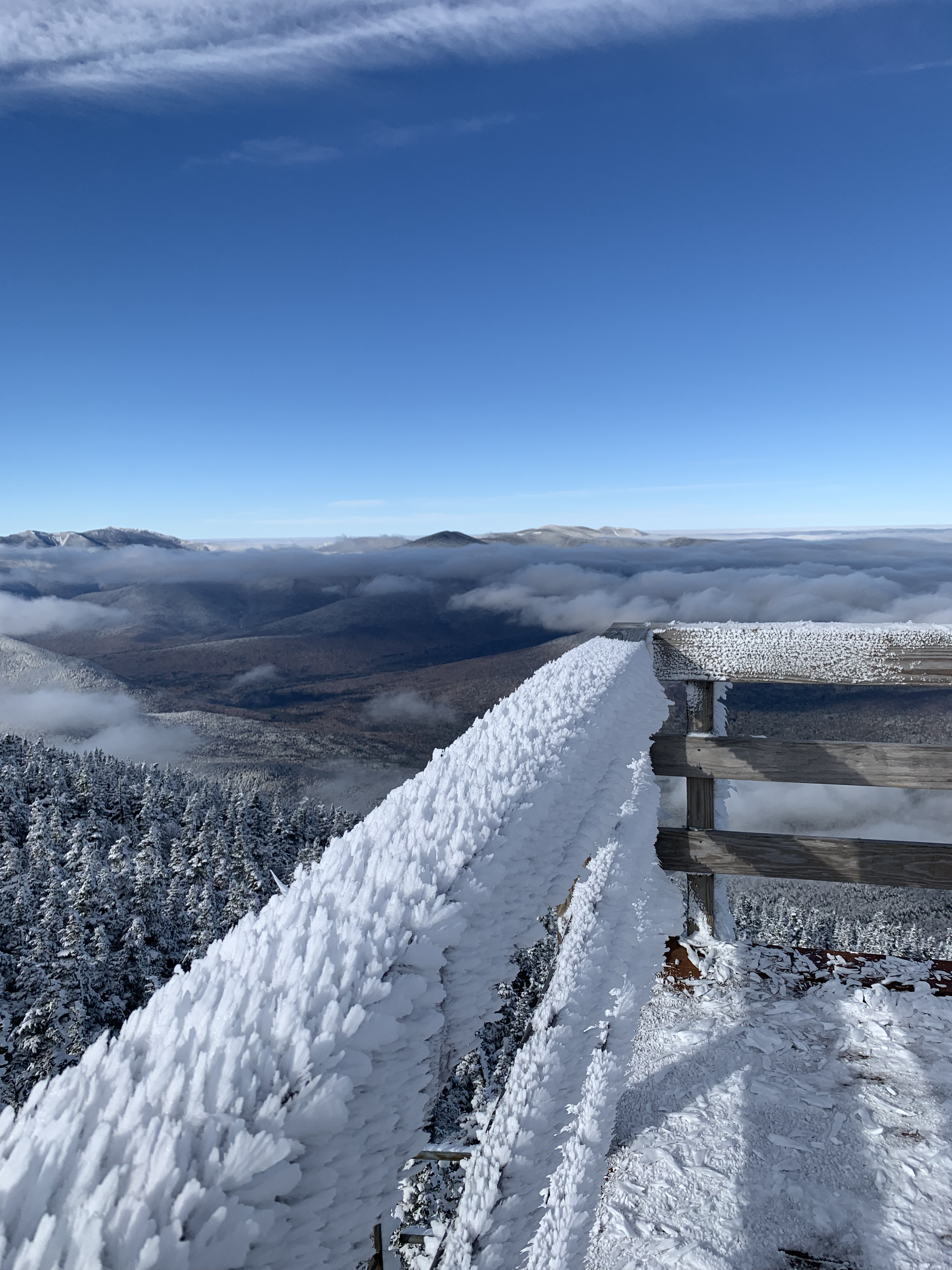
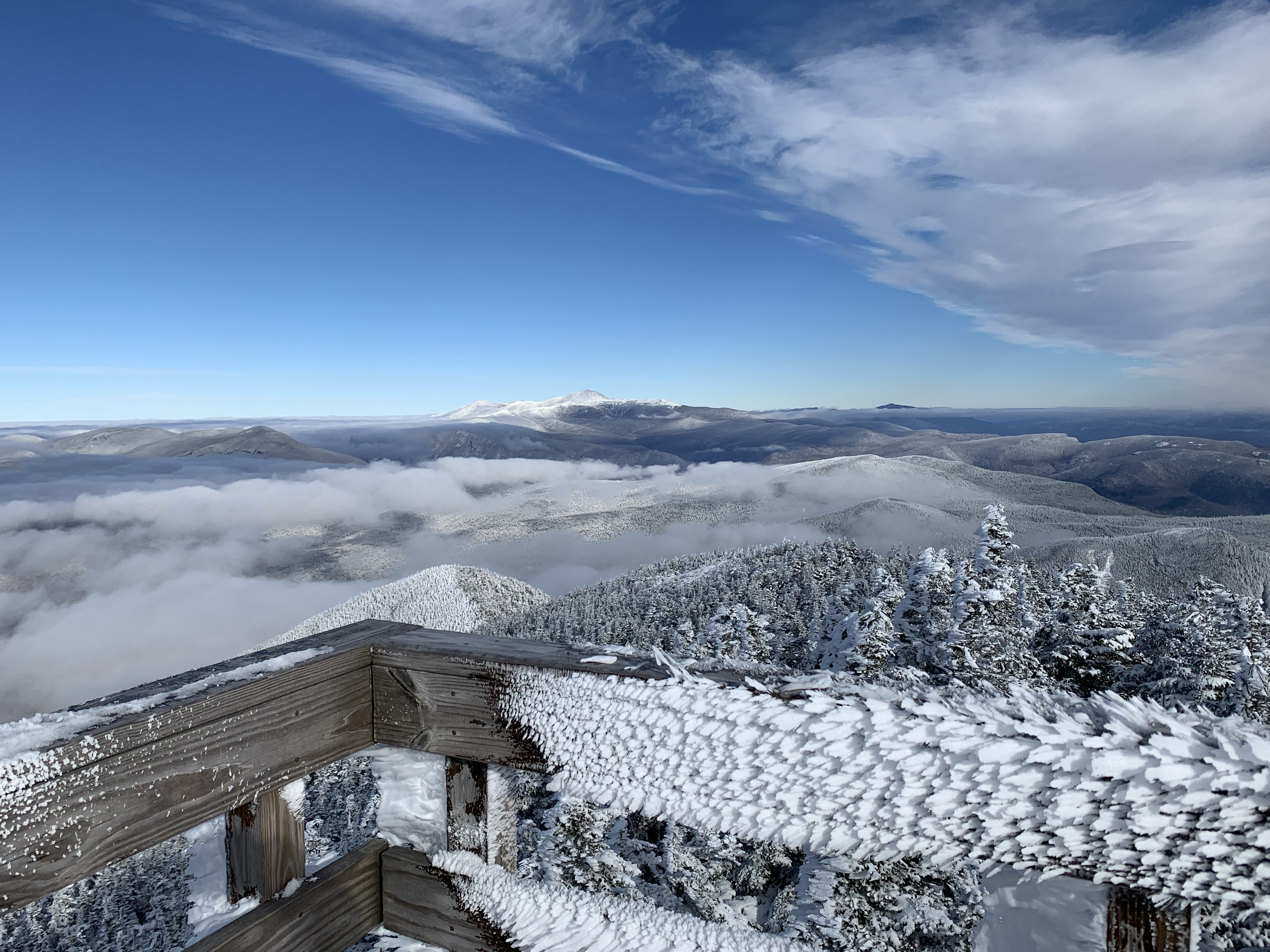
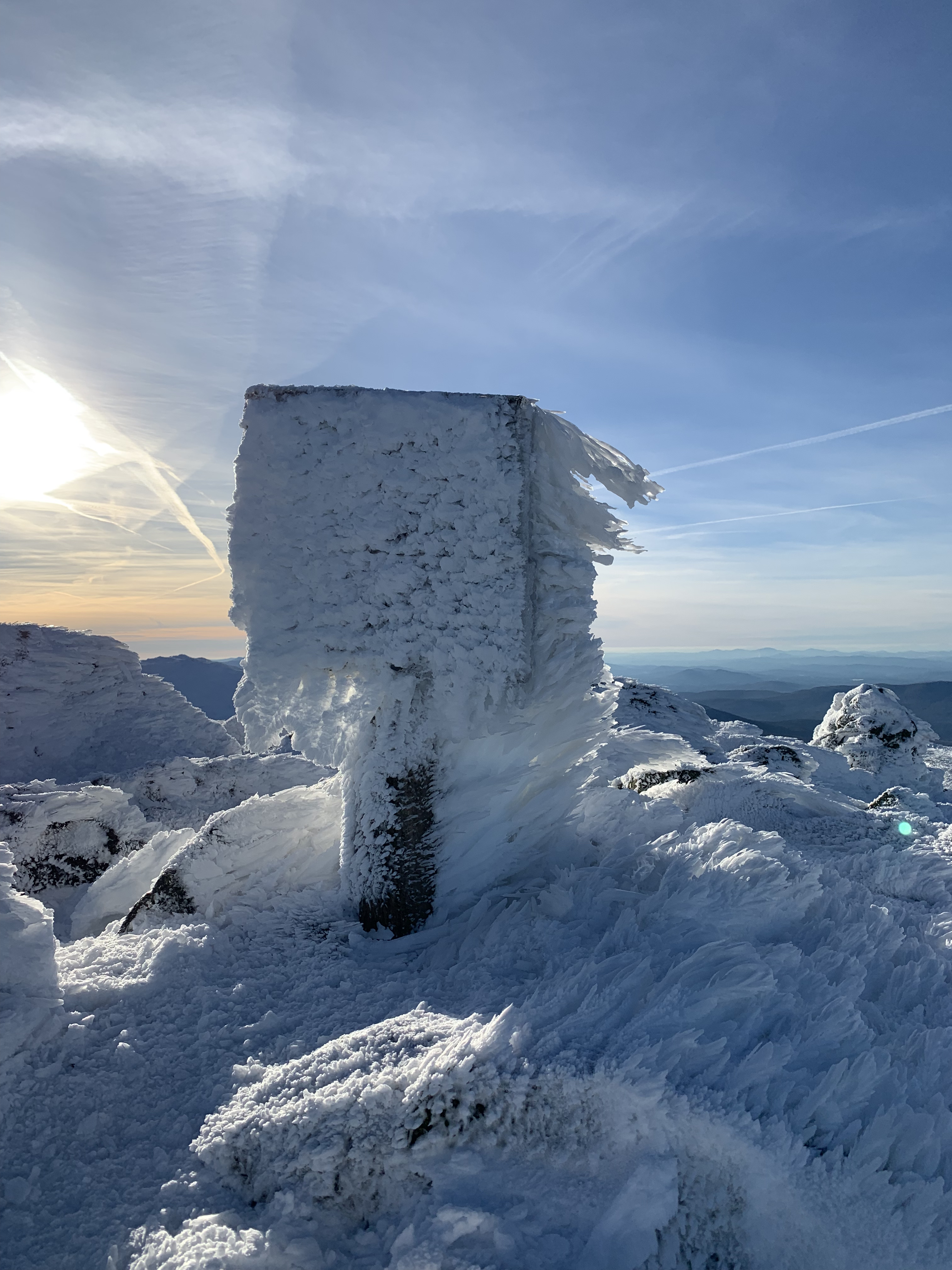
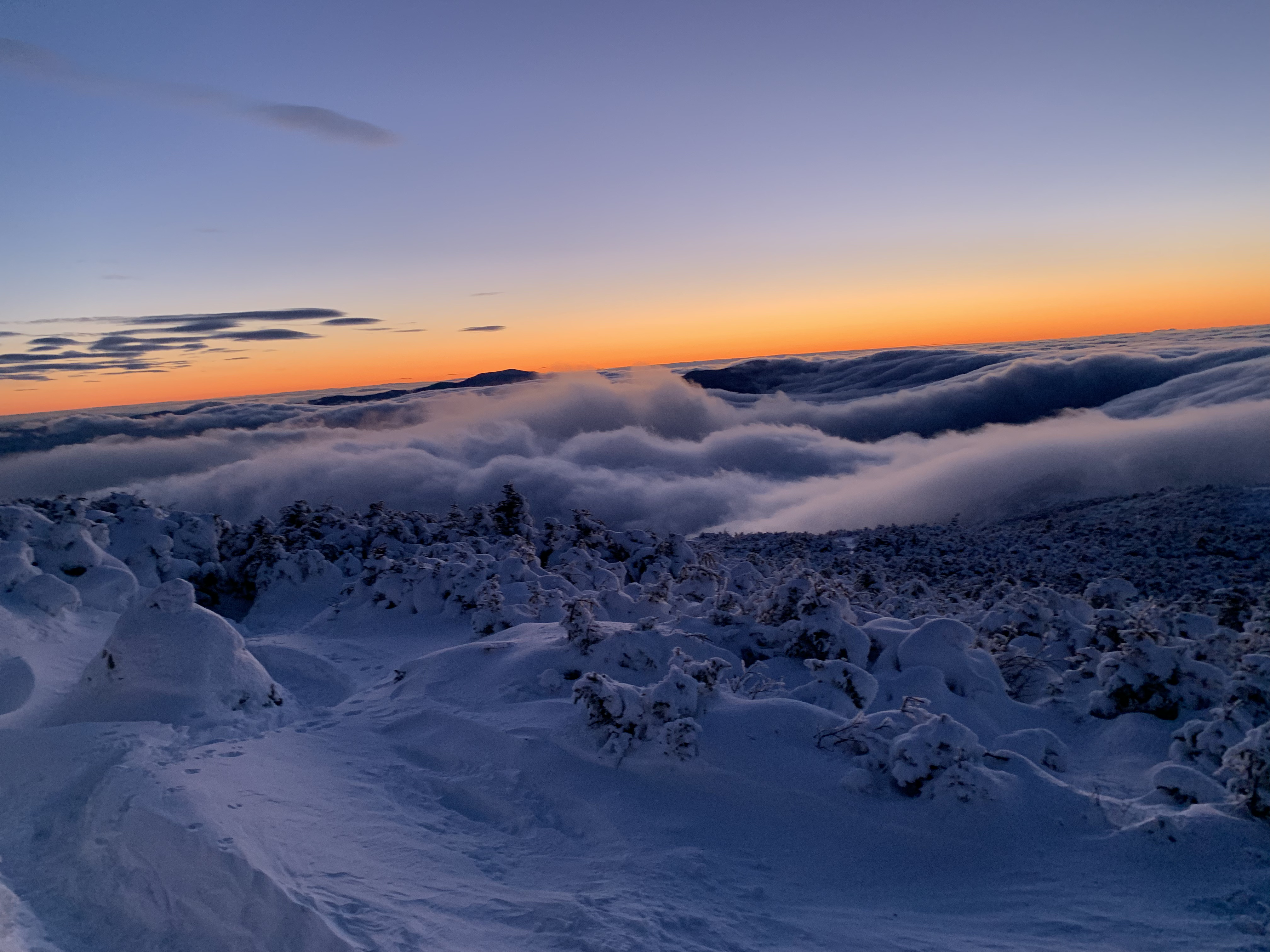
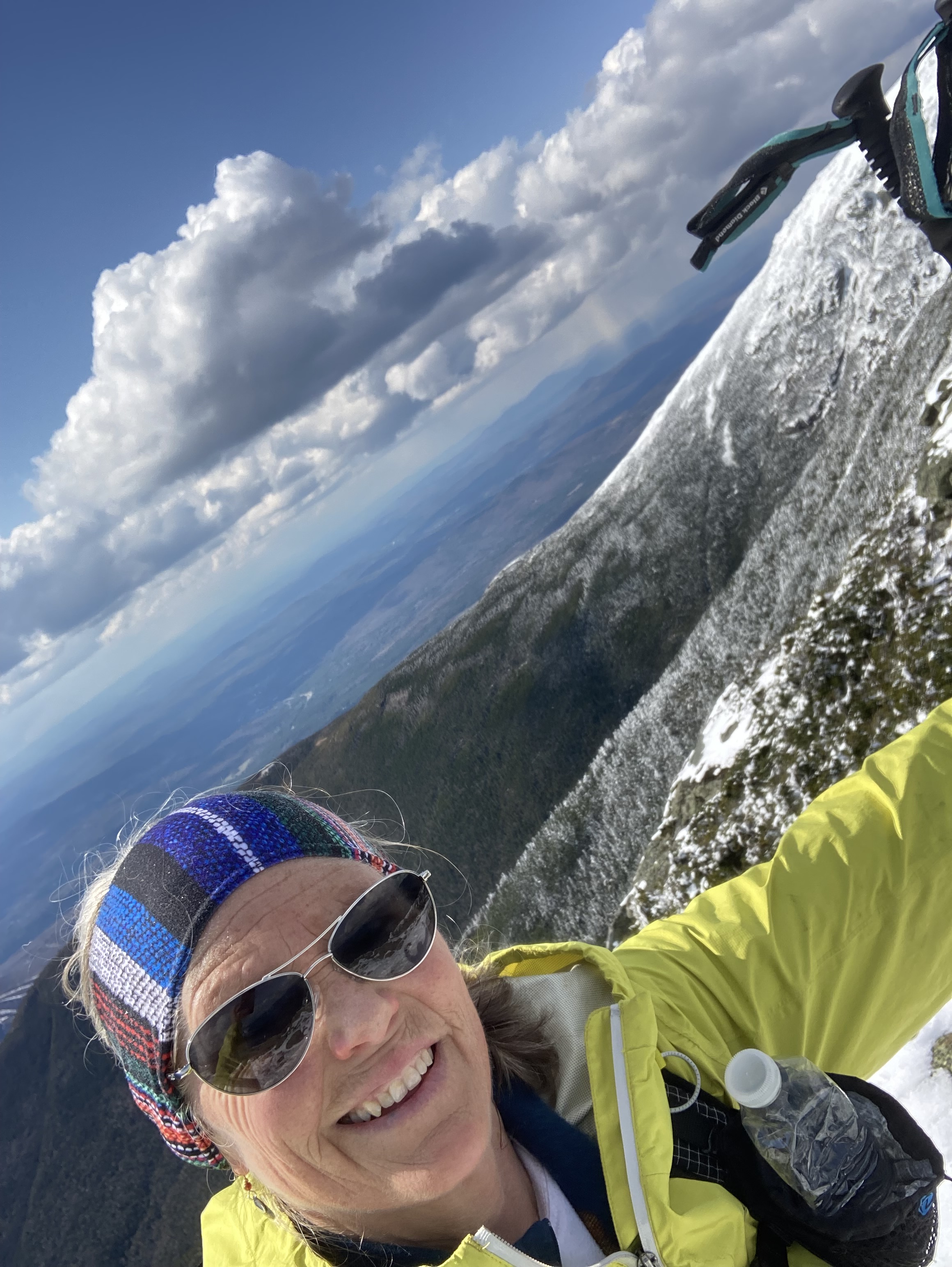
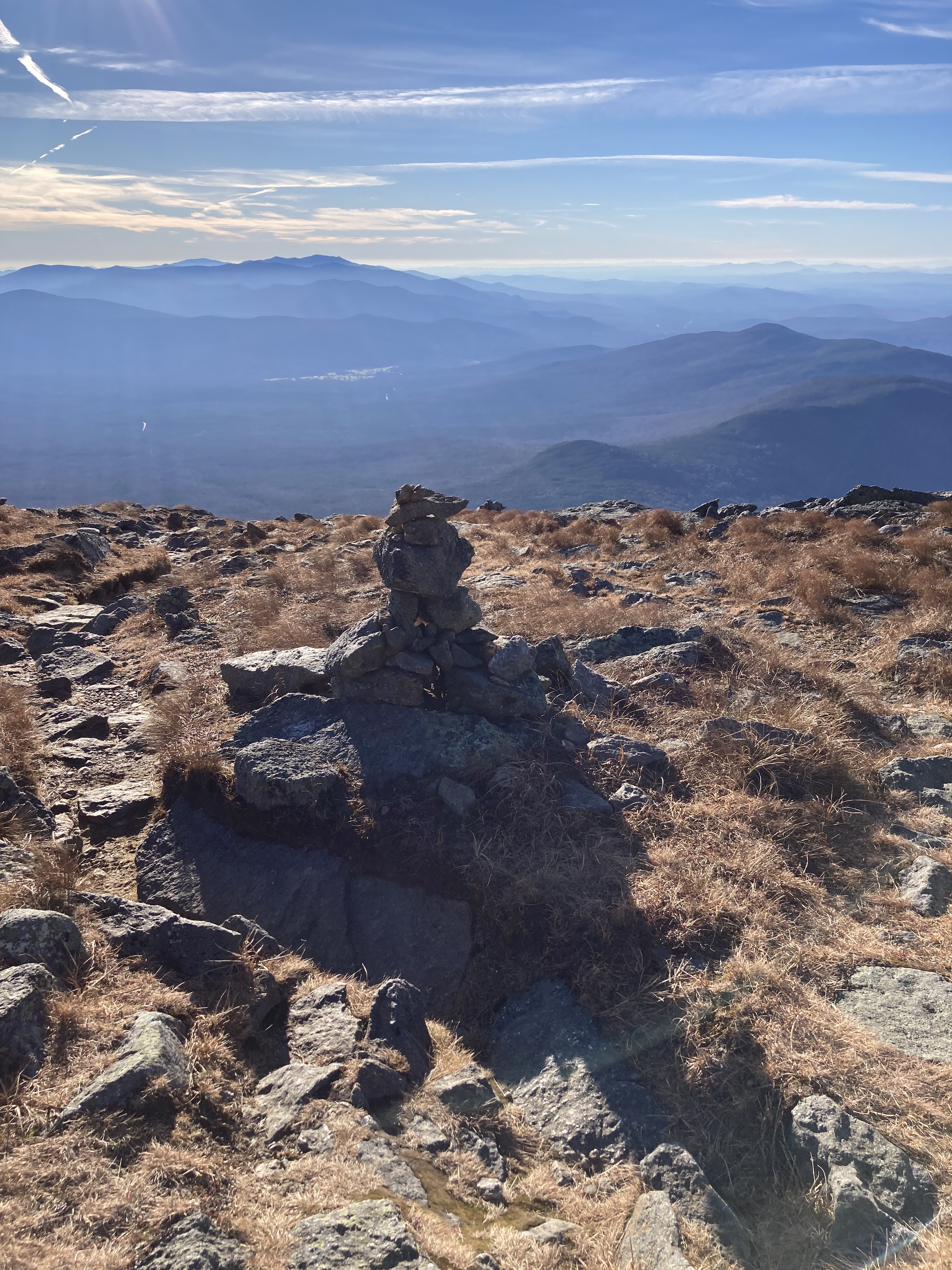
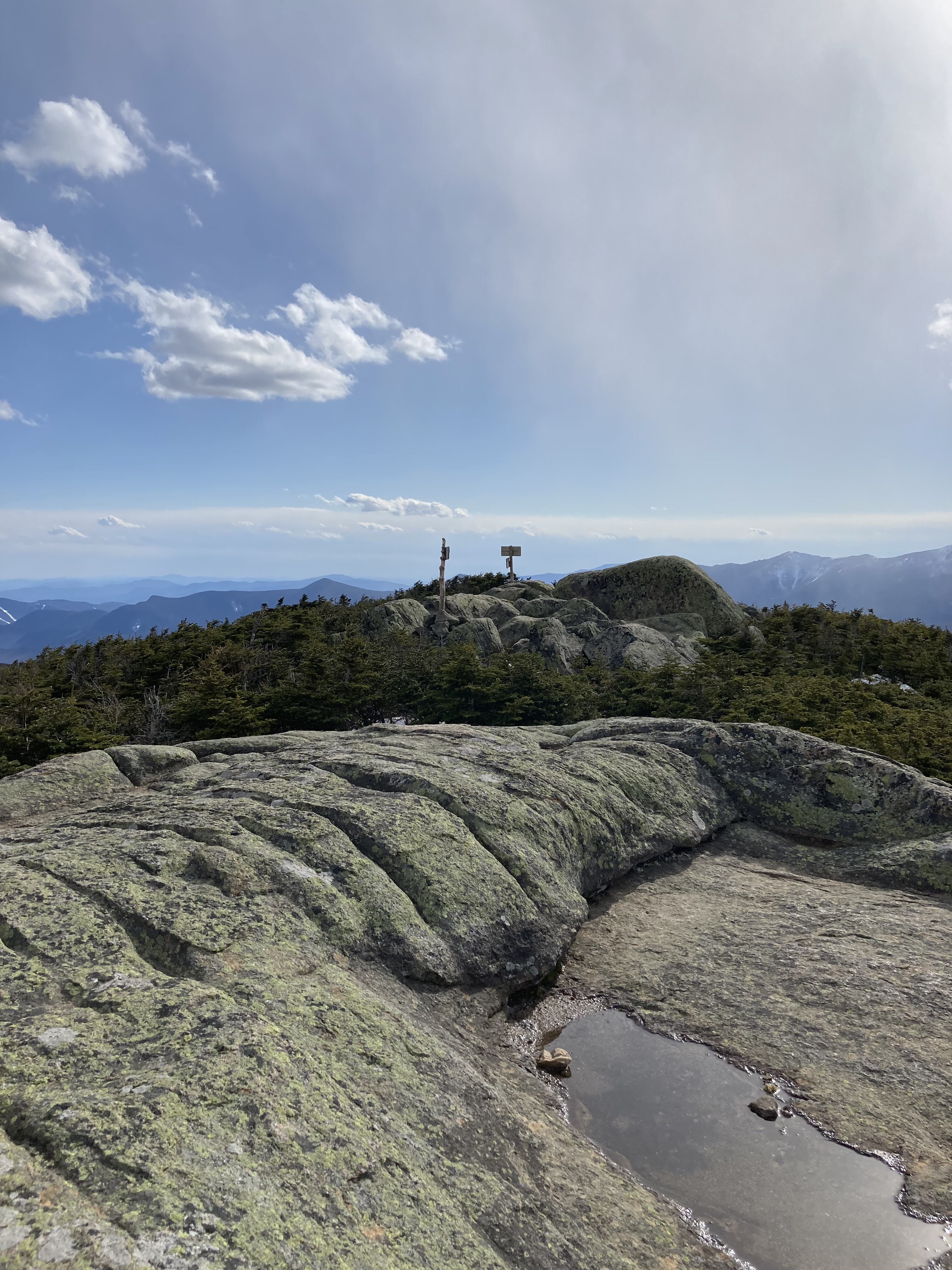
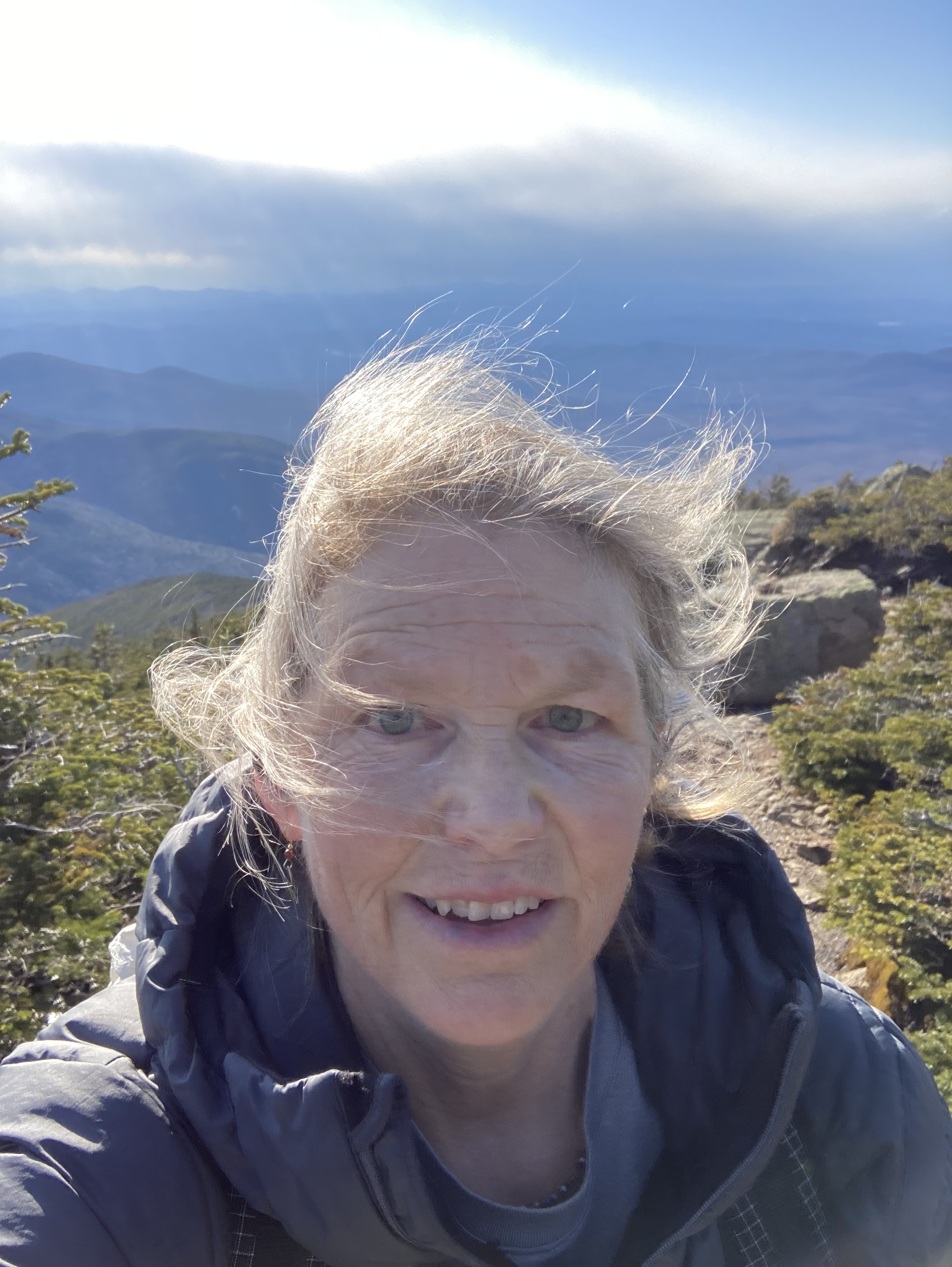
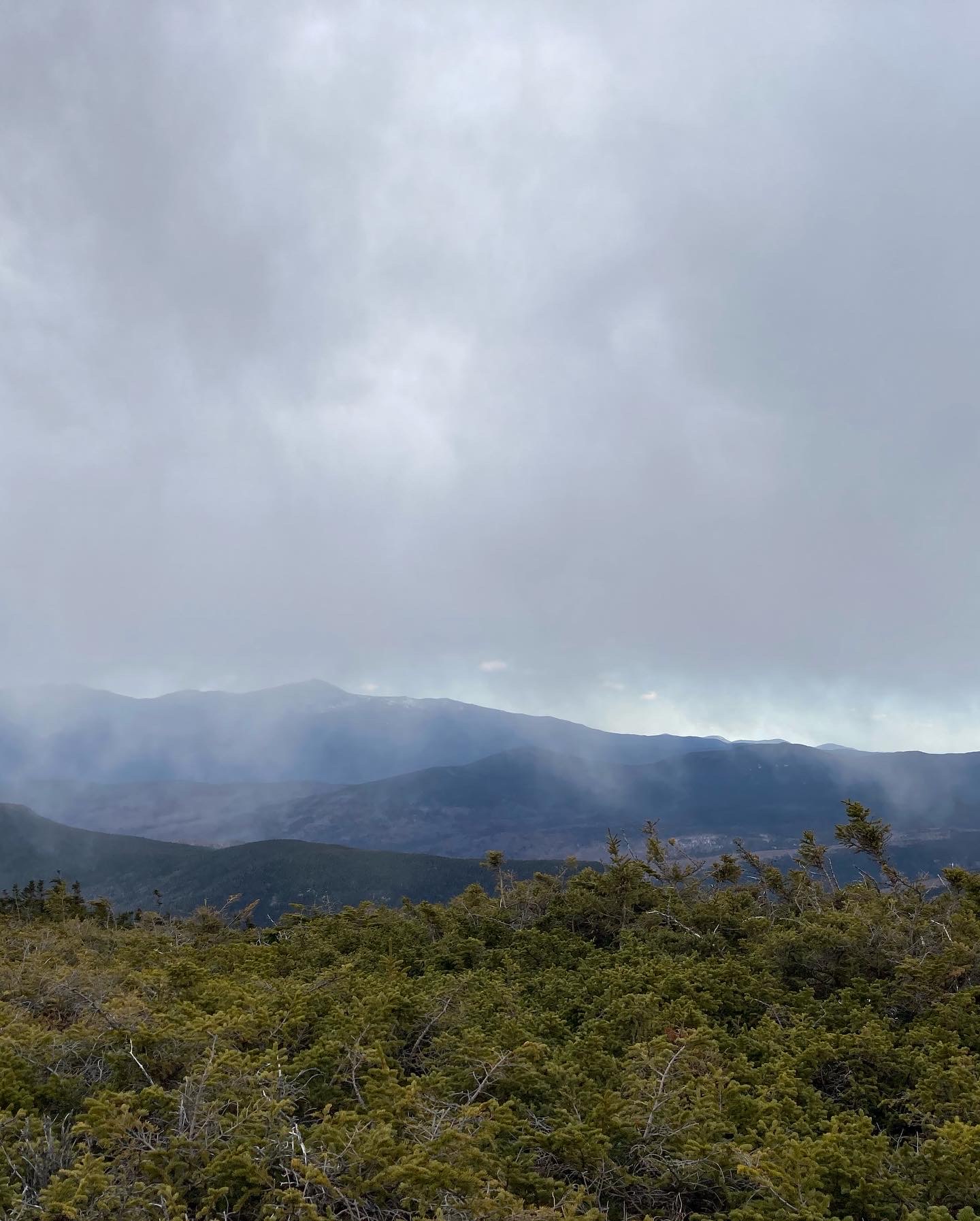
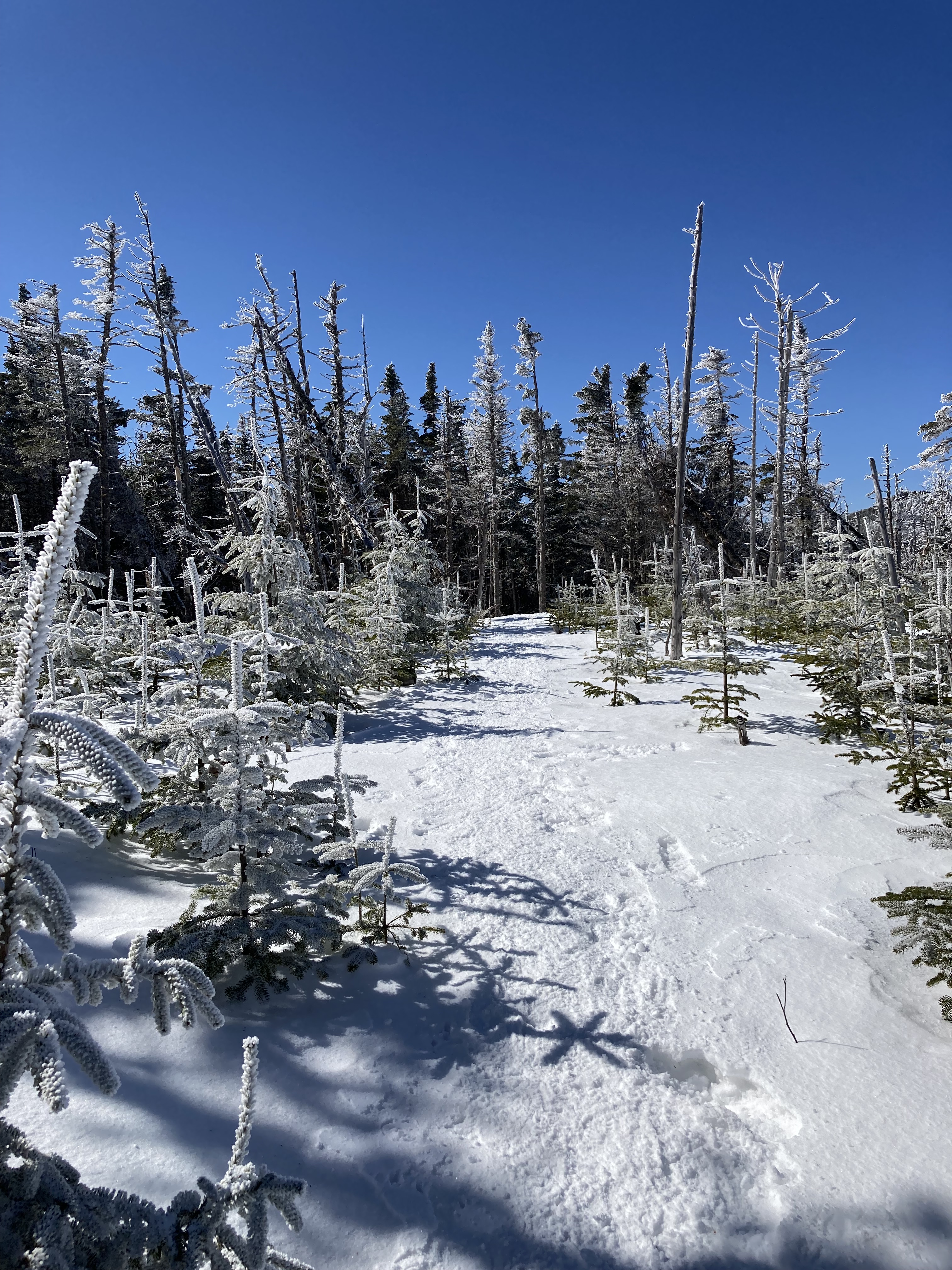
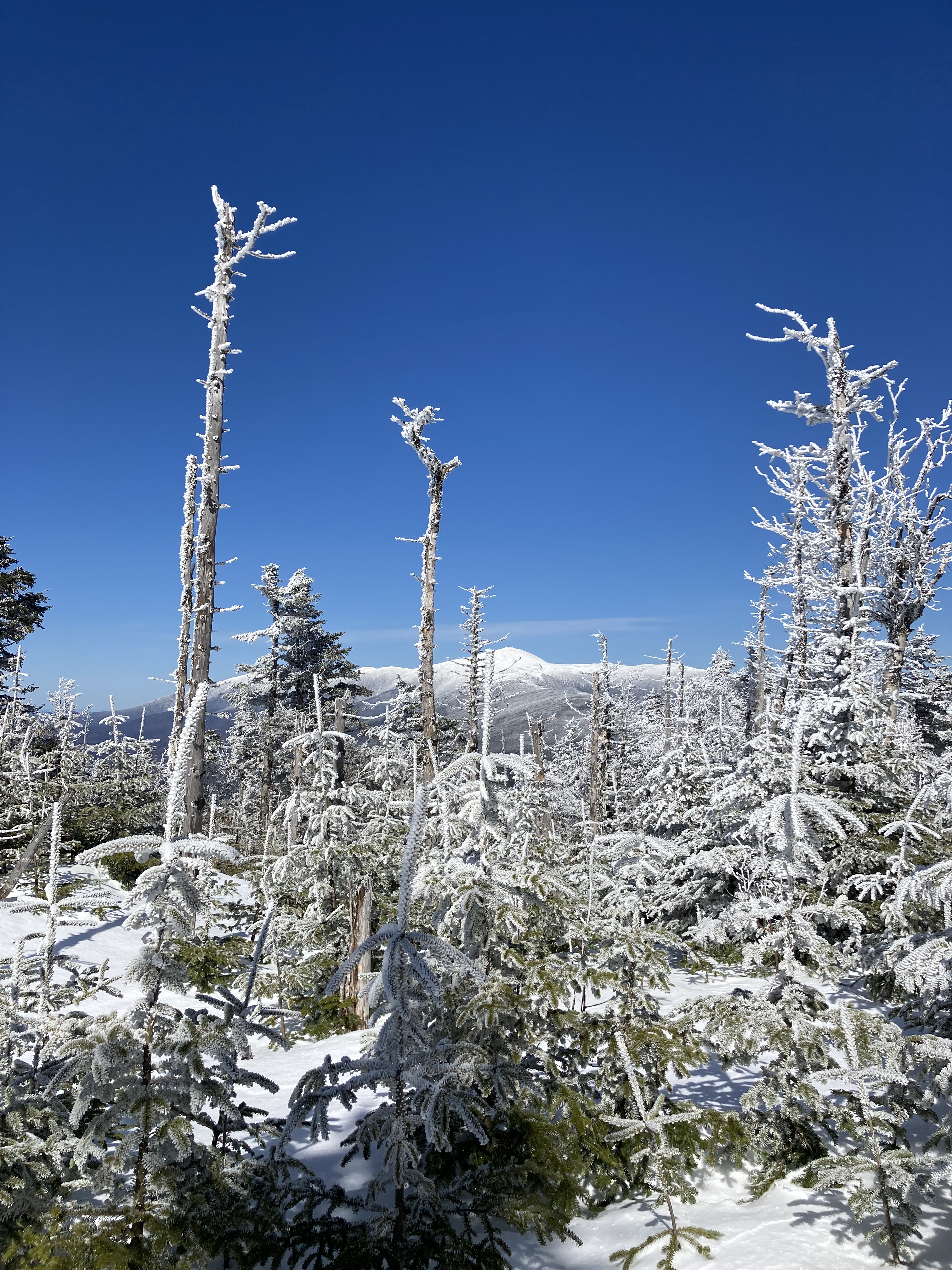
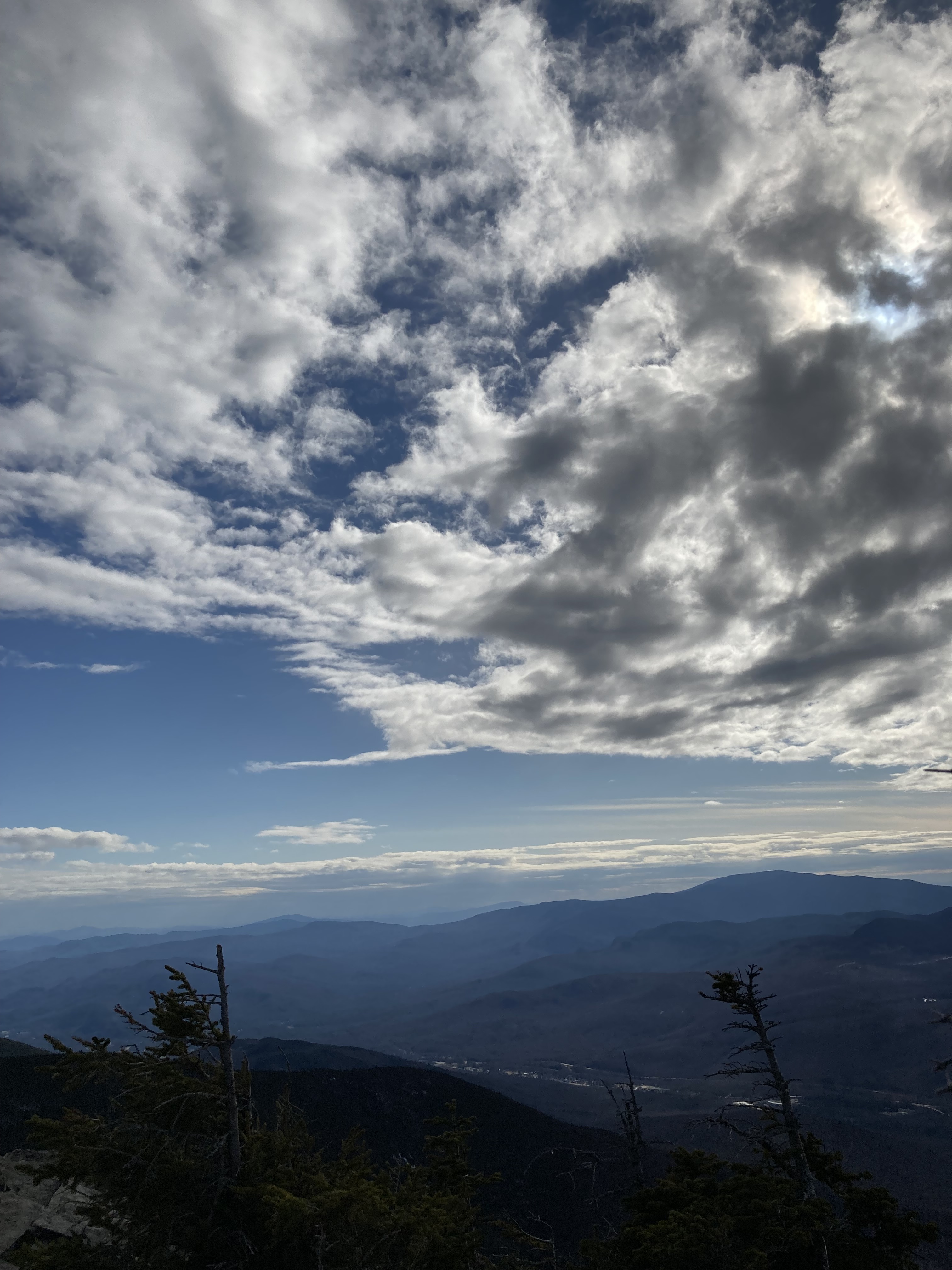
On the first day of the year, I hit 509/576 with Carrigain, a glorious peek into what forever might look like: blue blue sky, cold clear air, clouds above and clouds below.
But I feel myself slowing down.
I look in the mirror and see my mother’s face, gone now 10 long years.
I know, I know, there could be many years left ahead for me. On the cusp of 2024, I welcome every one and all the things that each might bring.
The summits up ahead, though they look far off, are closer perhaps than they appear. I’m thankful there is a now.
Thankful for the faces of my children and grandchildren, and all the wild silly that lives within them.
So much ahead for them.
I wish to be a part of it for as long as I can.
I’m thankful, too, for the gift of tears, for the juxtapositional tug of sadness and joy. I read somewhere recently that a dead world does not suffer; much like love, we must take the possibility of its ache if we ever hope to glean all of its delight.
It feels sometimes that I will never finish The Grid. It pulls me along, one peak at a time, giving me just enough hope for the next one and the next. Sometimes it constrains me, and I wish I could just go where I wanted. I suppose that I could, but I’ve spent a lifetime in competition – against others, against myself, against the forces that seek to derail and destroy – so not-finishing was never an option.
Best to just believe the good report. To embrace the shifting seasons and live like I know I should, like I know that I can, because of the promise that we will never die forever.
Pressing on toward the goal to win the prize for which God has called me heavenward (Phillipians 3:14).
It’s raining again, torrents of water, blazes of light and thunderbooms, making outside an impossibility.
Confined, I close all windows and stalk the floors in a prison of boredom and frustration, thinking about a friend I used to know.
My dear one still inhabits her evanescent frame, but her beautiful mind has fled; she no longer recognizes me.
This past Sunday, I sit sandwiched between her and her husband, a strong tower of a man whose sturdy presence reassures us both that somehow it’s going to be okay.
How?
Memories that once anchored her to me, to others, have slipped from the depths and motored away.
I remember the years she poured into the children of our church, my children, Sunday after Sunday, teaching the littles to love Jesus and one another. She was a brilliant light who attracted their innocent shiny souls to herself, like a cluster of stars shimmering and glowing in a galaxy of joy.
There were paper arks and popsicle stick crosses, glue and googly-eyed lambs, singing and laughing and prayer.
Though she sits beside me still, I miss the her she used to be, and I’m not sure what to do with this new layer of sad.
I wonder about my own mind, whether it might one day also go, and what that might mean, as there is no strong tower next to me. My kids, of course, have promised that they will honor my only request, should circumstance require, of a room with a view of anything besides another wall. A place where they don’t pretend decaf is coffee.
My friend suspected what what coming for her; her own mother slowly faded into dementia, and the prayers we prayed, that she would have a different fate, have not been answered in the way we had hoped.
Both of my own parents had a similar end.
It’s too soon to be afraid.
We must not lose heart.
If this Jesus is real, the One who tells us over and over and over again fear not, little flock; for it is your Father’s good pleasure to give you the kingdom, then I know that one day, some day, I will sit with her once again, surrounded by the children she loved so well, and she will be wholly, beautifully, joyfully there.
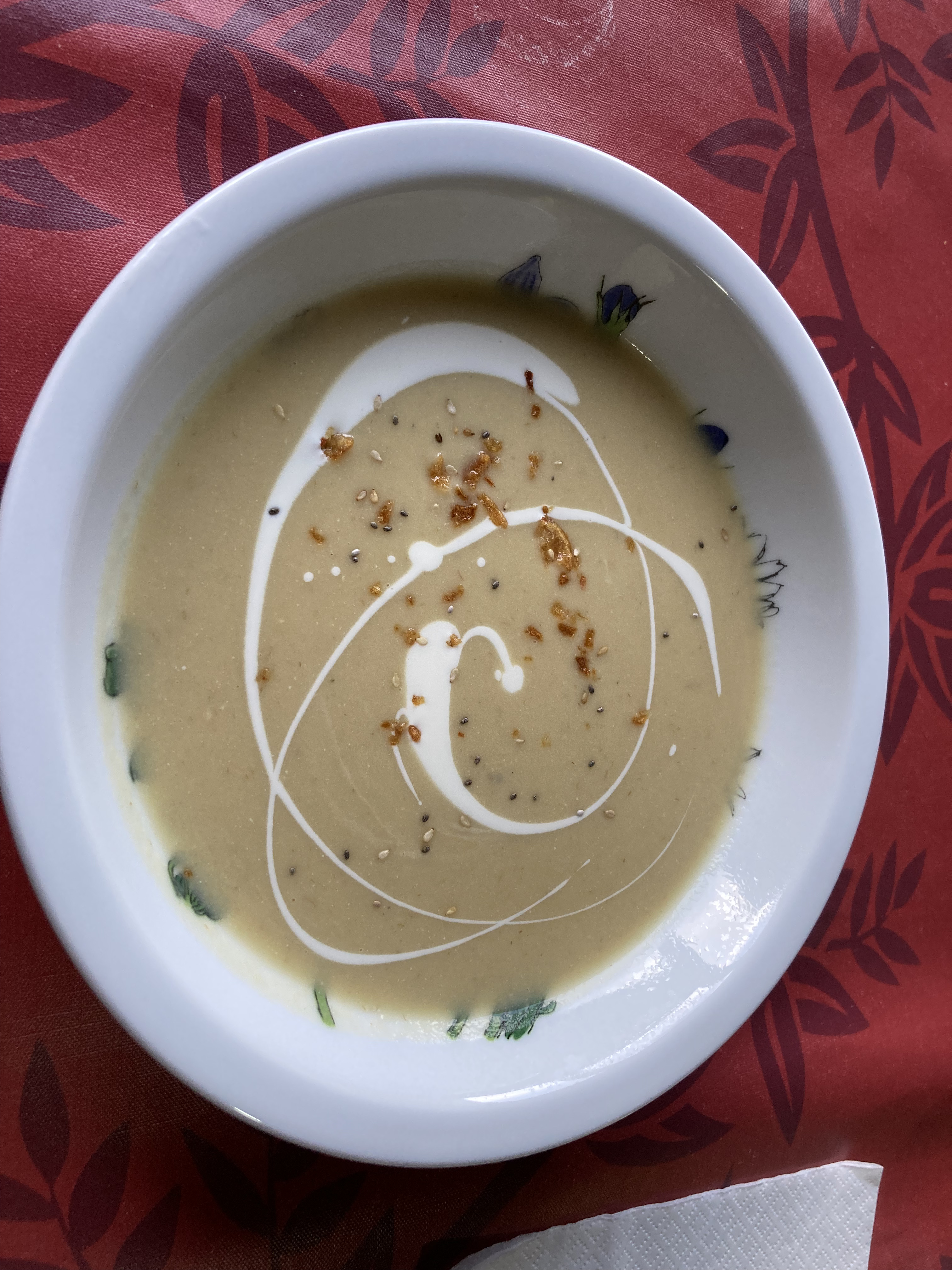
I’ve been back from the Camino de Santiago for a few weeks now, and although I re-familiarizing myself with my own kitchen, I am unable to replicate the feeling of sitting down after a long day’s walk to bowls of savory soup, baskets of bread, plates of rice and seafood, pollo and patatas, a bottle of wine and a glass.
The first time this happened, as I sat at a table alone, I wondered if there had been some mistake – did the waitress think I was expecting someone else?
So. Much. Food.
But I soon came to appreciate the rejuvenative nature of these hearty meals for the next day’s miles.
I’m still processing all of the things-I-miss from my time in Spain.
There are actually whole books written about the post-Camino experience. Author Karin Kaiser writes in After the Camino: Your Pocket Guide to Integrating the Camino de Santiago into Your Daily Life, “The Camino isn’t something you do to check off a bucket list and return to your life as if nothing happened. Something did happen. The person who started the Camino is no longer the same person who finished it.”
Given that this Camino, my first, had been an unexpected gift, it was not unusual that when I arrived in Santiago, I did not, like so many before me, want it to end.
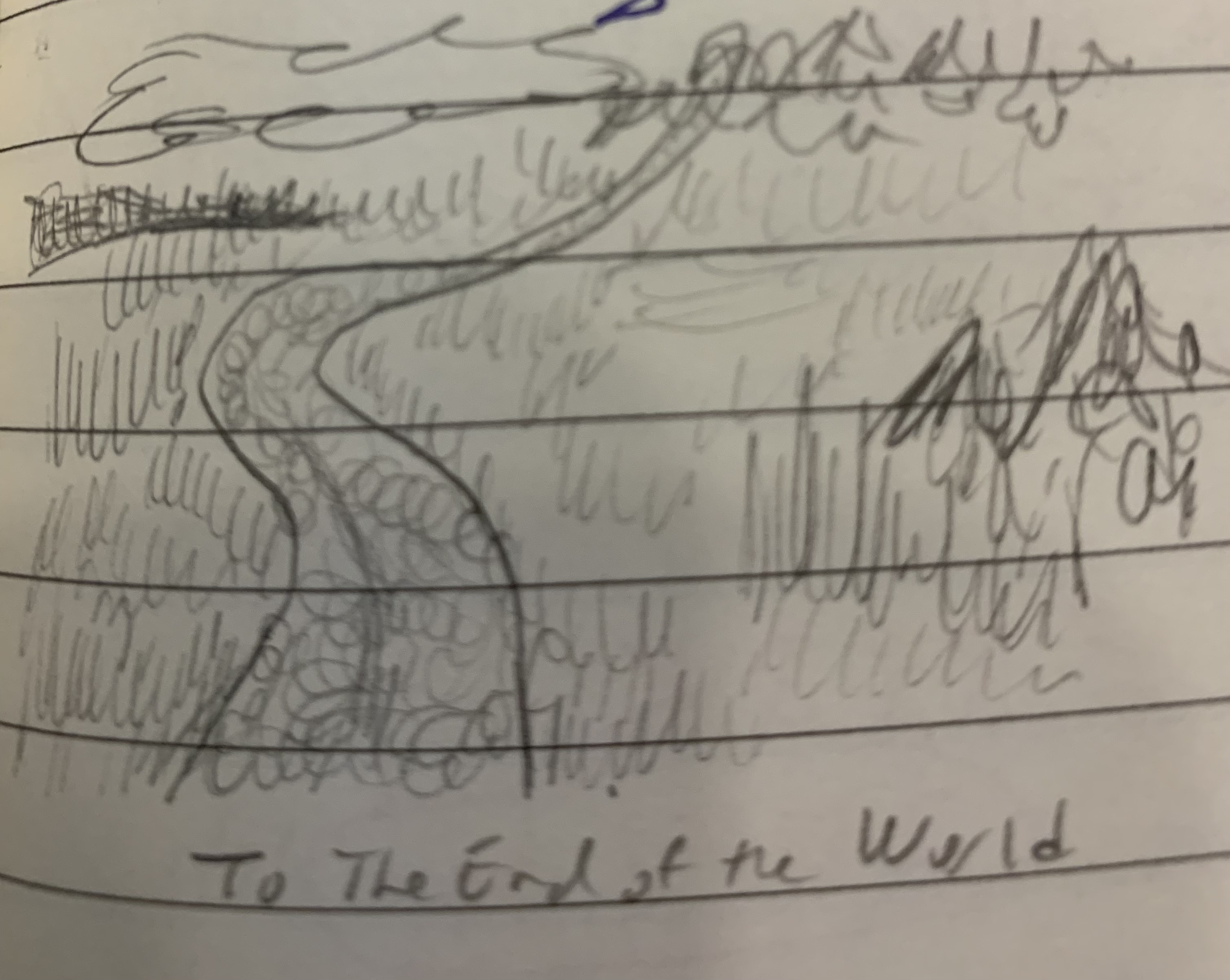
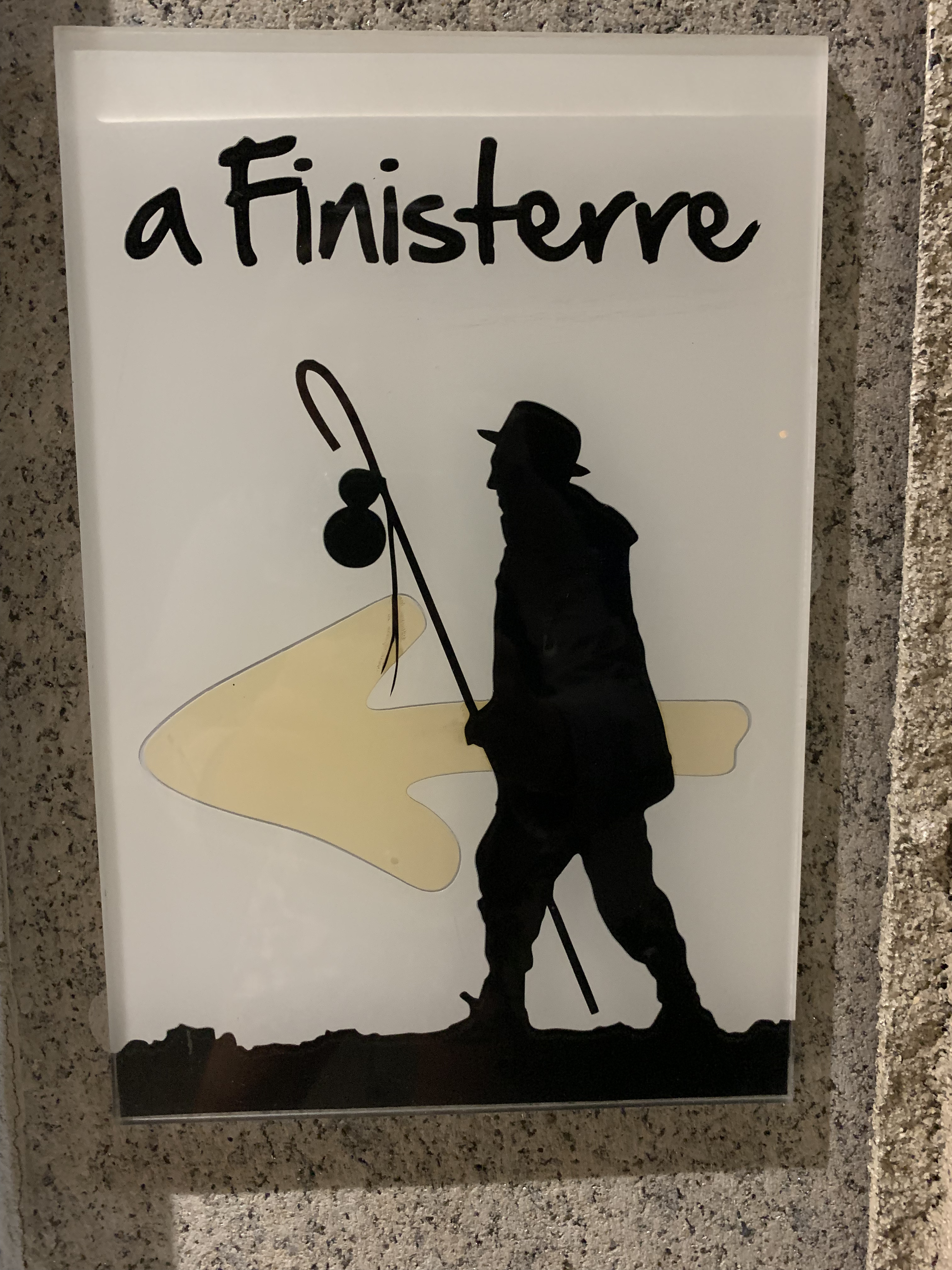
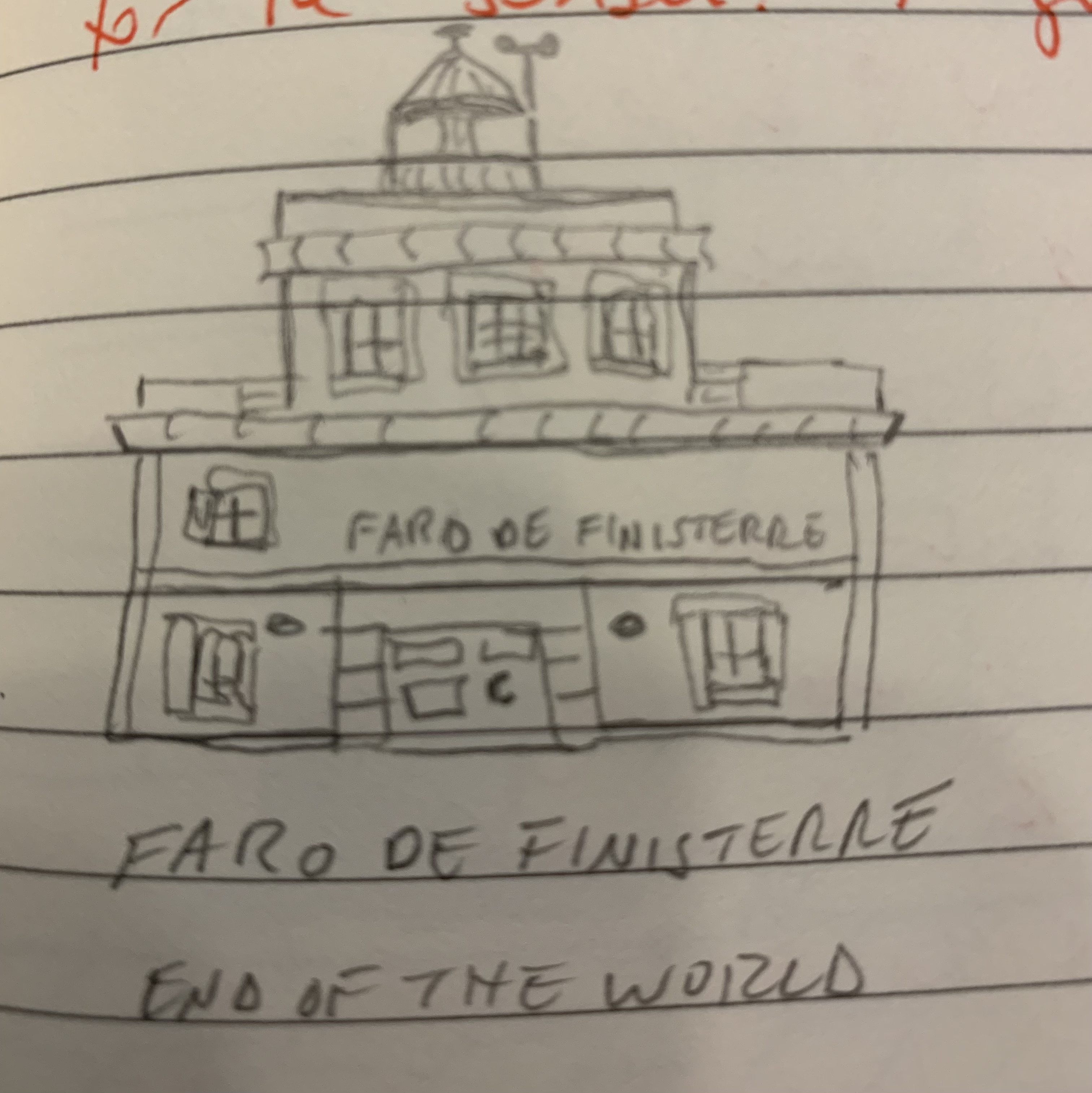
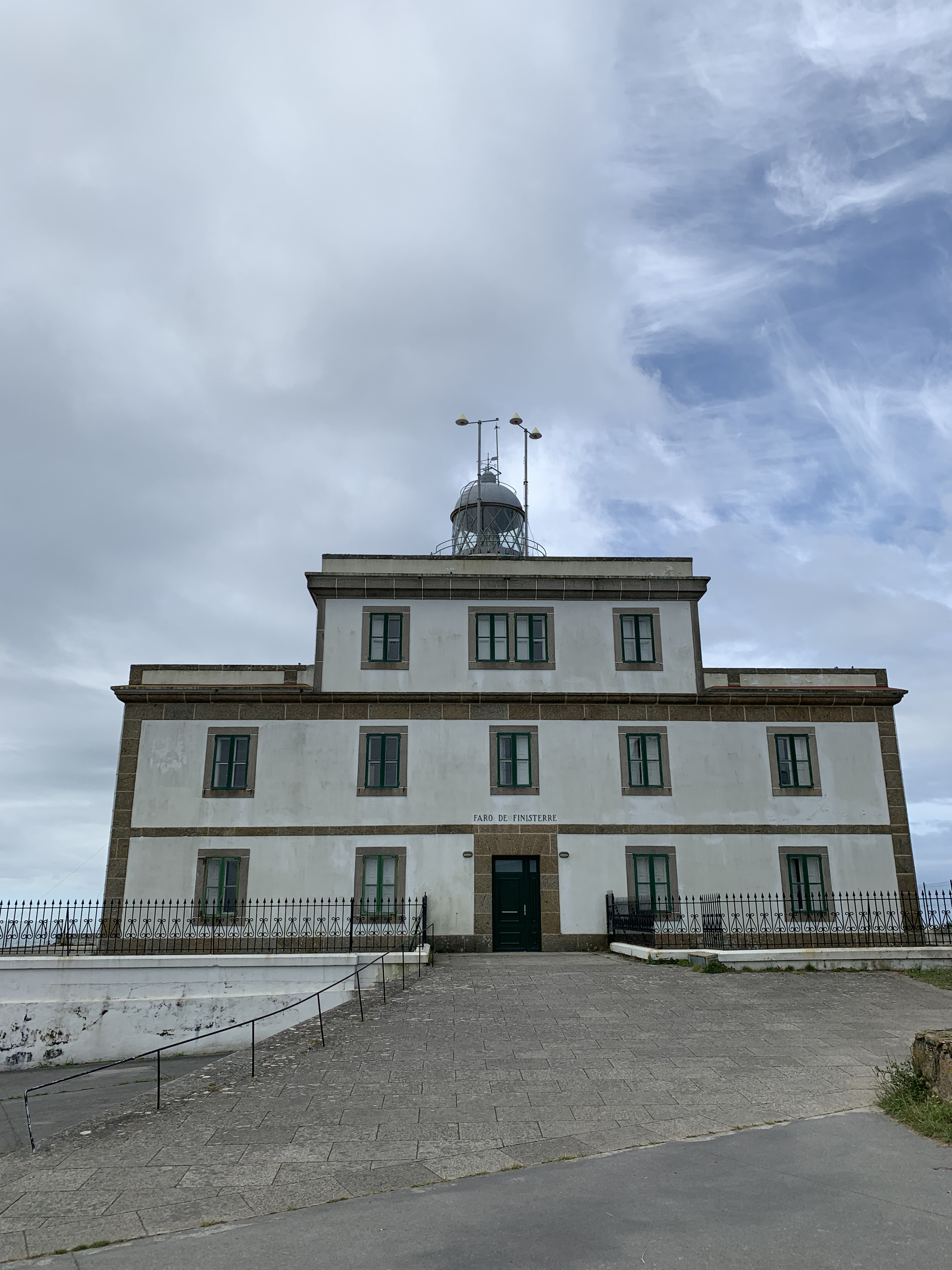
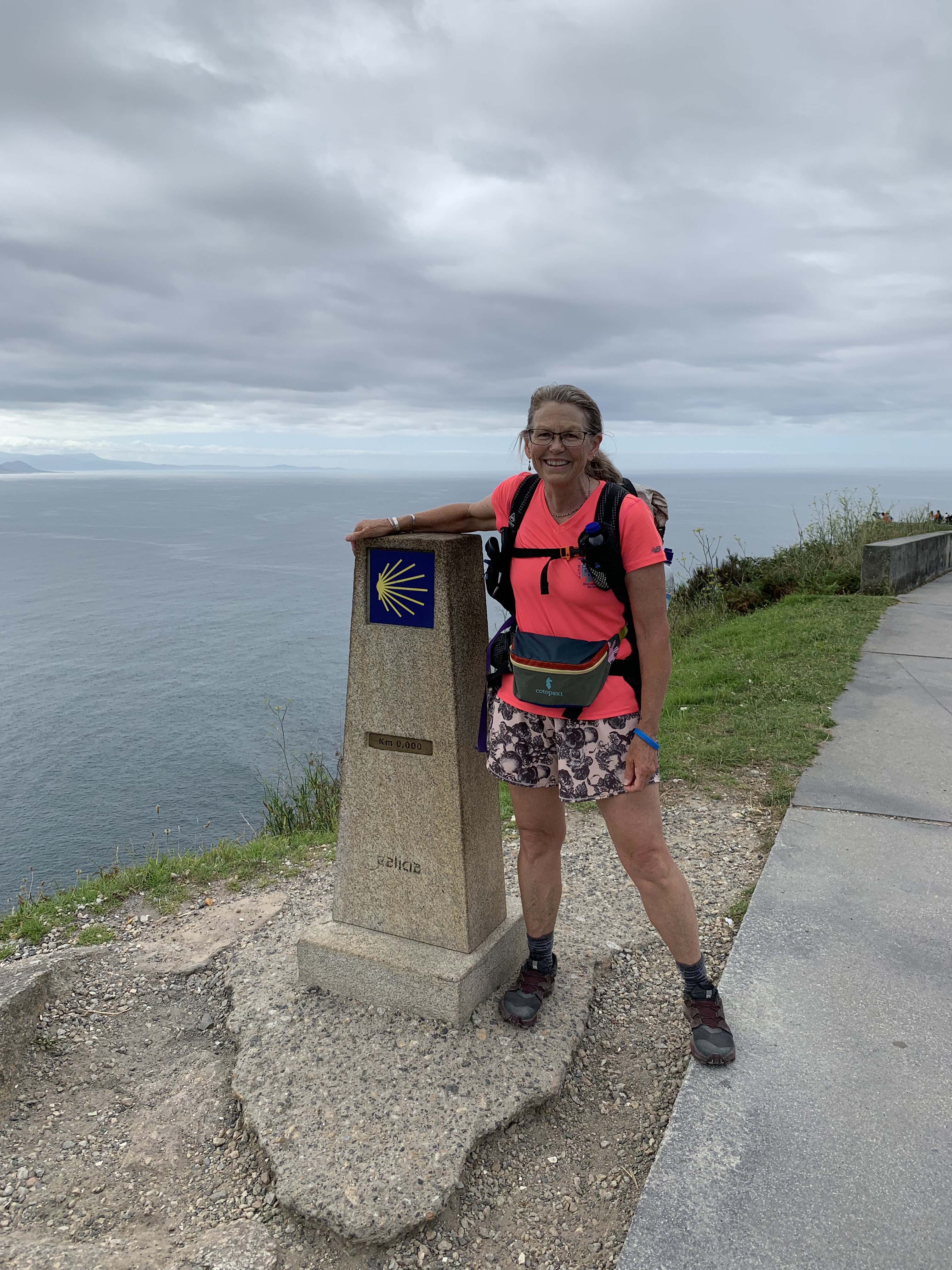
Luckily, many pilgrims choose to head to the coast after reaching Santiago, to Finisterre, which translates to “The End of the World.”
So early morning, on the day after I arrived in Santiago, I headed back out to cross the Cathedral plaza and walk the three days to the coast.
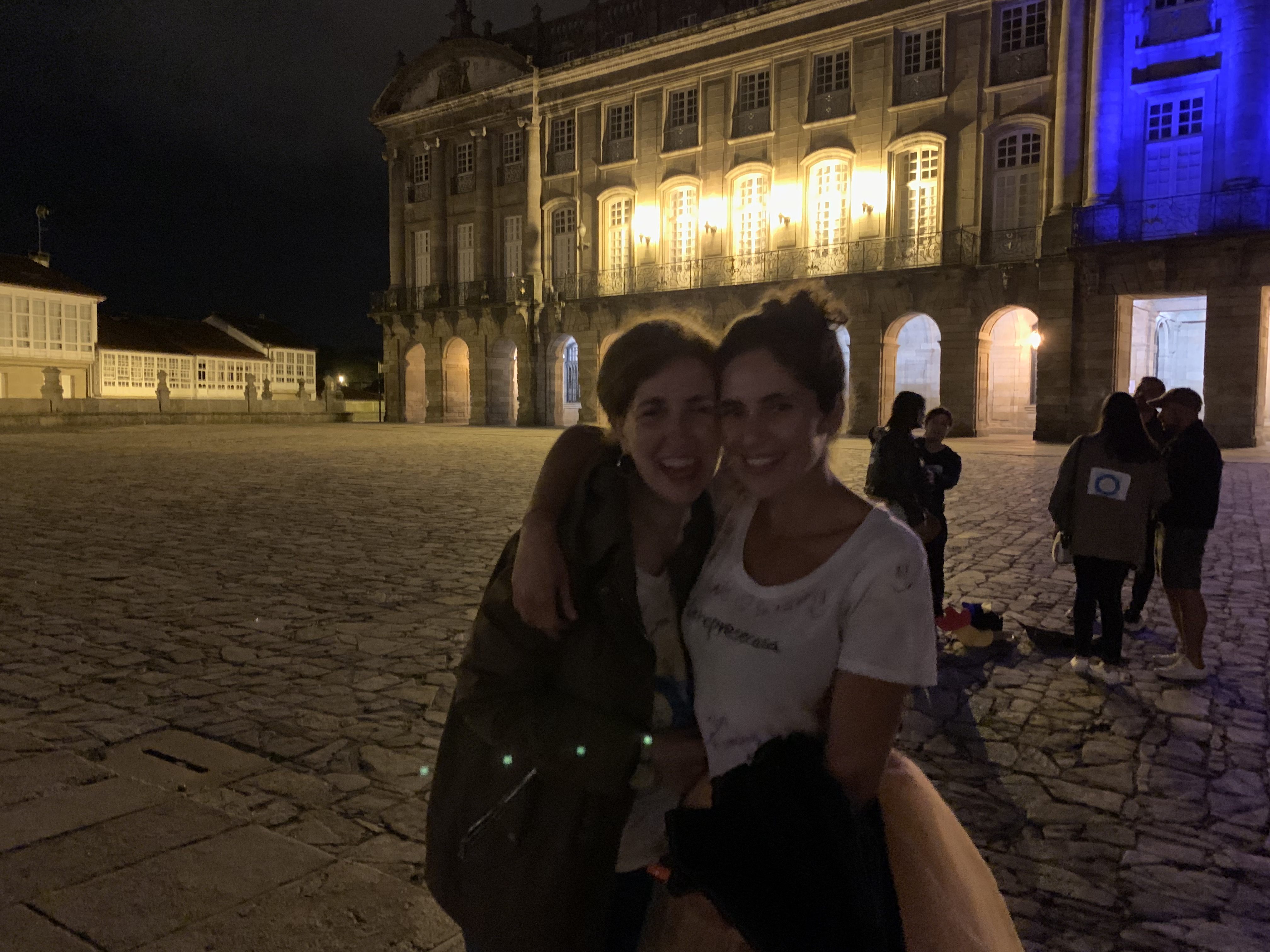
It was lovely to have the plaza almost all to myself after the chaos of the day before. I joined a party still in progress as bridesmaids celebrated with the soon-to-be-bride; invited to sign her shirt, we laughed together as she hugged her momma in joy.
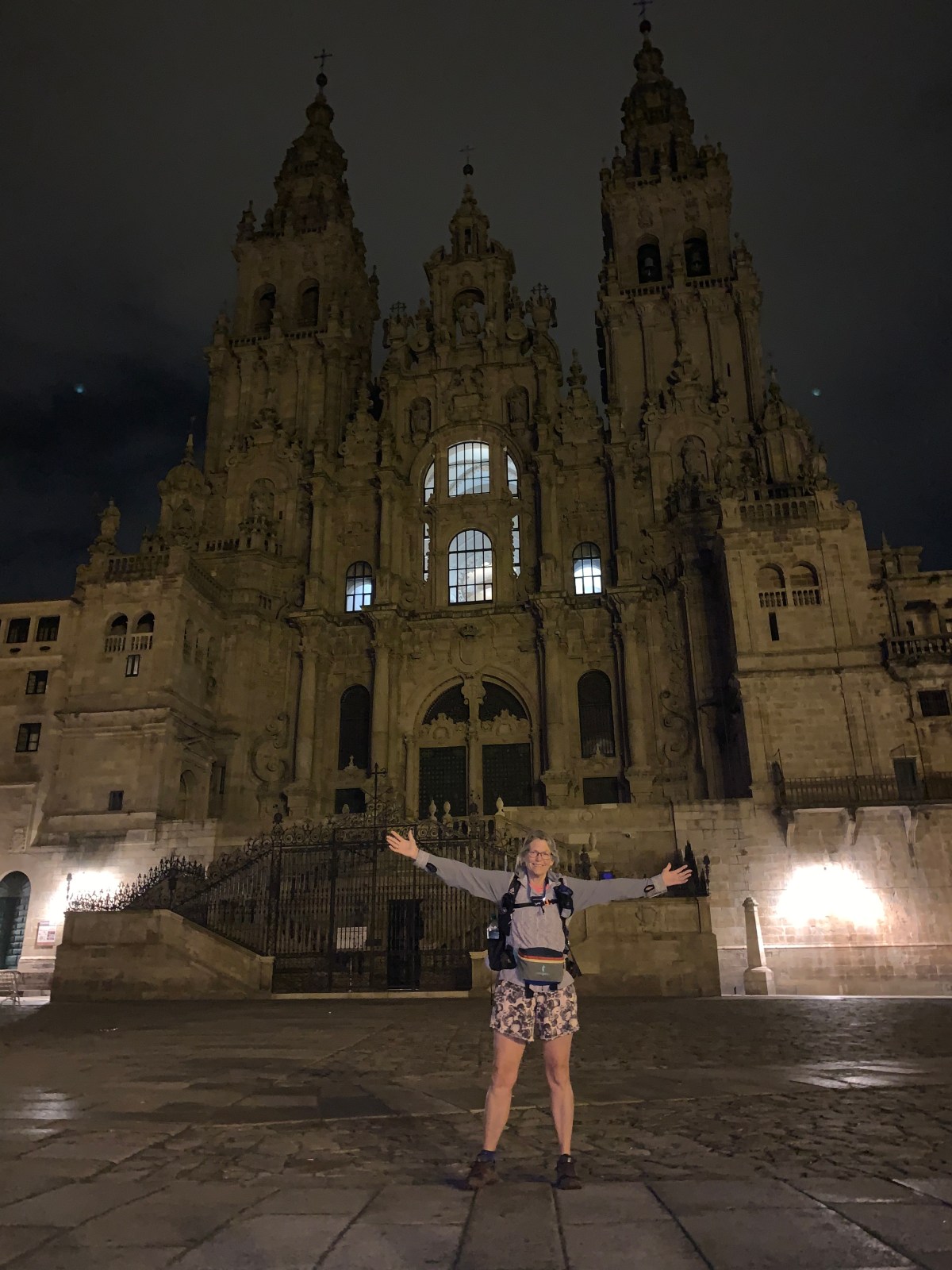
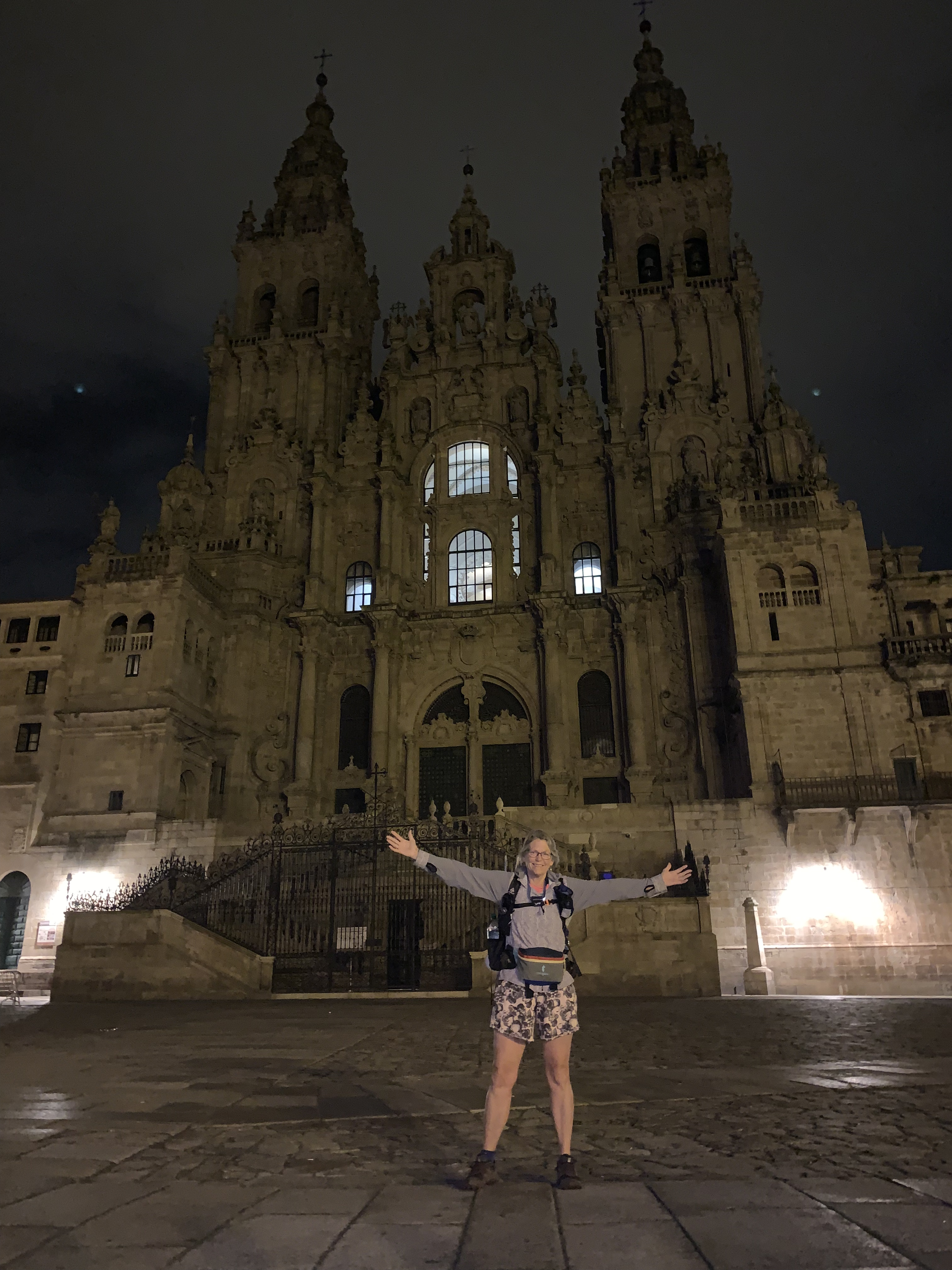
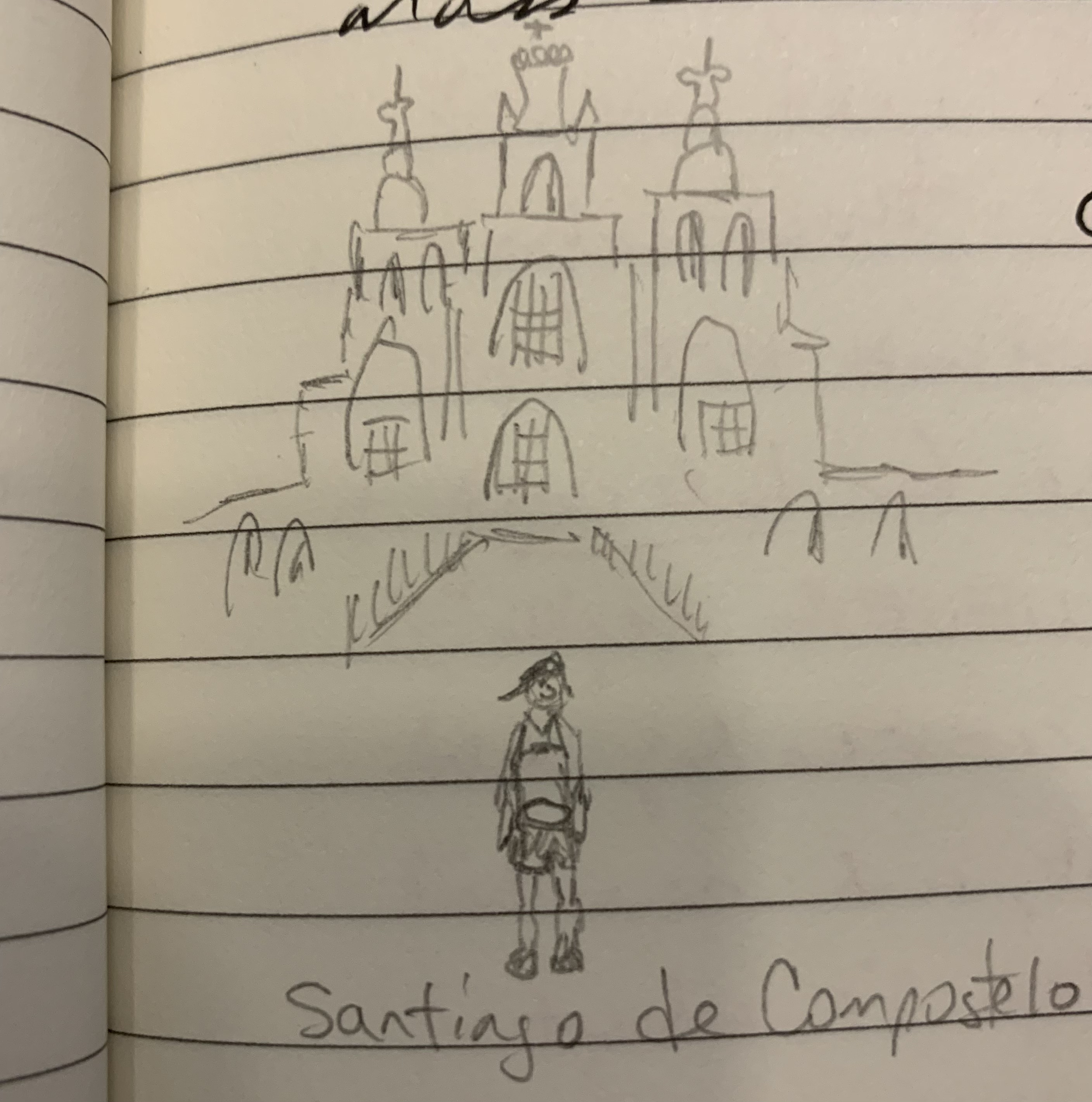
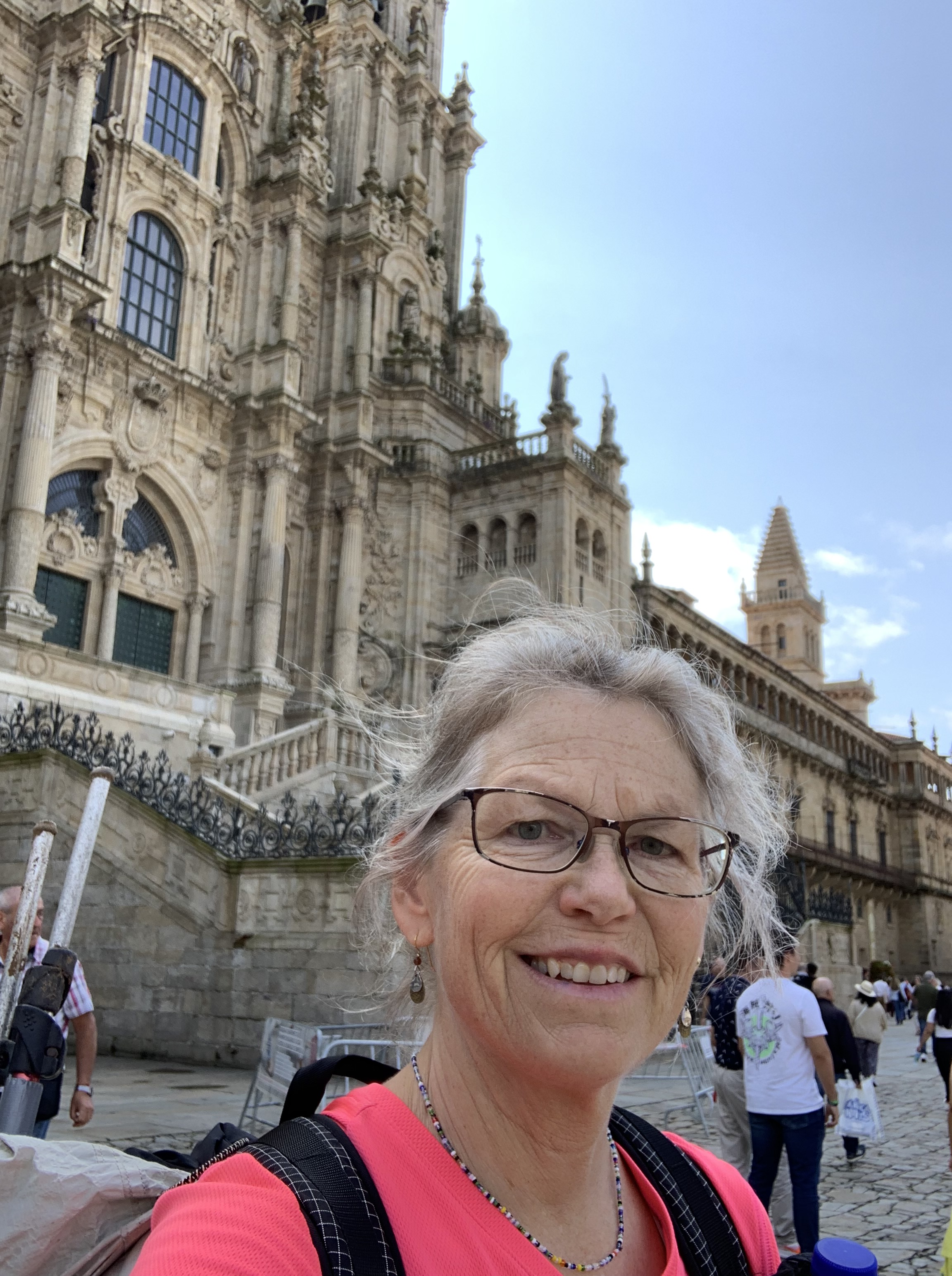
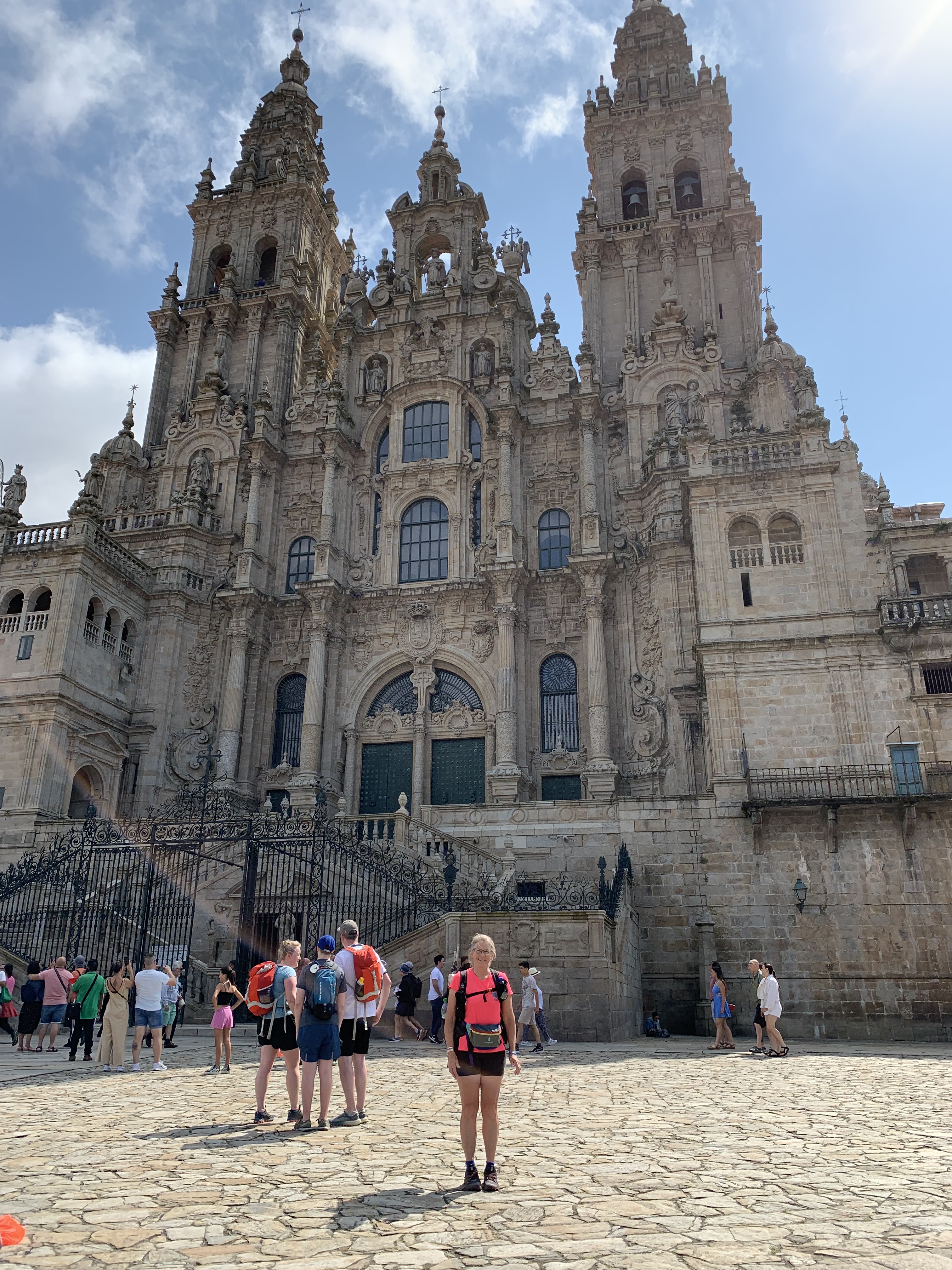
They insisted on taking my picture in front of the Cathedral, and their energy carried me the rest of the way out of town.
One thing I wanted to do before I left Spain was swim in the ocean; having lived much of my life close to the Atlantic, it seemed fit to try to find a place where, if I looked out across the swells, I could imagine seeing home.
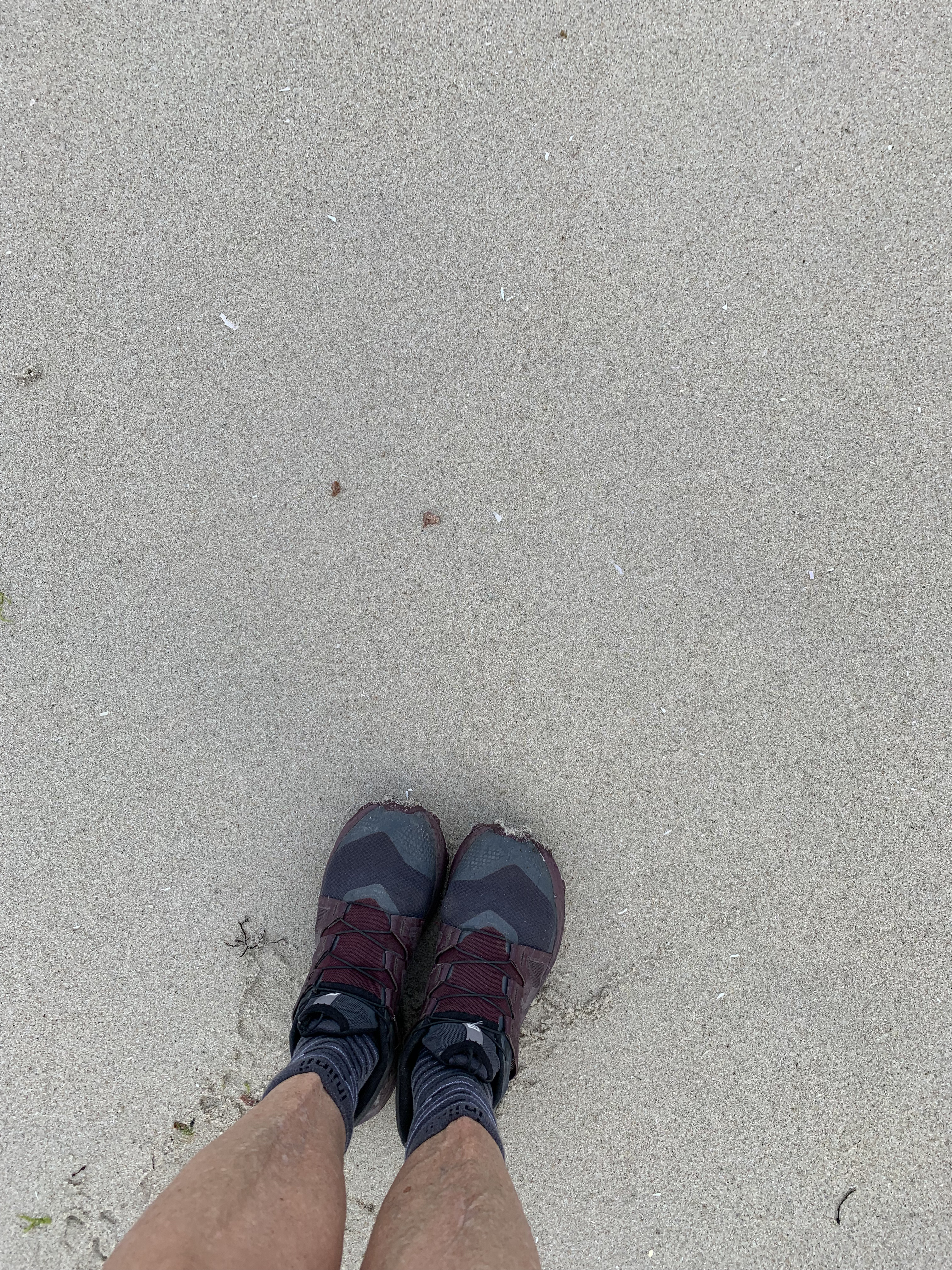
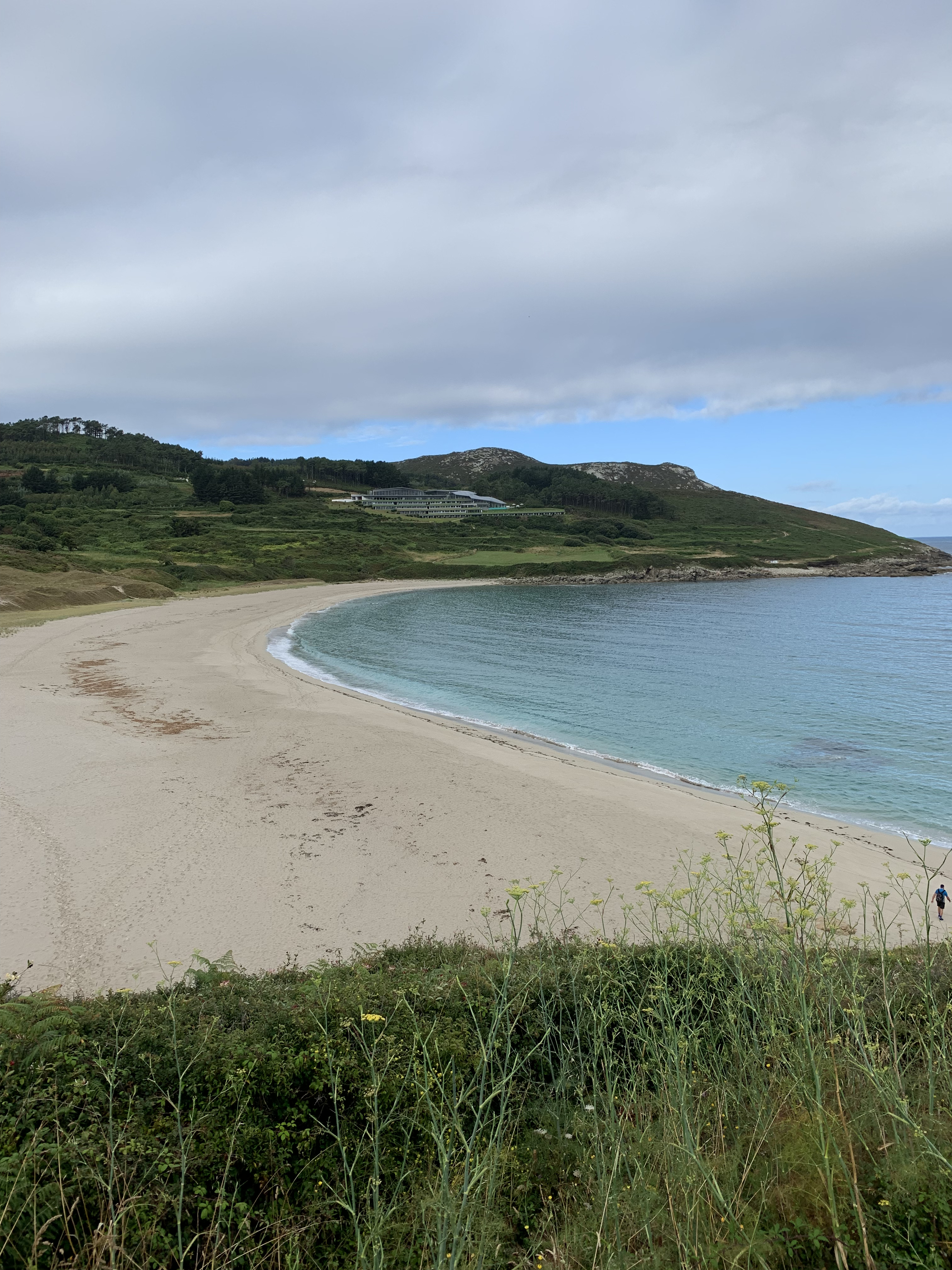
I walked long that first day, 47K, hoping to set myself up to reach the port town of Cee. Unfortunately, their beach turned out to be a shallow, seaweed-laden, plastic trash soup, so I needed another plan. The beach on the approach to Finisterre would have worked, but the chilly air and my eagerness to reach the iconic lighthouse kept me moving.
I decided not to stay overnight in Finisterre, as most pilgrims do, as it was a bit too people-y; despite brief encounters with others from around the world, I remained a most solitary pilgrim.
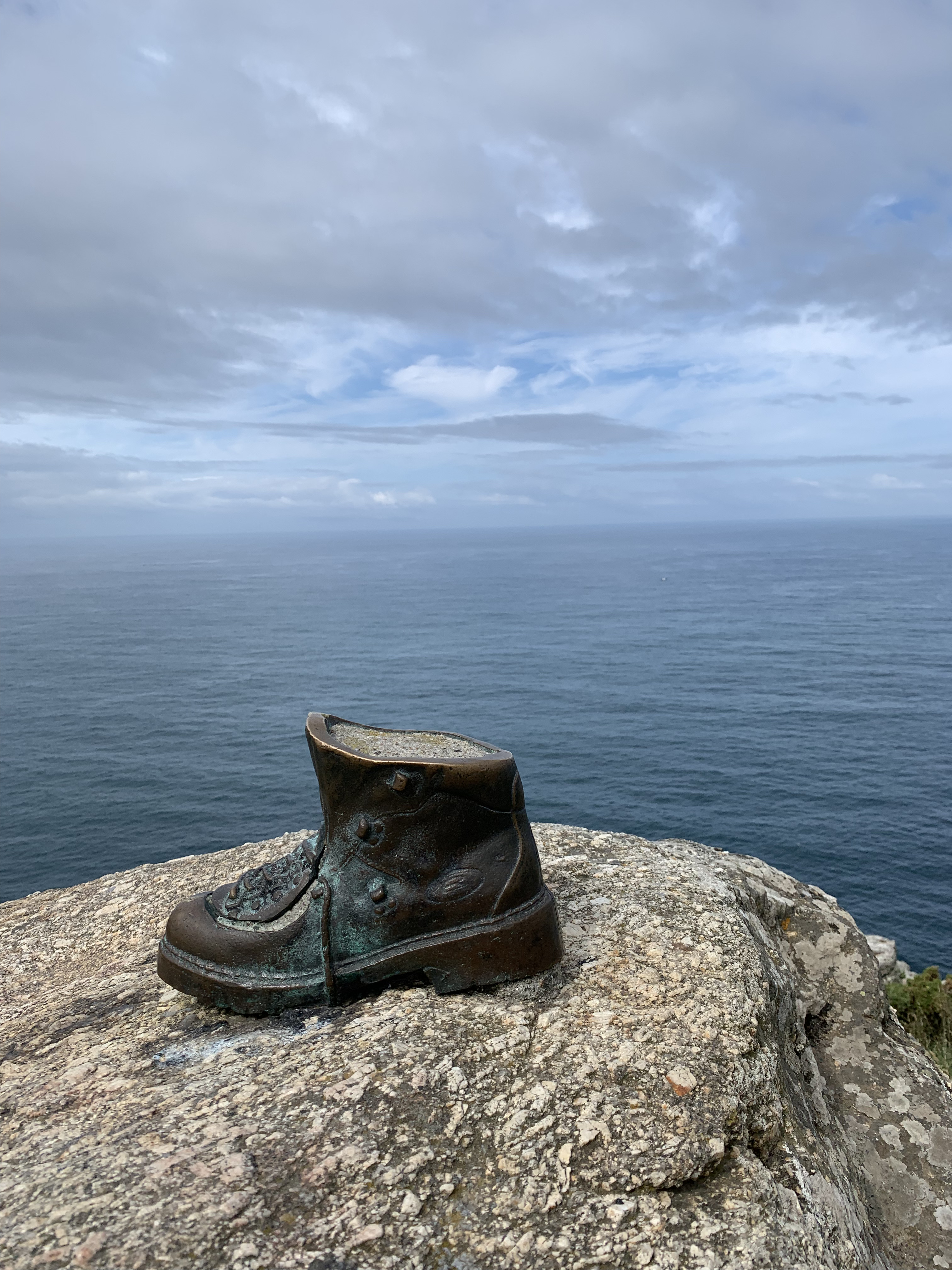
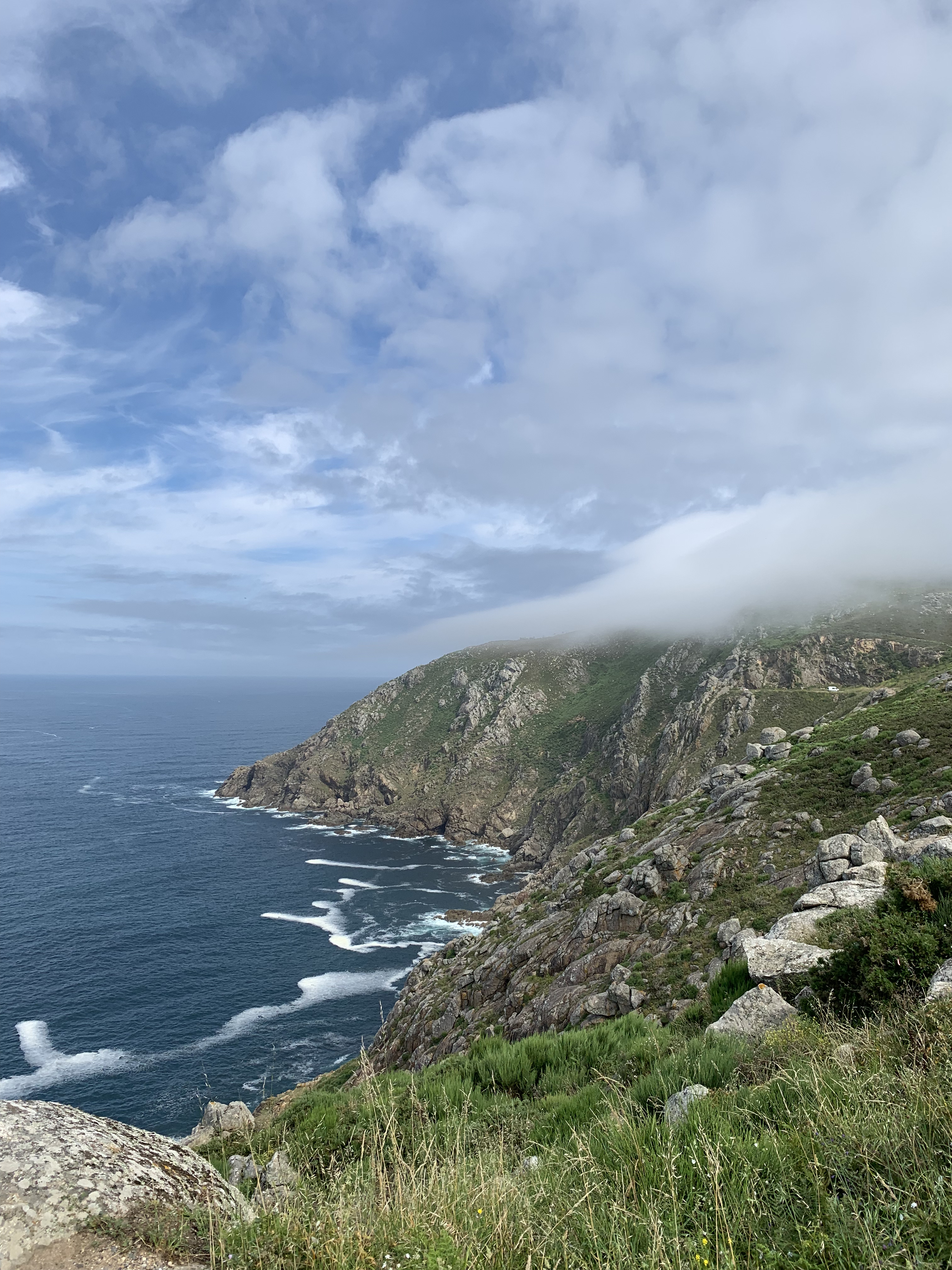
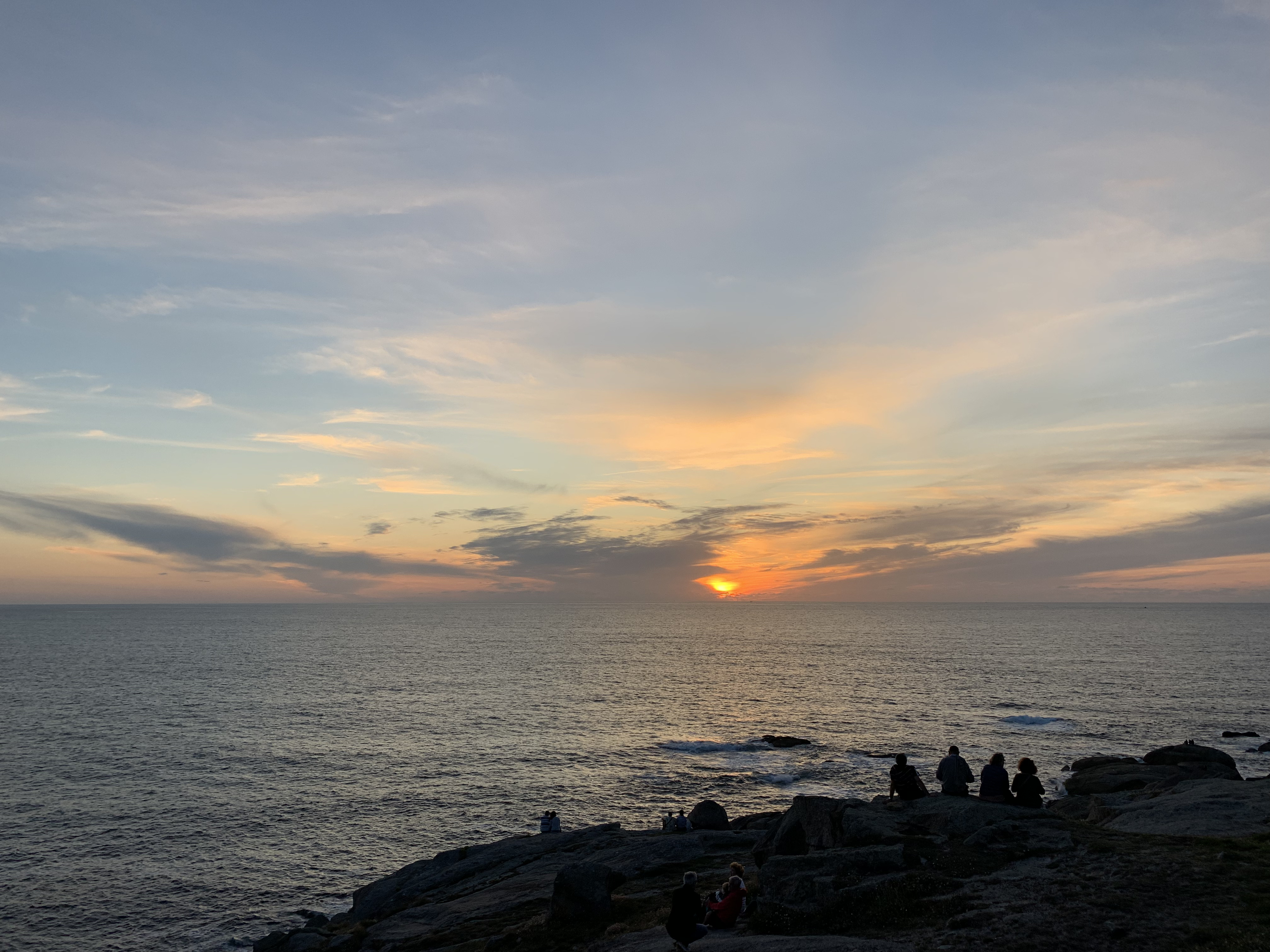
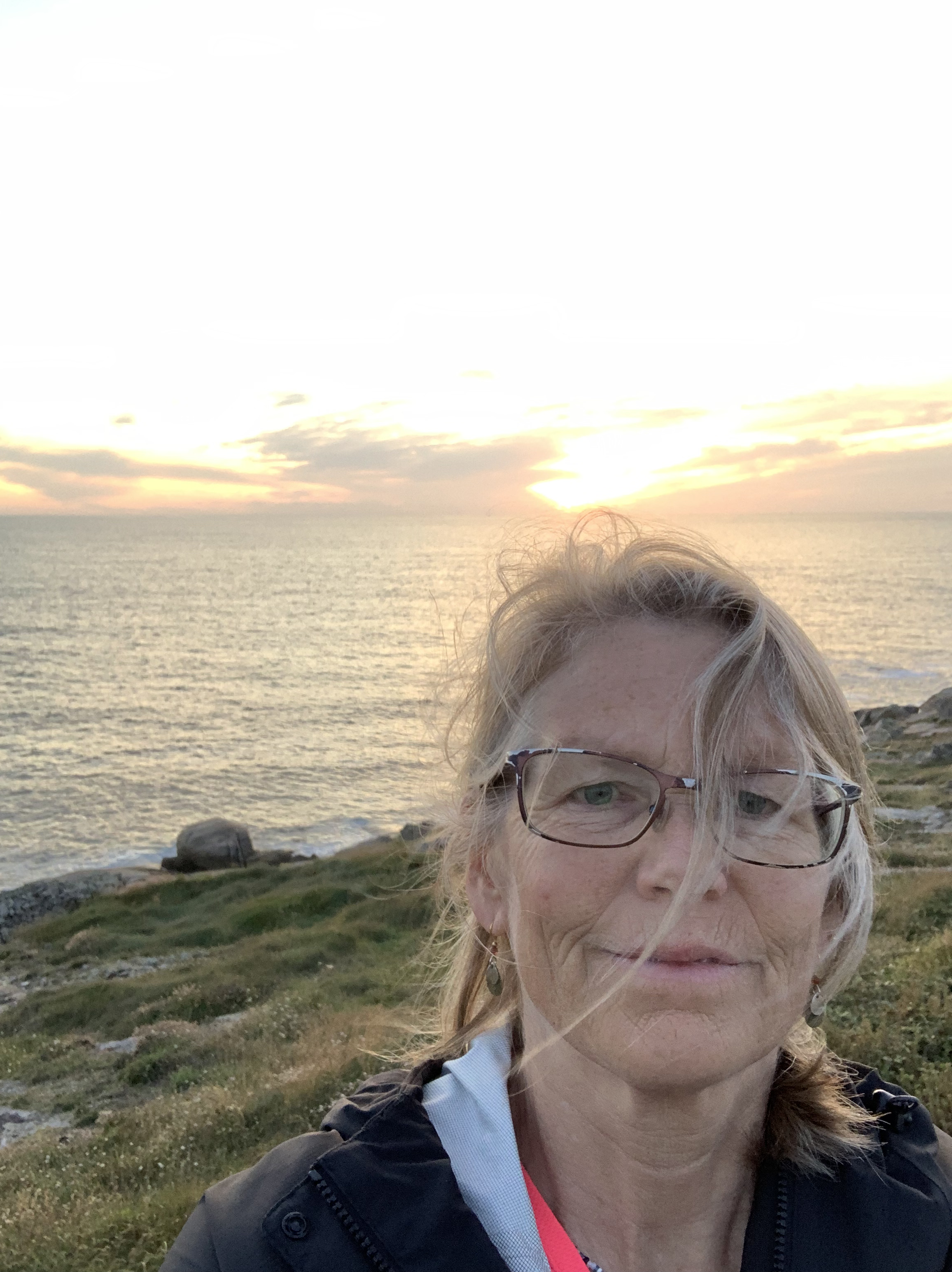
I did spend a few hours on the rocky cliffs at The End of the World, taking pictures and watching mists shape shift across the sea.
But there was one place left to visit, and my feet just wanted to keep walking, 27K north of Finisterre, to the tiny town of Muxia. It seemed much more my type of end, quieter, and the last place listed in my guidebook.
The trail hugged the coast through forest and farm, giving glimpses of water and wave. At last it popped out onto the road into Muxia, and I couldn’t believe my luck.
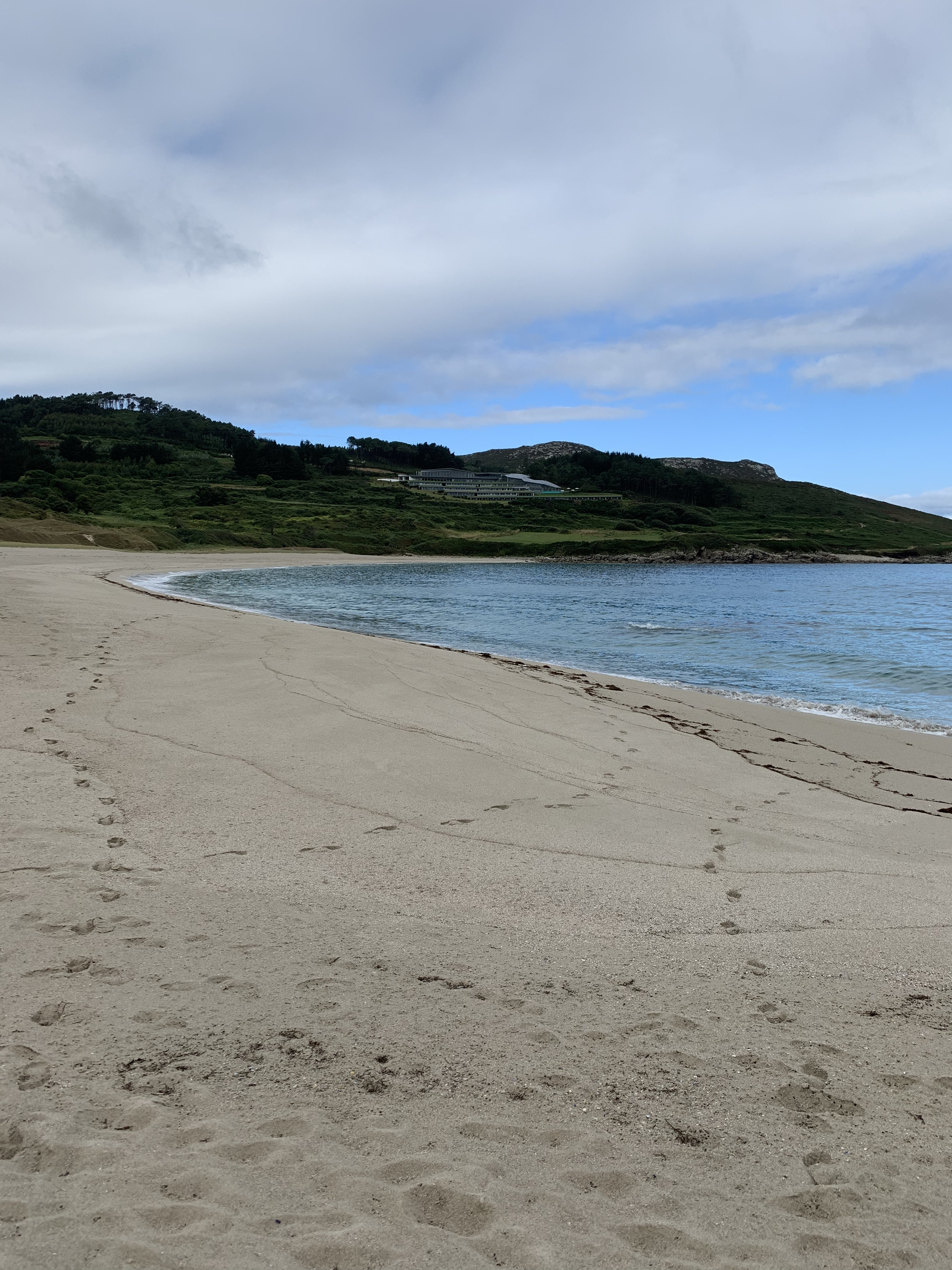
A vast expanse of deserted sand, cobalt blue surf, a path leading down. Time to swim.
Matthew writes that Jesus’s disciples were “amazed” when he calmed the storm, but not a peep about when he healed a leper. Was this smaller on the miraculous scale? Do we ignore minor miracles in our earnest expectation of the one for which we wait? After asking for the how-many-ith-time, do our hearts turn hard at the not-yet?
O, if we could only wait! Un-stone our hearts, watch with assurance, rejoice when it arrives.
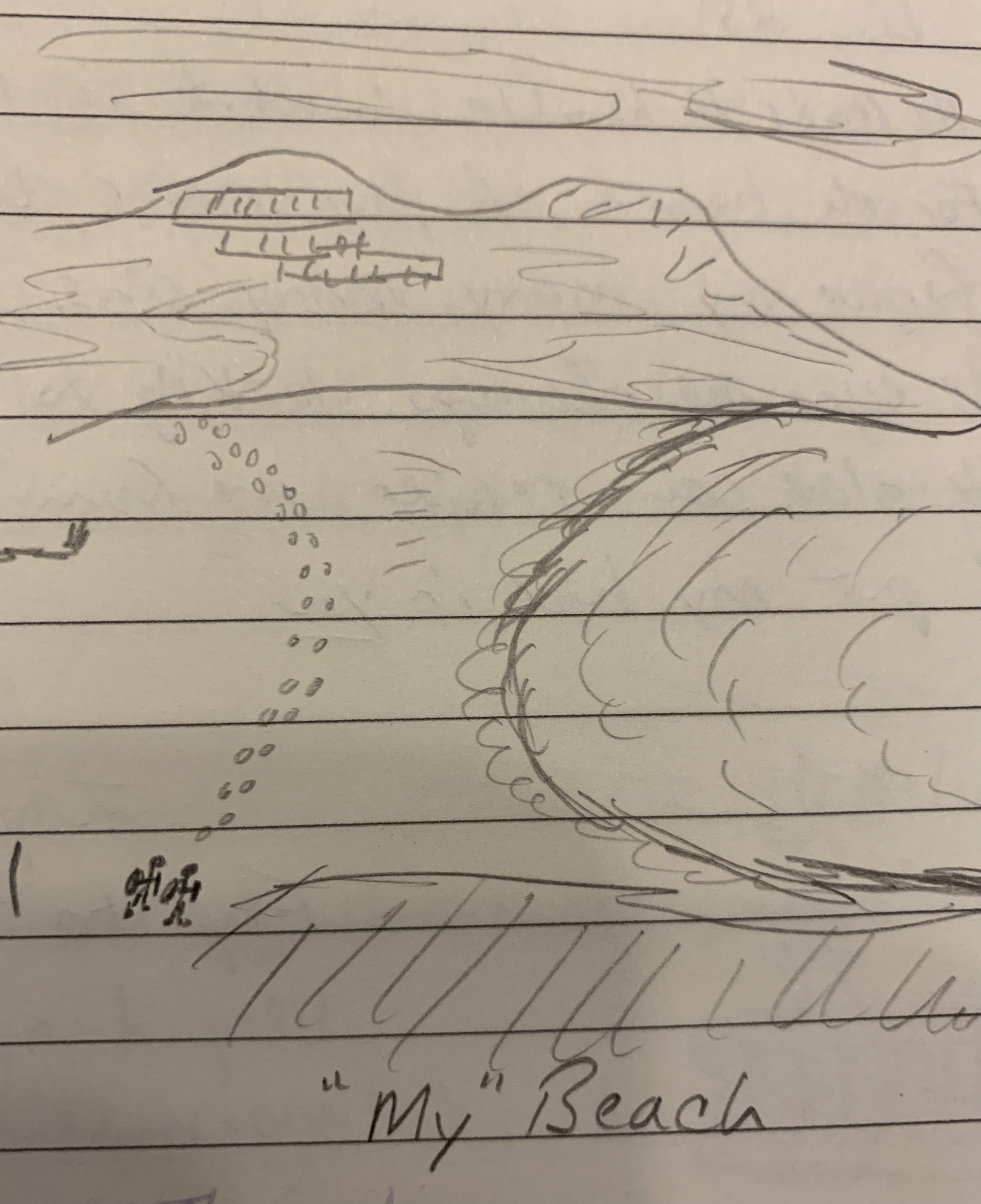
“My” beach was perfect, all the more for the wait, and I didn’t even mind when I had to share.
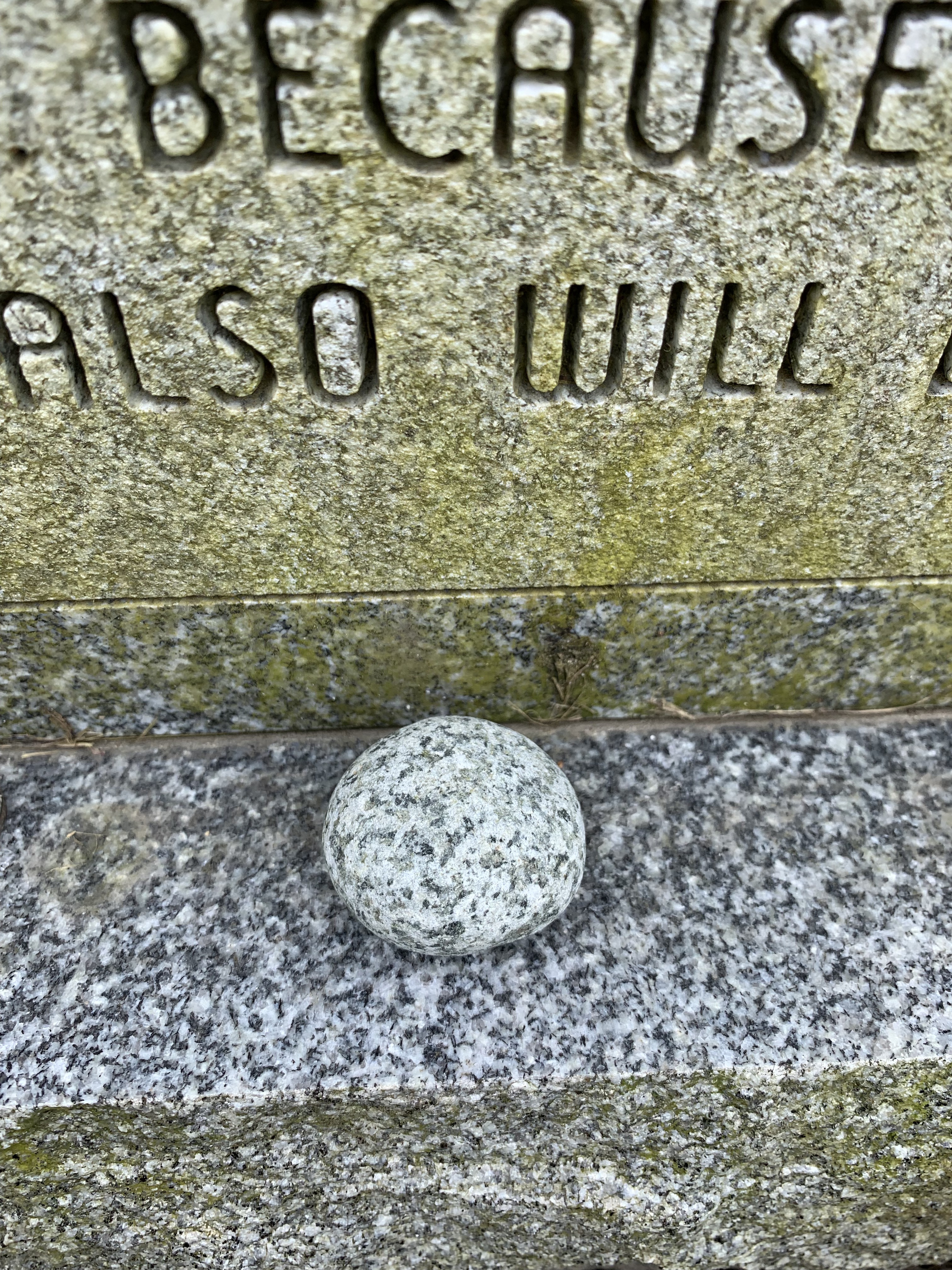
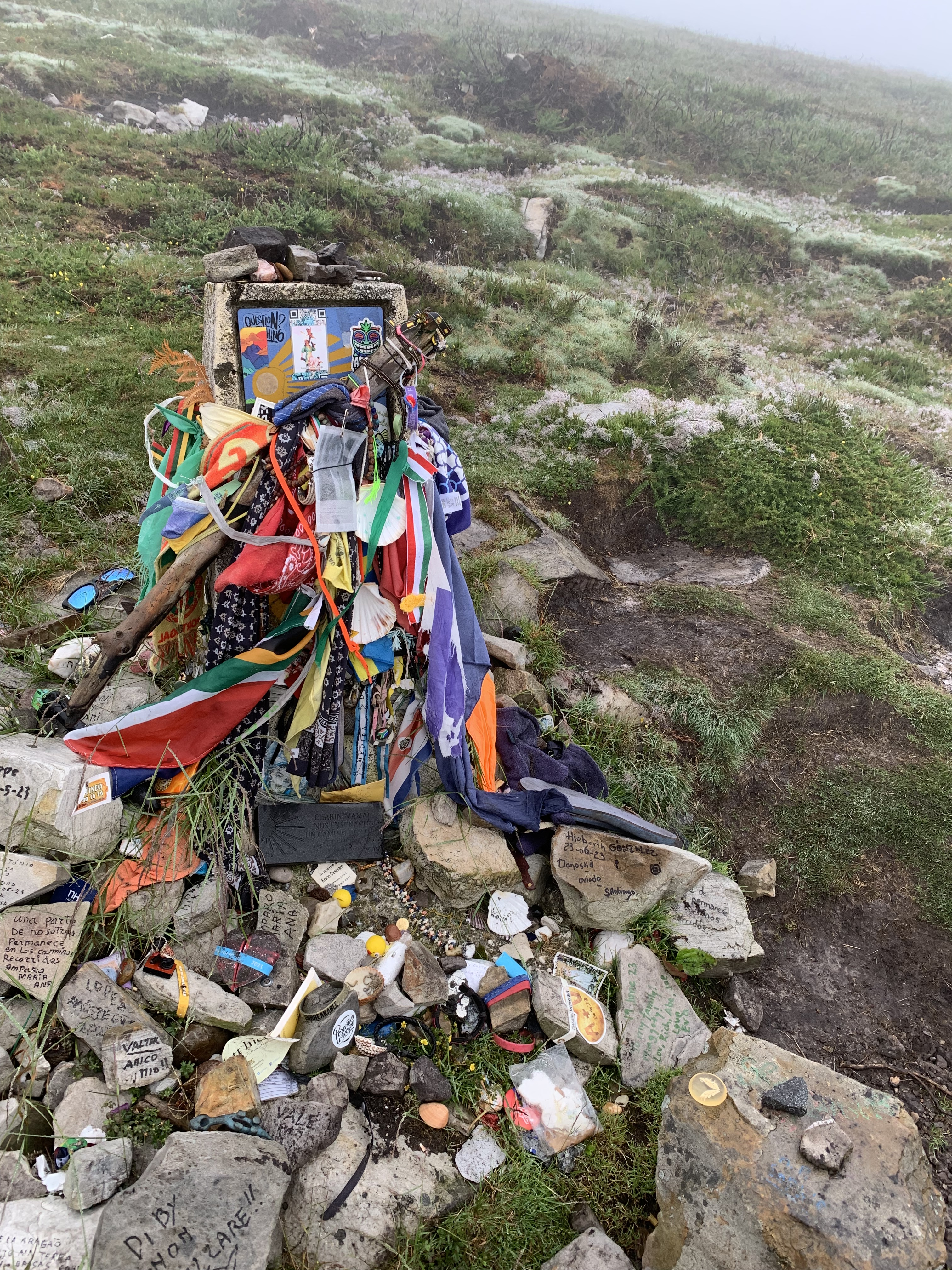
One tradition many pilgrims participate in is bringing a small cross or stone to Spain, symbolically leaving them at one of the many shrines along The Way in remembrance of a loved one or a burden they would like to shed.
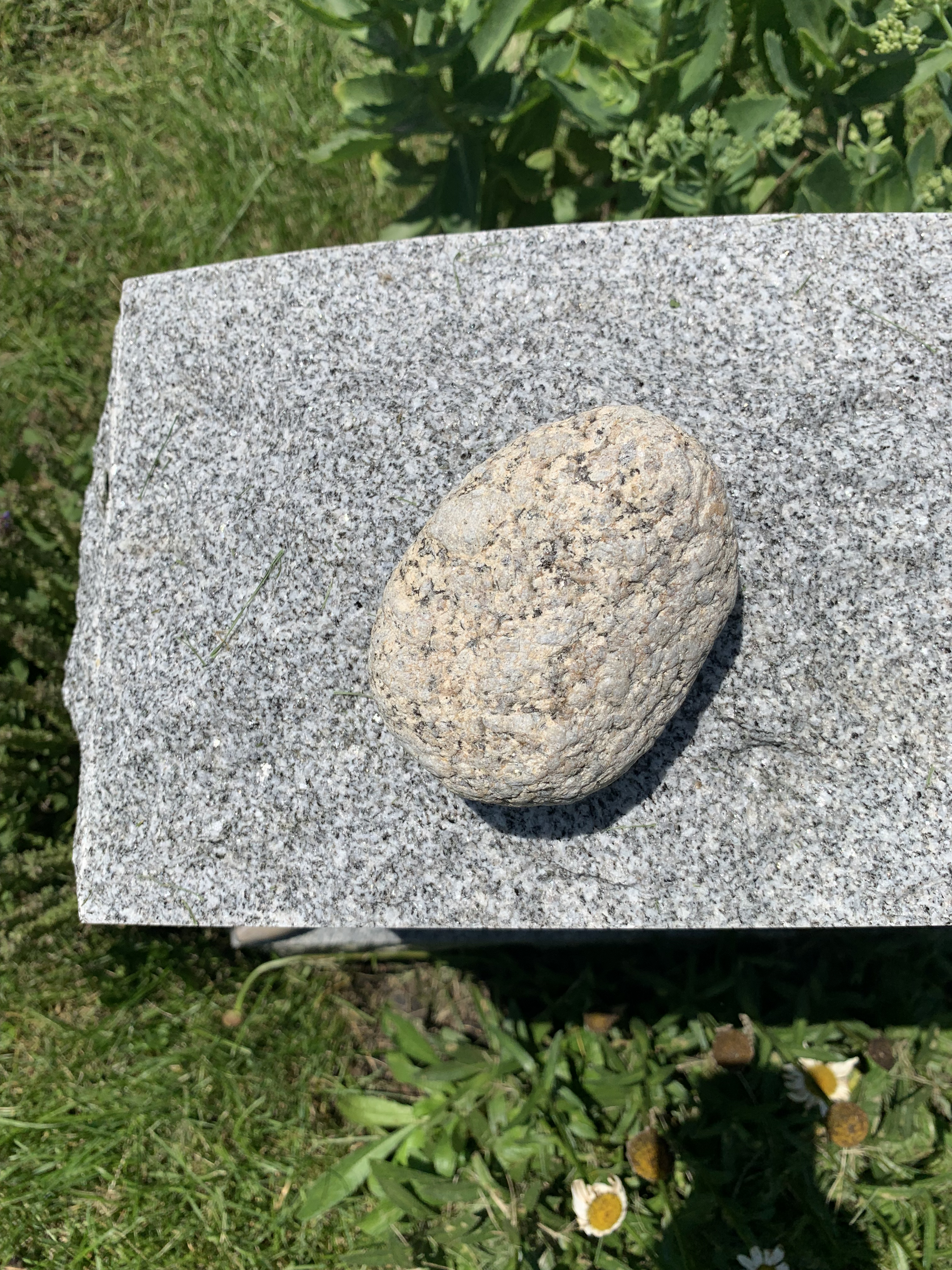
I decided, since my oldest son could no longer walk an earthly path, to bring a stone back to him; climbing back off the beach, I spied one, lovely in shape and heft, and carryied it with me to the end. When I got home, it was a beautiful complement to the granite of his gravestone.
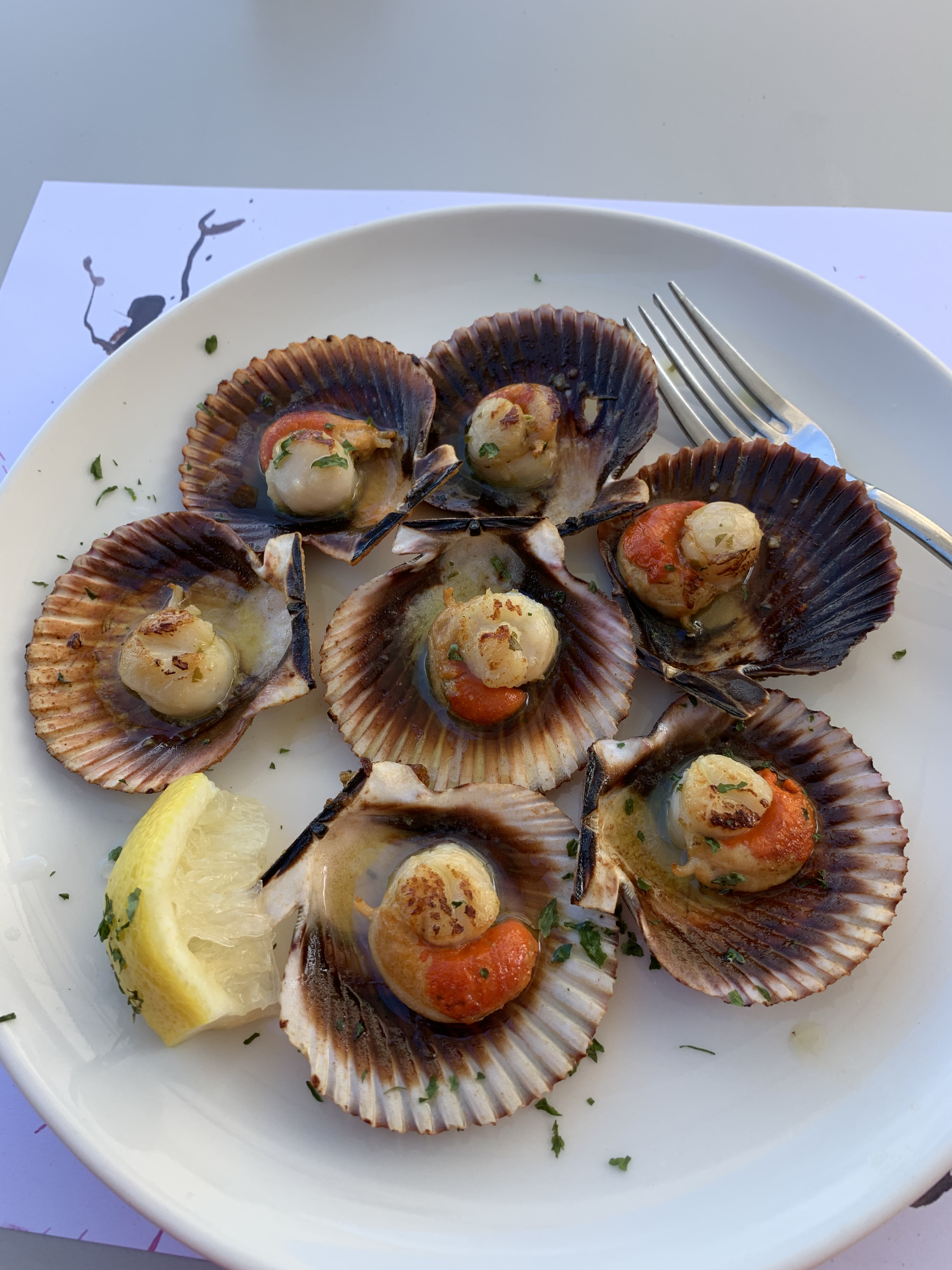
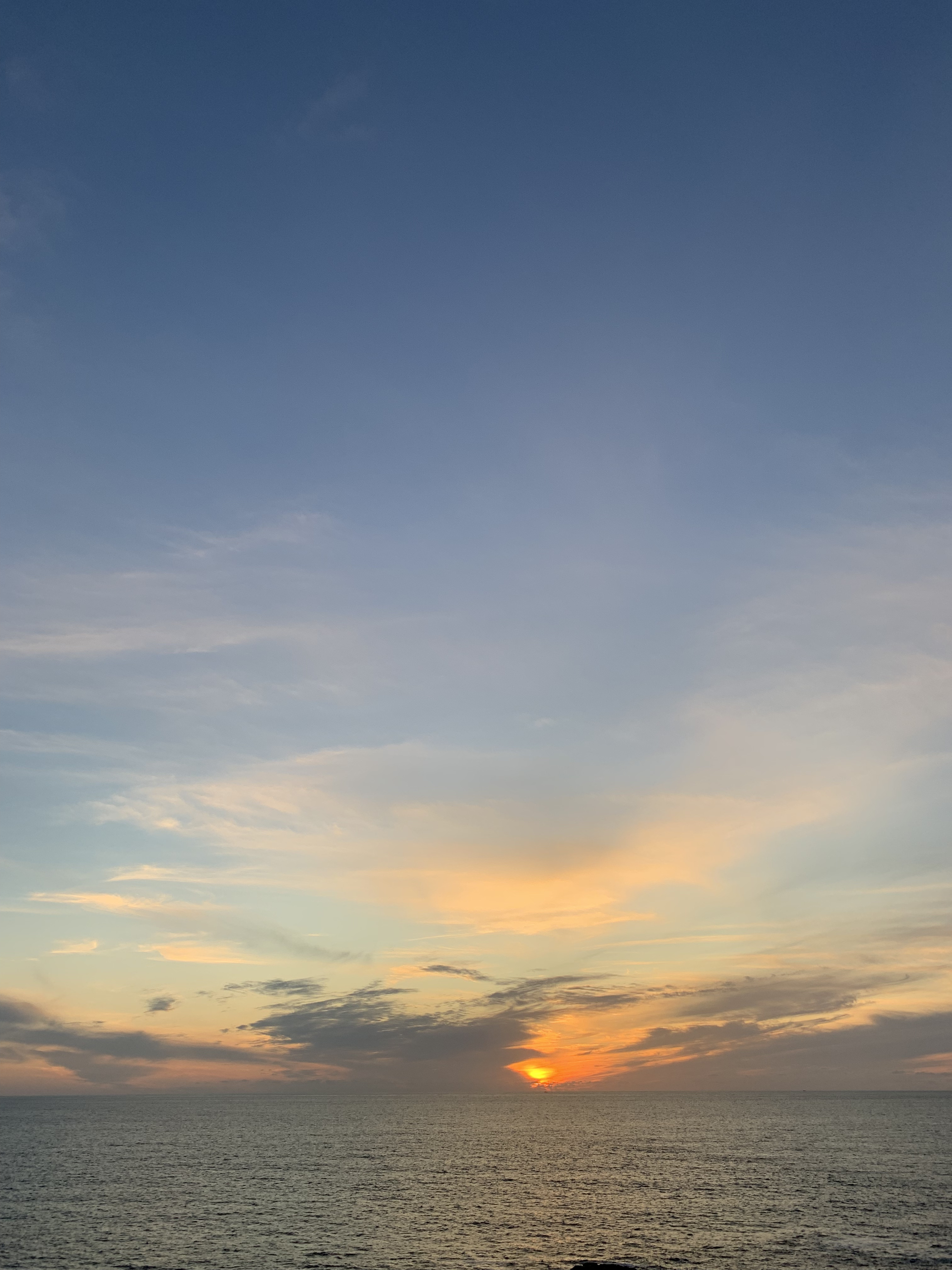
Muxia held other miracles. Sunsets, scallops. A strange monument, harkening back to the Celts. I milked Muxia of everything I could; my Camino was near to its end.
Home now, there are things I miss too numerous to count. Most of all, I miss the daily adventure, the not-knowing of where you will end up, the miracles around every turn. But we cannot live like that forever. Not here, on this plain, at least.
Though I brought with me no rock, I did manage to leave some other things behind: one traitorous sock, then another, as they rent and tore from the daily exertion. Grief and heaviness, past pains. Fears and insecurities – gone as I navigated Europe – busses, trains, post offices, menus, and maps – alone, armed with only a language and a half, my own skin now enough.
Something did happen. The person who started the Camino is no longer the same person who finished it.
It’s time to wait again, for another Camino, perhaps, or something else I know not what.
Is his perfect timing about to find us? We will never know, until it does.
A few years ago, I had planned on walking the Camino de Santiago with my cousin. At the time, all I knew about the Camino was gleaned from watching Martin Sheen in The Way and from listening to a few others at my school who had walked it.
When they spoke of The Camino, I had assumed there was only one, from the border of France across the north of Spain, and when Covid cancelled all the plans my cousin and I had made, I turned to other long walks in the hopes that one day we might find another window of time to make the pilgrimage.
Unexpectedly, this May I was invited to accompany my best friend on a brief foray to Germany and dreams of The Way came flooding back.
With a new job, my cousin would be unable to accompany me, but in the meantime, I discovered that there are scores of Caminos of varying lengths from compass points all over Europe; I could pick another and save the route from France for a future time with her. Why waste an already booked flight which was taking me only two countries away?
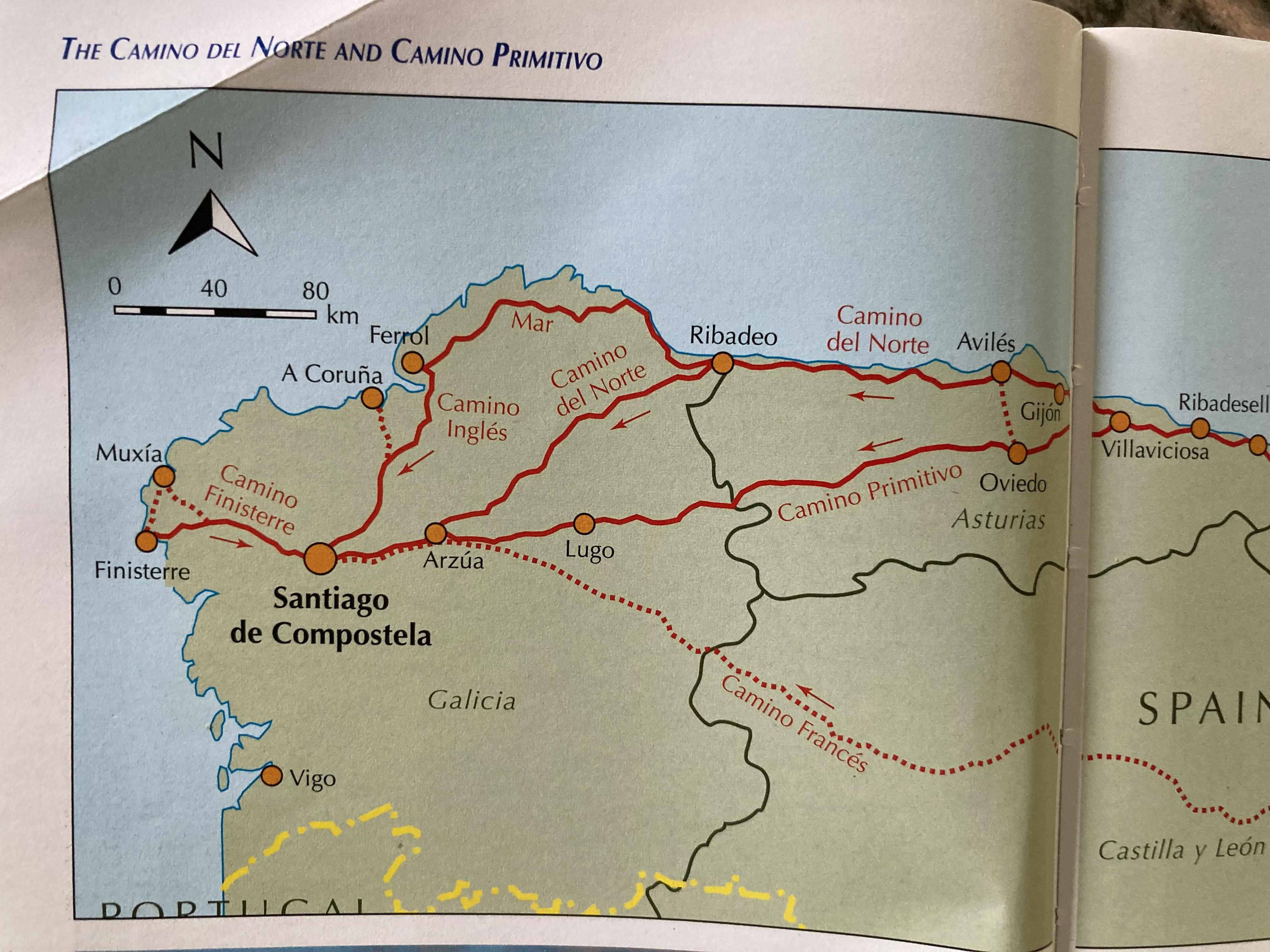
I decided on the Camino Primitivo, largely because it was described as one of the more mountainous routes and a lesser traveled one. I could fly into Aviles, a city which is on the Camino del Norte, walk backwards (away from Santiago de Compostelo) on the Norte, and pick up the Primitivo in Villaviciosa.
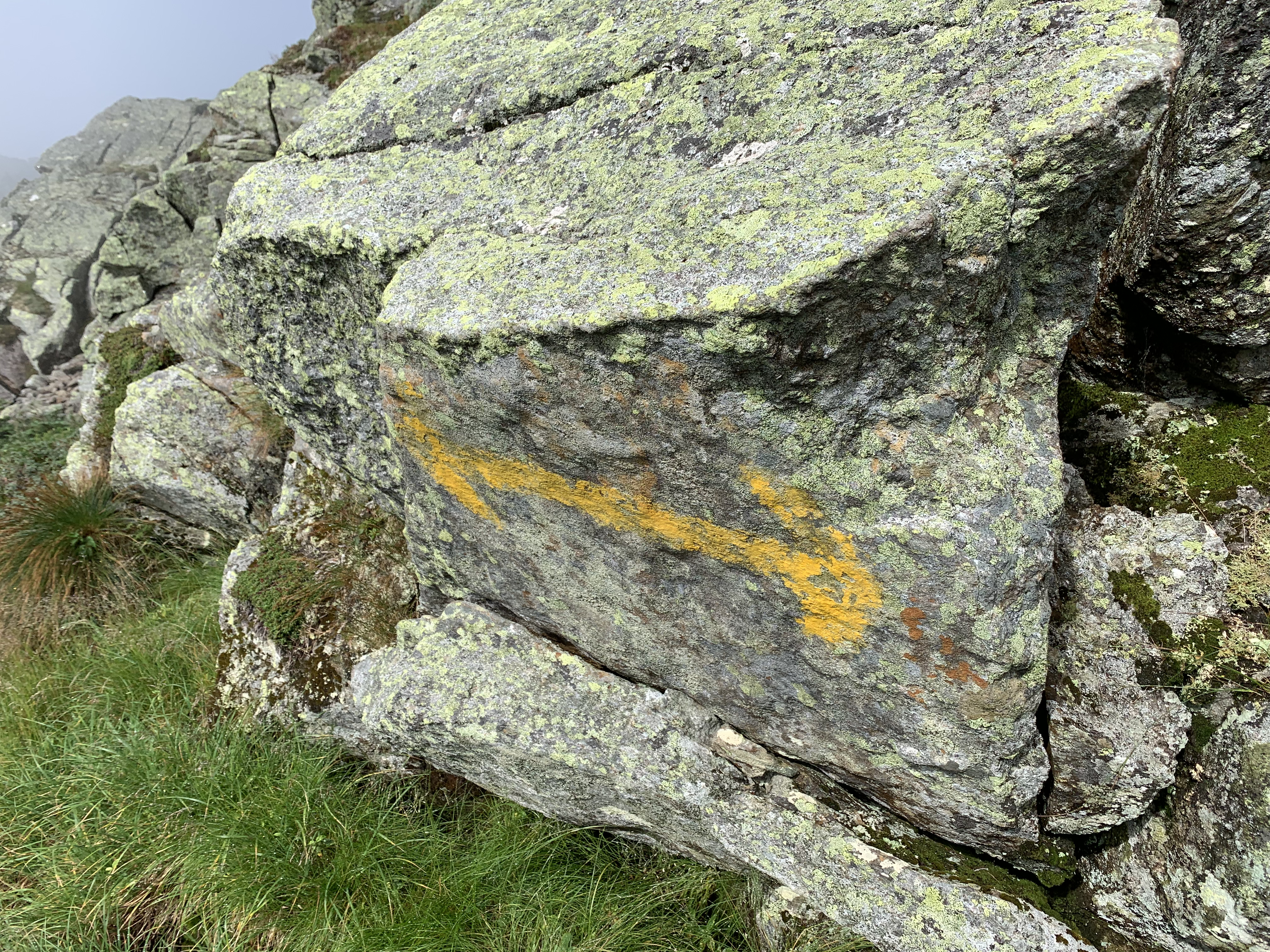
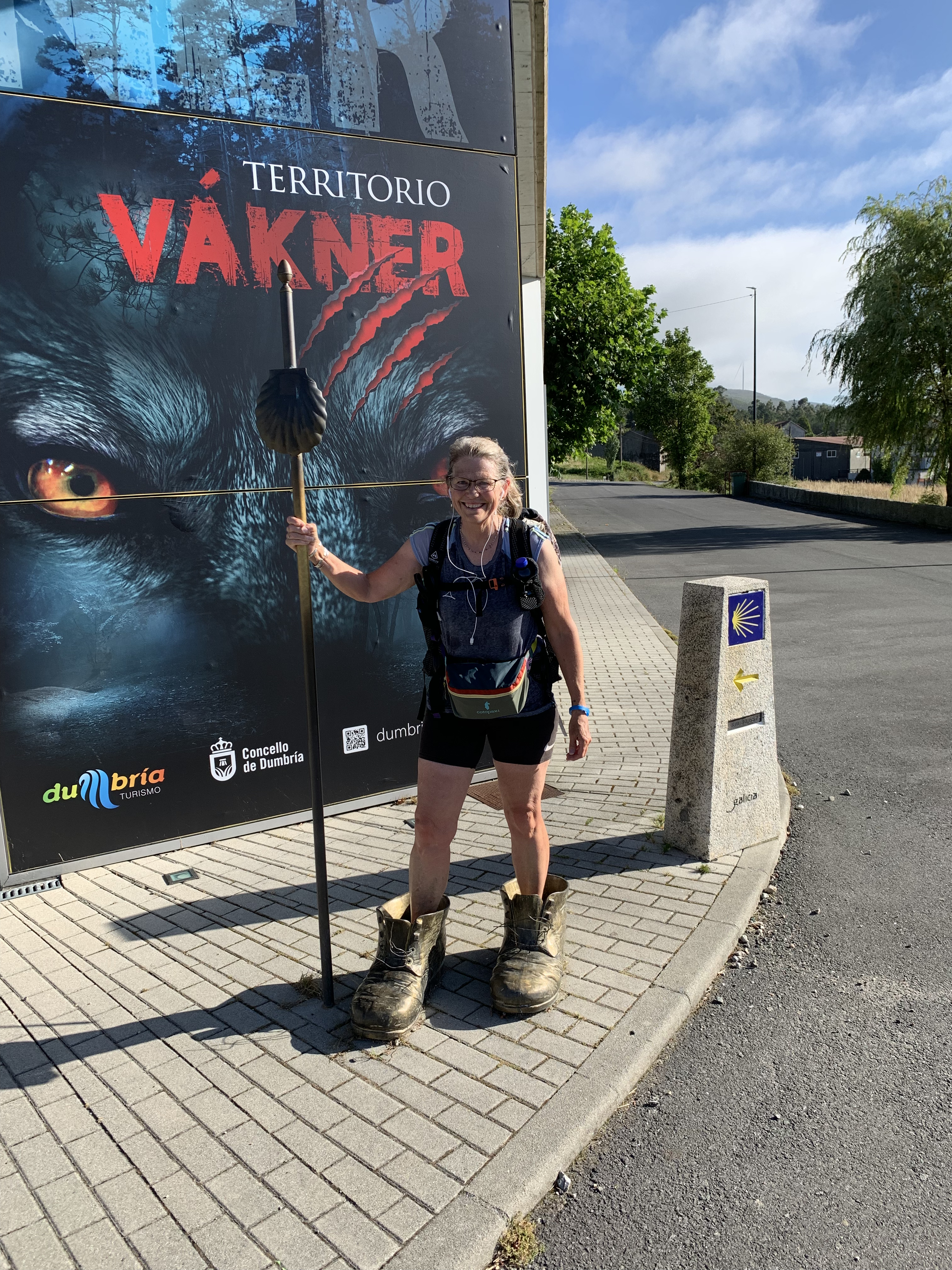
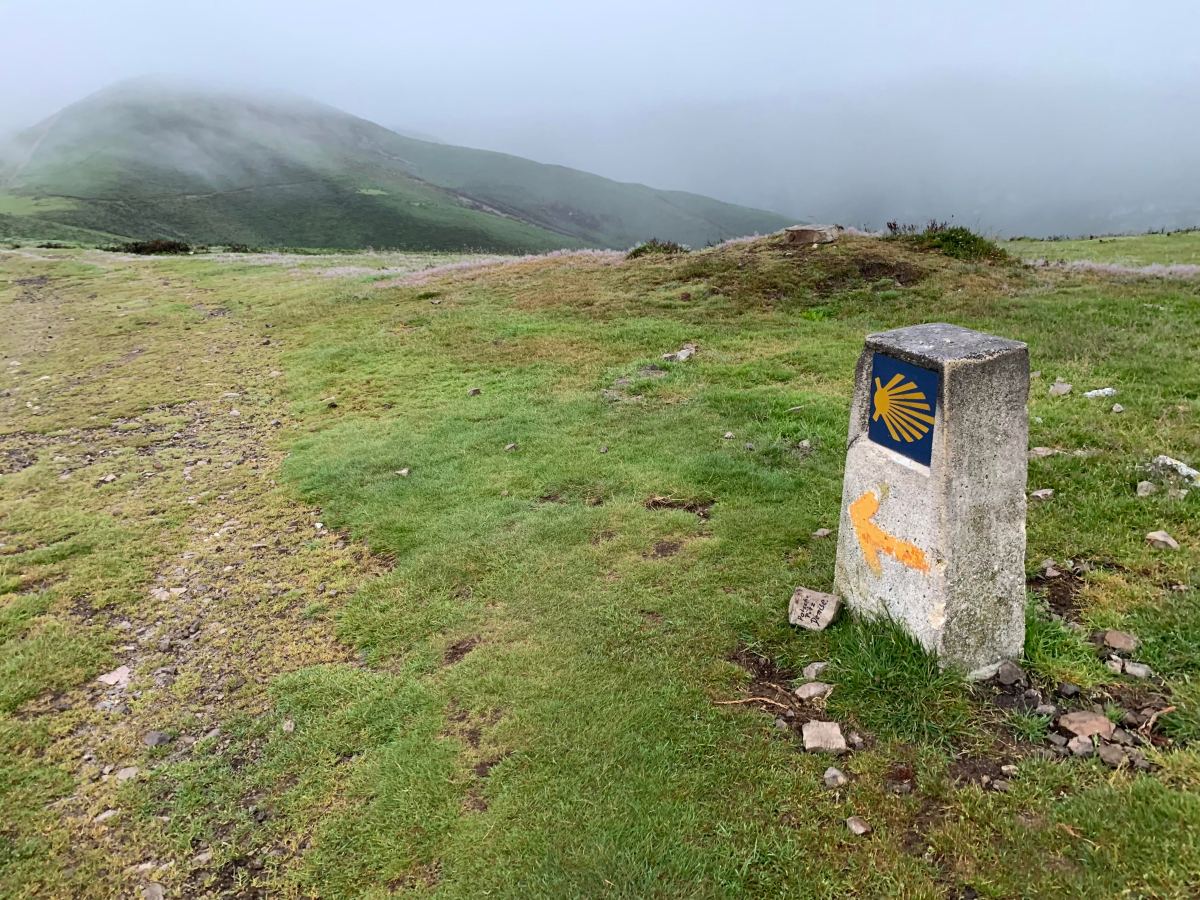
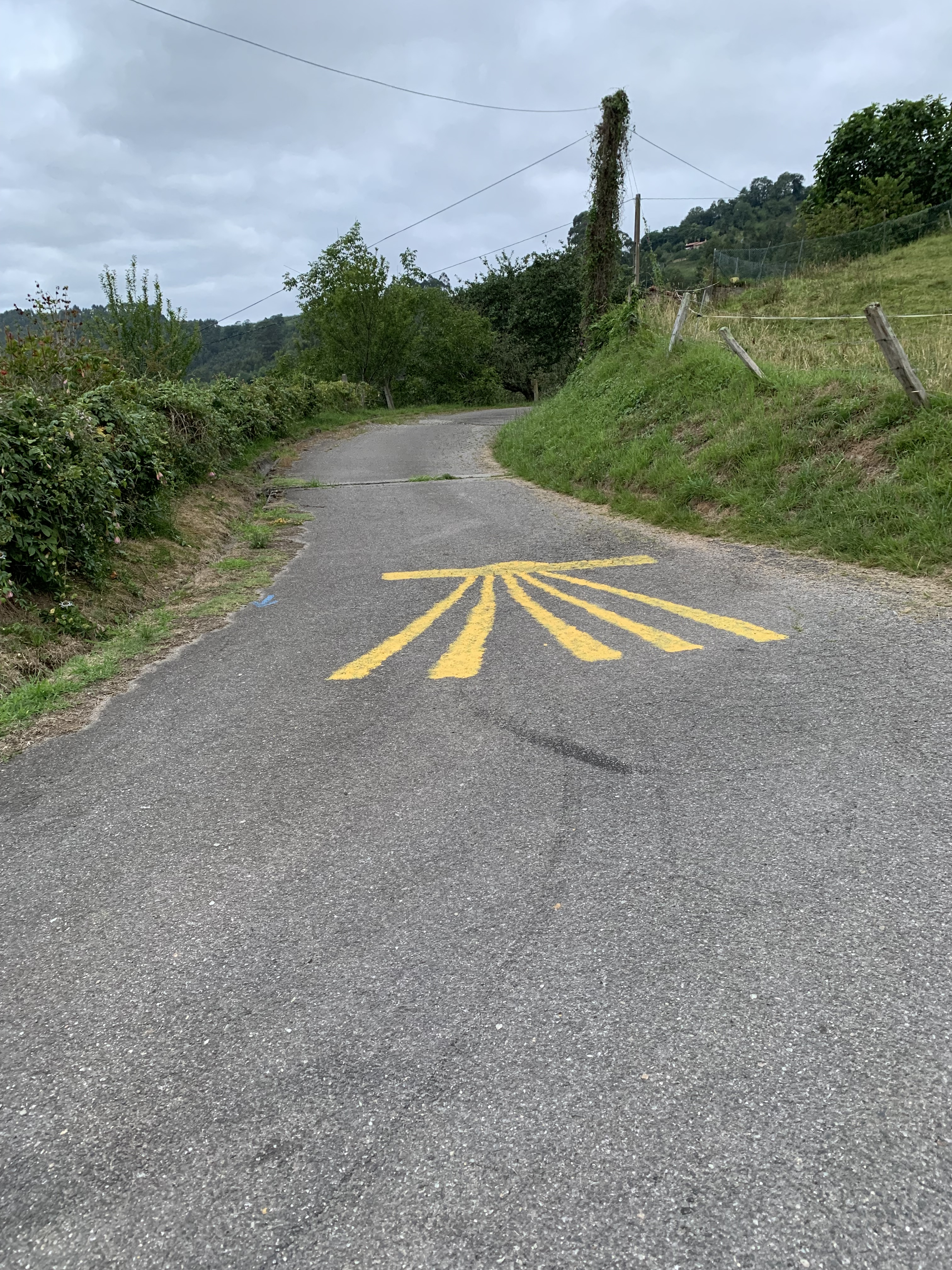
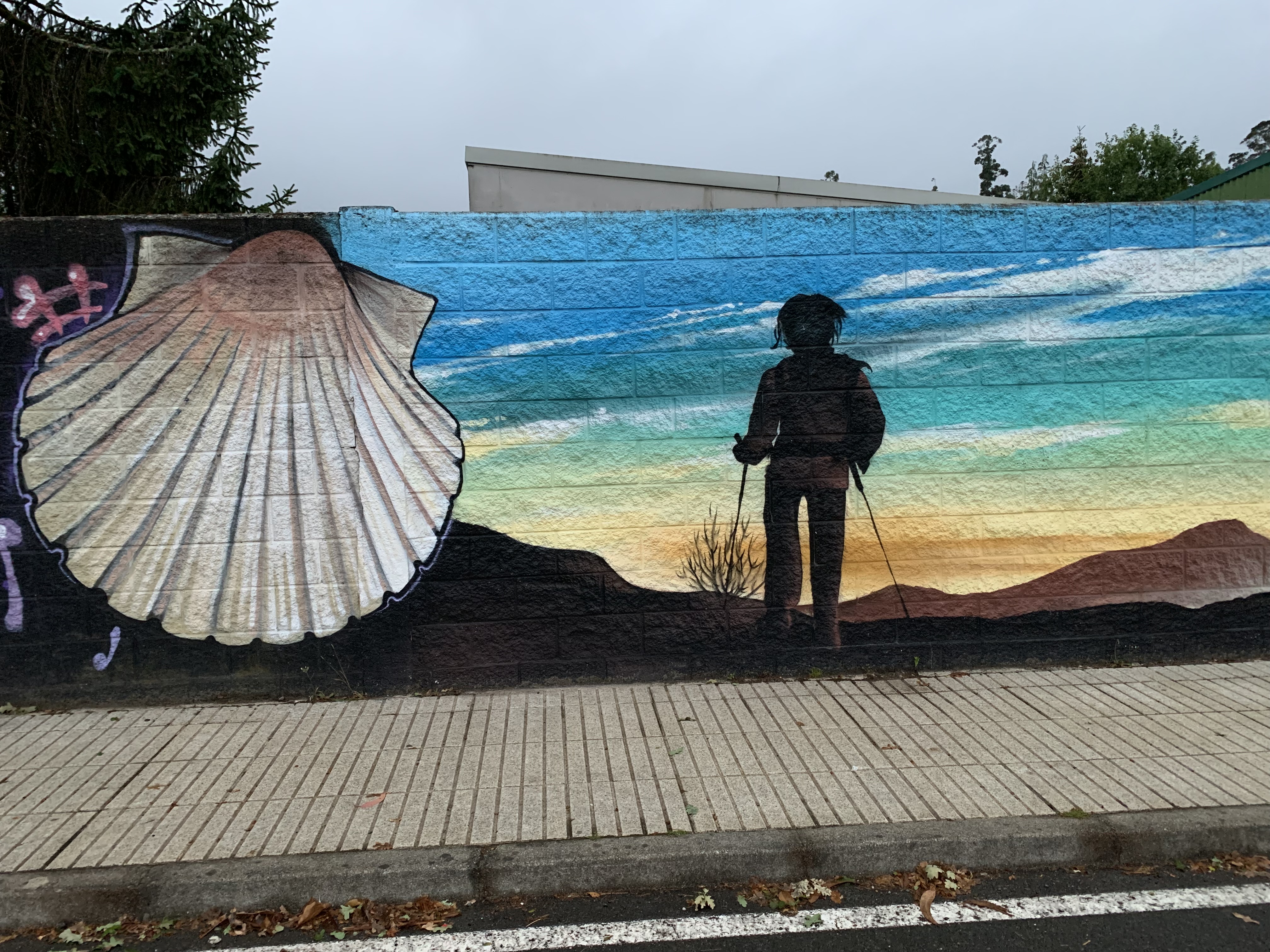
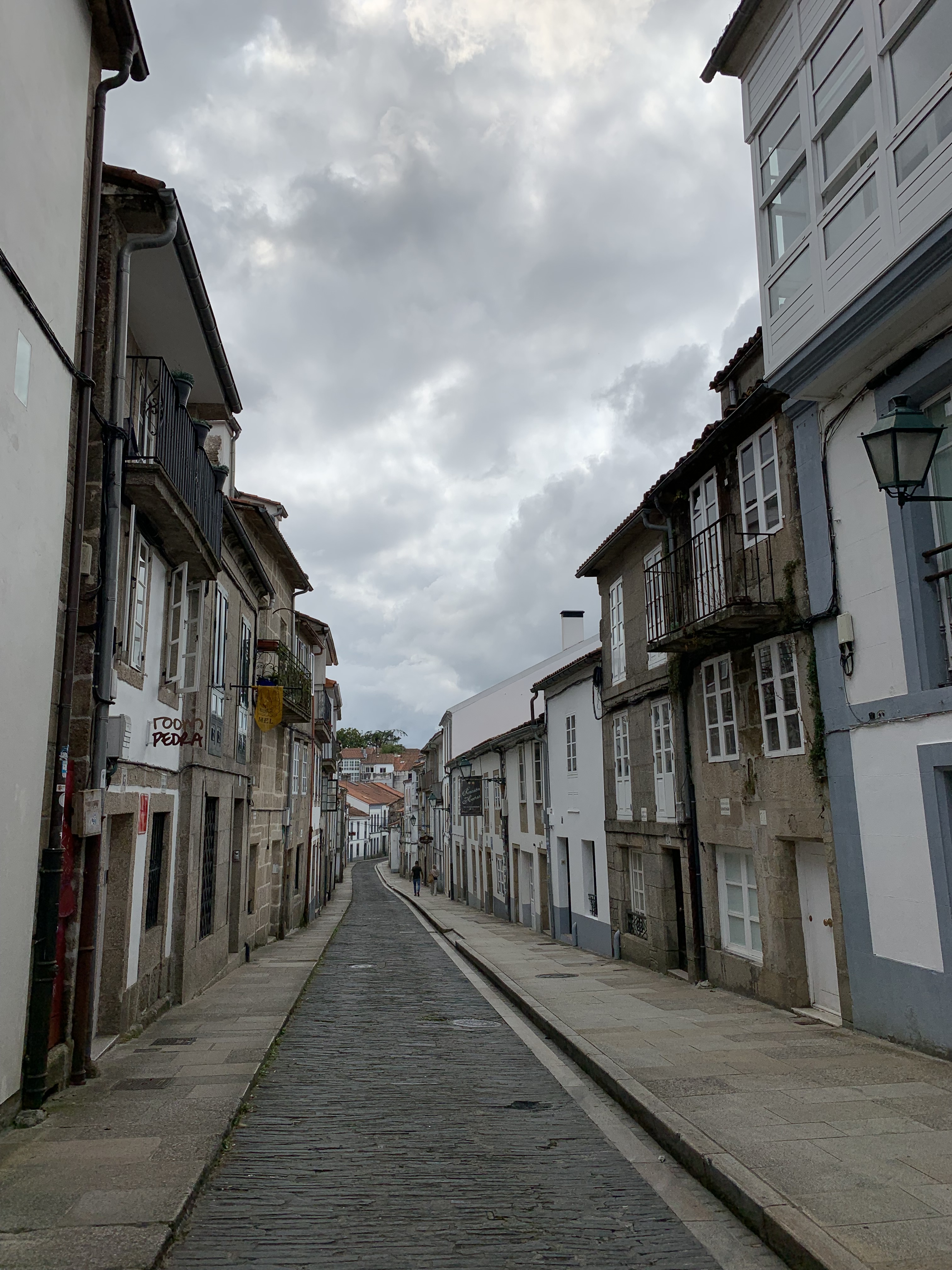
Credencial in hand, I left Aviles in the early hours of June 25 following the iconic scallop shells and yellow arrows that mark the route. For two days, until I reached the Primitivo, everyone I met would ask me if I was going the wrong way. I’d just smile and assure them that The Way I was going was the right way for me.
One wonderful thing about the Camino are the albergues and hostels pilgrims stay in every night and the small cafes and grocers spaced throughout the day. I needed only to carry some simple clothing and a few other essentials, making it the most luxurious thru-hike I have ever done.
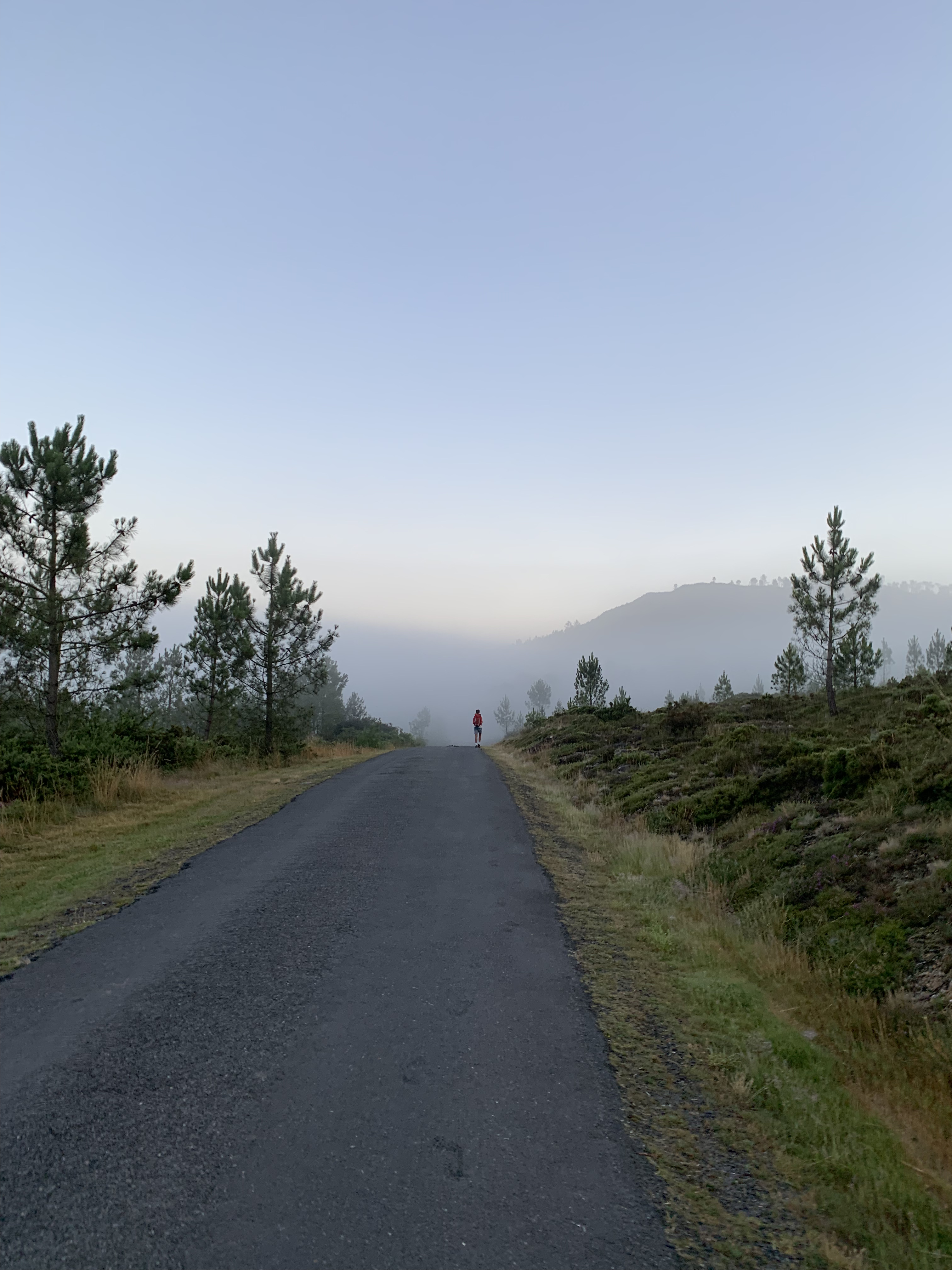
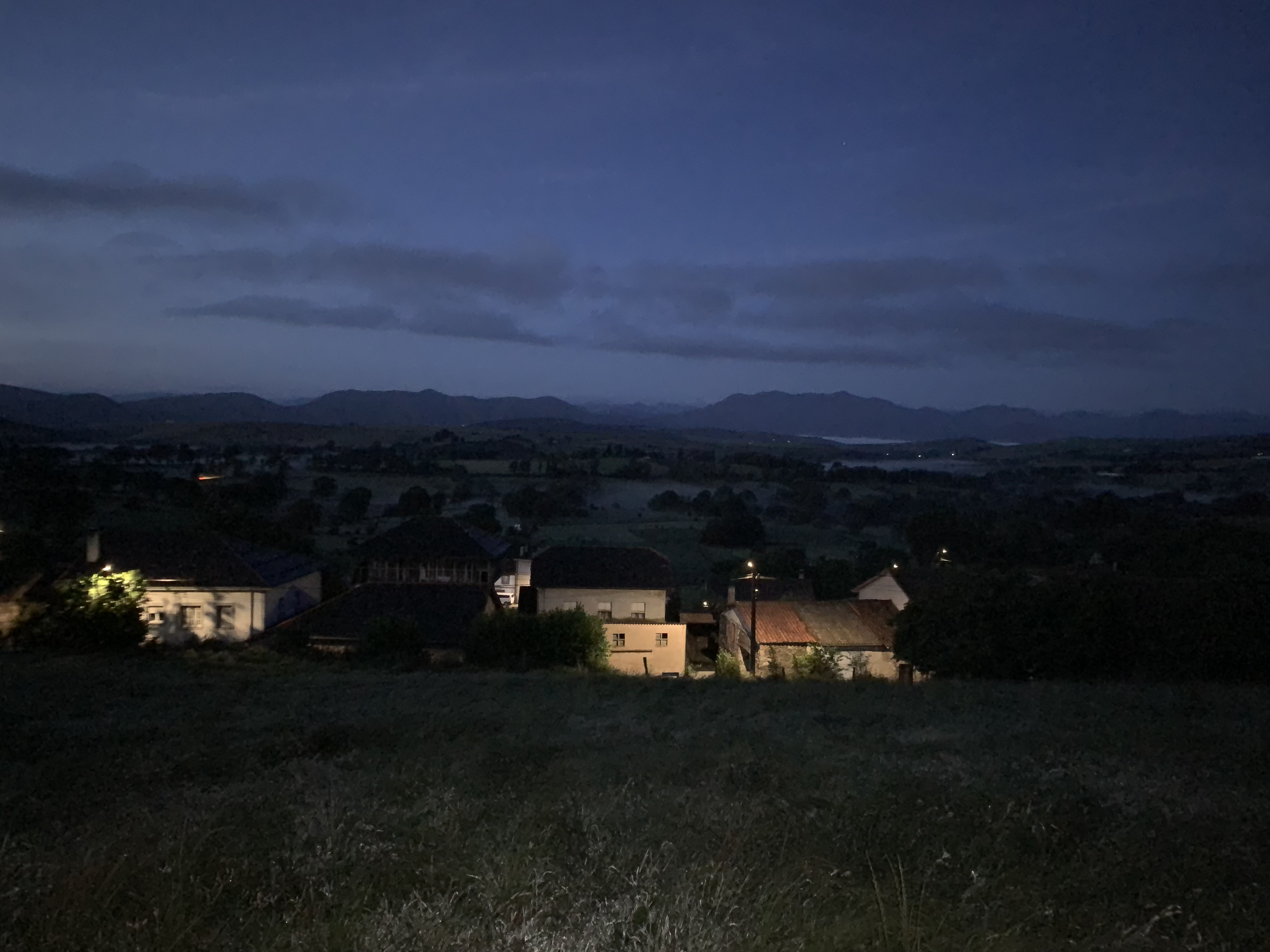
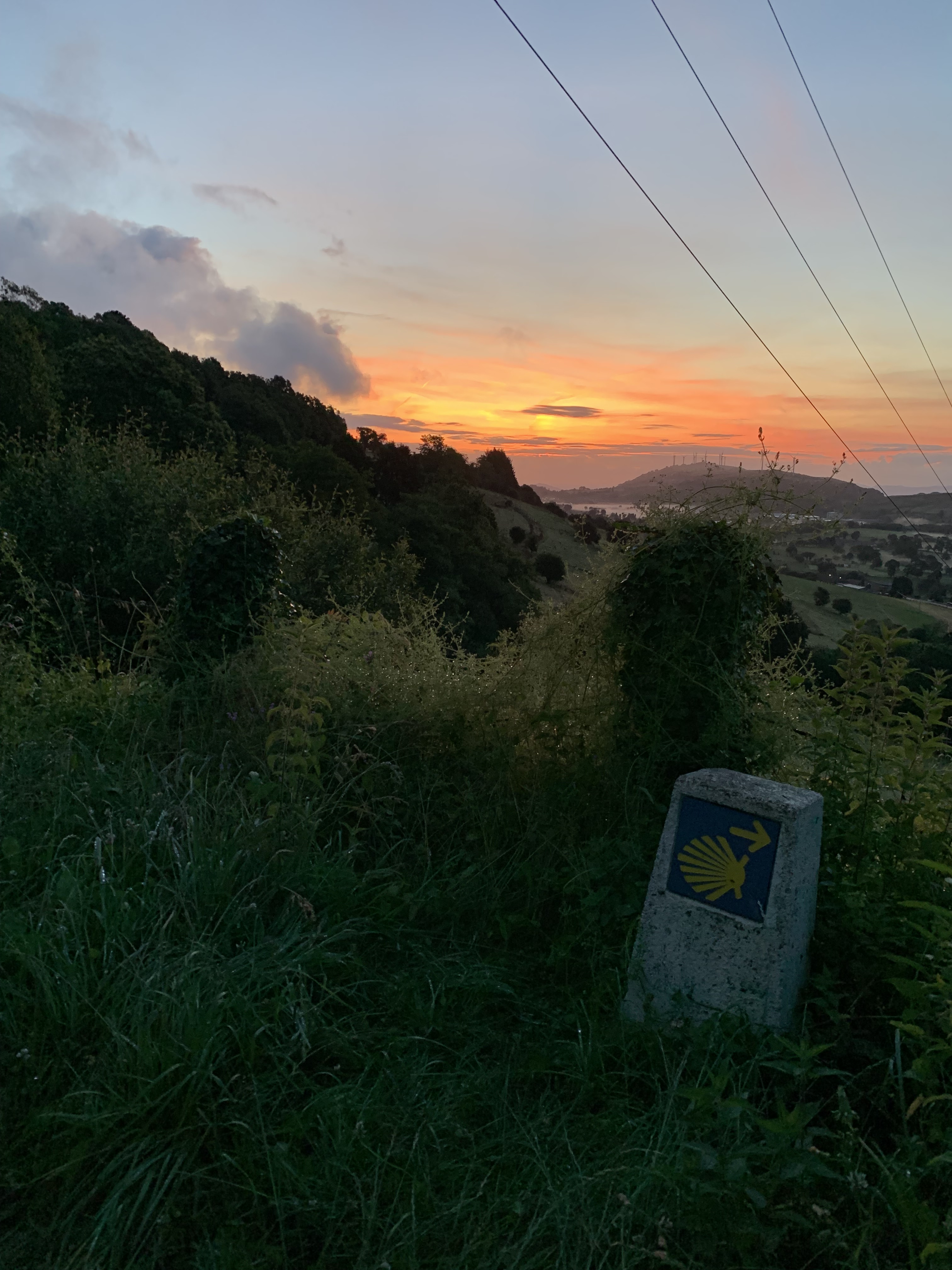
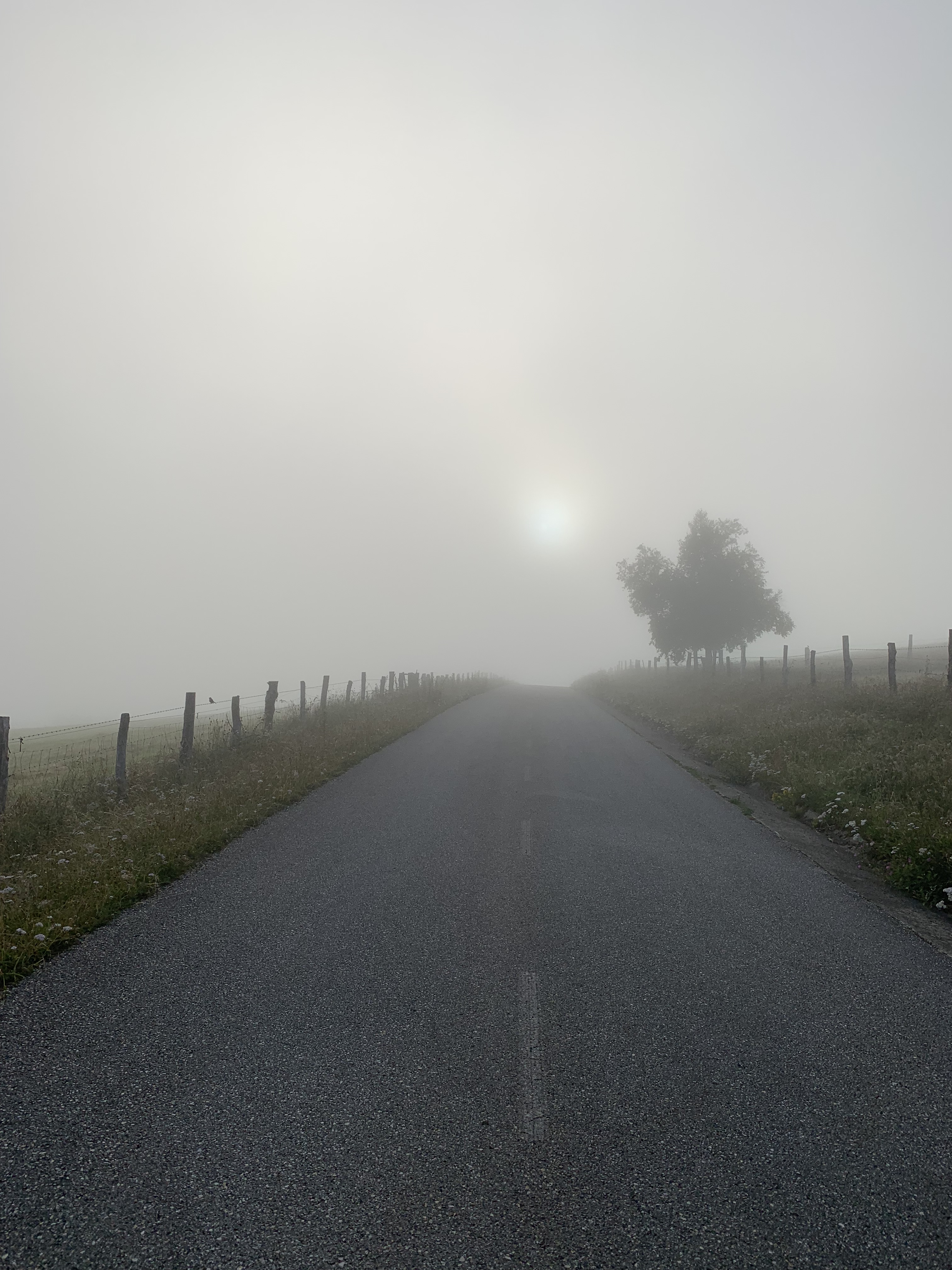
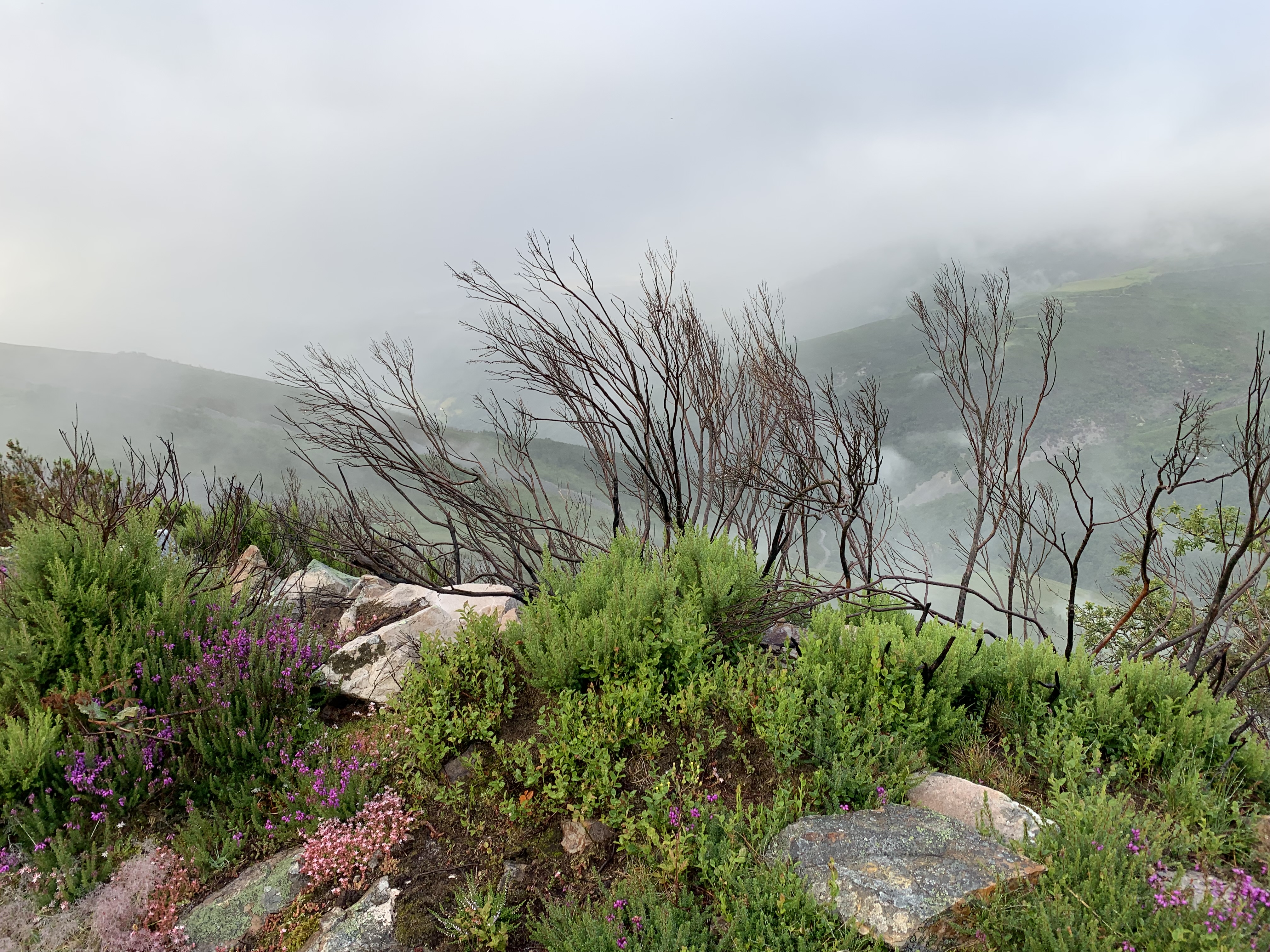
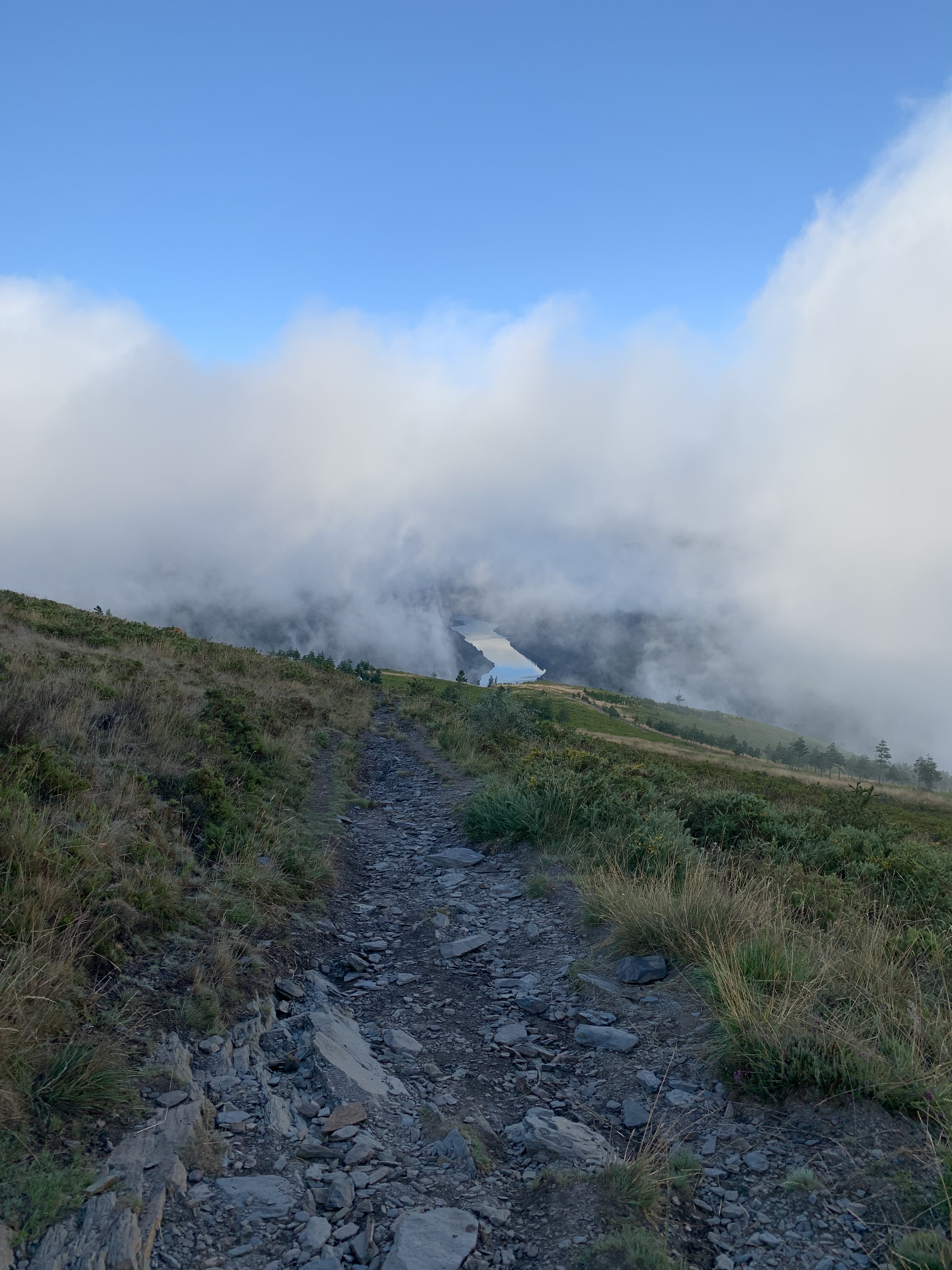
I loved getting up early every morning, tip-toeing out of the bunkroom so as not to wake my fellow pilgrims, and walking the first few cool hours in the dark mist, moonset and sunrise engaged in a duel of beauty.
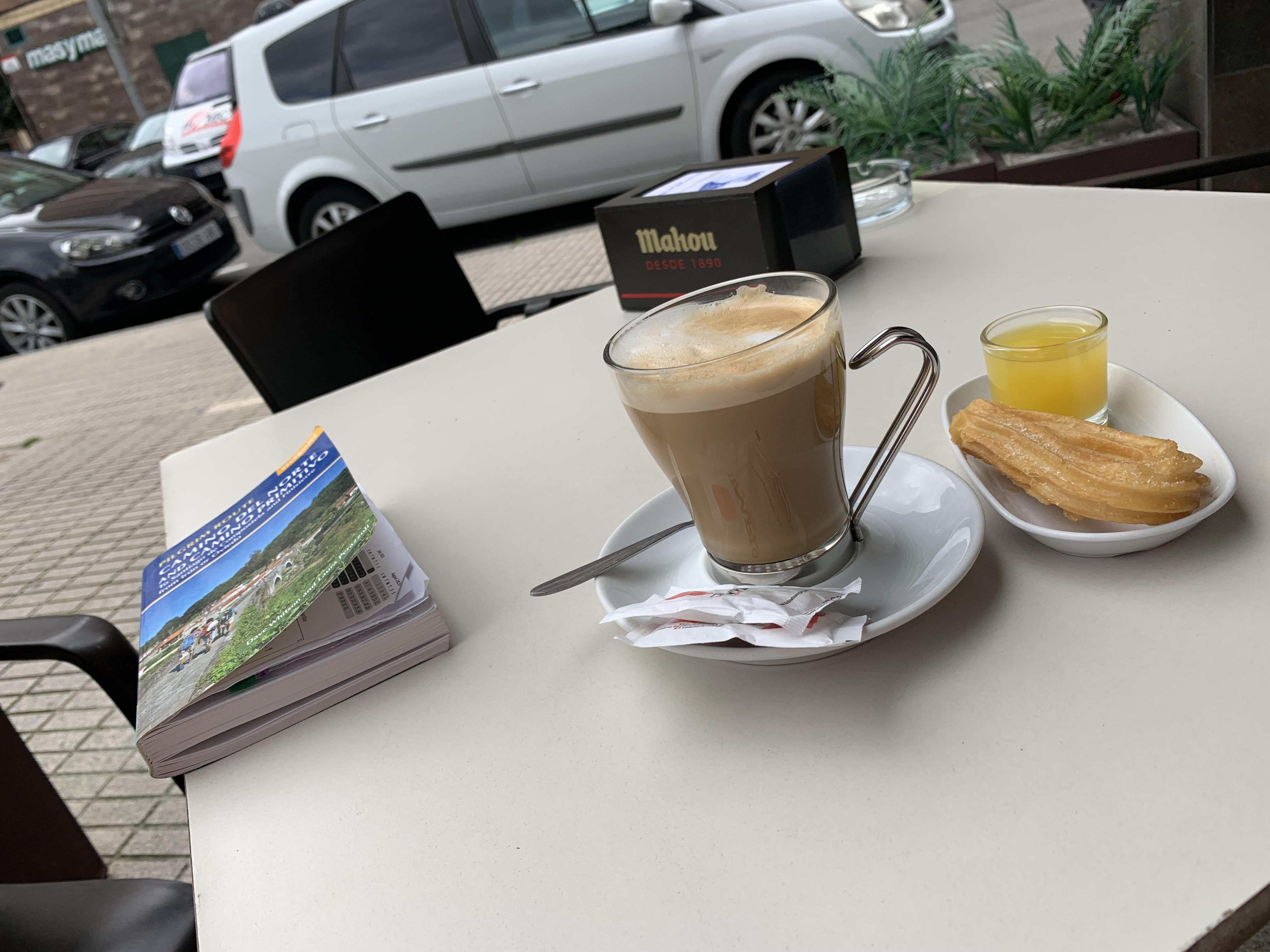
Spain tends to stay up quite late and sleep in, so I cherished these quiet moments alone on The Way waiting for the first shop to open to stop in for a cafe con leche grande and the delicious extras that always accompanied it.
Although it was harder to find markings in the dark, I found myself unbothered when I wasn’t sure which way to turn; feet at one shell, I’d inch a few tentative steps forward until the next one appeared; I reminded myself that I was a pilgrim and must do pilgrim-y things, like launching out in faith even when the road ahead was uncertain.
I forced myself to slow down. To find the sacred.
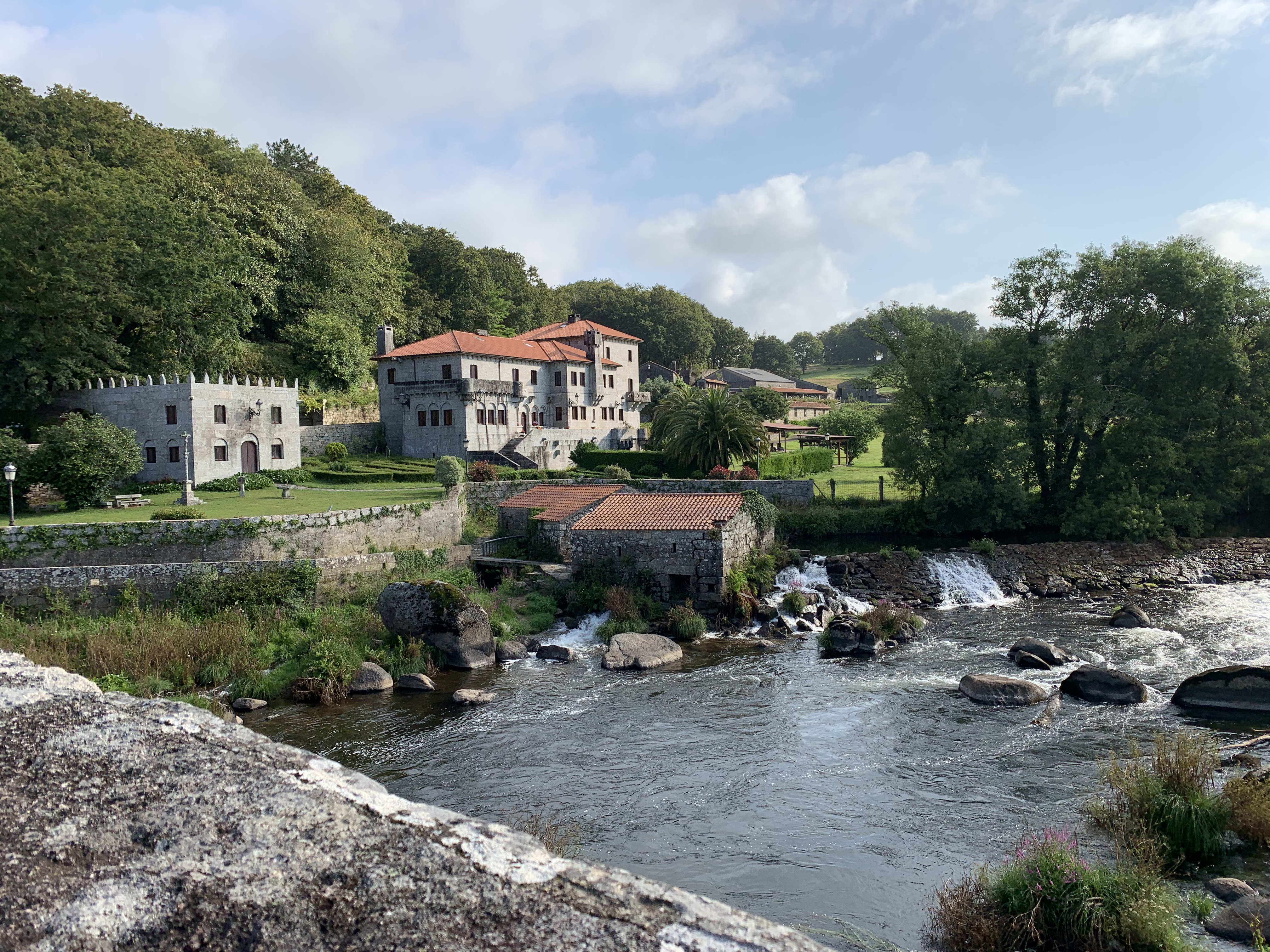
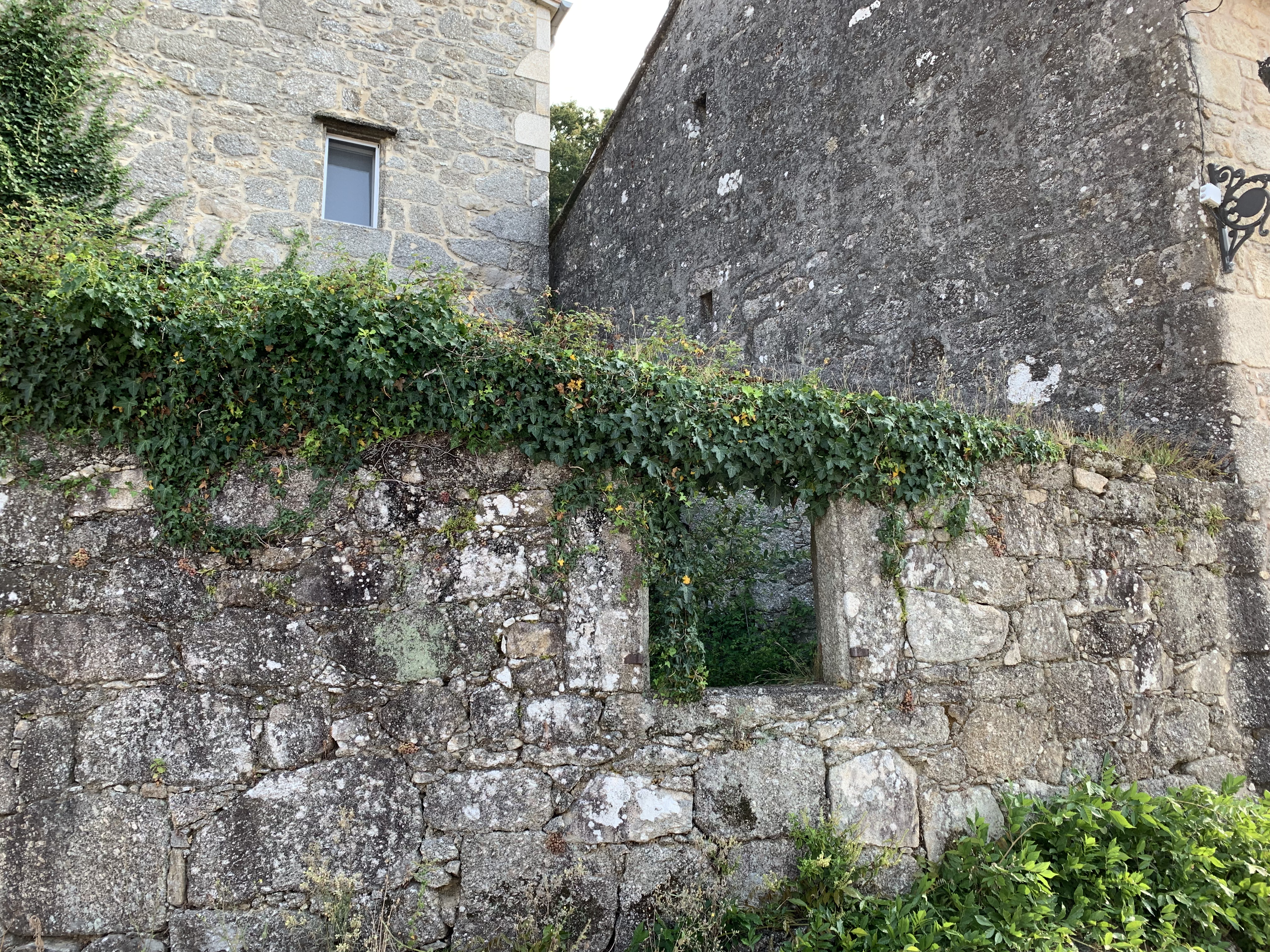
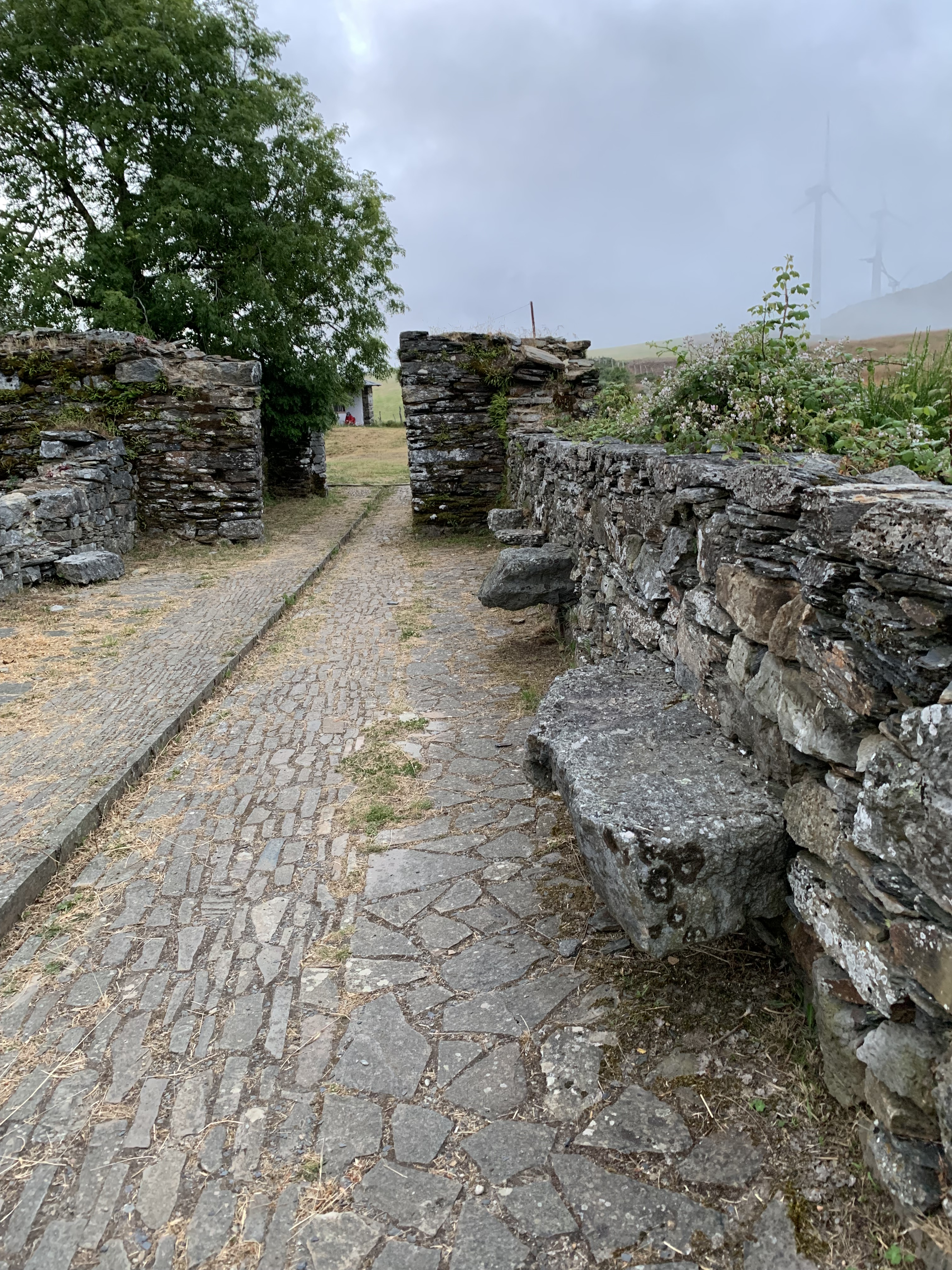
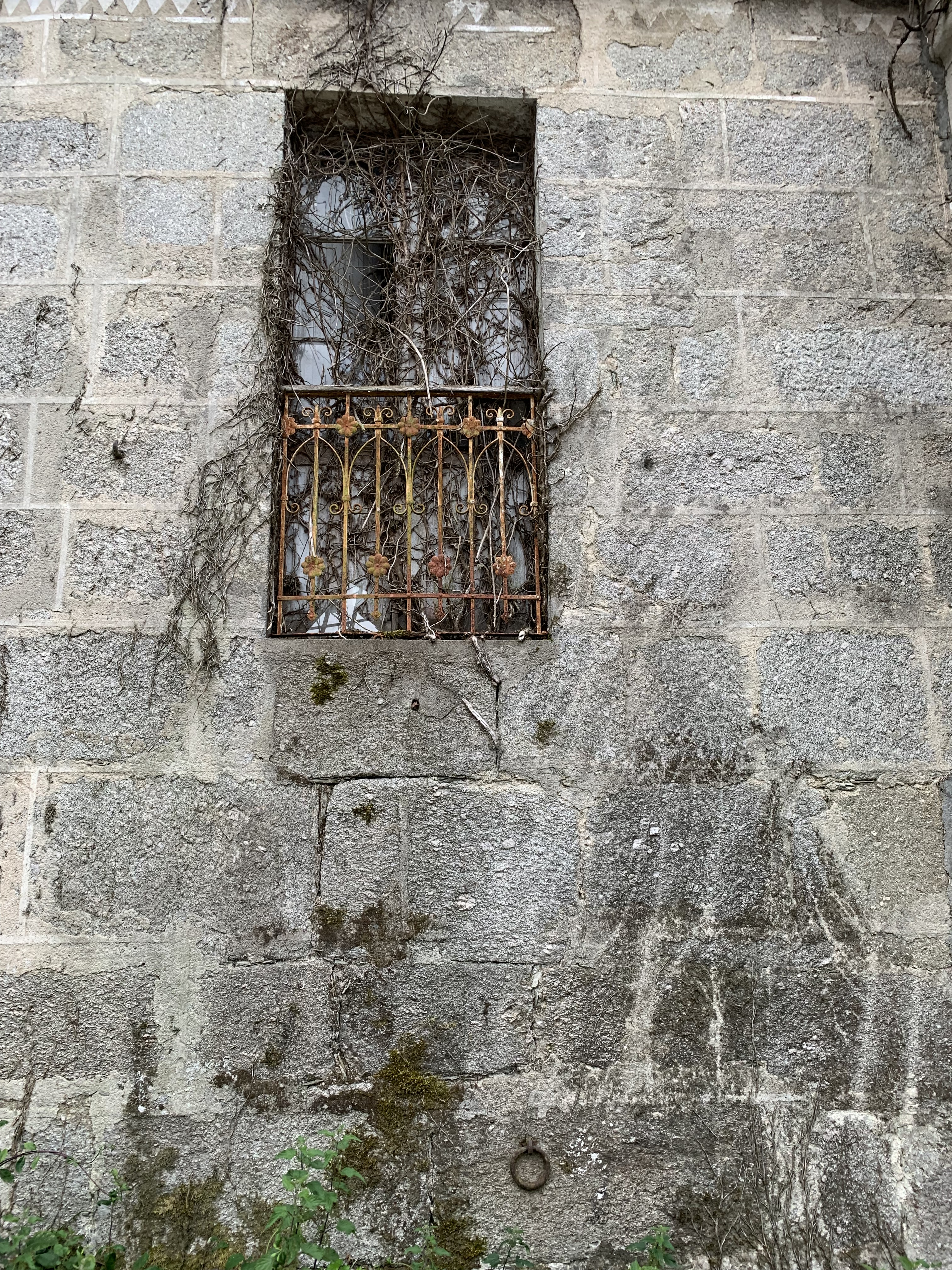
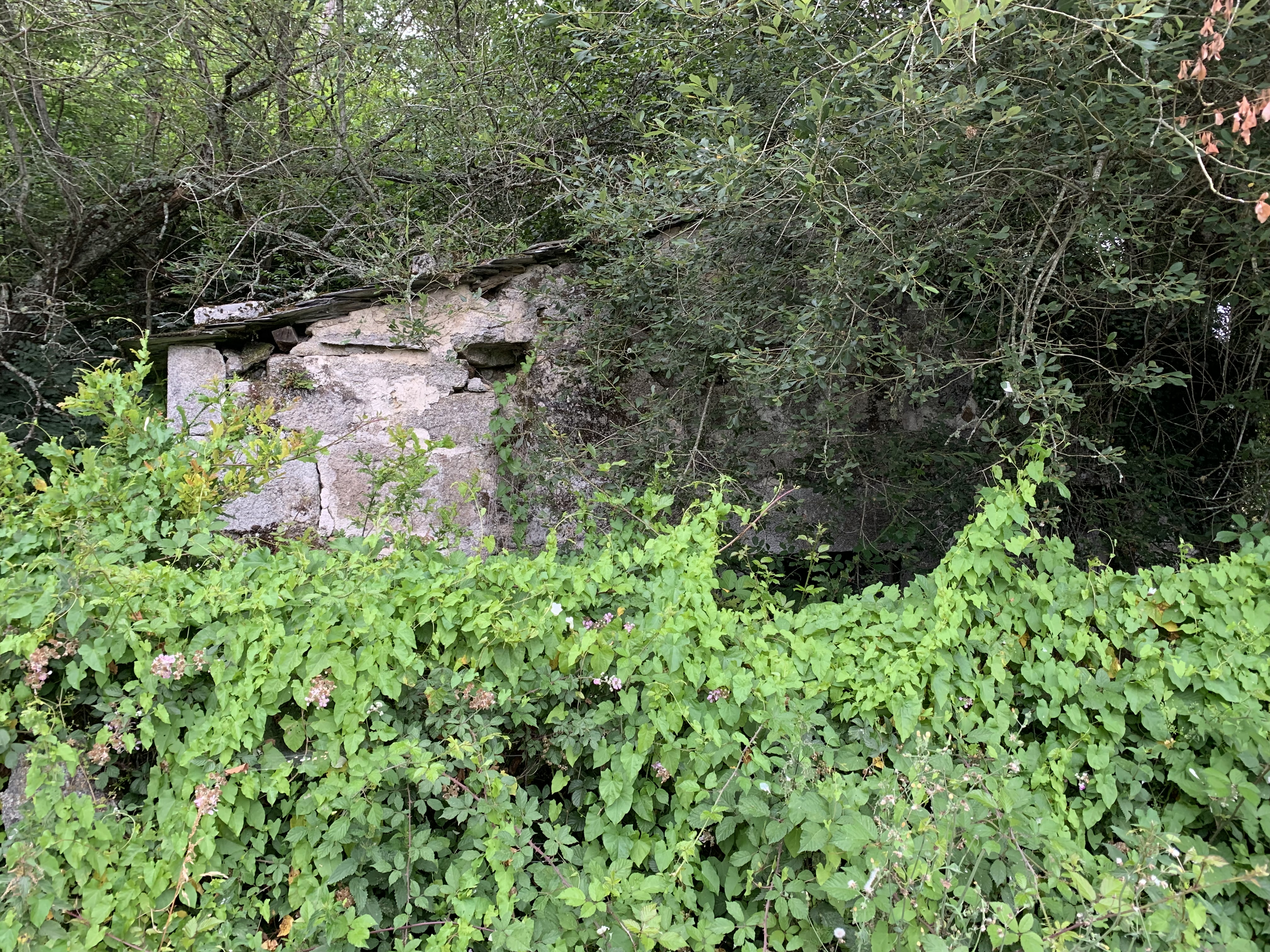
Sometimes it was revealed in ruins, evidence of the relentless taptaptap of time.
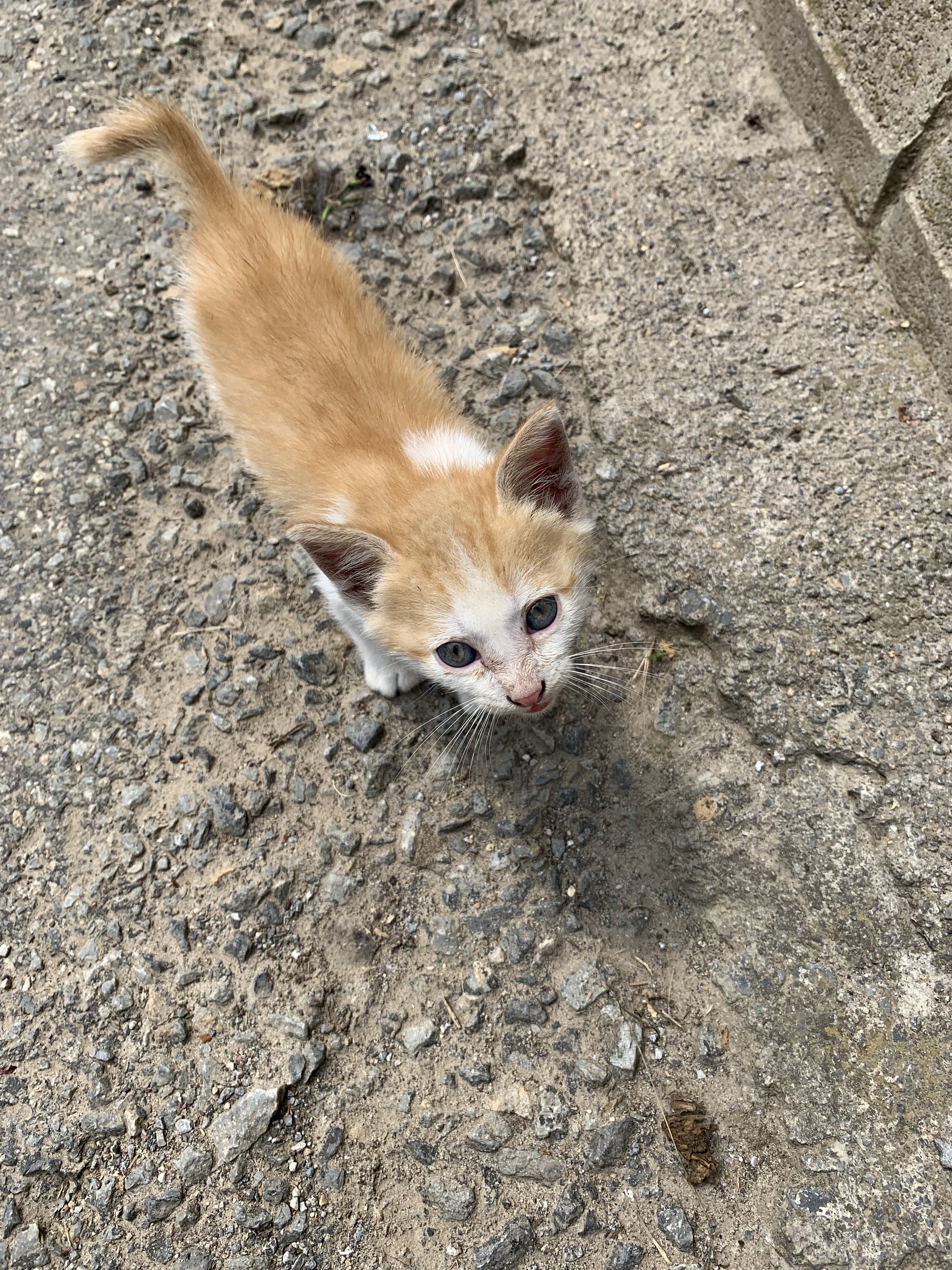
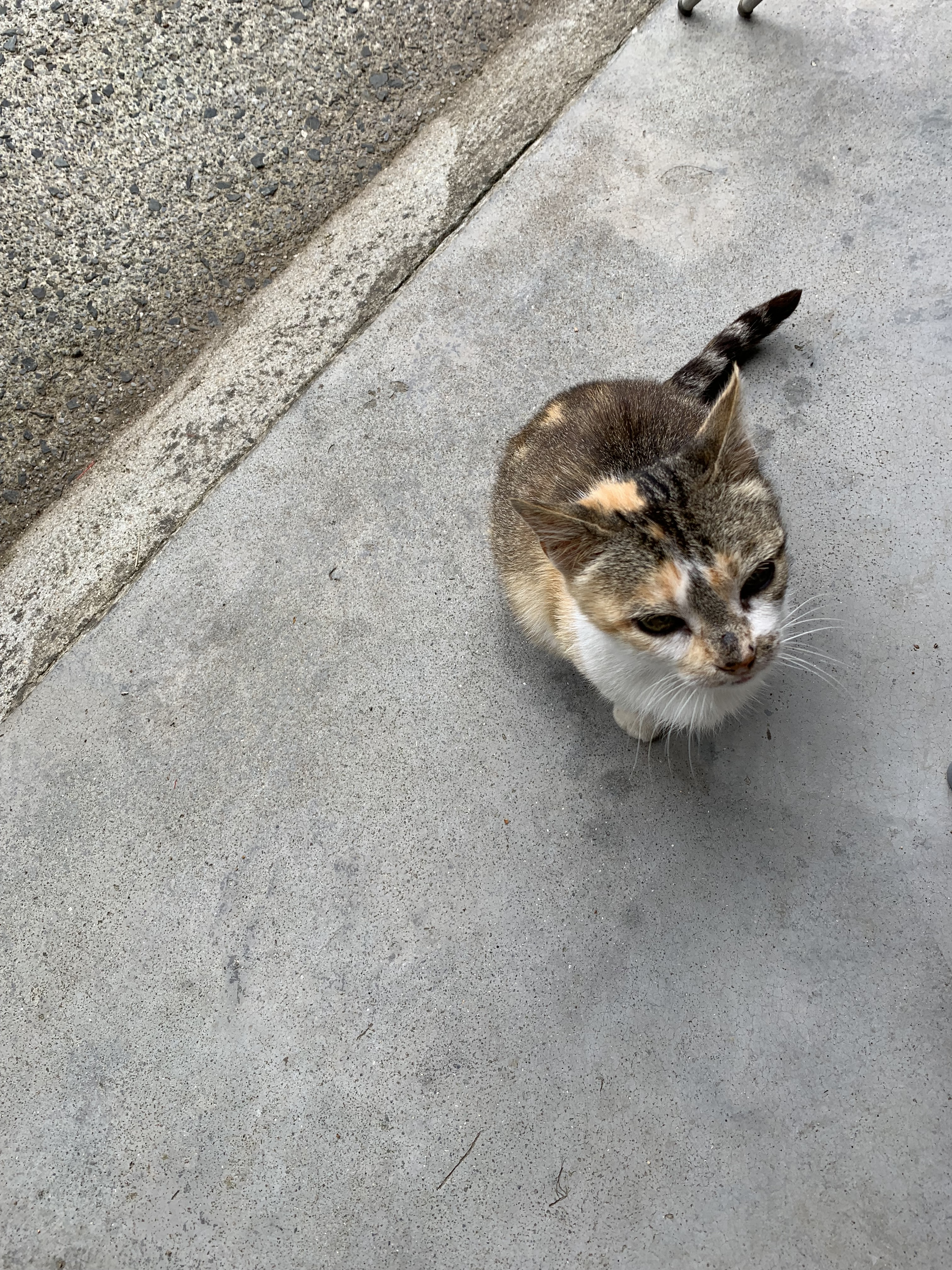
Other times it was a kitten, tiny delight with a broken tail, begging me to take her with me.
The hills of Spain felt like God’s holy temple, and every day He surprised me by His intimate care.
Like a monastery albergue, where I met Richard from Quebec and Noel from Australia, each of us speaking wildly disparate English as we shared a week or so of gentle company.
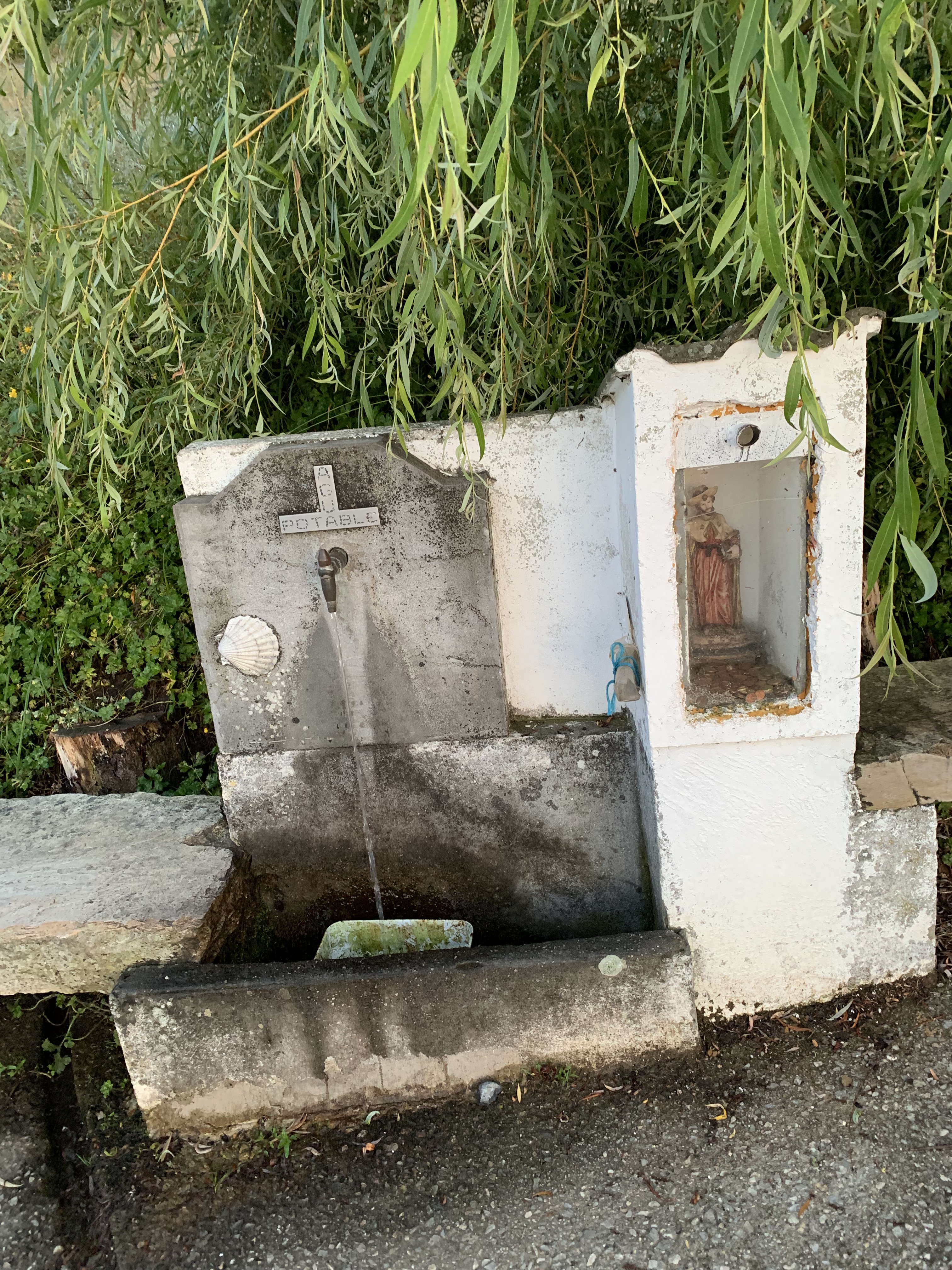
Or a town water fountain just as I was about to run out.
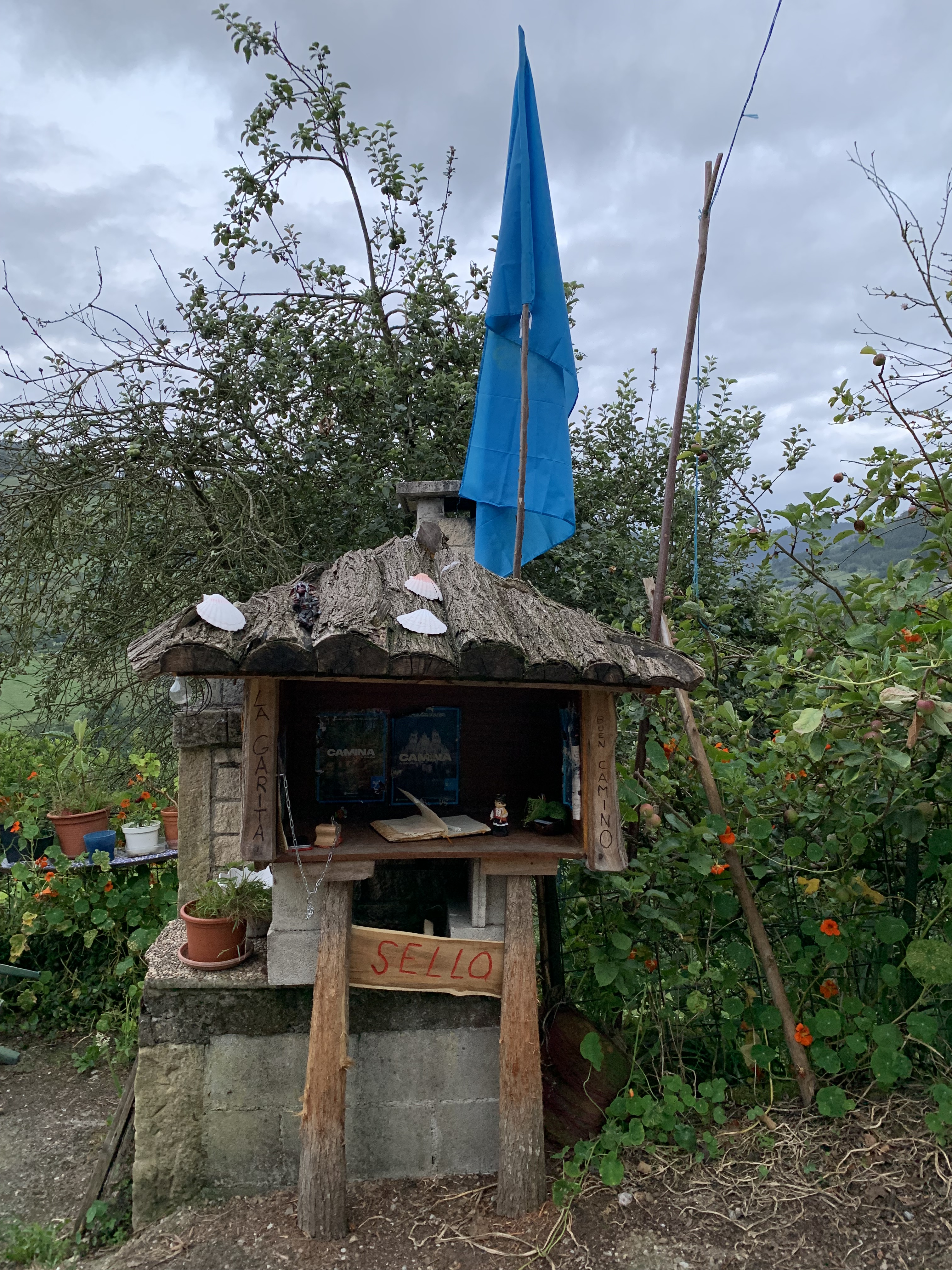
A sello stand in the middle of nowhere when I hadn’t found any place to stamp my credencial all day.
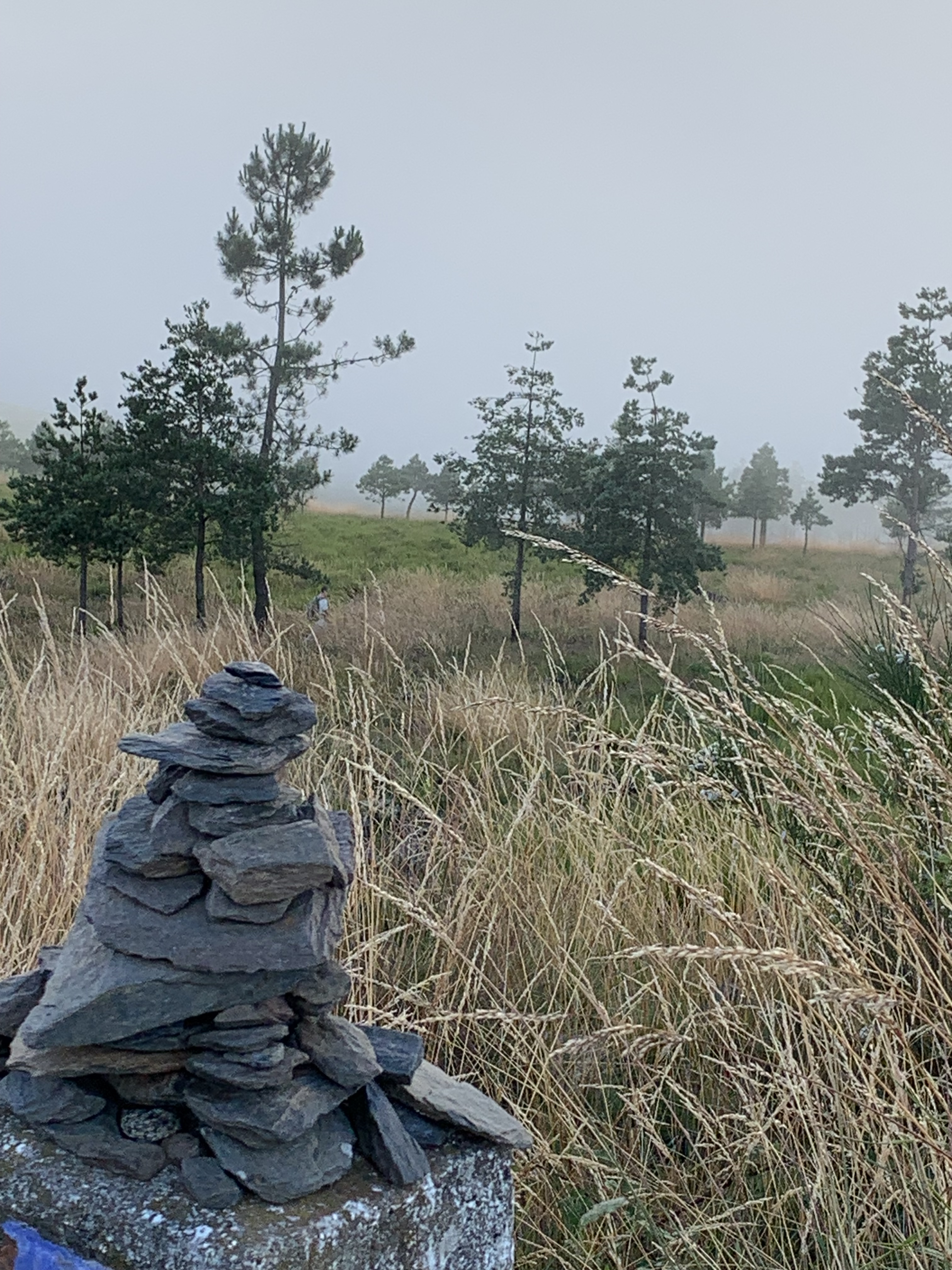
Fairytale forests.
A cheese-loving cat to share my lunch.
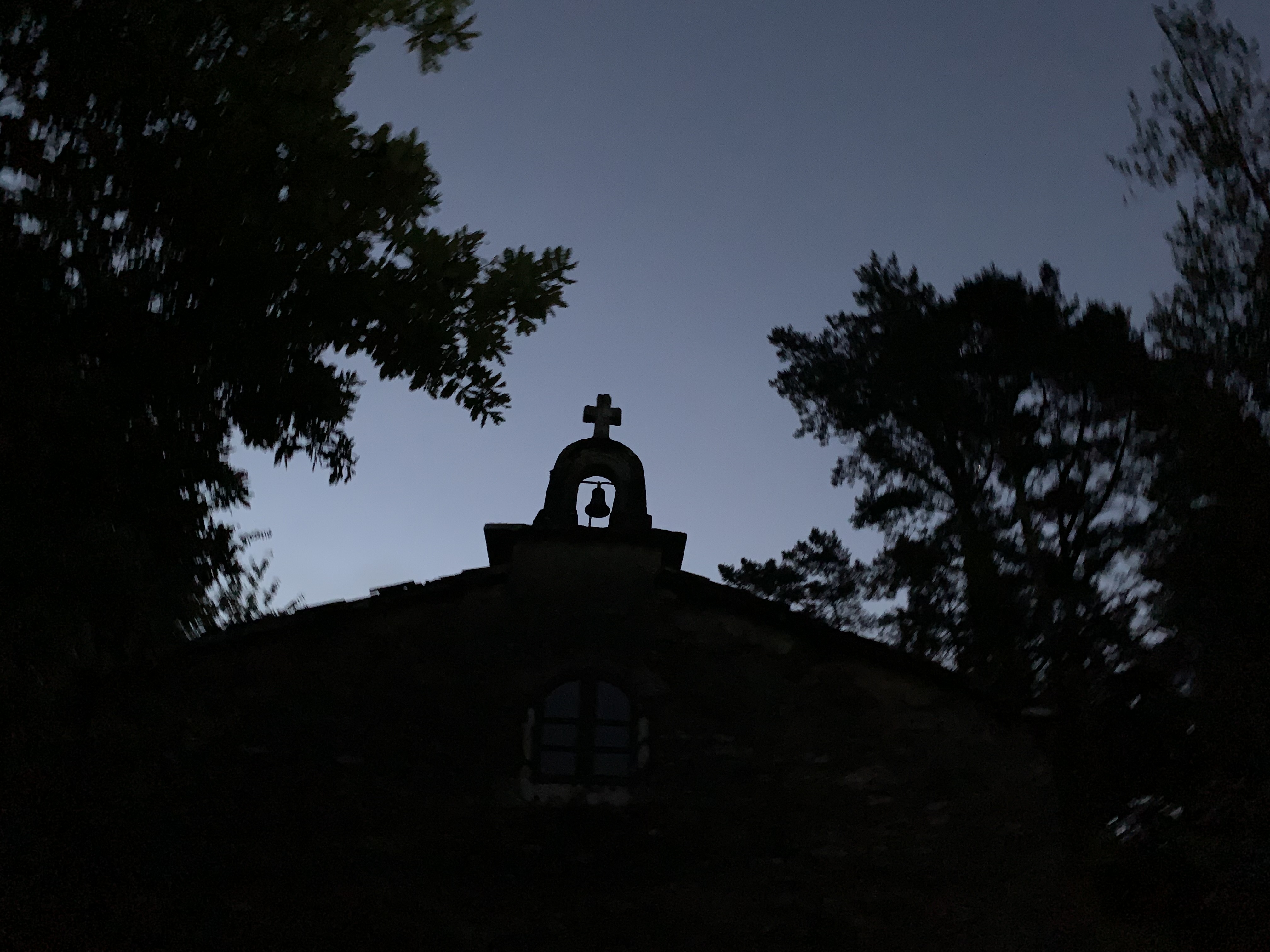
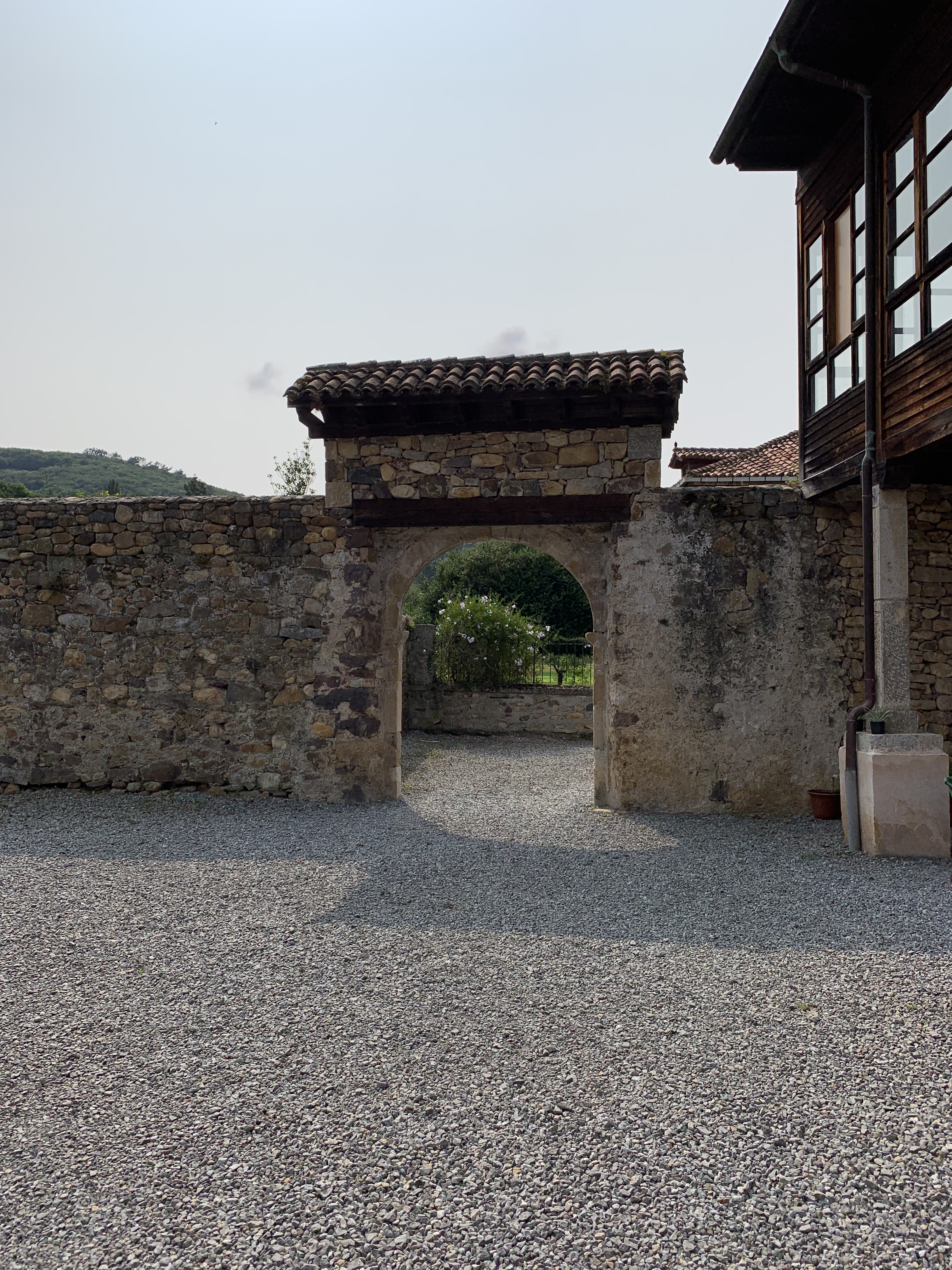
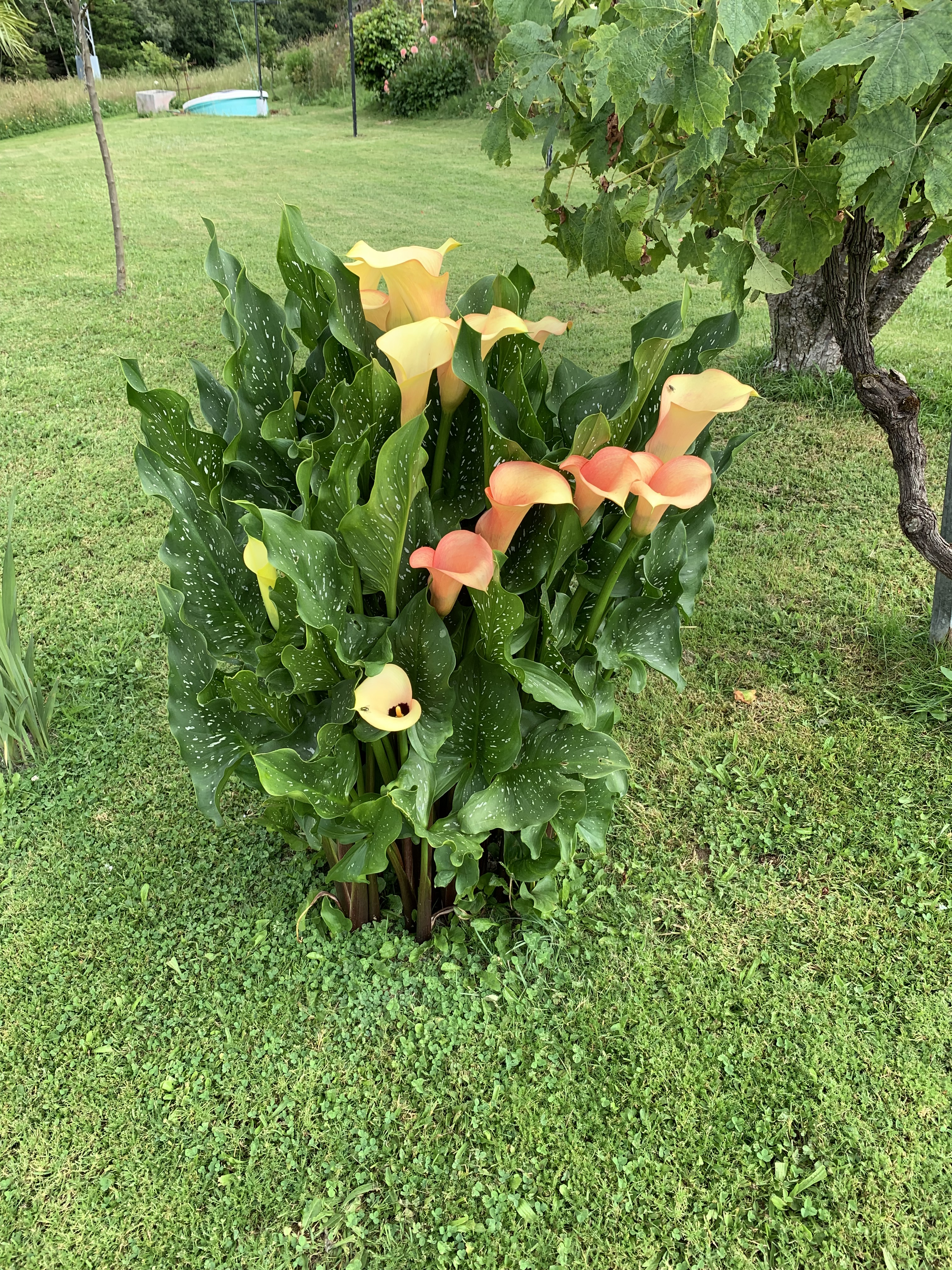
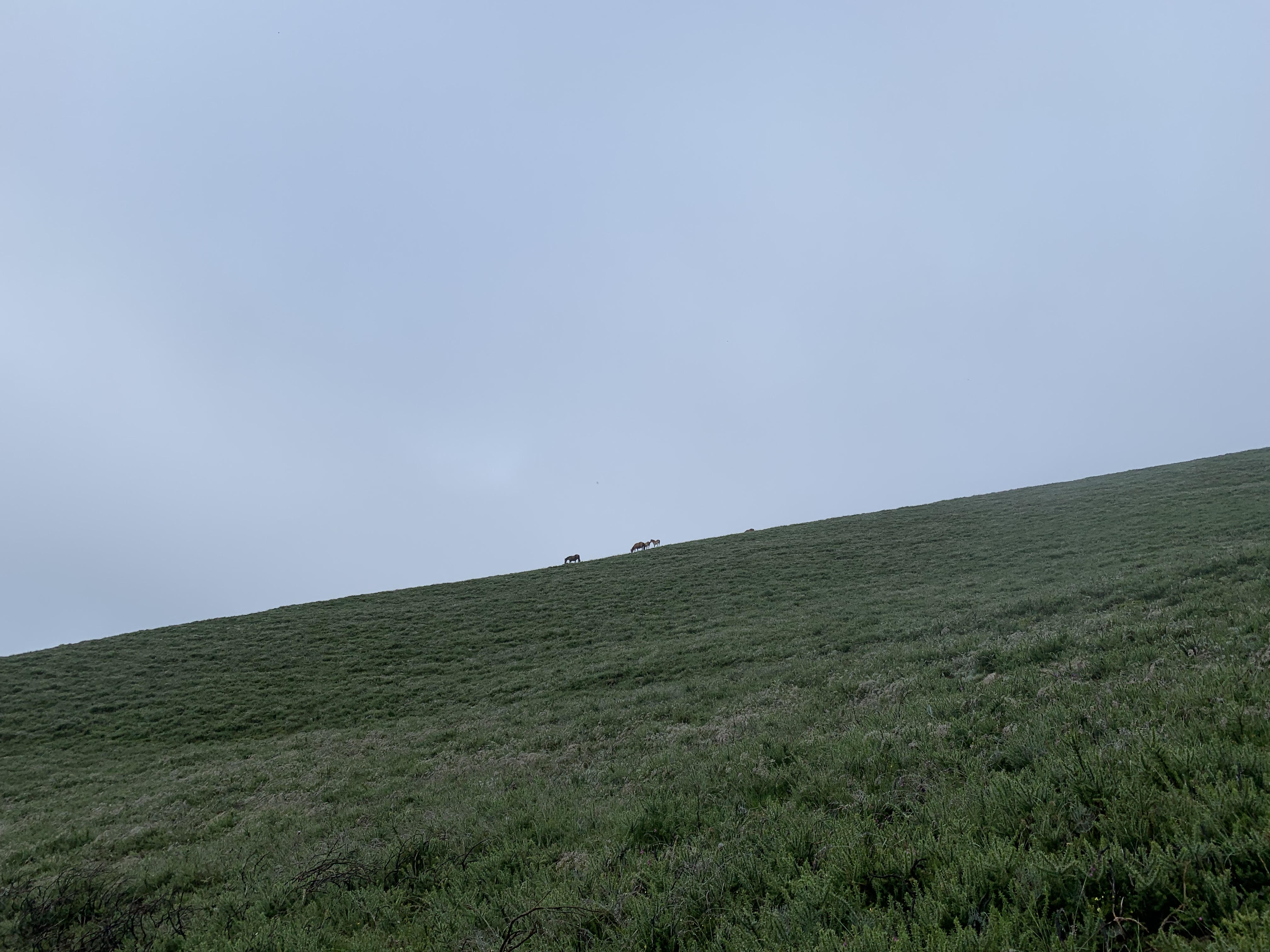
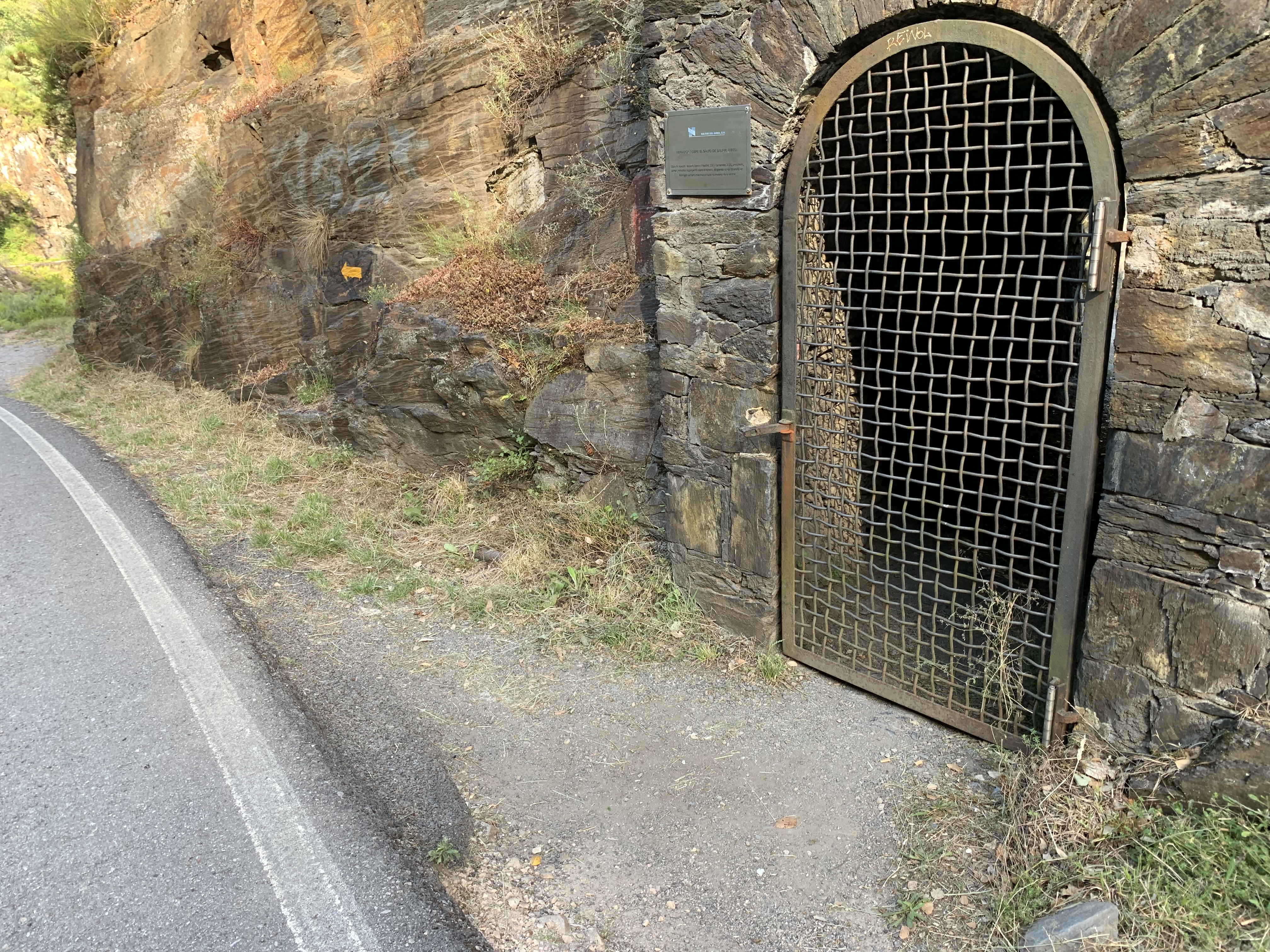
Lush flowers, Roman bridges, horses grazing a hillside, mysterious doors, and small stone churches, candles ablaze, causing me to weep.
One morning, I came across a vending station in a tiny hamlet, but no coffee dispensed after paying my euro. Noel happened by, and as we chatted, the owner of the machine walked in. Unable to fix the problem, she ran instead to her house and brewed us both fresh coffee, served on a tray with a pitcher of cream.
I could have kissed her.
One night, we pilgrims fall asleep to the mournful moos of momma cows newly separated from their babies. Another morning, I sit eating second breakfast at a road crossing, enthralled as wafts of steam evaporate from the asphalt.
Everywhere, beauty.
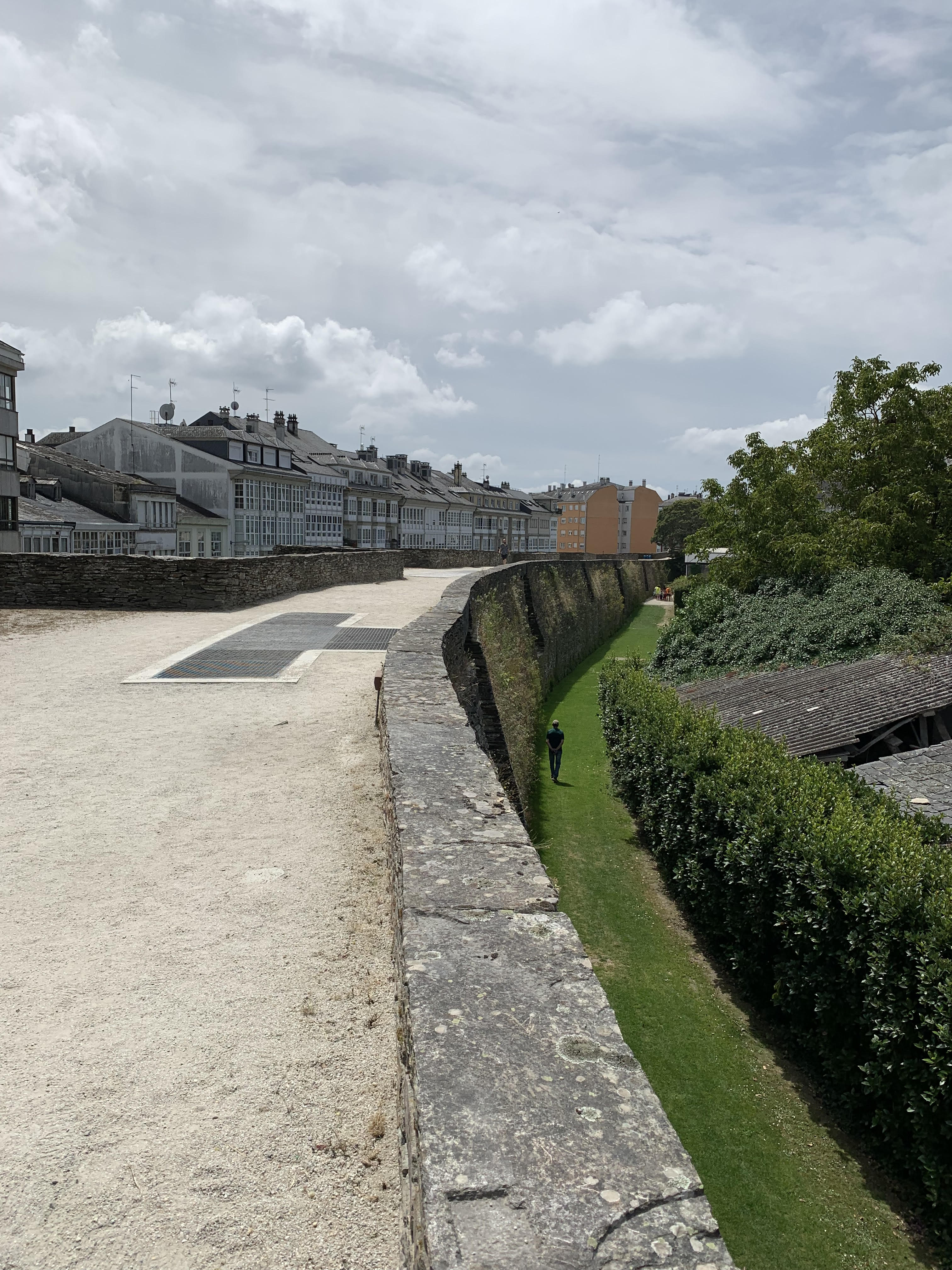
In the ancient Roman town of Lugo, I walk the city walls and find an English language paperback at a market stall to replace the one I was just about to finish.
When the Primitivo finally joins the French Way in the town of Melide, a day and a half from Santiago de Compostela, I am unprepared for the hordes of pilgrims completing the final stages.
It’s disorienting to walk next to tour busses and taxis ferrying luggage, singing and cheering, music blaring over bluetooth speakers; I’m initially quite grumpy.
Who are all you people?
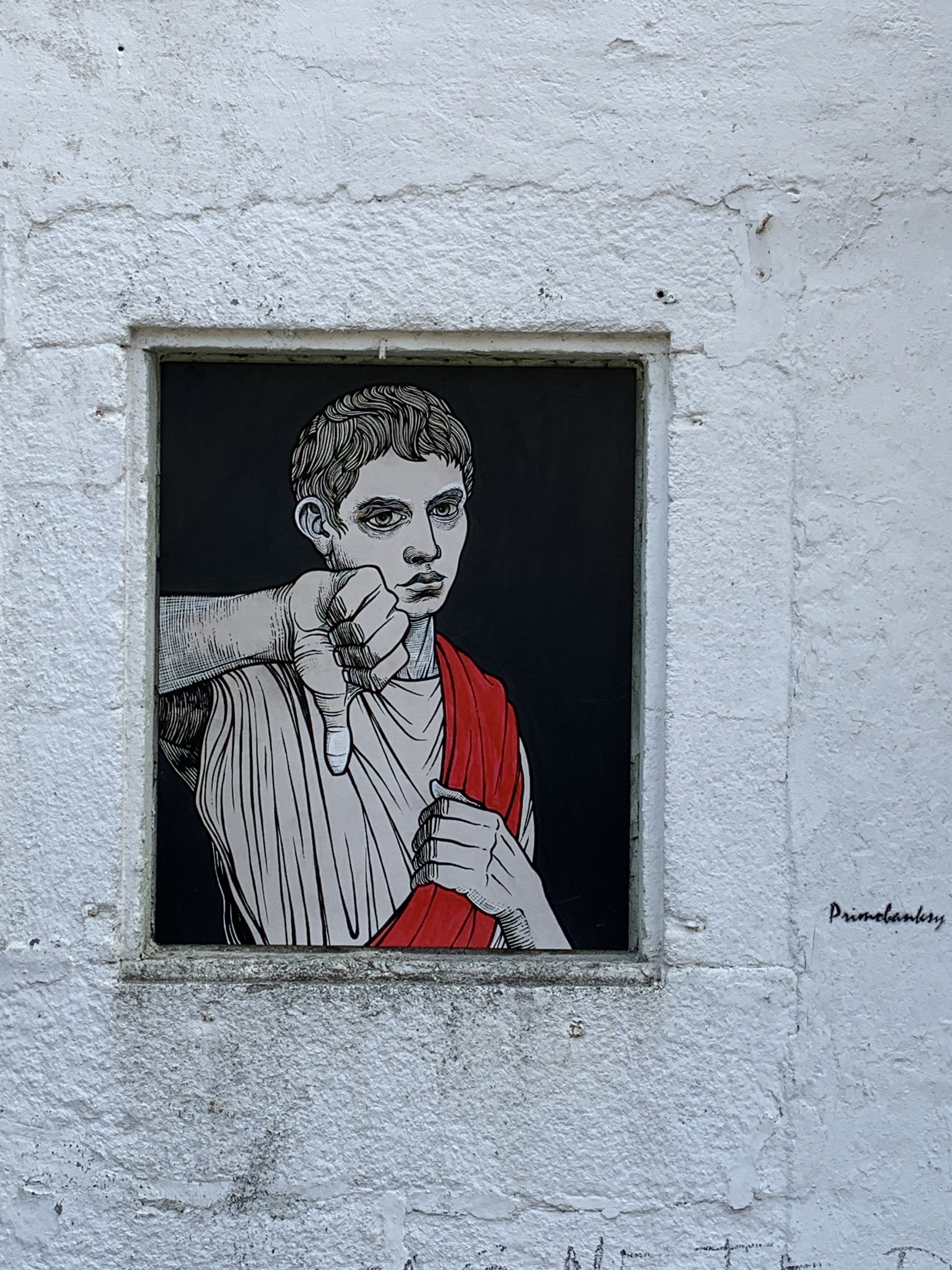
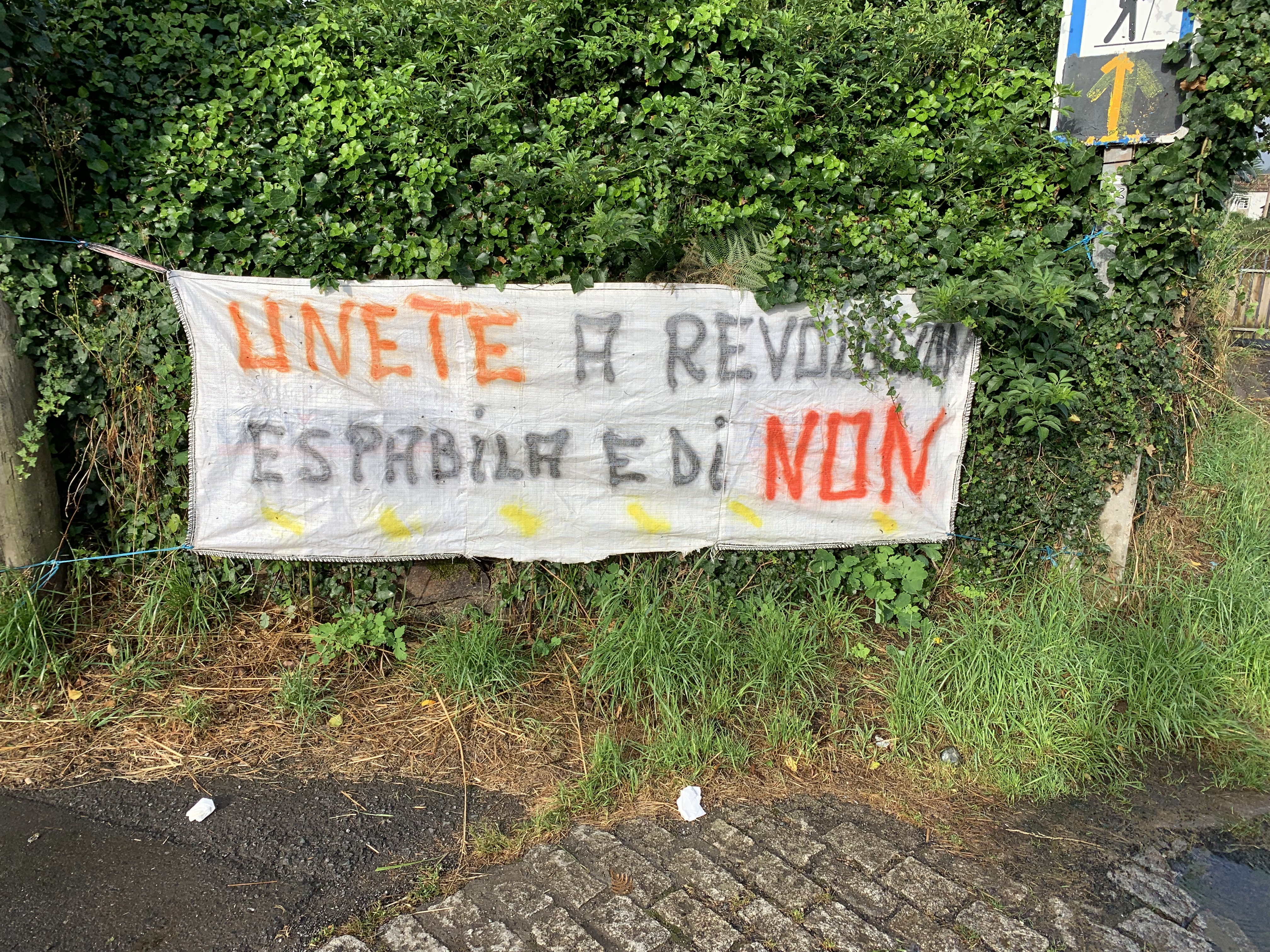
Perhaps the noisy crowd is why the closer we get to Santiago, we begin to see neighborhoods displaying protest signs. The mobile party coming through every day must be a lot for the residents.
But are not all these souls pilgrims? Are they not also following The Way?
I force my critical heart around and begin to give thanks for all those pilgrim feet, traveling the hot and dusty road into the city.
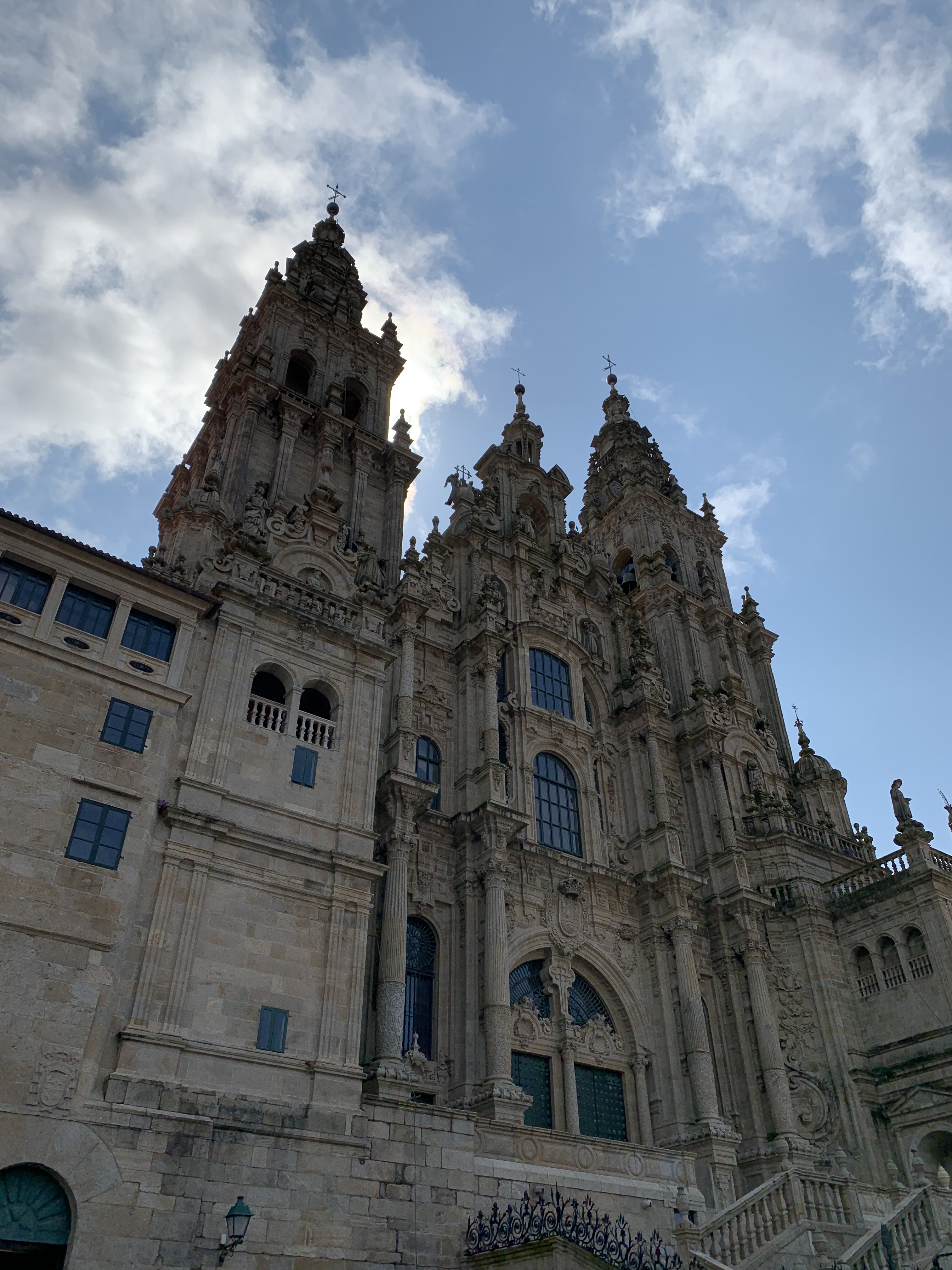
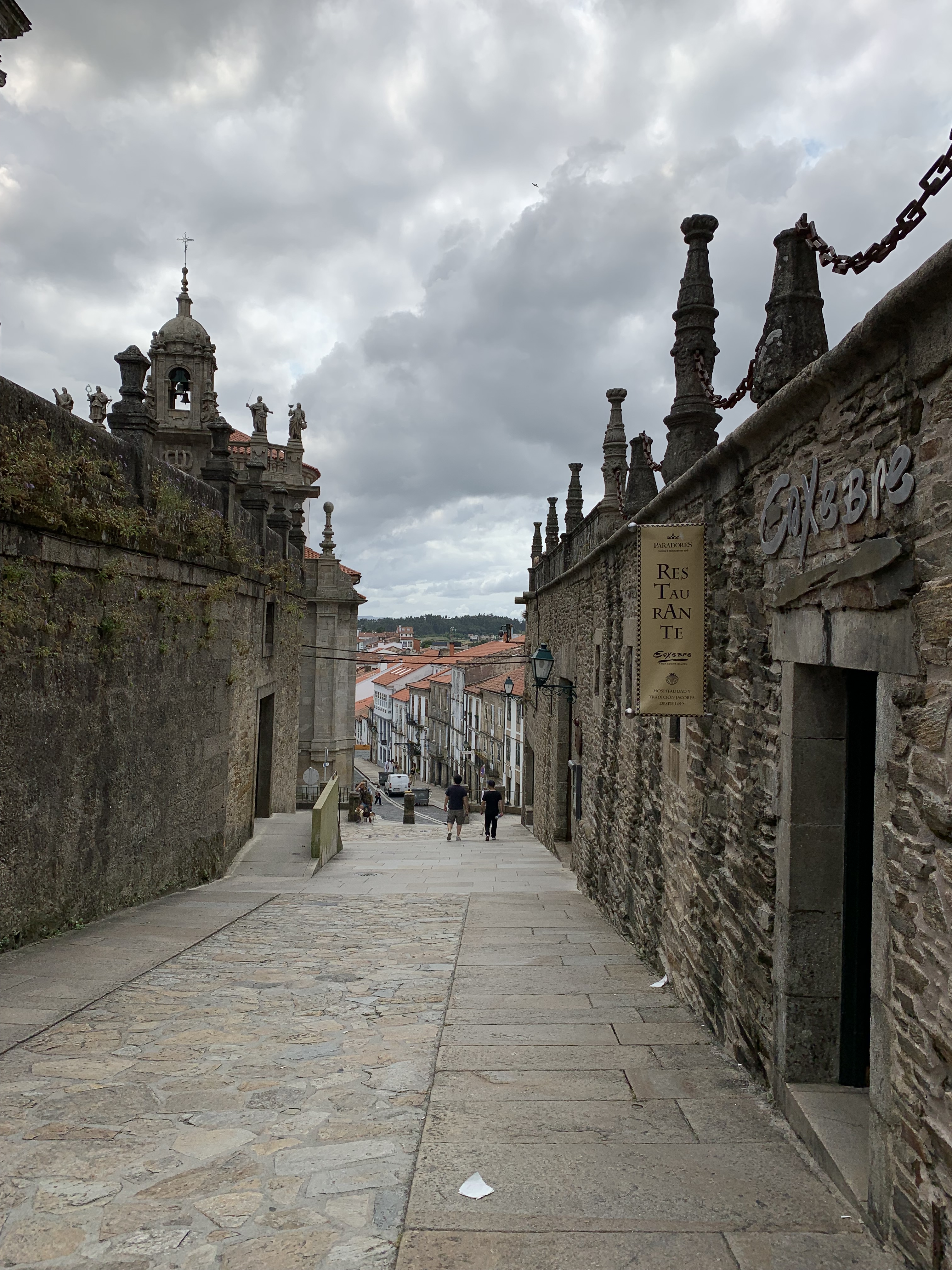
And just in time – peeking out between the apartments and businesses that line the street is my first glimpse of the iconic Cathedral tower.
Pilgrims buzz by me as I lose my breath, hands on knees. Wasn’t expecting that.
Straightening up, I become singularly focused – get to the plaza.
Crosswalks are torture, as are mothers with strollers, old couples arm in arm, men on corners smoking. Please let me by!
Bagpipes play as I round the final corner and the Cathedral appears.
Pilgrims are everywhere, all of us in similar states of relief, euphoria, confusion, and despair.
Over? How can it be over?
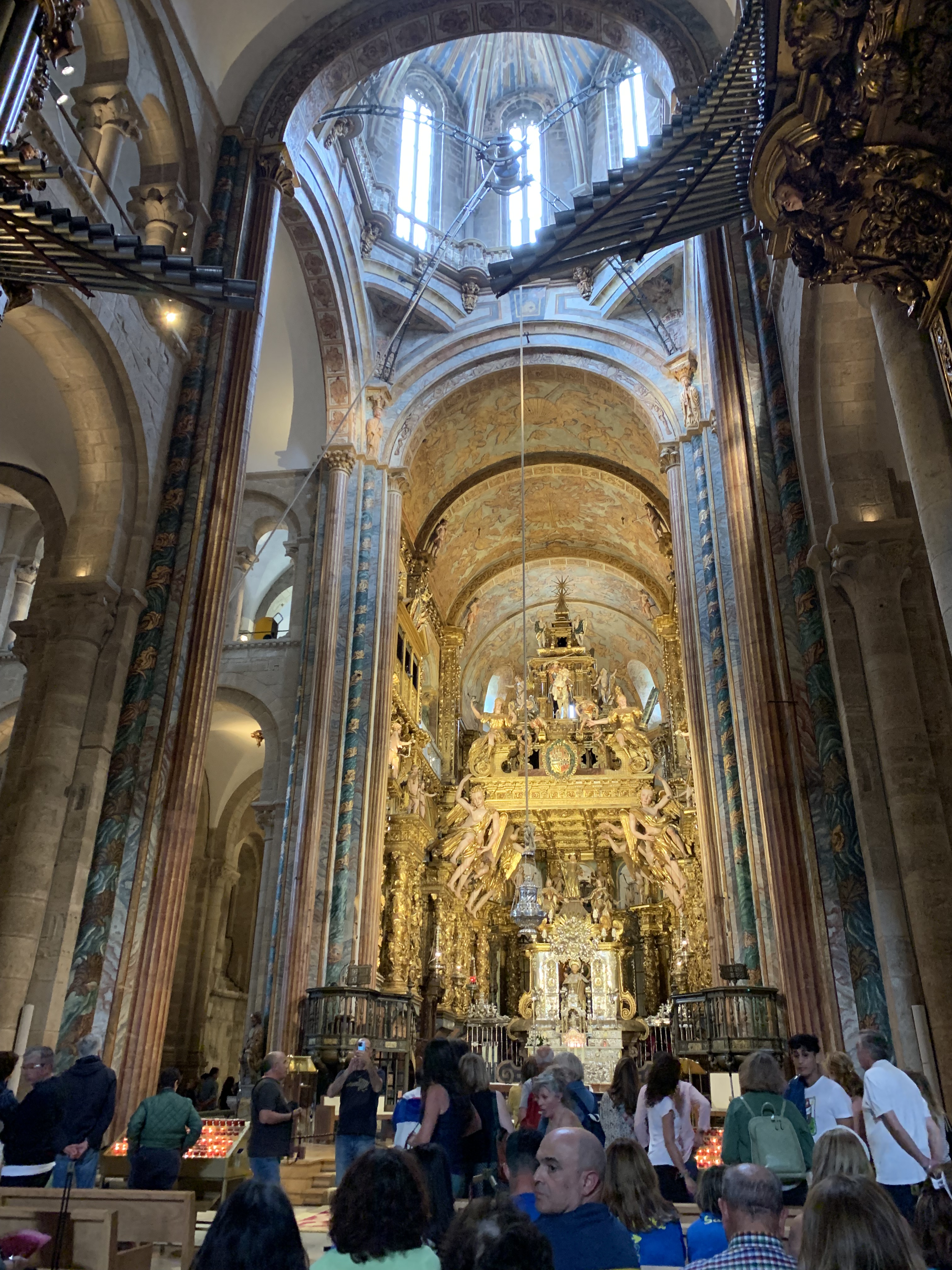
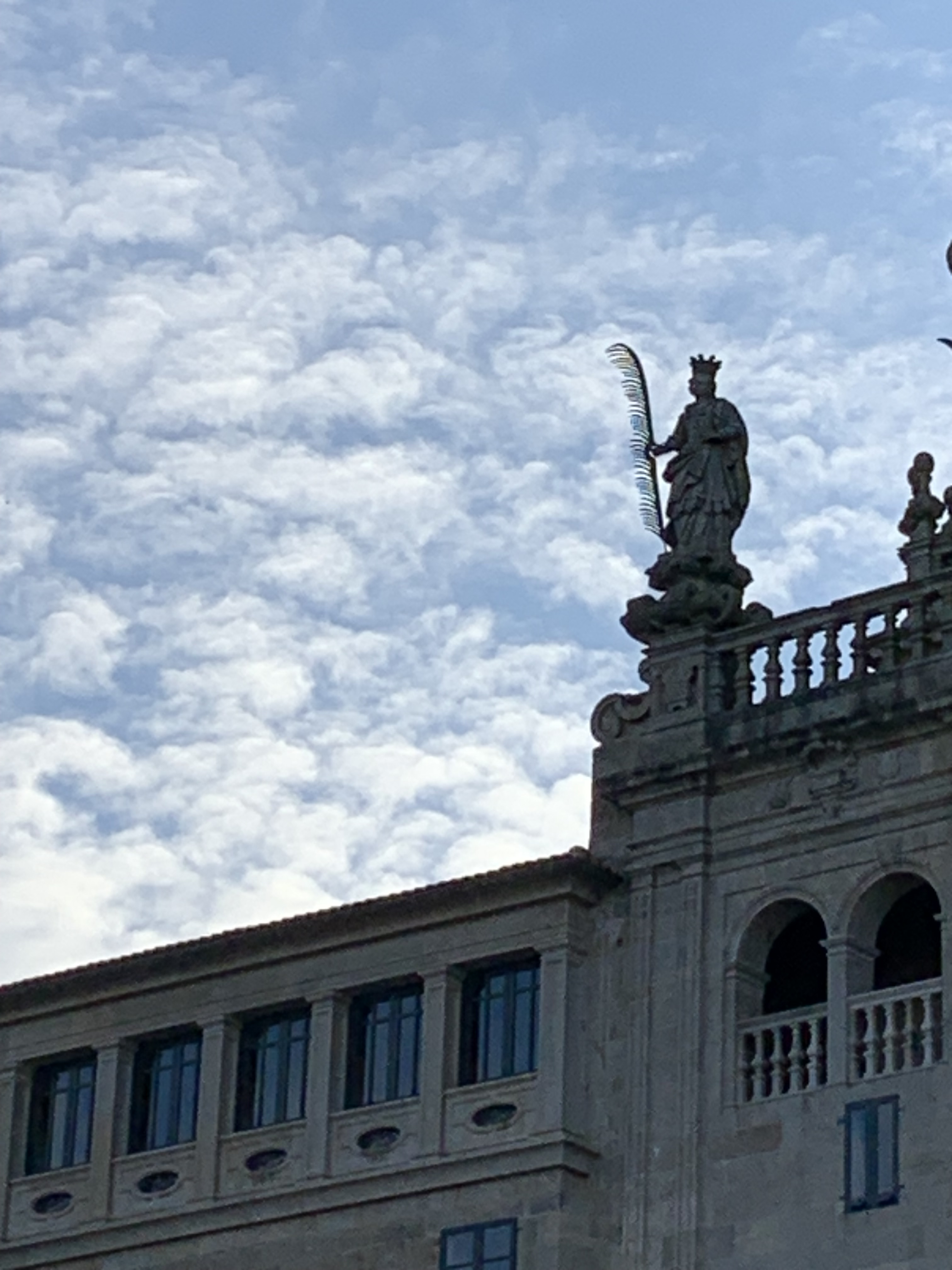
I wander around, doing the things I know I should do. Go to the Pilgrim Office to receive my Compostela. Tour the Cathedral. Get in line to hug the statue of Saint James.
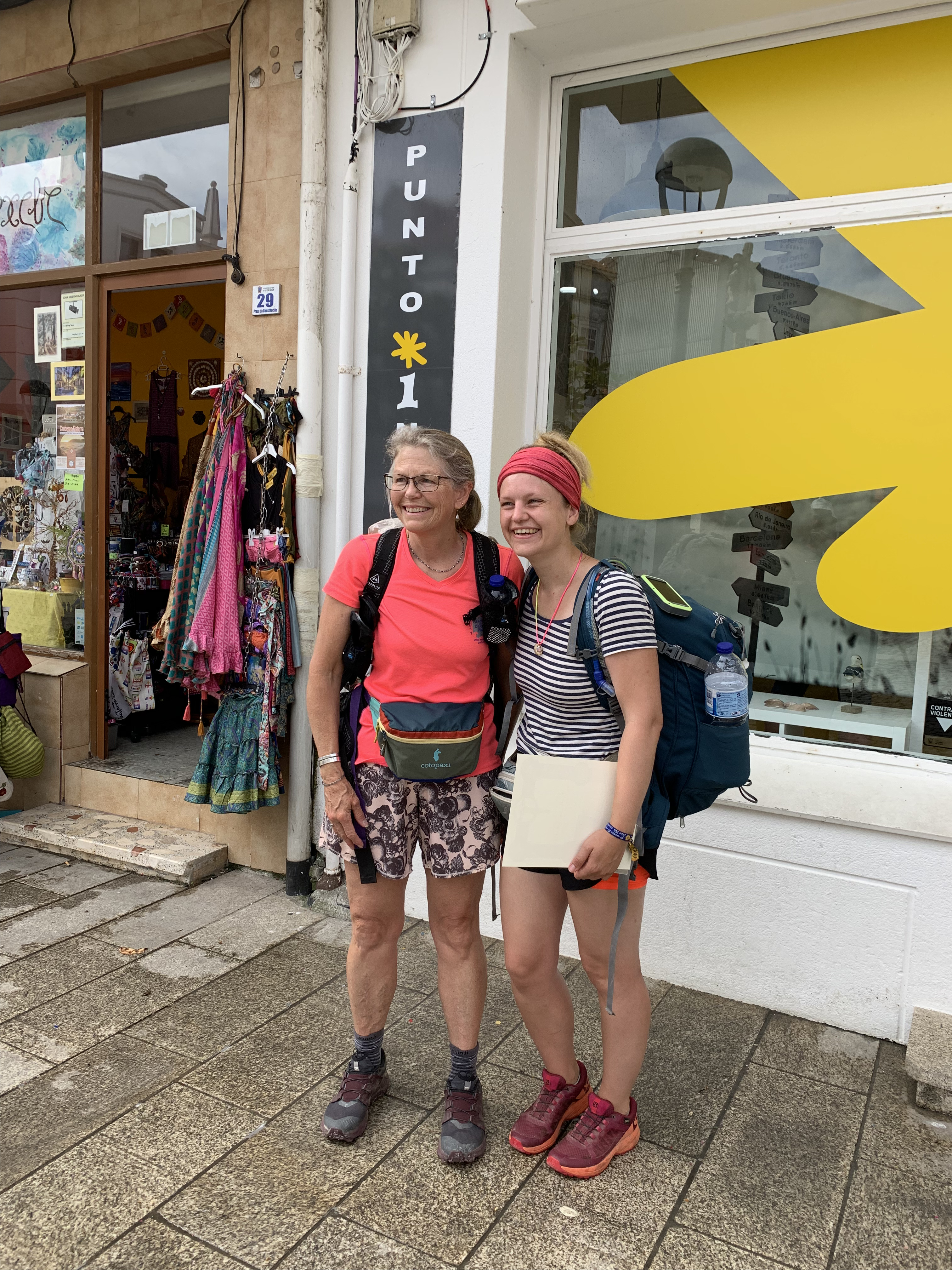
Offer to take others’ pictures. Ask someone to take my own.
I know I should feel something – what? – more.
But all I really want to do is keep walking.
So that is what I do.
Why have you chosen to follow The Way? This is the question most pilgrims ask one another when they meet.
For me, it was an unexpected gift to hike The Camino this summer.
I felt God’s protective and loving presence in myriad forms, every day, and I learned to trust Him, not begrudgingly as I often have in the past, but in eager anticipation of His goodness, wisdom, artistry, and love.
Following The Way was to experience what the prophet Isaiah described hundreds of years before there even was a Way:
But those who hope in the Lord will renew their strength. They will soar on wings like eagles; they will run and not grow weary, they will walk and not be faint.
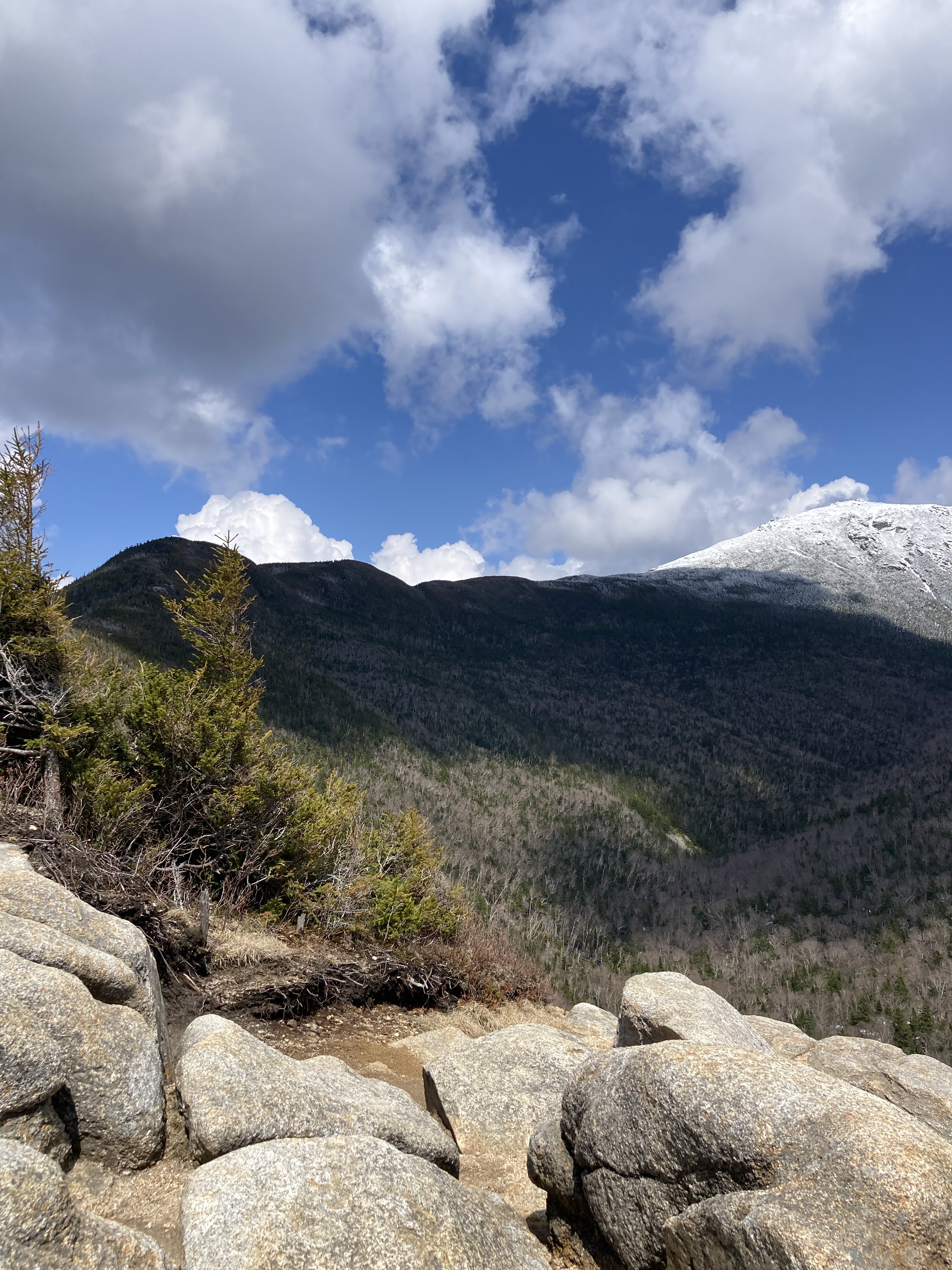
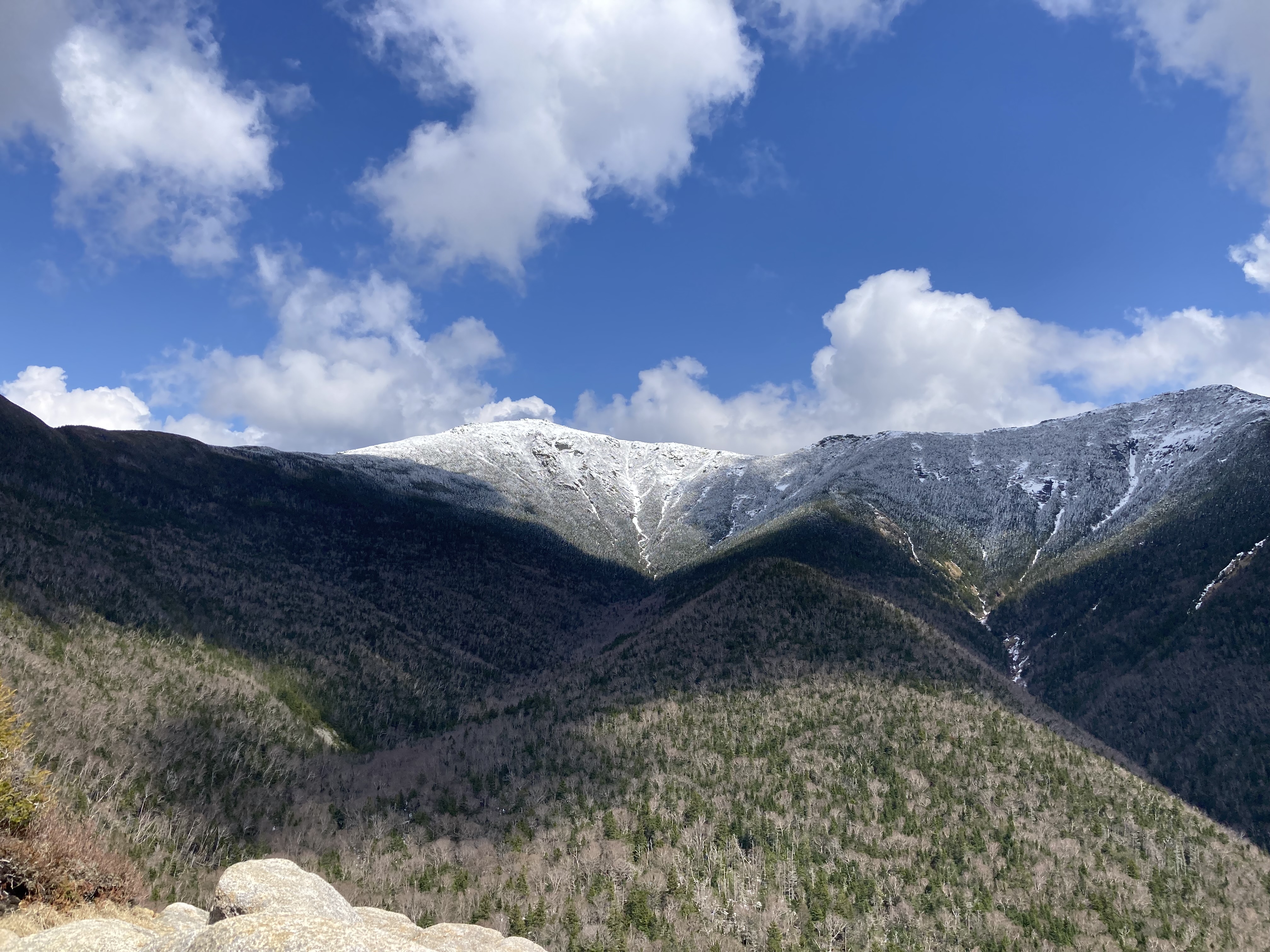
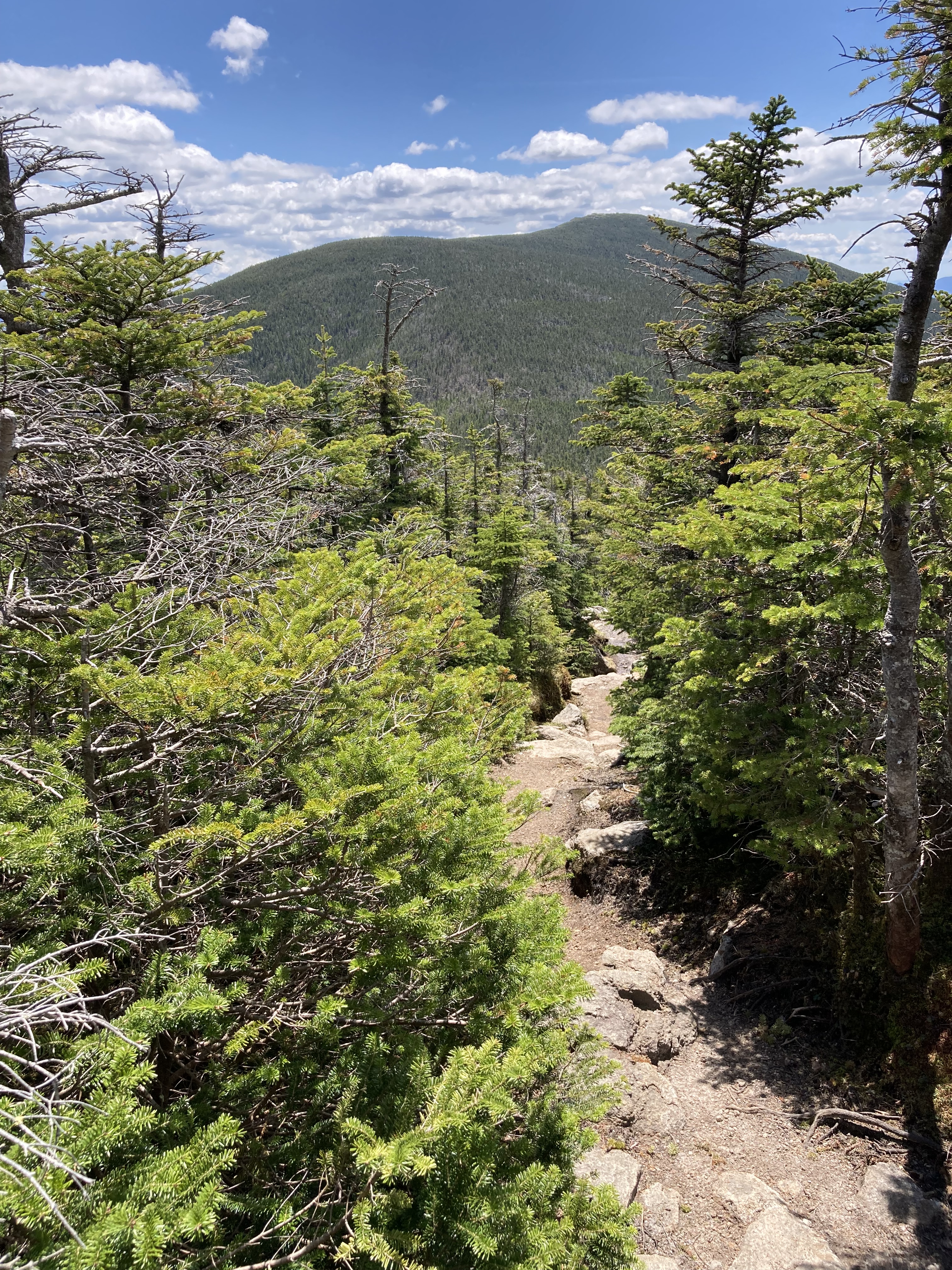
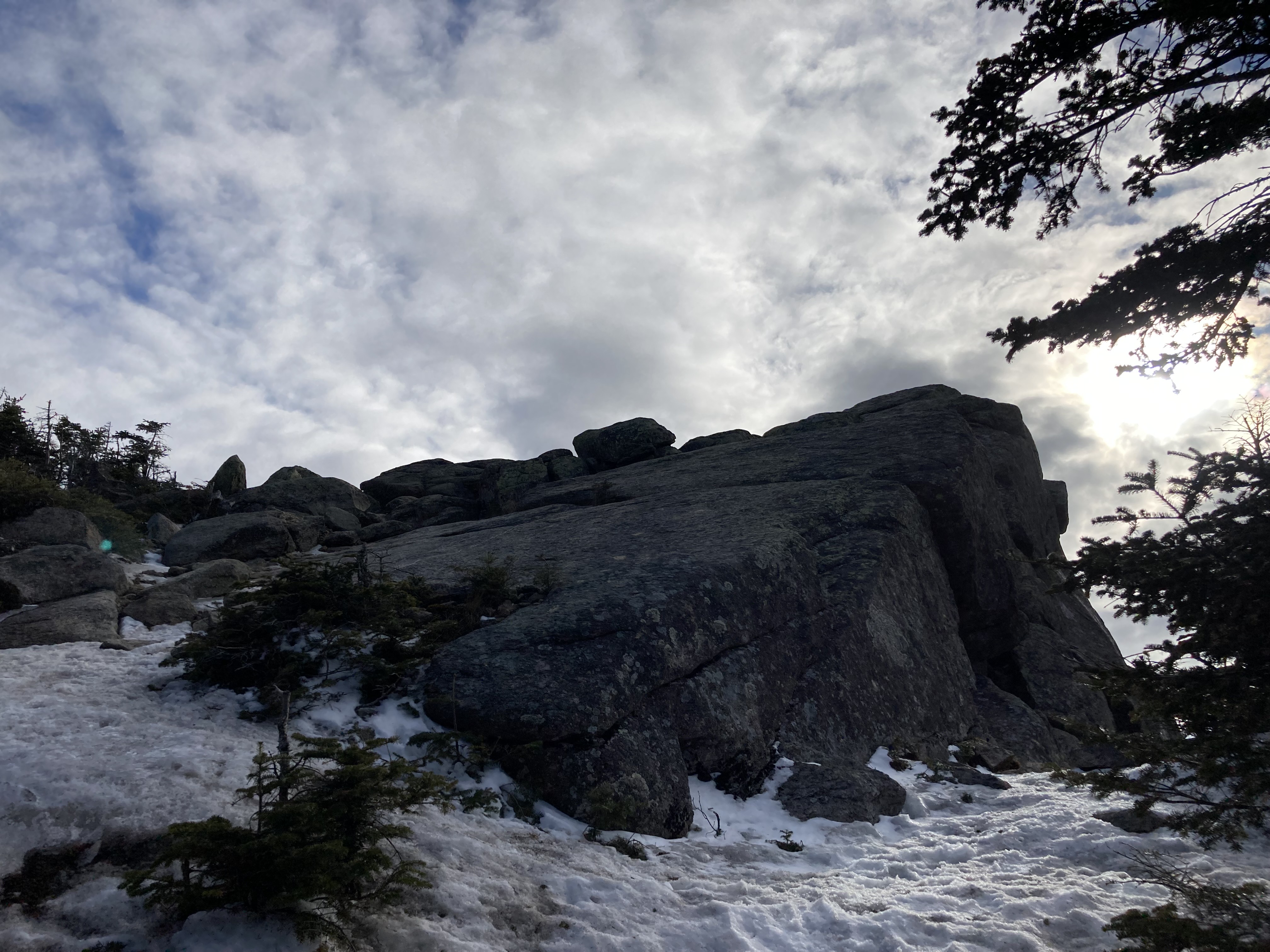
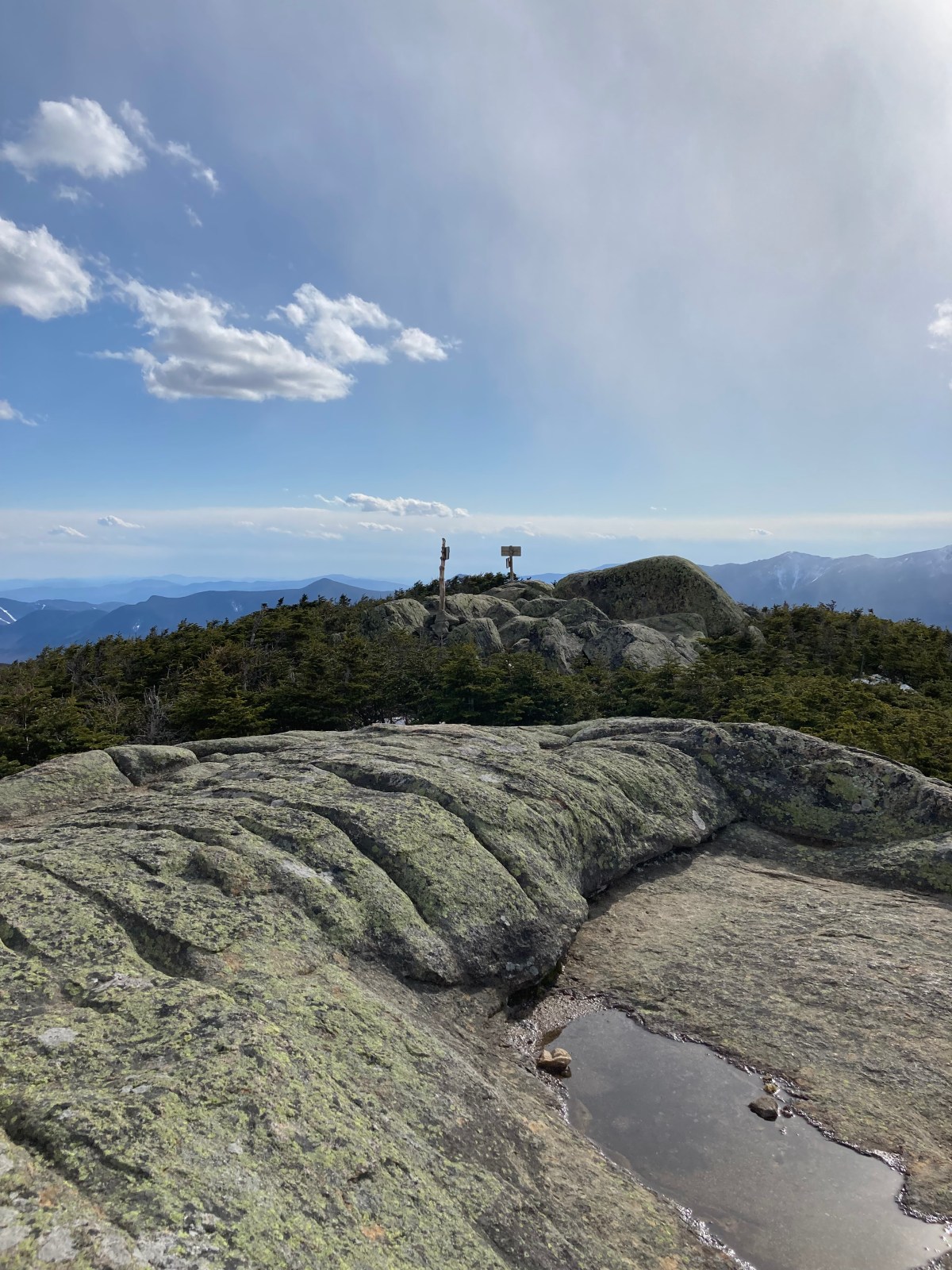
On the way up Old Bridle Path, leading to Mt. Lafayette, New Hampshire’s sixth tallest mountain, there is a place on the trail where the trees part.
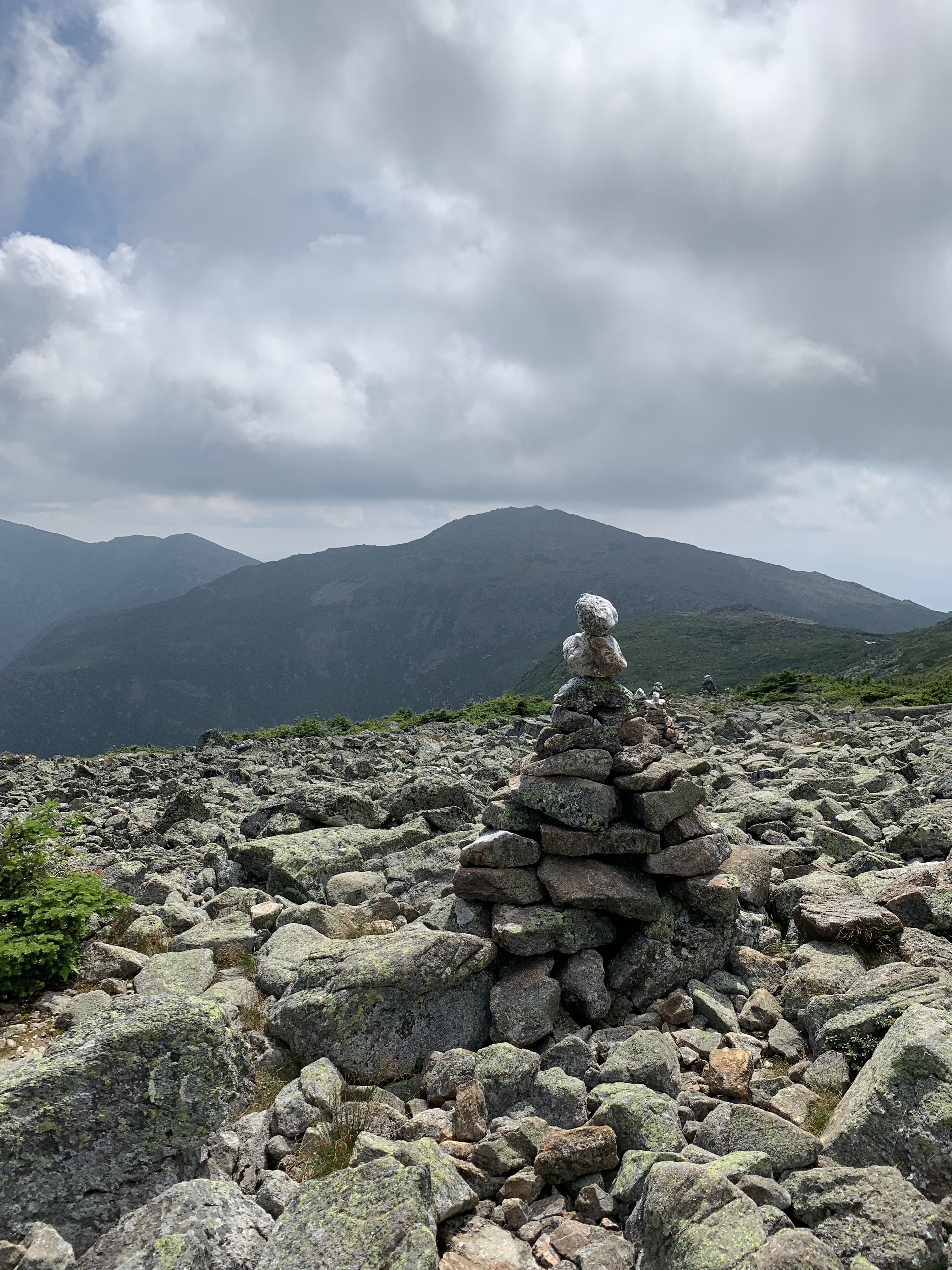
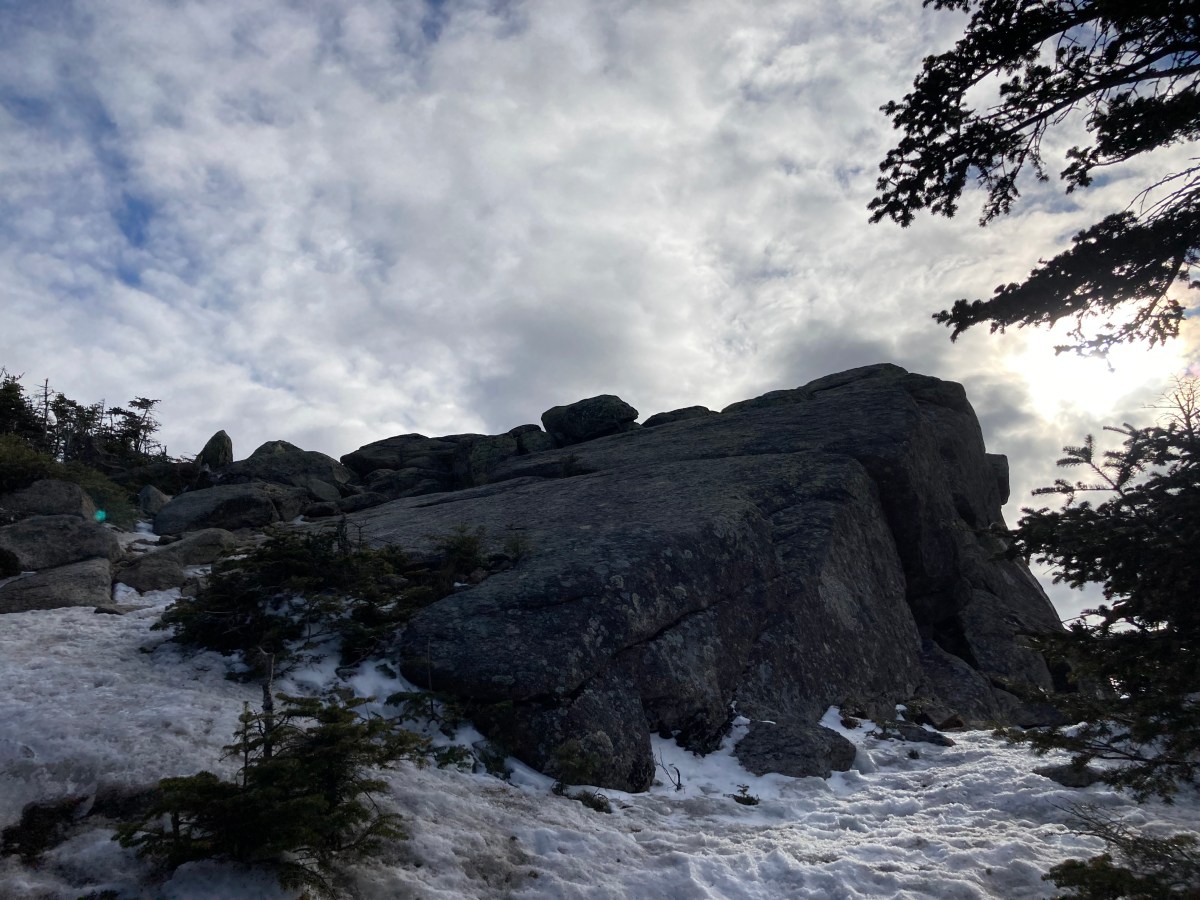
From there, you can look up and see a series of humps, a roller coaster of lesser crests which are the gateway to the 5,260′ rocky crown of Lafayette.
It’s a daunting view.
You know you have to haul yourself up there, over those hellish hills, if you ever want to stand on top and look down, across all of Franconia Notch and beyond.
Along the way, head down, you grasp and claw, finding what beauty you can between the sweat and heavy breathing.
Until at last.
As I write this, I think of how seven years ago on this day, I went about my life as if nothing were amiss. Not knowing what was to come, two days hence. It was uncommon grace, the not-knowing.
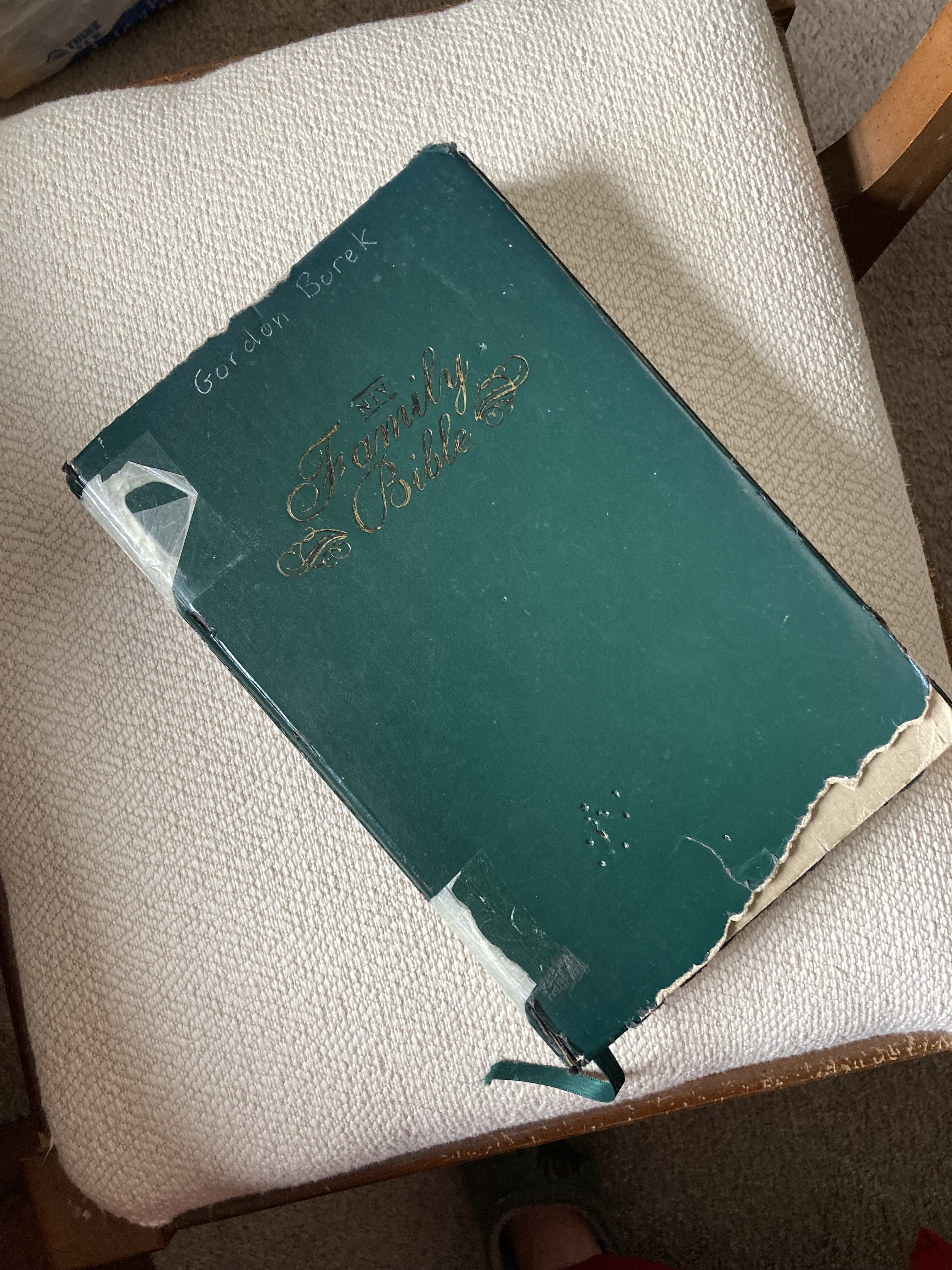
I look under the bed and see his backpack stored there, the one he had forgotten at his friend’s house from that day. He left so little behind.
All it contained was a sock ball and a pair of worn out Chuck Taylors. It’s how he lived his earth-bound life and after, he simply didn’t need it where he was going.
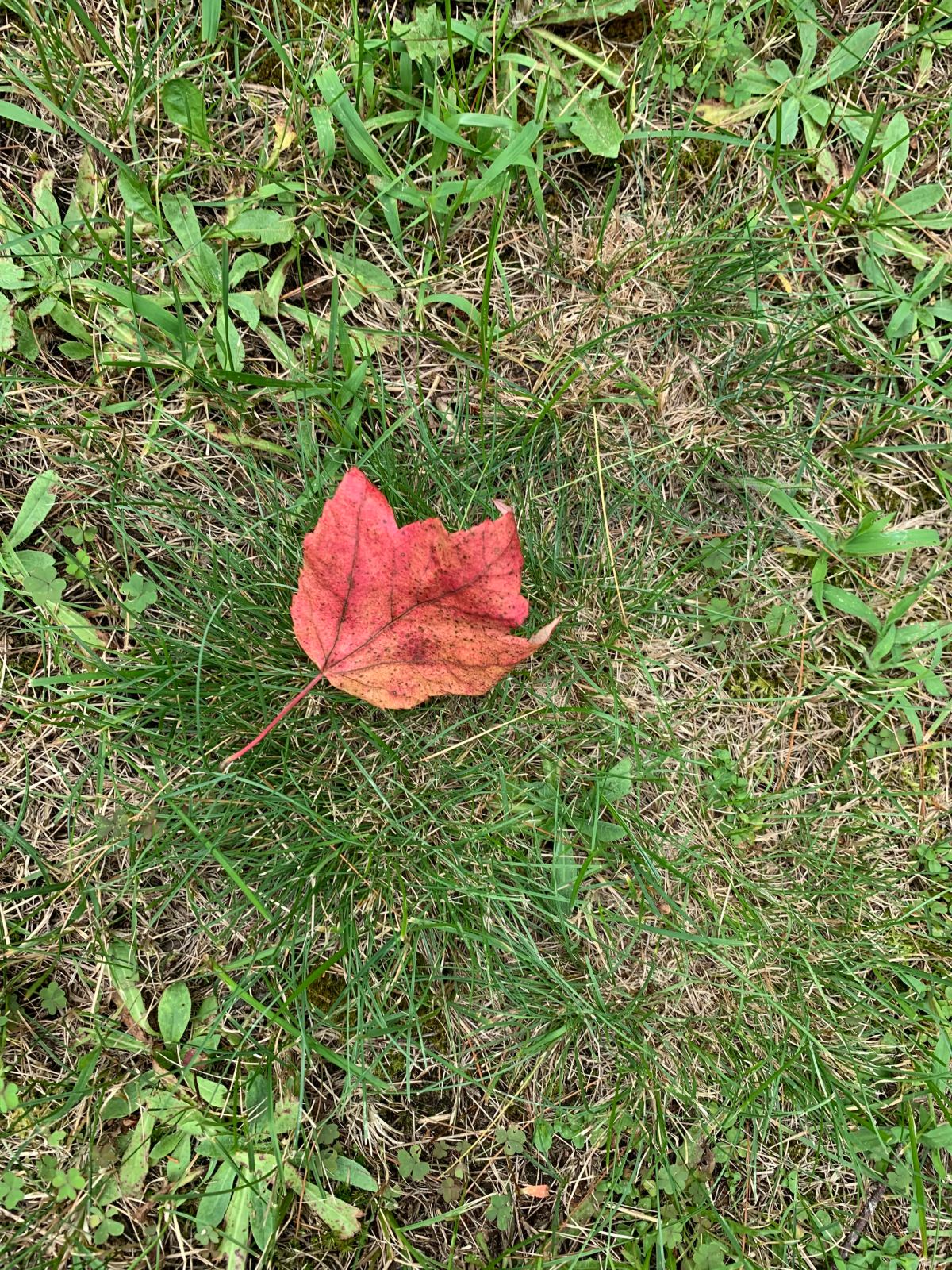
He had only new ahead, a glorious death, like the life of an autumn leaf. Burnished gold or orange or red, a fall, then the waiting. For us. For me.
But unlike the leaf, his eternal self (I don’t pretend to know when, or how) will not contain even a cell of decay.
Not. One. Cell.
On this side, things continue to happen, good things and hard, heedless to the one who is gone.
I have to admit, it is sometimes a daunting view, from this side.
I cannot do it alone as I wait, but I am grateful for the One who holds my hand and listens as I haul and breathe, crest after crest, on the way to until.
Grateful, for He listens as I pray – for a sweeter disposition, for living bread that satisfies, for redemption, for friends, for peace, for plans. For my kids and the littles, for this lonely ache, for temptations, boredom, and pain.
I think of the seed that was my son. Planted here, on this side, a brief blooming, but full of the all any mother would want. Sweetness and honor, devotion and warmth.
Each of us is also a seed, each a potential to reproduce – hope, love, help. Eternal friendships, eternal family, eternal joy.
Seven years ago, two days from now, I lost my son from this side.
I don’t know why, but I’ve been swimming laps in the pool of grief these past few weeks.
As far as I can tell, there was no clear event which precipitated this, just a gradual thinning of my power to hold things together, until it seemed like the slightest brush brought unbidden tears.
What was that? I find myself wondering.
Who stole all the air?
I text my tribe, I’m drowning here, and discover that it’s possible that our bodies store trauma.
Hear that sometimes, the scales fill and fill and fill until at last, they tip. Uninvited, it comes pouring out, too much to hold in trembling cupped hands. What to do with all the spill?
I can’t seem to climb it away, sleep it away, pray it away.
How must we steward our healing? I only know one way.
We go to the One.
He holds the universe and our one tiny life together, carries them along, inches them forward.
I must believe that He can catch the spill in His own cupped hands. Coax the dead places inside of us back to life.
Keep our one tiny life, until it’s time.
Slowly, I feel this season of sad shifting.
I can hold on, as to a light shining in a dark place, until the day dawns and the morning star rises in my heart. (2 Peter 1:19)
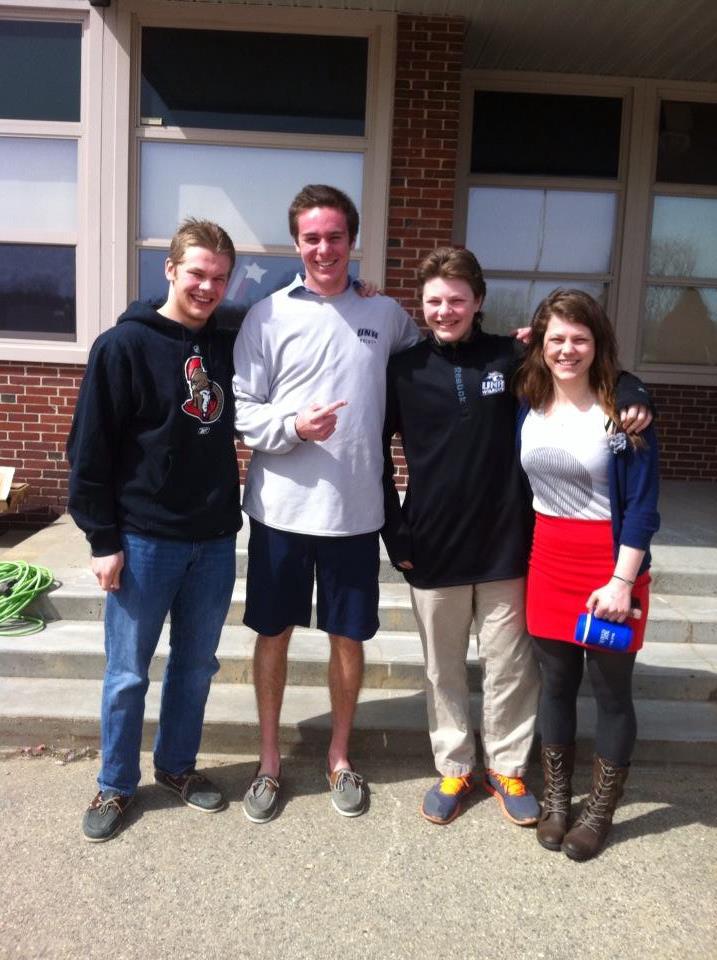
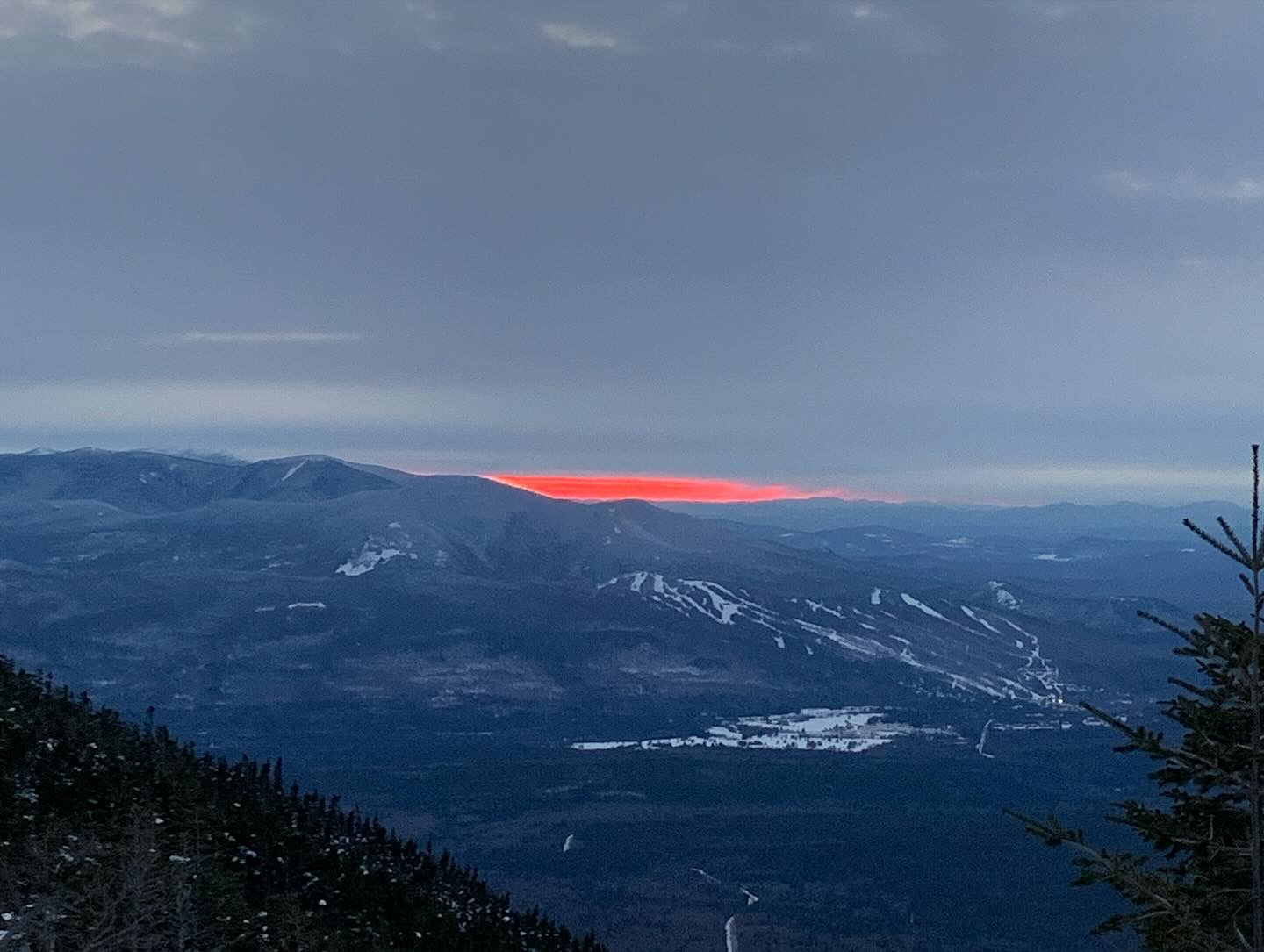
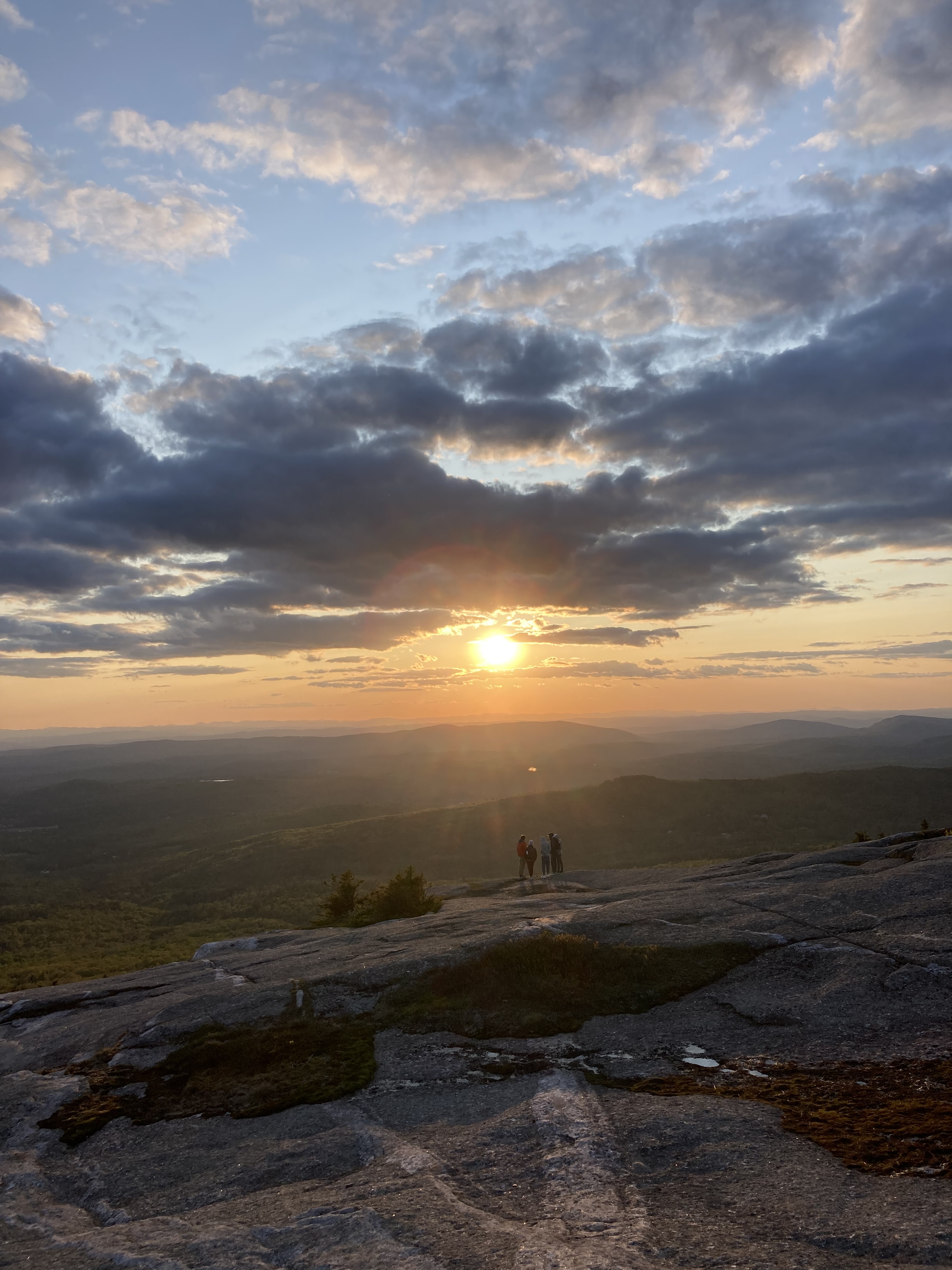
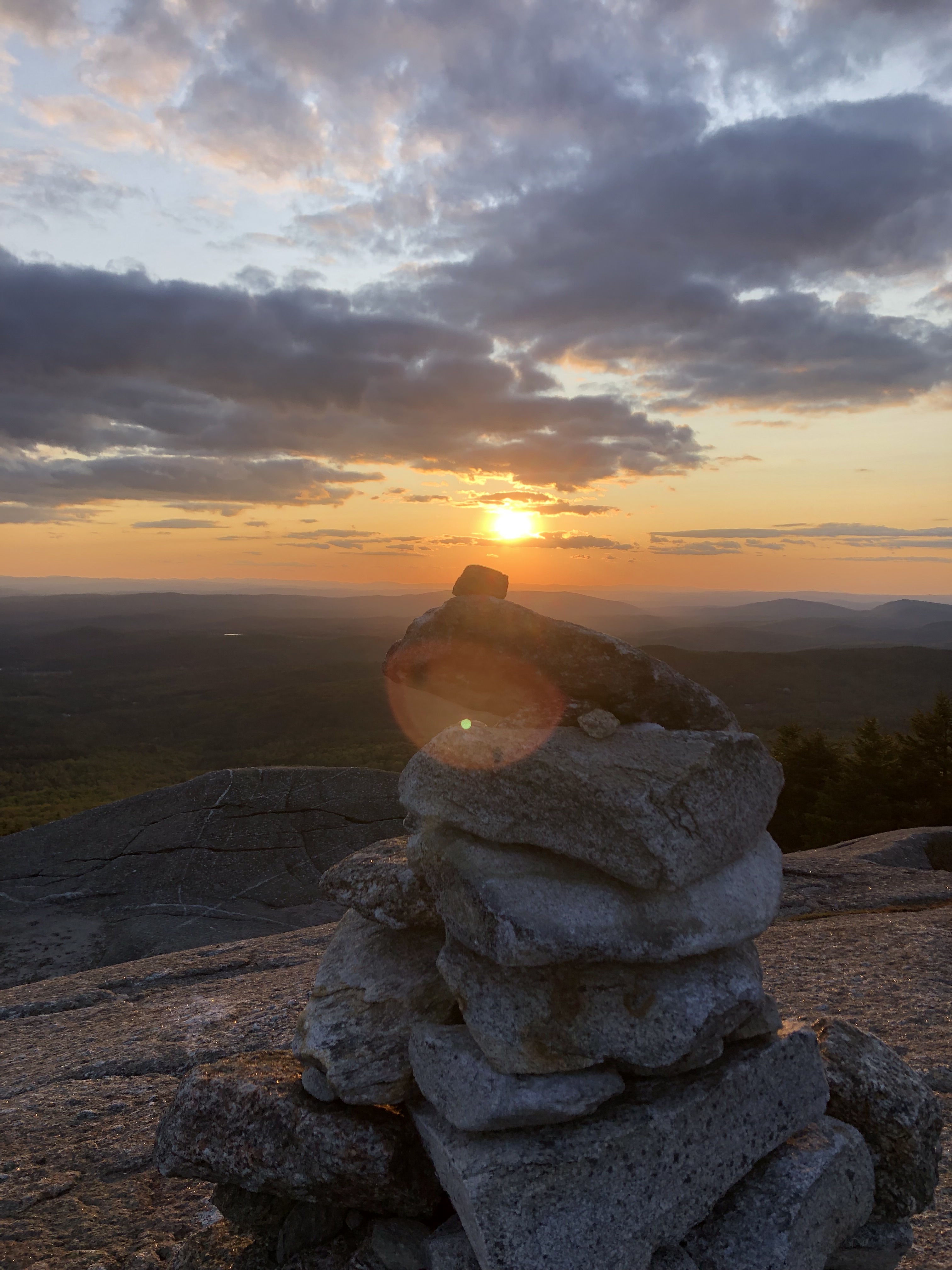
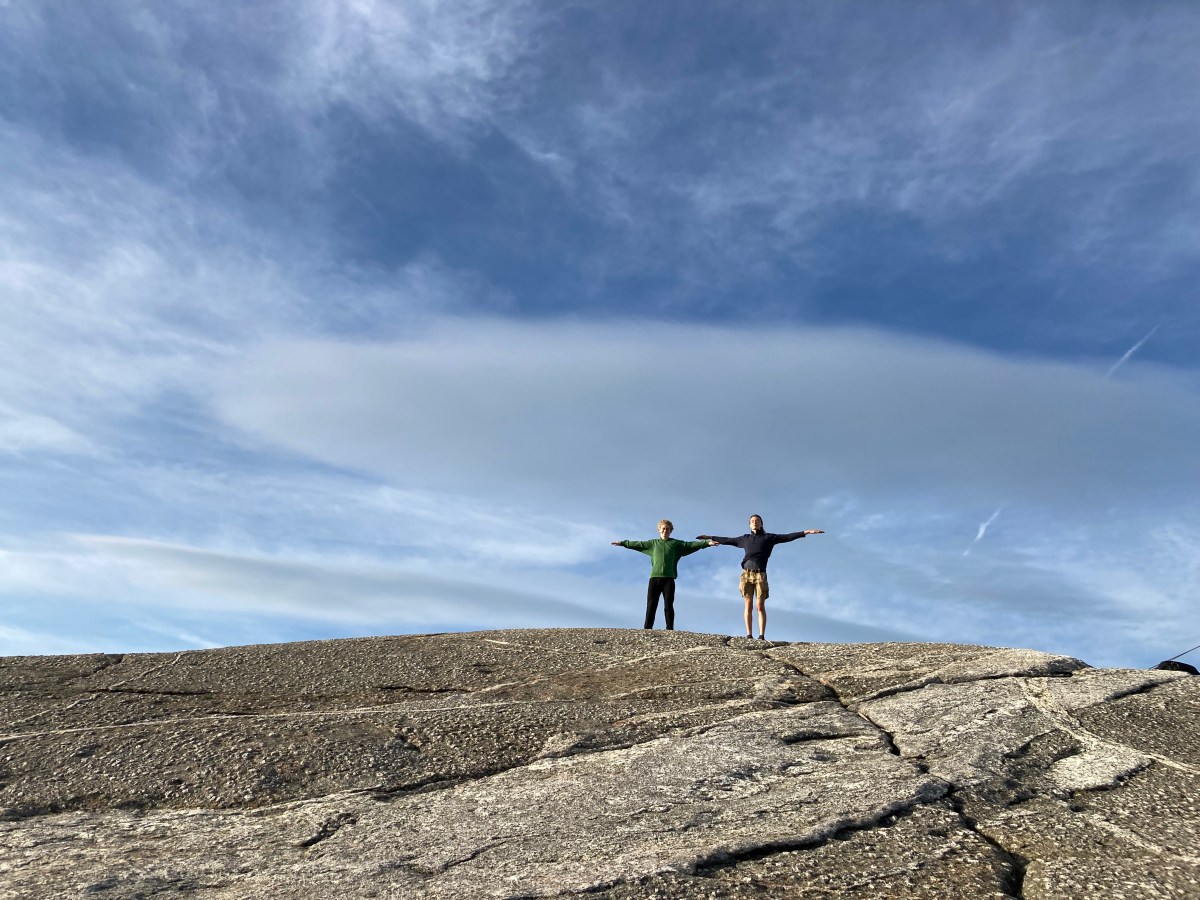
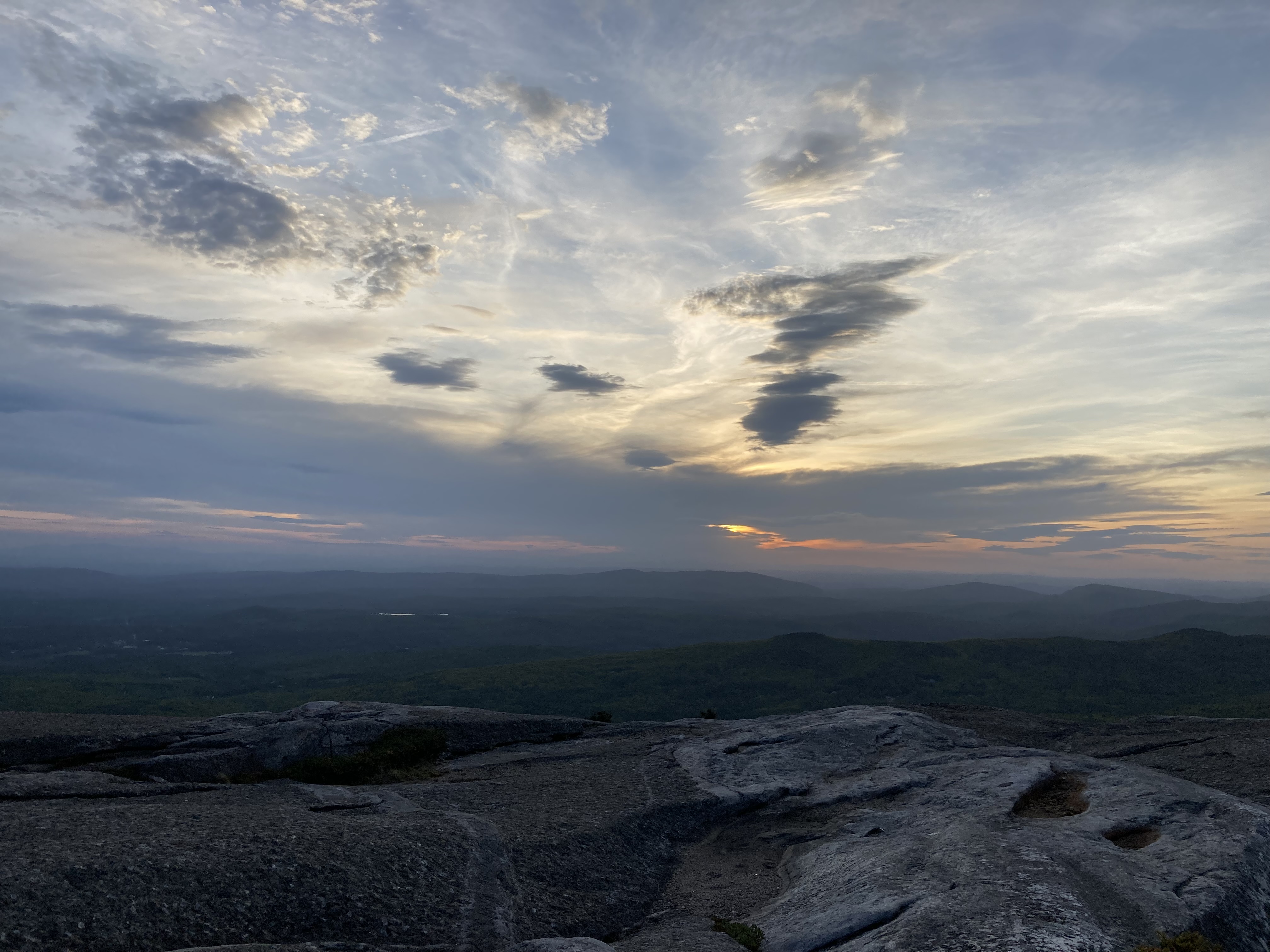
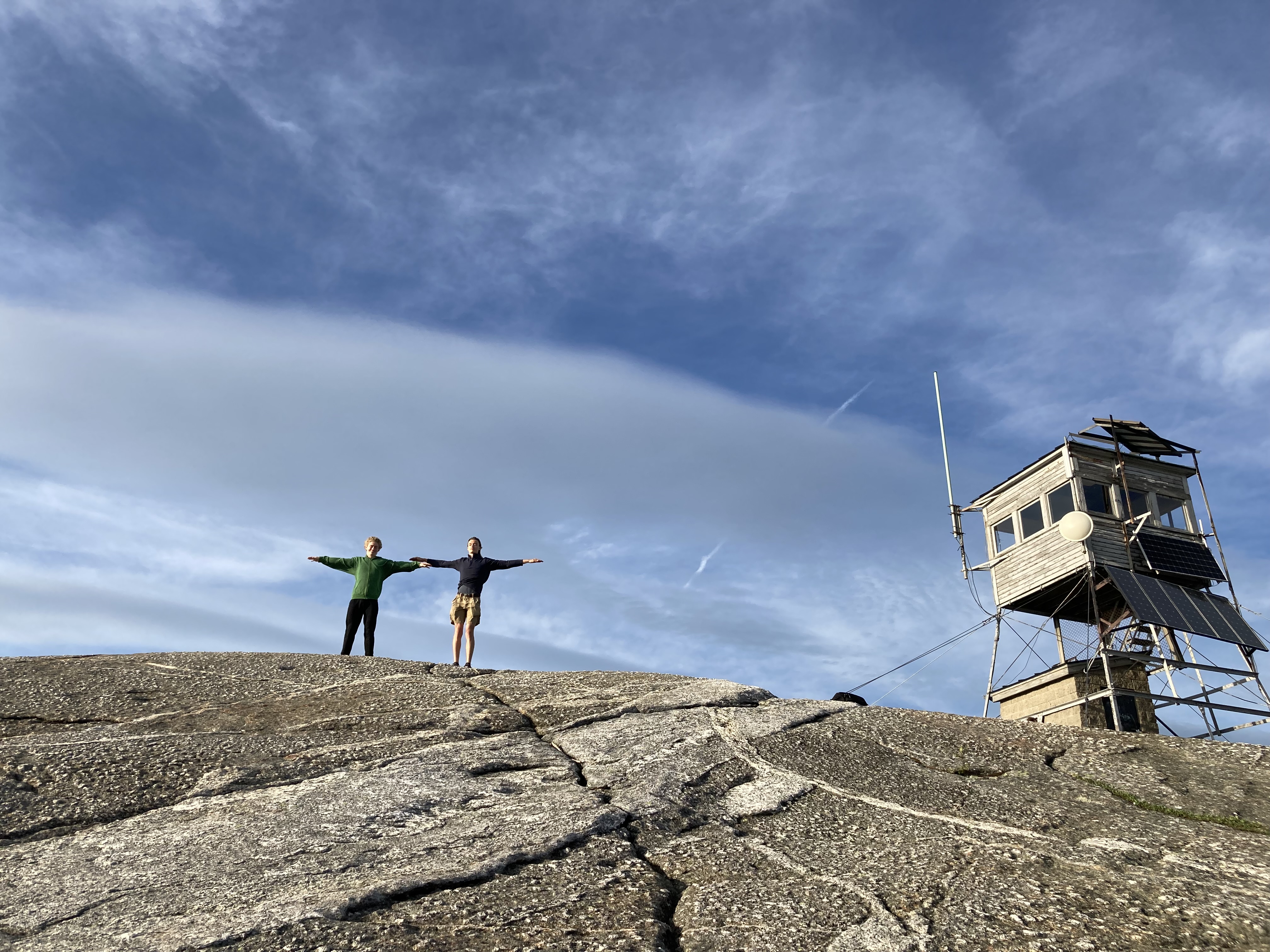
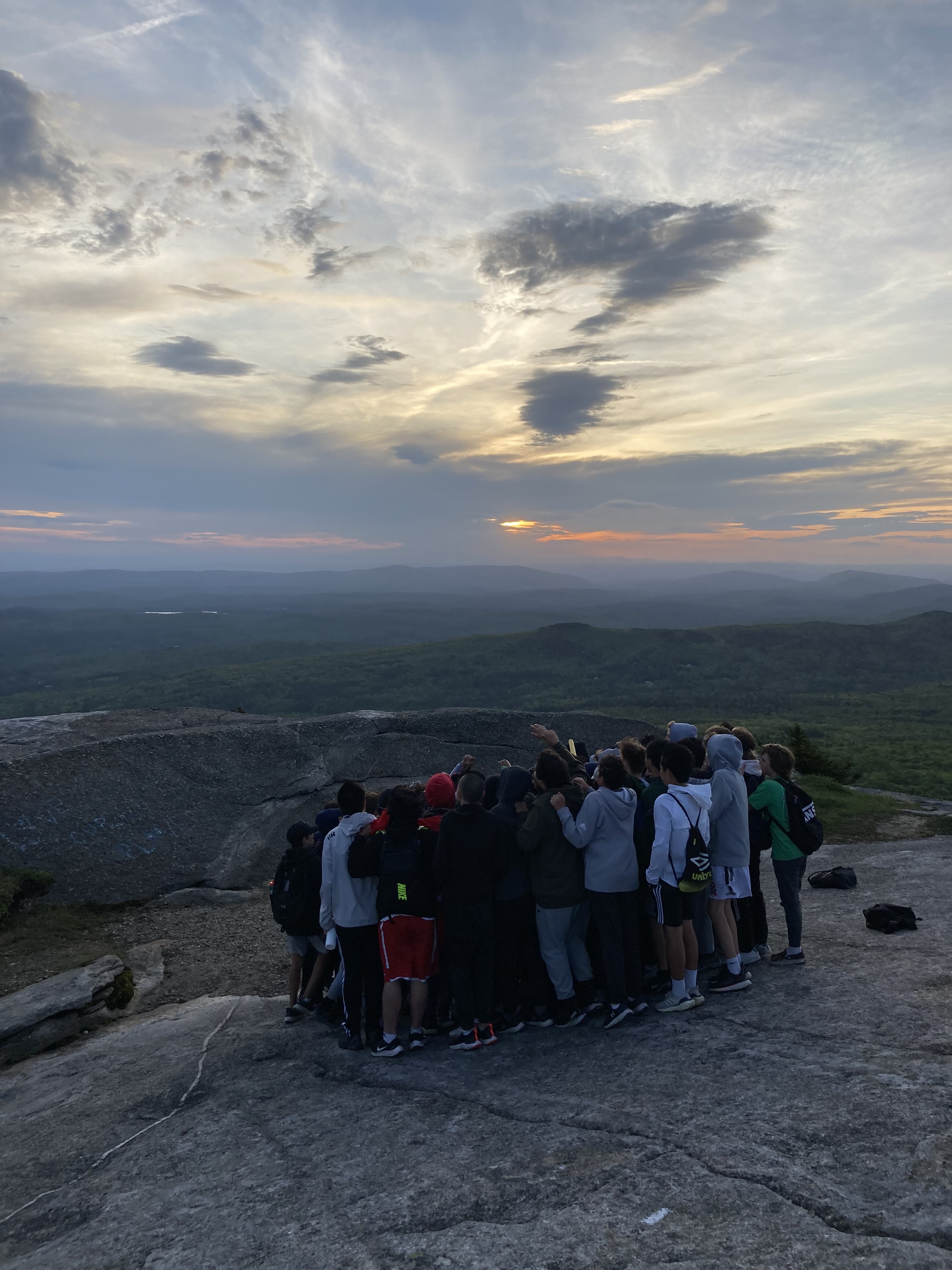
Memorial Day weekend and the senior boys at my school climb Mt. Cardigan to watch the sun set.
It’s a tradition I love, as the lads marvel at the view, looking down at their school miles away, and remember. They hug and thank and laugh and cry, though they are apt to blame the last on wind in the eye.
It is a bittersweet time for all of us as we wait for the final gold to soften and run from the sky. To say good-bye.
I feel my own eyes fill with wind.
I read this morning that the Hebrew word for “wait” is almost identical to the word “mourn.” This makes sense, as our lads are stuck between readying to push off from the safe shore of our control, while, at the same time, lamenting all that they are about to lose.
I am stuck there myself.
This weekend will mark the sixth year since my son went home, and I feel a bit untethered. I disappear into the woods for a while, pick some ferns for his bench, think of his siblings.
Do they miss him as I do?
I dare not ask at times, lest they think I somehow love them less. In many ways, he was our glue, and we have had to find new ways of being ourselves.
To mourn is to wait.
Mary and Martha were siblings who lost their brother. They waited for Jesus to come, sending word, reminding him that his friend Lazarus lay sick.
But Jesus didn’t come, not until Lazarus was four days dead. And when Martha tells him that she believes there will be a one-day resurrection for her brother, Jesus tells her, “I am the resurrection and the life. The one who believes in me will live, even though they die; and whoever lives by believing in me will never die. Do you believe this?”
“Yes,” Martha replies, because she knows who he is.
We all know what happens next. Jesus tells Lazarus’s friends to roll away the stone of his tomb, and out he shuffles, feet wrapped in tangled linen.
I often wonder how Lazarus lived the rest of his life. Did his gratitude free him to serve and share with reckless abandon?
Why wouldn’t he?
And why shouldn’t we – add our yes to Martha’s yes and rest in what Oswald Chambers calls the glorious now? To “begin to know him now and never finish.”
It’s okay, I think, to mourn while we wait.
But I also want to live like Lazarus, recklessly grateful that we have someone to wait for.
Easter Sunday and I wake up to snow on the ground and a song in my head.
It’s a joyful song for a joyful day, one that swells my heart to Easter Sundays long ago, hearing my father’s tone-deaf voice, full volume, belting out the notes:
Christ the Lord is risen to-day
A-a-a-a-a-le-lu-ia!
He always said that God had given him that voice and he was just giving it back to him.
Photo by @johnnyherrick2
How I miss the man.
But – Jesus is alive! I am alive and will forever be alive! Why shouldn’t we sing?
After the resurrection, when the disciples had yet to understand, Jesus caught up to a few of them as they left Jerusalem. Cleopas and his companion didn’t know it at the time, but they were talking about Jesus to Jesus. Close to despair, they told Jesus, We had hoped that he was the One.
But your thinking was too small, Cleopas. You thought Jesus came to rescue Israel from Rome, like some Moses-Groundhog-Day moment when their brutal bonds of physical oppression would be loosed.
Think BIGGER, Cleopas.
Any governmental victory could only be temporary; the empty tomb is a permanent mend.
Jesus asks the two men gently, Why are you so thick-headed? Why do you find it so hard to believe every word the prophets have spoken?
We. Had. Hoped.
Slowly, Jesus opens their fragile, traumatized hearts to the truth. And when he tells them that he’s going to walk on, they plead with him.
Please.
Stay with us.
So he does. And so he has.
At dinner, he reveals himself at last, and in a flash, is gone again from their eyes. Gone but not-gone.
Once you see him you cannot un-see him.
Stunned, they ask themselves, Did not our hearts burn with flames of holy passion while we walked beside him on the road?
They are compelled to tell – run, not walk, back to Jerusalem, back the way they came, only it’s not the same dusty Jerusalem road.
Their feet are light, their hearts afire. Running back, running ahead.
And when they get to the Eleven, they find Jesus has also appeared to Peter – poor Peter, still stinging from his betrayal at the court.
I wonder where Jesus had gone first?
He must have been having so much fun.
Then, when finally I’m sure he couldn’t contain himself any longer, he manifests right in the midst of them all with the most perfect of words.
Be at peace.
I am the living God.
It’s all true.
Don’t you remember – I told you that everything written about me would be fulfilled – in ME.
I think of my dad and the son who are gone.
Gone but not-gone, while I continue to age as I walk the dusty Jerusalem road toward wheretheyare.
Though no amount of lotion or make-up can smooth the wrinkles of my long and curving life, it has almost ceased to bother me.
On Palm Sunday some 2,000 years ago, Jesus rode into Jerusalem on a donkey, as people lined the street and cheered.
At the risk of heresy, I was wondering this morning if he enjoyed the adulation. After all, as man, he experienced all the emotions we as people feel, and, as God, well, didn’t he deserve it?
I was in Luke 19 reading about the crowd tossing their coats on the road as Jesus rode by. Curious about what he was doing before that moment, I turned back a few chapters to Luke 13 to discover: He went through the cities and villages, teaching, and journeying toward Jerusalem.
Always, always, always was Jesus on his way to Jerusalem. He knew what was going to happen there, yet he wasn’t deterred. And in his wake, the blind saw, children were blessed, lepers cleansed, and the greedy converted.
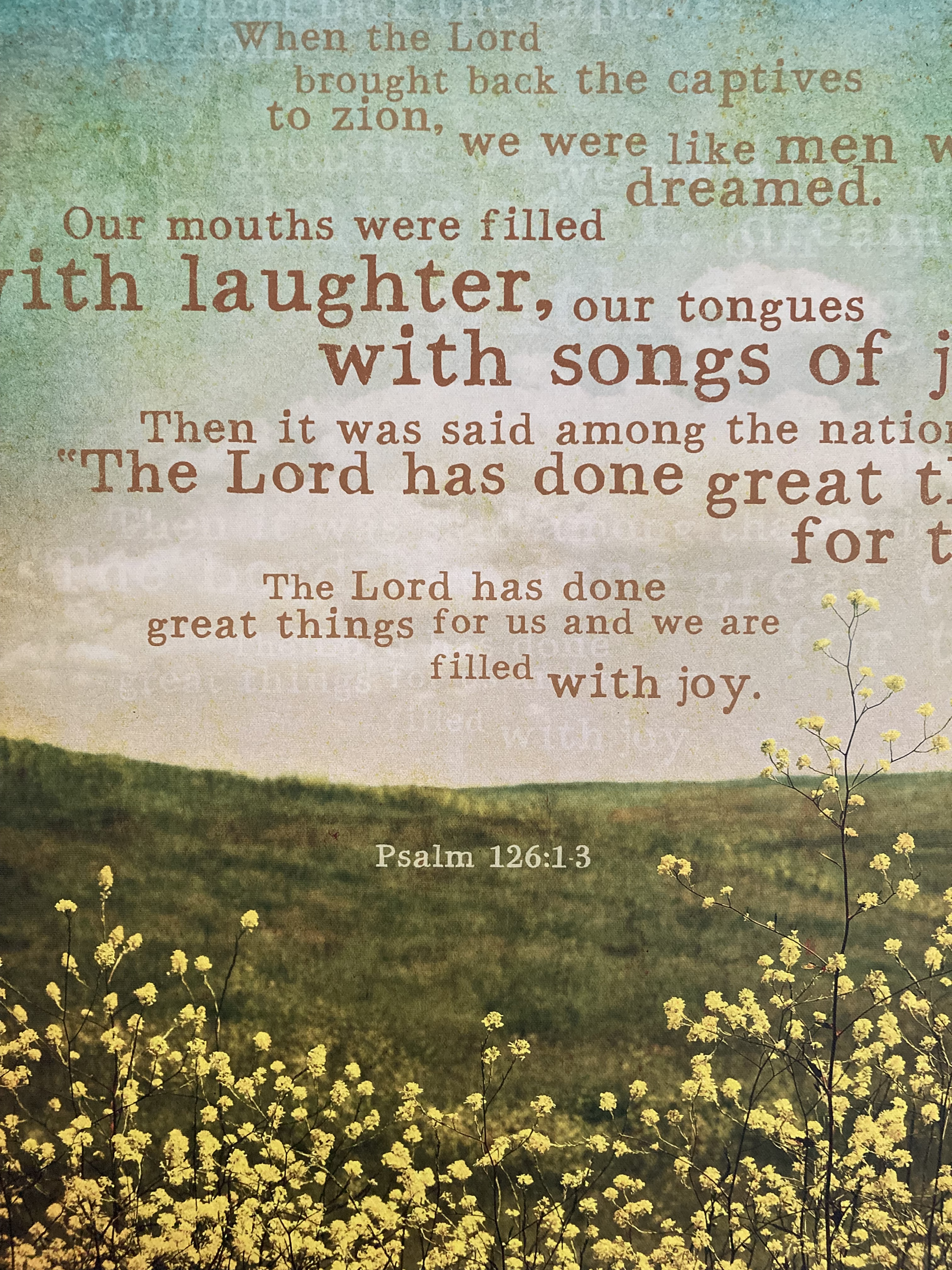
Are we not also traveling toward Jerusalem? Toward Zion, that city which will one day descend from the sky and be our eternal home?
John tells us in Revelation 21 that he saw a new heaven and a new earth, for the first heaven and the first earth – our earth, the death-riddled, disease-burdened, war-bloodied lonelybrokenmournful earth – had passed away. He hears a loud voice from heaven saying,
Behold, the tabernacle of God is with men, and He will dwell with them, and they shall be His people. God Himself will be with them and be their God. And God will wipe away every tear from their eyes; there shall be no more death, nor sorrow, nor crying. There shall be no more pain, for the former things have passed away.
No more sorrow, tears, pain, death.
Finished.
Jesus left behind restoration, transformation, and confirmation on his donkey ride of death-to-life.
What are we leaving in our wake as we journey toward Jerusalem?
I think back on my last week – aid not extended, harsh words unbridled, succor withheld – and am ashamed.
Best instead to throw my cloak on the road, raise up a palm, and shout Hosanna!
As man, he understands.
And as God, he deserves it all.
This Palm Sunday, may you find peace as you journey toward Jerusalem.
































 walkwithme413